Having thorough vision exams by an eye doctor is crucial not only for correcting your vision but also for detecting any underlying health conditions that may otherwise go unnoticed. Whether it’s diagnosing conditions like glaucoma, cataracts, or macular degeneration, regular eye exams play a vital role in maintaining long-term eye health. However, the rising cost of these exams—especially for those without insurance—has become a significant barrier for many individuals. Beyond the financial burden, the time and effort required to visit a doctor’s office can also discourage people from seeking routine vision care. This is where the Eyebot, a new kiosk-based vision care machine, steps in to make the process more convenient and affordable.
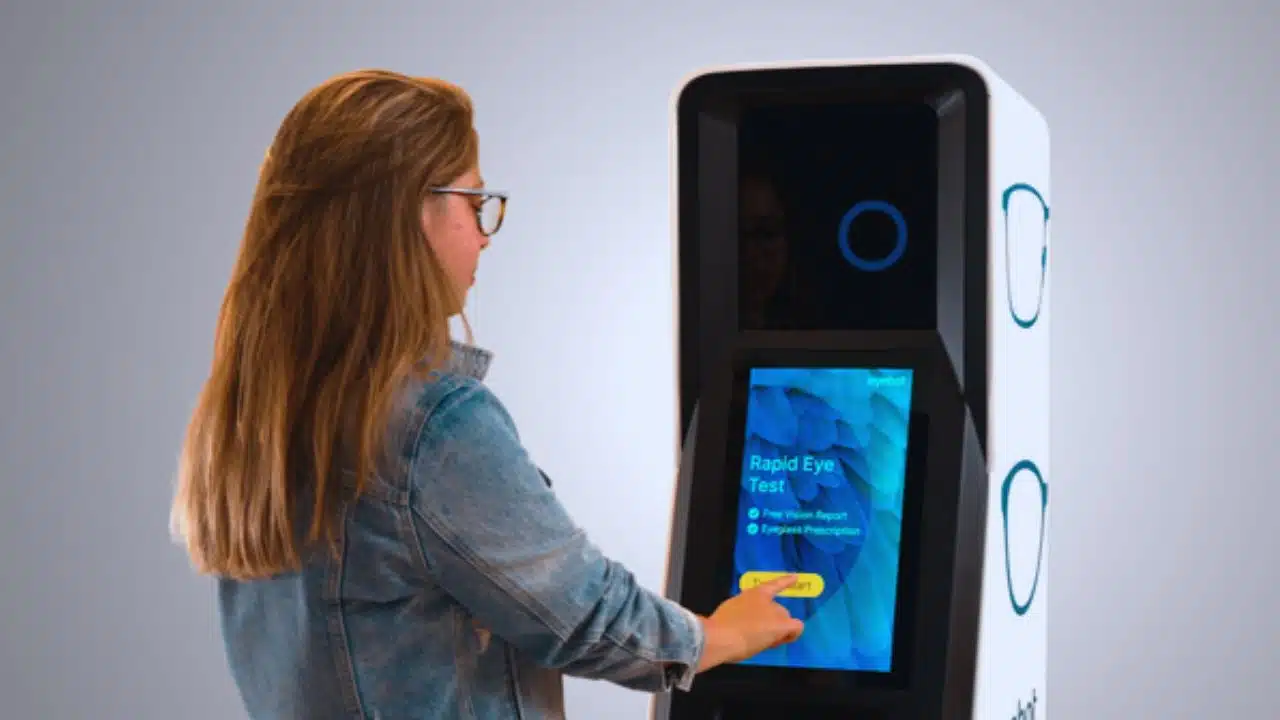
The Eyebot, which just launched in the Boston area, is a technology-driven solution designed to streamline the process of getting a vision prescription. This machine, positioned in easily accessible locations such as retail stores, allows users to get an eye check-up in under two minutes. With the ability to deliver a vision prescription and general eye health information quickly, it aims to fill a growing gap in the vision care industry.
How Eyebot Bridges the Gap in Vision Care
Eyewear retailers and online services have made renewing prescriptions for contacts or glasses more convenient in recent years, offering tools to check your vision from home. If you’re confident that your eyesight hasn’t changed, these tools provide a useful stop-gap measure to renew your prescription. However, such online tools aren’t sufficient if you suspect that your vision has worsened or if you’re getting glasses for the first time. They also don’t help with diagnosing any underlying issues that might be affecting your eye health.
The Eyebot is designed to address these shortcomings. It’s not just another vision-checking app or online tool—it’s a physical kiosk that provides an in-depth vision assessment quickly and affordably. For a small fee, usually between $20 and $30, users can receive a prescription for glasses or contact lenses after a licensed eye doctor reviews their results remotely.
The convenience and affordability of the Eyebot mean that more people will have access to vision care, even if they don’t have the time or money to visit a traditional optometrist. As vision care continues to evolve, tools like the Eyebot will likely play an essential role in ensuring that more people have access to the eye care they need.
How the Eyebot Works: Fast, Simple, and Convenient
The Eyebot experience is designed to be user-friendly, allowing anyone to walk up to the kiosk and complete a vision test in just a few minutes. Here’s how it works:
- Kiosk Setup: The Eyebot is a standing kiosk with a large touchscreen interface. Users follow simple on-screen instructions, and the entire test takes about one and a half minutes to complete.
- AI-Generated Report: After the test, the machine generates an AI-based report that provides non-diagnostic information about your eye health. For example, the report may tell you if you have myopia (nearsightedness) or presbyopia (age-related vision loss), and how severe the condition is.
- Doctor Review and Prescription: If the test indicates that you need vision correction, you can opt to pay for a prescription. For a fee of around $20 to $30, a licensed eye doctor will remotely review your results. Within about 24 hours, you’ll receive your prescription for glasses or contacts via email.
- Use Anywhere: The prescription you receive from Eyebot can be used at any retailer, giving you the flexibility to shop for eyewear wherever you choose. For example, Zenni Optical, an Eyebot partner, may offer perks like waiving the prescription fee if you purchase glasses through their platform. But you are free to use your prescription at any optical store or online retailer.
Focus on Affordability and Accessibility
One of the biggest advantages of Eyebot is its affordability. Traditional eye exams without insurance can cost anywhere from $50 to $250 or more, depending on the location and type of tests performed. For people without insurance, these high costs can prevent them from seeking regular eye care, even if they know they need it.
Eyebot offers a far more affordable option, with vision checks costing around $20 to $30. The company’s partnership with eyeglass retailers like Zenni Optical allows them to keep costs low, while still providing a comprehensive service. This partnership is part of what makes Eyebot so accessible—it places the kiosks in locations where people are already shopping for eyewear, making it easy to combine an eye test with purchasing new glasses or contacts.
Moreover, Eyebot’s flexibility is appealing. Even though the kiosks are initially launching in the Boston area through partnerships with Zenni, you’re not limited to buying your glasses there. Once you receive your prescription via email, you can use it anywhere, allowing you to shop for eyewear from a wide variety of retailers, both online and in-store.
What Makes Eyebot Different from Traditional Vision Tests?
Traditional eye exams often involve sitting in a chair and answering questions about which lens is clearer, a process familiar to anyone who wears glasses or contacts. The classic “Which is better—one or two?” question is a staple of these exams. However, Eyebot does things differently.
Instead of relying on subjective answers, Eyebot uses advanced technology to measure your vision. The machine sends safe infrared light into your eyes to gather data on your vision quality. This approach allows the Eyebot to assess conditions like myopia and presbyopia without requiring you to choose between different lenses. It’s a faster, more objective process that doesn’t rely on your ability to interpret subtle differences in lens clarity.
In addition to providing vision prescriptions, the technology behind Eyebot has the potential to detect more than 20 different eye diseases and disorders. These include cataracts, eye trauma, and other conditions that might affect your long-term eye health. While the machine isn’t yet certified to diagnose these conditions, Hofmann, the co-founder and CEO of Eyebot, said that clinical trials are underway. The goal is to eventually allow the Eyebot to provide a comprehensive vision and eye health assessment in a matter of minutes.
Limitations of the Eyebot
While Eyebot offers a convenient and affordable option for many people, it does have some limitations. The machine is currently designed for adults between the ages of 18 and 65. Additionally, there are some exclusions for people with very severe myopia or certain eye diseases. These individuals may need a more comprehensive exam with an optometrist or ophthalmologist to ensure their eye health is fully assessed.
At the moment, the Eyebot can only provide new glasses prescriptions. However, according to Hofmann, the company is planning to expand its services in December to include prescription updates for contact lenses. This expansion will make Eyebot even more useful for people who rely on contacts for vision correction.
A Growing Vision Care Solution
The rollout of Eyebot is still in its early stages, but the company has ambitious plans for the future. Currently, the kiosks are available in the Boston area, but there are plans to expand to other regions soon. Hofmann mentioned that two kiosks are set to launch in California in the near future, and by the end of the first quarter of 2025, the company expects to have 25 kiosks in operation across the United States.
This rapid expansion could make vision care more accessible to people across the country, particularly those who don’t have easy access to an eye doctor or who can’t afford traditional eye exams. By placing the kiosks in high-traffic retail locations, Eyebot is creating a convenient and affordable option for millions of people who need vision correction.
The Future of Vision Care: From Apps to Kiosks
In an era where technology is increasingly app-based, it might seem surprising that Eyebot has chosen to create a physical kiosk rather than a smartphone app for vision testing. However, this decision was intentional. According to Hofmann, attempts to develop smartphone-based vision testing solutions have faced several challenges. People tend to be skeptical of app-based vision tests, feeling that they don’t offer the same reliability as traditional eye exams.
By creating a physical kiosk, Eyebot aims to provide a solution that feels more trustworthy and comprehensive. The kiosk’s advanced technology, combined with the involvement of licensed eye doctors, helps to ensure that users feel confident in the results they receive. In many ways, the Eyebot is similar to the blood pressure kiosks found in pharmacies—offering a quick, convenient way to check your health while providing results you can trust.
Eyebot’s Impact on Vision Care
The launch of Eyebot marks a significant step forward in the world of vision care. By offering an affordable, convenient alternative to traditional eye exams, Eyebot has the potential to revolutionize the way people approach vision correction. As the company continues to expand, it will be interesting to see how this new technology shapes the future of eye care, making it more accessible to people who might otherwise struggle to get the vision care they need.
In the coming years, tools like Eyebot could play a vital role in closing the gap in vision care, providing quick and affordable eye exams to millions of people. With its focus on convenience, affordability, and reliability, the Eyebot represents a promising future for vision care technology.