Have you ever spent money on something that only exists on a screen – and didn’t regret it?
If you’ve ever played Counter-Strike, there’s a good chance you know what I’m talking about. That perfect knife skin. That factory new AK with just the right pattern. That ridiculous sticker combo that no one else has. It’s not just pixels – it feels like owning something. Something rare, something you worked for, or traded for, or maybe even got lucky pulling from a case at 3 a.m. when you should’ve been asleep.
Now here’s the thing: people talk about NFTs and digital assets like they’re some groundbreaking new idea. But truth is, gamers have been living that life for over a decade. We just didn’t call it a “digital asset economy.” We called it skins.
Skins Aren’t Just Cosmetics – They’re Digital Property
Back in 2013, Valve dropped the Arms Deal update in CS: GO. That’s when the skin economy was born. Nobody really knew what it’d turn into. Fast forward to 2025, and we’ve got single items selling for the price of a used car.
And I’m not exaggerating:
- A Souvenir AWP | Dragon Lore with a Katowice 2014 sticker? That can push $150,000.
- The infamous AK-47 Case Hardened “Blue Gem” patterns? Offers north of $400,000, easy.
- Even mid-tier skins like an M4A1-S | Printstream can go for $300+, depending on condition and float.
Yeah – float. That’s how worn a skin looks. Lower float, cleaner skin, higher price. Simple enough, right?
But here’s what really makes this whole thing fascinating: people treat these skins like real assets. Not in a hypothetical way, but in the “I’m holding this item as an investment and tracking market shifts” kind of way. There are Discord servers and spreadsheets and even full-time traders making moves daily. It’s not a game anymore – it’s a marketplace.
And All This Happened Without Blockchain
That’s the part most folks outside of gaming don’t get. Skins aren’t sitting on the blockchain. They live in Steam inventories, tied to your account. But we’ve already got:
- Scarcity
- Item histories
- Unique IDs
- Transferability
- Market-driven pricing
All the stuff Web3 is chasing? We’ve been doing it since CS: GO was still running on potato servers.
The only real difference? In gaming, people actually use their digital assets. You can flex your skin in a match, show it off in a highlight clip, or even wager it in a skin-based coinflip. NFTs? Half the time you don’t even know what you’re supposed to do with them beyond staring at a JPEG and hoping for a price pump.
Platforms Like CSGORoll Made It All Work
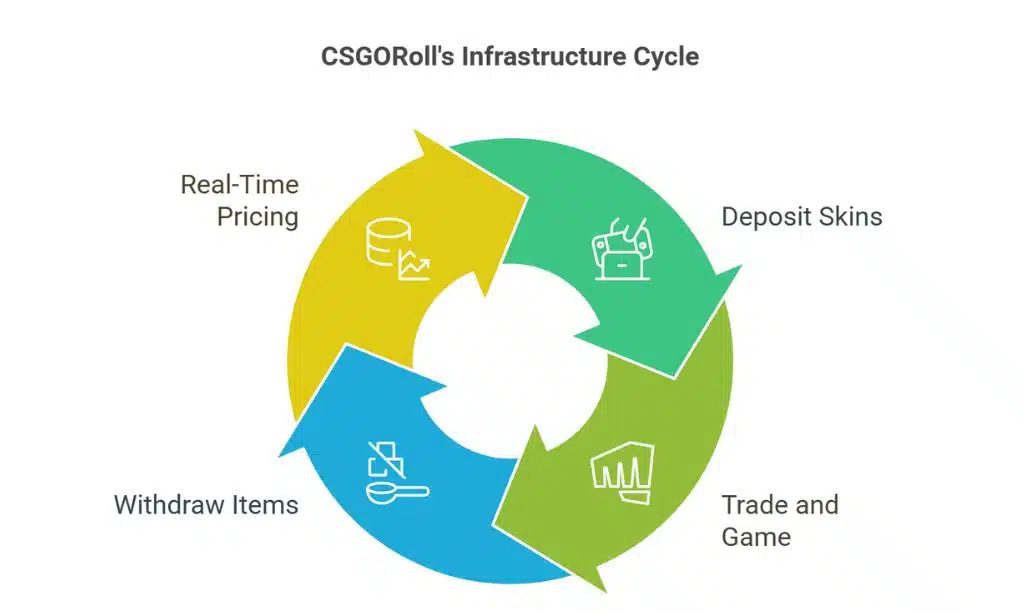
Now, let me tell you something important – this whole skin economy didn’t survive on its own. It needed infrastructure. That’s where CSGORoll came in.
Founded in 2016 by Killian – a guy most of us know better as EyE – CSGORoll started out as a passion project. But it didn’t stay small for long. The idea was simple: build a platform that made trading and gaming around skins actually feel safe, transparent, and fair.
And they pulled it off. CSGORoll built a system that makes it stupidly easy to:
- Deposit your skins and get credits
- Join case battles, roulettes, crash games [yeah, the risky stuff, but it’s all provably fair]
- Withdraw items with secure Steam trades
- See accurate market pricing and item info in real time
They’ve put a huge focus on security and responsible gaming, which is something the skin gambling scene really needed after the wild west phase back in 2016. CSGORoll isn’t just about flashy animations and dopamine hits – it’s a structured platform that actually respects users.
What the Rest of the World Can Learn From This
There’s a reason the CS skin market is still thriving while a lot of NFT projects are barely clinging to life. People here understand value. Not because someone wrote a whitepaper, but because they’ve lived it.
They know what scarcity feels like – when a discontinued case dries up and prices start spiking overnight.
They’ve seen supply and demand in action – like what happened when CS2 dropped and everyone started panic-buying or hoarding old-gen skins.
They understand the risk – skins aren’t immune to market dips, sudden bans, or even Valve’s mood swings.
But the big takeaway? Gamers didn’t need a lecture on digital ownership. They just needed a reason to care. And skins gave them that – through competition, status, collectibility, and yes, even gambling.
So, Where Do We Go From Here?
Right now, we’re at this weird point where gaming and crypto are circling each other. Some platforms are trying to merge both – blockchain-backed skins, cross-game inventories, hybrid trading models. Maybe it’ll work. Maybe it won’t. But one thing’s clear: gaming already figured out what ownership can look like online.
And honestly? It’s probably the most relatable version we’ve seen so far.
So next time someone tells you NFTs are the future of digital value, ask them how many hours they’ve spent trying to snipe a low-float AK with a Kato 2014 sticker on Buff163. If they don’t know what you’re talking about, they’ve still got a lot to learn.