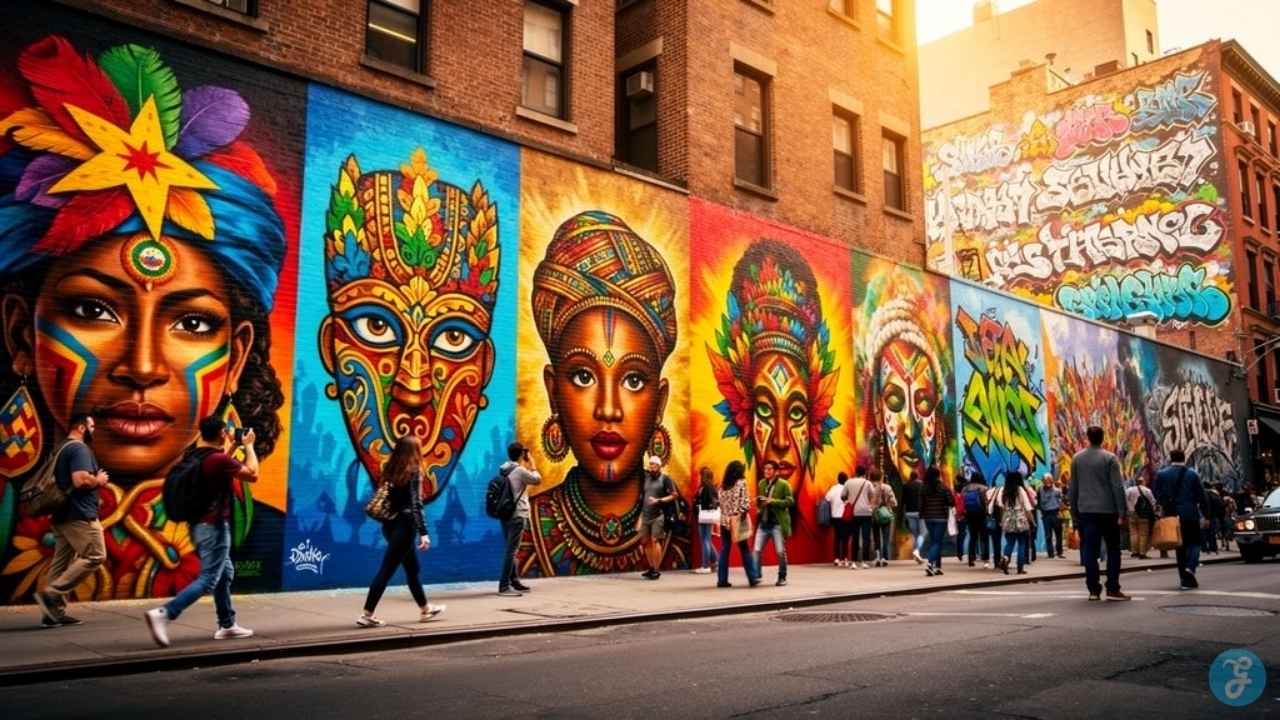
Have you ever walked past a bright, colorful mural on your way to work and wondered about the story behind it? I used to walk by these walls, thinking they were just random splashes of paint. It is very easy to see street art as just a mess or maybe even vandalism. But here is a fun secret I discovered recently. Cities that used to be covered in dull, gray concrete are now raking in billions of dollars in tourism, all thanks to these amazing wall paintings.
The Cultural Significance of Street Art Around the World is absolutely massive. It transforms quiet neighborhoods into buzzing creative hubs and gives a loud voice to people who often feel ignored.
I am going to walk you through exactly how this raw rebellion from the 1970s became a celebrated part of our cities today. Grab a comfortable seat, and let’s go through it together.
The Origins of Street Art
Street art erupted from city sidewalks as a raw, unfiltered form of rebellion. Young creators picked up spray cans and markers to transform blank walls into powerful statements about their lives.
They gave a loud voice to folks who felt completely ignored by mainstream society. For example, many historians trace the true origins of the modern movement to a young man named Darryl McCray, better known as Cornbread. He started tagging the streets of Philadelphia back in 1967 to get the attention of a girl, unintentionally sparking a global phenomenon.
From Rebellion to Recognition
Graffiti artists started out as pure rebels in the 1960s and early 1970s. They painted heavily on subway cars and building walls in New York City. This was their unique way of marking territory and expressing intense frustration with the system.
Back then, society viewed these creators as common criminals. Police arrested them, cities quickly painted over their work, and property owners fought back hard.
Yet, public opinion slowly shifted. Artists like TAKI 183 and DONDI became massive local legends. Their visual art told deep stories of struggle and cultural expression that traditional galleries completely ignored at the time.
By the 1980s and 1990s, museums finally started paying attention. Famous creators like Jean-Michel Basquiat and Keith Haring moved from painting subway cars to starring in prestigious art shows. Collectors realized this urban creativity held real value, and these pieces began selling for thousands of dollars.
To see how deep these neighborhood roots go, you can look at places like the Bushwick Collective in Brooklyn. Founder Joseph Ficalora helped turn his local neighborhood into an outdoor gallery that now hosts annual block parties drawing thousands of eager visitors. Cities eventually began inviting artists to paint legal murals instead of arresting them, changing how we all view public spaces today.
The Graffiti Boom of the 1970s and 1980s
The 1970s and 1980s saw this movement explode across urban landscapes. By 1983, the iconic documentary Style Wars hit television screens, showcasing legendary creators like SEEN and KASE2. It introduced the vibrant New York scene to the entire world.
- Young artists in New York City started tagging subway cars in the early 1970s. These moving trains spread their art far and wide across the five boroughs.
- The movement grew rapidly as trains became moving galleries. Artists fiercely competed to develop bolder colors and much larger pieces.
- Crews formed across major cities like Los Angeles, Philadelphia, and Chicago. They established distinct territories and pushed each other to create increasingly impressive work.
- Spray paint technology has improved drastically, giving creators better color options. Thinner and fatter caps allowed them to produce detailed work or cover massive areas quickly.
- Style wars erupted between competing crews. They developed wildstyle lettering, bubble letters, and character designs that became instantly recognizable.
- The movement challenged authority directly and expressed frustration with urban decay. Graffiti gave a loud voice to communities ignored by mainstream society.
- Media coverage heavily amplified the graffiti boom. Newspapers and television stations reported on the phenomenon, sometimes celebrating it and other times condemning it.
- Art galleries began noticing the immense skill behind the work. Many talented creators successfully transitioned from concrete walls to canvas.
- Urban creativity heavily influenced fashion, music, and hip-hop culture. The connection between graffiti, rap music, and breakdancing formed a massive cultural movement.
- City governments struggled to respond, implementing strict anti-graffiti ordinances. This intense conflict between creators and authorities became a central part of the story.
The Evolution of Street Art
Street art transformed from illegal vandalism into highly respected public art. Cities that once spent millions painting over these murals now actively fund and celebrate them.
In 2026, finding a legal wall is much easier thanks to organized city programs that bridge the gap between property owners and artists.
From Vandalism to Public Art (1990s to Present)
The 1990s marked a major turning point in visual culture. Cities stopped treating all graffiti as a crime and started recognizing it as legitimate visual art.
Authorities began inviting creators to paint massive murals on official building facades. Galleries opened their doors, showcasing these vibrant pieces on pristine white walls instead of concrete ones.
This change did not happen overnight. It took years of community engagement to prove that urban creativity had real, tangible value.
Look at Wynwood Walls in Miami as a perfect example of this transformation. Back in 2009, it was just a desolate, forgotten warehouse district. Today, it is a massive outdoor art installation that attracts around 3 million visitors annually.
Another great example is the legendary Shepard Fairey. He recently unveiled a massive, beautiful mural called “Uplift Justice” in Philadelphia near LOVE Park. It is a powerful call for social justice, timed perfectly for the nation’s 250th anniversary in 2026.
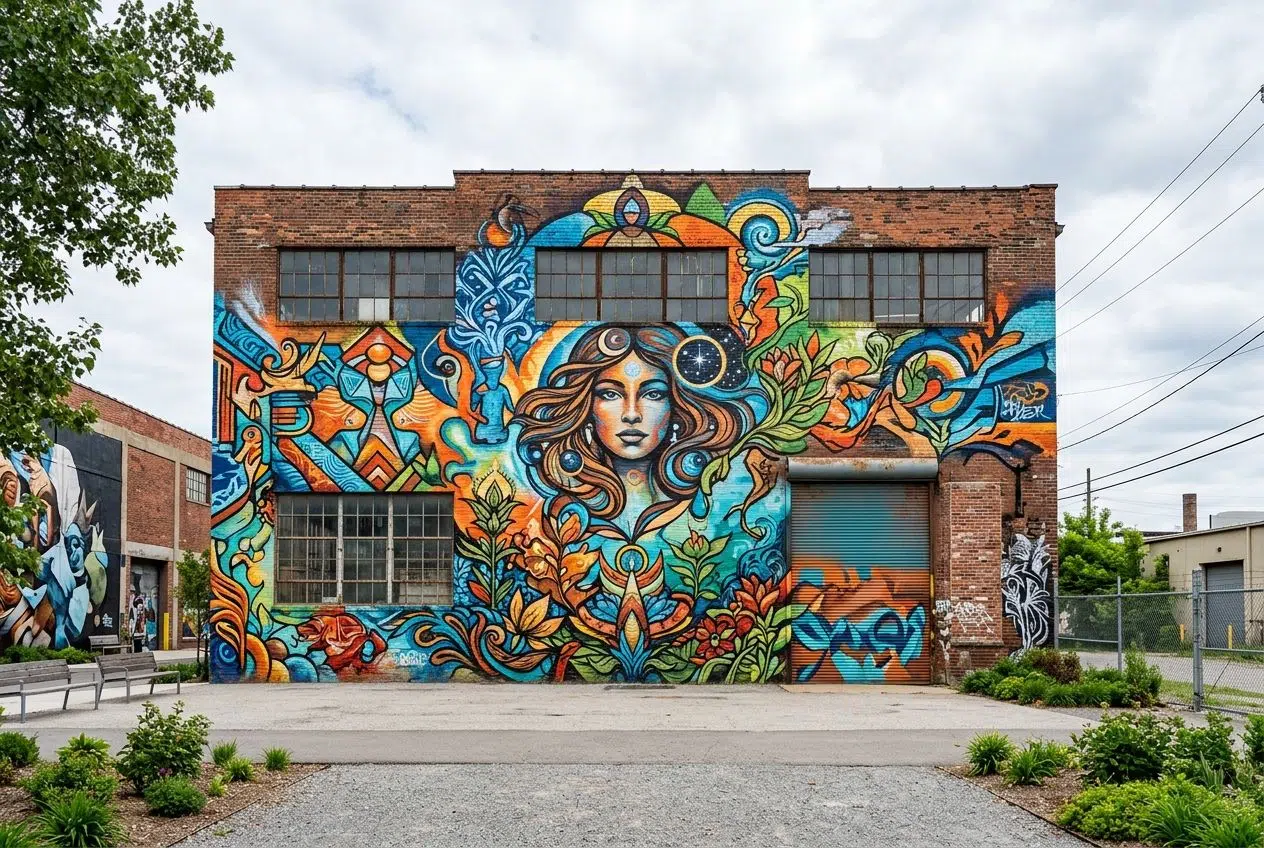
Art should not be something that decorates your walls. Art should make you think. – Banksy
Today, public spaces serve as open-air galleries. Artists tackle everything from political dissent to environmental concerns using spray paint, stencils, and wheatpaste.
The Democratization of Art
This movement completely smashed down the walls that kept art locked away in fancy, expensive galleries. Anyone walking down the street could suddenly see amazing artwork without paying an admission fee.
Art finally belonged to the streets and the people. Social platforms like Instagram revolutionized this process even further. By 2025, the hashtag #streetart had over 50 million posts, proving how completely digital sharing has democratized the viewing experience.
This shift created three massive changes in how we experience art:
- Art belonged to the people, turning blank concrete into colorful, daily conversations.
- Creators completely bypassed wealthy gatekeepers, sharing their personal vision immediately with the public.
- Young people learned they could communicate and build massive grassroots movements directly on their own streets.
Key Styles and Techniques in Street Art
Creators use many different, highly specialized methods to build their work. They constantly mix and match styles to tell stories in bold, creative ways.
If you want to buy specialized gear today, retail stores like Montana Colors dominate the market. They provide high-pressure cans specifically designed for this intense outdoor work.
Spray Paint and Freehand Techniques
Spray paint became the solid backbone of urban creativity during the boom of the 1970s and 1980s. Artists transformed blank walls into explosive displays of color and distinct style.
They used techniques like tagging, bombing, and throw-ups to leave their mark. Freehand work demanded great skill, incredibly fast hands, and nerves of steel.
The simple spray can allowed people to reach massive audiences without permission. Freehand techniques pushed visual art into new territory by combining raw speed with sharp precision.
If you are curious about the business side today, a professional custom mural is highly valued. A 2026 industry report shows that professional muralists in the US charge an average of $10 to $50 per square foot.
A typical commissioned mural project now averages around $2,180. Cities and businesses clearly recognize that paying for these techniques transforms urban environments for the better.
Stencils, Wheatpaste, and Sticker Art
While freehand work requires quick reflexes, many creators use pre-made tools to spread their messages much faster across the city.
- Stencil art: Artists cut shapes from plastic or cardboard, then use spray paint to transfer designs onto walls. Famous creators like Banksy use stencils to turn political commentary into recognizable visual art in just minutes.
- Wheatpaste art: This uses a simple, cheap adhesive made from flour and water. In 2025, artists like Swoon continued to elevate wheatpaste by placing massive, intricate paper portraits in museums and streets alike.
- Sticker art: Creators print designs on adhesive labels and place them on surfaces throughout the city. Stickers accumulate over time, creating dense layers of cultural expression that build artist recognition rapidly.
Installations and 3D Street Art
Many modern creators are pushing boundaries by building massive three-dimensional sculptures. These large-scale installations turn public spaces into immersive, interactive experiences.
Instead of flat murals, artists use wood, metal, plastic, and found objects. Viewers can easily walk around, touch, and explore these structures from multiple angles.
Technology is also completely changing the game. In 2025, European cities recorded a massive 30% increase in augmented reality (AR) art projects.
Artists now use digital projection mapping tools like HeavyM to create stunning visual art without leaving permanent marks on buildings. This hands-on approach creates strong emotional connections and makes viewers stop to think about the world around them.
The Role of Street Art in Social and Political Activism
Artists often transform blank walls into powerful public megaphones. They loudly broadcast messages that governments and large institutions try to silence.
Today, organizations like Amnesty International actively commission street murals to highlight global injustices, proving how effective this medium is.
Protest and Resistance Art
Protest art turns public spaces into active stages for dissent. Bold colors and sharp messages cut right through the busy noise of everyday life.
Murals depicting political leaders and human rights violations force communities to pay attention. Resistance art thrives exactly where corporate interests dominate public discourse.
Graffiti becomes a weapon for those completely shut out of official channels.
Creators risk heavy fines and harassment to paint their truths on city streets. This incredible work speaks directly to people’s hearts.
From the separation wall in Palestine to pro-democracy murals in Hong Kong, street artists boldly document oppression across continents. In 2024, powerful “Woman, Life, Freedom” murals supporting Iranian women appeared in major cities from Los Angeles to London.
The art itself becomes a brave act of rebellion. It reshapes exactly how communities reclaim their neighborhoods and assert their collective voice.
Community Engagement and Grassroots Movements
Street art sparks real, tangible change in neighborhoods across the globe. It turns passive residents into active participants. A perfect example is Mural Arts Philadelphia, which stands as the largest public art program in the US. Since the 1980s, they have proudly produced over 4,000 murals.
They actively engage the community to create projects that tackle tough local issues, and they have secured a massive $2.4 million investment to beautify highways through 2026.
When creators and residents collaborate, the benefits are clear:
- Neighborhoods become welcoming gathering places where social commentary flows freely.
- Public engagement happens naturally right where people live, work, and commute daily.
- Collaborative efforts celebrate local heritage and prove that urban creativity belongs to everyone.
The Cultural Significance Of Street Art Around The World
This amazing movement transcends borders, carrying messages from New York City to Tokyo alleyways. It completely transforms how people everywhere express themselves through visual culture. The global market for urban art auctions even topped $1 billion recently, proving its worldwide economic power.
From Local Walls to International Platforms
Social media platforms have completely changed how people discover these beautiful public works. A single photo of a mural can now reach millions of viewers within hours.
Creators easily gain international recognition without needing any traditional gallery representation. Anyone with a smartphone can share their neighborhood’s visual art with the world. Major cities now actively compete to attract renowned muralists. This turns urban creativity into a massive driver for cultural tourism.
In fact, the US is projected to welcome around 85 million international tourists in 2026. A massive portion of those eager visitors specifically seek out street art hubs in cities like Los Angeles, New York, and Miami.
Brands and corporations even commission these creators for major advertising campaigns. This shift provides financial stability that simply did not exist a few decades ago.
Street Art in Different Cultures
Street art speaks entirely different languages across continents. Each culture adds its own unique, beautiful flavor to this global conversation.
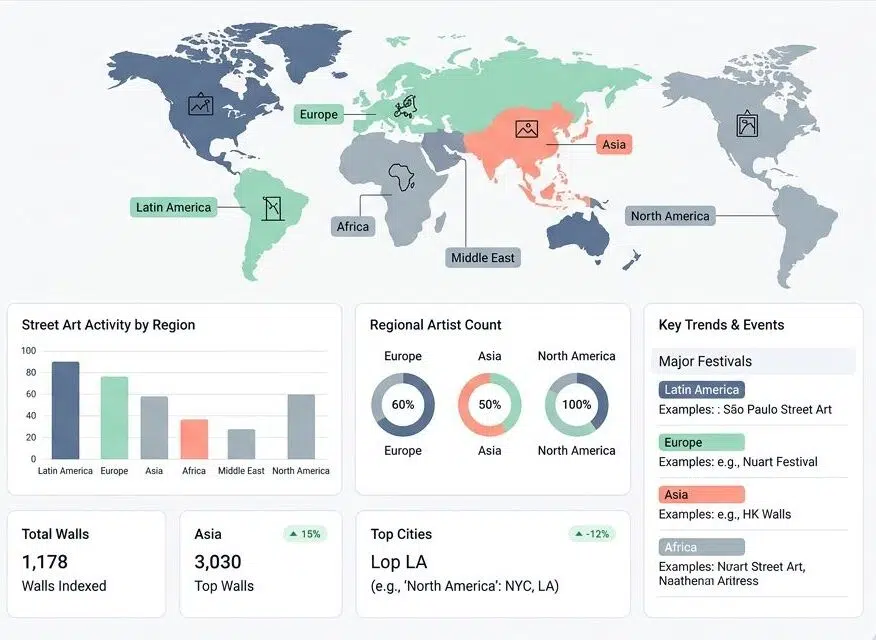
| Region and Culture | Key Characteristics | Cultural Impact and Examples |
|---|---|---|
| Latin America | Vibrant murals reflect indigenous heritage, social justice themes, and community storytelling. Bold colors dominate the landscape. Political messages run deep through the work. Spray paint meets traditional artistic methods. | Mexico’s muralist movement, led by Diego Rivera in the early 1900s, paved the way for modern street expression. Today, neighborhoods like Mexico City’s Roma district burst with color and meaning. Bogota’s Comuna 13 transformed from a dangerous area into a tourist destination through collaborative mural projects. Street art became a voice for the voiceless in these communities. |
| Europe | Stencil work and paste-ups dominate European cities. Political activism drives much of the content. Banksy’s style influenced an entire generation of creators. Street art gained institutional acceptance faster here. Museums began collecting pieces from walls. | London became synonymous with subversive street art through Banksy’s satirical commentary on politics and consumerism. Berlin’s East Side Gallery preserved Cold War history through massive murals. Paris embraced paste-up culture with artists like JR creating powerful social statements. These cities transformed street art from an illegal activity into cultural tourism. |
| Asia | Calligraphy blends with modern techniques. Traditional symbols appear alongside contemporary designs. Street art often honors heritage while embracing change. Community festivals celebrate urban creativity. Legal walls provide sanctioned spaces for expression. | Hong Kong’s street art scene merges Eastern calligraphy with Western graffiti styles, creating something distinctly local. Tokyo’s Shibuya district features legal walls where artists experiment freely. Bangkok’s street art communicates social messages about inequality and environmental concerns. Singapore regulates street art strictly, yet underground movements persist in creating meaningful work. |
| Africa | Murals serve as platforms for social commentary and cultural pride. Street art addresses HIV awareness, education, and economic inequality. Bright patterns reflect local artistic traditions. Community involvement shapes every project. Storytelling remains central to the work. | South Africa’s post-apartheid street art movement gave voice to marginalized communities and celebrated cultural identity. Nairobi’s murals tackle issues like environmental conservation and youth empowerment. Lagos’s growing street art scene showcases African contemporary culture to the world. These works build community pride and spark necessary conversations about social change. |
| Middle East | Street art addresses complex political landscapes. Calligraphy and Islamic geometric patterns inform modern work. Artists risk persecution for their messages. Walls become spaces for resistance and hope. Youth movements drive much of the creation. | Palestinian street art expresses resistance and yearning for freedom on separation walls. Iranian artists use spray paint to critique government policies, operating in dangerous conditions. Lebanese muralists commemorate historical trauma while imagining peaceful futures. These works carry weight that extends far beyond aesthetics. |
| North America | The birthplace of modern graffiti culture in the 1970s and 1980s. Spray paint techniques evolved here first. Indigenous street art reclaims cultural narratives. Legal mural programs grew substantially. Commercial integration became more accepted over time. | New York City’s subway system sparked the graffiti movement that spread globally. Los Angeles developed distinct regional styles and crew dynamics. Indigenous street artists across Canada and the US reclaim spaces with traditional stories and contemporary messages. Commissioned murals now appear in nearly every major American city. |
The Impact of Street Art on Urban Spaces
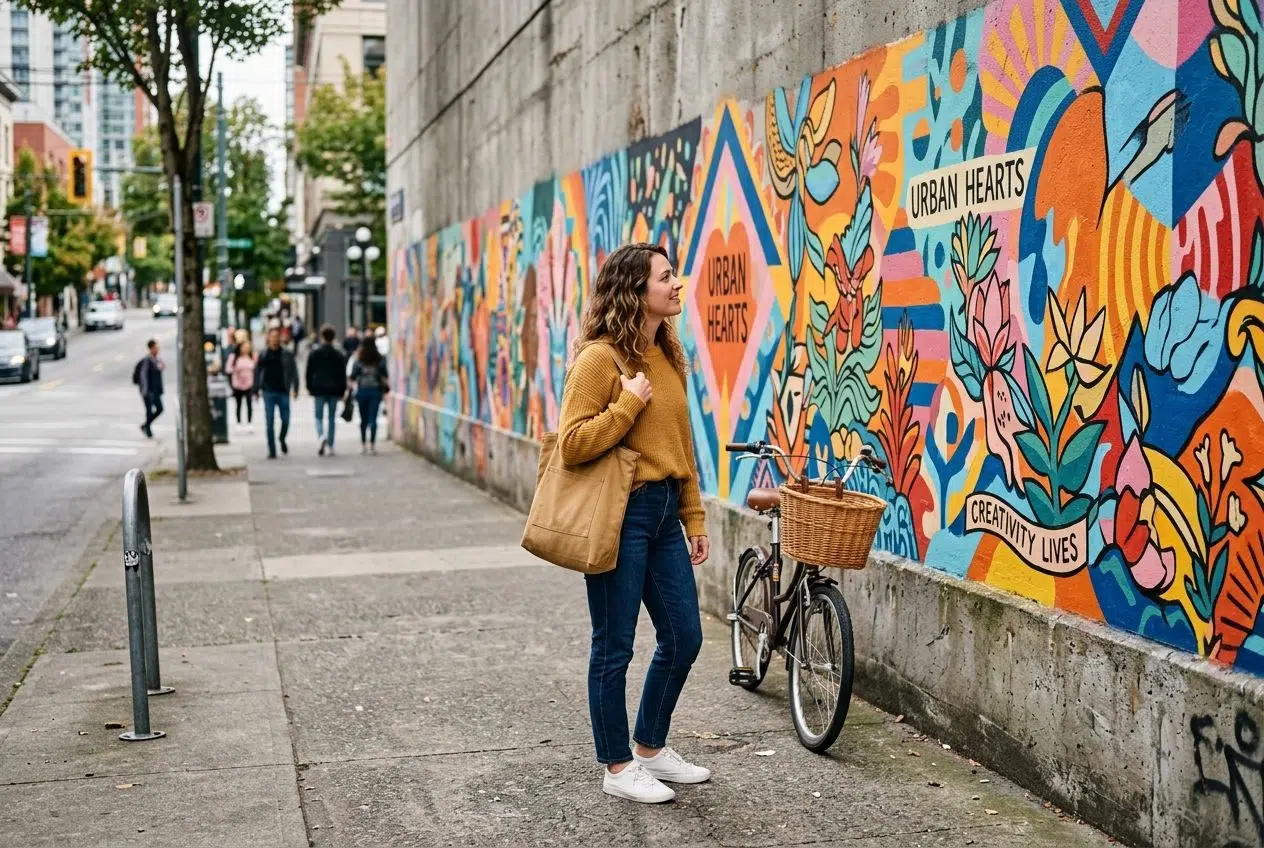
This vibrant medium transforms gray, forgotten walls into gorgeous, sprawling galleries. Artists breathe fresh life into concrete jungles, giving communities a place to connect and feel deeply proud. A 2025 report from the Center for an Urban Future highlighted exactly how vital these creative sectors are to city economies and local job growth.
Promoting Urban Regeneration and Aesthetic Enhancement
Murals and large-scale installations completely transform neglected neighborhoods. Cities like Los Angeles, Berlin, and São Paulo have seen dramatic, positive shifts through visual art projects.
The financial benefits are absolutely stunning. For instance, after a series of mural installations went up in Livingston, Tennessee, local tourism expenditures surged by a massive 36.7% year-over-year. That same town saw its downtown sales tax revenue rise by 13.1% in 2022 alone. This proves that public art directly and powerfully fuels the local economy.
Urban creativity signals that people genuinely care about their neighborhoods. Property values rise, foot traffic increases, and local businesses flourish as art enthusiasts flock to these colorful districts.
Social commentary painted on buildings sparks daily conversations about real issues. Grassroots movements gain serious momentum when creators amplify community voices on a massive scale.
Strategies for Reclaiming Public Spaces
Creators transform neglected urban areas through very intentional, community-driven efforts. These smart strategies reshape how we interact with our cities.
- Artists successfully collaborate with local governments to secure legal walls. This turns potential conflict into a wonderful creative partnership.
- Community organizations host projects that invite residents to participate in the painting process, building instant pride in shared spaces.
- In New York, the CreateNYC program proved that every $1 invested in public arts generates $6 in tax revenue.
- Property owners actively grant permission for large-scale murals on their buildings, recognizing that great art attracts happy customers.
- Public art festivals celebrate street culture through highly organized events, legitimizing the entire movement as a serious artistic discipline.
Challenges and Future of Street Art
Creators still face very real pressure from property owners and strict law enforcement. The biggest hurdle is the frequent clash between creative freedom and rapid real estate development. The future depends entirely on finding a solid middle ground to protect creative expression.
A massive controversy still surrounds this culture across the globe. Many people celebrate it as a powerful cultural expression, while others strictly see it as criminal property damage. In the US, there is a striking legal double standard. Under California Penal Code 594, unauthorized graffiti is classified as vandalism and can carry up to a year of jail time.
Yet, that exact same artwork is fully protected by federal copyright law. This creates a strange reality where an artist can go to jail for a piece that is simultaneously recognized as valuable intellectual property.
Gentrification is another massive hurdle for creators today. As neighborhoods become famous for their murals, they often become far too expensive for the artists who beautified them.
A perfect example is the Bushwick neighborhood in Brooklyn. Since 2018, median asking rents there have jumped over 30%. As a direct result, the local artist population has fallen by 5%, pushing the creative soul out of the area.
The Intersection of Sustainability and Digital Advancements
Creators today face a critical choice between old traditions and new progress. Technology is completely transforming how they approach their craft every single day. Social media allows them to share their vision instantly, reaching millions of people globally instead of just their local block.
Modern creators are adopting several sustainable practices to protect our cities:
- Digital projection mapping creates stunning visuals without permanently marking buildings or causing property damage.
- Brands like Sugar Artists’ Acrylic now offer eco-friendly spray paint made from harvested sugarcane to drastically reduce carbon footprints.
- Digital planning tools help artists map their exact designs beforehand, eliminating wasted paint and excess chemical runoff.
The Bottom Line
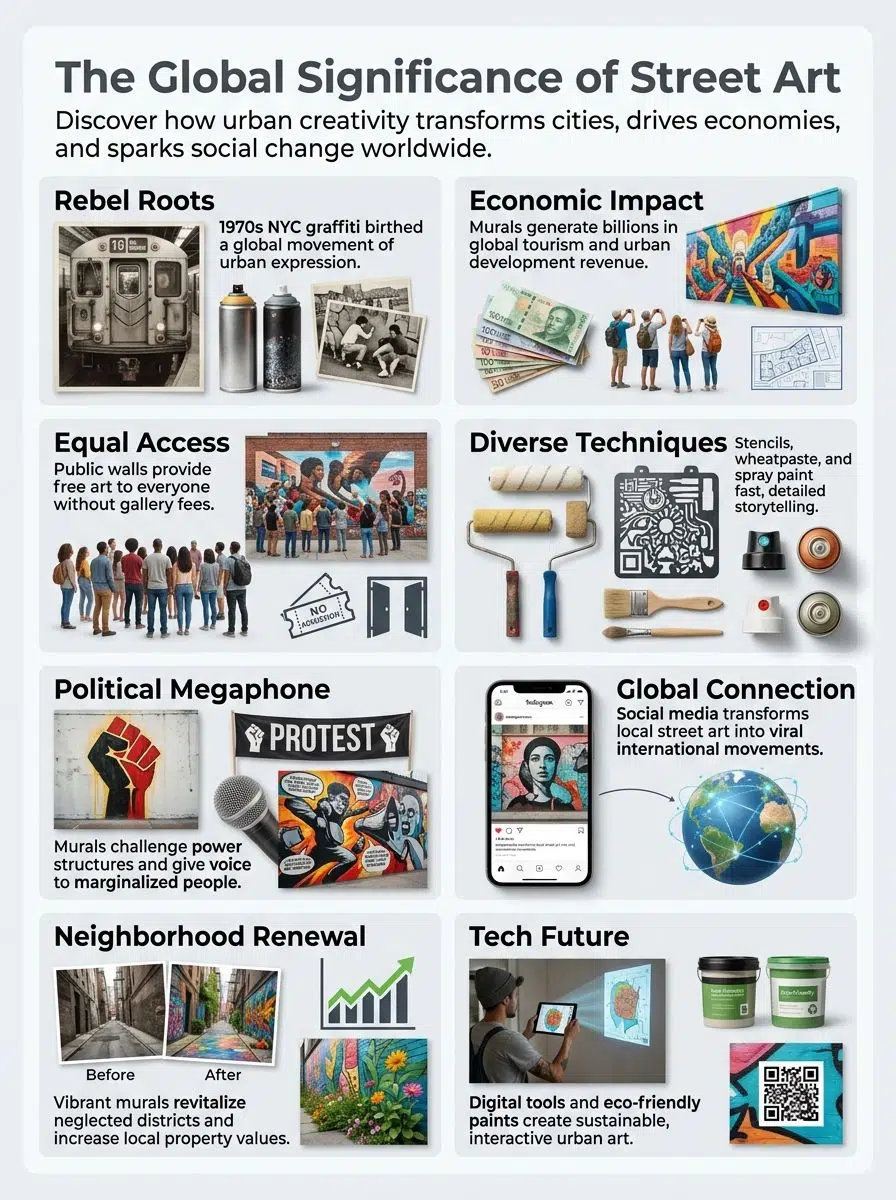
Street art has transformed from an illegal rebellion into a powerful, global force for social change. Creators use stencils, wheatpaste, and massive installations to voice their dissent and reclaim public spaces. This visual art form reaches millions of people who might never step foot inside a traditional museum.
Urban creativity easily breaks down barriers and speaks directly to people in their own neighborhoods. The Cultural Significance of Street Art Around the World lies in its incredible ability to spark conversations and inspire direct action. The future looks brighter than ever as cities worldwide commission creators to turn gray walls into open-air museums.
Digital platforms instantly connect this beautiful work to a massive global audience. These amazing artists will keep pushing boundaries and challenging outdated systems. They will continue transforming our urban spaces into brilliant canvases for protest, human expression, and hope.
Frequently Asked Questions (FAQs) on The Cultural Significance Of Street Art
1. Why does street art matter in different cultures?
Street art gives voice to communities that might otherwise go unheard, telling stories of local pride, protest, and identity right on city walls. In Philadelphia, the Mural Arts Program has created over 4,000 murals since 1984, transforming how neighborhoods express their cultural values.
2. How do artists use public spaces for cultural messages?
Artists transform ordinary city corners and old buildings into powerful public canvases that reflect community struggles, joys, and social commentary. Street artist Banksy demonstrated this impact when his 2013 New York residency sparked citywide conversations about art, commerce, and public space.
3. What makes street art important to young people worldwide?
Young people often find hope and inspiration in the bold colors and shapes splashed across concrete walls in their neighborhoods. Street art makes them feel seen and understood, reflecting their lived experiences in ways traditional media often misses. A 2022 study by the Urban Institute found that youth in cities with active street art programs reported 23% higher community engagement scores.
4. Can street art change how we see our own towns?
A once-dull alley becomes a destination when covered with vibrant murals or clever graffiti, completely changing how residents view their town. The Wynwood Walls in Miami turned an abandoned warehouse district into an internationally recognized art destination, proving how street art can reshape a community’s identity.