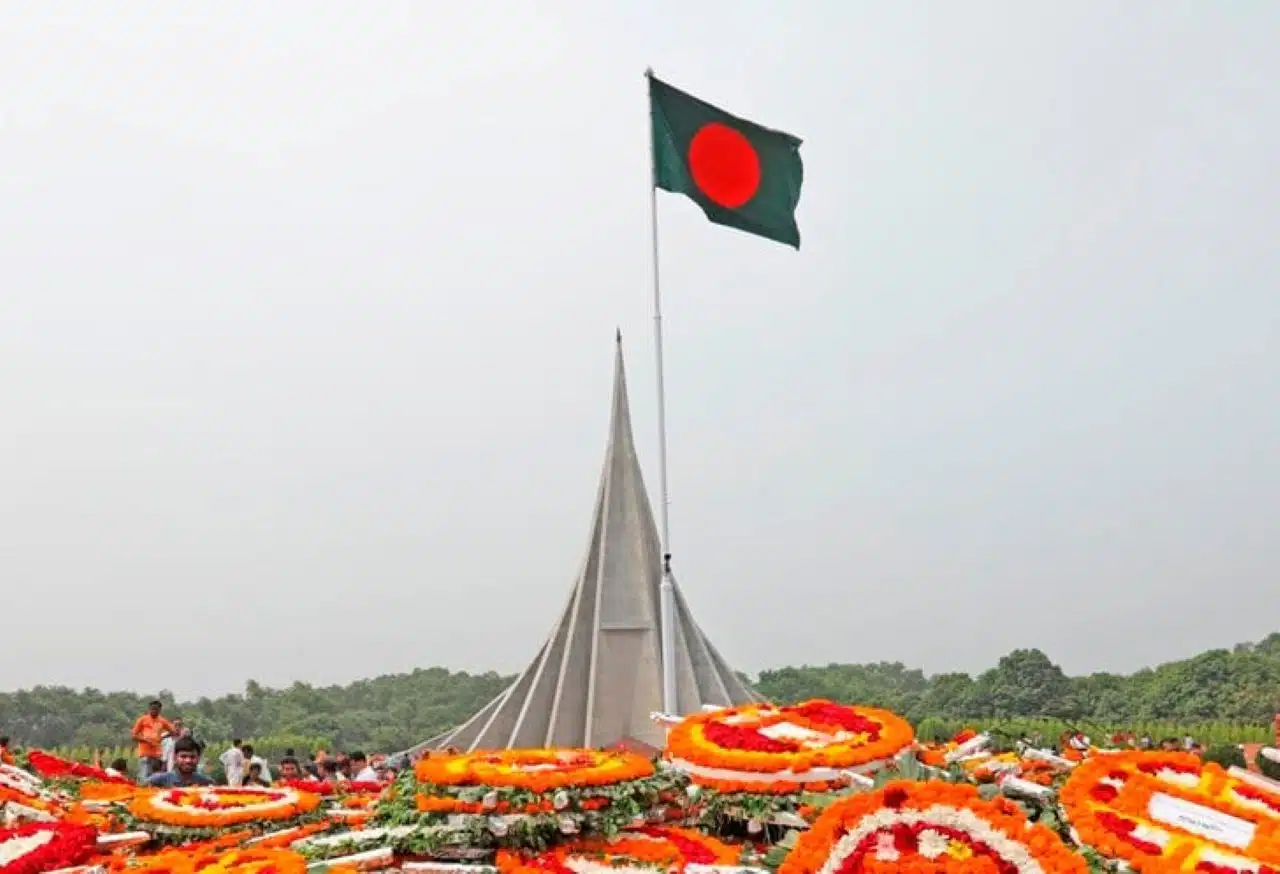
On December 16, we commemorate the day as Bangladesh Victory Day, which marked the end of Bangladesh Liberation War in 1971. The Pakistani Army’s capitulation in Dhaka on this day in 1971 put an end to nine months of atrocities in Bangladesh. General Jagjit Singh Aurora, commander of the Allied Forces, received a formal surrender from Pakistani General AAK Niazi. After a protracted 9-month slaughter and bloodbath, Bangladesh finally earned independence with that.
What Caused the 1971 War?
Here’s a brief history of Bangladesh Liberation War
India was divided into two separate nations, India and Pakistan, following the end of British control in 1947. East Pakistan (now Bangladesh) and West Pakistan made up the latter (present-day Pakistan). Since the outset, there have been issues between the two Pakistans for a variety of reasons, the most obvious of which is their geographical separation.
As people in the West held the highest positions, East Pakistan was frequently disregarded in terms of management. Additionally, there was the matter of cultural incompatibility. For instance, it was perceived as an infringement on the culture of those in the East when Urdu, which was used in West Pakistan, became the official language of the nation.
Leaders like Sheikh Mujibur Rahman, who is credited with founding Bangladesh and is the father of the current prime minister, Sheikh Hasina, actively started protesting against these measures in the middle of the 1960s and assisted in the formation of the Awami League. They soon started to want more freedom and independence. In the end, the League won no seats in the West and an astounding 160 of the 162 seats in East Pakistan in the 1970 elections.
Although Mujib had a comfortable majority in the House, Zulfikar Ali Bhutto’s Pakistan People’s Party won 81 of the 138 seats in West Pakistan. As a result, Mujib was elected prime minister. However, on March 25, 1971, the Pakistani military launched a savage crackdown that resulted in the wholesale murder of Bengalis rather than recognizing the mandate.
Bangabandhu’s Historical 7th March Speech
Bangabandhu Sheikh Mujibur Rahman, Bangladesh’s founding father, delivered an address to a crowd of over one million people on March 7, 1971, at the Ramna Race Course in Dhaka. It was presented during a period of rising tensions between East Pakistan and West Pakistan’s dominant political and military establishment. “This time the struggle is for our liberation,” Bangabandhu declared in his speech. This time the struggle is for our independence.”
In the midst of extensive reports of West Pakistan’s armed mobilization, the speech spurred the Bengali people to prepare for an independence fight. On October 30, 2017, UNESCO inscribed the speech as a documentary heritage in the Memory of the World Register. The Pakistan Armed Forces launched “Operation Searchlight” in East Pakistan’s capital on the night of March 25. Tanks rolled through Dhaka’s streets. Students and intellectuals at Dhaka University were killed, as were many civilians in other sections of the city. It burned major cities on fire and defeated police and East Pakistan Rifles resistance (EPR).
March 26 is now Bangladesh Independence Day
On March 25, at 00:00, Pakistan started a genocide in Bangladesh. India was inundated with Bangladeshi refugees. India supported Bangladesh during its war for independence, and one must commend both Indira Gandhi and the Indian Army for their roles in helping Bangladesh achieve freedom. The two-nation theory and religion both failed along the road as the Pakistani hegemony lasted for two and a half decades.
Bangabandhu Sheikh Mujibur Rahman sent a message concerning attacks on EPR and police barracks in Dhaka just before his arrest on the night of March 25, declaring Bangladesh’s independence. On March 26, 1971, this message was transmitted from Swadhin Bangla Betar Kendro (Independent Bangla Radio Centre) and was widely published in publications all over the world.
Bangladesh Victory Day on December 16, 1971
This Day, That Year! pic.twitter.com/t9Tp73wvl2
— Rajnath Singh (@rajnathsingh) December 16, 2021
India formally recognized Bangladesh’s independence on December 6, 1971. Two days later, Karachi was attacked by the Indian Navy. Indian soldiers advanced on Dhaka from December 12 to December 16 in 1971 and entered the city, declaring Bangladesh victory day and putting an end to the conflict.
Lt Gen AAK Niazi, commander of the Pakistan Eastern Command, signed the document of capitulation and submitted to Lt Gen Jagjit Singh Aurora, commander of the Allied Forces.