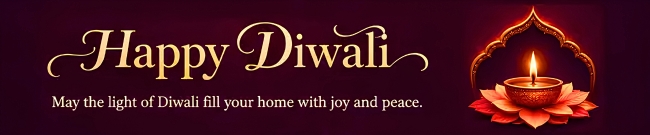
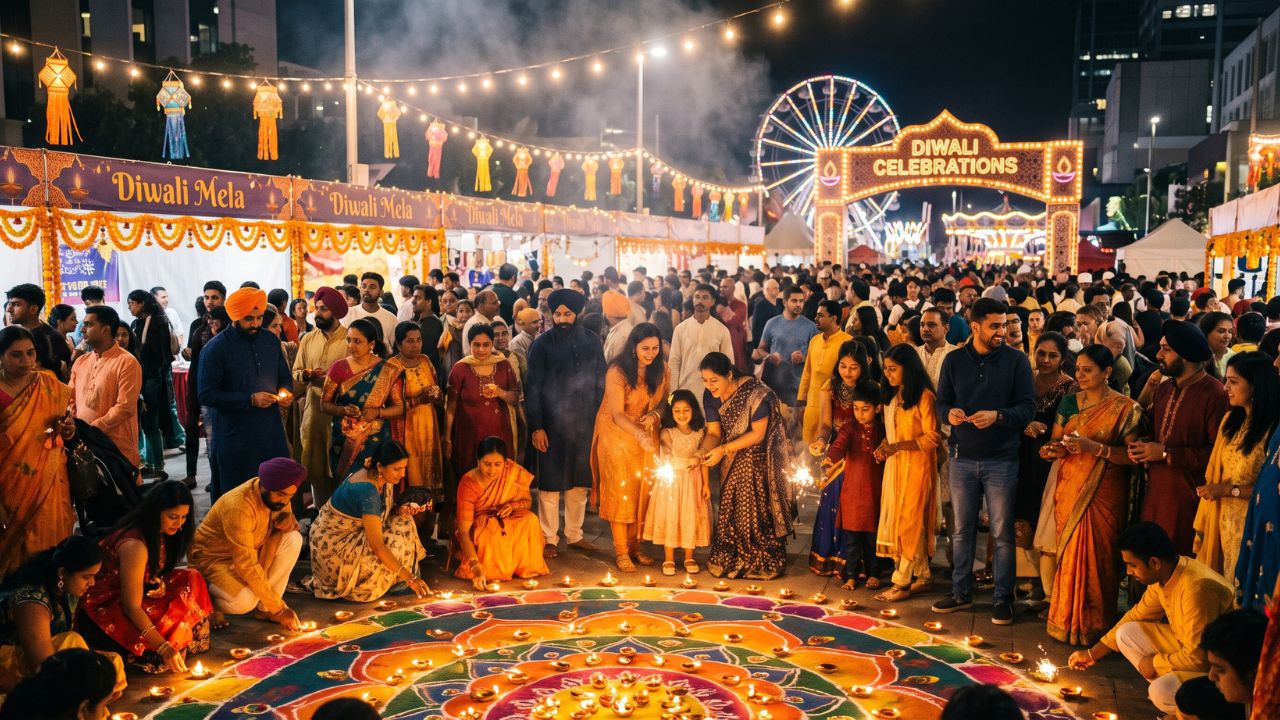
Have you ever watched the warm flicker of a clay lamp and wondered what lies just beneath the surface of the holiday’s dazzling decorations? While the visual spectacle is breathtaking, the true heartbeat of the festival is found in its people. From quiet moments of reflection to vibrant neighborhood gatherings, Diwali celebrations around the world are woven together by the ancient stories, shared rituals, and boundless generosity that give the Festival of Lights its enduring warmth.
Diwali can include prayer, sweets, new clothes, music, rangoli, and joyful gatherings, but its message reaches further. It asks us to choose goodness over darkness, knowledge over ignorance, and connection over isolation.
Whether you celebrate every year or are joining a friend for the first time, this guide will help you see the tradition with fresh eyes and take part respectfully.
The Symbolism of Diyas in Diwali
A diya is a small oil lamp, often made of clay, with a cotton wick. Its soft flame represents light pushing back darkness, and it gives families a simple way to turn a spiritual idea into something they can see and share.
The word Deepavali is often translated as “a row of lights,” which helps explain why homes, temples, and gathering spaces glow during the festival. Lighting even one diya can become a pause for gratitude, reflection, and hope for prosperity.
Place diyas where people can notice them, such as near an entryway or on a table prepared for prayer. Then share one sentence about what the light means to your family, especially with children or guests who may be learning about Diwali for the first time.
- Light: A reminder to choose hope during hard times.
- Knowledge: A symbol of learning, wisdom, and clear thinking.
- Homecoming: For many Hindu families, lamps recall Rama and Sita’s return to Ayodhya.
- Welcome: A diya at the door can express warmth for visitors, neighbors, and loved ones.
Use care with every open flame. Keep diyas on a stable, heat-safe surface, away from curtains, paper décor, pets, and busy walkways.
Diwali’s Core Message: Triumph of Light Over Darkness
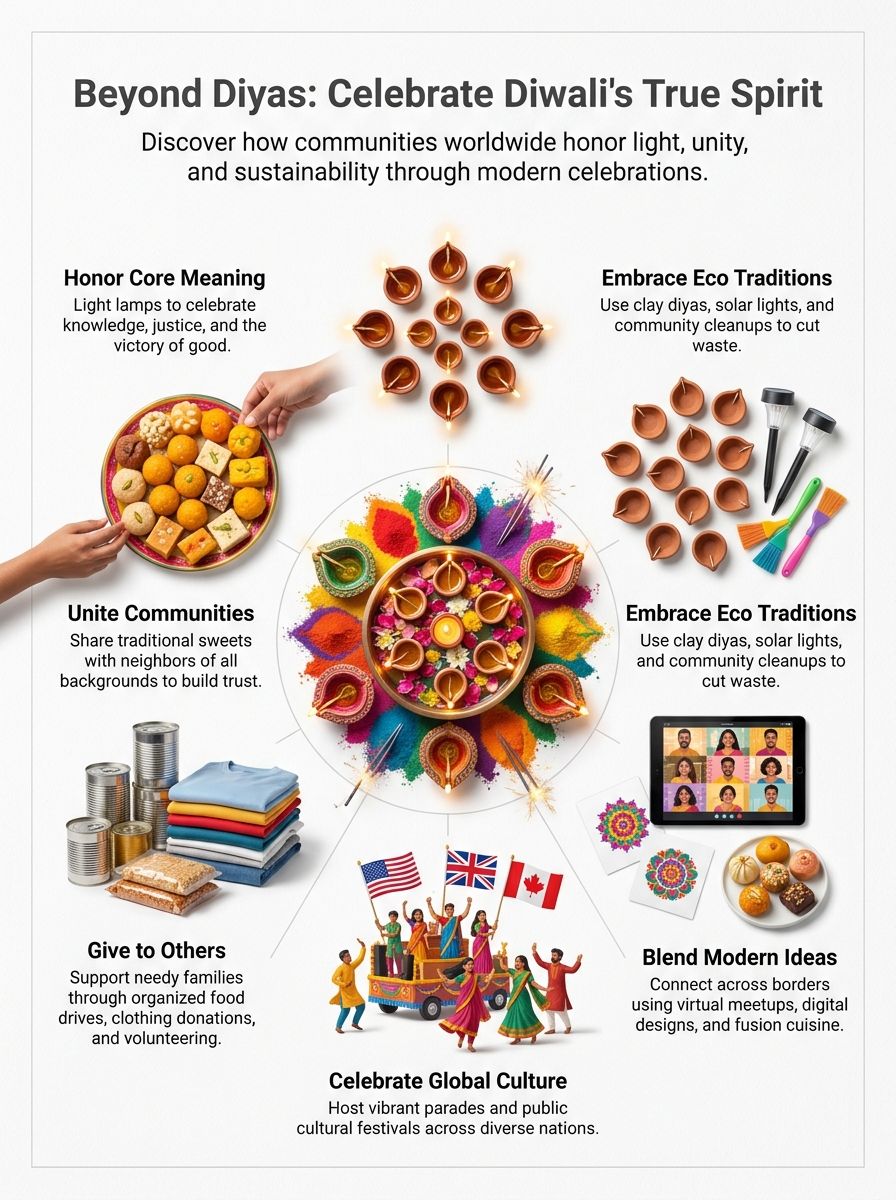
Diwali carries a simple message that works at any age: light wins over darkness. In daily life, that can mean choosing honesty, generosity, patience, and knowledge even when those choices take more effort.
It often describes the festival as a celebration of light over darkness, good over evil, knowledge over ignorance, and hope over despair. That is why Diwali traditions often pair beautiful rituals with acts that strengthen family and community.
For many Hindu families, Diwali recalls Rama’s return to Ayodhya after exile and victory over Ravana. Other families honor Lakshmi, the goddess associated with prosperity, while Jain communities observe Mahavira’s liberation and Sikh communities mark Bandi Chhor Divas, connected with Guru Hargobind’s release from imprisonment.
Diwali is not one single story. Its shared thread is the choice to bring more goodness, knowledge, and care into the lives around us.
This is a helpful point to share at a school event or neighborhood dinner. Rather than treating the Festival as a costume party or a display of lights, invite people to ask what the ritual means to the family hosting it.
Modern Diwali Celebrations: How The World Celebrates The True Spirit of Diyas
Modern Diwali celebrations can feel traditional and current at the same time. A family might begin with prayer and homemade mithai, then call relatives in another state, attend a community performance, or share photos with loved ones who cannot be there.
The best modern updates keep the meaning intact. They make it easier for more people to join while still giving respect to the spiritual roots of the Festival.
Fusion of Tradition and Contemporary Practices
Families often blend familiar rituals with the way they live now. A video call can bring grandparents into a diya-lighting moment, while a shared playlist can connect cousins across cities without replacing prayer, storytelling, or a meal together.
In 2026, Diwali falls on Sunday, November 8, in the United States. The observance often stretches across several days, giving families room to prepare, gather, visit loved ones, and recognize traditions such as Dhanteras, Lakshmi Puja, Govardhan Puja, and Bhai Dooj.
- Start with one family ritual, such as lighting a diya or making rangoli.
- Ask an older relative to tell a story connected to Diwali.
- Invite distant relatives to join a short call during the celebration.
- Share one dish, song, or memory that reflects your family’s culture.
Restaurants, museums, schools, and cultural groups can also help introduce Diwali to new audiences. The National Museum of Asian Art in Washington, D.C., scheduled Diwali programming from November 6 through November 17, 2026, showing how art, conversation, food, and performance can create a respectful public welcome.
Celebrating Sustainability in Diwali
A greener Diwali does not need to feel less festive. Choose reusable décor, natural flower arrangements, clay diyas, and rangoli made with rice flour, flower petals, or spices instead of glitter and disposable plastic.
LED string lights can give you color and glow without filling a room with smoke. If you use electric lights outdoors, inspect cords before use and avoid overloading outlets.
- Buy clay diyas from local makers, then clean and reuse them next year.
- Use battery-operated LED tea lights in places where an open flame would be risky.
- Serve food on reusable plates or clearly labeled compostable items.
- Skip fireworks if smoke, noise, wildfire conditions, or local rules make them unsafe.
- Turn leftover gift wrap, fabric, and paper into small rangoli or craft supplies.
Fireworks may be part of some celebrations, yet electric lights offer a lower-smoke option for homes and community events. A thoughtful switch lets the focus stay on joy, culture, and spiritual renewal rather than cleanup or safety worries.
Diwali in India: The Epicenter of the Festival
As the birthplace of the festival, India hosts the most expansive and deeply rooted observances. However, even within the country, Diwali is not a single, uniform event. From the northern plains to the southern coast, the traditions and origin stories shift dramatically, reflecting the rich spiritual and regional diversity of the subcontinent.
North India: The Return to Ayodhya
In North India, the festival is heavily centered on Lord Rama’s victorious return to Ayodhya after 14 years of exile. Cities like Varanasi and Ayodhya itself create a mesmerizing spectacle by lighting millions of earthen diyas along the ghats (riverbanks). Communities gather for Ram Leela, dramatic folk reenactments of the ancient Ramayana epic, which often culminate in the burning of towering effigies of the demon king Ravana, symbolizing the ultimate defeat of ego and evil.
South India: The Defeat of Narakasura
In South India, where it is primarily known as Deepavali, the celebration often peaks a day earlier on Naraka Chaturdashi. This day commemorates Lord Krishna’s victory over the demon Narakasura. The observance is deeply traditional, beginning well before dawn with a ceremonial oil bath using sesame oil (Ganga Snanam), believed to cleanse impurities. Families then wear new clothes, offer prayers, and share regional delicacies like Mysore Pak and murukku.
East India: Honoring the Divine Mother
In Eastern states, particularly West Bengal, Assam, and Odisha, the festival coincides with Kali Puja. Rather than focusing on Lakshmi or Rama, devotees honor the fierce Goddess Kali. Midnight pujas (prayers) are held in grand pandals (temporary structures) and temples, celebrating her strength and her role in destroying the dark forces that threaten cosmic order.
West India: Wealth and New Beginnings
In Western states like Gujarat and Maharashtra, the festival spans several days and marks the beginning of the new traditional financial year. The celebration emphasizes Dhanteras and Lakshmi Puja. Business owners perform Chopda Pujan, the blessing of new account books, seeking Goddess Lakshmi’s favor for wealth, prosperity, and success in the coming year, while homes are decorated with intricate rangoli patterns to welcome her inside.
Despite these distinct regional variations, the core message remains unified across the entire nation: a shared commitment to honoring the light, celebrating community, and welcoming spiritual renewal.
Diwali Celebrations Around the World
Diwali travels beautifully because its message speaks across borders, but the celebration does not look identical everywhere. Local languages, public holidays, faith traditions, and neighborhood customs shape the experience.
That variety is part of the Festival’s richness. A celebration in the United States may center on a temple program or school event, while Deepavali in Singapore can fill Little India with lights, shopping, food, and public activities.
| Place | Common Name | What Readers May Notice |
| United States | Diwali | Temple gatherings, city festivals, school programs, family dinners, and cultural performances. |
| Singapore | Deepavali | Little India light displays, mithai shops, temple visits, and a public holiday. |
| Malaysia | Deepavali | Family visits, festive meals, open houses, and holiday observances in most states. |
Diwali in the United States
Across the United States, Diwali brings families together at home and in public spaces. People light diyas, prepare food, wear festive clothes, visit temples, and invite friends to learn through music, dance, prayer, and storytelling.
Public recognition has also grown. California made Diwali an official state holiday effective January 1, 2026, following statewide recognition in Pennsylvania and Connecticut. That change gives schools, workplaces, and public institutions a stronger reason to learn what the Festival means to the people who observe it.
For readers who are new to Diwali, the most respectful approach is simple: attend an open event, listen before making assumptions, and follow the host’s guidance around prayer spaces, food, shoes, and photography.
- Bring a small box of sweets or fruit if you are invited to a home gathering.
- Ask before photographing a puja or a sacred space.
- Learn whether the event is a cultural festival, a religious service, or both.
- Thank the host and ask what part of the Tradition matters most to them.
Community events can open the door to real conversation. In 2026, the Mayor’s Office on Asian and Pacific Islander Affairs in Washington, D.C., partnered with community groups for a Diwali gathering featuring classical music, dance, faith leaders, and ceremonial diya lighting.
Diwali in Southeast Asia
In Southeast Asia, Diwali is often called Deepavali. The name may differ, but the spirit of light, family, prayer, generosity, and renewal remains familiar.
Singapore’s Ministry of Manpower lists Deepavali on Sunday, November 8, 2026, with Monday, November 9 observed as a public holiday. In Little India, people can see seasonal lights, shop for clothing and sweets, visit temples, and join cultural activities that welcome residents and visitors.
Malaysia also observes Deepavali as a public holiday in most states. Family visits and open-house meals are a meaningful part of the celebration, giving neighbors and friends a chance to share food across cultural lines.
- Singapore: Visit Little India early if you prefer a calmer experience, since large crowds gather close to Deepavali.
- Malaysia: Accept open-house invitations with appreciation, and ask about family customs before serving yourself.
- Any public event: Give yourself time to enjoy the food, music, and rituals instead of treating the Festival as a quick photo stop.
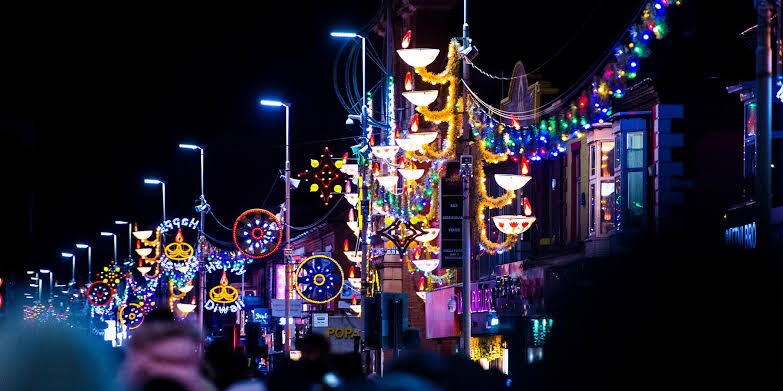
Unity Through Diwali
Diwali turns a private ritual into a shared experience. A lit lamp, a plate of sweets, or a story told at the table can help people feel included, especially when the Festival comes during a busy and lonely season.
The clearest way to honor Diwali’s message is to make room for someone else. That may mean inviting a neighbor to dinner, helping a child understand a family Tradition, or giving time and food to people who need support.
Bringing Communities Together
Community celebrations work best when people can take part rather than just watch. A simple program can include a short explanation of Diwali, a diya-lighting moment, food, music, and one service activity.
Sewa Diwali organizes food drives in the United States around the Festival, connecting celebration with feeding neighbors. A local group can borrow that idea by collecting shelf-stable food at a gathering and donating it through a nearby pantry.
- Open with a brief welcome that explains the meaning of the Festival.
- Offer a hands-on activity, such as rangoli, diya painting, or a story circle.
- Share food with clear labels for ingredients and dietary needs.
- Collect donations for a food pantry, mutual-aid group, or family support program.
This kind of gathering gives children a way to connect the symbolism of light with kindness they can practice right away.
Celebrating Diversity During Diwali
Diwali includes different histories, languages, foods, and forms of worship. That is why one family’s celebration may include Lakshmi Puja, while another may focus on Bandi Chhor Divas, Mahavira, Kali Puja, or a cultural gathering with friends.
When you attend a Diwali event, let people describe their own customs. A curious question, asked with care, creates more understanding than assuming every family follows the same Rituals.
A welcoming Diwali celebration does not ask everyone to celebrate in the same way. It gives people room to share their own story while joining in the Joy of the Festival.
Schools, libraries, museums, temples, gurdwaras, and Jain centers can all create meaningful spaces for this exchange. Food, art, music, and stories help people connect, but respect is what makes the connection last.
Diwali celebrations around the world remind us that the Festival is about far more than lights. It is a celebration of goodness, knowledge, prosperity, homecoming, and Spirituality shared with others.
Choose one small act this year: light a diya safely, share sweets with a neighbor, learn a family story, support a food drive, or attend a local cultural event with an open mind.
Carry that light past the Festival, through kindness, curiosity, and the simple habit of making people feel welcome.