The voice can sound right. The face can look familiar. Even the personal details may be accurate. None of that guarantees the person on the call is real.
Deepfake scams harder to recognize now and combine cloned audio or synthetic video with old fraud tactics such as urgency, secrecy, authority, and payment pressure. In the United States, the FBI’s 2025 Internet Crime Report findings included 22,364 complaints involving artificial intelligence and nearly $893 million in reported losses. Those figures reflect reported US cases, not the full global impact.
The deepfake is often only the prop. The request is where the danger becomes visible. A caller may demand money, a manager may bypass an approval process, or a supposed official may ask for login information. Recognizing these patterns is more useful than trying to identify every pixel or pause that looks artificial.
What Makes Today’s Deepfake Scams So Convincing?
Scammers can collect names, voices, photographs, workplaces, travel plans, and family connections from public posts or breached data. They can then place the synthetic media inside a believable situation. An email introduces the request, a voice note adds familiarity, and a video call appears to confirm it.
This is why judging the media alone is unreliable. A real call can have delayed audio or poor lighting. A well-made fake may show none of the familiar flaws. Readers who want the underlying mechanics can first review how deepfake scams work. For the examples below, focus on what the person wants you to do and whether the request breaks a normal process.
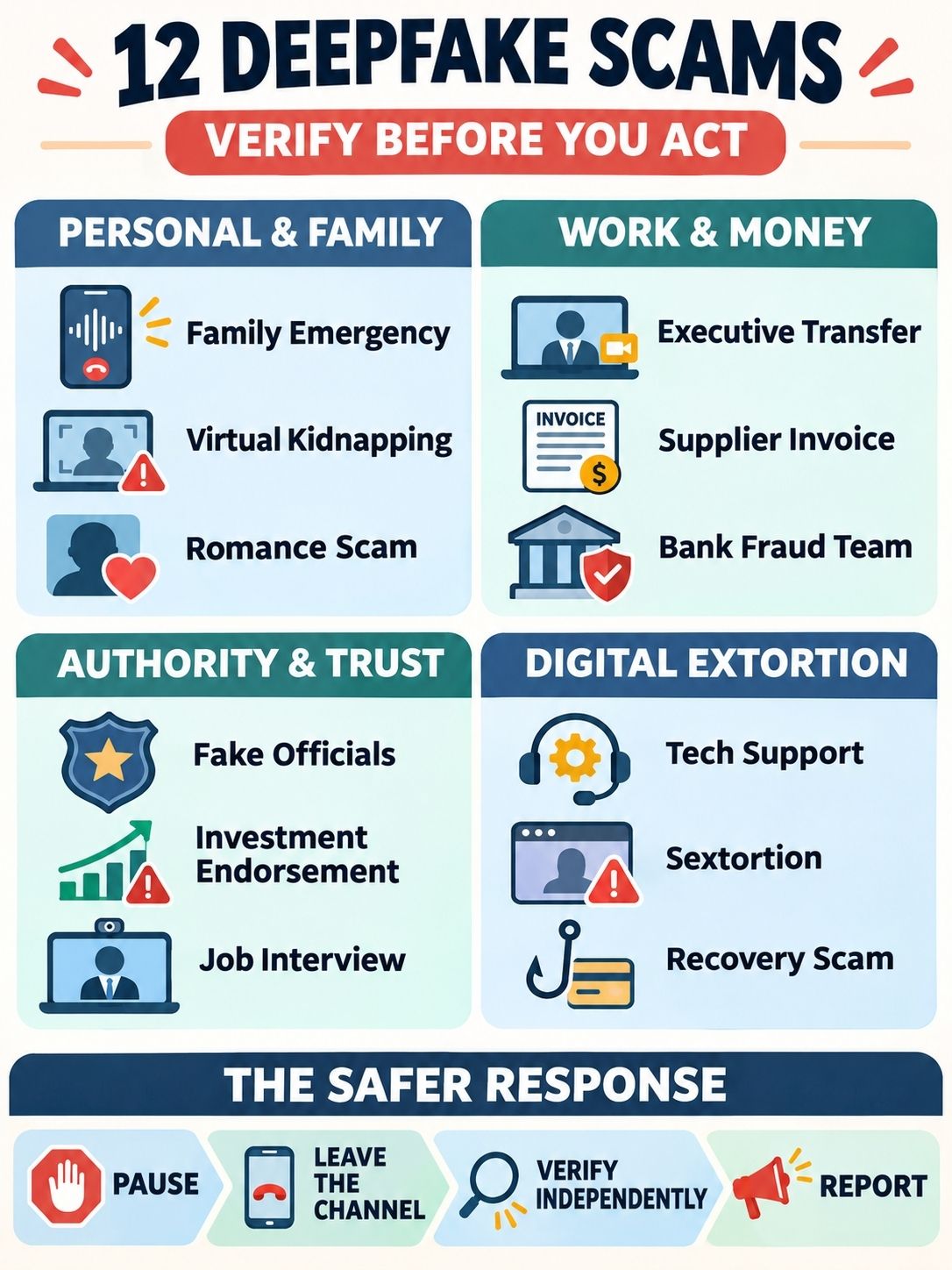
12 Deepfake Scams Harder to Recognize and Check Twice
The following deepfake scams harder to recognize target families, employees, job seekers, investors, and people who have already experienced fraud. Each uses synthetic media differently, but the goal is usually the same: create enough trust or panic to trigger a payment, expose sensitive information, or bypass a normal security check.
1. Family Emergency Voice-Cloning Calls
A caller sounds like a child, parent, grandchild, partner, or close friend. They claim to be injured, arrested, stranded, or unable to access money. A second person may join as a lawyer, doctor, police officer, or friend and explain how to pay.
The familiar voice creates an emotional shortcut. The scam usually adds secrecy, a new phone number, and a payment method that is difficult to reverse.
End the call and contact the relative through a number already stored in your phone. If they do not answer, speak to another person who should know where they are. A private family phrase can add another check, but it should not use birthdays, pet names, schools, or other details visible online. The broader ethical risks of unauthorized voice cloning help explain why a familiar voice is no longer enough to establish identity.
2. Virtual Kidnapping With Altered “Proof of Life”
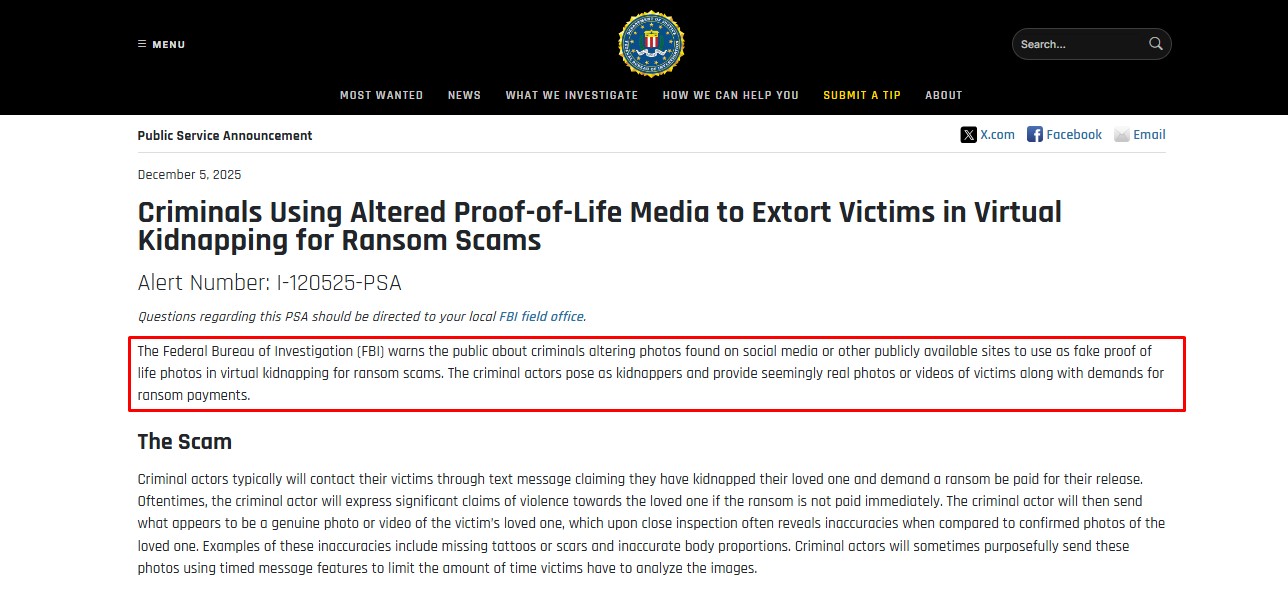
The scammer claims to have kidnapped a loved one and sends a photo, voice clip, or video as proof. In December 2025, the FBI warned that criminals were altering publicly available images to create convincing proof-of-life material. Some used timed messages to reduce the victim’s chance to inspect or save it.
Try to reach the supposed victim and someone who can confirm their location. Save the messages, phone numbers, media, and payment instructions when it is safe to do so. If a genuine danger cannot be ruled out, contact local law enforcement or emergency services. Do not let the caller make independent verification sound like an additional threat.
3. Executive Video Calls Ordering Urgent Transfers
A finance employee joins what appears to be a live meeting with the CEO, CFO, colleagues, lawyers, or investors. The people on screen approve a confidential acquisition, project payment, or emergency transfer.
This pattern has been documented. A video call should never replace the company’s payment controls. Large or unusual transfers should require:
- Confirmation through the corporate directory or approved internal platform
- Authorization inside the normal finance system
- A second reviewer who is not relying on the same call
These checks also belong in broader small-business cybersecurity controls. The aim is not to distrust every manager. It is to ensure that one convincing call cannot authorize a damaging transaction.
4. Supplier Invoice Fraud With a Cloned Confirmation
A real invoice is approaching its due date when an email announces new bank details. The customer hesitates, so a voice note or call appears to come from the usual account manager and confirms the change.
The deepfake layer matters because the supplier, invoice, project, and amount may all be genuine. Only the payment destination has changed. A copied voice or synthetic confirmation makes a standard payment-diversion scam feel independently verified.
Treat every change of bank details as a separate security event. Call a known contact using the number in the original vendor record, not the number in the new message. Compare the instruction with the contract or onboarding file and require a second approval for material changes.
5. Government and Law-Enforcement Impersonation
A synthetic official appears in a video, voice memo, or direct message. They claim that the target faces arrest, tax action, immigration trouble, frozen funds, or an active investigation. A copied badge, public official’s face, spoofed caller ID, and fake government page complete the presentation.
FBI warnings in 2025 and 2026 documented campaigns using AI-generated voices or videos to impersonate public officials. Some contacts tried to move conversations to encrypted messaging apps before requesting money, account access, or introductions to other people.
End the interaction and locate the agency through its verified government website or a number you already trust. Do not use the link or callback number the supposed official provides. Procedures vary by country, but demands for secrecy, gift cards, cryptocurrency, passwords, or transfers to a “safe” account should stop the conversation.
6. Fake Bank Fraud Teams and Account-Takeover Calls
The caller claims to work in a bank’s fraud department and already knows the customer’s name, card type, recent merchant, or partial account details. A cloned voice or branded video agent makes the call feel like an upgraded security service.
The supposed agent then asks for a one-time code, password reset, remote-access session, login approval, or transfer to a protected account. Criminals can also use synthetic audio to impersonate account holders when contacting financial institutions.
Never read out a security code or approve a sign-in you did not initiate. End the call and open the bank’s official app, or use the number printed on the card or statement. The practical habits used to protect yourself from financial scams still work when the caller sounds polished and knows real information.
7. Celebrity and Finfluencer Investment Endorsements
A well-known entrepreneur, actor, news presenter, or financial influencer appears to promote a trading platform, cryptocurrency, AI investment system, or limited-time opportunity. The video may resemble a television interview, podcast clip, livestream, or breaking-news segment.
The fake endorsement directs viewers to a professional-looking website. Early gains may appear in the account dashboard, and the platform may permit one small withdrawal before pushing for a larger deposit. The video creates trust, while the fake platform controls what the victim sees.
Verify the offer through the relevant financial regulator and the person’s established channels. Search the company name with words such as “warning,” “complaint,” and “scam.” A recognizable face does not make guaranteed returns, secret methods, or pressure to deposit cryptocurrency credible.
8. Romance Scams With Synthetic Video Proof
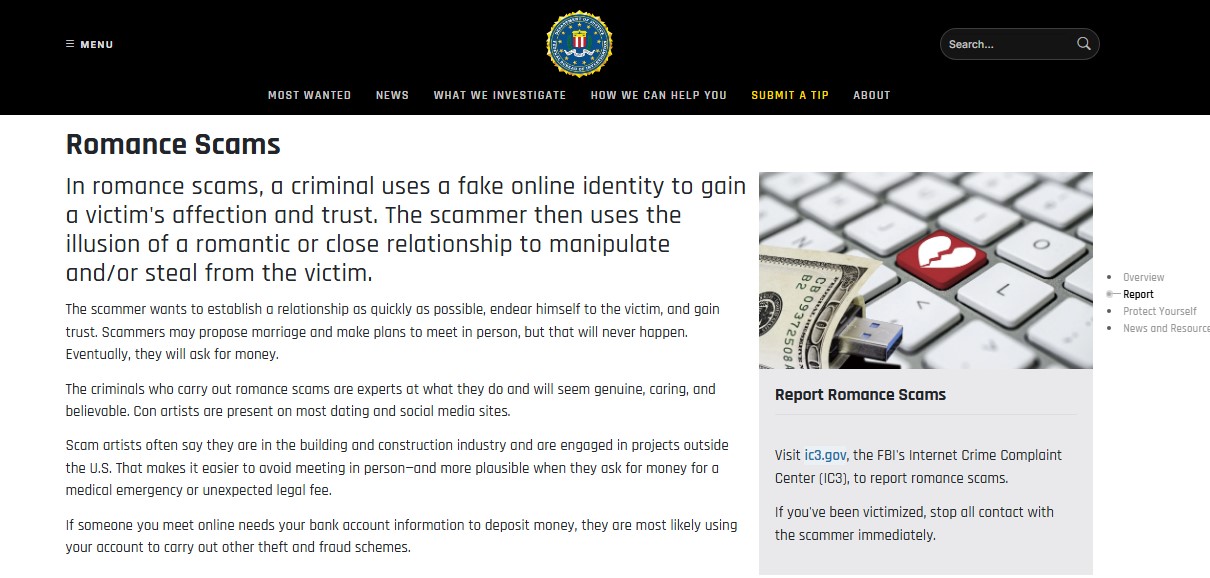
Stolen profile photos once became less convincing when the other person refused to video chat. Synthetic images, translated voices, and manipulated video can now help a fabricated identity survive that test.
The scammer may spend weeks building trust before introducing a medical bill, travel problem, customs fee, business crisis, or investment opportunity. The FBI warned in 2026 that some romance scammers use AI-generated images, videos, and voices to make their identities more believable.
Do not send money, identity documents, account details, or intimate images to someone known only online. Reverse-image searches and profile checks may expose reused material, but a clean result proves little when the content was generated for that identity. The safest boundary is financial: an online relationship should not become a route for investments, emergency transfers, money movement, or account access.
9. Remote-Job Identity and Interview Impersonation
Deepfake job fraud can target employers and applicants in different ways. The FBI’s Internet Crime Complaint Center warned in 2022 about stolen personal information and possible voice deepfakes being used by applicants during remote-work interviews. The concern is especially serious when the role provides access to customer data, financial systems, code, or internal networks.
Job seekers face a related risk when someone impersonating a recruiter or hiring manager uses synthetic media to make a fake interview feel legitimate before requesting identity records, bank details, or money for equipment.
Applicants should confirm that the role appears on the employer’s real careers page and contact the company through independently found details. Employers need consistent identity checks, background-review procedures, and least-privilege access after hiring. A smooth video interview should not replace those controls.
10. Synthetic Tech-Support and Refund Agents
Not every tech-support scam uses a deepfake. When it does, a synthetic voice or branded avatar gives the fake agent a stronger appearance of authority.
The contact begins with a security warning, failed payment, subscription problem, or unexpected refund. The “agent” asks the victim to install remote-access software, sign in through a new link, or allow access to a bank account. A refund may then become an overpayment story, followed by demands for gift cards, cryptocurrency, or a bank transfer.
Close the pop-up and contact the company through its real app or website. Do not install remote-access software because an unexpected caller requests it. If credentials were entered or a suspicious file was opened, follow the recovery steps for what to do after clicking a phishing link instead of trusting the caller to repair the problem.
11. Deepfake Sextortion
A criminal threatens to distribute an explicit image or video unless the target pays. The media may have been assembled from a face photo, generated from material collected during a video call, or created without the person ever producing intimate content.
The scam works through panic and shame. The criminal may show a list of relatives, classmates, colleagues, or followers and claim the material is ready to send. The FBI warns that paying rarely ends the harassment and may lead to repeated demands.
Do not send more images or money. Preserve messages, usernames, payment instructions, and URLs before blocking the account when it is safe to do so. Report the profile to the platform and contact the appropriate law-enforcement or child-protection channel. A minor should involve a trusted adult immediately. Synthetic media does not make the threat the victim’s fault.
12. Deepfake Recovery and “We Found Your Money” Scams
Someone who has already lost money may be targeted again by a fake investigator, bank official, cybersecurity specialist, lawyer, or government agent. The person appears in a video or call and claims the stolen funds have been found.
In July 2026, the FBI’s Internet Crime Complaint Center warned about deepfake videos impersonating FBI personnel and directing victims toward a spoofed complaint site. Other recovery scams demand a release fee, tax, legal charge, identity document, or verification deposit.
Return to the reporting channel used for the original case by typing its official address yourself. Do not trust a recovery offer delivered through social media, an unsolicited call, or a messaging app. Accurate information about the first loss does not make the new contact legitimate. It may simply mean the victim’s details were retained or shared.
Stop Trying to Prove the Media Is Fake
You do not need to identify the AI model or find a distorted frame before refusing a dangerous request. A safer decision comes from checking the identity and the action through a route the sender does not control.
| Suspicious request | Independent check |
|---|---|
| A relative needs urgent money | End the call and contact the person or another relative through a known number |
| A manager orders a transfer | Confirm through the company directory and normal approval system |
| A supplier changes bank details | Call a contact already stored in the vendor record and require a second approver |
| A bank asks for a code or transfer | Use the official app or the number printed on the card or statement |
| An official threatens arrest or account action | Find the agency independently through its verified government domain |
| An online contact recommends an investment | Check the provider with the relevant regulator and refuse pressure-based transfers |
Urgency, secrecy, a new account, unusual payment instructions, requests for credentials, and pressure to bypass normal procedure matter more than small visual defects. These behaviors also overlap with common phishing red flags, because deepfake media is often one layer in a broader social-engineering attack.
If You Already Responded
Act quickly, but work through trusted channels.
- Contact the bank, card issuer, wire service, payment app, or cryptocurrency platform involved. Ask whether the transaction can be stopped, recalled, or flagged.
- Change exposed passwords from a device you believe is secure. Review recovery details, recent sessions, forwarding rules, and unfamiliar authentication methods.
- Preserve messages, call logs, transaction records, usernames, wallet addresses, and media files.
- Report the account or advertisement to the platform where it appeared.
- File a report with the appropriate national fraud, cybercrime, consumer-protection, or law-enforcement service.
Be cautious of anyone who contacts you afterward and guarantees recovery. That offer may be scam number 12.
Trust a Process the Scammer Does Not Control
Deepfake scams are becoming harder to recognize because the synthetic media is surrounded by details that feel authentic. The message may mention a real project. The account may belong to someone you know. The caller may sound exactly right.
That is why the safest response is procedural. Stop the interaction, move to a communication route you already trust, and verify both the person and the requested action. A face or voice can be copied. A sound verification process is much harder to imitate.