
A patient may need help getting comfortable, an explanation they can understand, or someone to notice that something has changed. Meeting those needs takes more than a willingness to help. It requires knowledge, practical skills, clear communication, and the judgment to recognize when another team member should step in.
Preparing for a career in patient care starts with choosing a role and understanding its responsibilities. From there, education and supervised practice help turn an interest in healthcare into skills that patients and colleagues can rely on.
The path will differ depending on the job. Nursing is one example, but patient care also includes support roles with different training requirements. What connects these paths is the need to work carefully, respect patients, and keep learning.
Choose the Role Before Choosing the Program
“Patient care” describes a broad area of work rather than a single qualification. Before comparing schools, identify the role you want to enter and investigate what that role involves where you plan to work.
Ask what you would do during a typical shift, which tasks require supervision, and what education or credentials employers expect. A program should fit that destination.
For readers considering registered nursing in the United States, the Bureau of Labor Statistics identifies bachelor’s, associate’s, and approved diploma programs as education pathways. Registered nurses must also be licensed, and some employers may require a bachelor’s degree. A BSN is therefore one route into nursing, rather than a requirement for every patient care job.
A prelicensure BSN degree can combine academic study with practical preparation. Grand Canyon University’s program page, for example, describes coursework, skills labs, simulation, and supervised clinical experiences. Those are useful features to examine when comparing programs, alongside costs, placement arrangements, and eligibility for the relevant licensing process.
Connect Classroom Learning to Everyday Care
Once you understand the training route, the next question is what the coursework will help you do.
Subjects such as anatomy, physiology, and microbiology provide a foundation for understanding the body and illness. Nursing students also study areas such as pharmacology and assessment. The purpose extends beyond remembering terms for an exam: students need to understand why an observation matters and how it relates to their responsibilities.
Consider a hypothetical training exercise involving a change in a patient’s breathing. The learning task might include noticing the change, gathering information appropriate to the student’s role, and reporting concerns to a supervisor. Scientific knowledge gives that observation context. Training establishes what the student should do next.
Infection prevention makes this connection especially clear. The CDC identifies hand hygiene, environmental cleaning, and other standard precautions as basic practices across healthcare settings. Learning these practices includes understanding when and how to apply them, then following them consistently during care.
A useful study habit is to ask: Where would this knowledge appear in a patient interaction, and what would my role allow me to do with it?
Look for Practice That Includes Feedback
Reading about a skill and performing it under observation are different experiences. Practical training gives students opportunities to discover where they need more instruction.
When evaluating a program, ask how students move from demonstrations to practice and then to supervised patient contact. Find out who assesses their skills and what happens if they need additional support.
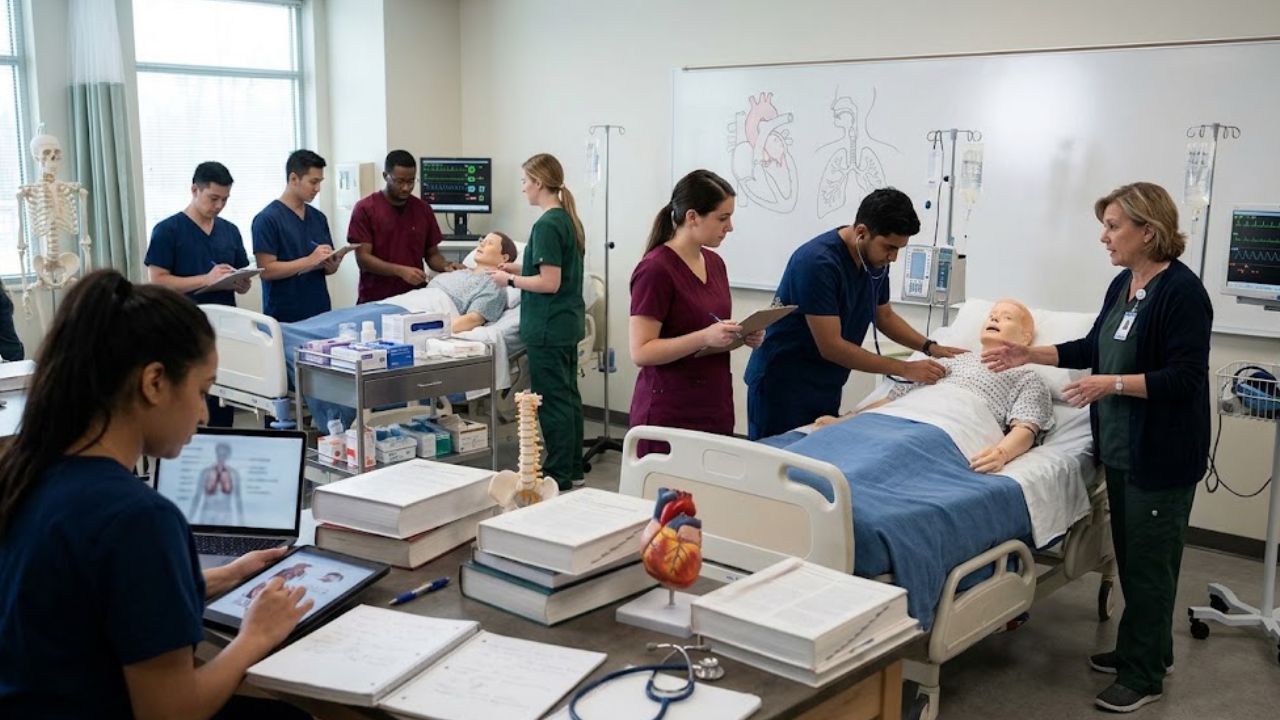
In nursing education, skills labs and simulations can provide opportunities to rehearse assessments, communication, and responses to changing scenarios. GCU’s program description, for instance, explains that simulation includes structured debriefing, allowing students to review their decisions afterward.
That review matters. Completing an exercise is only part of the learning process. Students also need to understand what they missed, why a step was difficult, and what they should practice again.
After a supervised session, useful reflection questions include:
- Which observations did I explain clearly?
- Where did I hesitate or need prompting?
- Did I stay within my assigned responsibilities?
- What specific feedback should guide my next practice session?
The goal is steady improvement supported by evidence of competence.
Practice Explaining, Listening, and Handing Over Information
Patient care involves conversations that deserve deliberate practice. Someone may be anxious, unfamiliar with medical terms, or reluctant to admit that an explanation was confusing.
Clear communication begins with listening and using language the patient can follow. It also requires checking whether the explanation worked.
The Agency for Healthcare Research and Quality describes teach-back as asking patients or caregivers to explain important information in their own words. This helps the professional check the clarity of their explanation and identify misunderstandings. Students can practice the approach through role-play before using it under appropriate supervision.
Communication with colleagues needs similar care. A vague comment such as “the patient seems different” provides limited information. A clear report identifies the concern and shares relevant observations.
AHRQ’s SBAR framework offers a structure for these conversations: Situation, Background, Assessment, and Recommendation or Request. Students should learn to use such tools at the level appropriate to their role and training, without guessing at findings they cannot assess.
Learn When to Pause and Ask for Help
As practical skills develop, students also need to become comfortable with uncertainty.
Preparation should teach people to recognize the limits of their knowledge and responsibilities. An unfamiliar task, an unclear instruction, or a concern about a patient calls for appropriate clarification and escalation.
Imagine a student being asked to perform a task they have observed but have not been cleared to carry out. The responsible response is to explain that limit and seek supervision. Trying to appear confident would add uncertainty to the situation.
Similar habits apply to documentation. Students should learn to record relevant observations accurately, distinguish what they observed from what someone else reported, and follow the organization’s procedures.
Clinical judgment develops through this combination of knowledge, supervised decisions, feedback, and an honest account of what is known.
Plan for the Demands Around the Training
Academic readiness is only one part of preparing for a career in patient care. Prospective students also need a workable plan for attendance, travel, study time, and any placement commitments.
Before enrolling, request clear answers to these questions:
- What is the total expected cost, including required supplies and placement-related expenses?
- When and where does practical training take place?
- Who arranges placements, and how much travel might be necessary?
- What support is available if a student struggles academically or clinically?
- What requirements must graduates meet before entering the intended role?
Emotional preparation deserves attention too. Patient encounters may involve distress, frustration, grief, or embarrassment. Training is a time to learn respectful boundaries, receive difficult feedback, and identify where to seek support.
Ask how a program supports students after challenging clinical experiences. Compassion is easier to sustain when learners have guidance and a place to discuss difficulties appropriately.
Build Readiness One Habit at a Time
A career in patient care asks people to bring knowledge and care into the same interaction. Preparation builds that ability through many small habits: arriving ready, checking instructions, listening closely, reporting concerns, and following through.
Start with a defined role, compare training options carefully, and look for supervised practice with useful feedback. The aim is to become someone who can contribute responsibly to a care team while treating each patient with attention and dignity.