Are wearable devices helpful? For many people, yes—when they support one clear goal without taking over their attention. A fitness tracker can make daily movement easier to notice, while a smartwatch can filter calls or reminders. But constant alerts, rigid step targets, and uncertain health readings can create stress or pull you away from work.
A device’s value depends less on how many features it offers than on whether its feedback helps you change a habit you care about—and whether you can silence the rest. Before buying or changing settings, decide what you want it to do, then keep only the tools that help. Wearables can support everyday awareness, but they do not diagnose illness or replace medical advice.
What Counts as a Wearable Device?
Wearables are electronic devices designed to be worn on the body. Smartwatches and fitness trackers are the most familiar examples. The category also includes smart rings, health-monitoring patches, and some connected hearing devices.
Features vary by model. A device may count steps, estimate heart rate, record exercise, track sleep, or deliver phone notifications. A feature appearing in an app does not guarantee the measurement is suitable for medical decisions.
For example, the U.S. Food and Drug Administration (FDA) warns against using smartwatches or smart rings that claim to measure blood glucose on their own. The agency says it has not authorized, cleared, or approved such devices to measure or estimate glucose without piercing the skin.
Are Wearable Devices Helpful for Everyday Health?
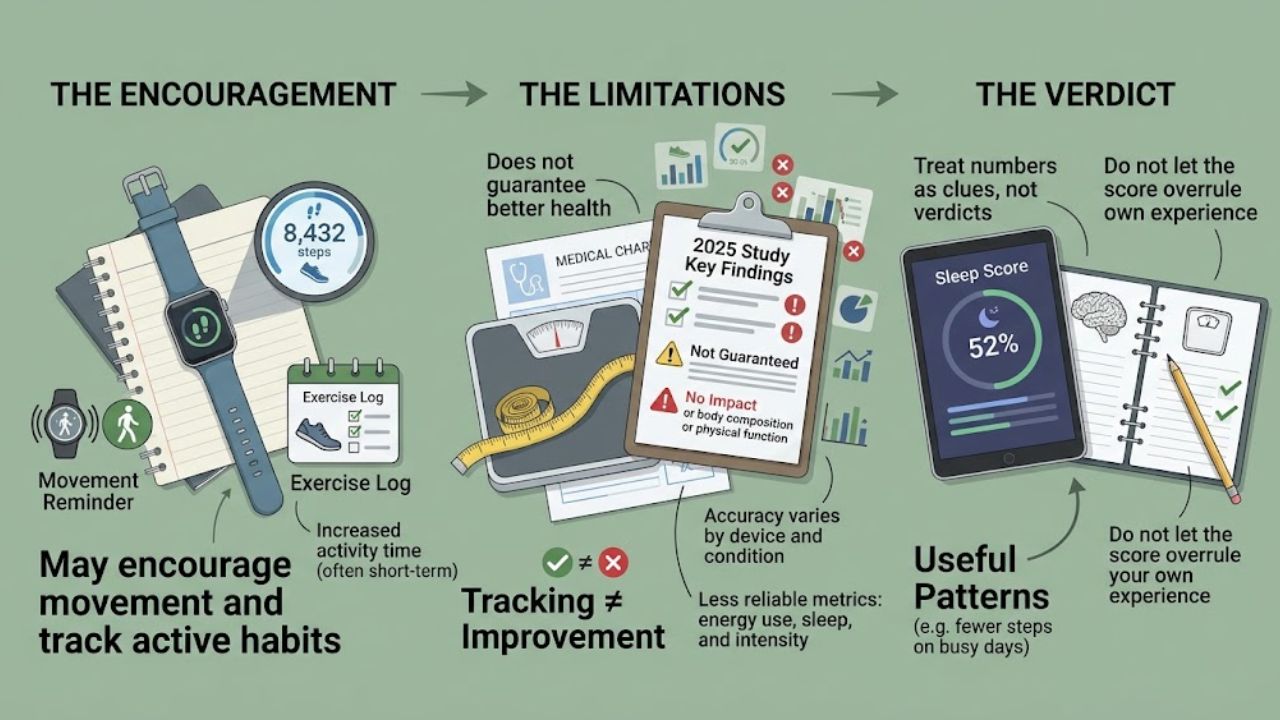
A step count can make movement easier to notice. A reminder to stand may prompt a short walk, while an exercise log can show whether you are keeping up a routine. The device supplies a record; it cannot decide what matters or what change will work for you.
Research suggests trackers can support activity in some settings. A 2025 review of trials involving older adults found that tracker-based programs increased activity time and step counts compared with usual care, particularly soon after the intervention. The review did not find significant improvements in several other outcomes, including body composition and physical function. That gives a qualified answer to “are wearable devices helpful”: they may encourage activity, but wearing one does not guarantee better health.
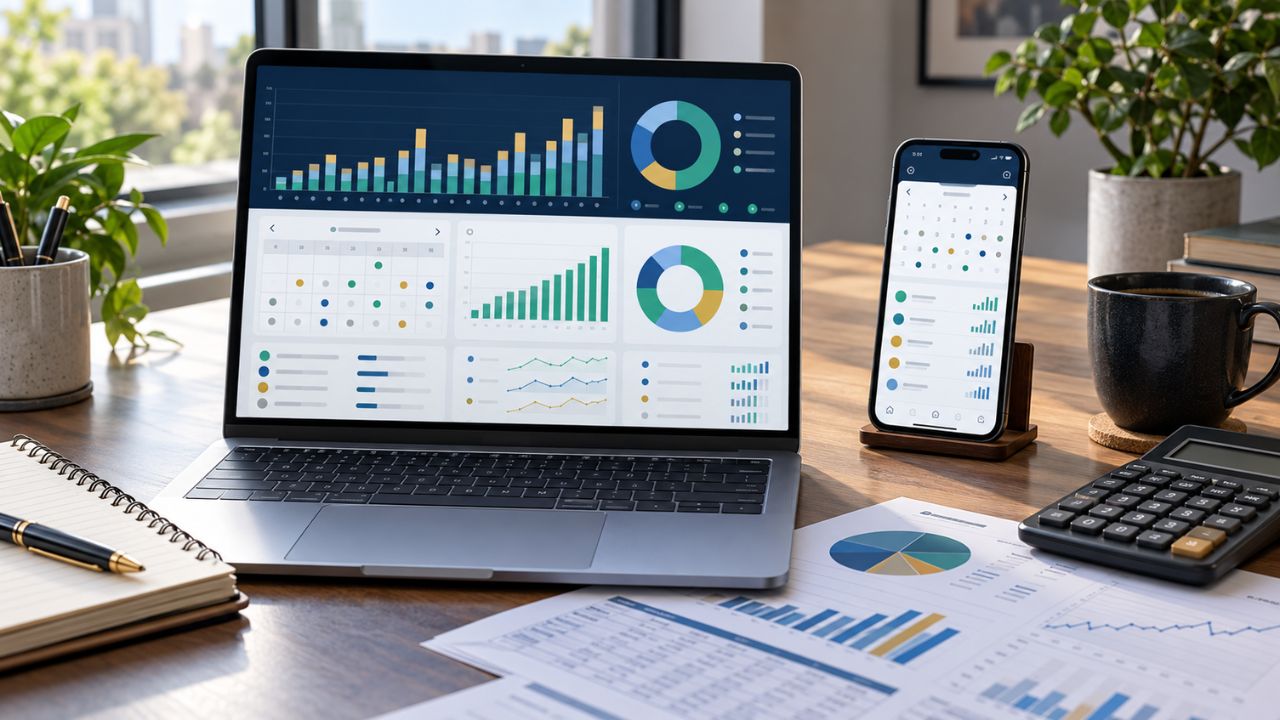
A tracker might also reveal a useful pattern, such as walking less on days filled with meetings. But its readings are not all equally dependable. A 2024 review found that accuracy varies by device, measurement, and conditions. Step counts may help show broad trends, while estimates of energy use, activity intensity, and sleep can be less reliable.
Treat the numbers as clues, not verdicts. If a sleep score conflicts with how rested you feel, do not let the score overrule your own experience.
When Tracking Becomes Its Own Source of Stress
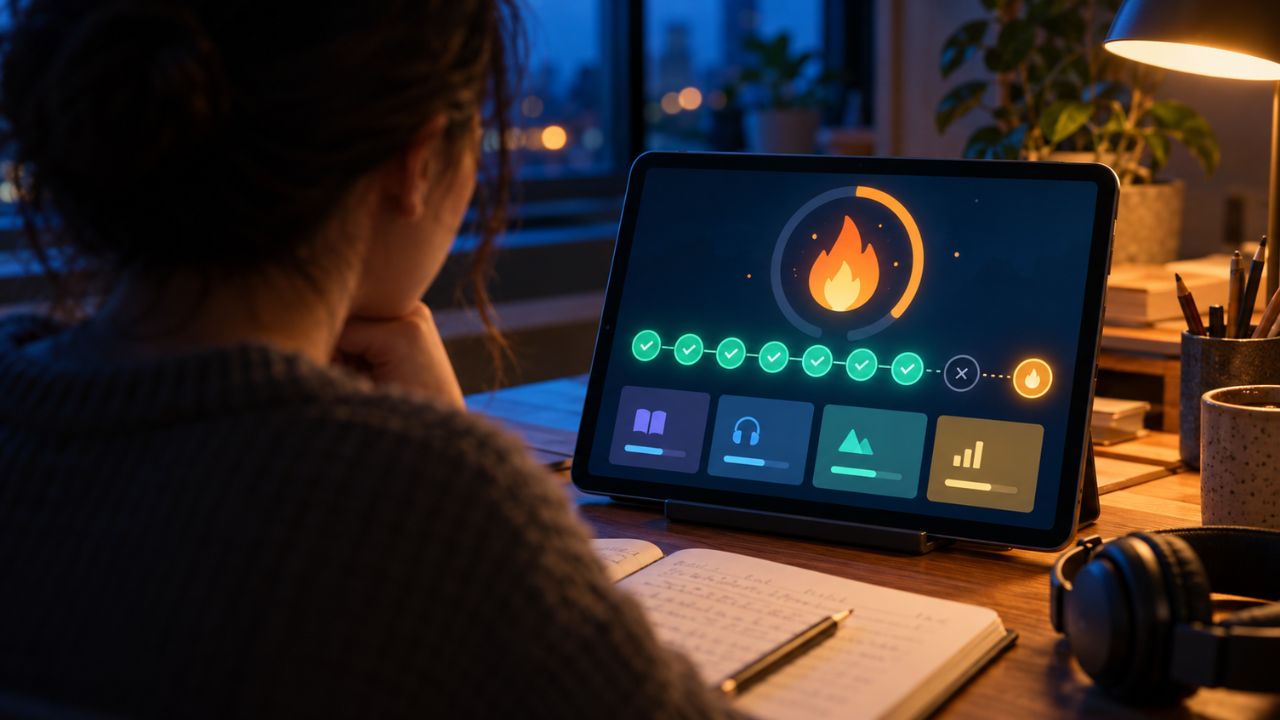
Goals, streaks, and progress charts motivate some people. For others, they turn movement into a daily test. Missing a step target can feel like failure, even after a busy day or when rest is the sensible choice.
Are wearable devices helpful if a score leaves you anxious or guilty? Probably not in its current setup. Turn off the score, lower the target, or take a break. A flexible cue—such as walking after lunch—is usually more useful than a rigid target that ignores illness, work, or changing routines.
The Distraction Problem: Alerts on Your Wrist
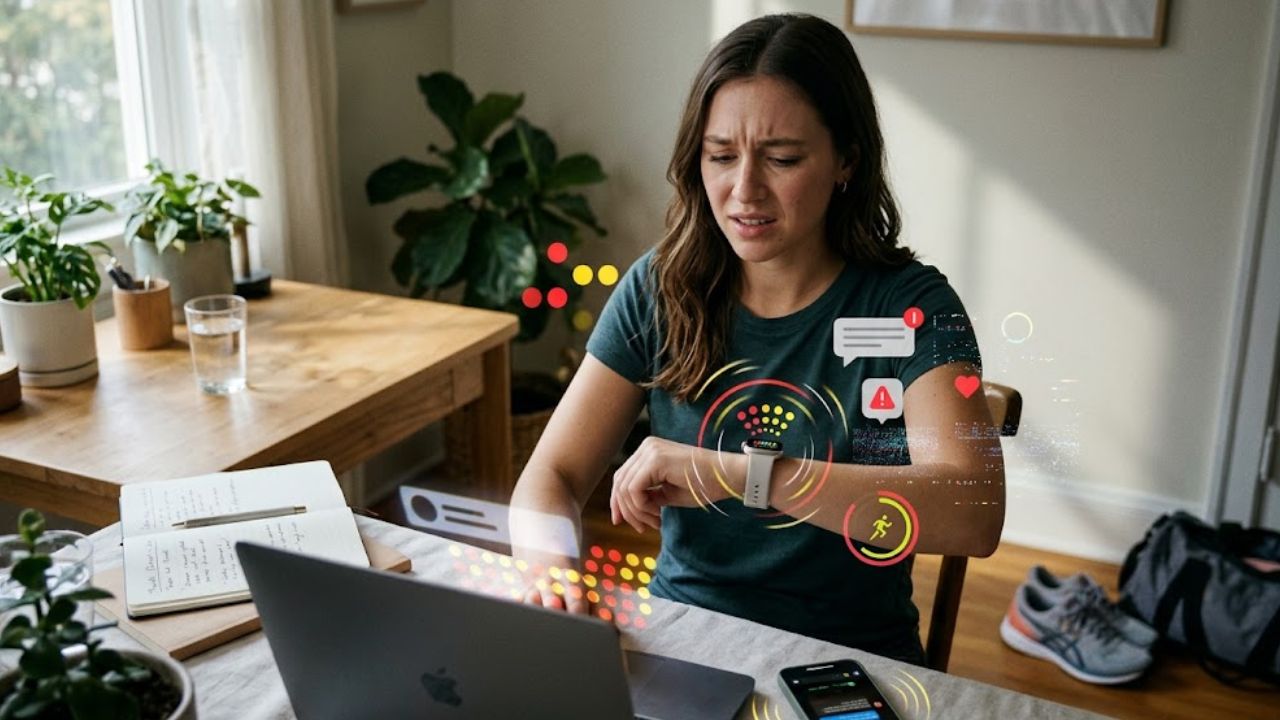
A smartwatch can reduce phone checks if it filters messages down to a few that matter. It can also move the same stream of interruptions from your pocket to your wrist.
Even a quick glance asks you to decide whether to read, dismiss, or follow up on an alert. For anyone asking “are wearable devices helpful” for concentration, the answer depends partly on what the watch is allowed to interrupt.
Driving calls for particular care. In an experimental driving study, researchers found that smartwatch use affected drivers’ attention; their gaze was less focused on driving with a smartwatch than with a phone in the tested conditions. The study does not represent every driver or device, but it supports a straightforward precaution: silence or avoid handling wearable alerts while driving.
At work or during study, keep only alerts that need a quick response, such as calls from key people or time-sensitive calendar reminders. Turn off promotions, social updates, and routine prompts. If you still look down whenever the watch buzzes, use a focus mode or remove it during work that needs sustained attention.
What Wearables Can—and Cannot—Tell You
Are wearable devices helpful as health monitors? Only within limits. A reading can look precise because it appears as a number, but that does not make it a clinical measurement. Fit, movement, skin contact, device design, and the type of activity can affect results. A tracker that helps you follow step trends may not be equally useful for estimating calories or sleep stages.
An alert is not a diagnosis. A normal reading should not reassure you if you feel unwell, and an unusual reading is not proof that something is wrong. For a health concern, follow advice from a qualified professional.
The FDA’s glucose warning shows why product claims deserve scrutiny: it says people should not buy or use smartwatches or smart rings that claim to measure blood glucose without piercing the skin. This guidance comes from the U.S.; medical device rules differ by country. Do not replace prescribed monitoring with an unverified feature.
Privacy Is Part of the Decision
Wearables and their companion apps may collect activity, sleep, location, or heart-rate information. Before connecting a device, check what data it collects, whether it shares information with other services, and how you can manage or delete it.
Connected apps deserve a second look. A tracker, phone health app, and coaching service may each have different data practices. Review permissions after setup and turn off access that is not needed for a feature you use.
Privacy belongs in the answer to “are wearable devices helpful,” especially if you plan to sync information across several services. Legal protections vary by country and service. In the United States, the FTC’s Health Breach Notification Rule applies to certain health apps and connected technologies not covered by HIPAA. It does not mean every wearable is governed by the same rules, and U.S. protections do not necessarily apply elsewhere.
How to Decide Whether a Wearable Is Worth It
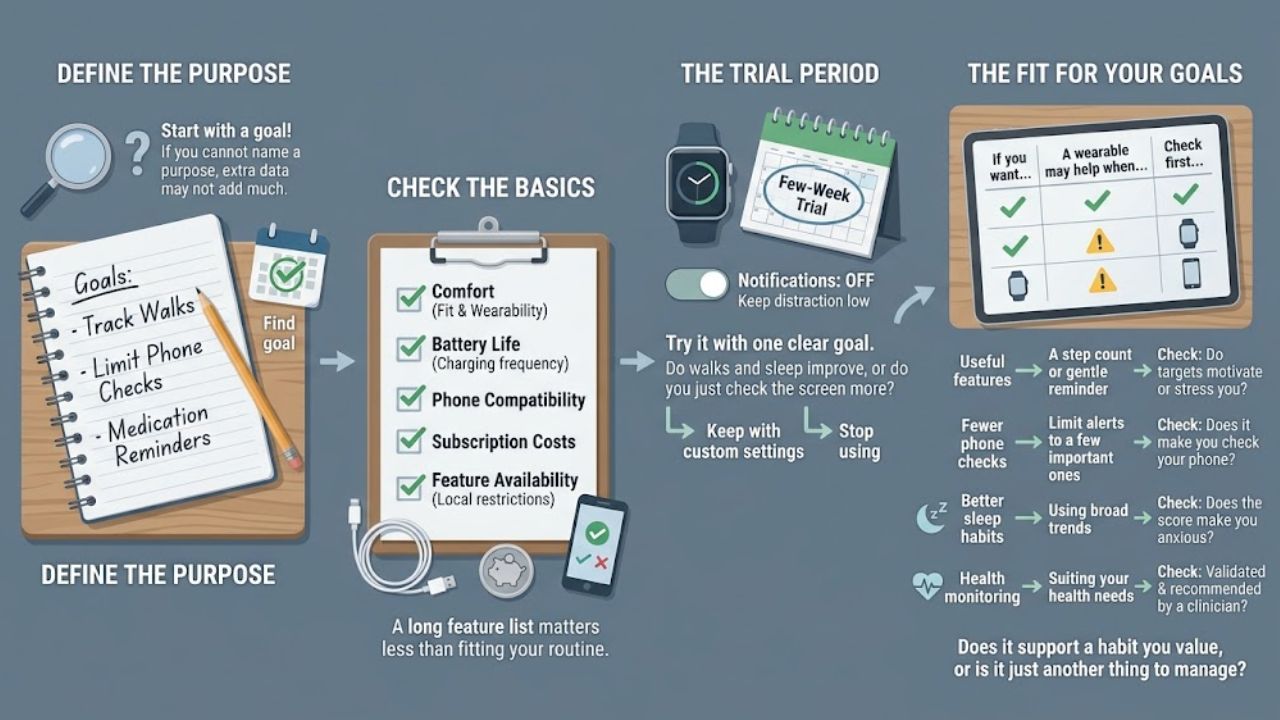
To decide whether “are wearable devices helpful” in your routine, start with the problem you want to solve: tracking walks, limiting phone checks, or getting a medication reminder. If you cannot name a purpose, extra data and notifications may not add much.
Before spending money, check the basics: comfort, charging frequency, phone compatibility, subscription costs, and whether the features you want are available where you live. A long feature list matters less than whether the device works with your routine.
Give it a short trial with one clear goal. For a few weeks, track walks while keeping most notifications off. Then ask whether the device helped you make a decision or stick with a habit. If it mostly made you check the screen more often, change the settings or stop using it.
| If you want… | A wearable may help when… | Check first… |
| More daily movement | A step count or gentle reminder encourages you | Whether targets motivate or stress you |
| Fewer phone checks | You limit alerts to a few important ones | Whether alerts still send you to your phone |
| Better sleep habits | You use broad trends to adjust routines | Whether scores make you anxious |
| Health monitoring | The feature suits your health needs | Whether it is validated for that use and recommended by a clinician |
Use the table as a starting point, not a verdict. The better test is whether the device supports a habit you value or creates another thing to manage.
Make the Device Quieter Before You Give Up on It
If the watch feels distracting, change its defaults first. Remove nonessential apps, disable repeated activity prompts, and use focus or sleep modes. You could also choose a set time to review your health data instead of checking it throughout the day.
Keep the features that serve a purpose. You might retain activity tracking and a medication reminder while silencing social notifications. If a daily score bothers you, hide it and look at longer-term patterns instead.
Final Thoughts
So, are wearable devices helpful? They can be when they make a useful pattern easier to see or support a habit you have chosen. They are less useful when they turn movement into a scorecard, make uncertain readings feel definitive, or keep pulling your attention away.
Start with one purpose and turn off everything that does not serve it. After a few weeks, keep the device only if it has helped you make a useful change. If it creates more noise than value, taking it off is a reasonable choice.
Frequently Asked Questions (FAQs) About Are Wearable Devices Helpful
Should I wear a tracker overnight?
Only if sleep tracking is a feature you want to use and the device is comfortable enough to wear. If it keeps you awake or makes you anxious about scores, there is little reason to keep it on overnight.
What should I do if a wearable reading worries me?
Do not use a consumer reading by itself to diagnose a condition or change treatment. If you have symptoms or a specific concern, contact a qualified health professional and ask what measurement method is appropriate.
Should I keep wearing a tracker if I miss its daily targets?
You do not need to meet a device’s target every day. Lower or disable goals that create pressure, and use the tracker only if its feedback helps you make choices you actually want to make.