
Review response templates give me a starting point when I want to answer customer feedback clearly. I’ve used Imagine Chat to draft replies for both sample scenarios and real customer reviews. I change the name or role and sometimes add important notes so the wording fits the situation.
For a local business, a reply becomes part of the experience people read about. Someone choosing a café, booking a haircut, or arranging a repair may read the review and the response together. They can see whether the business understood the feedback and offered a useful next step.
I want a reply to sound like someone has paid attention. That means acknowledging a specific point, keeping the tone natural, and making promises the business can keep.
These ten templates cover positive reviews, complaints, unexplained ratings, and feedback after a problem has been resolved. Each includes guidance on when to use it and what to personalize.
Disclosure: ImagineLab Art is our in-house product of the Editorialge team. Imagine Chat is part of that platform.
Why Personalized Review Responses Matter
A thoughtful response gives customers something concrete to judge: how the business listens, explains a problem, and takes responsibility. The wording matters most when it reflects what the reviewer actually said.
A positive review might mention a patient employee or a clearly explained estimate. A complaint might describe a late appointment or an unexpected charge. Those details should guide the reply.
Before using any of these review response templates:
- Replace every bracketed field with accurate information.
- Use the reviewer’s publicly displayed name when appropriate.
- Sign with the responder’s real name or initials and an accurate role.
- Remove any sentence that does not fit the situation.
- Check available records before asking the customer for information again.
If you are already speaking with the customer, continue that conversation and adapt the public reply accordingly. A request to contact the business should lead to something useful.
The templates and the two fictional examples below are starting points to adapt.
1. Thank a Customer for Specific Positive Feedback
Use this when: The customer praises a product, service, or particular part of the experience.
The easiest way to make a positive review response feel personal is to acknowledge one detail. A customer who appreciated a clear explanation deserves a reply that recognizes it.
Template:
Thank you, [Name]. We appreciate your kind words about [detail they praised]. We’re pleased you had a good experience and hope to welcome you back. — [Your name], [Your role]
Choose a detail from the review rather than adding an unrelated service or promotion. You do not need to repeat every compliment.
Illustrative example — fictional café:
Thank you, Maya. We appreciate your kind words about our vegetarian breakfast and friendly service. We’re pleased you enjoyed your visit and hope to welcome you back. — Alex, Manager
The response is brief, but the customer can see that their review received attention.
2. Recognize a Returning Customer
Use this when: The reviewer clearly says they have visited or used the business before.
A returning customer may value consistency as much as a single good experience. Acknowledge the relationship they have chosen to describe publicly.
Template:
Thank you for choosing us again, [Name]. We’re pleased that [detail from the review] made this another good experience. We appreciate your continued support and look forward to seeing you again. — [Your name], [Your role]
Use “again” only when the review supports it. Recognizing a name from your records does not mean you should publish someone’s purchase history.
If the customer mentions reliable service across several visits, respond to that point. Leave private details about what they buy or how often they visit out of the reply.
3. Acknowledge Praise for a Staff Member
Use this when: A customer mentions an employee’s helpfulness, patience, or professionalism.
Praise for a staff member gives you a chance to recognize the behavior that helped the customer. Focus on what the employee did well.
Template:
Thank you, [Name]. We’re glad our colleague could help with [what the customer needed]. I’ll share your kind feedback with them. — [Your name], [Your role]
For example, the relevant detail might be help choosing a product or understanding an estimate.
Only promise to pass on the feedback if you will do it. If you use the employee’s name, keep it to an appropriate public name and avoid adding their surname, schedule, or personal details.
A simple acknowledgment can recognize both the customer’s feedback and the employee’s contribution.
4. Reply to a Positive Rating Without a Comment
Use this when: Someone leaves four or five stars without written feedback.
There is little to personalize when a customer leaves only a rating. A short thank-you is enough.
Template:
Thank you for the rating, [Name]. We appreciate you taking a moment to share your feedback. — [Your name], [Your role]
Avoid guessing what the person bought or which part of the service they liked. The rating does not provide that information.
You also do not need to ask a four-star reviewer to change their score. Keep the acknowledgment friendly and proportionate.
For a low rating without an explanation, use Template 9 to invite more detail.
5. Respond to a Mixed Review
Use this when: The customer praises one part of the experience and raises a concern about another.
Both points deserve attention. Thanking someone for the compliment while overlooking the complaint leaves the main concern unanswered.
Template:
Thank you for the feedback, [Name]. We’re pleased you enjoyed [positive detail]. I’m sorry that [specific problem] affected your experience. [What we have done or can do next.] Please contact [person handling this] at [business contact] if further help is needed. — [Your name], [Your role]
The sentence about the next step is optional. Include it only when the action is confirmed or the proposed help is available.
If someone enjoyed the food but struggled with collection instructions, address the instructions. Explain a change you have actually made, or say what you can check.
Use the apology when the problem is established. If the details need investigating, acknowledge the concern without presenting an unverified explanation as fact.
6. Address a Delay or Missed Appointment
Use this when: The review describes waiting, a late arrival, or a missed booking.
The customer may have arranged their day around the appointment. Acknowledge the inconvenience and make the follow-up useful.
Template:
I’m sorry you were kept waiting, [Name]. [Brief explanation, if confirmed and helpful.] We’d like to [specific next step]. Please contact [person handling this] at [business contact] so we can arrange it. — [Your name], [Your role]
Check the booking or service records first. The next step might be arranging a new appointment, reviewing an unresolved service issue, or discussing an available remedy.
If the delay is still unverified, adjust the opening to acknowledge the reported concern.
“We were busy” gives the customer little useful information on its own. A clear explanation and an achievable next step do more to address the problem.
7. Take Responsibility for a Confirmed Mistake
Use this when: The business has verified an incorrect order, defective item, incomplete job, or another error.
Once you know what went wrong, be direct about it. Explain what the business can do to put it right.
Template:
I’m sorry we [what went wrong], [Name]. We should have [what we should have done]. We can [available remedy]. Please contact [person handling this] at [business contact] so we can arrange it. — [Your name], [Your role]
A remedy might involve an inspection, correction, replacement, or refund where appropriate. Include only something the business is authorized and able to provide.
Illustrative example — fictional repair shop:
I’m sorry we installed the wrong part, Sam. We should have checked it against the work order. We can fit the correct part at no extra charge. Please ask for Alex when you call the shop to book the correction. — Alex, Manager
That example assumes the mistake has been confirmed and the correction approved.
A specific commitment is easier to assess than a promise that nothing will ever go wrong again. Keep the remedy independent of the customer’s rating.
8. Explain a Price or Fee Concern
Use this when: The reviewer questions value, an estimate, or an unexpected charge.
Check what the customer is disputing before replying. A concern about a high price needs a different explanation from an incorrect charge.
Template:
Thank you for raising your concern about [price or fee], [Name]. [Explain what the price covers or how the fee applies.] We’d be happy to review any questions about the charge with you. Please contact [person handling this] at [business contact] so we can discuss the details privately. — [Your name], [Your role]
Keep the explanation relevant and easy to understand. If the business made a billing error, use Template 7 and address the mistake directly.
Avoid publishing an invoice, payment history, or other account details to defend the price. A public response can explain the pricing policy while a private conversation deals with the customer’s account.
Phrases such as “you get what you pay for” can sound dismissive. Explain the charge plainly.
9. Respond to a One-Star Review With Little or No Detail
Use this when: A low rating provides too little information to understand the experience.
An unexplained rating can be frustrating. Invite clarification without guessing what happened or accusing the reviewer.
Template:
Hi [Name]. We’d like to understand your feedback and see whether we can help. Please contact [person handling this] at [business contact] with more details privately so we can look into the experience you’re referring to. — [Your name], [Your role]
If you cannot match the review to a customer, remember that someone may use a different display name. A missing match alone does not establish that the review is fake.
Where there is evidence of a policy violation, use the platform’s reporting process. On Google, disagreeing with a review or disliking its criticism is not grounds for removal.
Keep the public response calm and leave room for the customer to clarify.
10. Thank a Customer Who Updates a Review After Resolution
Use this when: The customer updates their review and confirms that the business addressed the concern.
A brief follow-up can acknowledge the outcome without reopening the dispute.
Template:
Thank you for updating your review, [Name]. I’m pleased we were able to address the concern you described. We appreciate the opportunity to put things right and your taking the time to share the outcome. — [Your name], [Your role]
Use this wording only when the customer’s update supports it. A higher rating by itself does not confirm that every issue has been resolved.
Leave refund amounts, private messages, and personal circumstances out of the reply. Focus on the outcome the customer has chosen to share publicly.
How I Use Imagine Chat to Adapt Review Replies
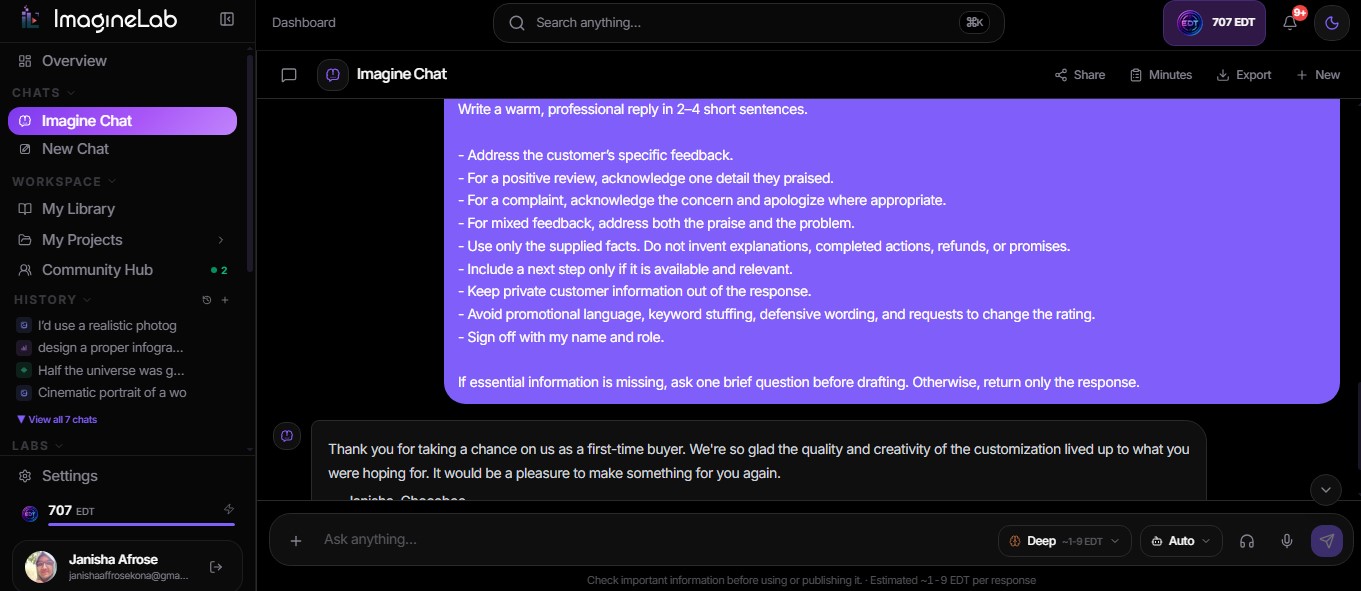
When I use Imagine Chat, I change the name or role and sometimes add important notes about the situation. These details help me adapt the wording to the review.
A useful note might clarify what happened, which concern needs answering, or what next step the business can offer. The draft still needs to match the information available.
For anyone preparing an AI-assisted review response, I recommend checking five things before posting:
- Names and roles: Are they accurate?
- The customer’s concern: Does the reply address what they actually said?
- Facts and promises: Can the business support every explanation and commitment?
- Contact details: Will the follow-up reach someone who can help?
- Privacy: Does the reply avoid unnecessary personal or account information?
I want the final wording to fit the person and the situation. Personalization should go beyond changing the greeting.
Make Every Reply Lead to Useful Action
Review response templates work best when the business can follow through. Before posting a complaint response, confirm who will handle the next step.
If the customer has already supplied the necessary details, use them. Asking someone to start again can add frustration, especially when they have already tried to resolve the issue.
Recurring complaints also deserve attention beyond the reply. Confusing collection instructions may need clearer messages. Unexpected fees may need better explanations before a purchase.
Keep compensation separate from review changes. Google prohibits incentives for posting reviews, revising them, or removing negative reviews. It also prohibits selectively asking only for positive reviews.
For me, a trustworthy response makes it clear what the business understood and what the customer can expect next. The follow-through gives those words value.
Frequently Asked Questions on Review Response Templates
1. How do I respond to a negative review professionally?
Start with the specific concern, apologize where appropriate, and explain an achievable next step. Keep the tone calm, even if the review feels unfair. Check the facts before admitting a particular mistake or promising a remedy. When private details are needed, offer a business contact route monitored by someone who can help.
2. Should I respond to every Google review?
A useful response is worth aiming for across both positive and negative feedback. Detailed reviews, direct questions, and unresolved complaints deserve particular attention. A brief thank-you can suit a positive rating with no comment. Avoid posting the same reply everywhere just to increase the number of responses.
3. How quickly should I reply to a customer review?
Reply promptly once you can provide an accurate acknowledgment. Checking reviews regularly helps you catch concerns before they sit unanswered. You do not need to finish a complex investigation before acknowledging the complaint. Explain the next step, then follow through. If you give a follow-up time, choose one the business can realistically meet.
4. Does responding to reviews help local SEO?
Helpful replies can show potential customers that a business pays attention. More reviews and positive ratings can also help local ranking. A reply is not a guaranteed ranking boost. Do not assume that repeating keywords, adding city names, or replying more frequently will directly improve your position. Write for the customer reading the response.
5. Can I use AI to write customer review responses?
Yes. AI can help you prepare a draft, especially when you need a starting point for the wording. Review it before posting. Check the facts, tone, names, contact details, privacy, and promises. The business remains responsible for the final response and any action it offers.