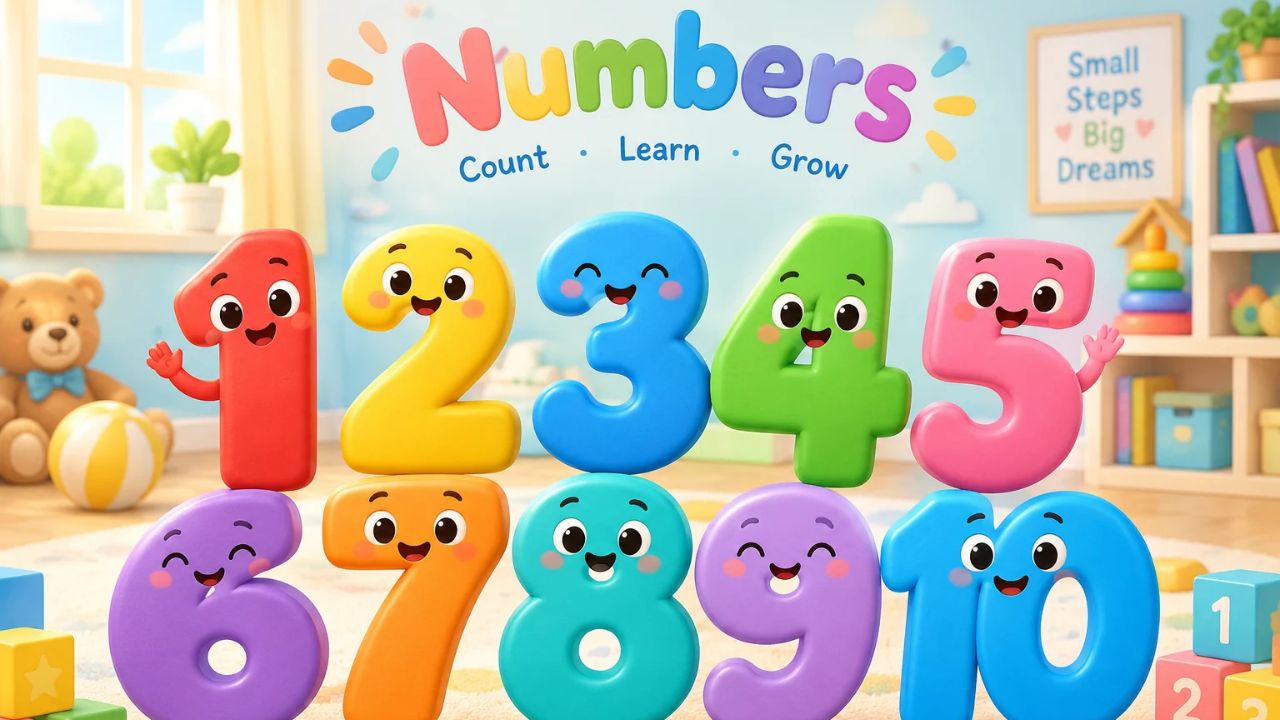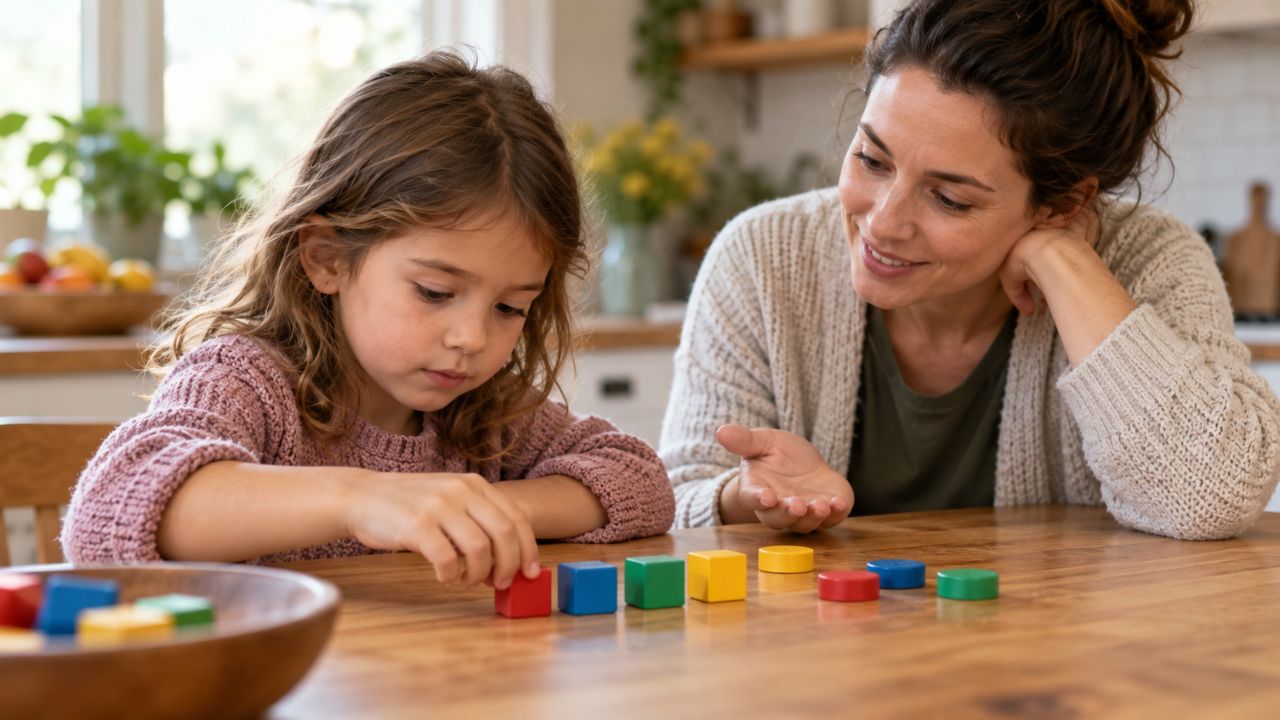
Has your child ever gone quiet while other kids count out loud? You ask them to count to ten, and they shake their head or look away. It can feel really frustrating, especially when you are not sure what is holding them back.
Here is something worth knowing. According to the Child Mind Institute and a National Council on Family Relations (NCFR) policy brief on children’s math anxiety, this kind of anxiety can take hold as early as kindergarten. It affects roughly 20% of people, including children as young as 5, and early experiences at home and in preschool often shape those feelings.
Your child has plenty of company. The good news is that you can change this with the right approach. This guide walks you through practical steps to help your child overcome their counting resistance. You will learn why kids refuse to count aloud, discover strategies that work, and find tools that make counting fun.
We will also cover when to reach out for extra support. So grab a cup of coffee, and let’s go through it together. By the end, you will have real answers to try today.
Understanding Why a Child Refuses to Count Aloud
Your child might refuse to count aloud for several reasons. Knowing which one is at play makes it much easier to help them.
Sometimes it is math anxiety. Other times it comes down to confidence, or simply a lack of interest in the activity.
Anxiety or Fear of Making Mistakes
Many children freeze up when asked to count aloud because they fear making mistakes. This math anxiety creeps in quietly, often starting when a child worries about getting a number wrong in front of others.
A child might know their counting skills perfectly well in their head, but saying numbers out loud feels risky. The pressure of being watched or judged makes their brain go fuzzy, and suddenly they clam up.
This fear of failure is real, and it holds back early math skills that the child actually has. Kids pick up on our reactions too, so even a small frown or a quick correction can make them feel that counting aloud is dangerous territory.
Classroom observations show how powerful low-pressure practice can be. In one small study of 30 kindergarten students across three classrooms, 6 children refused to count aloud at first. After two weeks of nonverbal counting practice using manipulatives like blocks and counters, 5 of those 6 children showed reduced refusal. One teacher noted: “After two weeks of hands-on counting with blocks, most of the children who would not speak numbers began joining in quietly before saying numbers out loud.” This approach removes the verbal pressure while still building number confidence through touch and visualization.
Anxiety shows up differently for each child. Some get sweaty palms. Others simply refuse to participate, choosing silence over the risk of sounding wrong.
The root cause often traces back to past experiences, like being corrected harshly or laughed at by peers. Building confidence takes time and patience, but it starts with creating a judgment-free space where mistakes become learning opportunities instead of failures.
Counting objects during play, using visualization techniques with number patterns, and practicing number families in low-pressure settings all help chip away at this anxiety. When a child sees that errors are normal and fixable, their willingness to count aloud grows stronger.
Lack of Confidence in Their Counting Skills
A child who lacks confidence in their counting skills often holds back from saying numbers out loud. This child might know the numbers in their head, but self-doubt stops them from speaking.
They worry about saying the wrong number. That one stumble can stick with them, making them believe they are not good at math.
Confidence plays a huge role in early math skills, and without it, children clam up. Building it back up starts with celebrating small wins. Try these approaches:
- Praise your child when they count even just a few numbers correctly, not only when they get everything right.
- Use counting objects like blocks or toys to make the activity feel like play, not a test.
- Let your child count at their own pace without rushing or correcting every slip.
- Use visual aids like number charts so they can see patterns and number families clearly.
- Weave counting into songs or games where it happens naturally and without pressure.
Your child will start to trust their counting abilities when they feel safe and supported, not judged.
Disinterest in the Activity
Sometimes a child simply does not want to count aloud because the activity feels boring or pointless. Math engagement drops fast when kids see counting as just another chore on their to-do list.
Your child might prefer playing video games, drawing, or running outside instead of practicing number patterns. This is totally normal. Kids have different interests, and counting aloud might not spark joy for them right now.
The trick is to mix counting into activities your child already loves.
- If they enjoy building with blocks, count the blocks together as you stack them.
- If they like snacks, count out crackers or grapes before eating them.
- If music gets them excited, sing counting songs during car rides or bath time.
- If they love being active, count steps or jumps during outdoor play.
By weaving counting skills into daily routines and play, you shift the activity from boring to fun. Your child starts seeing counting as part of their favorite moments, not something they must endure.
Strategies to Encourage Counting Aloud
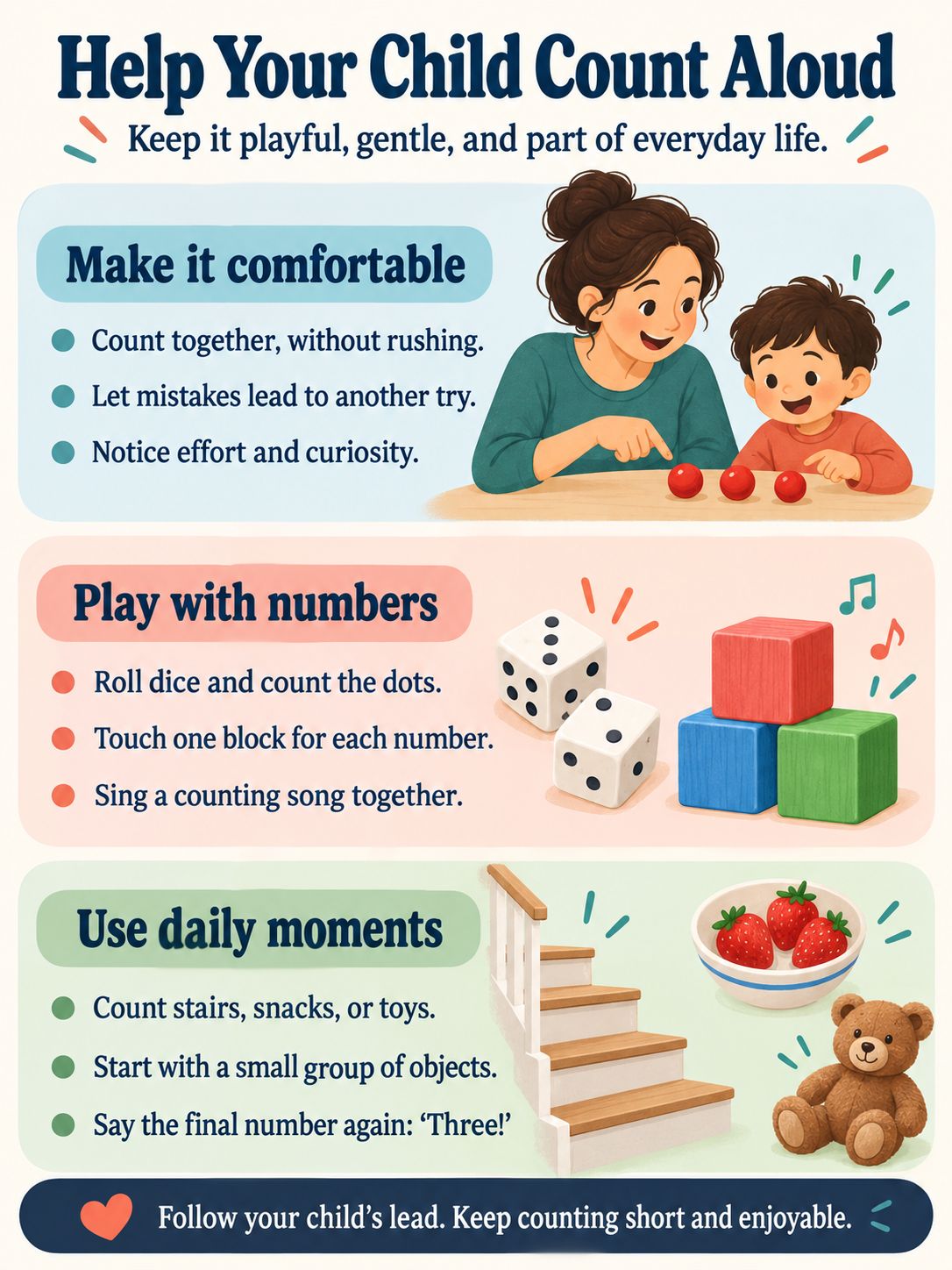
Getting your child to count aloud takes patience, creativity, and a willingness to meet them where they are. Small shifts in your approach can turn counting from a source of stress into something your child actually enjoys doing.
Create a Stress-Free Environment
A stress-free environment helps children feel safe enough to try counting aloud without fear. Your child will take more risks with math engagement when they know mistakes are okay.
- Remove pressure and criticism from counting practice sessions. Let your child count at their own pace without rushing or correcting every error.
- Praise effort over perfection when your child attempts to count aloud. Say things like, “I love how hard you tried,” rather than focusing on accuracy.
- Use soft, encouraging tones when your child speaks numbers. Your calm voice teaches them that counting is a relaxed, normal activity.
- Avoid testing or quizzing your child on counting objects. Count together naturally during meals, walks, or playtime instead.
- Create a judgment-free zone where wrong answers do not trigger negative reactions. Your child learns that counting mistakes are learning opportunities, not failures.
Use Fun and Engaging Counting Games
Games transform counting from a chore into something kids actually want to do. Your child will build early math skills while having genuine fun with these activities.
- Roll dice and count the dots aloud together, then move that many spaces on a board game. This makes counting feel like play, not a lesson.
- Sing counting songs like “Five Little Monkeys” or “Ten in the Bed” to make number patterns stick. Music helps children remember sequences better.
- Use counting objects like blocks or buttons to build towers while saying each number out loud. Hands-on activities keep kids engaged longer.
- Play store games where your child counts out coins or pretend money to “buy” items. Real-world applications show kids why counting matters.
- Try counting backwards from ten down to one. This variation builds different pathways in the brain than forward counting and keeps things fresh.
One classroom example shows the power of routine counting games. The Sunnybrook cohort of 18 kindergarten students took part in a weekly counting song and game routine during music time. Over four weeks, voluntary aloud-counting during free play jumped from 22% of occasions to 68% of occasions. The teacher observed, “Once counting was part of our music time, more children counted without being prompted and some even initiated the songs themselves.”
Embedding counting into enjoyable group activities can shift children from reluctant counters to enthusiastic participants, without formal testing or pressure.
Incorporate Counting Into Daily Routines
Counting does not have to feel like a classroom exercise. You can weave math engagement naturally into your child’s everyday life to build their counting skills without pressure.
- Count stairs together as your child climbs up or down, turning a simple moment into a fun learning opportunity that builds number patterns.
- Ask your child to count objects during snack time, like crackers, berries, or apple slices, making counting part of mealtime conversation.
- Count items at the grocery store, such as apples in the cart or cans on a shelf, letting your child see real-world uses for counting skills.
- Have your child count toys while cleaning up their room, connecting tidiness with number recognition.
- Count fingers and toes during dressing time, using manipulatives your child already has with them every day.
The key is making counting feel natural, not forced. When your child counts during their favorite parts of the day, they build number patterns without even noticing they are learning.
Tools and Techniques to Support Counting
You can turn counting into something your child actually wants to do by picking the right tools that match their learning style. Here is what works best for building counting skills at home.
Use Visual Aids Like Number Charts or Blocks
Visual aids transform counting from an abstract idea into something your child can see and touch. Number charts and blocks give kids concrete ways to understand math concepts and build confidence with counting objects.
- Display a colorful number chart on your child’s bedroom wall. Kids see numbers every day, which helps them recognize patterns and connect spoken words to written symbols naturally.
- Gather building blocks or counting manipulatives in different colors and sizes. Your child touches real objects while counting aloud, making the activity feel less intimidating and more like play.
- Create a number line using tape on the floor with numbers written clearly. Your child walks along the line while saying each number, combining movement with counting skills development.
- Use ten-frames to organize objects into groups of ten. This visualization technique helps kids see number families and understand how numbers relate to each other.
- Point to each number on a chart as your child says it aloud. This pairing of visual and verbal input strengthens early math skills and keeps their attention focused.
According to the National Association for the Education of Young Children (NAEYC), one of the most effective techniques is to start with small quantities of 1 to 5 and have your child place a token on each object while counting. This builds one-to-one correspondence, which is the understanding that each number word matches exactly one object. It explains why ten-frames and manipulatives work so well. They give children a physical way to anchor each number they say.
Try Music and Songs to Make Counting Enjoyable
Music transforms counting from a boring task into a joyful experience that children actually want to join. Songs stick in kids’ heads, making number patterns and early math skills feel natural and fun.
- Sing counting songs set to familiar tunes like “Twinkle, Twinkle, Little Star” or “Happy Birthday” to help children count aloud without pressure.
- Use rhythm instruments like drums or shakers while counting out loud, turning math engagement into a musical activity that holds attention.
- Clap or stomp along while counting aloud, adding physical movement that helps children remember number patterns and stay engaged.
- Record your child singing counting songs, then play them back so kids hear themselves counting aloud in a positive, celebratory way.
- Pair counting objects with songs, letting children touch manipulatives while singing to strengthen their connection to numbers and visualization skills.
You can also mix fast and slow counting songs to keep things fresh. The variety stops boredom from setting in and keeps practice sessions feeling fun rather than repetitive.
When to Seek Additional Help
Sometimes a child’s refusal to count aloud signals something deeper than shyness. Knowing when to reach out for professional support is just as important as knowing the right strategies to try at home.
Identifying Signs of Deeper Learning Challenges
Some children struggle with counting for reasons that go deeper than shyness or lack of practice. If your child avoids counting aloud despite repeated encouragement, watch for other signs that might point to learning difficulties.
Keep an eye out for these specific behaviors:
- Skipping numbers in sequences or reversing digits consistently
- Confusion with number patterns and number families
- Physical signs of distress like fidgeting, avoiding eye contact, or getting upset during math activities
- Losing track easily when counting objects or struggling to match spoken numbers with physical items
These behaviors suggest that support techniques beyond simple encouragement might help your child progress.
Learning challenges sometimes show up in unexpected ways across different settings. Your child might count fine with manipulatives like blocks or tokens but freeze when asked to count aloud without visual aids. They could show solid early math skills in one setting yet struggle in another.
Talk with your child’s teacher about their observations in the classroom. Compare notes on what works and what does not. If multiple adults notice consistent struggles with early childhood math concepts, or if your child’s counting skills lag significantly behind peers, that is your signal to explore professional support.
Considering Professional Tutoring or Support
Professional tutoring can make a real difference for children who struggle with counting skills. A tutor brings fresh perspectives and specialized learning strategies that address your child’s specific needs.
Tutors work one-on-one with your child in a calm setting, which often helps reduce math anxiety. They use manipulatives, visual aids, and counting activities suited to your child’s learning style. This focused approach builds confidence and strengthens early math skills over time.
Final Thoughts
Helping a child who refuses to count aloud takes patience, creativity, and a little bit of heart. Your child will gain confidence when you remove the pressure and make counting feel like play instead of work.
Start small with counting objects around your home. Use songs and games to build early math skills, and celebrate every tiny win along the way.
If your child continues to struggle after trying these strategies, reaching out to a teacher or tutor can provide extra support. Every child learns at their own pace, and your encouragement makes all the difference.
FAQs about How to Help a Child Who Refuses to Count Aloud
1. Why does my child refuse to count aloud?
Your child might feel shy or worried about making a mistake, which is completely normal. Research shows that math anxiety can start as early as age 5, so speaking numbers out loud can feel pretty risky to them.
2. What is the best way to make counting fun for a reluctant child?
Turn counting into a game with things they already love, like toy cars, crackers at snack time, or steps to their bedroom. When your child chooses what to count, they stay in control and it feels like play instead of pressure.
3. How can I build my child’s confidence in counting out loud?
Start with just two or three objects, and celebrate every single try, even the shaky ones. According to Stanford University research, immediate positive feedback is one of the most powerful tools for building early math confidence.
4. Should I be worried if my child still refuses to count aloud after trying these tips?
Not right away, because most kids just need more time and gentle practice. If the refusal continues for more than a few weeks and starts affecting other learning, that’s your cue to reach out. Chatting with their teacher or a child development specialist can help you figure out if there’s something else going on.