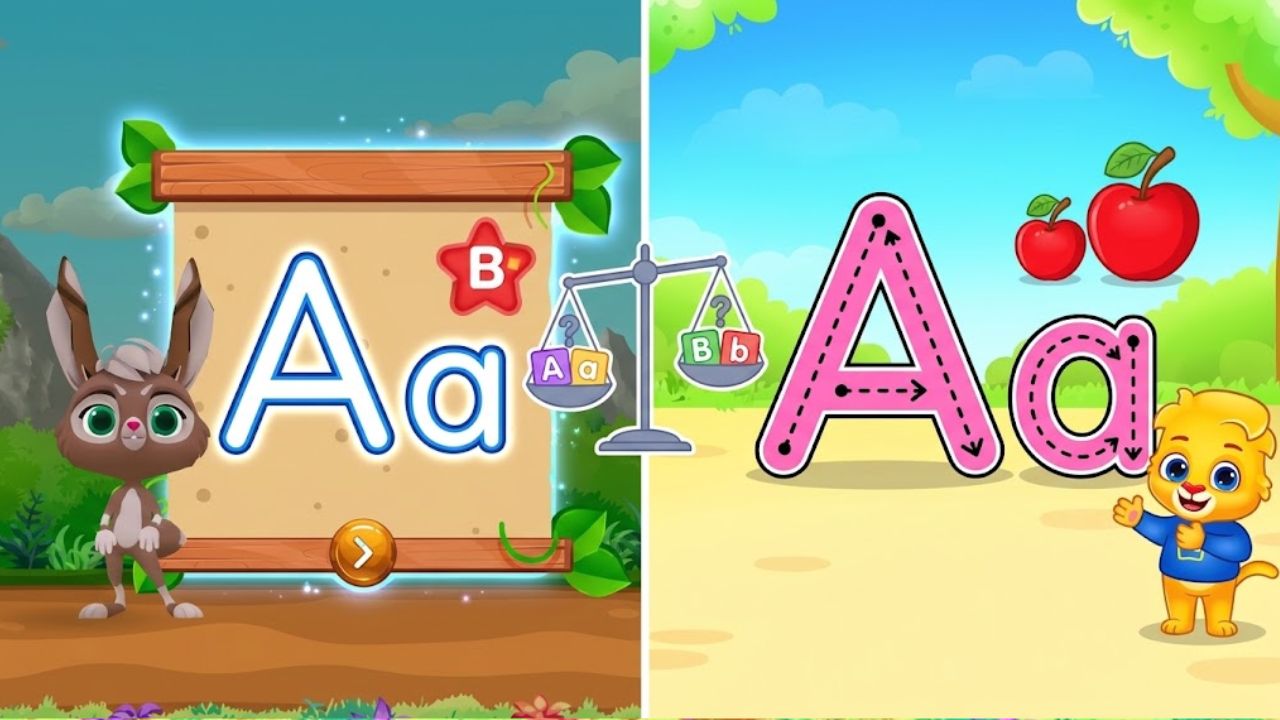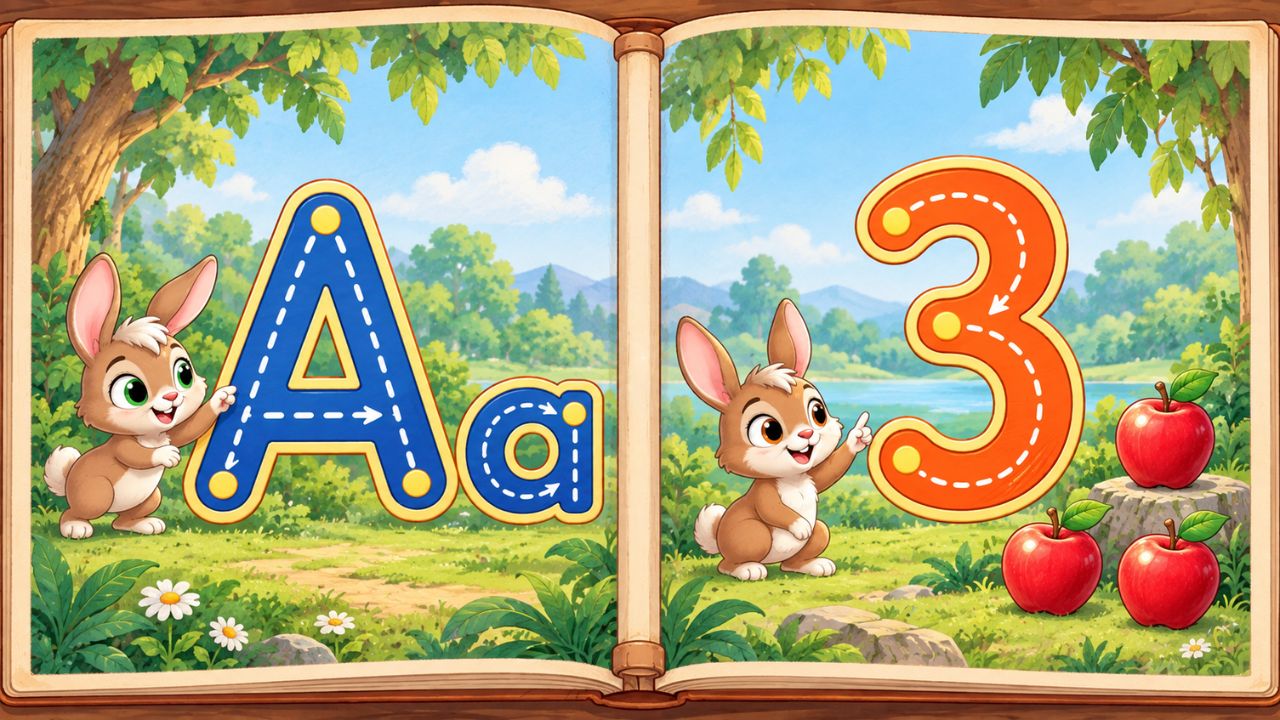
In my Alphabet Magic vs 123 Magic Number Fun testing on Android, I traced capital and small letters in one app and numerals in the other. My finger followed a guided path in both. Yet finishing the shapes was only one part of the task: a letter can be recognized, connected with a sound, and used in a word; a numeral can be recognized, placed in order, and connected with an amount.
Both apps were built by our team at Editorialge. I played the letter mini-games in Alphabet Magic Trace & Phonics and almost every activity in 123 Magic Number Fun: Math Kid. I also submitted wrong answers and stopped traces before finishing them. Alongside my testing, I have watched young children use the apps. These experiences let me explain what each activity asks a child to practise. They do not let me measure how much either app taught a child on its own.
The answer is fairly clear. Alphabet Magic targets early letter knowledge: recognizing capital and small letters, following their shapes, connecting letters with sounds, and beginning to spell. 123 Magic targets early number knowledge: recognizing and forming numerals, counting objects, understanding quantities, and following number order. Its math puzzles offer further practice when a child is ready.
Alphabet Magic: recognizing and forming letters
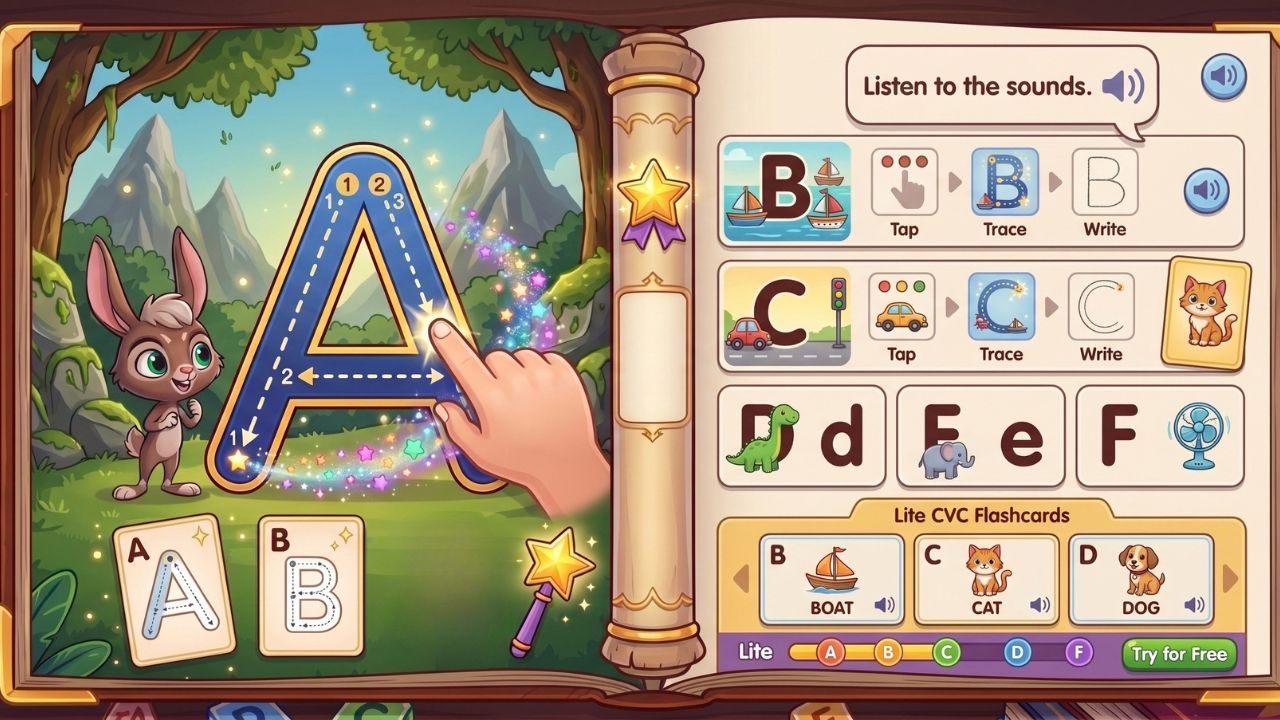
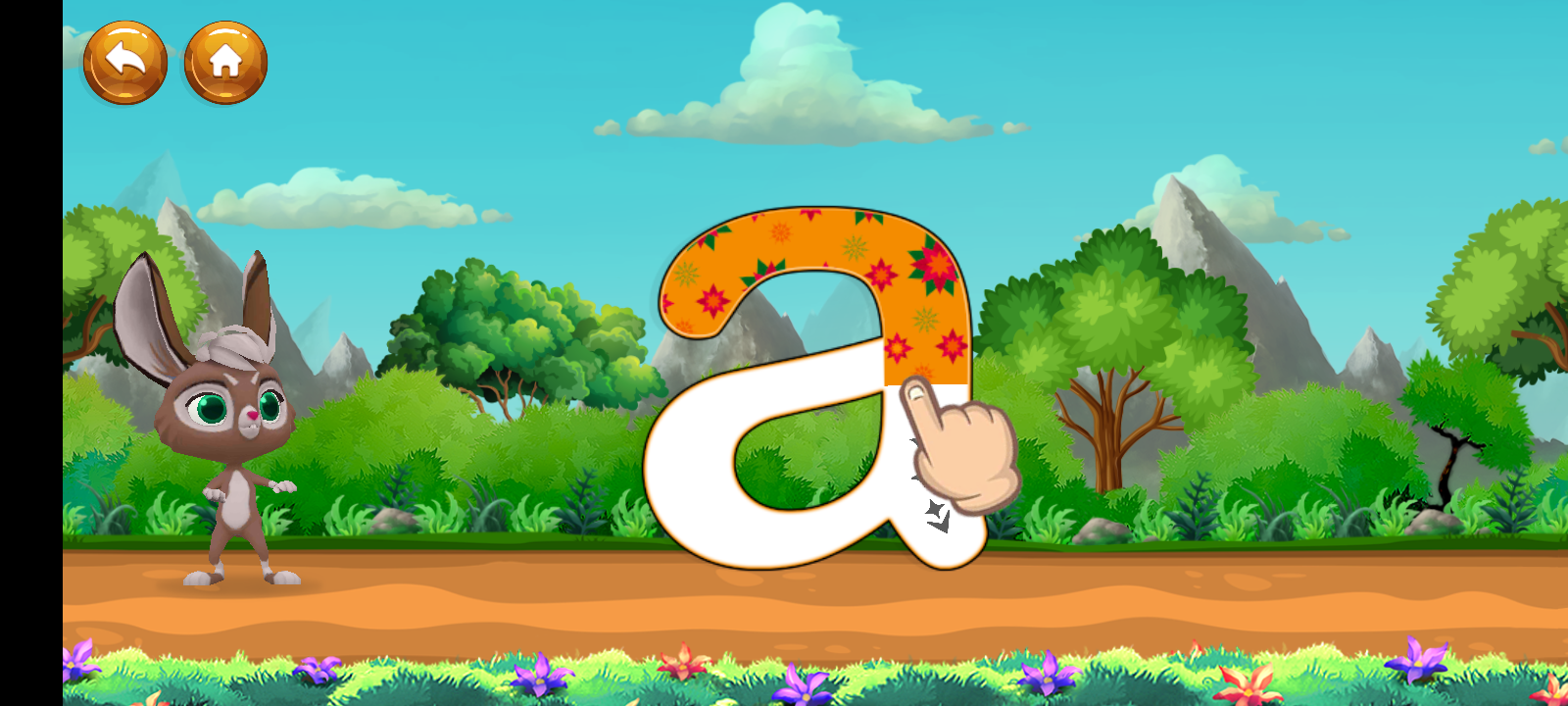
I tried tracing in both letter cases. Alphabet Magic has separate guided activities for capital and small letters. When I left a trace unfinished during testing, the activity I checked did not count it as complete. I had to finish the required path.
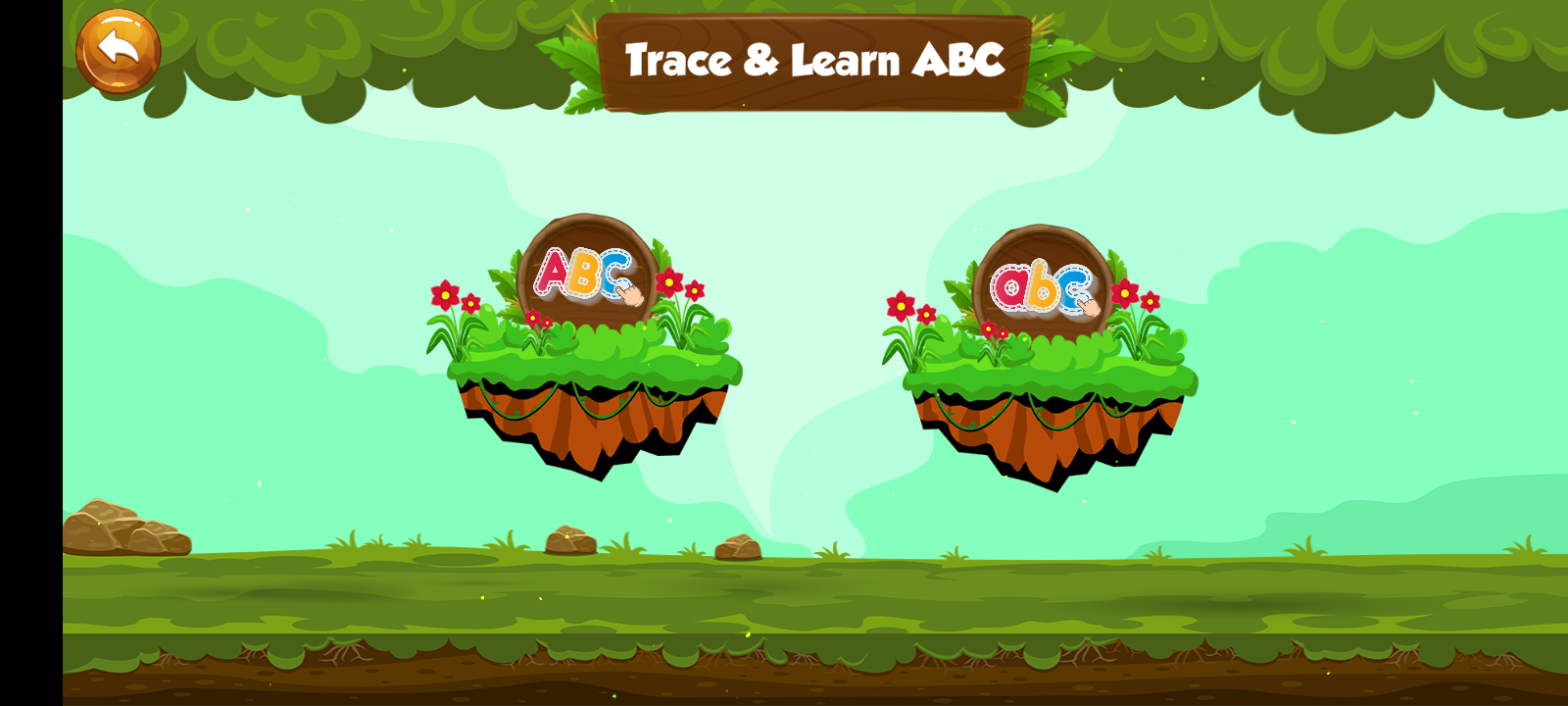
Tracing gives a child practice with a letter’s shape and formation. Seeing both cases also matters. A capital A and a small a are not simply the same drawing at two sizes. A child who knows one may need time with the other.
The app’s matching and letter-discovery games ask for recognition beyond following a line. That gives me another question to consider when watching a child: can they find the letter when the tracing guide is gone? Can they recognize it in a book, where the colour, size, and surrounding pictures have changed?
My nephew began with uppercase letters. Later, I saw him distinguish lowercase forms and spot letters in books. He also had books, toys, preschool activities, and help from adults. Alphabet Magic gave him opportunities to practice; I cannot separate it from everything else he was learning through.
Letter sounds and spelling ask for another step
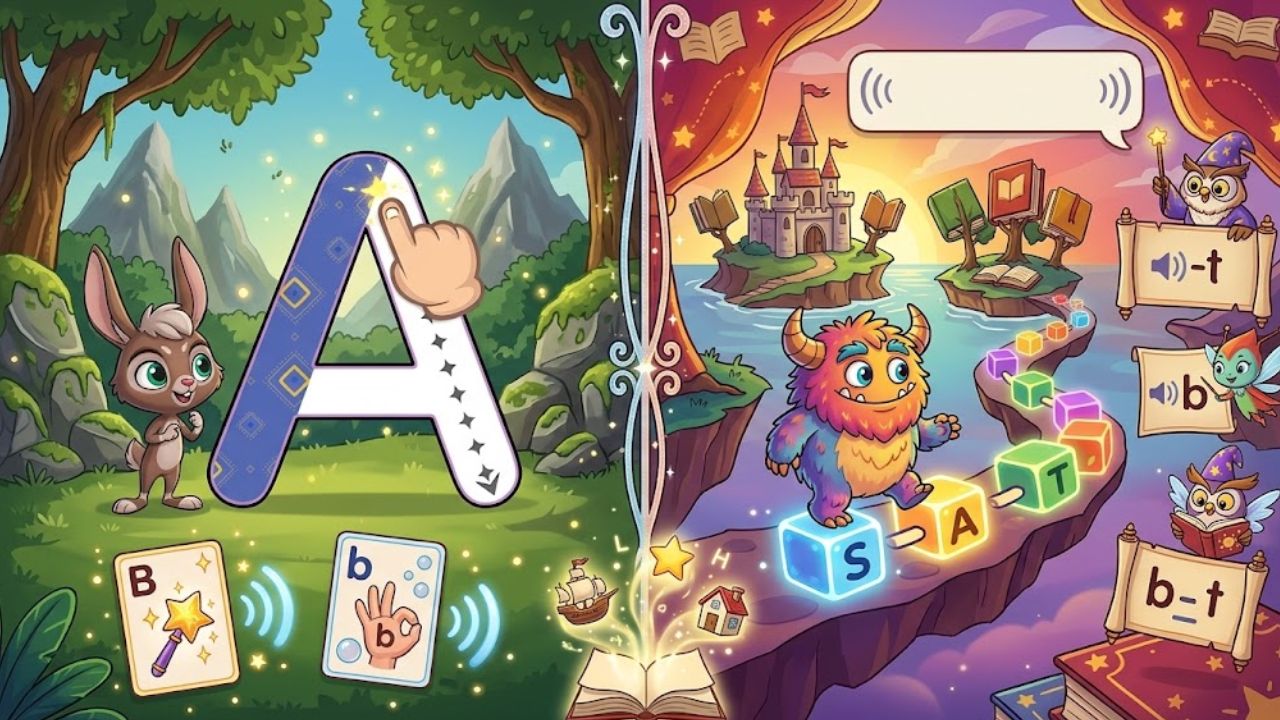
Alphabet Magic includes sound activities and a spelling game. Knowing a letter’s name, giving a sound it can represent, and using letters in a word are related skills. One does not automatically establish the next.
I describe the app’s target as letter recognition, capital and small letter forms, guided letter formation, letter–sound connections, and early spelling practice. A completed spelling activity does not tell me that a child can read an unfamiliar word. Likewise, I would check whether they can form a letter on paper without the guided path before calling it independent handwriting.
123 Magic Number Fun: connecting numerals with quantities
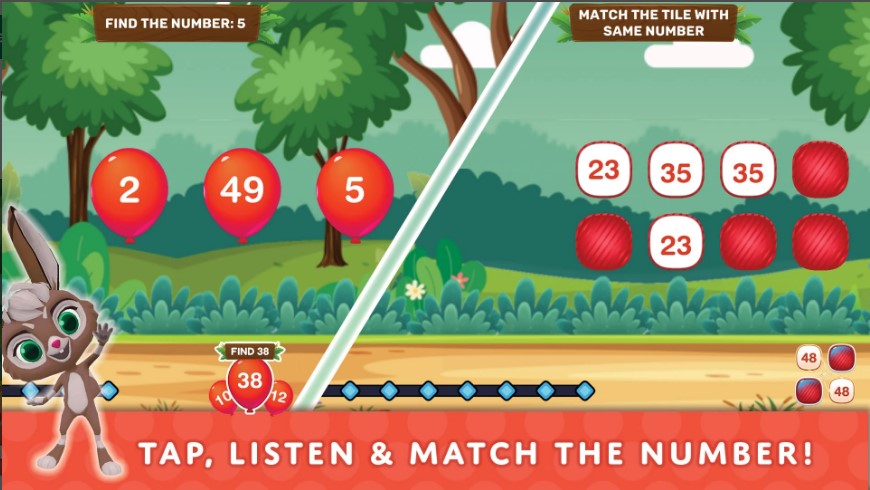
I tried number tracing, Pop Balloons, Tile Match, and Joint Numbers, among other activities. Tracing introduces the shape of a numeral. Pop Balloons asks the child to listen for a number and select its written form. Matching activities give them practice noticing and pairing numerals.
These games primarily work on number recognition. A child may correctly identify 5 on the screen while still needing help to count out five objects. Count Objects moves closer to that second skill by asking the child to look at a group and choose an answer about how many there are.
I tried wrong answers during testing. The activities I checked did not count an incorrect selection as complete. Even so, a correct tap cannot tell me how a child reached it. I would watch whether they counted each object once and understood that the final number said was the total. That is a more specific skill than recognizing the shape of 5.
Number order and equations extend the practice
I also tried Number Adventure and Number Art Creator. Following numerals in order asks children to work out what comes next. That is another task beyond identifying an isolated number.
Math Puzzle and Math Car Race move into equations. The race uses addition and subtraction, while the puzzles include a wider range of operations. I would choose these games according to what a child already understands. A child still learning to count a small group of objects has a different task from one who is ready to solve an equation.
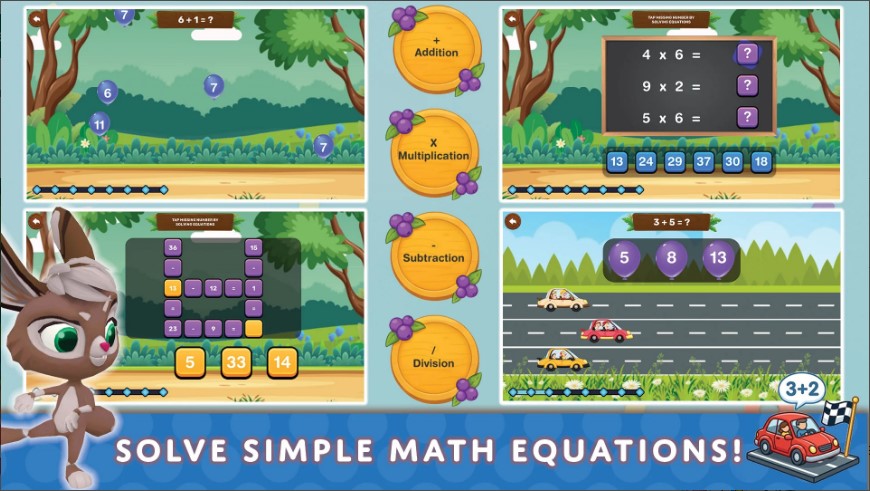
For me, 123 Magic’s core targets are numeral recognition and formation, counting, quantity, and number order. Its arithmetic activities extend the range of practice. I would choose a relevant activity for the child rather than assume they should work through every game.
What the wrong answers showed me
I deliberately stopped tracing partway and selected wrong answers because I wanted to see what the games counted as completion. In the activities I checked, an unfinished trace or wrong answer did not clear the task. I had to finish the path or select the correct answer.
That tells me something useful about the action required in the app. To understand a child’s learning, I need to watch what happens before the final correct tap. Did they count carefully? Did they recognize the letter without a prompt? Did they try another answer after thinking, or keep tapping until one worked?
I have watched children around three years old need help at first and later move through activities more independently. Some recognized letters or counted away from the apps. I wrote about the broader question of what makes an educational app educational because I wanted to pay attention to those moments beyond the screen. They matter, although I did not run a formal before-and-after test that could isolate either app’s effect.
Which skill would I practise next?
If a child recognizes capital letters but struggles with small letters, I would choose Alphabet Magic’s letter activities and then look for those letters together in a book. If they know a letter’s name but hesitate over its sound, I would focus on that connection.
If a child can say number names but loses track while counting objects, I would choose a counting activity in 123 Magic. Afterward, I might hand them a few toys, ask them to count each one, and ask, “How many?” A child ready for equations can explore the app’s later math games.
That is how I use the skill focus behind Alphabet Magic vs 123 Magic Number Fun. Each app offers several activities, but the useful choice is a specific one: what is the child practising today, and can they use some of it when the game is closed?
Frequently Asked Questions on Alphabet Magic vs 123 Magic Number Fun
1. What skill does Alphabet Magic target most directly?
Alphabet Magic focuses on early letter knowledge. Its activities include capital and small letter tracing, letter matching, sound practice, and spelling. These give children different ways to work with letters; completing a game does not establish that they can already read independently.
2. Does tracing in Alphabet Magic mean a child can write letters on paper?
Tracing provides guided practice with a letter’s shape and movement. To see whether the child can form it independently, give them paper and a pencil or another suitable writing tool and remove the on-screen guide.
3. What does 123 Magic teach beyond recognizing numerals?
Its counting activities ask children to connect numbers with groups of objects. Number Adventure and Number Art Creator involve sequence, while the math games introduce equations for children ready for that work.
4. If a child taps the correct number, do they understand the quantity?
The correct tap shows which answer they selected. Watch how they reached it. Ask them to count a small group of real objects, touching each once, and then tell you the total.
5. Are the math puzzles appropriate for every young child?
I would choose based on the child’s current skill. A child learning to count objects can start with recognition and counting activities. Equation games make more sense once they are comfortable with the numbers and quantities involved.
6. Can a child use both apps?
Yes, when they are practising both early literacy and numeracy. I would select one activity that matches the skill the child is working on, then continue with it using a book, letters, toys, or other objects, away from the screen.