I have spent the last two years buying access to models I did not build. At ImagineLab Art, that means running image and video models through their APIs every single day. At Rankpilot AI, which my team is still building, it means sitting with our developers, checking response quality, and arguing over which model earns its place in the stack.
Both jobs forced me to learn how AI models are trained, because the training decisions made months earlier show up in my invoice and in my output quality. This is the explainer I wish someone had handed me on day one.
The Three Stages Behind Every Model You Use
Every model I pay for went through roughly the same three stages.
- First comes pretraining. The model reads an enormous pile of text, images, or video and learns to predict what comes next. This stage eats almost all of the money and time.
- Second comes fine-tuning. The lab feeds the model smaller, cleaner examples of the behavior it wants. Answer this way. Format code like this. Refuse that.
- Third comes alignment, usually through human feedback. People rank model answers, and the model learns which style of answer people prefer.
When someone asks me how AI models are trained, I always start here. Stage one builds raw ability. Stages two and three decide whether that ability is usable.
How AI Models Are Trained on Data and Why Data Quality Matters
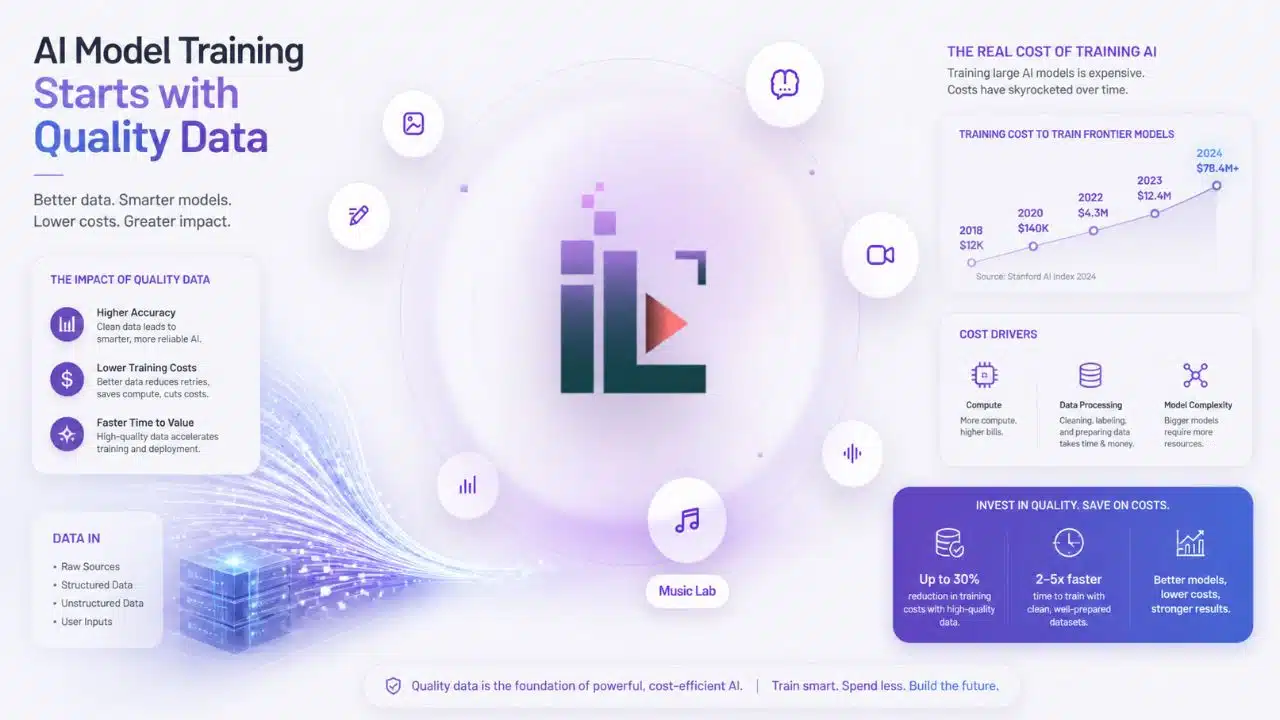
Data is the part most people skip over. It is also the part I notice most in daily work. Text models train on trillions of tokens. A token is a chunk of a word. Image models train on pairs of pictures and captions. Video models train on clips plus text descriptions, which is far harder to collect at scale.
Here is what I see at ImagineLab.art. I can send the exact same prompt to FLUX from Black Forest Labs, to Seedream from ByteDance, and to a model from Alibaba’s Qwen family. The outputs are not slightly different. They are different in taste. One handles typography inside an image well. Another gives me better skin tones. One follows long prompts closely and another drifts after the first two clauses.
None of that is random. Those gaps trace back to what each lab collected, what it filtered out, and what captions it wrote. So when I explain how AI models are trained to a client, I tell them the honest version: you are not choosing a model; you are choosing someone else’s dataset.
More data is not automatically better, either. Duplicate pages, junk scrapes, and broken captions all teach the model bad habits. Labs now spend serious effort on filtering, and I think that effort explains more quality jumps than raw size does.
How AI Models Are Trained Using Compute: The GPU Part Explained Simply
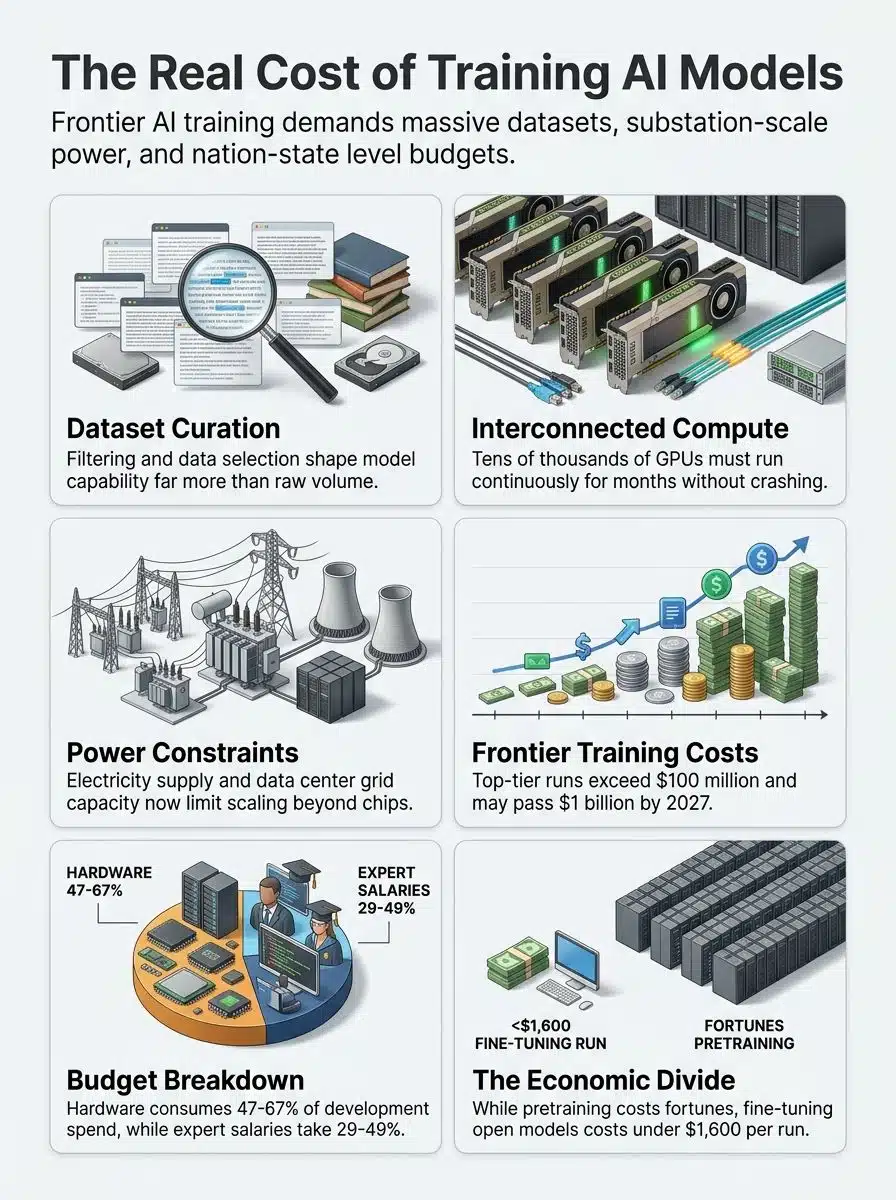
Compute is the second pillar, and it is easier to picture than people expect. Training runs on clusters of specialized chips, mostly NVIDIA GPUs. A frontier run can use tens of thousands of them at once, wired together so they act like one giant machine. The run lasts weeks or months without stopping.
Two things make this hard. The chips must talk to each other constantly, so the network between them matters as much as the chips. And if the run crashes at week six, you restart from your last checkpoint and lose real money.
The binding limit on the next jump in training compute is now power, not chips. That line stuck with me. A cluster this size needs its own substation-scale electricity supply, which is why data center siting became an AI story.
You do not need to run a cluster to care. Understanding how AI models are trained on this kind of hardware explains why a lab prices its top model higher than its small one and why cheap models arrive months after expensive ones.
How AI Models Are Trained at a Cost That Surprises Almost Everyone
Now the numbers. These are public estimates, not lab disclosures, so treat them as ranges.
GPT-4’s training reportedly landed somewhere between $78 million and $191 million, and Gemini Ultra sat near $191 million by Stanford AI Index estimates. Epoch AI found that the amortized hardware and energy cost of frontier training runs grew about 2.4 times per year since 2016. If that pace holds, the biggest runs pass a billion dollars by 2027.
The breakdown matters more than the headline. Epoch’s analysis of major models put hardware at 47 to 67 percent of development cost, with research staff at 29 to 49 percent. Salaries are not a rounding error here. Experienced people are a large slice of the bill.
The other half of the story is that the floor keeps dropping. Fine-tuning an existing 7B open model can cost between $40 and $1,600 per run in 2026, and most teams fine-tune rather than pretrain. That is the range my own projects live in, not the hundred-million range.
So how AI models are trained splits into two very different economic worlds. A handful of labs spend like nation-states. Everyone else adapts what those labs release.
How AI Models Are Trained for Images and Video Versus Text
This is where my ImagineLab Art work taught me something I had not read anywhere.
Text models predict the next token. Most image and video models work by diffusion, which means they start with noise and clean it up step by step until a picture appears. Video adds time, so the model must keep a face consistent across frames, not just make one good frame.
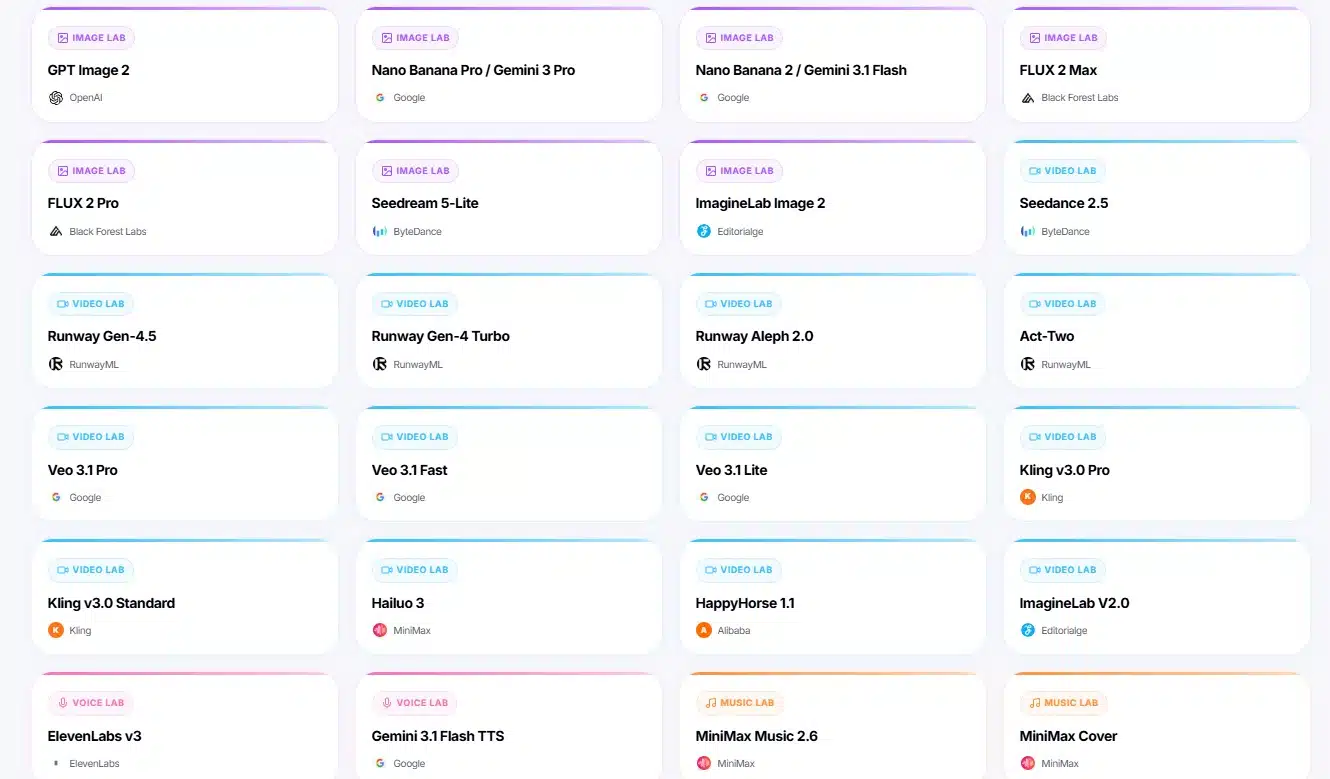
The practical result is that image and video generation costs behave differently from text. Text bills by tokens in and tokens out. Image and video bills by resolution, by number of steps, and by seconds of footage. When I tested video models from MiniMax and ByteDance against our production needs, the cost curve was steep in a way our text budget never was.
Anyone learning how AI models are trained should keep this split in mind. The three stages still apply. The math underneath and the invoice on top do not match.
How AI Models Are Trained Shows Up Directly in Your API Bill
This is the part I actually get paid to think about. When I compare providers for RankPilot AI, I never look at price per million tokens alone. I look at four things together:
- Output quality on our real prompts, not on public benchmarks
- Token efficiency, because a chatty model costs more even at the same rate
- Latency, since a slow model breaks the product experience
- Context window pricing, because long inputs quietly dominate the bill
Frontier models from OpenAI, Anthropic, and Google carry frontier training costs, and you pay part of that back. Smaller models in the same families are usually distilled, meaning a big model taught a small one. They cost far less and often handle routine work fine.
Open-weight models from Meta, Mistral, and Alibaba shift the equation again. The training was paid for by someone else, so you pay for hosting instead. In our testing, they won on price for narrow, repetitive tasks and lost on anything needing careful reasoning.
My working rule is simple. Route easy tasks to cheap models and hard tasks to expensive ones. That one decision cut our test-phase spend more than any prompt trick did.
How AI Models Are Trained: Quick Answers to Common Questions
1. How long does training an AI model take?
A frontier pretraining run usually takes weeks to several months of continuous compute. Fine-tuning an existing open model can finish in hours.
2. Can a small team train its own AI model?
Training from scratch? Realistically, no. Fine-tuning an open-weight model, yes, and often for a few hundred dollars.
3. Does more training data always make a better model?
No. Clean, well-filtered, well-labeled data beats a bigger, messy pile. Duplicates and bad captions teach bad habits.
4. Why do two models give different answers to the same prompt?
Different training data, different fine-tuning choices, and different human feedback. Same question, different upbringing.
If you are picking models for a product right now, run your own prompts against three providers before you commit to any of them. Benchmarks describe how AI models are trained to perform in general. Your prompts tell you what you will actually pay for.
Final Words
Strip away the numbers and the whole thing comes down to one idea. A model is the result of choices someone else made about data, hardware, and budget, months before you ever typed a prompt into it.
That is why I stopped treating model selection as a shopping decision. Once I understood how AI models are trained, the differences I kept running into at ImagineLab Art stopped feeling random. A model that ignores half my prompt is not broken. It was trained on captions that never rewarded close reading.
So here is what I do now and what I ask our developers at RankPilot AI to do. Build a small test set of prompts that look like your real work. Run it across three providers. Log the quality, the tokens, and the wait time. Then pick.
Pricing pages will tell you what a model costs. Only your own prompts will tell you what it is worth.