Does your accounting team feel a little stuck? They crunch numbers, file taxes, and keep your books straight. But you want more than clean books. You want someone who spots problems early and helps you make smarter financial decisions. Many business owners and CPA firms feel this same gap. They need accounting support that goes beyond traditional bookkeeping. They want an advisor who has a seat at the table during strategic planning.
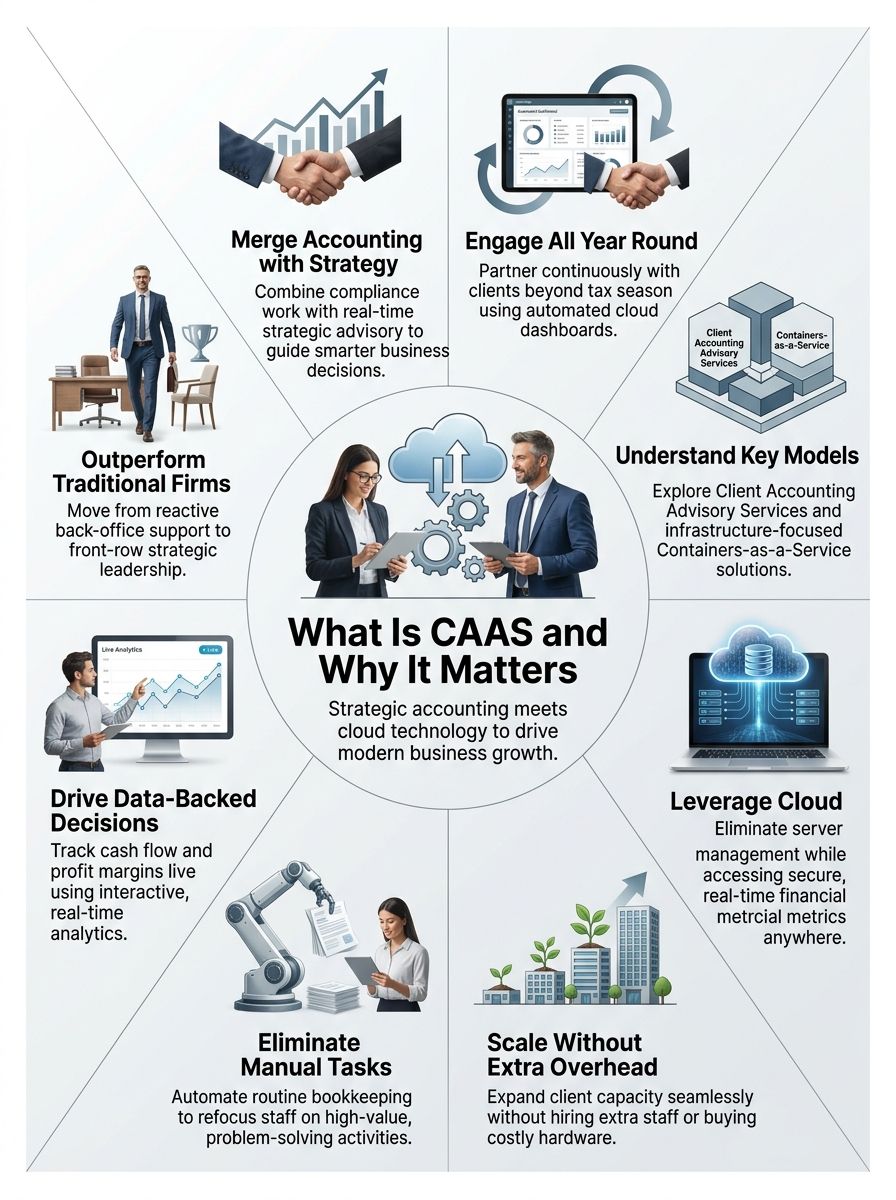
That’s exactly what CAAS delivers. CAAS stands for Client Accounting and Advisory Services, and it blends compliance work with real strategic guidance.
With CAAS accounting, your accountant becomes a true partner. They use cloud computing, software tools, and real-time data to help you run your business better. CPA firms stay engaged with clients all year, not just during tax season.
Businesses get better financial insights. Accountants build stronger relationships. Everyone wins.
I’ll walk you through what CAAS actually means, the different types of CAAS services, the benefits of outsourced accounting, and how scalability helps your business grow. Grab a coffee, and let’s go through it together.
What Does CAAS Stand For?
CAAS stands for Client Accounting and Advisory Services. It’s a cloud-based approach that helps businesses manage their financial data and accounting operations more effectively.
This service model pairs accounting expertise with strategic guidance. Instead of working from outdated reports, you make decisions backed by real-time information.
Definition of CAAS
Client Accounting and Advisory Services blends two powerful things into one offering. Accountants combine traditional bookkeeping with strategic consulting to help businesses thrive.
Clients get financial statements, compliance work, and expert guidance all rolled together. The advisory piece is what sets CAAS apart from regular accounting services. A certified public accountant delivers more than numbers; they act as a trusted advisor who shapes business strategy and performance.
CAAS accounting also represents a major growth opportunity for CPA firms across the country. The proof is in the data. According to the AICPA and CPA.com’s 2024 CAS Benchmark Survey (based on 2023 data from more than 200 U.S. firms), CAS practices reported a median 17% revenue growth rate. Median net client fees per professional rose to $156,250, a 29% jump since the 2022 survey.
Why does that matter to you? If you run a CPA firm, those numbers give you a real benchmark to measure your own growth against. This is not a vague trend. It’s a documented shift in how firms make money.
Here’s what CAAS service providers typically bring together:
- Core accounting functions and compliance work
- Consulting on financial strategy and risk assessment
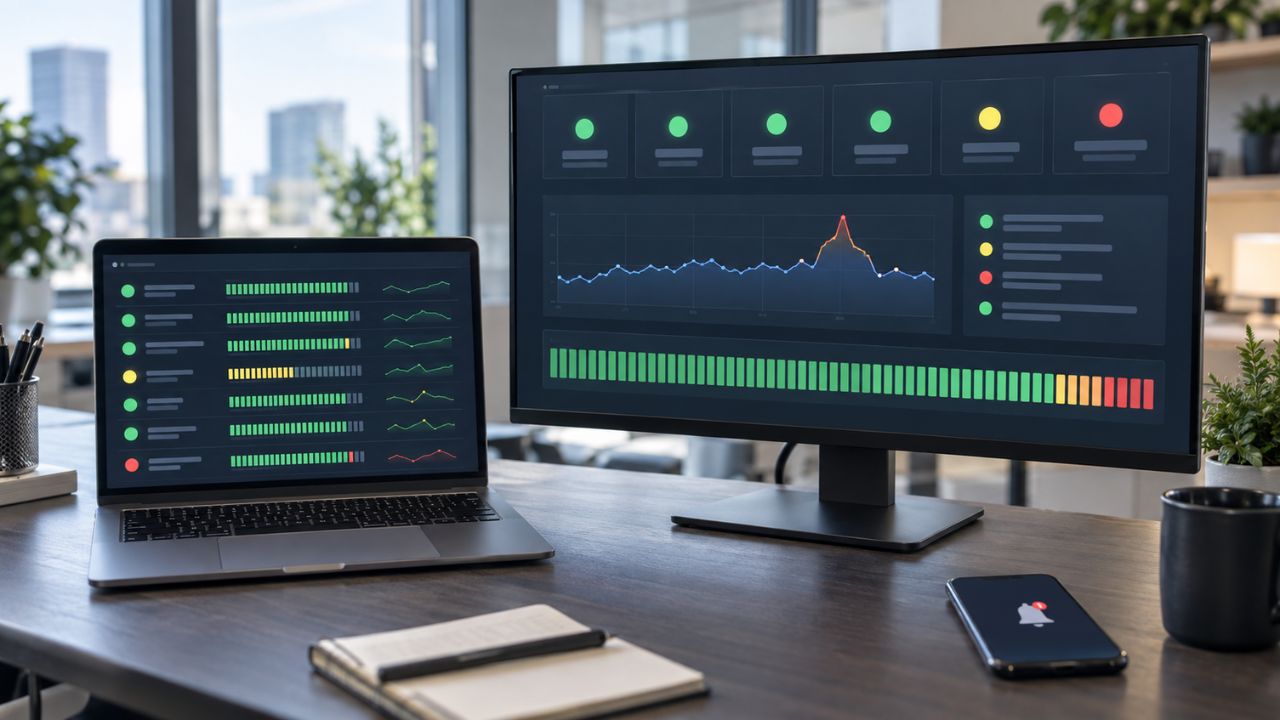
- Real-time dashboards showing cash flow, profitability, and operational efficiency
- Ongoing guidance on business performance
This consultative approach focuses on strategic insights rather than just compliance. Accounting firms have moved from back-office support to a front-row seat at the strategic management table.
Overview of its significance in the digital age
Traditional accounting focused on number-crunching and annual tax filings. CAAS turns that relationship into something far more valuable.
Firms now engage with clients throughout the year, not just once annually. That continuous contact means accountants can address real-time challenges and help guide business decisions as they happen.
Cloud service providers and modern technology make this constant communication possible. Real-time dashboards and automation tools let CPAs share secure information instantly. Firms strengthen relationships and create new revenue streams by offering strategic advice that shapes management decisions.
So why has CAAS taken off now? A few reasons stand out:
- Businesses need more than compliance; they face shifting markets and complex financial choices
- Cloud infrastructure, containerization, and deployment tools make service delivery smooth and secure
- Kubernetes and container management systems let firms scale without expensive in-house infrastructure
- AWS, Google Cloud, and Azure provide the backbone for secure data sharing
Automation reduces manual work and improves accuracy in tax filings and audits. Meanwhile, chief financial officers increasingly want advisory services alongside traditional accounting support.
The industry data backs this up. Per Accounting Today’s 2026 Top 100 Firms survey, 85% of the 88 responding firms said client accounting services boosted their growth. That’s up five percentage points from the prior year, and it marks the third straight year CAS ranked as a top growth driver.
Businesses clearly recognize that accountants bring strategic value beyond the numbers. The digital environment simply makes that partnership faster, cheaper, and more reliable than ever.
Types of CAAS
Here’s a fun twist: CAAS actually comes in two very different flavors. One focuses on accounting services. The other handles containerized software workloads through cloud providers.

| Client Accounting and Advisory Services (CAAS) | Containers-as-a-Service (CaaS) | |
|---|---|---|
| What it is | Outsourced accounting plus strategic advisory support | Cloud service for running software in containers |
| Who uses it | Businesses, CFOs, and CPA firms | Software and IT teams |
| Main benefit | Better financial decisions with real-time data | Portable, scalable applications with lower compute costs |
Client Accounting and Advisory Services
This version of CAAS puts your financial operations in capable hands. Firms like Wegner CPAs offer services that go well beyond basic bookkeeping.
A typical package includes:
- Month-end financial close support
- Real-time dashboards that show exactly where your money goes
- Cash-flow forecasting and recurring strategic planning
- Advisory meetings with experienced professionals
These services cover compliance too, keeping your business tax-ready and audit-ready without the headache. Your CFO and controller get expert guidance on budgeting, forecasting, and management reporting.
The best part? Your outsourcing partner adapts to your needs, whether you face a merger, an acquisition, or a sudden growth spurt.
Many business leaders choose outsourced accounting because their back office eats more resources than it creates in value. With advisory support, your team stops drowning in data entry and starts making smarter decisions with real-time information.
Good providers work with you to define roles, schedules, deadlines, and communication guidelines that fit your operation. They adjust service delivery as your workload changes, so you get support today and flexibility tomorrow. Profit margins improve when you stop paying for unneeded overhead in your accounting department.
Containers-as-a-Service
Containers-as-a-Service, or CaaS, lets companies run software in small, portable boxes called containers. Think of containers like shipping boxes for your code. Red Hat and other companies offer these services to businesses.
Your software works the same way inside a container no matter what operating system runs underneath. That portability matters. You can move applications from your computer to the cloud without breaking anything, and containerization uses fewer resources than virtual machines do.
CaaS brings two big ideas together:
- Orchestration: the system automatically manages your containers, starting, stopping, and moving them as needed
- Microservices: big applications get broken into small pieces that work independently

This approach gives you scalability that VMs can’t match. And it’s no longer a niche choice. According to Kubernetes adoption research compiled by commandlinux.com’s Linux Container & Kubernetes Adoption Statistics report, 80% of organizations had deployed Kubernetes in production by 2024, up from 66% in 2023. The U.S. accounts for 52.4% of Kubernetes users worldwide, and Amazon EKS, Google GKE, and Azure AKS together run roughly 79% of managed Kubernetes workloads.
In plain terms, the container-based tools that power CAAS platforms are proven at massive scale. You pay only for the compute you use, deployment happens in minutes, and your infrastructure grows right along with your business.
The Rise of CAAS in the Digital Era
Cloud technology powers CAAS. It lets businesses scale operations without buying expensive hardware or managing complex infrastructure-as-a-service systems on their own.
Organizations now automate routine tasks, cut manual work, and see profit margins, client performance, and business management metrics on live dashboards.
The role of cloud technology
Cloud platforms give CPA firms and their clients real-time access to financial data from anywhere. Infrastructure-as-a-service and platform-as-a-service solutions handle the data processing and storage behind the scenes.
Accountants no longer manage servers or worry about system maintenance. The cloud does that work, which frees firms to focus on high-value advisory work instead of routine data management.
Want to see what this looks like in practice? One regional firm rebuilt its delivery model around containerized accounting applications on a managed cloud platform. Here’s how it went:
- Assessed eight typical client workflows and standardized five month-end templates
- Migrated twelve clients to the managed cloud environment over ten weeks
- Implemented role-based access with automated backups
- Trained staff in two 90-minute sessions
By month three, support tickets dropped by 25 percent. A managing partner at the firm noted that standardizing templates and moving to a managed cloud environment gave them repeatable delivery without extra headcount.
Advanced software tools built on cloud systems handle financial forecasting and economic analysis quickly. Automation reduces human error and cuts time spent on repetitive work. And CAAS providers offer help throughout the adoption process, so firms don’t have to figure it out alone.
Scalability and efficiency benefits
CAAS gives your firm room to grow without hiring extra staff at every turn. Your team serves more clients while keeping overhead low, and real-time dashboards show exactly where profits come from.
Container-based systems adapt to whatever hits next: a merger, an acquisition, or a sudden growth spike. Flexibility and scalability are two of the biggest advantages of picking the right CAAS provider.
The cost math is striking. Per cost-comparison research published by inDinero, a single in-house accountant typically costs $100,000 to $150,000 per year fully loaded with salary, benefits, and software. A CPA-led outsourced accounting arrangement can deliver a full team plus advisory support for roughly $9,000 to $60,000 annually, depending on scope.
One subscription-based services company ran this exact comparison during a growth period. Leadership modeled a three-year cost picture for recurring bookkeeping and advisory work:

| Option | What it included | Estimated cost |
|---|---|---|
| In-house | One additional senior accountant, benefits, software licensing | $220,000 |
| Outsourced | Subscription package with platform access and advisory hours | $95,000 |
Both options assumed a steady workload and the same service level. A CFO at the company explained that when they modeled both paths, outsourcing preserved capital and scaled immediately without hiring.
The gains go beyond money. Your people feel happier because they tackle strategic activities instead of paperwork. Small firms compete like larger ones by doing more with less, and providers adjust their services to match your goals as they change.
Benefits of Adopting CAAS
When you adopt CAAS, your team gets real-time data on dashboards that show profit, cash flow, and spending patterns right away. Your operations become scalable too. You can handle growth without hiring extra staff or buying expensive VMs and infrastructure.
Smoother day-to-day operations
Outsourcing client accounting services cuts overhead and takes manual tasks off your plate. Your team stops doing repetitive work and starts doing meaningful work instead.
Lower overhead means more money stays in your pocket. Staff satisfaction climbs because people prefer solving problems over entering data all day. Containerization and orchestration tools organize your accounting workflows so everything runs smoother.
One midmarket retail client shows how fast this can pay off. The company moved bookkeeping and advisory work to a cloud-native outsourced accounting team to cut manual month-end tasks. During a six-month pilot of one business unit, using only standard dashboards and automated bank feeds:
- Average monthly close time dropped from nine days to two days
- Manual journal adjustments fell from 18 per month to four
- Forecasting updates increased from once per quarter to monthly
A finance director at the company put it simply: after the pilot, their finance team stopped chasing transactions and started analyzing trends each month.
Training and development matter a lot when you switch to a CAAS model. Your CPA firm should equip staff with current knowledge in financial management, strategic planning, and technology use. A culture of continuous learning keeps your team sharp in accounting, business consulting, and financial analytics.
Track your metrics along the way. Measuring results tells you whether your strategy is working or needs adjustment, and staff with fresh skills handle the transition with confidence.
Enhanced decision-making with real-time data
Real-time dashboards give you the facts you need to make smart choices right now. CAAS accounting services put key performance indicators and financial statements at your fingertips.
You see cash flow forecasts, profit margins, and spending patterns as they happen. You stop guessing and start deciding based on what’s actually happening in your business. Your team spots problems fast and catches opportunities before competitors do.
Back office support through CAAS also helps you measure performance and test strategies without waiting for month-end reports. Everyone sees the same numbers at the same time, so you can set benchmarks, agree on goals, and build a shared vision across your organization.
This continuous engagement builds client satisfaction and loyalty too. Dashboards cut through the noise and display what matters most. Your staff spends less time hunting for information and more time acting on it, catching small problems before they grow into big headaches.
Final Words
CAAS stands for Client Accounting and Advisory Services, and it changes how businesses work with their accountants. Your company gets more than bookkeeping. You get strategic advice that helps you make smarter financial choices.
Cloud-based platforms and data analytics make the service run smoothly, with dashboards that show your profit and performance instantly. CPA firms now work with clients all year instead of just at tax time, which builds stronger relationships and opens new revenue doors.
Give CAAS a serious look. Your operations get more efficient, and your accountants become true partners in your success.
Frequently Asked Questions (FAQs) on What Does CaaS Stand for
1. What does CAAS stand for?
“CAAS” stands for “Containers as a Service” in tech or “Client Accounting Services” in finance. In tech, platforms like Docker Enterprise use containerization and orchestration to run apps without managing servers. In finance, it combines accounting automation with strategic advisory services.
2. How does CAAS differ from IaaS and PaaS?
CAAS sits between IaaS and PaaS by managing just your containers on platforms like AWS Fargate. With IaaS you control servers, and with PaaS you get a full runtime, but CaaS handles only container orchestration on Linux.
3. What are the benefits of CAAS accounting?
CAAS accounting provides real-time financial dashboards, automates routine tasks, and delivers profit-focused advisory services. Platforms like Botkeeper use AI to process transactions continuously, cutting monthly close time significantly.
4. Why do businesses love the CAAS dashboard?
A CAAS dashboard consolidates financial and operational metrics into one real-time view. Instead of logging into QuickBooks, your bank, and Excel separately, you see cash flow, expenses, and profit margins on a single screen.