Every single day of the calendar year holds a mirror up to human history, reflecting moments of unparalleled triumph, devastating tragedy, and profound cultural transformation. However, July 28 stands out as an incredibly dense cross-section of global milestones. It is a date that witnessed the initial sparks of the First World War, the structural birth of the American space age, and the passing of some of the most phenomenal composers the classical world has ever known.
But to truly understand the historical gravity of July 28, we must look beyond the traditional Western lens. From the deeply intertwined musical history of the Bangalee sphere to the shifting political sands of Asia and the Americas, this date is a testament to how diverse and interconnected our global timeline truly is.
Whether you are a history enthusiast, a trivia collector, or just someone curious about the footprints of the past, join us as we take a deep, comprehensive dive into everything that makes July 28 a monumental day in human history.
The Bangalee Sphere
The Indian subcontinent, particularly the Bengal region (now divided into Bangladesh and the Indian state of West Bengal), possesses a rich tapestry of art, political revolution, and natural phenomena. On July 28, the Bangalee sphere experienced moments that shaped its musical heritage and political consciousness.
Historical Events
-
2015 – The Devastation of Cyclone Komen: The Bay of Bengal is historically notorious for birthing catastrophic weather systems, and late July of 2015 was no exception. On this day, a monsoon depression that had been lingering over the Ganges Delta intensified into a semi-circular tempest known as Cyclone Komen. The storm unleashed torrential downpours across Bangladesh, West Bengal, and neighboring Myanmar. The resulting floods submerged immense tracts of vital agricultural cropland, destroyed infrastructure, and ultimately displaced over 1.2 million people across the region. It served as a stark reminder of the region’s vulnerability to extreme climate shifts.
-
1971 – Preparations for the Battle of Belonia: During the bloody and heroic Bangladesh Liberation War, late July was a period of crucial strategic maneuvering. By July 28, 1971, Mukti Bahini (the Bengali freedom fighters) and allied forces were making rapid, clandestine preparations in the areas of Dhanpur. These meticulous artillery alignments and strategic strongholds laid the vital groundwork for the famous Battle of Belonia, a significant military engagement that helped pave the way for an independent Bangladesh.
Famous Births
-
Kamal Dasgupta (Born 1912, Narail, British India): Born in what is now Bangladesh, Dr. Kamal Dasgupta was an absolute titan of subcontinent cinema and classical music. He earned his doctorate in music from Banaras Hindu University and went on to compose music for over 8,000 songs. He worked intimately with the National Poet of Bangladesh, Kazi Nazrul Islam, composing the music for hundreds of his most famous poems. Dasgupta’s genius was not limited to the Bengali language; he sang and composed in Urdu, Hindi, and Tamil, essentially acting as a cultural bridge across the vast subcontinent.
-
Feroza Begum (Born 1926, Faridpur, British India): By a stroke of cosmic serendipity, Feroza Begum—who would grow up to become the undisputed “Nightingale of Nazrul Sangeet”—was also born on July 28. She learned music directly under Kazi Nazrul Islam and Kamal Dasgupta. Feroza Begum’s powerful, unconventional voice popularized Nazrul Sangeet globally. She later married Kamal Dasgupta, uniting two of the greatest musical minds in South Asian history. She was awarded Bangladesh’s prestigious Independence Day Award and West Bengal’s highest cultural award, the Bangla Bibhushan Samman.
Famous Deaths
-
Mahasweta Devi (Died 2016, Kolkata): Few literary figures have managed to blend exquisite storytelling with fierce, boots-on-the-ground activism quite like Mahasweta Devi. Born in Dhaka (now Bangladesh) and later based in West Bengal, she died on this day at the age of 90. Her literary masterpieces, such as Hajar Churashir Maa (Mother of 1084), brought the brutal realities of the Naxalite movement and the extreme oppression of marginalized tribal communities into the mainstream consciousness. She was decorated with the Sahitya Akademi Award, the Jnanpith Award, and the Ramon Magsaysay Award for her relentless dedication to the voiceless.
-
Charu Majumdar (Died 1972, Calcutta): Charu Majumdar was a radical communist leader and the primary architect of the Naxalite movement in India. His fiery, uncompromising ideology, famously encapsulated in his “Historic Eight Documents,” sparked a series of violent peasant uprisings against wealthy landlords and the Indian state. After a massive nationwide manhunt, Majumdar was apprehended and died of a massive heart attack while in police custody at the Lalbazar lock-up on July 28. His death fractured the movement, though his ideological ghost still haunts the political fringes of the subcontinent today.
International Observances & Holidays
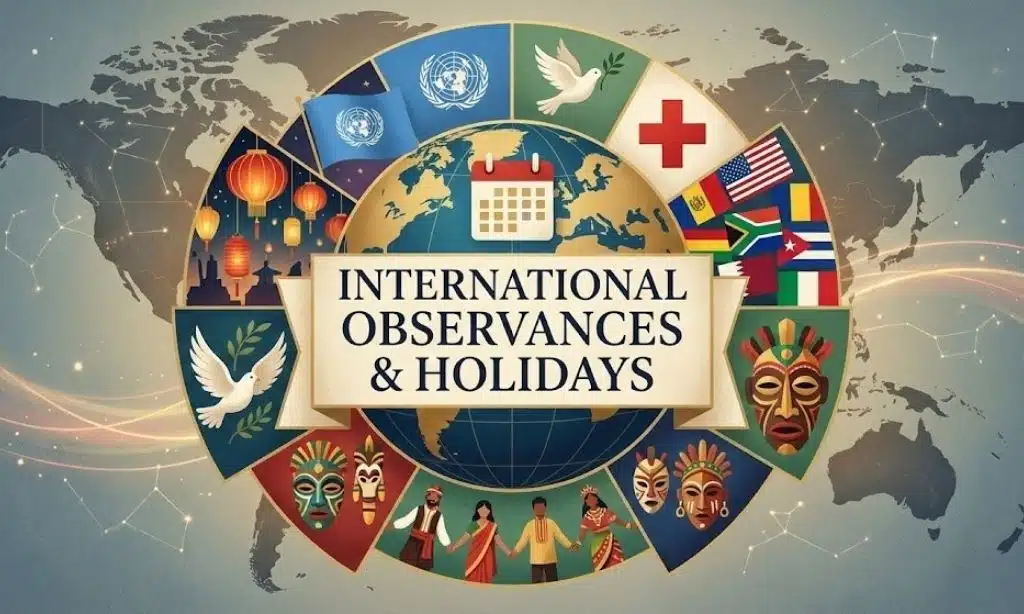
On a global scale, July 28 serves as a day of vital awareness and patriotic celebration. The United Nations and various international bodies utilize this date to draw attention to pressing health and environmental crises, while several nations celebrate their sovereignty.
-
World Hepatitis Day: Recognized globally by the World Health Organization (WHO), this day is dedicated to raising massive awareness about viral hepatitis—an inflammation of the liver that causes severe liver disease and hepatocellular cancer. Why July 28? The date was specifically chosen to honor the birthday of Nobel Laureate Dr. Baruch Samuel Blumberg, the brilliant scientist who not only discovered the Hepatitis B virus but also developed its very first diagnostic test and vaccine.
-
World Nature Conservation Day: As climate anxiety peaks globally, World Nature Conservation Day acts as an annual reminder that a healthy environment is the foundation for a stable and productive society. The day encourages widespread grassroots actions—from planting trees to advocating for renewable energy—to preserve habitats and protect endangered flora and fauna from irreversible extinction.
-
Peru – Independence Day (Fiestas Patrias): On July 28, 1821, the brilliant Argentine general and liberator José de San Martín officially proclaimed the independence of Peru from the Spanish Empire. Today, Peruvians celebrate this monumental anniversary with vibrant parades, passionate music, and deep national pride.
-
Thailand – King Vajiralongkorn’s Birthday: In Thailand, July 28 is a prominent national holiday celebrating the birth of the reigning monarch, King Maha Vajiralongkorn (Rama X). The streets of Bangkok and other major cities are typically adorned with portraits of the King, intricate floral displays, and bright yellow flags—the color traditionally associated with Monday, the day of his birth.
Global History
History is often shaped by single days where the geopolitical pendulum swings wildly in one direction. July 28 is packed with instances of war declarations, technological leaps, and tragic natural disasters that rippled across continents.
United States
-
1868 – Ratification of the 14th Amendment: In the arduous aftermath of the American Civil War, the United States officially adopted the 14th Amendment to its Constitution. This was a watershed moment in American legal history. It granted citizenship to “all persons born or naturalized in the United States,” which crucially included formerly enslaved people. Furthermore, it guaranteed all citizens “equal protection of the laws,” serving as the bedrock for civil rights litigation for centuries to come.
-
1932 – The Eviction of the Bonus Army: At the height of the Great Depression, thousands of desperate, impoverished World War I veterans camped out in Washington, D.C., demanding the early payment of military bonuses they had been promised. On July 28, President Herbert Hoover ordered the U.S. Army, led by General Douglas MacArthur, to clear the encampment. The harsh, tear-gas-filled eviction deeply scarred the nation’s conscience and heavily contributed to Hoover’s subsequent electoral defeat.
-
1945 – The Empire State Building Plane Crash: In a bizarre and tragic accident, a U.S. military B-25 Mitchell bomber, lost in dense fog over New York City, slammed directly into the 79th floor of the Empire State Building. The horrific crash killed 14 people (three crew members and eleven people in the building) and caused a massive structural fire, though the iconic skyscraper remained standing.
-
1958 – The Birth of NASA: Driven by the intense paranoia of the Cold War and the Soviet Union’s successful launch of the Sputnik satellite, the United States Congress passed the National Aeronautics and Space Act. This legislation officially created NASA (National Aeronautics and Space Administration), pivoting the American government toward a highly organized, civilian-led era of space exploration.
Russia & Europe
-
1914 – The Spark of World War I: Exactly one month after a Serbian nationalist assassinated Archduke Franz Ferdinand in Sarajevo, the Austro-Hungarian Empire formally declared war on Serbia. On July 28, this single declaration triggered a catastrophic domino effect of entangled treaties and alliances. Russia mobilized its massive forces to aid its Slavic ally, Serbia, prompting Germany to mobilize, and plunging the entire European continent into the bloody quagmire of the First World War.
-
1943 – Operation Gomorrah (Firestorm Over Hamburg): During the intense strategic bombing campaigns of World War II, British and American allied air forces dropped massive payloads of incendiary bombs on the German port city of Hamburg. The unique weather conditions on July 28 combined with the sheer volume of explosives to create a literal “firestorm”—a tornado of roaring flames that sucked the oxygen from the air. Up to 40,000 civilians perished in one of the deadliest air raids in recorded history.
China
-
1976 – The Devastating Tangshan Earthquake: At 3:42 in the morning, while most of the city’s million residents were fast asleep, a colossal earthquake measuring a magnitude of 7.5 to 7.8 struck the industrial city of Tangshan in Hebei Province, China. Because the city was situated on a previously unknown fault line, buildings lacked earthquake-resistant reinforcements. The city was flattened in seconds. The official Chinese government death toll stands at roughly 242,000, though international estimates suggest the actual number of fatalities may have exceeded 600,000, making it the deadliest earthquake of the 20th century.
United Kingdom
-
1540 – The Execution of Thomas Cromwell: Thomas Cromwell, the brilliant and ruthless chief minister to King Henry VIII, was the mastermind behind the English Reformation and the dissolution of the Catholic monasteries. However, after arranging the disastrous marriage between Henry and Anne of Cleves, Cromwell’s enemies pounced. Stripped of his titles, he was beheaded for treason and heresy on Tower Hill on July 28.
-
2005 – The IRA Ends Its Armed Campaign: In a massive leap toward lasting peace in Northern Ireland, the Provisional Irish Republican Army (IRA) made a historic announcement on this day. After 36 years of violent guerrilla conflict against British rule, the group ordered all its units to dump their arms and declared that they would exclusively pursue their goals through peaceful, democratic politics moving forward.
Australia & Canada
-
1909 – The SS Waratah Vanishes: Often referred to as “Australia’s Titanic,” the luxury passenger steamer SS Waratah was en route from Durban to Cape Town, ultimately headed to London from Australia. On July 28, she was spotted by another ship struggling against heavy swells. She was never seen again. No wreckage, lifeboats, or bodies of the 211 passengers and crew were ever recovered, making it one of maritime history’s most chilling unresolved mysteries.
-
2005 – Acknowledging the Great Upheaval: The Canadian government issued a Royal Proclamation formally designating July 28 as an annual “Day of Commemoration of the Great Upheaval.” This was a formal acknowledgment of the tragic events that began on this date in 1755, when the British Crown ordered the mass, forced deportation of thousands of French-speaking Acadian people from their ancestral lands in Nova Scotia.
Notable Births & Deaths (Global)
Famous Births
Beyond the Bangalee legends, July 28 has given the world a host of brilliant creatives, thinkers, and political leaders.
-
Beatrix Potter (Born 1866, UK): The beloved English author and illustrator whose charming watercolor tales, most notably The Tale of Peter Rabbit, defined early children’s literature. Beyond her writing, Potter was a pioneering natural scientist and a fiercely dedicated conservationist who bought up massive parcels of land in England’s Lake District to protect them from industrial development.
-
Karl Popper (Born 1902, Austria/UK): Regarded as one of the 20th century’s most profound philosophers of science. Popper introduced the theory of empirical falsification, fundamentally arguing that for any theory to be considered genuinely scientific, it must be inherently testable and capable of being proven false.
-
Jacqueline Kennedy Onassis (Born 1929, USA): The 37th First Lady of the United States, married to President John F. Kennedy. A global icon of high fashion, grace, and cultural intellect, she spearheaded the historic restoration of the White House and later forged a highly successful career as a respected book editor in New York.
-
Jim Davis (Born 1945, USA): The American cartoonist best known to the world as the creator of Garfield. His comic strip about a cynical, lasagna-loving, Monday-hating orange tabby cat became one of the most widely syndicated and beloved comic strips in the history of print media.
-
Terry Fox (Born 1958, Canada): An absolute titan of human endurance and spirit. After losing his right leg to osteosarcoma, Fox embarked on the “Marathon of Hope” in 1980—a cross-Canada run with a prosthetic leg to raise money for cancer research. Though his cancer returned and forced him to stop, he became a national hero, and his legacy continues to raise hundreds of millions of dollars globally for cancer research.
Famous Deaths
July 28 marks the loss of some individuals who drastically altered the trajectory of arts, science, and governance.
-
Antonio Vivaldi (Died 1741, Italy): The virtuosic Italian violinist and prolific Baroque composer. Though he died in poverty in Vienna, his masterpieces, especially the series of violin concertos known as The Four Seasons, remain some of the most celebrated and instantly recognizable classical compositions on earth.
-
Johann Sebastian Bach (Died 1750, Germany): Exactly nine years after Vivaldi, the world lost Johann Sebastian Bach. A master of counterpoint, harmonic, and motivic organization, Bach’s intricate compositions—such as the Mass in B minor and the Brandenburg Concertos—fundamentally defined the Baroque era and heavily influenced nearly every major classical composer who followed him.
-
Maximilien de Robespierre (Died 1794, France): The fiercely idealistic and radical leader of the French Revolution. As the architect of the “Reign of Terror,” he sent thousands to the guillotine in the name of liberty and republican virtue. On July 28, the revolution turned on its creator, and Robespierre himself faced the guillotine, effectively ending the most violently turbulent phase of the revolution.
-
Francis Crick (Died 2004, UK): The monumental molecular biologist, biophysicist, and neuroscientist. In 1953, alongside James Watson and relying heavily on the uncredited X-ray crystallography work of Rosalind Franklin, Crick co-discovered the double-helix structure of the DNA molecule—the very blueprint of life. He was awarded the Nobel Prize in Physiology or Medicine in 1962.
“Did You Know?” Trivia
Want to impress your friends at your next dinner party? Here are some fascinating, lesser-known facts specifically related to July 28:
-
A Cosmic Musical Match: Kamal Dasgupta (born in 1912) and Feroza Begum (born in 1926) did not just share a lifelong passion for Nazrul Sangeet—they shared the exact same birthday, July 28. The two iconic artists later married, merging their extraordinary talents to define an entire era of Bengali music.
-
The Loss of the Baroque Masters: In a bizarre twist of historical coincidence, July 28 marks the death of two of the absolute greatest musical minds in European history. Antonio Vivaldi died on this exact day in 1741, and Johann Sebastian Bach passed away precisely nine years later on July 28, 1750.
-
The Botched Execution of Cromwell: When Thomas Cromwell met his grim fate at the chopping block on July 28, 1540, it was not a swift death. Historical accounts suggest the executioner was inexperienced and heavily intoxicated. It took three brutal, agonizing swings of the heavy axe to finally sever the fallen statesman’s head.
-
The Discovery of Kennewick Man: On July 28, 1996, two men watching a hydroplane race in Washington state stumbled upon a human skull. It turned out to belong to “Kennewick Man,” one of the most complete ancient skeletons ever found in North America, dating back roughly 9,000 years. This discovery triggered a massive, decades-long legal battle between scientists who wanted to study the remains and Native American tribes who demanded the right to rebury their ancestor.
Quote of the Day
“There is something delicious about writing the first words of a story. You never quite know where they’ll take you.”
— Beatrix Potter (English author and illustrator, born on this day, July 28, 1866)
Final Thoughts
From the very first declarations that plunged the globe into the trenches of World War I to the structural beginnings of humanity’s reach for the stars via NASA, July 28 is a date of extreme historical density. It is a day that reminds us of the fragility of human life—seen in the Tangshan earthquake and the Empire State Building crash—yet simultaneously celebrates the enduring legacy of human creativity, marked by the births and deaths of literary legends and classical masters.
Understanding what happened “On This Day” allows us to map out the grand, chaotic, and beautiful story of human progress. The historical tapestry of July 28 proves that every day holds the potential to permanently shift the course of history, whether through a single act of legislation, a radical political protest, or the quiet stroke of an artist’s brush.