Have you ever wondered which social media platform actually pays the most for all the work you put in? You film the videos. You post the content. You build the audience. Your time is worth real money, and where you post can change your income by thousands of dollars a year.
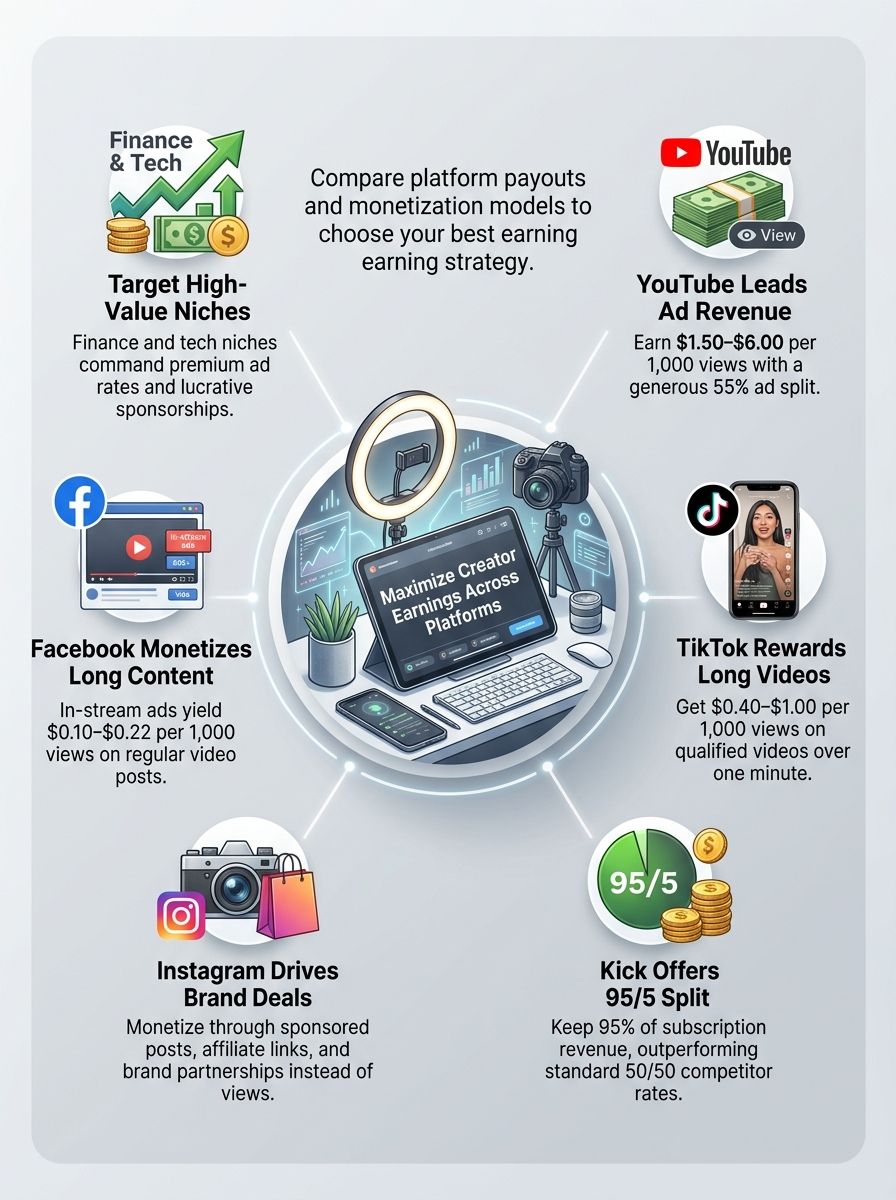
YouTube is still the highest-paying social media platform in 2026. Creators earn between $1.50 and $6.00 per 1,000 views through the YouTube Partner Program.
TikTok comes in second at $0.40 to $1.00 per 1,000 qualified views. Instagram, Facebook, and Kick each pay creators in their own ways too.
The gap between platforms is bigger than most people expect.
In this guide, I’ll walk you through exactly how each platform pays creators in 2026, what the real rates look like, and which factors decide how much lands in your pocket. By the end, you’ll know exactly where to focus your content creation efforts.
Let’s go through it together.
Which Social Media Platform Pays the Most in 2026
Different social media platforms pay creators in wildly different ways, and 2026 brings fresh opportunities to cash in on your content. Some sites hand you ad revenue. Others offer subscriptions, live gifts, or shop commissions to sweeten the deal.
YouTube: Ad revenue sharing, memberships, and Shorts monetization
YouTube leads the pack as the highest-paying platform for content creators in 2026. The YouTube Partner Program gives creators 55% of the ad revenue their videos generate.
Long-form video content earns between $1.50 and $6.00 per 1,000 views. Finance and technology niches pull in even higher payouts.
The scale here is hard to ignore. According to YouTube CEO Neal Mohan’s 2026 remarks on the Partner Program, YouTube has paid creators, artists, and media companies over $100 billion in the past four years. No other platform has disclosed a creator payout figure anywhere close to that.
Sample data from early 2026 backs this up. In a recent analysis of creator dashboards, median ad earnings per 1,000 views broke down like this:

- YouTube: $3.20 median, with payouts ranging from $1.40 to $5.90 between lower and higher earners
- TikTok: $0.70 median on qualified views, ranging from $0.40 to $1.00
- Facebook: $0.16 median, staying tight between $0.10 and $0.22
Those sample figures show why YouTube keeps producing the strongest per view returns for most content creators.
Channel memberships add another income layer. You set your own membership price, YouTube takes a cut, and you keep a solid percentage of every subscriber fee.
YouTube Shorts monetization opened fresh doors for short-form creators, and live streaming brings in money through ads and viewer donations. Add affiliate links and YouTube Shopping commissions, and you can see why serious creators treat YouTube as their home base.
TikTok: Creator Rewards Program and live gifts
TikTok’s Creator Rewards Program puts real money in your pocket through direct payouts based on video performance. Creators earn between $0.40 and $1.00 per 1,000 qualified views, so your content directly translates into cash.
Here’s a detail that works in your favor if you live in the US. Per 2026 TikTok payout analyses from creator-monetization trackers, US-based creators earn roughly 30-40% more per qualified view than creators in other eligible countries because US advertising rates run higher. If your audience is mostly American, your real payout likely sits at the top of that range.

A few rules to know before you count on those earnings:
- Videos must run longer than one minute to qualify, so short clips won’t cut it
- The revenue share model rewards content that keeps people watching
- Engaged audiences beat raw follower counts every time
Live gifts add another income stream on top of your Creator Rewards Program earnings. Viewers send digital gifts during your live video sessions, and you convert those gifts into real money.
This works especially well once you build a loyal fan base that loves interacting in real time. Streamers can earn serious amounts during popular streaming hours.
Between the rewards program and live gifts, TikTok gives you multiple paths to earn. That makes it a solid pick for anyone serious about social media monetization.
Kick: 95/5 subscription split for live streamers
Kick stands out from other streaming services with its generous 95/5 subscription split. Creators keep 95 percent of subscription revenue, while Kick takes only 5 percent.
Compare that to Twitch, where streamers typically start at a 50/50 split. Viewers pay to support their favorite broadcasters on Kick, and creators pocket almost all of it.
Want to see what that difference means in dollars? Here’s a sample calculation:

| Scenario | 400 Subscribers at $5/Month | Creator’s Monthly Income |
|---|---|---|
| Standard 50/50 split | $2,000 total subscription revenue | $1,000 |
| Kick’s 95/5 split | $2,000 total subscription revenue | $1,900 |
Same subscribers, same prices, and an extra $900 per month. That’s a 90 percent jump in subscription income from nothing more than a better platform split.
This isn’t just theory anymore. According to 2026 streaming-industry earnings reports covering Kick’s creator payouts, the platform has paid out more than $400 million to creators since its Creator Incentive Program launched in 2024. Big-name streamers have made the move too. Asmongold reported a 25% jump in viewer hours after switching from Twitch to Kick.
The platform lets live streamers focus on content instead of worrying about losing money to platform cuts. Streamers who build engaged communities can turn subscriptions into steady, predictable income.
For broadcasters tired of traditional revenue models, Kick’s subscription business model offers a different path. The 95/5 split proves platforms can pay their content creators fairly and still operate profitably.
Instagram: Brand deals and sponsored content earnings
Instagram doesn’t pay creators directly for views the way YouTube does. Instead, creators earn money through brand deals and sponsored content.
Companies pay influencers to feature products or services on their accounts. The money comes straight from brands, not from Instagram itself.
So what can you actually charge? Based on 2026 influencer-rate industry data compiled by influencer marketing platforms, the average Instagram sponsored post runs about $220, but rates scale sharply by follower tier.

- Nano creators (500-10K followers): roughly $20-$200 per post
- Macro creators (100K-500K followers): $5,000-$10,000+ per post
- Reels: typically price 40-100% higher than static posts
Affiliate marketing works well here too. You share product links and earn commissions when followers buy. Native advertising lets you blend brand messages into your content so they feel like a real recommendation instead of an ad.
One thing I’d stress: your engagement rate matters more than your follower count. Brands want creators whose audiences actually click, comment, and share.
High engagement tells companies your followers trust your opinions, and they’ll pay more for that trust. Focus your content ideas on your niche, chase authentic video views over vanity metrics, and brand partnerships tend to follow.
Facebook: In-stream ads and video monetization
Facebook pays creators real money through in-stream ads and video monetization. Your videos earn cash when ads play during your content.
Facebook averages between $0.10 and $0.22 per 1,000 views, so earnings grow as more people watch. This advertising revenue model works best for creators who post long-form content on a regular schedule.
The platform’s ad system tracks view counts over time, then calculates payouts based on cost per mille (CPM) rates. Higher engagement pulls in more ad impressions, so engaging content pays off directly.
Video creators on Meta Platforms can also mix revenue streams beyond ads. Your in-stream ads kick in automatically once your videos meet the platform’s requirements.
The more watch time your videos generate, the more chances ads have to display. That makes Facebook a solid choice if you want direct payouts without relying only on sponsorships or brand deals.
Comparison of Revenue Models
Different platforms pay creators in different ways, so you need to pick the right one for your goals. Some sites hand you cash from ads, while others let you earn through subscriptions, gifts, and brand deals.
Direct payouts vs. sponsorship opportunities
When you’re earning money on social media, you face a clear choice between two main paths: getting paid directly by the platform or landing brand sponsorship deals.
| Revenue Stream | How It Works | Best For | Earning Potential |
|---|---|---|---|
| Direct Payouts | Platforms pay you from ad revenue, subscription splits, or viewer gifts. YouTube shares ad revenue. TikTok runs its Creator Rewards Program. Kick offers a 95/5 subscription split for live streamers. Facebook pays through in-stream ads and video monetization. | Creators who produce consistent content. Those building steady audiences. People focused on long-term growth. | Varies by platform. YouTube creators earn from multiple sources. TikTok payouts depend on video performance. Kick streamers get aggressive revenue splits. Facebook monetization grows with views. |
| Sponsorship Opportunities | Brands pay you to create content featuring their products. Instagram specializes in brand deals and sponsored content earnings. Companies negotiate flat rates or performance bonuses. Deals happen outside the platform’s payment system. | Creators with engaged niche audiences. Those with strong personal brands. People are comfortable negotiating with companies. | Often exceeds direct payouts. Sponsorships pay per post or campaign. Rates scale with follower count and engagement rates. High-niche creators command premium fees. |
| Hybrid Approach | Smart creators combine both methods. You collect platform payouts while pursuing sponsorships. This strategy maximizes total income. Most successful creators use this model. | Established creators scaling income. Those serious about monetization. Anyone wanting financial stability. | Highest earning potential overall. Direct payouts provide baseline income. Sponsorships add significant revenue on top. Combined earnings far exceed single-method income. |
Direct payouts arrive automatically through platform dashboards. Sponsorship money requires negotiation, contracts, and relationship building.
Your niche matters enormously for both paths. Tech creators attract premium brand deals. Comedy channels build massive audiences for ad revenue. Gaming streamers thrive on subscription splits through Kick, while fashion influencers command top sponsorship rates on Instagram.
View counts drive direct payouts, but engagement rates drive sponsorship negotiations. A creator with 100,000 followers and low engagement earns less than someone with 50,000 highly engaged followers. Brands care about audience quality, not just numbers.
Timing shapes your strategy too:
- New creators: focus on direct payouts first while you build audience size and consistency
- Growing creators: start pitching sponsorships once you can prove your engagement
- Established creators: flip the ratio and earn more from sponsorships than platform payouts
Your content type matters as well. Educational creators attract tech company sponsorships, fitness creators land supplement and gear deals, and entertainment creators lean more on platform revenue sharing. Figure out what brands want from your niche, then position yourself for it.
Subscription-based models for live streamers
Live streamers earn real money through subscription splits that reward their hard work. Kick leads with its 95/5 split, so streamers keep 95 percent of subscription fees while the platform takes just 5 percent.
Twitch offers a standard 50/50 split, though top streamers can do better than that now. Per Twitch’s 2026 Partner Plus program updates, streamers who sustain roughly 50 concurrent viewers over three months can reach a 60/40 split. Hit about 100 concurrent viewers, and you can unlock 70/30.
There’s a catch, though. The better split only applies to your first $100,000 of annual subscription revenue; then it reverts to 50/50. Even at its best, Twitch’s top tier still trails Kick’s 95/5 by a wide margin.
YouTube and Facebook offer subscription options too, but their cuts favor the platforms more heavily. Streamers who build loyal audiences can stack serious cash through monthly subscriptions alone, especially with a regular streaming schedule.
Live gifts and loyalty programs add another revenue stream on top of subscriptions. Viewers send gifts during streams, and creators pocket a portion of that money.
Building a strong community matters most here. Subscribers stick around when they feel valued and entertained, and streamers who combine subscriptions with sponsored content and brand deals maximize their total earnings.
Factors Influencing Creator Earnings
Your niche and content type shape how much platforms pay you per view. Your engagement rates, view counts, and audience size determine what you actually earn from ad views, sponsorships, and creator fund payouts.
Niche and content type
Your niche makes or breaks your earnings on social media. Long-form content creators on YouTube pull in serious money through ad views and RPM rates. Short-form creators on TikTok and Instagram take a different route, earning through the TikTok Creator Rewards Program, branded content deals, and sponsored posts.
Gaming streamers on Kick and Twitch land big payouts from subscriptions. Tech reviewers, fitness coaches, and beauty creators all see different rates.
The kind of content you make shapes how much platforms pay per view:
- Educational videos attract higher-value sponsors
- Comedy clips get massive engagement but lower ad rates
- Niche audiences, like cryptocurrency or luxury fans, command premium advertiser prices
Engagement and view counts drive earnings directly. A video with 100,000 views in the past 30 days beats one with 10,000 views every single time, and creators who build loyal communities see better revenue per mille rates.
TikTok Shop sellers combine product sales with creator earnings for double income streams. Instagram doesn’t pay creators directly for posts, so brand deals and sponsored content carry the load there, while Facebook creators earn through in-stream ads.
Platforms like TikTok and Instagram reward creators who keep audiences watching longer. High engagement pushes your content harder in the algorithm, more views bring more sponsorship offers, and content shared across multiple platforms multiplies your income potential.
Engagement and view counts
High engagement rates and strong video views in the past show what you can earn going forward. Platforms track how many people watch your content, like your posts, and comment on your videos.
More views mean more money in your pocket. TikTok ads, YouTube monetization, and Instagram Reels all reward creators who build loyal audiences.
The math is simple: bigger numbers equal bigger payouts.
Content type matters too. Long-form content on YouTube pulls in steady ad revenue, while short videos on TikTok and Instagram Reels attract younger viewers who engage fast. Snapchat and X creators find different payout structures based on how people interact with posts.
Here’s the part many creators miss. Niche audiences often engage harder than broad ones, even with fewer total views. A creator with ten thousand passionate fans beats someone with one hundred thousand passive watchers.
Engagement is the real currency that makes social media content pay. Platforms pay per view, but they pay more when viewers stick around, click, and share.
Final Words
YouTube takes the crown as the highest-paying social media platform for 2026, offering creators up to $6.00 per 1,000 views through ad revenue sharing, backed by over $100 billion in creator payouts over four years.
TikTok follows close behind at $0.40 to $1.00 per 1,000 qualified views, with US creators earning at the top of that range. It’s a strong second option for short-form content.
Kick disrupts the game with its 95/5 subscription split, rewarding live streamers far more generously than traditional competitors.
Your best strategy? Mix multiple platforms and revenue streams. Combine direct payouts with brand sponsorships and affiliate marketing.
Start where your audience already gathers, then expand across platforms to grow your creator earnings in 2026.
Frequently Asked Questions (FAQs)
YouTube still leads in 2026, paying creators around $3 to $5 per 1,000 views in the US for long-form content with ads.
2. Does Instagram pay creators directly?
Instagram doesn’t have a direct ad revenue program for creators, so you’ll need to earn through brand deals instead.
3. What is the best platform for creators to earn in 2026?
It depends on what you make. YouTube is best for video ad revenue, while Twitch works great if you stream live and want to earn through subscriptions.
4. What are the top ways for content creators to make money?
The top four ways are ad revenue, sponsorships, tips, and subscriptions, and mixing them gives you the most stable income.
5. How can I monetize my content if one platform pays too little?
Add another platform and cross-post your videos, then use a tool like ClickUp to keep your content schedule organized.
6. Did the 2026 payout rates change from 2025?
Yes, rates shifted between January 2025 and January 2026, with some platforms boosting their per-view payouts to keep talented creators around. Each platform tweaks its monetization rules differently, so checking the latest terms every year helps you find better deals. You’ll discover programs now allow creators more earning options than before.