

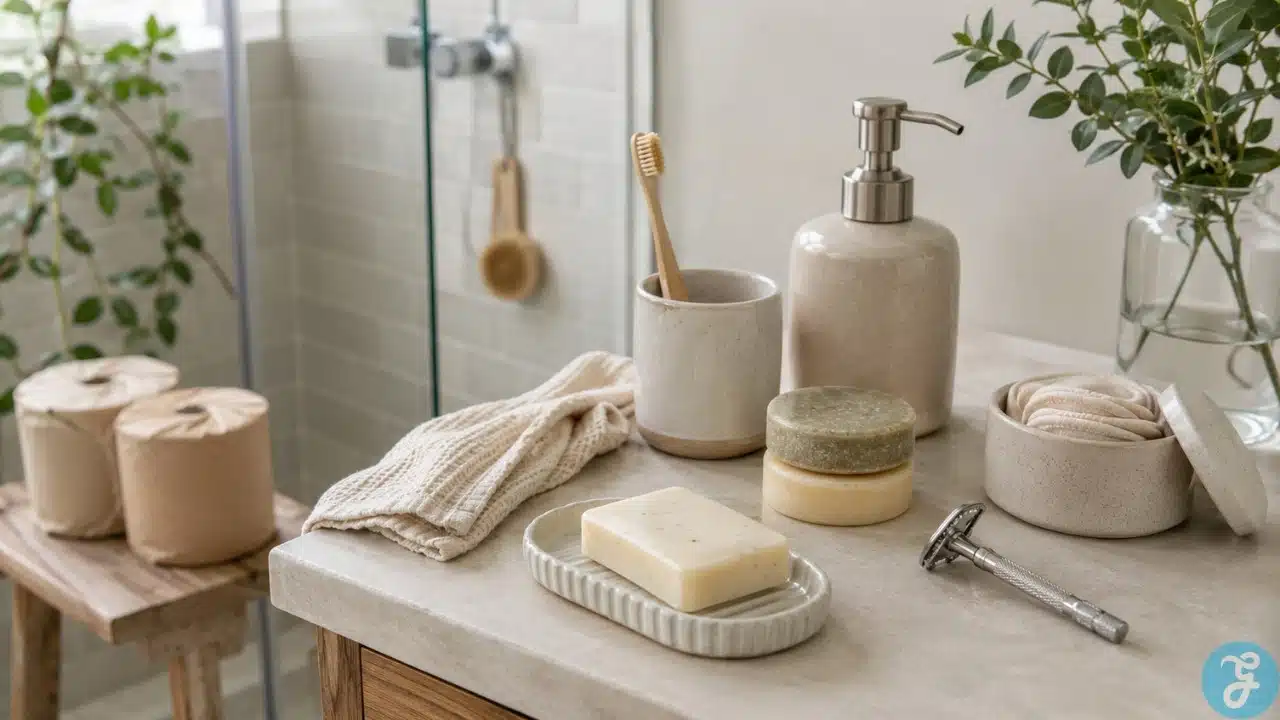
Most bathroom waste comes from small things people replace again and again: toothpaste tubes, shampoo bottles, disposable razors, cotton swabs, pump bottles, mini travel products, floss containers, body wash refills, and plastic-wrapped toilet paper. None of them feels like a big problem on its own. Together, they turn the bathroom into one of the easiest places to create steady household waste.
A plastic-free bathroom routine is not about making the room look like a beige product photo or replacing every item overnight. That usually leads to wasted money, half-used products in drawers, and a routine that collapses after two weeks. The better approach is slower and more practical: use what already works, replace empty products with lower-waste options, and avoid swaps that create new problems.
This matters because recycling cannot carry the full weight of plastic packaging. U.S. EPA data shows that only 13.6% of plastic containers and packaging generated in 2018 was recycled, while more than 69% was landfilled. PET and HDPE bottles perform better than many other plastics, but even their recycling rates were below one-third in the same dataset. Plastic pollution also remains a global problem, with UNEP warning that plastic waste could nearly triple by 2060 under a business-as-usual path.
The bathroom will not be perfectly plastic-free for most people. That is fine. A better target is a bathroom that uses less disposable plastic, avoids gimmicky “eco” products, and still supports hygiene, dental health, skin comfort, and everyday convenience.
Start With What You Already Own
The least wasteful first step is boring: finish the products already in the bathroom.
Throwing away half-full plastic bottles just because they no longer match the new routine creates waste before the new routine has even started. Use the shampoo, toothpaste, cleanser, lotion, and cleaning spray you already bought unless a product irritates your skin, has expired, or is unsafe to use.
A simple reset works better:
| Bathroom area | What to do first | What to avoid |
|---|---|---|
| Shower | Finish current shampoo, conditioner, body wash, and scrub | Buying five new bars before testing one |
| Sink | Use current toothpaste, soap, and skincare | Switching oral care only for packaging |
| Shaving | Use remaining cartridges or disposable razors before replacing | Buying a safety razor without learning how to use it |
| Cleaning | Use existing cleaners safely | Mixing homemade cleaners without checking safety |
| Storage | Reuse jars, tins, baskets, and old containers | Buying “zero waste” storage you do not need |
This also gives time to notice what actually creates waste in your bathroom. Some households go through more shampoo bottles. Others burn through razors, cotton rounds, plastic floss picks, skincare packaging, or children’s bath products. The best swap is the one that replaces a real repeated purchase.
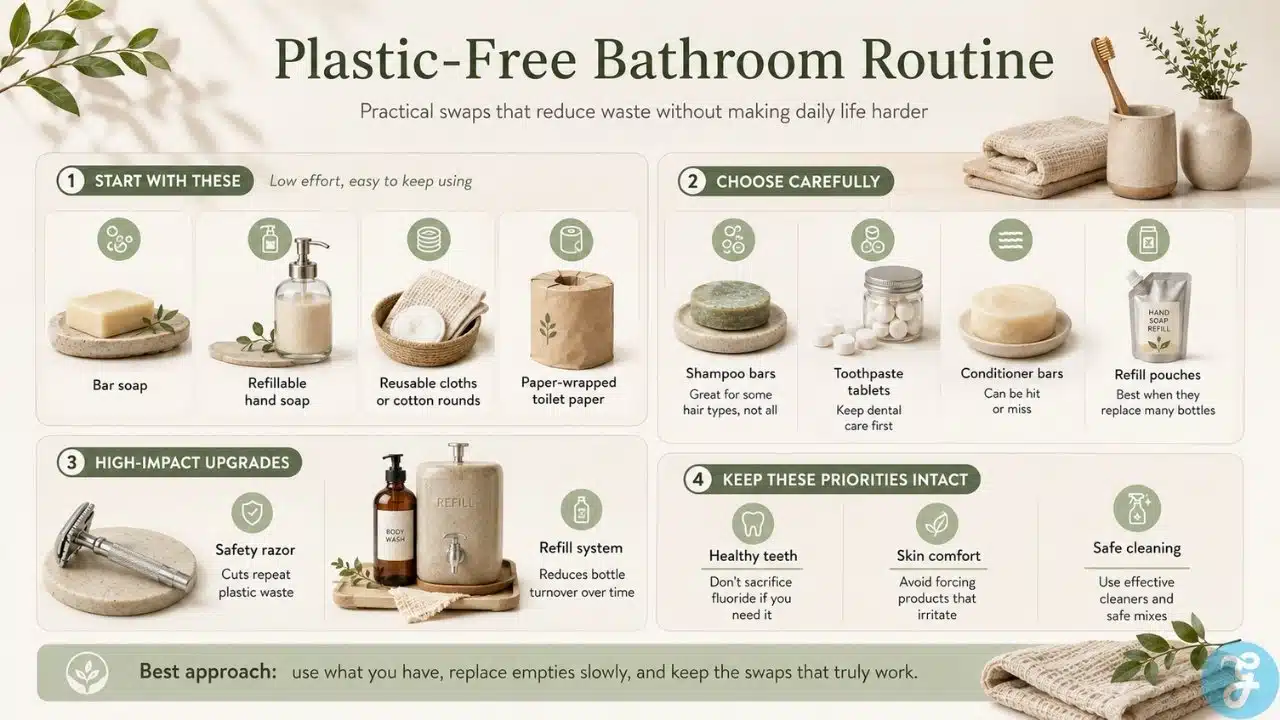
The Best First Swaps for a Plastic-Free Bathroom
Some changes are easier than others. Start where the swap is low-risk, affordable, and unlikely to disrupt the routine.
Bar Soap Instead of Body Wash
Bar soap is one of the simplest plastic-free bath products to try. It usually comes with less packaging, lasts a long time when stored properly, and does not require a pump bottle.
The mistake people make is leaving the bar sitting in water. A soggy bar disappears fast and feels unpleasant. Use a soap dish with drainage, a slatted tray, or a small rack that keeps the bar dry between uses.
For sensitive skin, fragrance-free bar soap is often a safer first choice than heavily scented “natural” soap. Essential oils can still irritate skin. “Natural” does not automatically mean gentle.
Shampoo Bars, But Choose Carefully
Shampoo bars can cut plastic waste, but they are not all the same. Some work like proper solid shampoo. Others feel more like soap and may leave buildup, especially in hard water.
A good shampoo bar should match your hair type and local water conditions. People with curly, color-treated, dry, or scalp-sensitive hair should be more cautious. One bad bar can make the entire idea feel useless, when the problem may be the formula rather than the format.
Conditioner bars are more hit-or-miss. They often need more patience because they do not spread like liquid conditioner. For some people, a refillable liquid conditioner may be more realistic than forcing a bar that leaves hair dry or tangled.
Refillable Hand Soap
Hand soap is a strong candidate for refills because most homes use it daily. A refill system works best when the refill packaging is meaningfully lower waste than buying a new pump bottle every time.
Look for local refill shops, large-format refills, concentrates, tablets, or brands that offer returnable packaging. Do not assume every refill pouch is automatically better. Flexible plastic pouches are often difficult to recycle through regular household systems, so the value depends on how much packaging they replace and whether the brand has a credible take-back option.
Reusable Cotton Rounds
Reusable cotton rounds are useful for people who regularly remove makeup, apply toner, or use micellar water. They are not magic. They need washing, drying, and a place to live.
Choose soft, washable rounds that suit your skin. Keep a small mesh bag or container nearby so used rounds do not vanish into laundry. If someone rarely uses disposable cotton pads, this swap will not change much. If they use several a day, it can make a real difference.
Do Not Compromise Dental Care Just to Remove Plastic
Oral care is where plastic-free advice often gets careless. A bamboo toothbrush may reduce plastic handle waste, but dental health still comes first.
The American Dental Association recommends brushing twice a day for two minutes with fluoride toothpaste for cavity and gingivitis prevention. That matters more than having a perfectly plastic-free sink.
A bamboo toothbrush can be a reasonable swap if the bristles feel comfortable and the brush head suits your mouth. Most bamboo toothbrushes still use nylon bristles, so they are not fully compostable. Some brands ask users to remove the bristles before composting the handle, which is more work than the packaging often suggests.
Toothpaste is trickier. Tablets, powders, and jars can reduce plastic, but the formula matters. Look for fluoride if cavity prevention is a priority, and check whether the product has credible dental support rather than just attractive packaging.
Floss has similar trade-offs. Silk floss in a refillable glass container may work for some people, but it is not vegan and may break more easily for tight teeth. Plant-based floss can still contain coatings or packaging components that are not fully plastic-free. If a certain floss actually helps someone floss daily, that may beat a more “eco” option that stays unused.
A practical oral-care priority list looks like this:
- Keep brushing with fluoride toothpaste unless a dentist advises otherwise.
- Choose a toothbrush that cleans well and does not hurt your gums.
- Use floss or interdental cleaners consistently.
- Reduce plastic where it does not reduce oral health.
- Treat “plastic-free toothpaste” claims as something to verify, not assume.
A plastic-free bathroom should not create dental bills.
Shaving: Where One Swap Can Remove a Lot of Waste
Disposable razors and cartridge systems create repeated plastic and mixed-material waste. A safety razor can be one of the most effective bathroom swaps for adults who shave regularly.
The good part is durability. A metal safety razor can last for years, and replacement blades are small. The harder part is technique. Safety razors require a lighter hand, slower strokes, and a better understanding of blade angle. Rushing the first shave is how people nick themselves and give up.
People who shave quickly in the shower before work may need a short learning period. Start with easy areas first. Use shaving soap, a cream in low-waste packaging, or a product that gives enough slip. Do not press the razor into the skin like a disposable cartridge.
For body shaving, a safety razor can work well, but knees, ankles, and underarms need care. Some people may prefer an electric trimmer, especially if they do not need a close shave. That still uses materials and electricity, but it can reduce disposable razor waste over time.
Blade disposal also matters. Used blades should go into a blade bank or a safe metal container, not loose in the trash.
Hair Care Without a Shelf Full of Failed Experiments
Hair care is personal. A product that works beautifully for one person may make another person’s hair feel waxy, flat, greasy, or brittle. That is why the best plastic-free hair routine starts with one change at a time.
For many people, the most realistic options are:
- Shampoo bar plus regular conditioner
- Regular shampoo plus conditioner bar
- Refillable shampoo and conditioner
- Concentrated liquid products in smaller packaging
- Larger salon-size bottles when refills are not available
- A simpler routine with fewer styling products
A zero waste bathroom does not require every hair product to become solid. If a refillable liquid product works and prevents a pile of failed bars, it may be the better choice.
Styling products are harder. Gels, creams, mousses, heat protectants, oils, and curl products often come in plastic because formulas need stable packaging. Glass jars exist, but they can be heavy and risky in wet bathrooms. Metal tins work for balms and waxes, not every texture.
This is a good place to reduce rather than chase perfection. Use fewer products. Buy the size you will finish. Avoid travel-size plastic unless travel rules make it necessary. Keep products out of the shower if humidity ruins them.
Skin Care: Keep the Routine Simple and Be Skeptical of Pretty Claims
Skin care is where low-waste shopping can become expensive fast. Small jars, droppers, tubes, sample packs, sheet masks, cleansing wipes, and single-use patches all add up.
The first question is not “What is the most plastic-free product?” It is “Do you need this step?”
A simple routine often creates less waste than a crowded shelf of eco-branded products. Cleanser, moisturizer, and sunscreen may be enough for many people. Treatments should match a real skin concern, not a trend.
Be careful with products sold as clean, natural, non-toxic, green, biodegradable, or planet-safe without clear evidence. The FTC’s Green Guides exist because environmental marketing claims can mislead consumers when brands use vague language or imply benefits they cannot support.
Cosmetic safety claims also need caution. In the United States, cosmetic products and ingredients generally do not need FDA premarket approval, except for color additives, although companies are still responsible for product safety and proper labeling. That does not mean every product is unsafe. It means shoppers should not treat packaging language as proof.
Better signs include clear ingredient lists, fragrance-free options for sensitive skin, transparent refill systems, realistic disposal instructions, and packaging that matches local recycling or reuse options.
Make the Shower Less Wasteful Without Making It Annoying
The shower is usually the easiest part of an eco bathroom routine to improve because many products have simple alternatives.
A practical shower setup may include:
- Bar soap or a low-waste body wash refill
- Shampoo bar or refillable shampoo
- Conditioner bar or refillable conditioner
- Metal razor or electric trimmer
- Washcloth instead of plastic loofah
- Soap dish with drainage
- One product backup, not six
Plastic loofahs are cheap, but they wear out and can be difficult to clean well. A cotton washcloth, hemp cloth, or natural-fiber scrub mitt is easier to wash and replace thoughtfully. Natural loofah is another option, but it needs to dry fully between uses.
The real trick is storage. Bars need air. Razors need to dry. Reusable cloths need a laundry plan. A low-waste shower fails when everything stays wet, slimy, and inconvenient.
Toilet Paper, Tissues, and the Hidden Plastic Around Paper Goods
Toilet paper is not a plastic product, but its packaging often is. Plastic-free or lower-plastic options include paper-wrapped rolls, bulk cartons, recycled paper, bamboo toilet paper, and bidets.
A bidet attachment can reduce toilet paper use, but it is not the right answer for everyone. Renters may need permission. Some bathrooms are hard to fit. Some people simply do not want one. Paper-wrapped or bulk toilet paper is a lower-effort starting point.
For tissues, consider whether washable handkerchiefs make sense in your home. They work for some people and feel unpleasant to others. During illness, disposable tissues may be more practical and hygienic. Sustainability should not turn basic care into a guilt exercise.
Cleaning Products: Refills Are Useful, Homemade Mixes Need Care
Bathroom cleaning creates waste through spray bottles, wipes, toilet cleaners, plastic sponges, scrub pads, and disposable gloves.
The easiest improvement is to keep durable spray bottles and refill them. Concentrates and tablets can reduce shipping weight and packaging, but they should still clean properly. A cleaner that does not work leads to overuse, repeat cleaning, or mold and grime buildup.
Reusable cloths can replace many paper towels. Old cotton T-shirts can become cleaning rags. A washable scrub brush with a replaceable head may last longer than plastic sponges.
Homemade cleaners can be useful, but not every online recipe is safe or effective. Vinegar can damage some stone surfaces and certain finishes. Bleach should never be mixed with vinegar or ammonia. If a bathroom has mold, poor ventilation, or recurring mildew, use an appropriate cleaner and fix the moisture problem where possible.
A plastic-free bathroom should still be clean.
Periods, Personal Care, and Real-Life Comfort
Menstrual products can be a major source of bathroom waste for people who use them. Reusable options include menstrual cups, menstrual discs, washable pads, and period underwear.
These can reduce waste and long-term spending, but they are not universal solutions. Fit, flow, comfort, disability, access to clean water, laundry setup, public bathroom access, and medical conditions all matter. Some people prefer reusable products at home and disposable products when traveling. That is still a valid reduction.
For personal care items such as cotton swabs, look for paper-stick versions instead of plastic-stick ones. For wipes, the best low-waste move is often avoiding them unless they serve a real need. Many wipes are single-use by design, and “flushable” claims do not always mean they are friendly to plumbing systems.
A Realistic Plastic-Free Bathroom Routine
A good routine should feel normal after the first few weeks. If it requires too much effort every morning, it probably will not last.
Here is a realistic version for an average household:
Morning
Brush with a fluoride toothpaste, using a bamboo or long-lasting toothbrush if it works well. Wash hands with refillable soap or bar soap. Use deodorant in a paper tube, metal tin, refillable case, or glass jar if the formula works for your skin. Apply skincare from products you will finish, not a rotating shelf of half-used jars.
Shower
Use bar soap or a refillable body wash. Use a shampoo bar, refillable shampoo, or a larger bottle that reduces purchase frequency. Keep bars on a draining dish. Shave with a safety razor only after learning the technique, or use an electric trimmer if that suits your routine better.
Evening
Remove makeup with washable rounds if you use them often. Cleanse with a low-waste cleanser that does not irritate your skin. Floss with the best lower-waste option you will actually use. Put used reusable rounds or cloths in a small laundry bag.
Weekly
Wash reusable rounds, cloths, and shower mitts. Check whether bars are drying properly. Refill soap dispensers. Recycle only what your local system accepts. Make a note when a product is nearly empty so the next purchase can be lower-waste rather than rushed.
This routine is not perfect. It is workable. That matters more.
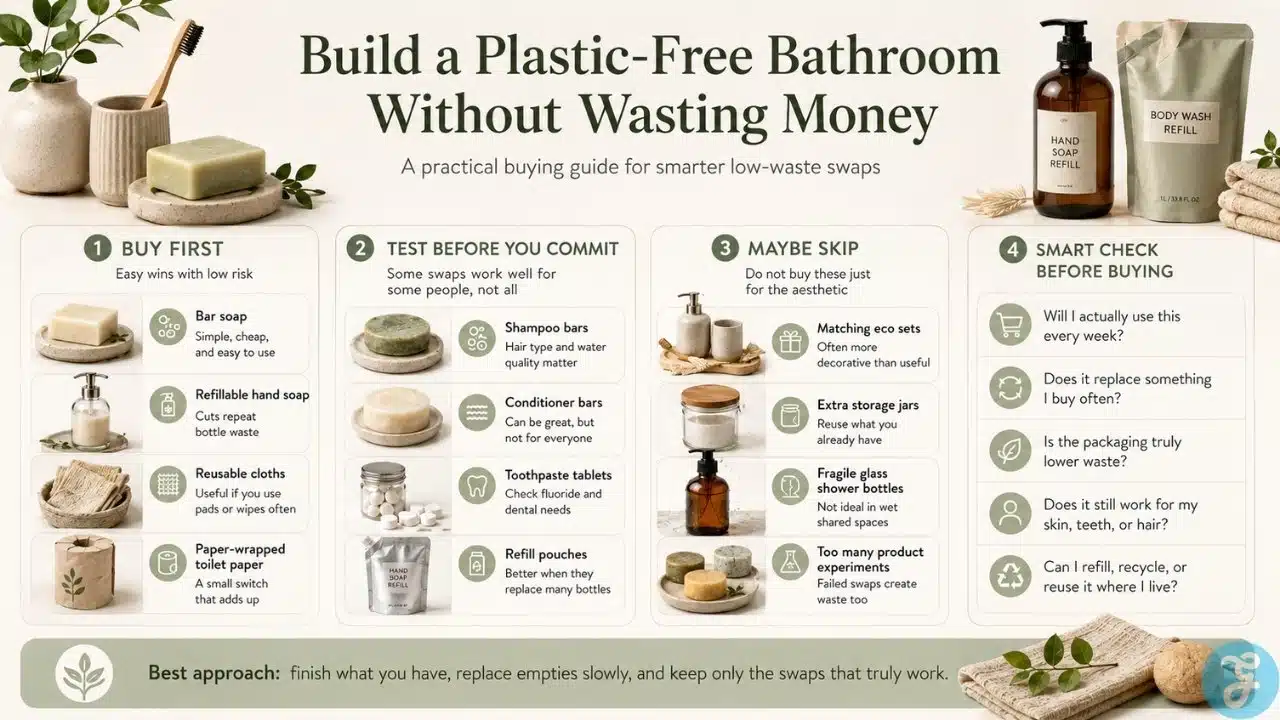
What to Buy First, Later, and Maybe Never
Not every plastic-free bathroom swap deserves the same urgency.
| Priority | Swap | Why it makes sense |
| First | Bar soap, refillable hand soap, reusable cloths | Easy, low-risk, affordable for many households |
| First | Plastic-free toilet paper packaging | Simple if available locally or online |
| Next | Shampoo bar or refillable shampoo | Useful, but formula matters |
| Next | Safety razor | High waste reduction, but needs learning |
| Next | Reusable cotton rounds | Worth it for regular makeup or toner users |
| Later | Toothpaste tablets or powders | Only if dental needs are still met |
| Later | Conditioner bars | Can work well, but not for every hair type |
| Maybe skip | Full matching bathroom “eco sets” | Often unnecessary and more about aesthetics than waste |
| Maybe skip | Fragile glass bottles in the shower | Risky in wet spaces, especially shared bathrooms |
| Maybe skip | Products bought only because they look sustainable | Packaging design is not proof of impact |
The most underrated swap is buying less. Fewer backup products, fewer experiments, fewer travel minis, fewer “just in case” purchases. A bathroom with five reliable products is usually better than a bathroom with twenty low-waste products no one likes.
How to Read Plastic-Free Product Claims Without Getting Fooled
Plastic-free shopping gets confusing because brands use similar words to mean different things.
“Plastic-free packaging” may mean the outer box has no plastic, while the product still has a plastic seal, cap, liner, label adhesive, or shipping material. “Compostable” may mean industrially compostable, not backyard compostable. “Biodegradable” may not mean much unless the brand explains the conditions, timeline, and testing behind the claim.
“Recyclable” also depends on local collection. A package can be technically recyclable and still not accepted by the facility that handles your household waste.
Use a simple check before buying:
- Does the brand explain what each part of the packaging is made from?
- Can you refill it, return it, compost it, or recycle it where you live?
- Does the product replace something you already buy repeatedly?
- Does the formula suit your body, hair, skin, or dental needs?
- Are you buying it because it solves a problem, or because it looks like a better identity?
The last question saves money.
Common Mistakes That Make a Zero Waste Bathroom Harder
The biggest mistake is replacing everything at once. That creates pressure, clutter, and disappointment.
Another mistake is copying someone else’s routine without checking context. A person with short, untreated hair may love a shampoo bar that does not work for someone with thick curls. A person with soft water may get better results from solid hair products than someone with hard water. A person living near a refill shop has different options than someone who must order everything online.
People also underestimate convenience. If a product is annoying, it needs a strong reason to stay. Sustainability matters, but daily friction matters too. A product that makes the routine slower, messier, or less comfortable may not last long.
The most expensive mistake is buying “eco” versions of things you did not need before: bamboo storage boxes, matching amber bottles, special labels, luxury refill systems, travel tins, decorative jars, and backup sets. A plastic-free bathroom should reduce consumption, not decorate it.
When Plastic May Still Be the Better Choice
Some plastic use is hard to avoid, and some of it serves a purpose. Medical products, prescription skincare, contact lens care, certain disability aids, child-safe packaging, waterproof bathroom items, and products needed for allergies or skin conditions may come in plastic because safety, hygiene, or stability requires it.
Sunscreen is a good example. A plastic-free sunscreen package is not helpful if the product is unpleasant, poorly suited to your skin, or used too sparingly. The best sunscreen is one that protects properly and gets used. Reduce packaging where possible, but do not turn sun protection into a packaging purity test.
Families also need flexibility. Children, elderly relatives, shared bathrooms, tight budgets, rental rules, limited storage, and local product availability all shape what works. A low-waste routine should bend around real life.
A Good Plastic-Free Bathroom Is Built Slowly
The best plastic-free bathroom routine starts with the next empty bottle, not a shopping spree. Replace one repeated plastic item with a better option. Test it. Keep it if it works. Drop it if it creates more trouble than it solves.
Start with bar soap, refillable hand soap, lower-waste toilet paper packaging, reusable cloths, and a better shaving setup if razors are a major source of waste. Move slowly with hair care, oral care, skincare, and menstrual products because comfort and health matter there.
A plastic-free bathroom does not need to be perfect to be worth doing. It needs to reduce household waste, fit your daily routine, and keep the basics intact: clean hands, healthy teeth, comfortable skin, safe cleaning, and products you can keep using without resentment.
That is the version that lasts.






















