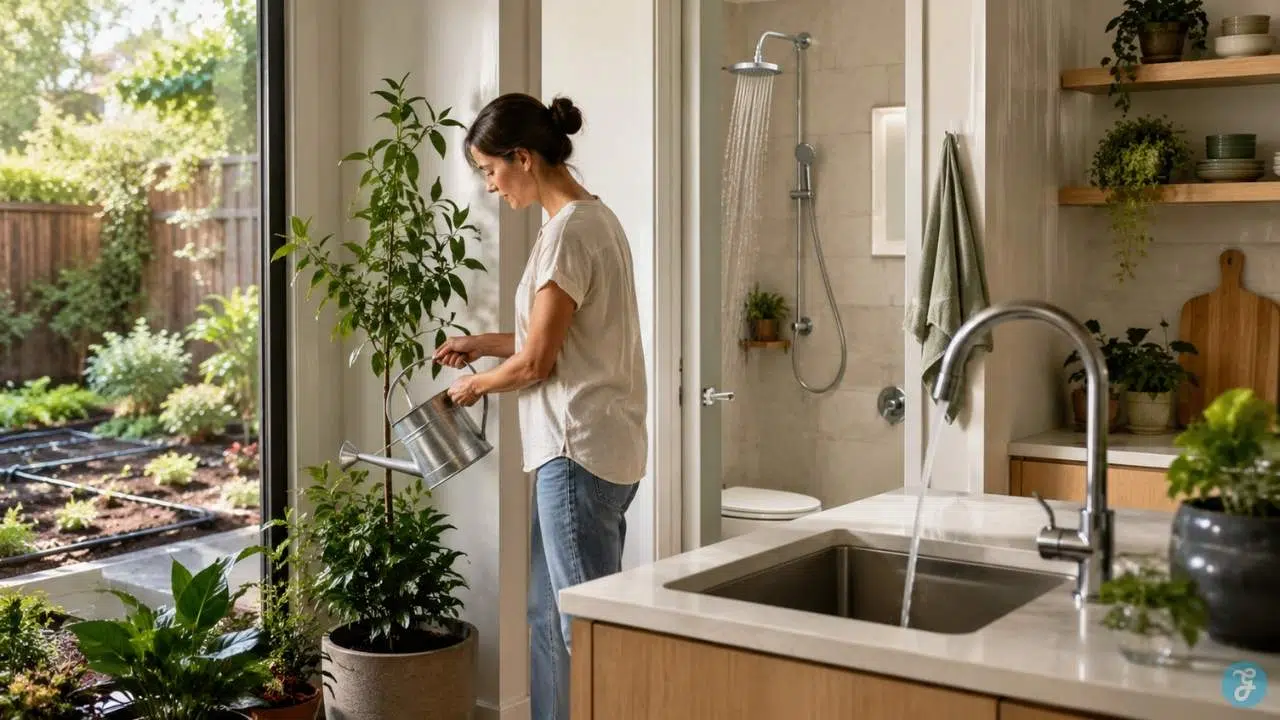
Most people do not waste water because they do not care. They waste it because the waste is quiet. A toilet runs in the background. A shower lasts a few minutes longer than needed. A faucet drips under the sink. The garden gets watered at the wrong time of day. The washing machine runs half full. A small leak hides behind a wall until the water bill looks strange.
That is why the best water conservation methods are not only about willpower. They are about finding invisible waste, fixing the easy problems first, and setting up your home so saving water becomes normal.
You do not need to turn your home into a survival camp. You do not need to take miserable showers or stop watering every plant. The real goal is smarter water use: better fixtures, better habits, better timing, and fewer leaks.
This guide explains practical water conservation methods for everyday homes. You will learn where household water usually goes, how to reduce waste in bathrooms, kitchens, laundry rooms, gardens, and plumbing systems, and which upgrades create the biggest household water savings over time.
Why Water Conservation at Home Matters
Water feels unlimited when it comes out of the tap on demand. But clean, treated water takes energy, infrastructure, chemicals, pipes, pumping, heating, and maintenance. Once it enters your home, you often pay for it twice: first as water, and then again as wastewater or sewer service. Hot water costs even more because you also pay to heat it.
That means saving water home efforts can reduce:
- Water bills
- Sewer or wastewater charges
- Water heating costs
- Pressure on local water supplies
- Strain on plumbing and fixtures
- Outdoor irrigation waste
- Household environmental impact
Water conservation also matters during droughts, heat waves, water restrictions, infrastructure stress, and local supply shortages. Even in areas that do not feel water-scarce today, wasting treated water still wastes money and energy. The practical point is simple. The less water you waste, the less you pay for water you never really used.
Water Conservation Methods That Make the Biggest Difference
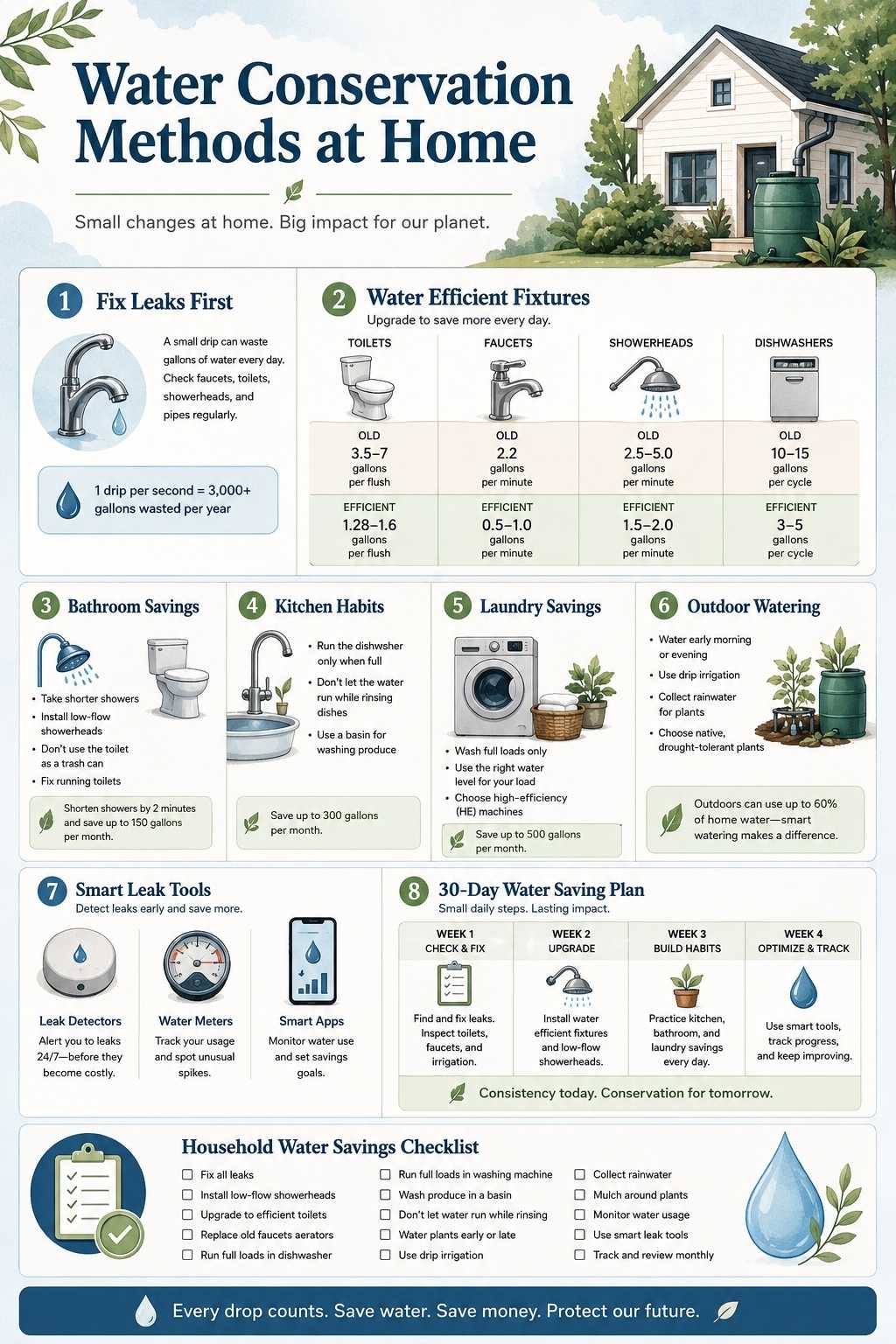
The most effective water conservation methods are usually boring in the best possible way. Fix leaks. Replace old fixtures. Shorten wasteful water use. Run full loads. Water plants properly. Choose efficient appliances when it is time to replace them.
These steps work because they target repeat behavior. A one-time skipped shower saves a little water. A repaired toilet leak saves water every hour of every day. That is the difference between effort and system design.
1. Check for Hidden Leaks First
Leaks should be your first priority because they waste water whether anyone is home or not.
Common leak sources include:
- Toilets
- Faucets
- Showerheads
- Outdoor spigots
- Irrigation systems
- Water supply lines
- Under-sink pipes
- Washing machine hoses
- Water heater connections
- Underground service lines
A slow leak may not look dramatic, but over weeks and months it can waste a surprising amount of water.
2. Replace Old Toilets With Water Efficient Fixtures
Toilets are one of the most important places to save water at home. Older toilets can use much more water per flush than modern efficient models. If your toilet is decades old, it may be one of the biggest water users in the house.
Water efficient fixtures, especially high-efficiency toilets, can reduce water use without changing daily habits.
When choosing a toilet, look for:
- Low gallons per flush
- Reliable flushing performance
- WaterSense label where available
- Good user reviews
- Proper bowl height and shape
- Compatibility with your bathroom layout
- Easy-to-find replacement parts
Avoid choosing a toilet only because it uses the least water on paper. A toilet that requires double flushing defeats the purpose. The best efficient toilet uses less water and still works properly.
3. Install Low-Flow Showerheads
Showers use water quickly because the flow is continuous. A showerhead upgrade is one of the easiest water conservation methods because it can reduce water use every time someone showers.
Good low-flow showerheads are not the weak, frustrating fixtures people remember from years ago. Many modern models are designed to maintain good spray coverage and pressure while using less water.
When shopping, check:
- Gallons per minute
- Spray quality
- Pressure performance
- Whether it is WaterSense labeled
- Ease of cleaning
- Finish and fit
- Handheld vs fixed design
- Flow restrictor quality
A lower-flow showerhead saves both water and hot water energy. That makes it especially useful in homes where showers are long or frequent.
4. Add Faucet Aerators
Faucet aerators are small devices that attach to the end of a faucet. They mix air into the water stream so the flow feels useful while using less water. They are inexpensive, simple, and effective.
Use aerators on:
- Bathroom sinks
- Kitchen sinks
- Utility sinks
- Guest bathrooms
- Powder rooms
They are especially helpful in bathrooms, where people often leave water running while washing hands, brushing teeth, shaving, or rinsing. Before buying, check the faucet thread size and whether you need male or female threading. A small aerator can quietly reduce water waste every day.
5. Turn Off the Tap During Routine Tasks
Some water-saving habits sound too obvious, but they work because they happen daily.
Turn off the tap while:
- Brushing teeth
- Shaving
- Scrubbing dishes
- Washing vegetables between rinses
- Soaping hands
- Cleaning counters
- Waiting between cooking steps
A running tap can waste more water than people realize because it feels harmless in the moment.
A practical trick is to use a bowl or basin when rinsing produce or soaking dishes. You get the job done without keeping the faucet on continuously. This is one of the simplest saving water at home habits because it costs nothing.
6. Use the Dishwasher Efficiently
A modern efficient dishwasher can use less water than washing a full load of dishes by hand, especially if you avoid pre-rinsing under running water. The key is to use it properly.
Do this:
- Run full loads
- Scrape plates instead of pre-rinsing
- Use eco mode if it works well
- Load dishes correctly
- Clean the filter regularly
- Choose an efficient model when replacing
- Avoid running small partial loads
Do not treat the dishwasher like a magic fix if you run it half-empty every day. The savings come from using one full, efficient wash cycle instead of constant hand rinsing. If you wash dishes by hand, fill one basin for washing and one for rinsing instead of letting water run the whole time.
7. Wash Full Laundry Loads
Laundry can use a lot of water, especially in larger households. The easiest habit is to run full loads when possible. If your washer has load-size settings, use them properly. If it has an eco mode, test whether it cleans well for everyday laundry.
When replacing a washer, choose a water-efficient model. High-efficiency washing machines can reduce water use while also lowering hot water demand when paired with cold-water washing.
Practical laundry tips:
- Wash full loads
- Use cold water when appropriate
- Match water level to load size
- Rewear lightly used clothes when reasonable
- Use quick wash only for lightly soiled items
- Fix washer hose leaks quickly
- Clean the washer as recommended
Laundry water savings become meaningful because the habit repeats every week.
8. Reuse Water When It Is Safe and Practical
Some household water can be reused for simple tasks, depending on local rules and safety.
Examples:
- Collect cold water while waiting for the shower to warm and use it for plants
- Use leftover drinking water for houseplants
- Rinse produce in a bowl and pour the water onto outdoor plants
- Use dehumidifier water for non-edible plants if appropriate
- Collect rainwater where allowed
Be careful with greywater. Water from sinks, showers, or laundry may contain soap, oils, dirt, salt, chemicals, or bacteria. It may be allowed in some places and restricted in others. Do not use unsafe greywater on edible plants unless you understand local rules and safe practices.
Simple reuse is fine. Complicated greywater systems need planning.
9. Upgrade to Water Efficient Fixtures Gradually
You do not need to replace every fixture at once. Start with the fixtures that get the most use or waste the most water.
Good upgrade order:
- Fix leaks
- Replace old toilets
- Install low-flow showerheads
- Add faucet aerators
- Upgrade washing machine when replacement is due
- Upgrade dishwasher when replacement is due
- Improve irrigation controls
- Replace inefficient outdoor fixtures
Water efficient fixtures should make saving water automatic. Once installed, they keep reducing use without daily effort. That is why they are often better than relying only on reminders.
10. Reduce Hot Water Waste
Hot water waste costs more because it wastes both water and energy.
You can reduce hot water waste by:
- Installing low-flow showerheads
- Fixing hot water leaks
- Using faucet aerators
- Washing clothes in cold water when possible
- Running full dishwasher loads
- Insulating accessible hot water pipes
- Fixing long waits for hot water where practical
- Choosing efficient appliances
- Turning off hot water while shaving or scrubbing
If your shower or sink takes a long time to warm up, collect the cold water in a bucket and use it for plants or cleaning. For larger renovations, plumbing layout matters. Shorter pipe runs between the water heater and fixtures can reduce water wasted while waiting for hot water.
Bathroom Water Conservation Methods
Bathrooms are usually the first place to focus. They include toilets, showers, tubs, faucets, and hidden leaks. That combination makes bathrooms one of the biggest opportunities for household water savings.
Toilet Tips
- Fix running toilets quickly
- Replace old toilets with efficient models
- Avoid using toilets as trash cans
- Check flappers and fill valves
- Listen for phantom flushing
- Use the correct replacement parts
- Consider dual-flush where appropriate
A running toilet can be silent enough to ignore but costly enough to matter.
Shower Tips
- Install a low-flow showerhead
- Shorten showers slightly
- Turn water down while lathering
- Fix dripping showerheads
- Use a shower timer if helpful
- Choose showers over baths when reasonable
- Avoid extremely high-flow luxury shower systems
A comfortable shower can still be efficient.
Sink Tips
- Install faucet aerators
- Turn off water while brushing teeth
- Use a cup for rinsing
- Fix dripping faucets
- Avoid leaving water running while shaving
- Choose efficient faucets during remodels
Bathroom sinks are used often, so small changes add up.
Kitchen Water Conservation Methods
Kitchen water use often hides in habits. A running faucet while cooking or cleaning can waste more than people notice.
Cooking and Food Prep
- Wash produce in a bowl instead of under running water
- Thaw frozen food in the refrigerator, not under running water
- Keep drinking water in the fridge instead of running the tap until cold
- Use the right pot size
- Steam vegetables with minimal water
- Reuse unsalted cooking water for plants when safe and cooled
- Avoid overfilling kettles and pots
These habits are small, but they are easy to keep.
Dishwashing
If using a dishwasher:
- Run full loads
- Skip heavy pre-rinsing
- Scrape plates instead
- Use eco mode where effective
- Maintain the dishwasher filter
If washing by hand:
- Do not let water run continuously
- Use a basin or plugged sink
- Wash in batches
- Rinse efficiently
- Soak stubborn dishes instead of blasting them
The key is avoiding endless running water.
Garbage Disposal Use
Garbage disposals need water to operate, but they are not always necessary.
To save water:
- Compost food scraps where practical
- Scrape plates into trash or compost
- Use disposal only when needed
- Avoid sending large food waste through the sink
This saves water and can also reduce stress on drains.
Laundry Room Water Conservation Methods
Laundry savings depend on both habits and appliances.
Use Full Loads
Running frequent small loads wastes water. Wait until you have a full load unless the item truly needs immediate washing.
Choose Efficient Settings
Use:
- Eco mode
- Cold water
- Correct soil level
- Correct load size
- High spin speed where appropriate
High spin can remove more water from clothes, reducing drying time too.
Maintain the Washer
Check hoses, valves, and connections. Replace old rubber hoses if they show cracks, swelling, or wear. A burst washer hose can waste water and damage the home quickly.
Replace Old Machines Thoughtfully
If your washer still works, you may not need to replace it immediately. But when it reaches the end of its life, choose a high-efficiency model that uses less water and energy.
Look for clear efficiency information, capacity that fits your household, and reliable performance.
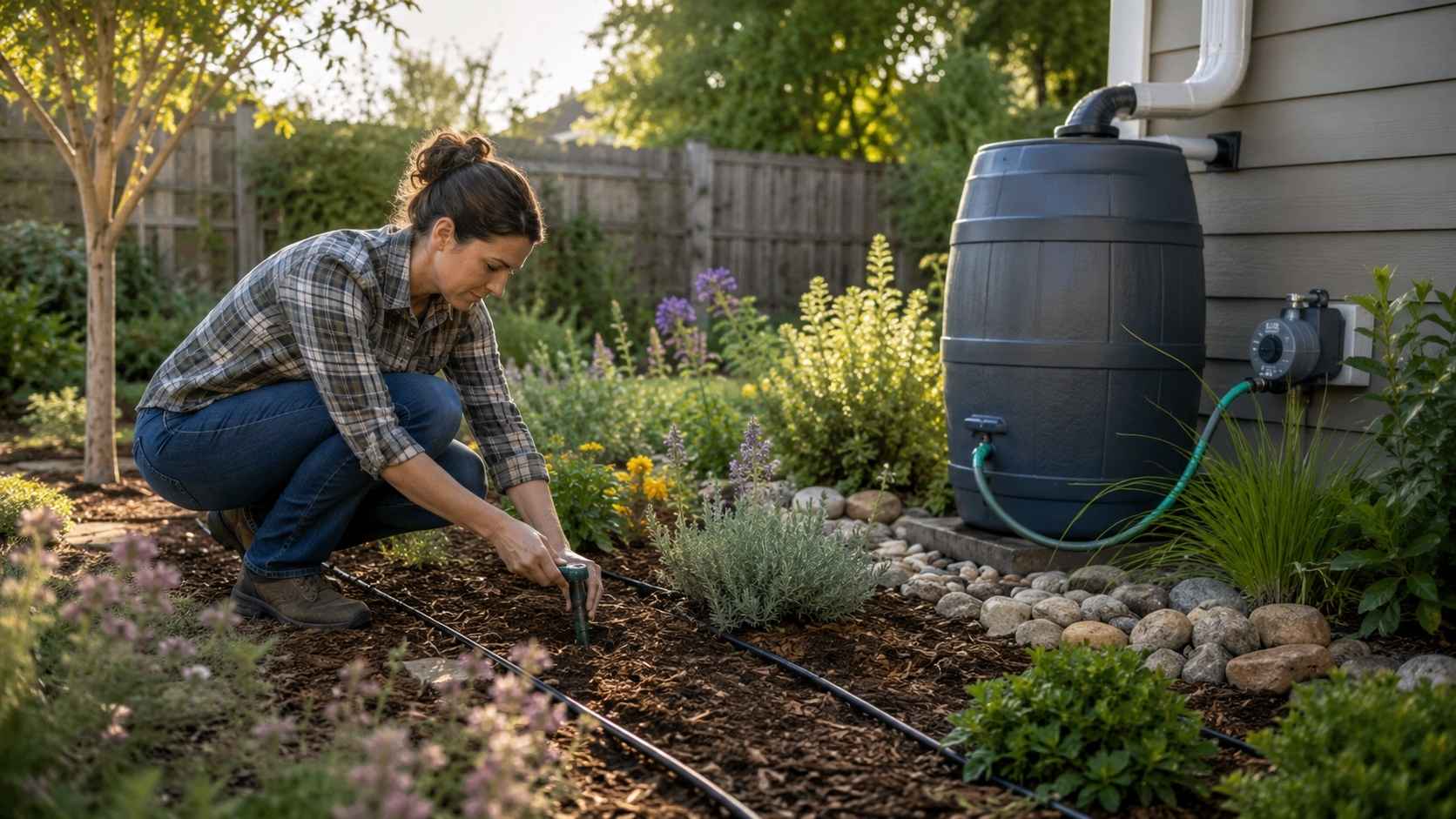
Outdoor Water Conservation Methods
Outdoor water use can be a major part of household water demand, especially in warm climates or homes with lawns. The goal is not necessarily to stop outdoor watering. The goal is to water only what needs water, when it can absorb it, and in a way that does not run down the sidewalk.
Water Early in the Morning
Watering early reduces evaporation and gives plants time to absorb moisture before the hottest part of the day. Avoid watering in the middle of the afternoon when heat and wind can waste water.
Evening watering can work in some climates, but in humid areas it may increase fungal disease risk for certain plants. Morning is usually the safest default.
Use Drip Irrigation or Soaker Hoses
Drip irrigation and soaker hoses deliver water closer to plant roots. They are often more efficient than sprinklers because less water is lost to evaporation, overspray, and runoff.
Use them for:
- Vegetable gardens
- Flower beds
- Shrubs
- Foundation plantings
- Hedges
- Trees
- Raised beds
Check lines regularly. Drip systems can clog or leak.
Fix Sprinkler Problems
Sprinklers waste water when they spray sidewalks, driveways, walls, fences, or streets.
Check for:
- Broken heads
- Misaligned spray
- Overspray
- Runoff
- Misting
- Leaks
- Watering during rain
- Uneven coverage
A sprinkler system should water plants, not pavement.
Choose Native or Drought-Tolerant Plants
Plants adapted to local climate usually need less extra watering once established.
Consider:
- Native plants
- Drought-tolerant shrubs
- Mulch-friendly beds
- Groundcovers
- Reduced lawn areas
- Climate-appropriate trees
- Rain gardens where suitable
This is one of the best long-term eco choices for outdoor water use.
Improve Soil Health
Healthy soil holds water better. Add compost where appropriate. Avoid compacting soil. Use organic matter to improve water retention and root health.
Sandy soil may drain too quickly. Clay soil may hold water but compact easily. Understanding your soil helps you water more intelligently.
Reduce Lawn Water Demand
Lawns can use a lot of water. You can reduce lawn water use by:
- Letting grass grow slightly taller
- Watering deeply but less often
- Choosing climate-appropriate grass
- Reducing lawn size
- Replacing unused lawn with beds or groundcovers
- Avoiding daily shallow watering
- Using a smart irrigation controller
- Fixing sprinkler coverage
A smaller, healthier lawn often uses less water than a large, stressed one.
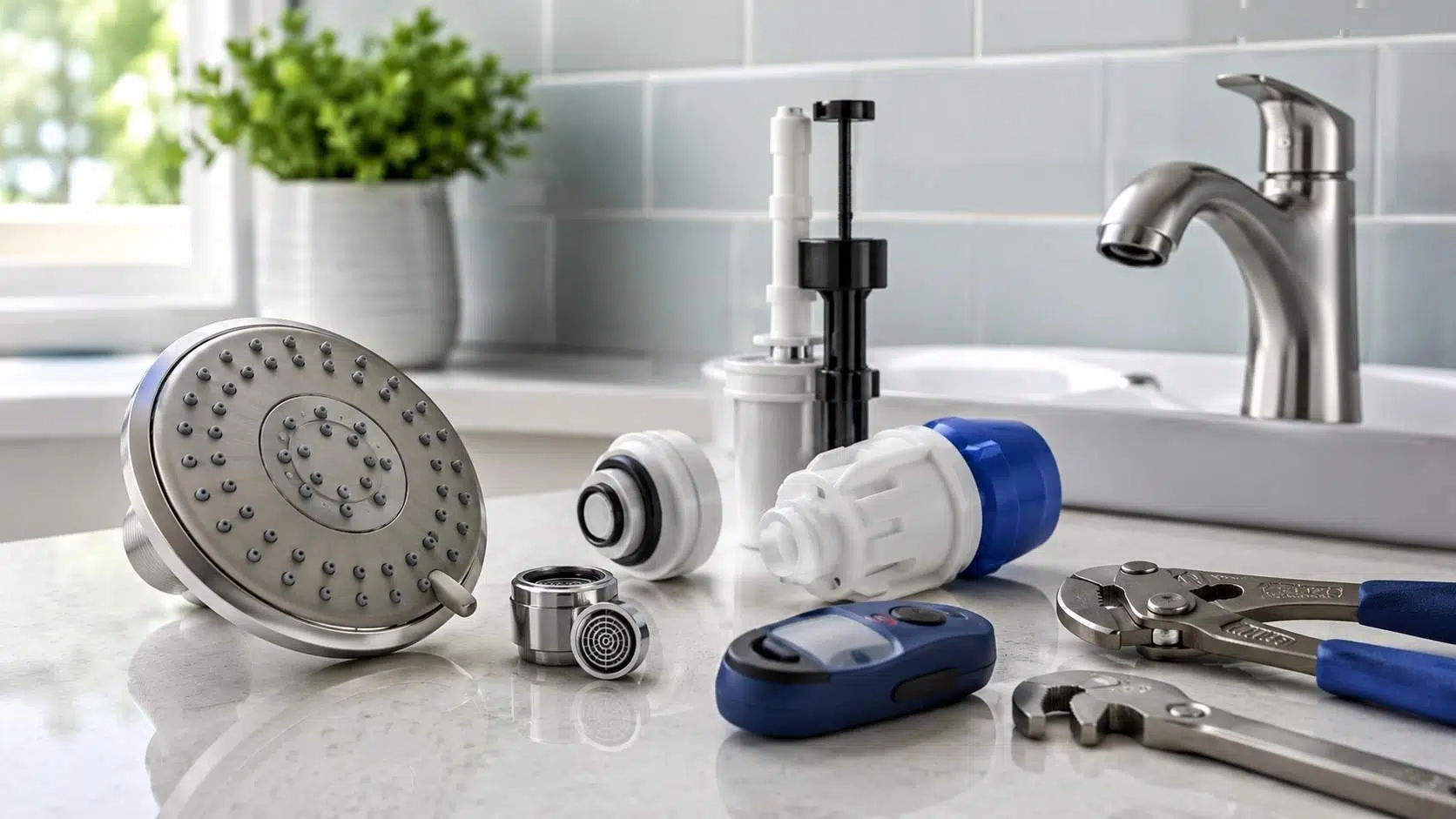
Smart Home Tools for Household Water Savings
Smart tools can help, but they should solve real problems.
Useful options include:
- Smart leak detectors
- Water meter monitors
- Smart irrigation controllers
- Soil moisture sensors
- Smart shutoff valves
- Timers for outdoor hoses
- App-based usage alerts
A smart leak detector under a sink or near a water heater can prevent major damage. A smart irrigation controller can reduce watering when rain or soil moisture makes irrigation unnecessary.
Technology is helpful when it reduces waste automatically. It is not helpful when it adds complexity nobody maintains.
Water Efficient Fixtures Worth Considering
Not every upgrade has the same value.
The best water efficient fixtures for most homes include:
| Fixture or Tool | Why It Helps |
| WaterSense toilet | Reduces water per flush |
| Low-flow showerhead | Cuts shower water and hot water use |
| Faucet aerator | Reduces sink flow cheaply |
| Efficient dishwasher | Uses less water per full load |
| High-efficiency washer | Reduces laundry water use |
| Smart leak detector | Catches leaks early |
| Smart irrigation controller | Reduces outdoor overwatering |
| Drip irrigation | Delivers water to roots |
| Hose timer | Prevents forgotten watering |
| Rain barrel | Stores rainwater where allowed |
Start with the fixture that matches your biggest water waste. For many homes, that means toilets, showers, faucets, and leaks first.
Common Water Conservation Mistakes
1. Focusing Only on Showers
Shorter showers help, but they are not the whole story. Toilets, leaks, laundry, dishwashing, and outdoor watering may matter just as much or more.
2. Ignoring Leaks
A hidden leak can cancel out many good habits. Check leaks first.
3. Buying Cheap Fixtures That Perform Poorly
A bad low-flow showerhead or weak toilet creates frustration. Choose efficient fixtures that still work well.
4. Watering the Lawn Every Day
Daily shallow watering can waste water and weaken roots. Deeper, less frequent watering is often better for many lawns.
5. Running Half Loads
Dishwashers and washing machines are most efficient when used properly. Partial loads can waste water.
6. Overusing Eco Modes Without Checking Results
Eco modes are useful, but they need to clean properly. If you have to rewash everything, savings disappear.
7. Forgetting Hot Water Waste
Saving hot water saves both water and energy. Showers, laundry, and faucets matter here.
8. Assuming Small Drips Do Not Matter
Small drips become large waste over time. Fix them.
The Best Water Conservation Methods Are the Ones You Can Maintain
Water conservation should not feel like punishment. The best water conservation methods are practical enough that people keep doing them: fix leaks, use efficient toilets and showerheads, install aerators, run full loads, water plants properly, reduce outdoor waste, and choose better fixtures when replacements are needed.
Small habits help. Better systems help more. If you want the fastest start, do three things first: Check for leaks. Replace wasteful fixtures. Stop running water when nobody is using it.
That alone can create real household water savings. The point is not to use as little water as humanly possible. The point is to stop wasting clean water that never needed to be used in the first place. That is how saving water at home becomes realistic, affordable, and sustainable.
Frequently Asked Questions About Water Conservation Methods
1. What are the best water conservation methods at home?
The best water conservation methods at home include fixing leaks, replacing old toilets, installing low-flow showerheads, adding faucet aerators, running full dishwasher and laundry loads, reducing outdoor watering waste, using drip irrigation, and choosing water efficient fixtures when upgrading.
2. How can I start saving water home without spending much?
Start by checking for leaks, turning off taps while brushing or shaving, running full laundry and dishwasher loads, taking slightly shorter showers, washing produce in a bowl, fixing dripping faucets, and adding inexpensive faucet aerators.
3. Are water efficient fixtures worth it?
Yes, water efficient fixtures are usually worth it when they replace older, wasteful fixtures. Efficient toilets, showerheads, faucets, dishwashers, and washing machines can reduce water use while still providing good performance if chosen carefully.
4. What wastes the most water in a house?
Common household water waste comes from leaks, old toilets, long showers, inefficient faucets, frequent half-load laundry, pre-rinsing dishes, and outdoor watering problems such as overspray, runoff, and watering at the wrong time of day.
5. How can I save water outdoors?
You can save water outdoors by watering early in the morning, using drip irrigation or soaker hoses, fixing sprinkler overspray, adding mulch, improving soil health, choosing native or drought-tolerant plants, reducing unused lawn areas, and using smart irrigation controls.
6. Do low-flow showerheads really work?
Good low-flow showerheads can reduce water use while still giving a comfortable shower. The key is choosing a quality model with good spray coverage and pressure performance instead of the cheapest option available.