Have you ever stopped to wonder what happened on this exact day, years before you were born? History isn’t just a collection of dusty dates and forgotten names; it’s a living, breathing tapestry of human triumphs, devastating tragedies, and moments of sheer genius that shaped the world we live in right now.
Welcome to our deep dive into On This Day June 29. Whether you’re a hardcore history buff, a trivia lover, or someone looking to see who shares your birthday, you’re in the right place. From the release of a little device called the iPhone to the tragic demise of the Globe Theatre, June 29 is packed with world-altering events.
Let’s take a journey back in time to explore the political shifts in the Bangalee sphere, groundbreaking global achievements, and the brilliant minds who entered (and departed) this world on June 29.
The Bangalee Sphere & Indian Subcontinent
When we look at the history of the Indian subcontinent, June 29 is a date of monumental shifts, particularly for Bengal and its surrounding regions. The events that unfolded on this day echoed for centuries, shaping colonial destinies and celebrating intellectual brilliance.
| Year | Event/Figure | Significance in the Subcontinent |
| 1757 | Mir Jafar placed on the throne | Marked the beginning of British dominance in Bengal and India. |
| 1873 | Death of Michael Madhusudan Dutt | The pioneer of modern Bengali drama and poetry passed away. |
| 1893 | Birth of P.C. Mahalanobis | Father of modern statistics in India; National Statistics Day. |
| 1926 | Birth of Buddhadeb Guha | Beloved Bengali author known for his forest-themed adventures. |
| 1972 | Jessore Train Disaster | A tragic collision in Bangladesh resulting in 76 fatalities. |
The Coronation of Mir Jafar (1757)
On June 29, 1757, just days after the infamous Battle of Plassey, a seismic shift occurred in the political landscape of Bengal. Robert Clive, leading the British East India Company forces, formally placed Mir Jafar on the throne of Bengal in Murshidabad. Mir Jafar had betrayed the reigning Nawab, Siraj-ud-Daulah, by withholding his troops during the battle. This single act of treachery essentially handed the keys of Bengal—and eventually the entire Indian subcontinent—to the British Empire. Mir Jafar’s reign would be a turbulent puppet-rulership, forever cementing his name in South Asian history as a synonym for treason.
Honoring Prasanta Chandra Mahalanobis (1893)
On a much brighter note, June 29 marks the birth of Professor Prasanta Chandra Mahalanobis, an eminent Indian scientist and applied statistician. Born in 1893, he revolutionized the way India gathered and analyzed data. He founded the prestigious Indian Statistical Institute (ISI) and contributed significantly to the design of large-scale sample surveys. In modern India, June 29 is celebrated annually as National Statistics Day to honor his immense contributions to socio-economic planning and policy formulation.
International Observances & Holidays
Every day of the year holds special meaning for different cultures and global organizations. On June 29, we observe a mix of environmental awareness and national pride across the globe.
International Day of the Tropics
Designated by the United Nations, this day is entirely dedicated to the tropical regions of the Earth. The tropics account for 40% of the world’s total surface area and host approximately 80% of the planet’s biological diversity. This observance aims to raise awareness about the unique challenges these regions face, such as severe climate change impact, deforestation, demographic pressures, and urbanization.
Feast of Saints Peter and Paul
In the Christian calendar, particularly within the Catholic and Orthodox traditions, June 29 is a major liturgical feast day honoring the martyrdom of the apostles Saint Peter and Saint Paul in Rome. In countries like Italy, Malta, Peru, and parts of Switzerland, this day is recognized with significant religious processions and, in some places, as a public holiday.
National Days Around the World
-
Seychelles Independence Day: The stunning island nation of Seychelles celebrates its independence from the United Kingdom, which it successfully gained on June 29, 1976.
-
Veterans Day in the Netherlands: A national day to honor all Dutch veterans who have served in the armed forces during war and peacekeeping missions.
Global History
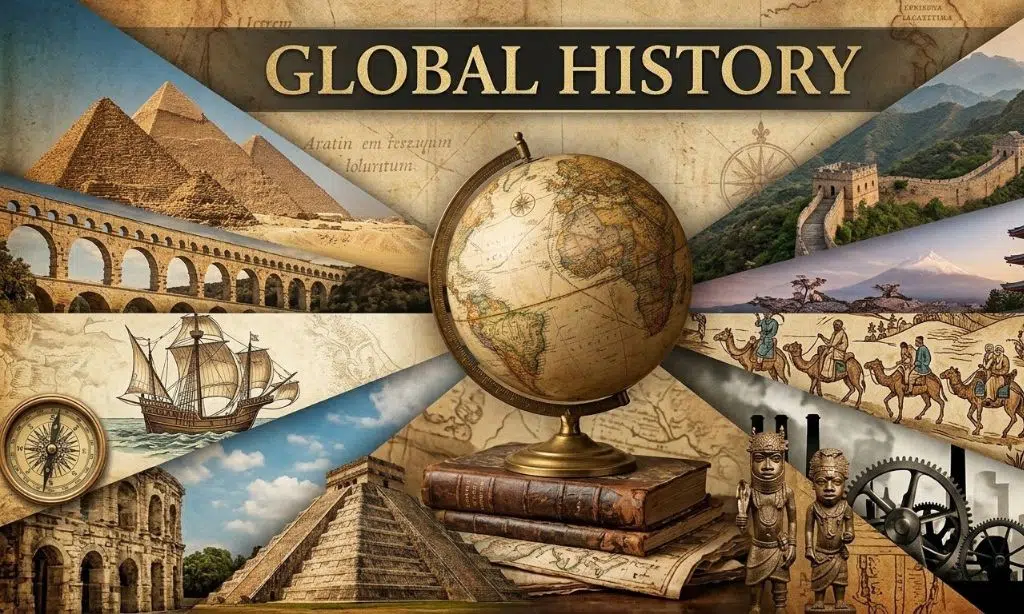
If we zoom out to look at the rest of the world, June 29 is a date heavily stamped with technological milestones, legal precedents, and moments of profound tragedy.
United States: The Birth of the Smartphone Era (2007)
Few dates in modern technological history are as significant as June 29, 2007. On this day, Apple Inc. officially released the first-generation iPhone to the eager public. Lines wrapped around blocks outside Apple Stores across the US. Steve Jobs had promised a revolutionary device that combined an iPod, a phone, and an internet communicator. It completely upended the mobile phone industry, spelling the beginning of the end for tactile keyboards and physical buttons, and ushering in the era of app-driven, touch-screen smartphones that now dominate our daily lives.
United States: Interstate Highway System (1956)
On June 29, 1956, President Dwight D. Eisenhower signed the Federal-Aid Highway Act. This colossal piece of legislation created the 41,000-mile National System of Interstate and Defense Highways. Not only did it transform the American landscape, enabling cross-country road trips and suburban expansion, but it was also originally pitched as a defense measure to allow rapid military mobilization and civilian evacuation in the event of a nuclear attack during the Cold War.
Russia/Soviet Union: The Soyuz 11 Tragedy (1971)
Space exploration is inherently dangerous, and June 29, 1971, stands as one of its darkest days. The Soviet spacecraft Soyuz 11 had successfully docked with the Salyut 1 space station, and its three cosmonauts—Georgy Dobrovolsky, Vladislav Volkov, and Viktor Patsayev—had spent a record-breaking 22 days in space. However, during their re-entry into Earth’s atmosphere, a ventilation valve accidentally opened, causing the crew capsule to depressurize in the vacuum of space. All three men tragically perished. To this day, they remain the only human beings to have actually died in space (above the Karman line).
Russia & USA: A Handshake in Space (1995)
In a much more triumphant space milestone, June 29, 1995, saw the American Space Shuttle Atlantis successfully dock with the Russian space station Mir. This historic rendezvous marked a new era of cooperation between the two former Cold War adversaries. The docking formed what was, at the time, the largest man-made satellite ever to orbit the Earth, paving the way for the eventual construction of the International Space Station (ISS).
United Kingdom: The Fall of the Globe Theatre (1613)
For lovers of literature and theater, June 29 is a day of historical infamy. In 1613, during a performance of William Shakespeare’s Henry VIII, a theatrical cannon misfired. The sparks caught the thatched roof of the legendary Globe Theatre in London. Within an hour, the iconic wooden structure, where many of Shakespeare’s greatest plays debuted, burned completely to the ground. Thankfully, historical records indicate that everyone escaped unharmed—save for one man whose burning trousers were famously put out with a bottle of ale!
Global Environment: Banning CFCs (1990)
On June 29, 1990, an international agreement was reached in London to completely phase out Chlorofluorocarbons (CFCs) by the year 2000. These chemicals, heavily used in aerosols and refrigeration, were tearing a massive hole in the Earth’s ozone layer. This aggressive, unified global action is widely considered one of the most successful international environmental treaties in human history, and the ozone layer has been slowly healing ever since.
| Year | Region | Major Historical Event |
| 1613 | UK | Shakespeare’s Globe Theatre burns down. |
| 1956 | USA | The Interstate Highway System is created. |
| 1958 | Brazil/Sweden | 17-year-old Pelé leads Brazil to World Cup victory. |
| 1971 | Soviet Union | Three cosmonauts perish during Soyuz 11 re-entry. |
| 1974 | Canada/USSR | Ballet legend Mikhail Baryshnikov defects from the USSR. |
| 1990 | Global | International agreement to ban ozone-depleting CFCs. |
| 1995 | USA/Russia | Space Shuttle Atlantis docks with the Mir space station. |
| 2007 | USA | Apple releases the revolutionary first-generation iPhone. |
Notable Births & Deaths (Global)
June 29 has been the entry and exit point for some of the most brilliant and complex figures in human history—from legendary aviator-authors to Hollywood royalty.
Famous Births on June 29
The individuals born on this day share a streak of intense creativity, physical prowess, and visionary leadership.
| Year | Name | Nationality | Claim to Fame |
| 1861 | William J. Mayo | American | Surgeon and visionary co-founder of the world-renowned Mayo Clinic. |
| 1900 | Antoine de Saint-Exupéry | French | Pioneering aviator and author of the timeless classic, The Little Prince. |
| 1911 | Bernard Herrmann | American | Oscar-winning composer known for iconic Hitchcock film scores (Psycho, Vertigo). |
| 1941 | Stokely Carmichael | Trinidadian-American | Prominent civil rights activist and leading figure of the Black Power movement. |
| 1944 | Gary Busey | American | Energetic character actor, nominated for an Oscar for The Buddy Holly Story. |
| 1978 | Nicole Scherzinger | American | Singer, dancer, and lead vocalist of the massively successful group The Pussycat Dolls. |
| 1991 | Kawhi Leonard | American | Professional basketball player, two-time NBA Champion, and Finals MVP. |
Famous Deaths on June 29
We also take a moment to remember the titans of art, cinema, and history who took their final bow on this day.
| Year | Name | Nationality | Legacy / Cause of Death |
| 1861 | Elizabeth Barrett Browning | English | Legendary Victorian poet (Sonnets from the Portuguese); died of a severe chill. |
| 1895 | Thomas Henry Huxley | English | Biologist known as “Darwin’s Bulldog” for his fierce advocacy of evolution. |
| 1933 | Roscoe “Fatty” Arbuckle | American | Silent film star and comedian whose career was ruined by a heavily publicized scandal. |
| 1940 | Paul Klee | Swiss-German | Visionary painter and master of color theory; died of scleroderma. |
| 1967 | Jayne Mansfield | American | Hollywood actress and 1950s sex symbol; died tragically in a devastating car accident. |
| 2003 | Katharine Hepburn | American | Iconic actress and record-holder for most Best Actress Oscars (4); died of natural causes at 96. |
Katharine Hepburn (1907 – 2003)
One of the most fiercely independent and talented actresses in Hollywood history passed away on June 29 at the age of 96. Katharine Hepburn shunned the traditional Hollywood publicity machine, refused to wear makeup off-camera, and frequently wore trousers before it was socially acceptable for women to do so. She remains the only actor in history to win four Academy Awards for Best Actress, leaving behind a legacy of strength and unparalleled talent.
Paul Klee (1879 – 1940)
The Swiss-born German artist Paul Klee died on this day. His highly individual style was deeply influenced by movements in art that included expressionism, cubism, and surrealism. A master of color theory, Klee’s works remain a staple of modern art museums around the globe.
“Did You Know?” June 29 Trivia
Want to impress your friends at your next dinner party? Keep these fascinating June 29 facts in your back pocket:
-
The First Miss Universe: Beauty pageants as we know them took a massive leap on June 29, 1952, when the very first Miss Universe pageant was held in Long Beach, California. Armi Kuusela, a 17-year-old from Finland, took home the inaugural crown.
-
Speeding Across the Atlantic: In 1986, flamboyant British billionaire Richard Branson broke the world record for the fastest crossing of the Atlantic Ocean in a boat. He navigated his speedboat, the Virgin Atlantic Challenger II, across the ocean in just over three days. However, he was denied the prestigious “Blue Riband” maritime award because he had to stop and refuel his vessel along the way!
-
The First Woman Rabbi: History was made in the United States on June 29, 1972, when Sally Priesand became the first woman to be ordained as a rabbi by a rabbinical seminary. She paved the way for thousands of women in religious leadership roles across the globe.
Quote of the Day
To wrap up our deep dive into June 29, we look to the brilliant mind of an author born on this very day in 1900. His words remind us of what truly matters in life.
“And now here is my secret, a very simple secret: It is only with the heart that one can see rightly; what is essential is invisible to the eye.”
— Antoine de Saint-Exupéry (Author of The Little Prince)
The Echoes of June 29 Across Time
June 29 is a date marked by remarkable achievements, transformative historical events, and the lives of influential people who shaped the world in different ways. From groundbreaking scientific discoveries and political milestones to unforgettable cultural moments, this day reflects humanity’s constant pursuit of progress and innovation. It also serves as a time to remember the notable figures whose births and deaths left lasting legacies across history.
Looking back at On This Day – June 29 offers more than just a collection of historical facts. It provides valuable insight into how past events continue to influence our present and future. Whether you’re a history enthusiast, student, or simply curious about significant moments from the past, June 29 reminds us that every day in history carries stories worth remembering and lessons worth preserving.