Nutrition habits long term success does not come from eating perfectly for 10 days. It comes from building food routines you can repeat when life gets busy, stressful, social, expensive, boring, or unpredictable.
I have seen the same pattern too many times. Someone starts a strict diet, removes half the foods they enjoy, tracks everything, feels motivated for a short time, then crashes when work, travel, family, hunger, or stress enters the picture.
That is not a character flaw. It is usually a bad system.
Sustainable eating habits should make daily life easier, not smaller. They should support energy, focus, training, sleep, digestion, and mood without turning every meal into a test. For the corporate athlete, food is not just about weight. It affects how you think in meetings, how you recover from workouts, how steady your energy feels, and how well you handle long desk days. These lasting nutrition habits also connect with the best healthy habits because food works best alongside hydration, movement, sleep, recovery, stress control, and focus.
The goal is simple: Build meals you can trust.
Why Most Diet Habits Fail Long Term?
Most diet habits fail because they are built for motivation, not real life. Motivation is useful, but it is not stable enough to carry every meal, every week, for years.
The first problem is usually restriction. People cut too much too fast. They remove favorite foods, skip meals, avoid entire food groups without a clear reason, and create rules they cannot maintain. The first few days may feel powerful. Then hunger, cravings, stress, and social life push back.
The second problem is complexity. A diet that needs perfect meal prep, expensive ingredients, constant tracking, and unusual recipes may work for a short challenge, but it often fails on a normal workweek. If the system is too hard, the person eventually returns to whatever is easiest.
The third problem is all-or-nothing thinking. One imperfect meal becomes a failed day. One missed grocery run becomes a failed week. That mindset ruins consistency faster than any single food choice.
Another issue is ignoring appetite. If meals are too small, low in protein, low in fiber, or not satisfying, hunger becomes louder later. Then snacking, overeating, or late-night food decisions become more likely. Long term diet habits work differently. They focus on structure, flexibility, and better defaults. You do not need to eat perfectly. You need a system that helps you return to balanced meals after normal life happens.
| Why Diet Habits Fail | What Usually Happens | Better Long-Term Fix |
| Too restrictive | Cravings and rebound eating | Keep planned flexibility |
| Too complicated | Meal prep becomes stressful | Use simple repeatable meals |
| Too expensive | Healthy eating feels unsustainable | Build around affordable staples |
| Too low in protein | Hunger returns quickly | Add protein to main meals |
| Too low in fiber | Meals feel less satisfying | Add fruits, vegetables, beans, oats, or whole grains |
| All-or-nothing mindset | One imperfect meal ruins the week | Restart at the next meal |
| No food environment plan | Convenience wins | Keep healthy defaults ready |
A sustainable nutrition plan should help you recover from imperfect days, not punish you for having them.
What Makes Sustainable Eating Habits Actually Work?
Sustainable eating habits work when they fit your real schedule, not your fantasy schedule. A person who works long hours, cares for family, trains after work, travels, or sits at a desk all day needs a food system that handles pressure.
The first rule is repeatability. You need meals you can make again and again. They do not need to be exciting every time. They need to be reliable. A few strong default meals can do more for your health than dozens of recipes you never cook.
The second rule is satisfaction. Long-term eating works better when meals keep you full and steady. That usually means enough protein, fiber-rich carbohydrates, healthy fats, and flavor. Bland food may look disciplined, but it rarely lasts.
The third rule is flexibility. A sustainable diet has room for family meals, restaurants, celebrations, snacks, cravings, travel, and cultural foods. If your eating plan only works when life is controlled, it is not a long-term plan.
The fourth rule is environment. Your kitchen, desk, bag, and grocery list shape your choices. If helpful foods are easy to reach, better eating takes less effort. If every meal depends on willpower, tired days will win.
The fifth rule is feedback. Notice how food affects energy, mood, digestion, training, focus, and sleep. This turns nutrition into a practical experiment, not a list of rules.
| Sustainable Eating Rule | What It Means | Practical Example |
| Repeatability | Meals should be easy to repeat | Keep 3 default breakfasts |
| Satisfaction | Meals should keep you full | Add protein and fiber |
| Flexibility | Real life must fit | Use restaurant rules, not food guilt |
| Environment | Make better choices easy | Keep fruit, yogurt, eggs, lentils, or nuts ready |
| Culture fit | Keep familiar foods | Improve the plate instead of replacing everything |
| Budget fit | Avoid expensive perfection | Use beans, eggs, oats, rice, frozen vegetables |
| Feedback | Notice how meals affect you | Track energy after lunch |
Sustainable eating is not about being strict forever. It is about making better food choices easier to repeat.
7 Nutrition Habits That Work Long Term
These nutrition habits are built for real life. They are not extreme, trendy, or designed to impress anyone. They are the habits that make eating better feel less fragile. Do not start all seven at once. Pick one habit that solves your biggest nutrition problem right now. If you get hungry too soon, start with protein. If meals feel random, build default meals. If snacks take over, improve your snack structure. If grocery trips are chaotic, build a better food environment.
Long-term nutrition works best when habits connect. Protein helps fullness. Fiber supports satisfaction. Hydration improves daily rhythm. Simple meal planning reduces decision fatigue. Better snacks prevent emergency choices. Food flexibility prevents guilt. Light tracking helps you learn patterns. These habits also support full body workouts busy people can follow, recovery day routines, morning habits for better energy, hydration habits, and habits for better focus.
| Habit | Main Benefit | Best For |
| 1. Build every main meal around protein | Better fullness and recovery | Busy workers, active people, snackers |
| 2. Add fiber before removing foods | Better satisfaction and diet quality | People who feel hungry often |
| 3. Create 3 default meals | Less decision fatigue | Busy schedules |
| 4. Keep healthy foods visible and ready | Better food environment | Stress eaters and rushed eaters |
| 5. Plan snacks instead of fighting them | More stable energy | Long workdays |
| 6. Use flexible food rules | Better consistency | Social eaters and families |
| 7. Review meals lightly, not obsessively | Better awareness | People who want lasting nutrition |
1. Build Every Main Meal Around Protein
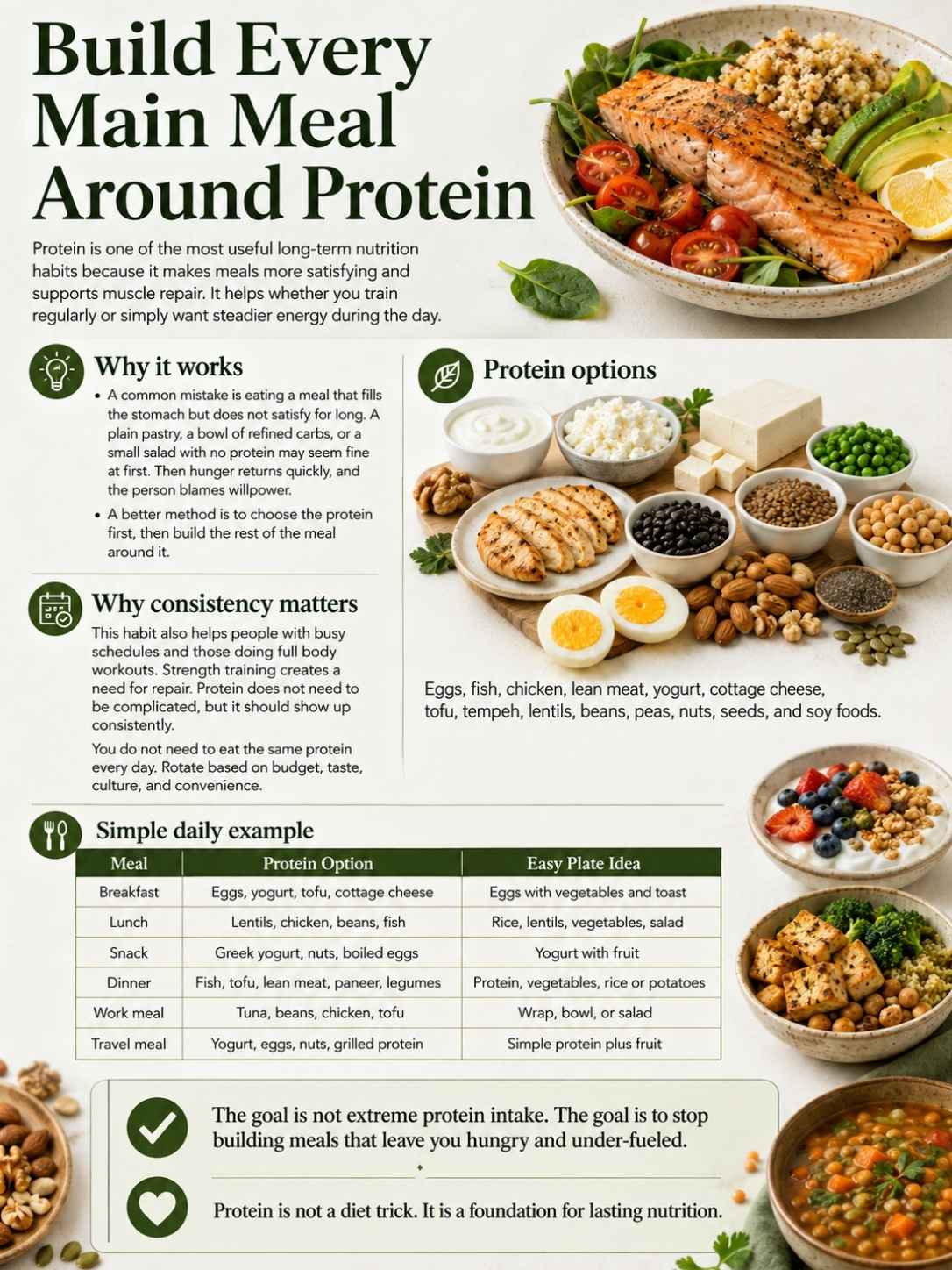
Protein is one of the most useful nutrition habits long term because it makes meals more satisfying and supports muscle repair. This matters whether you train regularly or simply want steadier energy during the day. A common mistake is eating a meal that fills the stomach but does not satisfy for long. A plain pastry, a bowl of refined carbs, or a small salad with no protein may seem fine at first. Then hunger returns quickly, and the person blames willpower.
A better method is to choose the protein first. Then build the rest of the meal around it. Protein options can include eggs, fish, chicken, lean meat, yogurt, cottage cheese, tofu, tempeh, lentils, beans, peas, nuts, seeds, and soy foods. This habit also helps people doing full body workouts busy schedules can handle. Strength training creates a need for repair. Protein does not need to be complicated, but it should show up consistently.
You do not need to eat the same protein every day. Rotate based on budget, taste, culture, and convenience. For example, eggs may work for breakfast, lentils for lunch, yogurt for snacks, and fish or tofu for dinner. The goal is not extreme protein intake. The goal is to stop building meals that leave you hungry and under-fueled.
| Meal | Protein Option | Easy Plate Idea |
| Breakfast | Eggs, yogurt, tofu, cottage cheese | Eggs with vegetables and toast |
| Lunch | Lentils, chicken, beans, fish | Rice, lentils, vegetables, salad |
| Snack | Greek yogurt, nuts, boiled eggs | Yogurt with fruit |
| Dinner | Fish, tofu, lean meat, paneer, legumes | Protein, vegetables, rice or potatoes |
| Work meal | Tuna, beans, chicken, tofu | Wrap, bowl, or salad |
| Travel meal | Yogurt, eggs, nuts, grilled protein | Simple protein plus fruit |
Protein is not a diet trick. It is a foundation for lasting nutrition.
2. Add Fiber Before Removing Foods
Most people think better nutrition starts by cutting things out. Sometimes reducing certain foods helps, but adding the right foods first is often easier and more sustainable. Fiber is a good example. Fiber-rich foods include vegetables, fruits, beans, lentils, oats, whole grains, nuts, and seeds. These foods help meals feel more complete and often improve overall diet quality.
The habit is simple: add one fiber-rich food to one meal each day. Add berries to yogurt. Add lentils to rice. Add beans to salad. Add vegetables to eggs. Add oats to breakfast. Add fruit to snacks. This approach works because it feels less like punishment. Instead of saying, “I cannot eat this,” you start with, “What can I add that helps?” That mindset creates better long-term behavior.
Fiber also works well with protein. A meal with both usually feels more satisfying than a meal built mostly around refined carbs or snacks. The mistake is jumping straight to supplements while ignoring basic foods. Supplements may help in some cases, but a food-first approach is usually a stronger daily foundation. If you are not used to high-fiber foods, increase gradually and drink enough water. Adding too much too fast can cause discomfort for some people.
| Fiber Add-On | Where to Use It | Why It Helps |
| Berries | Yogurt, oats, smoothies | Adds fiber and flavor |
| Lentils | Rice, soup, curry | Adds fiber and protein |
| Beans | Salad, wraps, bowls | Supports fullness |
| Vegetables | Eggs, noodles, rice, dinner | Adds volume and nutrients |
| Oats | Breakfast | Easy repeatable fiber |
| Chia or flax | Yogurt or smoothies | Small but useful addition |
| Whole fruit | Snacks | Better than juice for fullness |
Adding fiber is one of the easiest sustainable eating habits because it improves meals without making food feel smaller.
3. Create 3 Default Meals
Default meals are meals you can make without much thinking. They are one of the strongest long term diet habits because they reduce decision fatigue. Most people do not struggle with nutrition because they lack information. They struggle because every meal becomes a decision. What should I eat? Do I have ingredients? Is it healthy? Is it quick? Will it keep me full? When you are tired, the easiest option wins.
Default meals solve that problem. Choose three meals you like, can afford, and can repeat. One breakfast, one lunch, and one dinner is enough to begin. A good default meal should include protein, fiber, and flavor. It should be simple enough for a busy day. It should use ingredients you usually keep at home.
For example, a default breakfast could be eggs with toast and fruit. A lunch could be rice, lentils, vegetables, and yogurt. A dinner could be fish or tofu with potatoes and vegetables. The exact food depends on your culture and preferences. The mistake is trying to create a new meal plan every week. Variety is nice, but too much variety can make healthy eating harder. Repeat meals during busy seasons and save creativity for when you have more time.
| Default Meal Type | Example | Why It Works |
| Fast breakfast | Eggs, toast, fruit | Protein plus easy carbs |
| No-cook breakfast | Yogurt, oats, berries, nuts | Quick and repeatable |
| Simple lunch | Rice, lentils, vegetables | Affordable and filling |
| Work lunch | Chicken, beans, salad, wrap | Portable and balanced |
| Quick dinner | Fish or tofu, potatoes, vegetables | Easy full plate |
| Emergency meal | Soup, eggs, frozen vegetables | Prevents takeout by default |
Default meals make lasting nutrition easier because you are not starting from zero every day.
4. Keep Healthy Foods Visible and Ready
Your food environment often beats your intention. When you are tired, hungry, or stressed, you will usually choose what is easiest. That is why visibility matters. If fruit is hidden and packaged snacks are on the desk, snacks win. If yogurt, boiled eggs, cooked lentils, washed vegetables, or ready rice are easy to reach, better choices become more likely.
This does not mean removing every fun food. It means making helpful foods easier to choose. A healthy kitchen should support you when your motivation is low. Start with simple preparation. Wash fruit. Keep water visible. Boil eggs. Cook lentils or beans in batches. Keep frozen vegetables. Portion nuts. Keep yogurt available. Put easy protein options where you can see them.
The same rule applies to work. If your desk snacks are only sweets, your afternoon food choices will follow. Keep better options nearby: fruit, nuts, yogurt, roasted chickpeas, or a protein-rich snack. The mistake is relying on discipline at the hardest moment. A better method is to design the environment before hunger arrives.
| Food Environment Habit | What to Do | Why It Helps |
| Keep fruit visible | Put it on the counter | Easy snack choice |
| Prep protein | Boiled eggs, yogurt, tofu, chicken, beans | Makes meals faster |
| Use frozen vegetables | Keep bags ready | Quick meal upgrade |
| Portion snacks | Use small containers | Reduces mindless eating |
| Keep water nearby | Desk bottle or kitchen glass | Supports hydration habits |
| Plan emergency meals | Soup, eggs, rice, lentils | Prevents random takeout |
| Reduce friction | Put useful foods at eye level | Better default choices |
A good food environment makes sustainable eating habits feel almost automatic.
5. Plan Snacks Instead of Fighting Them
Snacking is not automatically bad. Unplanned snacking is where many people struggle. A planned snack can support energy, focus, and appetite control. It can help when lunch is delayed, work runs long, training is scheduled, or dinner will be late. The problem is random grazing without structure.
A useful snack should usually include protein, fiber, or both. That makes it more satisfying. A snack made only of quick sugar may give fast energy but can leave you hungry again soon. Examples include yogurt with fruit, nuts with an apple, boiled eggs, hummus with vegetables, cottage cheese, roasted chickpeas, peanut butter with whole-grain toast, or a simple protein smoothie.
The mistake is trying to ban snacks while your schedule clearly needs them. If you regularly go six or seven hours between meals, a snack may help. Plan it instead of pretending hunger will not happen. This habit is especially useful for desk workers. Afternoon snacking often happens because of boredom, stress, low hydration, or weak lunch structure. Before grabbing food, ask: Am I hungry, tired, thirsty, stressed, or restless? A short walk and water may solve some cravings. Real hunger needs food.
| Snack Situation | Better Snack Option | Why It Works |
| Long work gap | Yogurt and fruit | Protein plus fiber |
| Pre-workout | Banana and nuts | Quick energy with satiety |
| Afternoon hunger | Boiled eggs or roasted chickpeas | Protein-rich |
| Crunch craving | Carrots and hummus | Crunch plus fiber |
| Sweet craving | Fruit with yogurt | Sweet but more filling |
| Travel snack | Nuts and fruit | Portable |
| Late dinner | Cottage cheese or light balanced snack | Prevents extreme hunger |
Planned snacks help lasting nutrition because they reduce panic eating.
6. Use Flexible Food Rules

Rigid food rules often fail because life is not rigid. Restaurants, family meals, holidays, travel, work events, cravings, and cultural foods all exist. A long-term nutrition plan has to make room for them. Flexible food rules are simple guidelines that help you make better choices without turning every meal into a moral test. For example, “Add protein when possible.” “Choose water first most of the time.” “Eat vegetables at two meals.” “Enjoy dessert without turning it into a full day of overeating.”
This mindset prevents all-or-nothing thinking. One rich meal does not ruin anything. One dessert does not erase your progress. One busy day does not mean you failed. The key is returning to your normal rhythm at the next meal. That is where long-term consistency is built.
Flexible rules also protect social wellness. Food is part of family, culture, celebration, and connection. A healthy eating plan that makes you afraid of every social meal can become stressful. This does not mean eating without awareness. It means building structure without guilt. Most meals can follow your usual balanced pattern. Some meals can be more relaxed. Both can fit.
| Rigid Rule | Flexible Rule |
| Never eat carbs | Choose fiber-rich carbs most often |
| No dessert ever | Enjoy dessert intentionally |
| No restaurant meals | Use a simple restaurant plate method |
| Eat perfectly every day | Return to balance at the next meal |
| Avoid all snacks | Plan satisfying snacks when needed |
| Only fresh food counts | Use frozen, canned, and simple staples too |
| Track every bite forever | Track only when it helps awareness |
Flexible food rules make sustainable eating habits livable.
7. Review Meals Lightly, Not Obsessively
A light meal review helps you learn what works without turning food into an obsession. The goal is awareness, not judgment. At the end of the day or week, ask a few simple questions. Which meals kept me full? Which meals made me sluggish? Did I get enough protein? Did I eat fruits or vegetables? Did I drink enough water? Did I skip meals and overeat later? What made eating harder this week?
This kind of review turns nutrition into feedback. You are not labeling foods as good or bad. You are noticing patterns. For example, you may learn that a low-protein breakfast leads to constant snacking. Or that skipping lunch makes dinner chaotic. Or that keeping fruit visible helps. Or that late caffeine affects sleep, which affects cravings the next day.
Do not track everything unless you have a clear reason. Detailed food tracking can help some people, especially for specific goals, but it can also create stress for others. A simple review is often enough. This habit works well for busy professionals because it improves the system. Instead of blaming yourself, you adjust the routine.
| Review Question | What It Reveals |
| Which meal kept me full longest? | Better meal structure |
| When did I snack most? | Hunger, stress, or boredom pattern |
| Did I include protein? | Meal satisfaction |
| Did I include fiber? | Food quality and fullness |
| Did I drink enough water? | Hydration habits |
| What meal felt hardest? | Planning gaps |
| What should I repeat next week? | Sustainable defaults |
| What should I simplify? | Friction points |
Light reviewing helps lasting nutrition improve without making food stressful.
A Simple Long-Term Eating Routine
A long-term eating routine should be boring in the best way. It should make daily food decisions easier without removing enjoyment. Start with anchor meals. An anchor meal is a meal that stays fairly consistent. Many people do well by stabilizing breakfast first. Others prefer lunch. Choose the meal that causes the most trouble and make it easier.
Next, create a grocery structure. Instead of shopping randomly, build the list around protein, fiber-rich carbs, vegetables, fruits, healthy fats, and easy backup meals. This makes the week more predictable. Then decide your snack plan. If you usually get hungry between lunch and dinner, plan for it. A snack is not failure. It is a tool.
Finally, keep a flexible rule for social meals. You do not need to avoid restaurants or family food. You need a way to enjoy them and return to your rhythm afterward. This routine should support energy, training, recovery, and focus. It should also fit your budget and culture.
| Routine Step | What to Do | Example |
| Choose one anchor meal | Make one meal repeatable | Protein breakfast |
| Build a basic grocery list | Shop by food groups | Eggs, lentils, rice, vegetables, fruit |
| Plan one snack | Avoid random grazing | Yogurt and fruit |
| Prep one protein | Reduce cooking friction | Boiled eggs or cooked beans |
| Prep one fiber food | Improve meal quality | Washed fruit or cooked lentils |
| Keep one emergency meal | Prevent chaos meals | Soup, frozen vegetables, rice |
| Review weekly | Improve the system | Ask what worked |
If the full routine feels too much, start with the minimum version.
| Minimum Nutrition Routine | Action |
| Breakfast | Add protein |
| Lunch | Add one fiber-rich food |
| Snack | Plan one option |
| Dinner | Build a balanced plate |
| Weekly | Repeat one successful meal |
A long-term eating routine should make healthy eating easier next week, not just today.
Beginner Mistakes That Make Nutrition Harder
The first beginner mistake is changing too much at once. People try to overhaul breakfast, lunch, dinner, snacks, sugar, caffeine, water, meal prep, and workouts in one week. That is too much.
The second mistake is choosing rules that do not match real life. A plan that requires perfect cooking, no social meals, no favorite foods, and total control will struggle during busy seasons.
Another mistake is under-eating early in the day. Some people skip breakfast or lunch, then feel out of control later. That may not be a willpower issue. It may be a fuel issue.
Many people also chase supplements before fixing meals. Supplements can help in specific situations, but they cannot replace protein, fiber, hydration, sleep, and consistent meals.
A common mistake is using guilt as motivation. Guilt may push action briefly, but it usually creates a poor relationship with food. Better nutrition grows from structure, not shame.
Finally, people often ignore how food connects with sleep, stress, and movement. Poor sleep can increase cravings. Stress can change appetite. Sitting all day can trigger boredom snacking. Nutrition is part of the whole system.
| Mistake | Why It Hurts | Better Habit |
| Changing everything at once | Creates overwhelm | Start with one meal |
| Using extreme rules | Hard to maintain | Use flexible guidelines |
| Skipping meals | Can trigger overeating later | Build meal structure |
| Ignoring protein | Meals feel less satisfying | Add protein first |
| Ignoring fiber | Hunger returns quickly | Add fruits, vegetables, beans, or oats |
| Relying on supplements | Misses basics | Fix meals first |
| Eating from guilt | Creates stress | Use feedback, not shame |
| No backup meals | Convenience wins | Keep emergency options |
Good nutrition should make life more stable, not more anxious.
Nutrition Habits by Lifestyle Type
Different lifestyles need different food systems. A remote worker may need snack boundaries. A founder may need default meals. A parent may need fast family-friendly options. A student may need budget staples. A fitness beginner may need protein and recovery meals. That is why generic diet advice often fails. It ignores context. A person working 10-hour desk days needs different systems than someone with flexible cooking time. A traveler needs portable habits. A caregiver needs easy meals. A night-shift worker needs structure around unusual hours.
The food principles stay similar: protein, fiber, whole foods, hydration, flexibility, and consistency. The execution changes. If your schedule is unpredictable, create backup meals. If your food budget is tight, lean on eggs, beans, lentils, oats, rice, frozen vegetables, seasonal fruit, and canned fish where suitable. If you eat out often, learn simple ordering patterns.
Long-term nutrition should fit the person, not the other way around.
| Lifestyle Type | Common Nutrition Problem | Best Habit to Start |
| Desk worker | Afternoon snacking and low movement | Planned snacks and post-meal walk |
| Remote worker | Kitchen grazing | Structured meals and snack timing |
| Founder or manager | Skipped meals | Default meals |
| Student | Budget and convenience | Affordable staples |
| Parent | Family food pressure | Flexible plate method |
| Fitness beginner | Poor recovery meals | Protein at main meals |
| Frequent traveler | Random food choices | Portable protein and fiber |
| Shift worker | Irregular meal timing | Anchor meals around main sleep and work blocks |
| Writer or creator | Long focus blocks | Protein breakfast and hydration cues |
The best nutrition habit is the one that solves your daily friction.
How Nutrition Habits Support the Best Healthy Habits?
Nutrition habits support almost every other healthy routine. Food affects energy, focus, training, sleep, mood, hydration, and recovery. Morning habits for better energy work better when your first real meal supports you. If breakfast is weak or skipped without a plan, the morning may feel more scattered. A protein-rich meal and water can make the day feel steadier.
Full body workouts busy people can follow also need nutrition support. Training without enough protein, fluids, and balanced meals can make recovery harder. Recovery day routines also depend on food because muscles need nutrients to repair. Hydration habits connect closely with eating. Drinking water with meals, before coffee, and during the workday supports a better rhythm. Movement habits for sedentary lifestyles also pair well with post-meal walks.
Mental health habits and habits for better focus are affected by food patterns too. Long gaps without eating, too much caffeine, low water intake, and poor sleep can make mood and attention feel less stable. Evening habits that improve sleep may also improve when dinner timing and caffeine timing are handled better.
| Nutrition Habit | Related Healthy Habit Topic |
| Protein breakfast | Morning habits for better energy |
| Balanced dinner | Evening habits that improve sleep |
| Recovery meals | Recovery day routines |
| Protein after training | Full body workouts busy |
| Water with meals | Hydration habits |
| Post-meal walk | Movement habits for sedentary lifestyles |
| Planned snack | Habits for better focus |
| Flexible eating | Mental health habits |
| Social meals without guilt | Social wellness habits |
| Caffeine awareness | Habits that reduce stress long term |
Nutrition is not separate from wellness. It is one of the daily habits that holds the whole system together.
When to Get Personalized Nutrition Support?
General nutrition habits can help many people, but some situations need personalized guidance. Food is personal, and health conditions can change what is appropriate. If you have diabetes, kidney disease, heart disease, digestive disorders, food allergies, eating disorder history, pregnancy, medication-related food restrictions, or unexplained weight changes, speak with a qualified healthcare professional or registered dietitian.
It is also worth getting help if food feels stressful, obsessive, or emotionally overwhelming. A healthy eating plan should not make you afraid of normal meals. Personalized guidance can also help athletes, people trying to gain muscle, people managing weight, older adults, and anyone with specific lab results or medical goals.
The point is not to make nutrition complicated. The point is to avoid guessing when your situation needs individual care. A good professional can help you build sustainable eating habits that match your body, culture, schedule, preferences, and health needs.
| Situation | Why Support Helps |
| Diabetes or blood sugar concerns | Meal timing and carbs may need guidance |
| Kidney or heart conditions | Sodium, protein, or fluid needs may differ |
| Digestive issues | Food tolerance may need assessment |
| Food allergies | Safety and nutrient balance matter |
| Eating disorder history | Restriction can be risky |
| Pregnancy or breastfeeding | Nutrient needs change |
| Unexplained weight change | Medical review may be needed |
| Serious training goals | Protein and energy needs may need planning |
Long-term nutrition should be safe, flexible, and personal.
Final Thoughts
Nutrition habits long term success comes from repeatable structure, not perfect eating. Start with protein. Add fiber. Create default meals. Keep helpful foods visible. Plan snacks. Use flexible food rules. Review your meals lightly and learn from patterns.
You do not need to change everything this week. Choose one habit and make it normal. Then add another.
If your meals feel random, start with three default meals. If you are hungry all day, start with protein and fiber. If snacks feel out of control, plan them. If food guilt keeps ruining your consistency, practice returning to balance at the next meal. Lasting nutrition is not about fear. It is about building a food system that supports your energy, work, training, recovery, sleep, mood, and real life.
That is how sustainable eating habits become easier.
That is how long-term diet habits stop feeling like punishment.
And that is how nutrition becomes one of the best healthy habits for a stronger, steadier, healthier life.
Frequently Asked Questions (FAQ) About Nutrition Habits Long Term
What are nutrition habits long term?
Nutrition habits long term are repeatable food routines that support health, energy, and consistency over months and years. They include protein at meals, fiber-rich foods, simple default meals, better grocery planning, hydration, flexible food rules, and light meal reviews.
What are sustainable eating habits?
Sustainable eating habits are food choices you can repeat without feeling trapped or deprived. They fit your schedule, budget, culture, appetite, and social life. They focus on structure, not perfection.
What is the easiest nutrition habit to start?
The easiest habit is adding protein to your first real meal. This can help with fullness, energy, and recovery. Eggs, yogurt, beans, lentils, tofu, fish, chicken, cottage cheese, and soy foods are common options.
How do I make healthy eating last?
Make healthy eating last by choosing simple meals, keeping helpful foods ready, planning snacks, allowing flexibility, and restarting at the next meal after imperfect choices. Avoid extreme rules that make normal life difficult.
Are carbs bad for long-term nutrition?
Carbs are not automatically bad. Fiber-rich carbohydrate foods like oats, rice, potatoes, whole grains, beans, lentils, fruits, and vegetables can fit into a healthy eating pattern. The quality and portion of the meal matter.
Do I need to meal prep every week?
No. Meal prep helps some people, but it is not required. You can use simple prep instead: boil eggs, cook lentils, wash fruit, prepare one protein, keep frozen vegetables, or repeat default meals.
How can I stop random snacking?
Plan snacks instead of fighting them. Build meals with protein and fiber, drink enough water, and notice whether snacking comes from hunger, stress, boredom, or tiredness. Keep satisfying snack options ready.