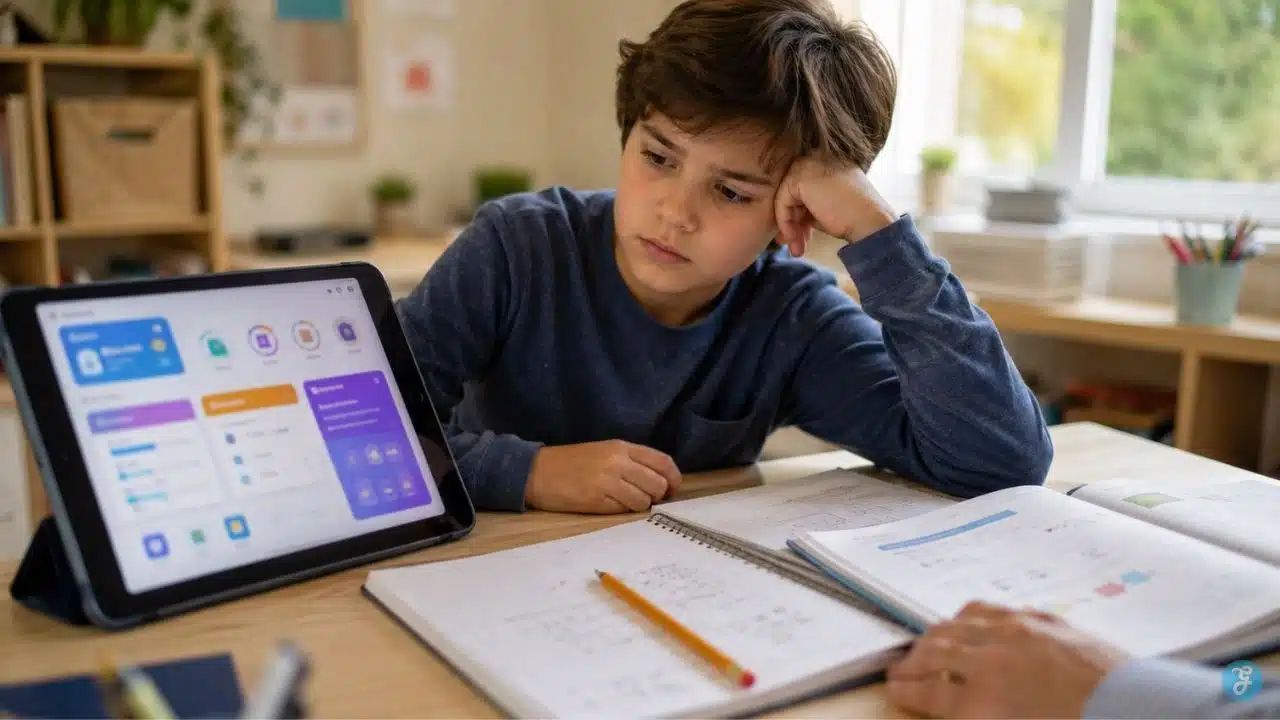
Why learning apps fail is not hard to understand once you stop judging them by the glow of the screen. A child taps. A badge appears. A cheerful sound plays. A progress bar moves. The parent feels reassured. The teacher gets dashboard data. The app records “engagement.” Everyone relaxes for a moment because something educational seems to be happening. But that is the trick.
A lot of learning apps do not really teach. They simulate teaching. They turn lessons into screens, answers into taps, repetition into streaks, and attention into analytics. The child looks busy. The app looks smart. The adult feels less guilty about screen time. But when you ask the child to explain the concept, apply it in a new situation, read independently, solve on paper, or discuss the idea without the app holding their hand, the weakness shows.
I work close enough to digital learning to know both sides of this argument. Good technology can help children learn. A carefully built app can support practice, feedback, accessibility, and curiosity. But many so-called educational apps are not built like serious learning tools. They are built like products trying to survive in an app store.
That is where the learning app problem begins.
The Word “Educational” Has Become Too Cheap
The app store label “educational” does not mean the app is instructionally strong. It often means the app has letters, numbers, colors, quizzes, puzzles, animals, badges, or classroom-like graphics. That is not the same as teaching.
A real educational tool should have a clear learning goal. It should know what skill it is building. It should present ideas in a structured sequence. It should give meaningful feedback. It should make the child think, not just react. It should help the learner transfer knowledge beyond the screen. Many apps fail that basic test.
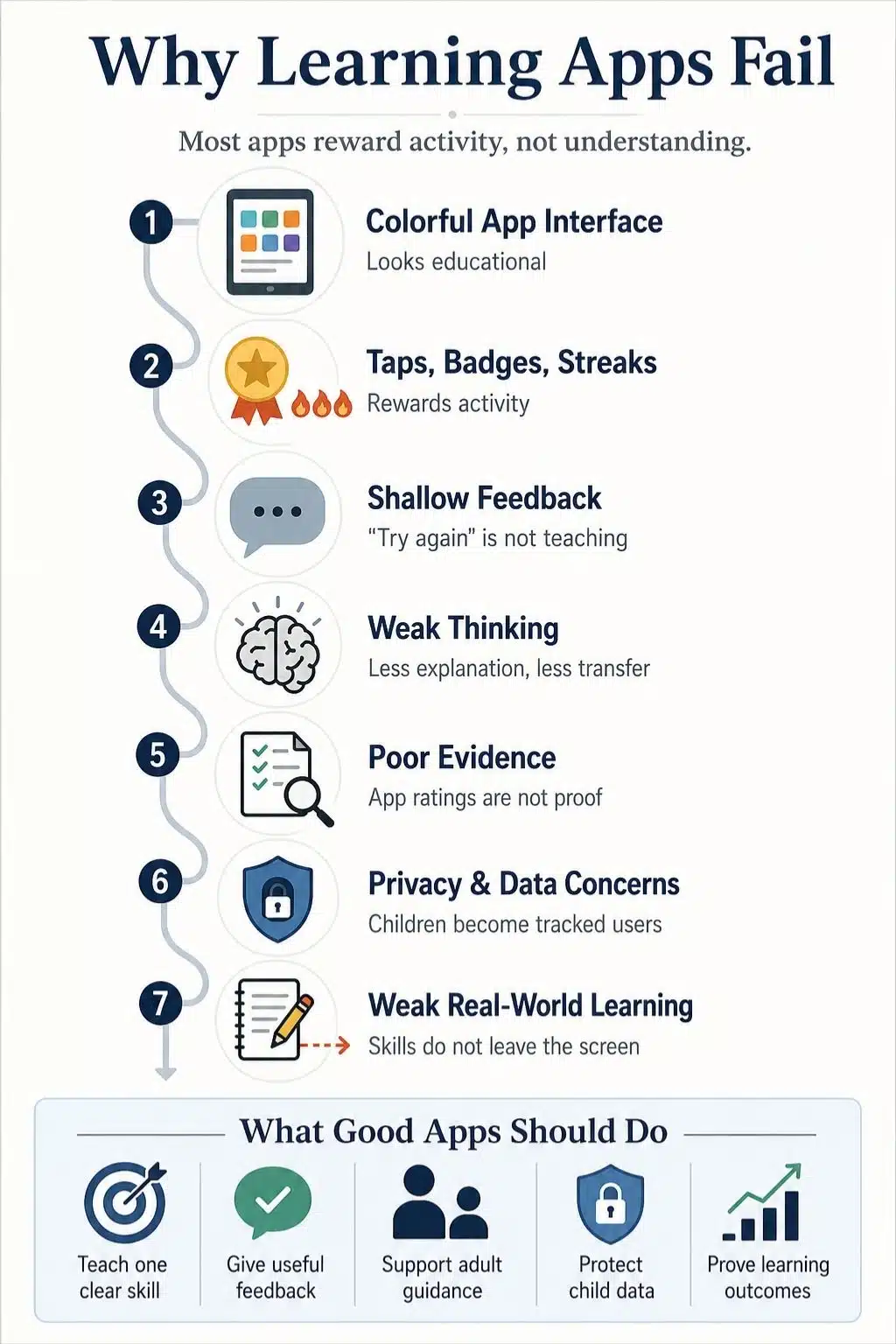
They ask children to match pictures, pop balloons, drag shapes, color letters, or tap the “right” object. Sometimes that is useful for early recognition or simple practice. But recognition is not understanding. Speed is not mastery. Completion is not learning.
The app may say the child finished Level 6. The better question is: can the child explain what Level 6 was supposed to teach?
The App Store Rewards Entertainment Before Learning
Most learning apps live in a brutal attention market. They compete with games, videos, social platforms, cartoons, and other apps built to hold attention. That pressure changes product design. Educational value becomes only one part of the business equation. Retention, daily use, upgrades, subscriptions, ratings, and parent appeal matter too.
So many apps lean into the easy stuff:
- Bright colors
- Constant rewards.
- Cartoon characters.
- Sound effects.
- Badges.
- Streaks.
- Leaderboards.
- Unlockable levels.
- Pop-up praise.
None of these is automatically bad. Children can enjoy learning. A good app can be playful. But playfulness becomes a problem when the reward system is stronger than the teaching system. A child may come back because the app feels good, not because the lesson is working.
That is why ineffective educational apps can perform well commercially. They satisfy the adult’s desire for “productive screen time” and the child’s desire for stimulation. Actual learning can become secondary.
Most Apps Confuse Activity With Thinking
This is the biggest flaw in edtech app criticism: people often talk about screen time, but not enough about screen quality. The problem is not only that children are on screens. The problem is what the screen asks them to do.
A strong learning experience requires mental effort. Children need to compare, explain, recall, connect, test, correct, and apply. They need to struggle a little. They need feedback that helps them understand why an answer is wrong.
Many apps avoid that friction because friction reduces engagement. Instead, they create low-effort interaction. Tap the picture. Swipe the card. Match the color. Repeat the sound. Drag the object. Watch the animation. Receive the badge.
That is activity. It may even be an enjoyable activity. But it is not necessarily thinking. When an app removes too much difficulty, it can also remove the learning.
Good Feedback Is Rare. Generic Praise Is Everywhere.
One of the most important jobs of a teacher is diagnosing misunderstandings.
A child gets an answer wrong. A good teacher does not simply say, “Try again.” The teacher asks why. The teacher notices the pattern. Maybe the child misunderstood the instruction. Maybe they guessed. Maybe they know the rule but cannot apply it. Maybe they memorized a trick without understanding the concept. Many apps cannot do this well.
They give shallow feedback:
- “Good job!”
- “Oops!”
- “Try again!”
- “Almost!”
- “Correct!”
- “You earned a star!”
That kind of feedback may keep the child moving, but it often does not repair the misunderstanding.
This is especially dangerous in reading and math. If a child repeatedly practices a weak strategy, the app may reinforce the habit instead of correcting it. The student gets more screen time, not better instruction. A useful app should not only mark answers. It should teach from mistakes.
The Best Learning Apps Are Usually Narrow, Not Magical
When educational apps work, they often work in limited and specific ways. Early math practice can work. Vocabulary support can work. Letter recognition can work. Spaced repetition can work. Accessibility tools can work. Targeted skill reinforcement can work.
But that is different from saying an app teaches a child in a complete way. The best apps usually do one thing clearly. They do not pretend to replace the teacher, the parent, the book, the discussion, the notebook, the project, or the classroom.
That distinction matters. A good app can support learning. A bad app pretends to be learning. The industry often blurs this line because big promises sell better than honest boundaries.
The “Personalized Learning” Label Is Doing Too Much Work
Many learning apps now claim to be personalized. In practice, personalization often means the app adjusts the next question based on the previous answer. That can be helpful, but it is not the same as knowing the child.
A teacher may know that a student is tired, anxious, rushing, bored, embarrassed, or copying a pattern without understanding it. A parent may know that the child can solve the problem orally but struggles to write it down. A tutor may notice that the child understands the answer but lacks the vocabulary to explain it.
The app usually sees clicks. That is not enough. Personalization becomes a marketing word when the system adapts difficulty but not explanation, emotion, language, context, motivation, or real-world application.
Children are not dashboards. They are human learners. Any app that forgets that will eventually fail them.
Apps Are Weak At Social Learning
Children learn through conversation. They ask questions. They copy adults. They explain ideas to friends. They listen. They negotiate meaning. They test language in real time. They build confidence through human response.
Many apps isolate the learner. That does not make the app useless. Independent practice has value. But when an app becomes the main learning experience, social learning shrinks.
This is a serious problem for young children. Early learning is not just content absorption. It is language, emotion, attention, memory, movement, imitation, and relationship. A quiet child tapping through a phonics game may look productive, but the missing adult conversation can be the most important part.
A learning app should invite adult-child discussion, not replace it. The strongest digital learning often happens when the app becomes a shared tool: parent and child talk through the task, the teacher uses the app to reinforce a lesson, the student explains what they did, and the screen becomes one part of a bigger learning loop.
Most apps are not designed for that. They are designed for solo use.
Star Ratings Are Not Evidence
Parents and teachers often rely on app store ratings because they do not have time to review learning science. That is understandable. It is also risky. A five-star review may mean the app is fun, cheap, colorful, easy to use, or good at keeping a child occupied. It does not prove the app improves reading, math, reasoning, writing, memory, or comprehension.
App ratings are consumer signals. They are not educational evaluations. The same is true of screenshots, awards, influencer recommendations, and “teacher-approved” labels that lack clear criteria. Some may be useful. Some may be marketing.
A serious educational product should be able to answer simple questions:
- What skill does this app teach?
- What age group is it designed for?
- What learning theory supports the design?
- Has it been tested with real learners?
- Does it provide meaningful feedback?
- Does it align with curriculum or evidence-based practice?
- Does it protect children’s data?
- Can adults see what the child actually learned?
If those answers are vague, the app should not get automatic trust.
The Privacy Problem Is Part Of The Learning Problem
Some people treat privacy as a separate issue from education. It is not. If a child’s learning environment is also collecting data, tracking behavior, sharing information with third parties, or nudging longer use for business reasons, then the product is not only teaching. It is also extracting. That changes the ethical standard.
Children should not have to trade personal data for basic learning support. Parents should not need to decode long privacy policies before letting a child practice phonics. Teachers should not carry the burden of evaluating every app’s data practices before assigning homework.
The more education moves into apps, the more privacy becomes part of educational quality. An app that teaches well but handles children’s data poorly is still a problem.
The Subscription Model Has Distorted Educational Design
The best educational outcome for a child is not always the best business outcome for an app company. A child may need fewer features, less screen time, more repetition, clearer instruction, and more adult involvement. A company may need higher retention, more sessions, more upgrades, and more reasons for parents to keep paying.
That tension shapes design.
Some apps stretch learning into endless levels. Some add unnecessary rewards. Some make cancellation difficult. Some lock useful content behind paid tiers. Some use free versions as funnels into subscriptions. Some build parent dashboards that look impressive but do not reveal much about real understanding.
This does not make every paid learning app bad. Quality education costs money to build. Good developers, researchers, designers, teachers, and child-safety experts should be paid. But when monetization leads the design, learning suffers.
Why Parents Keep Falling For Weak Apps
Parents are not foolish. They are tired. They want their children to learn. They want screen time to feel less empty. They want help with reading, math, language, coding, creativity, and exam preparation. Many parents are busy, overwhelmed, and under pressure to keep their children ahead.
The learning app market understands that pressure. It sells relief:
- “Your child can learn independently.”
- “Make screen time educational.”
- “Personalized learning at home.”
- “Fun lessons kids love.”
- “Build skills in minutes a day.”
Some of that may be true for good apps. But parents need to know that an app can be useful without being sufficient. No app should make adults disappear from learning.
Why Teachers Are Right To Be Skeptical
Teachers are often blamed for resisting edtech. In reality, many teachers are simply better at spotting weak learning design than investors, marketers, and administrators.
A teacher can see when students are clicking without understanding. A teacher can see when the app is too easy, too noisy, too distracting, or poorly aligned with the lesson. A teacher can tell when a dashboard is reporting activity instead of mastery.
Teachers are not anti-technology when they reject bad apps. They are defending instructional time. And they should. Classroom time is expensive. Childhood attention is precious. A weak app should not get 25 minutes just because it looks modern.
How To Judge A Learning App Properly
Here is a practical standard I trust more than app-store hype. A learning app is worth using only if it passes most of these tests:
| Question | Why It Matters |
| Does it teach a specific skill? | Vague “brain training” claims are weak. |
| Is the learning sequence logical? | Children need structured progression. |
| Does it give useful feedback? | “Try again” is not enough. |
| Does it require thinking? | Tapping is not the same as understanding. |
| Can the child explain the concept afterward? | Transfer matters more than completion. |
| Does it avoid unnecessary distractions? | Rewards should not overpower learning. |
| Can adults review meaningful progress? | Usage data is not learning data. |
| Does it protect child privacy? | Safety is part of educational quality. |
| Does it support adult involvement? | Children learn better with human guidance. |
| Is screen time justified? | Digital use should earn its place. |
This is not a perfect checklist, but it is better than trusting stars, screenshots, and “fun learning” slogans.
What A Good Learning App Should Look Like In 2026
The next generation of learning apps needs less noise and more discipline.
A good app should be built around real learning design, not engagement tricks. It should make children think. It should explain mistakes. It should use rewards carefully. It should be transparent about evidence. It should reduce parent and teacher guesswork. It should respect children’s privacy. It should support offline discussion, writing, reading, drawing, speaking, and practice beyond the screen.
It should also know when to stop. That may sound simple, but it is not how many apps are designed. The app economy rewards more use. Education often needs better use, shorter use, and smarter limits.
The future should not be “more learning apps.” It should be fewer, better, safer, and more evidence-based learning apps.
The Real Test Is What Happens After The Screen Goes Dark
The reason why learning apps fail is that too many are built to keep children active, not to help them understand. A child who taps correctly is not always learning. A child who finishes a level is not always improving. A child who earns a badge is not always building a skill. A parent who sees a progress bar does not always see progress.
The real test comes after the screen goes dark:
- Can the child read the word in a book?
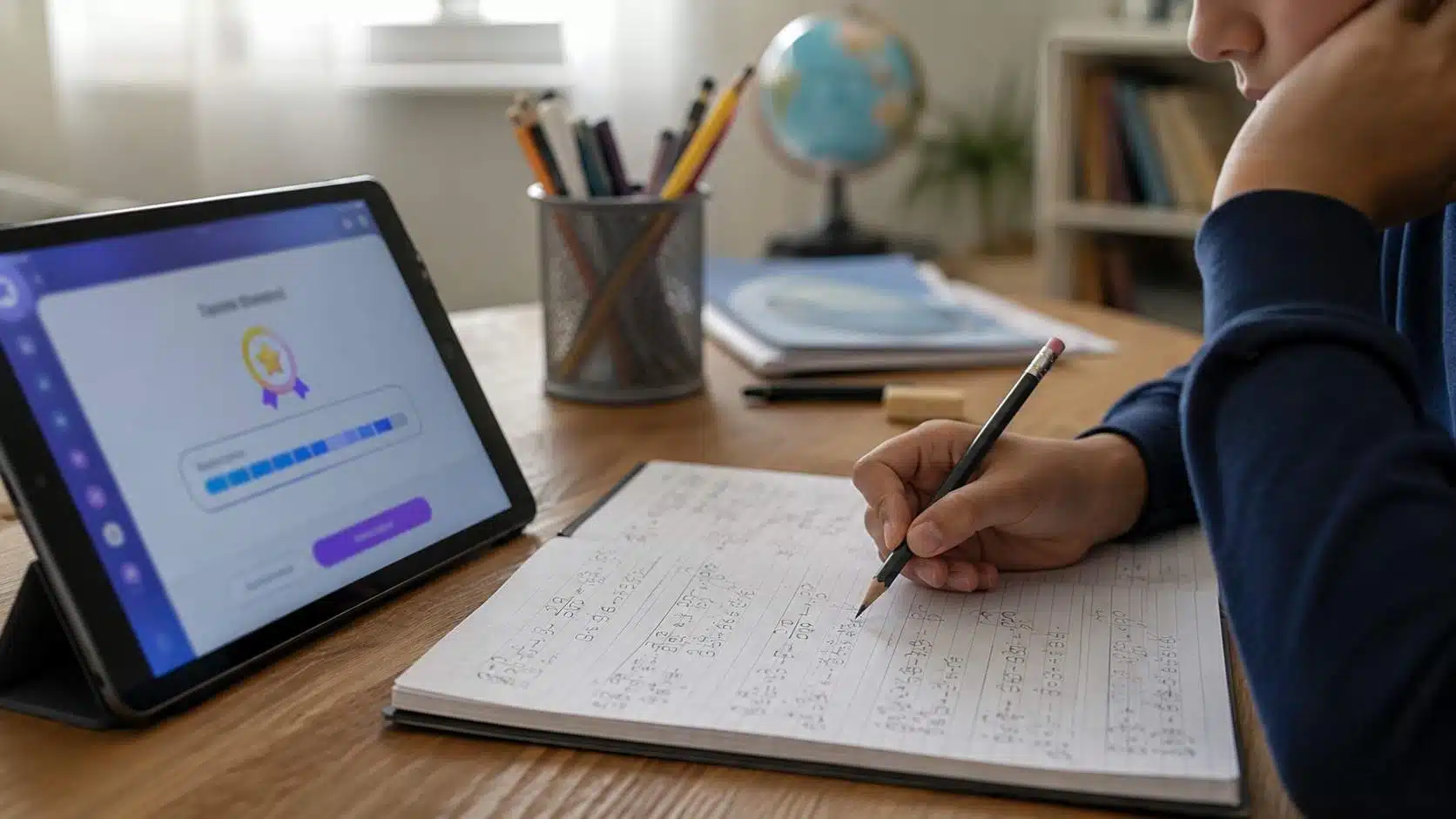
- Can they solve the problem on paper?
- Can they explain the idea aloud?
- Can they use the skill tomorrow?
- Can they apply it without prompts, animations, sounds, or badges?
If not, the app did not teach enough.
Learning apps do not need to disappear. The good ones should stay. But the industry must stop calling every colorful activity educational. Parents need better labels. Teachers need better evidence. Children need fewer addictive loops and more meaningful instruction.
The screen can support learning. It should not be allowed to fake it.