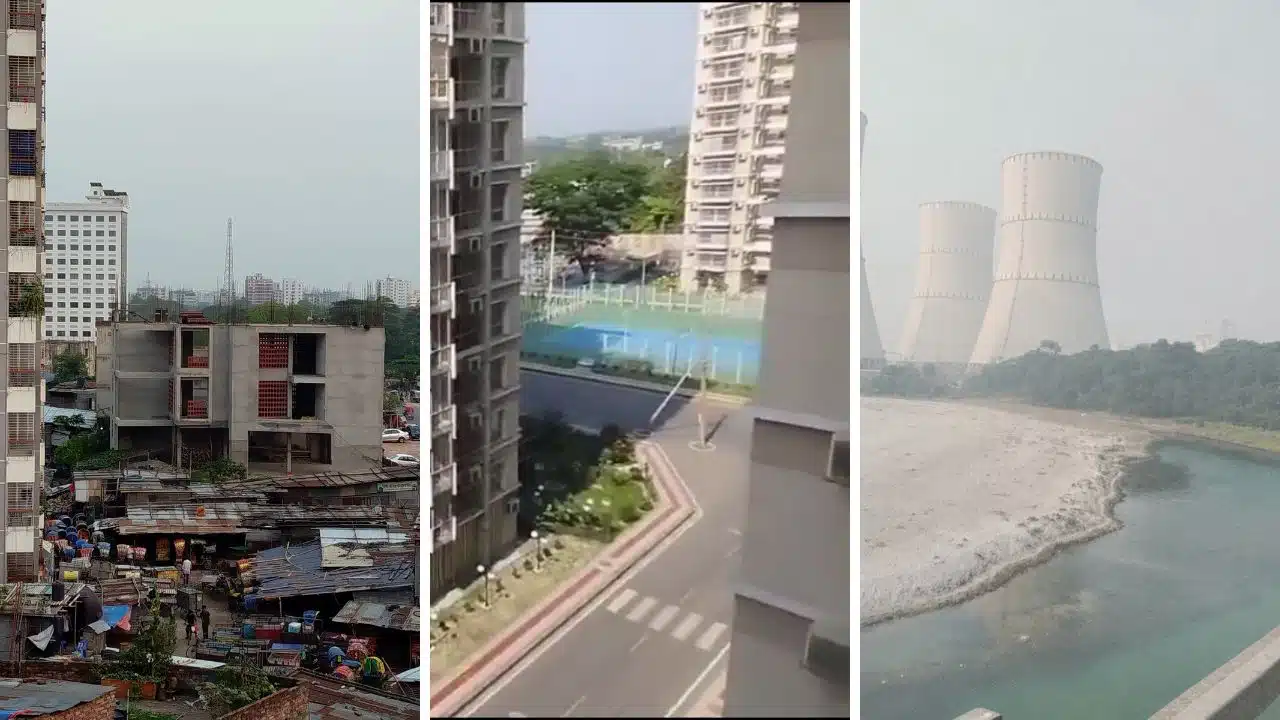
Every two weeks I leave my mother’s flat in Mohammadpur and take the train to Pabna, where my wife works at the country’s first nuclear power plant, a Russia–Bangladesh joint venture township built among the paddy fields of central Bangladesh. The journey takes five hours and crosses two great rivers. It begins on a balcony above a canal that no longer carries water and ends on a balcony above a tennis court that has never carried anything else. Between the two balconies is the country.
This is a travelogue of that journey, written on the cusp of World Environment Day 2026, the year the United Nations Environment Programme is rallying the world around the theme Inspired by Nature. For the climate. For Our Future, with the Republic of Azerbaijan hosting the global commemoration in Baku.
The campaign asks what signals the planet is sending us and what signals we are willing to send back. The answers, I have come to believe, are the kind one finds not in conference halls but in the small specifics of a single life. So I will offer mine.
Morning on a Mohammadpur Balcony
There is a balcony in Mohammadpur, on the fifth floor of a building that looks like every other building on the street, and from it you can see two things at once: a row of small shops and the rickshaw stand at the corner, and a narrow strip of canal that no one calls a canal anymore. It has been a long time since this canal carried water. What it carries now is whatever the neighborhood decides it should carry: polyethylene bags, broken plastic chairs, kitchen waste in black bags, and the occasional dead crow. On the morning I leave for Rooppur, I stand on that balcony for the few minutes it takes my mother to bring out the breakfast tray, and I look down at the canal, and I look up at the sky.
The sky is the part I can never get used to.
I have lived in this city for most of my thirty years, and I remember when the sky was a different color. When I was a boy, the sky over Dhaka was blue in the mornings, and the rains came when they were supposed to come, and the heat in summer was a heat you could complain about without feeling that you were complaining about something dangerous. The sky over Mohammadpur this morning is white. Not cloud-white. Particle-white. The kind of white that has no weather in it.
My mother brings the tray to the balcony because she knows I prefer to eat there before a long journey. Sweet potatoes, two boiled eggs, a small cup of black coffee without sugar. She does not eat with me. She watches me eat, the way mothers in this country have watched their sons eat for as long as there have been mothers and sons, and she tells me what she has told me every two weeks for the last two years: that I should call her from the train when I cross the bridge, that I should not eat from the food carts at the station, and that I should give her regards to my wife.
I finish the coffee. I pick up my bag. My mother walks me to the front door and then, because she has lived in this flat for thirty years and knows exactly how long it takes me to reach the street, she returns to the balcony, and when I look up from the road, I see her there, waving. She always waves until I turn the corner. I do not know what she does after that.
Five Hours by Train
The train from Kamalapur leaves after sunrise.
I have come to prefer the train. The bus is faster on a good day, but the road from Dhaka to Pabna is rarely a good day, and the bus deposits you at the side of a highway with your back aching and your nose full of diesel. The train takes five hours. The train gives you a window. The train allows you, if you wish, to do nothing.
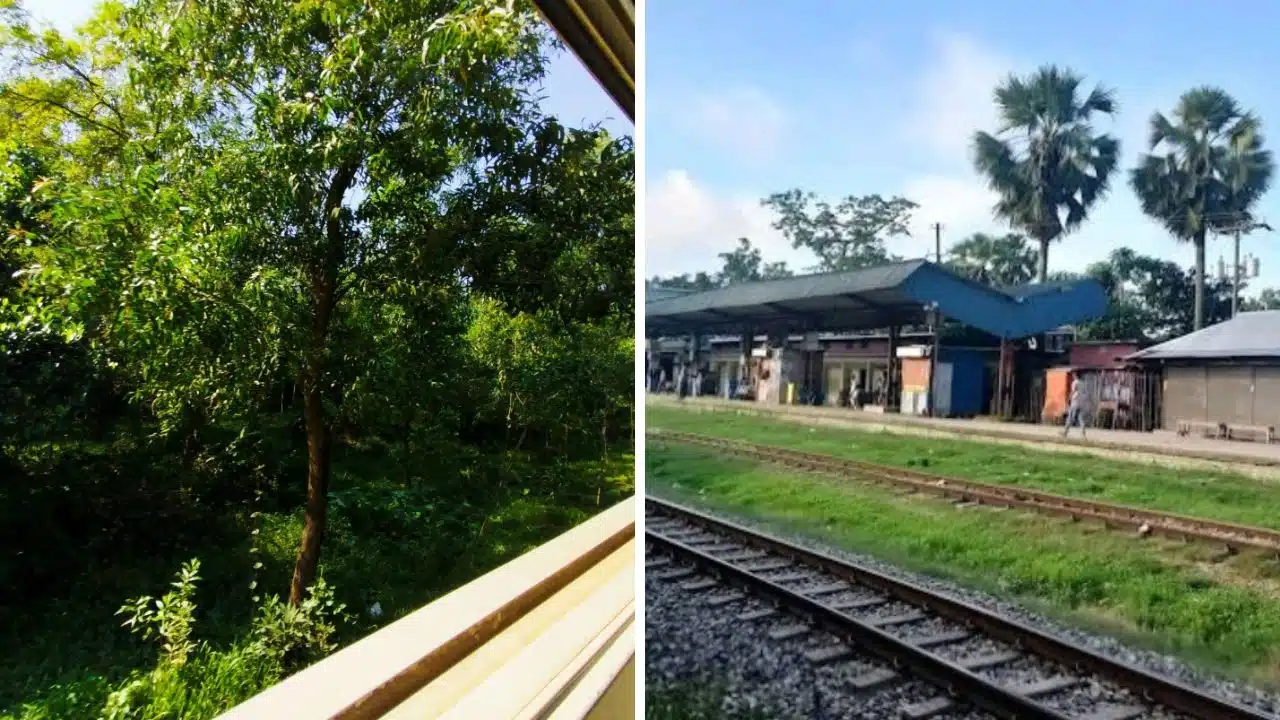
I rarely do nothing. I watch a film on my phone for the first hour, or I read a novel on my Kindle. There is a kind of travelogue tradition in which the writer claims to have spent the entire journey gazing meaningfully out of the window, and I have read enough of those to know they are mostly lies. Real travel, in this century, involves looking up from a screen at the moment something outside happens to interrupt you. The world is not always interrupting. Sometimes the world goes by unwitnessed because you are watching a film you have already seen.
But there are two moments, on the train out of Dhaka, when I always look up.
The Release at Joydebpur
The first comes around Joydebpur, in Gazipur. The train moves through the long industrial belt that begins almost at Tongi and continues for kilometers—the garment factories, the dyeing plants, the warehouses, the chimneys, the long blank walls—and then, somewhere past Joydebpur, the belt ends. There is no announcement. The buildings simply stop. A field appears, and then another, and then a small pond with a child standing at its edge, and you understand that you have left Dhaka. The city has finally let go.
I always look up at Joydebpur because I want to mark the moment of release. The release is the gift of the journey. It is also the diagnosis. A city that requires you to travel for two hours before it will let you breathe is a city with a problem.
The countryside between Gazipur and the Jamuna is what I imagine outsiders picture when they imagine Bangladesh. Paddy fields in the long stages of their growth, the wet green of the early planting, the deeper green of the middle months, and the gold of the harvest, depending on the season. Tea stalls at every crossing with men sitting on benches, talking.
Rivers no one has named on any tourist map. Cattle moving at the speed cattle have always moved at. Through the open window comes a procession of smells that I have come to think of as the actual smell of this country—sugarcane being pressed somewhere, paddy drying in the sun, jute in the late season, and vegetables stacked in baskets at a small bazaar the train slows past but does not stop at.
Crossing the Jamuna
The second moment is the Jamuna. It comes in the third hour.
The Bangabandhu Bridge is long. It is one of the longest bridges in South Asia, and when the train moves across it, the river opens beneath you in a way no map prepares you for. The Jamuna in monsoon is an inland sea. The Jamuna in the dry months is a slow, wide silver thing braided with sandbars, and on those sandbars there are people—fishermen, women washing clothes, children bathing, and small wooden boats and steamers drawn up onto the sand.
I have crossed this bridge many times now, and I always have the same thought when I see them: that the life along the river is the life this country was built on, and it is still here, and it is still possible, and it is the thing we are losing fastest.
It is a mesmerizing crossing. I have used that word before, in my head, and I do not have a better one.
The Gate at Rooppur
Iswardi Bypass Station is a small station with a particular geography. One side of the platform faces Natore and Lalpur. The other side faces Ishwardi proper. The train empties out, and the platform fills with the noise of people calling for relatives, and a row of battery-powered three-wheelers, the easy bikes that have quietly become the second-most-common vehicle in rural Bangladesh, sits in a line at the gate, waiting.
I take an e-bike to Rooppur. The driver knows the route. The journey is about forty minutes, and the road is not a highway in the sense that highways exist in other countries—it is a road that passes through paddy fields and the back gardens of small bazaars, that slows for cattle, that runs alongside a stretch of mills, and that stops at tea stalls where men in lungis look up to see who is passing. The driver does not speak much. He charges his battery from the grid every night. He is, in a quiet way, a small piece of the energy transition, and he does not know it.
Then the road bends, and the gate appears.
The gate to the Rooppur Green City is a military gate. The Bangladesh Army and the National Security Intelligence keep it. I show my identification card. The guard checks it against a list. He waves me through. There is a moment when you cross this gate, when the easy bike enters the township and the road becomes suddenly smooth and the buildings become suddenly tall and the signage becomes suddenly bilingual, when you understand that you have left Bangladesh and entered a small, careful piece of somewhere else.
Inside the Green City
There are Russian shops inside. There are coffee shops with Cyrillic on the menus. There are tall residential towers, painted in pale colors, arranged around lawns and walking paths. There is a tennis court. There is a gym. There is the particular hush of a place that has been planned, in detail, by people who do not live in the country they have planned it in.
My wife meets me at the door of the apartment. From her balcony, I can see the lawn and the tennis court and, beyond them, more buildings, and beyond those, the trees of central Bangladesh.
The Plant You Cannot See
The main structure of the power plant is far away, beyond a horizon line you cannot quite see from here. I have never asked to see it. She has never offered. There is a piece of the country’s future under construction somewhere past those trees, and from the balcony where my wife lives, you cannot see it, and that is exactly right. You are not supposed to see it. You are supposed to live next to its possibility.
We do small things in the evenings. We walk on the paths around the lawns. We go to the coffee shop with the Russian name and order two coffees and watch the engineers’ children play. We go to the supershop and buy onions, oil, fish, and a packet of biscuits. We come back and we cook together. We clean the apartment together. We do not talk much about our work. Her work is the room she goes to in the morning. When she comes home, the room ends.
The air here is different. In summer it is hotter than Dhaka, because central Bangladesh has less concrete to soften the heat, and in winter it is colder for the same reason. At night it is quiet. There are stars I cannot see from Mohammadpur. There is a tennis court where I sometimes hear the late sound of a ball being hit, very far away, and it is the only sound for a long time.
The Way Home
I leave on a morning that looks like the morning I arrived.
My wife walks me to the gate. I show my identification card once more, this time on the way out. The e-bike is waiting. The driver, sometimes the same driver, sometimes a different one—takes me back through the paddy fields and the mills and the tea stalls, and I reach Iswardi Bypass Station, and I board the train back to Dhaka, and the country runs backwards past my window.
The first sign of return is Tongi. You feel it before you see it. The air becomes thicker. The light changes. The fields outside the window give way to factories, and the factories give way to the long unbroken edge of the city. By the time the train pulls into Kamalapur, I am already inside the noise.
I take a rickshaw home. The streets of Mohammadpur are exactly as I left them. The same canal. The same waste in the canal. The same white sky. I climb the stairs to the fifth floor. My mother opens the door before I knock; she has been listening for the rickshaw, and the nephews come running up from somewhere inside the flat, and one of them takes my bag, and another asks what I have brought him, and the third just watches.
I walk through the flat to the balcony. The balcony has not changed. The canal has not changed. The white sky has not changed. Mohammadpur has continued without me, as Mohammadpur always continues, and I stand at the railing and look down at the street and listen to the traffic and the horns and the people, and after a while my mother comes out and stands beside me, and she does not say anything, because there is not much to say.
What I Have Come to Believe
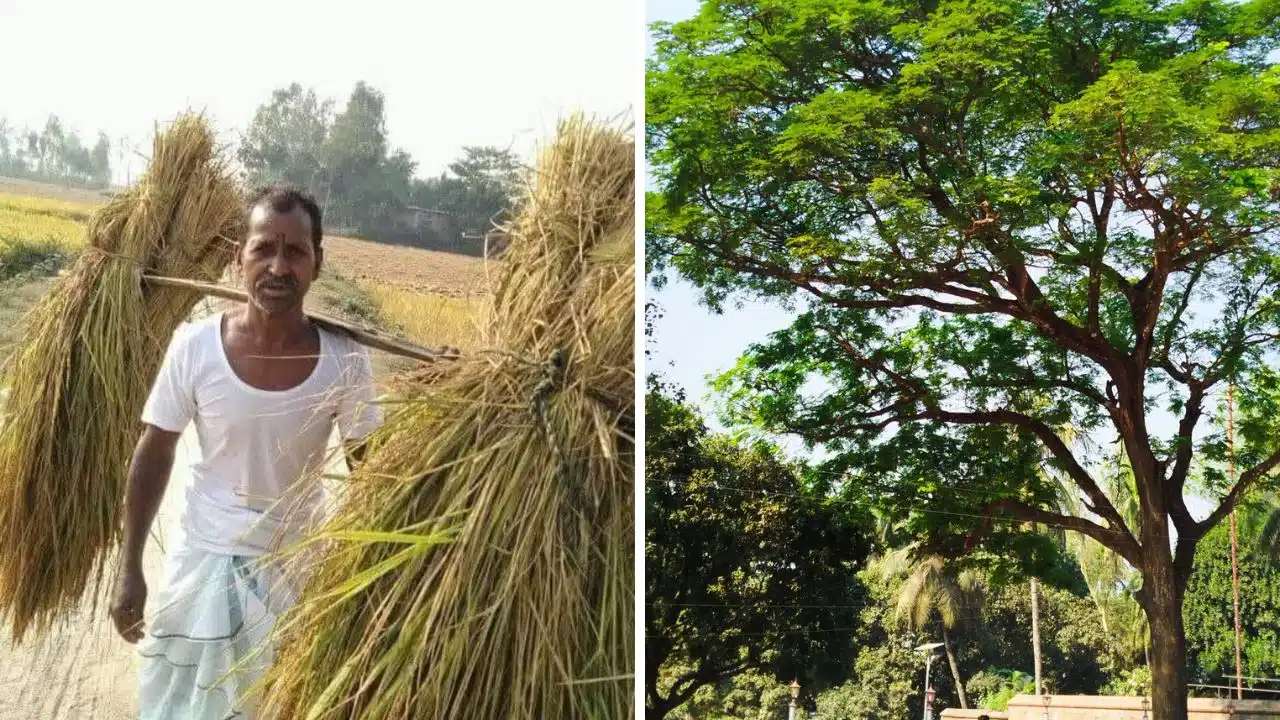
I have traveled this country for thirty years. I went to Chittagong as a boy with my parents. I spent my holidays in a village in Sirajganj where my mother’s people are from. I lived in Sylhet for five years while I studied. I have been to most of the corners of this country at least once, and I have been to some of them many times, and I will say what I have come to believe.
Bangladesh Is Not Okay
The country I traveled in as a child is not the country I travel in now. The skies have changed color. The rains have changed schedule. The rivers have changed shape. The summers are no longer summers I recognize. The dust in the air over Mohammadpur is so heavy that we cannot leave the windows open, and the furniture has to be wiped every morning, and the children playing on the streets are breathing what we are wiping off. This is not an opinion. This is the inventory of a single life.
And Still the Hope Remains
And yet the nephews are growing.
They are children. They will inherit this country. They will inherit Mohammadpur and its canal and its white sky, and they will inherit Rooppur and whatever Rooppur turns out to be, and they will inherit the Jamuna and the easy-bike driver and the women washing clothes on the sandbars, and they will inherit whatever is left of the climate we have not yet finished damaging. I dream the good, for them, that the government will move. I expect that the engineers across the river from my wife’s apartment will succeed at the thing they have been sent to do. I dream the air over Mohammadpur will be cleaner in twenty years than it is today.
I am not sure of any of this. I am only sure that I hope so.
The campaign for World Environment Day 2026 is called Inspired by Nature. For the climate. For Our Future. I have thought about that phrase many times in the writing of this account. I am inspired by nature. I am writing for the climate. I am thinking about our future. The three things sit together in the title of the campaign as if they belong together, and perhaps they do. From the balcony in Mohammadpur, with the white sky above me and my mother standing beside me, it is hard to tell.
But the nephews are inside, running through the flat. The kettle is boiling. The traffic is moving. The country is still here.
It is still here.