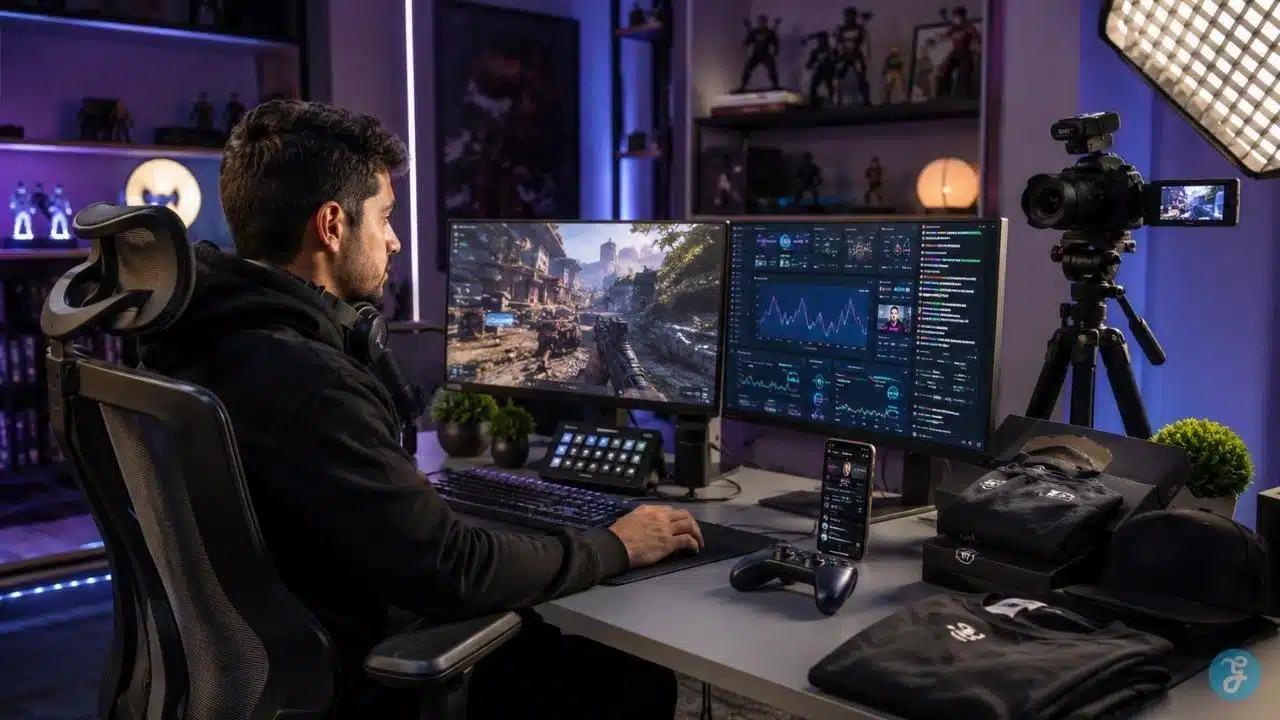
Is it me, or has everyone also noticed that Gaming influencers are no longer just people sitting in front of a camera, reacting to gameplay, raging at teammates, or celebrating a clutch win? Some of them are now running serious businesses with apparel lines, snack brands, esports teams, licensing deals, product collaborations, events, and investor-backed companies. I first started noticing this shift while following gaming creators not only as entertainers, but also as brands.
At first, the business model looked simple: play games, grow followers, get sponsors, sell merch. But after watching how audiences respond to creator-led products, I realized the real story is much deeper. Gaming influencers are not building multi-million dollar brands only because they are famous. They are doing it because they own something most companies spend years trying to build: attention, trust, inside jokes, community habits, and daily emotional connection.
That is why Gaming Influencers Building Brands has become one of the most important business stories in the creator economy.
Why Gaming Influencers Are No Longer Just Content Creators
When I researched it, I found that the old idea of a gaming influencer was simple. They streamed, uploaded videos, reviewed games, joined tournaments, and earned money from ads or sponsorships. That model still exists. But the smartest creators have moved beyond rented income.
Ad revenue depends on platforms. Sponsorship income depends on brand budgets. Twitch subscriptions, YouTube memberships, and donations are useful, but they still keep the creator tied to someone else’s system. A brand is different.
When a gaming influencer launches a product, community, apparel line, or media company, they are building something they can own. That ownership is the difference between being paid for attention and turning attention into a long-term business.
The numbers explain why this is happening. U.S. creator economy ad spend more than doubled from $13.9 billion in 2021 to $29.5 billion in 2024, and IAB projected it would reach $37 billion in 2025. That means brands are no longer treating creators like a side experiment. They are becoming a major marketing channel.
Gaming is especially powerful because the audience does not behave like a passive audience. Viewers come back daily. They join Discord groups. They buy merch. They repeat the creator’s catchphrases. They defend their favorite streamers. They form a culture around them. That culture is what turns a channel into a brand.
The Real Product Is Not Always the Product
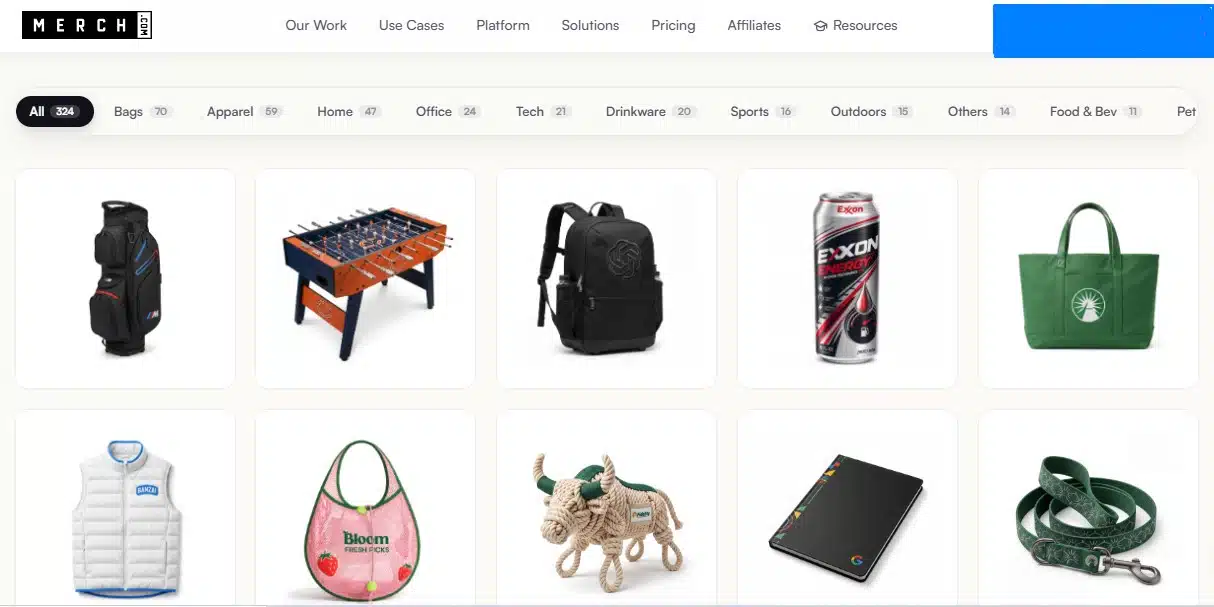
One thing I have noticed from gaming communities is that fans rarely buy only the physical item. A hoodie is not just a hoodie. A shaker bottle is not just a bottle. A keyboard, mousepad, snack, skin, or collectible is not just a product. It often means, “I am part of this community.”
That is why some creator products sell faster than traditional brands expect. The product carries identity. Fans want to show that they were there before the creator became mainstream. They want to support someone they feel close to. They want the joke, the logo, the drop, the memory.
This is where gaming influencers have an advantage over regular companies:
- A normal brand has to pay to earn attention. A gaming creator already has attention every time they go live.
- A normal brand has to explain its personality. A gaming creator has already shown it for years.
- A normal brand has to build trust. A creator either has it already or has already lost it.
That last part matters most. Gaming audiences are loyal, but they are not blind. If a product feels cheap, overpriced, rushed, or fake, the same community that buys fast can criticize even faster.
How Gaming Influencers Actually Make Money
The public often sees one part of the money: the sponsor logo on stream or the merch drop on social media. But creator businesses usually have several income streams working together.
Here are the most common ones:
| Revenue Stream | How It Works | Why It Matters |
| Sponsorships | Brands pay creators to promote products during streams, videos, or campaigns | Fast income, but not always owned by the creator |
| Merch | Hoodies, shirts, caps, mousepads, collectibles, and limited drops | Turns fans into visible supporters |
| Affiliate Sales | Creators earn commission when fans buy through their links | Works well for gaming gear, software, and accessories |
| Subscriptions | Twitch subs, YouTube memberships, Patreon, or private communities | Gives recurring income |
| Product Brands | Snacks, drinks, apparel, skincare, tools, courses, or gaming products | Creates long-term ownership |
| Events | Meetups, tournaments, pop-ups, fan events, and live shows | Strengthens community loyalty |
| Licensing | Brand names or creator IP used across products and campaigns | Helps the creator earn beyond daily content |
| Equity Deals | Creators receive ownership in startups or partner companies | Bigger upside than one-time sponsorship fees |
From an SEO and content marketing point of view, this is where the story becomes interesting. Gaming influencers are not just monetizing traffic. They are monetizing trust.
That is also why follower count alone does not explain success. A creator with 300,000 highly loyal fans can sometimes sell better than a creator with 5 million casual followers.
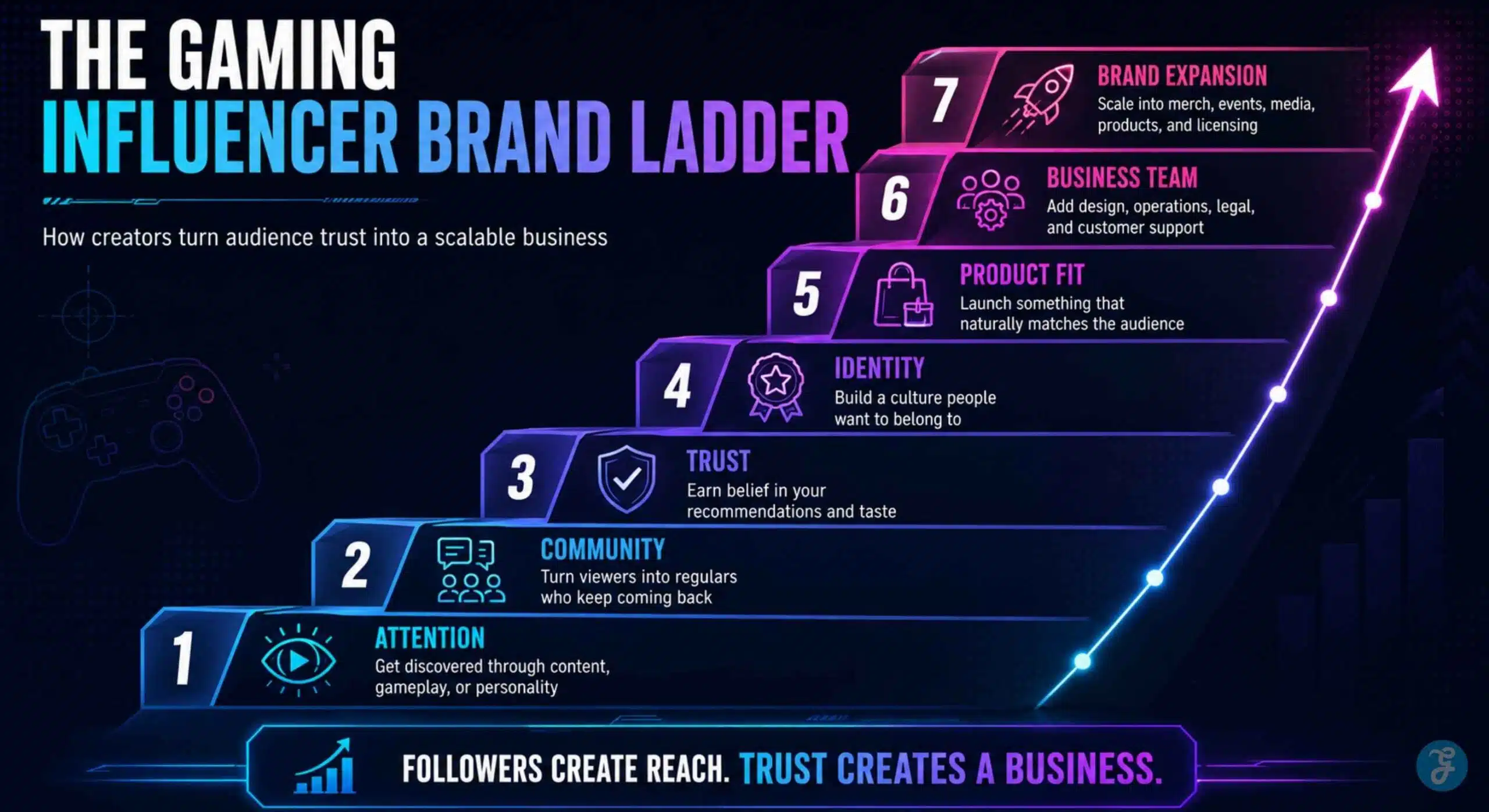
The Gaming Influencer Brand Ladder
After watching different creator businesses grow, I like to think of the process as a ladder. Most gaming influencers do not become brand owners overnight. They move through stages.
Stage 1: Attention
The creator gets people to watch. This may come from gameplay skill, humor, personality, tutorials, controversy, esports performance, or entertainment value.
Stage 2: Community
Viewers stop being random viewers. They become regulars. They join streams, comment often, follow on multiple platforms, and build small rituals around the creator.
Stage 3: Trust
The audience begins to believe the creator’s taste. If the creator recommends a mouse, chair, snack, headset, or game, people listen.
Stage 4: Identity
The creator becomes more than a content source. Fans see the creator’s brand as part of their own identity.
Stage 5: Product Fit
The creator launches something that makes sense for the audience. This is where many succeed or fail.
Stage 6: Business Infrastructure
The creator needs a real team: product people, designers, supply chain partners, legal help, finance support, customer service, and marketing operators.
Stage 7: Brand Expansion
The creator moves from simple merch or sponsorships into apparel, events, licensing, media, food, tech, or even game development.
The mistake many creators make is trying to jump from Stage 1 to Stage 7 too quickly. A viral creator can sell once. A trusted creator can build a business.
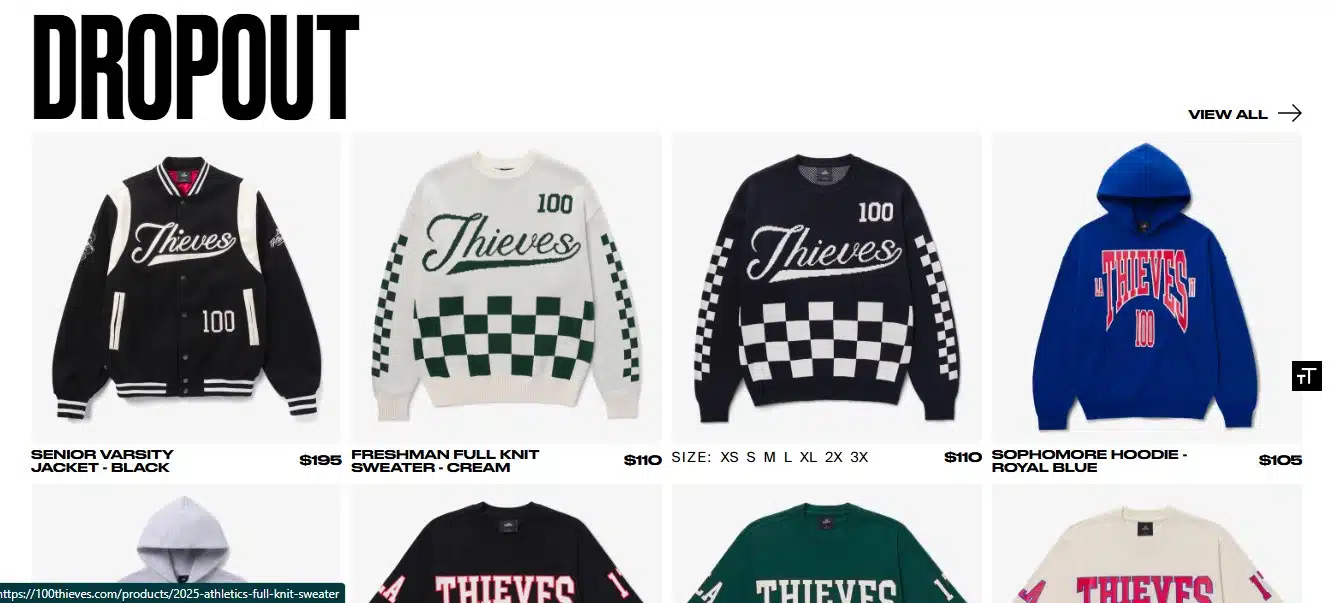
100 Thieves Shows the Power of Culture
I explored 100 Thieves; it is one of the clearest examples of a gaming brand growing beyond content. Founded by former Call of Duty player Matthew “Nadeshot” Haag, 100 Thieves combined gaming, esports, apparel, content, and community. In 2021, the company raised $60 million in Series C funding at a $460 million valuation.
What makes 100 Thieves interesting is that it not only sells gaming merchandise. It built a lifestyle around gaming. The clothes were not treated like cheap fan merch. They were treated like streetwear.
That difference matters. Vogue Business reported that early 100 Thieves drops could sell $1.5 million to $2 million of product in the first 10 minutes. The same report also noted that the brand later had to refocus after expanding too fast into areas like energy drinks and game development.
That is the lesson I would take from 100 Thieves: gaming culture can create huge demand, but demand does not protect a company from overexpansion. A loyal audience gives you a strong start. It does not replace operational discipline.
Ninja Helped Gaming Enter Mainstream Brand Culture
Ninja is another important example because his brand crossed into mainstream culture at a time when many traditional companies were still trying to understand gaming.
His Adidas partnership showed that gaming creators could be treated like athletes, entertainers, and cultural figures, not just internet personalities. Adidas officially announced its partnership with Ninja in 2019, marking a major moment for gaming’s connection with sportswear and lifestyle branding.
For me, the real lesson from Ninja is not just that big brands want gaming audiences. It is that gaming creators can make traditional brands feel younger, faster, and more culturally relevant. A sportswear company already knows how to sell shoes. But a gaming creator brings a different kind of energy: live interaction, fan loyalty, memes, clips, and community language.
That is why these partnerships work when they feel natural. They fail when they feel like a logo slap.
FaZe Clan Shows Both the Dream and the Risk
FaZe Clan is one of the most important names in gaming creator culture. It started as a gaming content group and became a major youth-culture brand tied to esports, creators, merch, sponsors, and entertainment. But FaZe also shows the risky side of influencer-led businesses.
GameSquare announced FaZe Media in 2024 as a creator-led IP and media company focused on licensing, sponsorships, merchandise, online events, and real-life events. That sounds like the perfect creator-economy business model. But the challenge is that creator brands depend heavily on talent, trust, and community perception.
When a brand is built around personalities, the business can become fragile. If creators leave, audiences shift, management loses touch, or the brand becomes too corporate, the magic can fade.
That is why gaming influencer brands need more than hype. They need systems. They need ownership clarity. They need community trust. They need products that make sense even when the creator is not live.
Why Product-Market Fit Matters More Than Popularity
A gaming influencer should not launch a product just because they have an audience. The product has to fit the creator’s world. A gaming chair, headset, mousepad, snack, energy drink, apparel line, community app, tournament, training course, or gaming accessory can feel natural. These products connect with the lifestyle of the audience. But if the product feels random, the creator has to work much harder to explain it.
The best creator brands usually answer three questions:
- Does this product fit the creator’s identity?
- Does the audience already care about this category?
- Would people still buy this if the creator’s name was removed?
That third question is brutal, but necessary. If the answer is no, the brand may only survive one launch.
The Biggest Asset Is Trust, Not Followers
The biggest misunderstanding about gaming influencer brands is that the largest creator always has the best business. That is not true. A big audience gives reach. A trusted audience gives conversion.
I have seen this many times while analyzing creator-led content and community behavior. A smaller creator with a loyal, focused audience can often drive better action than a massive creator with casual viewers.
This is especially true in gaming because communities are built around repeated attention. People do not just watch one video and leave. They watch streams for hours. They return for updates. They follow personal stories. They remember past jokes. That kind of audience relationship is hard to copy. It is also hard to fake.
Why Gaming Influencer Brands Need Real Business Teams
The romantic version of this story is that a creator launches a brand and fans make it successful.
The real version is less cute. Once a gaming influencer moves beyond content, they need serious business support. They need people who understand product development, manufacturing, margins, customer service, logistics, licensing, contracts, paid media, retail partnerships, and crisis management.
A creator can start the fire. A team has to keep the house from burning down. This is where many creator brands struggle. They have audience demand but weak operations. Orders get delayed. Product quality disappoints. Customer support is slow. Pricing feels unclear. Claims are not explained properly.
The audience then does what gaming audiences always do: they talk. They talk on X. They talk on Reddit. They talk in Discord. They talk in YouTube comments. They talk in live chat. That public feedback can become free marketing or a public trial.
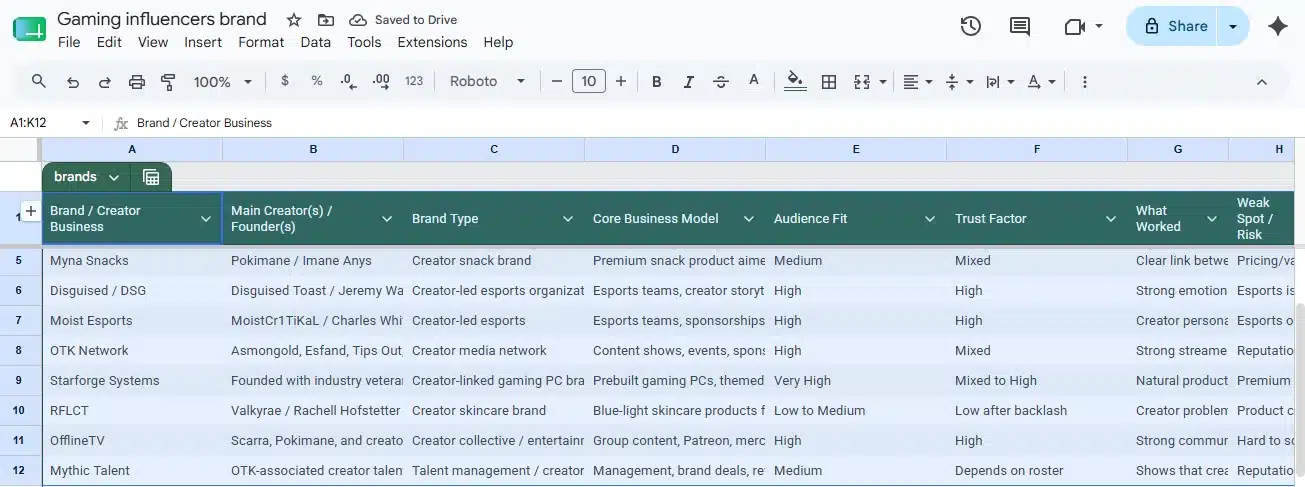
What I Have Learned Watching Gaming Influencer Brands Grow
The biggest lesson I have learned is that gaming influencer brands succeed when the business feels like a natural extension of the creator’s world. The weak ones feel forced. The strong ones feel like the community was already asking for them.
A good creator brand usually has these signs:
| What Works | Why It Works |
| The product matches the creator’s lifestyle | Fans understand why it exists |
| The pricing feels fair | The audience feels respected |
| The launch has a clear story | People know what they are buying into |
| The creator uses or believes in the product | It feels less like a cash grab |
| The community is involved early | Fans feel ownership |
| The brand can stand beyond one viral moment | It has long-term value |
The worst mistake is assuming fans will buy anything. They might buy once. But if the product disappoints them, they will remember. Gaming communities have long memories.
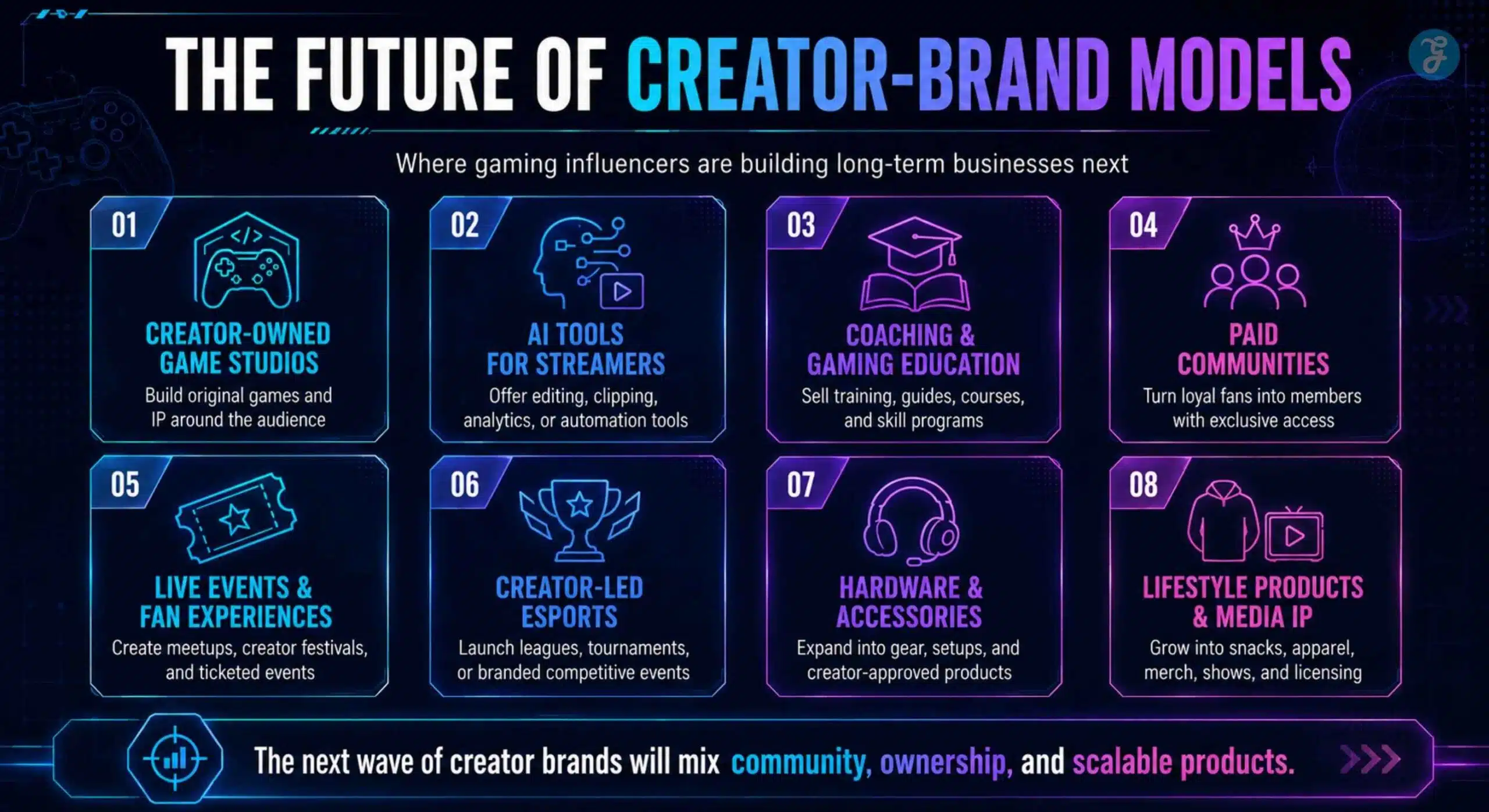
The Future of Gaming Influencer Brands
The next wave of gaming influencer businesses will go beyond basic merch.
I expect more creators to move into:
- Creator-owned game studios
- Gaming education and coaching
- AI-powered content tools for streamers
- Private paid communities
- Live fan events and creator festivals
- Digital collectibles with real utility
- Creator-led esports leagues
- Snacks, apparel, and lifestyle products
- Gaming hardware and accessories
- Media companies built around creator groups
But the winners will not be the creators who launch the most products. The winners will be the ones who protect trust while growing. That sounds simple, but it is very hard.
The pressure to monetize is high. Investors want scale. Fans want authenticity. Platforms change rules. Algorithms shift. Creators burn out. Product businesses are messy. This is why the best gaming influencer brands will need balance. They have to think like creators and operators at the same time.
Final Thoughts: Followers Start the Brand, Trust Keeps It Alive
Gaming influencers are building multi-million dollar brands because they understand something traditional companies often miss: people do not only buy products. They buy identity, belonging, trust, and culture.
A creator who has streamed for years has already done the hardest part. They have earned attention. They have built habits. They have created a shared language with their audience. But that power comes with pressure. The audience that supports a creator can also call them out. Fast.
That is why the future of gaming influencer brands will not belong to the loudest creators or the biggest follower counts. It will belong to the creators who launch products that make sense, respect their communities, and understand that trust is not a marketing trick. It is the whole business.
Frequently Asked Questions About Gaming Influencers Building Brands
1. How Do Gaming Influencers Build Multi-Million Dollar Brands?
Gaming influencers build brands by turning loyal audiences into customers. They usually start with content, then move into sponsorships, merch, product lines, memberships, events, licensing, or equity-based partnerships.
2. Why Are Gaming Influencers So Valuable to Brands?
They have direct access to highly engaged audiences. Viewers often spend hours watching their favorite creators, which creates stronger trust than traditional advertising.
3. Can Small Gaming Creators Build Successful Brands?
Yes. A smaller creator with a loyal niche community can build a strong business if the product fits the audience. Trust often matters more than follower count.
4. Why Do Some Gaming Creator Brands Fail?
Many fail because the product feels overpriced, low-quality, random, or disconnected from the creator’s identity. Gaming audiences quickly criticize brands that feel fake.
5. What Is the Biggest Lesson From Gaming Influencer Brands?
The biggest lesson is that community trust is the real asset. Followers may help a launch get attention, but trust decides whether the brand survives.