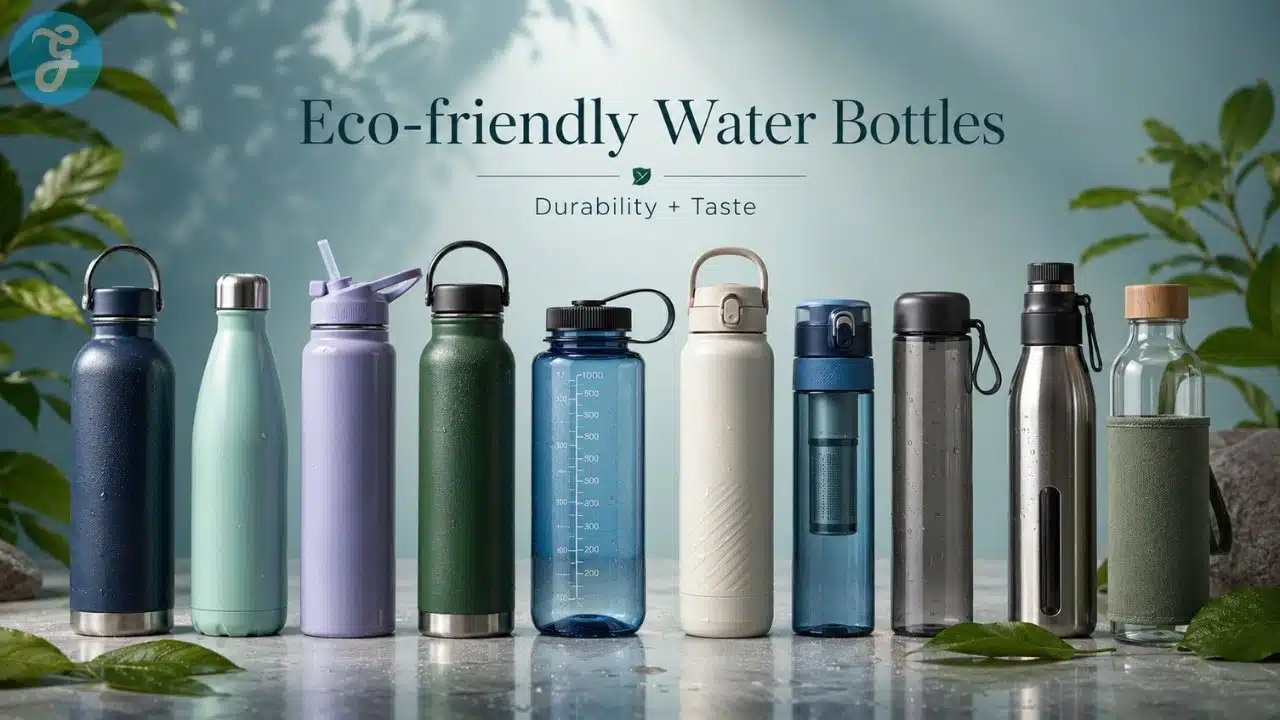
A reusable bottle sounds like the easiest sustainable purchase in the world, until you realize half the market is selling “eco” hydration with confusing lids, mystery coatings, metallic aftertaste, impossible cleaning grooves, and prices that make you wonder whether the bottle also pays rent. The best Eco-friendly water bottles are not just the prettiest ones on Instagram. They are the ones people keep using because they survive daily drops, keep water tasting clean, do not leak inside a bag, and make single-use plastic feel unnecessary.
For this review-style listicle, I looked at durability, taste neutrality, material quality, ease of cleaning, lid design, insulation, price, and long-term usefulness. I did not treat “eco-friendly” as a decorative label. A bottle earns that description when it reduces disposable bottle use, lasts long enough to justify its footprint, and avoids becoming another abandoned object in the back of a cabinet.
Our Selection Criteria
A good reusable bottle should work in real life: commuting, gym bags, desk use, school, hiking, travel, and chaotic mornings when the bottle gets thrown into a backpack beside a laptop that did not ask to be part of a leak test.
Here is the review lens used for this guide.
| Selection Factor | Why It Matters |
|---|---|
| Durability | A sustainable bottle should survive years of use, not one dramatic fall |
| Taste neutrality | Water should taste like water, not coins, plastic, or yesterday’s smoothie |
| Material choice | Stainless steel, glass, recycled plastic, and Tritan Renew each have different strengths |
| Leak resistance | A bottle that leaks becomes an expensive desk ornament |
| Cleaning ease | Narrow mouths, straws, and complex lids can become hygiene problems |
| Price-to-value | A premium bottle should offer more than branding and emotional hydration |
| Portability | Weight, handle design, and cup-holder fit matter for daily use |
| Eco credibility | Recycled materials, reusable design, filter replacement, and product lifespan all count |
This review also considers current retail pricing and official product information where available. Prices change often because of sales, colors, stock, and region, so treat the numbers as a practical buying snapshot rather than a permanent law of nature.
Whom This Is For
This guide is useful for anyone who wants a reusable bottle that is practical, durable, and not annoying after three days.
It is especially relevant for:
- office workers and commuters;
- students and gym users;
- travelers and hikers;
- people trying to reduce single-use plastic;
- buyers who care about taste neutrality;
- anyone tired of bottles that leak, dent, smell, or develop weird lid drama.
Before choosing a bottle, it helps to understand that “best” depends on how you drink water. A hiker, a desk worker, a parent, and a frequent flyer do not need the same bottle.
10 Eco-friendly Water Bottles Reviewed for Durability, Taste, and Everyday Use
The following picks include stainless steel, glass, recycled plastic, and filtered bottles. The goal is not to declare one universal winner, but to help readers match the right bottle to the right lifestyle.
1. YETI Rambler 26 oz Bottle
The YETI Rambler 26 oz Bottle is built for people who treat a water bottle less like an accessory and more like field equipment. YETI lists the 26 oz Rambler Water Bottle with Chug Cap at $45, making it one of the more premium choices in this review.
From a taste perspective, stainless steel performs well when cleaned properly, and the Rambler’s chug-cap setup keeps the drinking experience straightforward. It is not the lightest option, so it may feel bulky for minimalist commuters. But if durability is the priority, this is one of the safest premium picks.
Best for:
- Outdoor users, commuters, and durability-first buyers
- People who want a premium stainless steel bottle with a practical chug lid
Why We Chose It:
- Strong reputation for rugged build quality
- 26 oz size is useful without becoming oversized
- Chug cap makes drinking easier than narrow-mouth designs
- Good long-term value if durability is the top priority
Things to consider:
- Higher price than many competitors
- Heavier than plastic or lightweight recycled-material bottles
2. Hydro Flask 24 oz Wide Mouth
Hydro Flask remains one of the most recognizable insulated bottle brands, and for good reason. Hydro Flask lists the 24 oz Wide Mouth with Flex Straw Cap at $44.95 and describes it as a wide-mouth insulated water bottle with a leakproof straw.
The wide mouth makes it easy to add ice, which matters if you care about cold water throughout the day. Taste is generally clean because of the stainless steel interior, although straw lids require more careful cleaning than simple screw caps. This is a strong everyday bottle for users who want insulation, recognizable build quality, and an easy-drinking lid.
Best for:
- Daily commuters, gym users, and desk hydration
- People who prefer cold water with ice
Why We Chose It:
- Strong insulation reputation
- Wide mouth makes filling and cleaning easier
- Multiple lid options create flexibility
- Good balance of durability and daily usability
Things to consider:
- Straw caps need regular cleaning
- The price can feel high if you only need a simple bottle
3. Owala FreeSip 24 oz
Owala FreeSip has become popular because its lid solves a real problem: some people want to sip through a straw, while others want to tilt and drink normally. The FreeSip design offers both, with Owala describing the bottle as leak-proof, BPA-free, stainless steel insulated, and built around its patented sip-or-swig lid.
For taste, the stainless steel body is solid, but the lid has more parts than a basic screw-top bottle. That means cleaning matters. Still, if the goal is everyday drinking comfort, Owala is one of the most user-friendly picks in the category.
Best for:
- Students, office workers, drivers, and casual daily users
- People who want both straw sipping and chug-style drinking
Why We Chose It:
- Clever FreeSip lid design
- Leak-proof design improves daily carry confidence
- Built-in straw improves convenience
- Good value compared with many premium insulated bottles
Things to consider:
- Lid complexity means more cleaning attention
- Not ideal for users who prefer the simplest possible bottle
4. Klean Kanteen TKWide 20 oz
Klean Kanteen stands out for sustainability-minded buyers because the 20 oz TKWide is made from certified 90% post-consumer recycled 18/8 stainless steel, according to the brand’s product page. The same listing says the bottle keeps contents iced up to 59 hours, includes a leakproof Twist Cap with a built-in reusable steel straw, and “won’t retain or impart flavors.”
That last point matters because taste neutrality is one of the biggest reasons to choose stainless steel over lower-quality plastic bottles. The price sits in the premium zone, but the recycled stainless steel content gives it a stronger sustainability story than many standard insulated bottles.
Best for:
- Sustainability-focused buyers
- People who want recycled stainless steel and clean taste
Why We Chose It:
- Made with high recycled stainless steel content
- Brand highlights taste neutrality
- Good insulation performance on official specs
- Lid system is practical for daily use
Things to consider:
- Premium pricing
- Straw components require consistent cleaning
5. Nalgene Sustain 32 oz Wide Mouth
Nalgene is the anti-hype bottle: no fancy insulation, no elaborate lid theater, no influencer energy. The official 32 oz Wide Mouth Sustain bottle is listed at $16.99 and is made from Tritan Renew, a material derived from 50% waste plastic using ISCC-certified mass balance. Nalgene also states that the bottle is BPA/BPS-free, leakproof, dishwasher-safe, and made in the USA.
Durability is the main reason people keep buying Nalgene. It is light, simple, easy to clean, and tough enough for hiking, school, gym, and travel. The taste is usually clean if washed properly, though plastic can hold smells more than stainless steel or glass after flavored drinks.
Best for:
- Hikers, students, budget buyers, and lightweight packers
- People who want value and durability over insulation
Why We Chose It:
- Affordable price
- Lightweight and tough
- Made with 50% waste-plastic-derived material
- Wide mouth makes cleaning and filling easy
Things to consider:
- No insulation
- Plastic may retain odor if used with flavored drinks
6. Stanley IceFlow Fast Flow 24 oz
Stanley’s IceFlow Fast Flow 24 oz bottle is built for people who want quick hydration without the bulk of oversized tumblers. Stanley lists the 24 oz IceFlow Bottle with Fast Flow Lid at a regular price of $30, with a sale price of $22.50 at the time checked.
This bottle works well for gym bags, walking, errands, and active daily use. It is not as heavy-duty as a YETI-style bottle, but it offers a good mix of insulation, portability, and price. For taste, stainless steel keeps water cleaner-tasting than many cheaper plastic options when maintained well.
Best for:
- Gym users and active commuters
- Buyers who want insulation without paying top-tier prices
Why We Chose It:
- Competitive price for an insulated bottle
- Fast-flow lid is useful during workouts
- Wide mouth makes ice and cleaning easier
- Strong everyday brand recognition
Things to consider:
- Availability and colors may change often
- Some users may prefer straw lids over fast-flow caps
7. LifeStraw Go Series 22 oz
LifeStraw Go is different from most bottles here because it is not only about carrying water. It filters water. LifeStraw says the Go Series membrane microfilter protects against bacteria, parasites, microplastics, sand, dirt, and cloudiness, while the carbon filter reduces chlorine, odors, and organic chemical matter. The brand also says the membrane microfilter lasts up to 1,000 gallons and the carbon filter lasts up to 26 gallons.
This is a smart pick for travelers, hikers, and people who regularly dislike the taste of tap water. The trade-off is filter replacement and more maintenance. It is also important to understand that filtered bottles should be matched to the type of water risk you expect, because taste improvement and contaminant filtration are not always the same thing.
Best for:
- Travelers, hikers, and people with taste-sensitive tap water
- Users who want built-in filtration
Why We Chose It:
- Filters microplastics, bacteria, parasites, and chlorine-related taste issues
- Strong travel value
- Lightweight compared with many insulated steel bottles
- Useful when water taste varies by location
Things to consider:
- Filters must be replaced
- Not as simple to clean as non-filter bottles
8. CamelBak Chute Mag Renew 25 oz
CamelBak’s Chute Mag 25 oz with Tritan Renew is a practical pick for people who want a lighter reusable bottle without paying premium stainless steel prices. CamelBak lists the Chute Mag 25 oz Bottle with Tritan Renew at a regular price of $18, with a sale price of $11.99 at the time checked.
The magnetic cap design is convenient because it helps keep the cap out of the way while drinking. Taste is decent for water, though plastic bottles are not always the best choice for flavored drinks or long-term odor resistance. Still, for the price, this is one of the best low-cost alternatives to single-use bottles.
Best for:
- Budget buyers and casual everyday users
- People who want a lightweight bottle for commuting or school
Why We Chose It:
- Very affordable compared with insulated bottles
- Lightweight and easy to carry
- Tritan Renew material adds a sustainability angle
- Magnetic cap improves everyday usability
Things to consider:
- No insulation
- Plastic can retain smells more than stainless steel or glass
9. Brita Premium Stainless Steel Filtering Bottle
The Brita Premium Stainless Steel Filtering Bottle is useful for people whose main complaint is not durability but water taste. Brita positions its filtration products around cleaner, better-tasting drinking water, while retailer listings for the stainless steel filtering bottle commonly highlight chlorine taste and odor reduction through the built-in filter.
This is a strong pick for office, school, and travel users who want better-tasting tap water without buying bottled water. It is not the same type of purifier as a LifeStraw bottle, so buyers should understand the difference. Brita is more of a taste and everyday filtration pick than an outdoor survival bottle.
Best for:
- Tap-water taste improvement
- Office, school, and everyday indoor use
Why We Chose It:
- Built-in filter improves everyday drinking experience
- Stainless steel body adds durability and insulation value
- More affordable than many premium insulated bottles
- Filter replacement model may reduce bottled water dependence
Things to consider:
- It is not a full outdoor purifier
- Replacement filters add ongoing cost
10. purifyou Glass Water Bottle
If taste is your top priority, glass is hard to beat. The purifyou glass bottle line includes borosilicate glass bottles in multiple sizes, and the brand positions them around clean taste and everyday hydration.
Glass keeps water tasting clean because it does not hold flavors like some plastics and does not give the metallic impression some users detect in steel bottles. The downside is obvious: glass can break. A silicone sleeve helps, but this is still better for desks, home, yoga, and gentle daily use than rugged hiking.
Best for:
- Taste-sensitive users
- Home, office, yoga, and light daily use
Why We Chose It:
- Excellent taste neutrality
- Borosilicate glass body gives a cleaner drinking experience
- Protective sleeve improves grip and handling
- Good option for people avoiding plastic interiors
Things to consider:
- Less durable than stainless steel or Nalgene-style plastic
- Heavier and more fragile for travel or outdoor use
An Overview Of 10 Eco-friendly Water Bottles for Durability and Taste
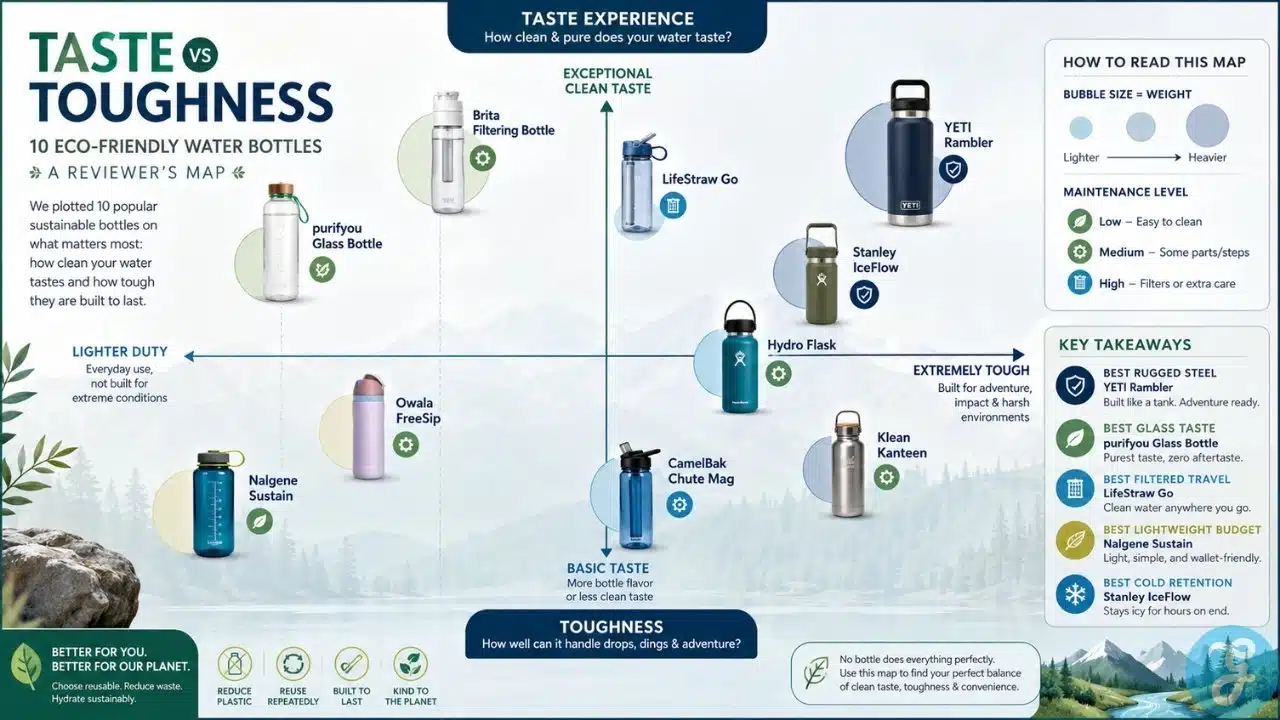
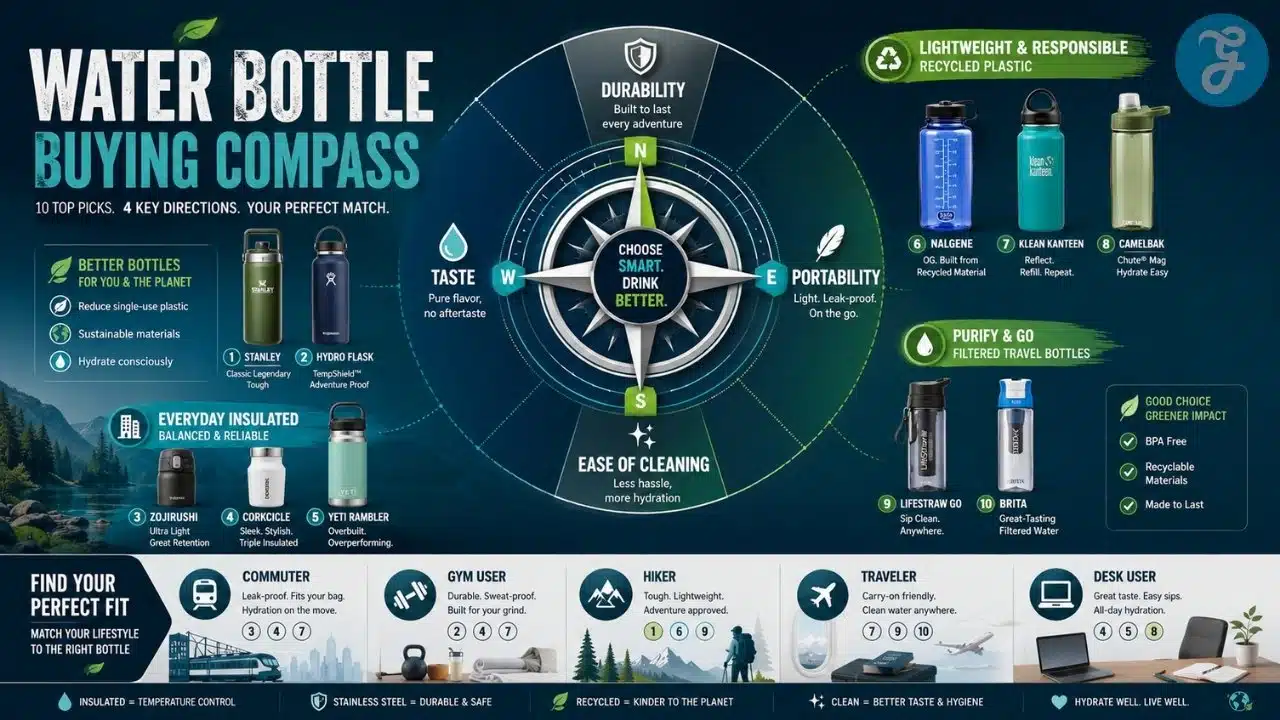
The best bottle depends on what problem you are trying to solve. If you want rugged durability, YETI and Hydro Flask are stronger picks. If you want lightness and value, Nalgene and CamelBak make more sense. If taste is the priority, glass or filtered bottles deserve attention.
Overview Comparison Table
Here is a quick side-by-side view to help readers compare the most important buying factors.
| Rank | Brand / Model | Approx. Price Checked | Material | Best Strength | Review Verdict |
|---|---|---|---|---|---|
| 1 | YETI Rambler 26 oz | $45 | Stainless steel | Heavy-duty durability | Best rugged pick |
| 2 | Hydro Flask 24 oz Wide Mouth | $44.95 | Stainless steel | Cold water and daily carry | Best all-round insulated choice |
| 3 | Owala FreeSip 24 oz | Around $30 to $35 | Stainless steel | Lid convenience | Best everyday drinking design |
| 4 | Klean Kanteen TKWide 20 oz | Premium range | 90% recycled stainless steel | Eco-conscious build | Best sustainability-focused steel bottle |
| 5 | Nalgene Sustain 32 oz | $16.99 | Tritan Renew plastic | Lightweight durability | Best budget outdoor bottle |
| 6 | Stanley IceFlow Fast Flow 24 oz | $22.50 sale / $30 regular | Stainless steel | Sporty hydration | Best active-use value |
| 7 | LifeStraw Go Series 22 oz | Varies by model and retailer | Filter bottle | Travel filtration | Best travel filter bottle |
| 8 | CamelBak Chute Mag Renew 25 oz | $11.99 sale / $18 regular | Tritan Renew plastic | Low-cost usability | Best budget recycled-material pick |
| 9 | Brita Premium Stainless Steel 20 oz | Varies by retailer | Stainless steel with filter | Taste improvement | Best for better tap-water taste |
| 10 | purifyou Glass Bottle | Varies by size | Borosilicate glass | Taste neutrality | Best glass choice |
Our Top 3 Picks and Why?
For this review angle, the top picks are based on durability, taste, cleaning practicality, and value, not just popularity.
| Pick | Why It Stands Out |
|---|---|
| YETI Rambler 26 oz | Best for buyers who want maximum durability and do not mind the weight |
| Klean Kanteen TKWide 20 oz | Best sustainability-focused pick because of recycled stainless steel and taste-neutral design |
| Nalgene Sustain 32 oz | Best budget durability pick because it is affordable, lightweight, and made with Tritan Renew |
These three cover the most useful buyer types: premium rugged, eco-conscious stainless steel, and budget outdoor durability.
How to Choose the Right Eco-friendly Water Bottles by Yourself
Choosing a reusable bottle is less about chasing the trendiest brand and more about matching the bottle to your actual day. The bottle you use every day is more sustainable than the expensive one you admire but never carry.
The Selection Framework:
- Material: Choose stainless steel for durability and insulation, glass for taste purity, and recycled plastic for lightweight affordability.
- Lid design: Simple screw caps are easiest to clean; straw and sip lids are more convenient but need more maintenance.
- Taste performance: If you notice metallic or plastic taste easily, glass or filtered bottles may suit you better.
- Real use case: Gym users, drivers, hikers, students, and desk workers need different sizes, lids, and weights.
The Final Checklist
Before buying, use this quick review checklist.
- Does the bottle fit your bag, cup holder, or bike cage?
- Can you clean the lid properly without special tools?
- Is the bottle material right for your taste sensitivity?
- Will you actually carry the weight every day?
- Does the price make sense for how often you will use it?
If you are looking for more sustainable and eco-friendly options, then you might want to check out Editorialge Eco Shop
The Bottle You Actually Use Is the Sustainable One
The reusable bottle market has become crowded, stylish, and sometimes a little ridiculous. A bottle does not become sustainable just because it has an earthy color name and a lifestyle photo beside a fern. It becomes sustainable when it replaces single-use bottles consistently and lasts long enough to justify its production.
That is why the smartest choice is not always the most expensive one. For some people, the best bottle is a YETI because it survives everything. For others, it is a Nalgene because it is light, cheap, and dependable. For taste-sensitive users, glass or filtered bottles may be worth the trade-off. For everyday convenience, Owala may simply be the bottle people reach for most often.
The future of Eco-friendly water bottles will likely focus on recycled materials, repairable lids, better cleaning design, and lower-impact manufacturing. But the uncomfortable truth is simple: the biggest environmental win is not owning the “greenest” bottle. It is buying one good bottle, using it constantly, and not replacing it every time a prettier color appears online.
Frequently Asked Questions (FAQs) About Eco-friendly Water Bottles
Which eco-friendly water bottle material is best for taste?
Glass is usually the best for taste neutrality because it does not hold flavors as easily as plastic and does not create the metallic impression some users notice with stainless steel. Stainless steel is still a strong second choice if cleaned properly.
Are stainless steel bottles more eco-friendly than plastic bottles?
They can be, especially if used for years. Stainless steel bottles usually last longer and offer insulation, but recycled plastic bottles like Nalgene Sustain and CamelBak Renew can be lighter and more affordable.
Which bottle is best for durability?
YETI Rambler and Hydro Flask are strong durability-focused picks among insulated stainless steel bottles. Nalgene Sustain is also excellent for lightweight durability at a lower price.
Do filtered bottles make water taste better?
Yes, filtered bottles like Brita and LifeStraw can improve taste, especially when chlorine or odor is the issue. Brita is better for everyday tap-water taste improvement, while LifeStraw is stronger for travel and outdoor filtration needs.
Is an expensive reusable bottle worth it?
It is worth it only if you use it regularly. A premium bottle used daily for years can be a smart buy, but a cheaper Nalgene or CamelBak may be better if you just need simple hydration without insulation.