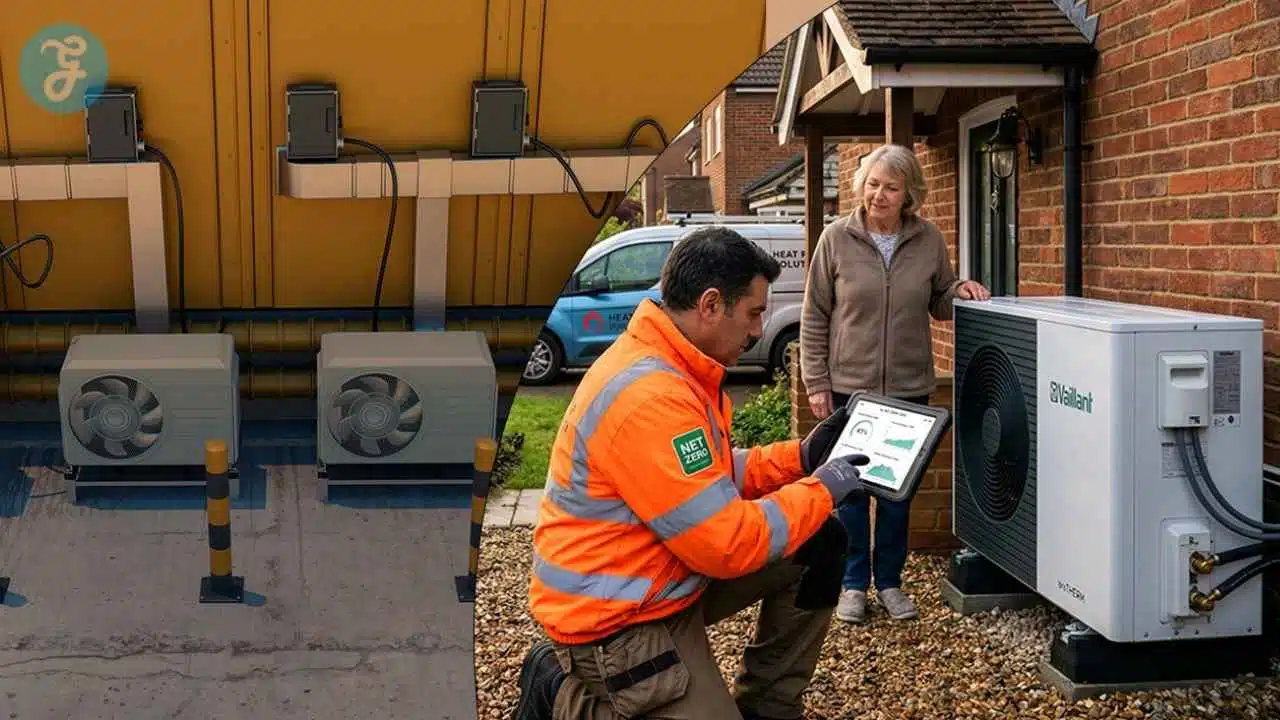
If you read the news lately, you might think the transition away from fossil fuels is stuck in the mud. For a long time, the narrative around upgrading how we heat our homes has been pretty negative. Pundits love to point out slow adoption rates, high upfront costs, and a supposedly massive lack of trained engineers. But when you step back and look at the actual numbers coming out in 2026, a completely different picture emerges.
The market is actually maturing right before our eyes. Government policies are finally taking root, people are changing how they think about home heating, and the underlying economics are shifting in favor of clean tech. The government has laid out a massive ambition to hit 450,000 heat pump installations per year by the end of the decade. Reaching the UK heat pump targets 2030 relies heavily on getting millions of old gas boilers out of the system.
Sure, we still have a steep hill to climb. But dismissing the real progress happening right now is a mistake. We are seeing record-breaking sales, massive investments, and brand-new legislation that fundamentally alters how houses are built. Today, we are breaking down the latest data to show you exactly how the country is quietly but surely pushing toward its net-zero goals.
The Current State of the UK Heat Pump Rollout
To really grasp what is happening, we need to look at the raw statistics. As of early 2025, around 260,000 heat pumps were keeping British homes warm. While that only covers about one percent of households, the growth rate is what matters most. Last year was the strongest year on record, with over 98,000 units sold and a massive spike in government-supported installations. We are currently sitting at a point where the groundwork is done, and the exponential growth phase is beginning. The data from 2026 shows continued momentum, backed by historic funding commitments that aim to lift millions out of fuel poverty while cleaning up the grid.
Understanding the Ambition Versus the Reality
The long-term goal is simple but huge. We need to upgrade around 19 million homes to clean heating to hit our climate commitments. That means replacing the vast majority of the 24 million gas boilers humming away in cupboards right now. Currently, we sell about 15 gas boilers for every heat pump, which sounds bad until you realize how fast the gap is closing. Market forecasts show a compound annual growth rate that puts the UK heat pump targets 2030 well within reach if current policies hold. It is not an overnight fix, but the wheels are definitely turning.
12 Proven Ways Progress Is Being Made Toward UK Heat Pump Targets 2030
The momentum we see today does not just happen by accident. It takes a mix of serious cash, tough new rules, and private companies stepping up to the plate. The industry is tackling the old problems head-on, from lowering costs to training up the people who will actually do the heavy lifting. Here is a close look at the twelve proven ways the rollout is successfully progressing right now.
1. Record-Breaking Boiler Upgrade Scheme Uptake
Let us talk about the money because it is the biggest hurdle for most families. The Boiler Upgrade Scheme has been the main engine driving people to make the switch. When the government bumped the upfront grant up to 7,500 pounds, it completely changed the math for the average homeowner. Suddenly, getting a clean heating system cost about the same as replacing a premium gas boiler. We saw applications go through the roof almost overnight.
The government recently backed this up by committing a massive 2.7 billion pound budget to keep the scheme running all the way through to the end of the decade. During the 2024 and 2025 periods alone, we saw tens of thousands of subsidized installations completed safely and efficiently. As long as this cash stays on the table and is easy for installers to claim, consumer demand will keep growing because the biggest financial barrier is completely gone.
| Scheme Aspect | Data and Impact |
| Grant Amount | 7,500 pounds deducted directly from the quote |
| Budget Secured | 2.7 billion pounds allocated through to 2030 |
| Application Growth | 24 percent year-over-year increase in vouchers issued |
| Consumer Benefit | Reaches cost parity with premium gas boiler replacements |
2. The Implementation of the Future Homes Standard
If you want to guarantee a massive market for green technology, you literally change the law. The Future Homes Standard is arguably the biggest regulatory game-changer we have seen in decades. Rolling out fully in early 2026, this building regulation basically bans traditional gas boilers from being installed in any newly constructed house. Builders now have to make sure new homes hit strict low-carbon targets, and air source systems are the cheapest and easiest way to do that.
This means every single new housing estate going up across the country automatically adds to our national installation numbers without relying on consumer choice. It forces the big property developers to build massive supply chains and makes the technology completely normal for hundreds of thousands of first-time buyers who will never even own a gas boiler.
| Regulation Detail | Real-World Impact |
| Gas Boiler Ban | Prevents fossil fuels in newly built housing stock |
| Carbon Reduction | Forces new homes to produce 75 to 80 percent fewer emissions |
| Supply Chain Boost | Gives manufacturers guaranteed bulk orders from developers |
| Normalization | First-time buyers adapt to the tech from day one |
3. A Steady Decline in Overall Installation Costs
People always complain that green tech is too expensive, and in the beginning, they were absolutely right. But as more companies enter the market, basic economics take over and prices naturally drop. We are seeing a steady decline in the real cost of getting a system fitted in the average home. Manufacturers are churning out units in much higher volumes, which lowers the cost per unit. On top of that, local installation crews are getting faster at their jobs because they do it every single day.
When you figure out how to streamline the pipework and the electrical setup, you cut the labor overheads drastically. This slow but steady drop in the base hardware and labor price, combined with that hefty government grant, is making clean heating a realistic option for regular families rather than just a luxury item for early adopters.
| Cost Component | Pricing Trend over 24 Months |
| Hardware Units | Prices dropping due to factory scaling and bulk buying |
| Labor and Fitting | Time on site reducing, leading to cheaper labor quotes |
| Ancillary Parts | Radiators and cylinders becoming cheaper through mass production |
| Final Consumer Cost | Trending downward, making the 7,500 pound grant go further |
4. Massive Expansion of the Installer Workforce
A few years ago, everyone panicked because we barely had enough trained engineers to fit these complex systems. You simply cannot upgrade millions of homes without a literal army of hard-working tradespeople in vans. The good news is the heating industry stepped up big time to solve this crisis. In just a couple of years, nearly 11,000 tradespeople passed dedicated training courses to become certified fitters. Better yet, the country already has roughly 130,000 Gas Safe registered engineers on the books.
These are men and women who already know how to run pipework, balance radiators, and deal with complex thermodynamics in domestic settings. Transitioning them from burning gas to fitting renewables only takes a few weeks of upskilling in a classroom. Training centers are packed right now, which is permanently fixing the labor bottleneck for good.
| Workforce Metric | Current Status in the Industry |
| Newly Trained Fitters | Nearly 11,000 engineers certified in recent years |
| Existing Gas Engineers | 130,000 professionals available for rapid upskilling |
| Training Infrastructure | Academies opening nationwide to meet local demand |
| Job Creation | Thousands of secure green jobs anchoring the local economy |
5. The Shift Toward Smaller and More Affordable Installations
Back in the day, these systems usually went into massive farmhouses out in the remote countryside. Those giant properties required huge, expensive, industrial-sized units to stay warm. But the demographic has completely shifted over the last two years. Right now, over 80 percent of the systems being installed are smaller units sitting comfortably between 4 kilowatts and 12 kilowatts. This data tells us the tech is finally hitting average suburban streets.
Homeowners are realizing they do not need a massive unit taking up half their garden to keep a standard three-bedroom semi-detached house perfectly warm. As home insulation slowly gets better, the required heating systems can get much smaller. Smaller units are significantly cheaper to buy, much faster to install, and run far more efficiently over the winter.
| Unit Size Category | Market Adoption |
| Under 4 Kilowatts | Growing slowly for highly insulated new builds |
| 4 to 12 Kilowatts | Represents over 80 percent of all residential installations |
| Over 12 Kilowatts | Shrinking market share, mostly used for large rural estates |
| Physical Footprint | Units getting slimmer and quieter for suburban gardens |
6. Surging Public Awareness and Consumer Acceptance
You cannot sell a revolutionary product to a public that does not understand how it works. Just five years ago, this technology sounded like pure science fiction to the average person on the street. Now, it is a completely normal dinner table conversation across the country. Recent consumer surveys show that nearly 80 percent of the population knows exactly what an air source system is. More importantly, the crazy myths pushed by fossil fuel lobbyists are finally dying out.
Huge information campaigns from major energy suppliers are cutting straight through the noise and educating families. People are seeing these quiet units pop up on their neighbors driveways and hearing first-hand that they actually keep the house toasty. When the fear of the unknown disappears, consumer acceptance skyrockets naturally.
| Awareness Indicator | Consumer Survey Results |
| General Awareness | 79 percent recognize and understand air source technology |
| Ground Source Knowledge | 76 percent understand how ground loops function |
| Functional Understanding | Over 25 percent confidently know how the tech generates heat |
| Sentiment Shift | Moving from skepticism to active interest in upgrading |
7. High User Satisfaction and Proven Winter Performance
The biggest lie holding back the UK heat pump targets 2030 was the ridiculous idea that the tech simply fails when it snows. The hard data from recent freezing winters has completely destroyed that myth once and for all. During the bitter cold snaps we experienced in January 2025, nearly 90 percent of system owners said their homes stayed perfectly warm despite the freezing temperatures outside. We are seeing massive user satisfaction rates across the board.
Many former gas boiler owners actually say their house feels significantly better now because the heat is constant and steady, rather than blasting hot air for an hour and then going completely cold. Word of mouth is the best marketing tool in the world, and the people who own these systems absolutely love the comfort they provide.
| Performance Metric | Real-World User Feedback |
| Freezing Weather | 86 percent report perfect warmth during sub-zero cold snaps |
| Overall Satisfaction | 79 percent highly satisfied with their total system performance |
| Comfort Levels | Users prefer steady background heat over intense boiler blasts |
| Recommendation Rate | High likelihood of owners recommending the tech to friends |
8. The Fifteen Billion Pound Warm Homes Plan
You have to treat domestic heating like a critical national infrastructure project, and the government finally gets it. The newly announced Warm Homes Plan is easily the biggest public investment in home upgrades in British history. They are throwing a staggering 15 billion pounds at the problem to upgrade up to 5 million older homes by the end of the decade.
This massive project is not just about changing heating units; it includes huge funding allocations for solar panels, home batteries, and deep fabric insulation, especially targeting low-income families. By funding thick insulation right alongside clean heating, they make absolutely sure the houses are ready for low-temperature systems. This holistic approach ensures everyday energy bills actually go down, taking the financial sting out of the green transition.
| Plan Component | Strategic Investment Focus |
| Total Budget | 15 billion pounds committed over the next five years |
| Homes Targeted | Up to 5 million properties slated for deep retrofits |
| Holistic Upgrades | Combines heating with solar, batteries, and draft proofing |
| Fuel Poverty Focus | Heavy subsidies directed toward low-income households |
9. A Significant Boost in Domestic Heat Pump Manufacturing
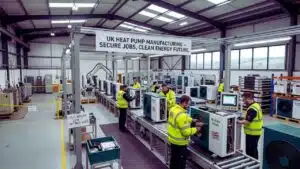
Relying entirely on imported technology is a terrible idea when global supply chains go crazy and shipping routes get blocked. To fix this vulnerability, heating companies are building massive factories right here at home. In 2024, the country manufactured tens of thousands of units domestically, covering a huge chunk of local sales demand.
Big name boiler brands are quietly ripping out their old gas assembly lines in historic factories and replacing them with cutting-edge green tech production. The new government plans even set a soft goal to have at least 70 percent of installed units made in Britain. Building the hardware here creates thousands of secure jobs, cuts down on frustrating shipping delays, and gives the nation total control over its own energy destiny.
| Manufacturing Benefit | Impact on the Domestic Rollout |
| Local Production | Over 33,000 units built domestically in 2024 alone |
| Supply Chain Security | Reduces reliance on delayed international shipping containers |
| Job Creation | Retains vital manufacturing jobs as gas boiler demand drops |
| Market Share Goal | Pushing toward 70 percent of hardware being built locally |
10. Targeted Support for Off-Grid and Rural Homes
If you live off the national gas grid in the countryside, you probably rely on heating oil or liquid petroleum gas to survive the winter. These outdated fuels are dirty, smelly, highly polluting, and wildly expensive to buy. The government smartly targeted these rural homes early on with extra support. Because heating oil is so incredibly pricey, the financial payback period for switching to a green alternative in an off-grid home is incredibly fast.
We are seeing huge uptake in farming communities and rural villages. Capturing this specific market first gives installation companies a steady stream of profitable work while they figure out the best logistical ways to retrofit older, harder-to-heat traditional properties. It is an easy, fast win for national carbon reduction.
| Property Type | Benefit of Immediate Upgrade |
| Oil Heating Homes | Massive financial savings compared to volatile oil deliveries |
| LPG Dependent Homes | Eliminates the need for ugly gas tanks in the garden |
| Rural Properties | High grant uptake due to fast return on investment |
| Carbon Impact | Removing heavy oil burners offers the biggest emissions drop |
11. Advancements in Grid Capacity and Smart Tariffs
A lot of folks worry that if everyone plugs in an electric heating system, the national electrical grid will just melt down. But the major tech and energy companies are already two steps ahead of the problem. Energy providers are rolling out genius smart tariffs designed specifically for this exact type of hardware. They offer dirt-cheap electricity in the middle of the night when national demand is low.
If you combine that with a smart internet-connected thermostat, your system does the heavy lifting of heating the house when power is cheap and green. It can even pause itself automatically during peak evening hours when everyone is cooking dinner, and the house stays perfectly warm without you ever noticing. The grid literally balances itself automatically.
| Tech Advancement | Benefit to the Consumer and Grid |
| Smart Tariffs | Access to incredibly cheap overnight electricity rates |
| Automated Thermostats | Shifts heating schedules away from expensive peak evening hours |
| Grid Balancing | Prevents local substations from overloading during winter |
| Running Costs | Dramatically lowers the monthly direct debit for the homeowner |
12. Carbon Reduction Overtaking Cost as the Primary Motivator
Here is a wild statistic that surprises a lot of industry experts. Recent data shows that the number one reason people buy these systems today is to actively cut their personal carbon emissions. Saving money is always great, but getting off fossil fuels entirely is the real driver for early adopters and modern families. We are seeing a massive cultural shift in how people view their homes.
People are tired of being tied to international gas markets that spike every time there is a political crisis overseas. They desperately want personal energy independence. When the public genuinely wants to do the right thing for the planet, hitting those government milestones becomes a lot easier because people are willing to navigate the transition.
| Motivation Factor | Consumer Mindset in 2026 |
| Carbon Footprint | 86 percent list environmental impact as a primary reason |
| Energy Independence | Desire to escape volatile international gas price spikes |
| Future Proofing | Increasing property value by meeting modern efficiency standards |
| Running Costs | Long-term bill stability is prioritized over short-term savings |
The Roadblocks Still Delaying the UK Heat Pump Targets 2030
It is not all sunshine and roses on the path to net-zero. We have to be brutally honest about the hurdles still sitting in the road right now. Compared to neighboring countries like France or Norway, our per capita installation numbers are still lagging behind where they should be. We have the right tools in place, but we are racing against a very tight and unforgiving clock.
Speed of Growth Requires Rapid Acceleration
The mathematical reality is pretty brutal. Yes, we had record sales last year, and the main grant scheme is absolutely booming. But to hit the massive installation numbers required by the end of the decade, the market needs to explode in size. Slow and steady linear growth will simply not cut it anymore. We desperately need an exponential adoption curve. Unless the government introduces stricter penalties for using fossil fuels or finds a magical way to make installations even cheaper, we might miss the exact 2030 milestone, even if the general direction of travel is extremely positive.
The Complexities of Upgrading Older Housing Stock
The country is famous for having some of the oldest, leakiest, and draftiest houses in all of Europe. While the vast majority of properties can technically handle clean heating, millions of them desperately need serious fabric upgrades first. We are talking about pumping cavity walls full of insulating foam, laying thick fiberglass in the loft, and ripping off skirting boards to fit much larger radiators. That level of physical disruption in the home scares a lot of people off. Fixing the heating crisis means we have to fix the insulation crisis at the exact same time, and dealing with century-old terraced housing remains a massive logistical nightmare for the industry.
Final Thoughts
The journey to completely overhaul how we heat our homes is well underway and picking up serious speed. If anyone tells you this technology does not work or that nobody wants it, they are simply ignoring the hard facts and the latest sales figures. The combination of massive public investment plans, strict new building regulations, and an army of newly trained engineers has built a rock-solid foundation for the future.
Hitting the ambitious UK heat pump targets 2030 will definitely require keeping the foot firmly on the gas and pushing that growth curve upward. But as the tech becomes the absolute default choice for new builds and smart tariffs make running costs cheaper than ever, the tipping point is closer than we think. The era of relying on imported gas to stay warm is finally coming to an end.
Frequently Asked Questions About UK Heat Pump Targets 2030
1. Is the UK on track to meet its heat pump targets?
Right now, the raw yearly numbers are slightly behind the super steep curve required to hit the huge annual goals by 2030. However, the market is growing fast every single year. With new funding secured and huge supply chains now established, the entire industry is primed for the rapid acceleration needed to close that gap.
2. How much is the heat pump grant in the UK right now?
Under the main government scheme, homeowners in England and Wales can get a massive 7,500 pound grant toward fitting an air source or ground source system. The best part is the installer deducts this straight from your final quote, so you never have to pay it upfront and wait months for a rebate.
3. Do heat pumps actually work in freezing UK winters?
Yes, they work perfectly fine. Modern units are cleverly designed to pull ambient heat from the outside air even when the temperature drops way below zero. They are actually the standard heating tech in freezing places like Norway. In recent domestic surveys, 90 percent of users said they stayed completely warm during severe winter snowstorms.
4. Are gas boilers legally banned in the UK?
Nobody is going to knock on your door and forcibly rip out your working boiler. But starting in early 2026, builders cannot put traditional gas boilers into brand new houses. For existing older homes, the government is just using big financial grants to encourage you to switch voluntarily when your old boiler eventually dies.
5. Can I get a heat pump if I rent my house?
If you are a private renter, you cannot legally install one yourself. Your landlord has to make that major structural decision. However, the new government plans include strict rules to force landlords to upgrade their drafty properties, ensuring renters eventually get to benefit from lower monthly bills and warmer homes.
6. What happens if my house has poor insulation?
If your house leaks heat like a sieve, a new system will have to work way too hard and your electricity bills will spike up. You almost always need to fix your basic loft and cavity wall insulation first. Luckily, many government grants often cover these exact insulation upgrades alongside the heating system to ensure your house is actually ready for the switch.