
Big ambitions often collide with limited budgets, making media coverage feel out of reach. For many founders, connecting with journalists and gaining visibility can seem overwhelming—especially when paid ads quickly drain resources.
A PR Strategy for Startups may sound complex or expensive, but it doesn’t have to be. Many small businesses struggle to stand out, much like a new face trying to break into a crowded room.
Research from Nielsen shows that 70% of consumers prefer learning about brands through articles rather than ads—making earned media a powerful growth channel.
Explores a practical PR Strategy for Startups, including crafting compelling press releases, building targeted media lists, and using tools like Google Alerts and Twitter for outreach. It also covers connecting with journalists, leveraging platforms like Instagram, and using newsjacking to boost visibility and attract investor interest.
Smart, budget-friendly PR can deliver real results.
Why PR Matters for Startups
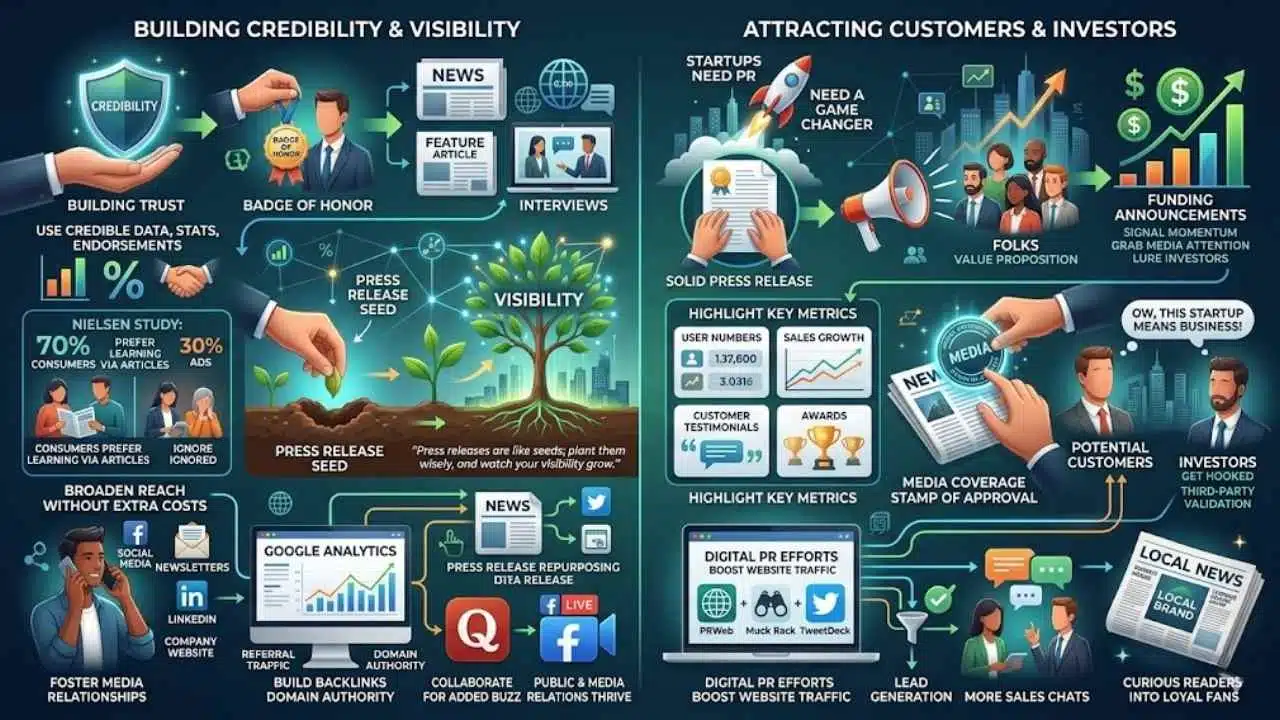
Startups face tough competition, and a solid PR strategy boosts credibility while shining a spotlight on your brand. It pulls in eager customers and sharp investors, turning your big ideas into real growth, like striking gold in a crowded mine.
Building credibility and visibility
Media coverage from press releases builds credibility. It signals trustworthiness to potential customers and investors. Think of it like earning a badge of honor in the startup world.
Press releases can lead to interviews, feature articles, and boosted visibility for your venture. You gain social proof that sets you apart. Incorporate credible data, statistics, and endorsements into your press releases to amp up that credibility.
A Nielsen study shows 70% of consumers prefer learning about a company through articles over ads. That stat alone packs a punch for your brand strategy.
Press releases are like seeds; plant them wisely, and watch your visibility grow. – Anonymous PR Expert
Repurpose those press releases on social media, newsletters, LinkedIn, and your company website. This broadens your reach without extra costs. Engage your audience through these channels to foster media relationships.
Tools like Google Analytics help track referral traffic from such efforts. Build backlinks and domain authority along the way. Focus on audience engagement to turn visibility into real connections.
Collaborate with platforms like Quora or Facebook Live for added buzz. Your public and media relations thrive on these simple moves.
Attracting customers and investors
Startups often struggle to draw in customers and investors without big bucks for ads. Public relations steps in as a game changer here. Craft a solid press release, and watch it build your startup’s credibility fast.
This tool pulls in folks by showcasing your value proposition loud and clear. Funding announcements in these releases signal real momentum. They grab media attention and lure investors eager for the next big thing.
Media coverage acts like a trusted stamp of approval from outsiders. Potential customers see it and think, wow, this startup means business. Investors spot that third-party validation and get hooked too.
Effective startup PR strategy boosts website traffic through digital PR efforts. Tools like PRWeb help distribute your story without costing a fortune. Pair that with Muck Rack to find journalists, or TweetDeck to amplify on social media.
Lead generation ramps up, sparking more sales chats. Your brand popping up in local news, turning curious readers into loyal fans.
Setting Clear PR Goals on a Budget
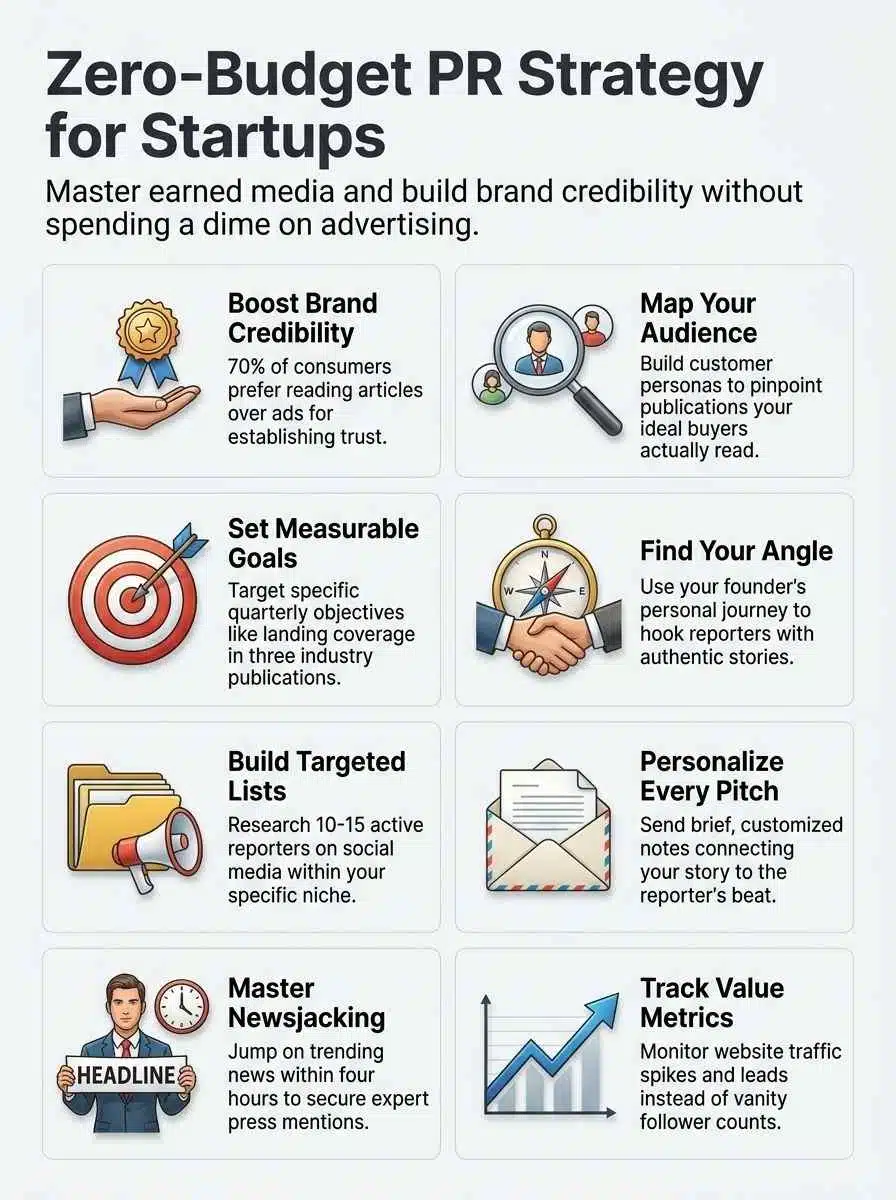
Your startup as a scrappy fighter in a big ring, you gotta pick fights you can win without spending a dime. Nail down your crowd, say tech fans on Pinterest, and chase goals like scoring five case studies from Help a Reporter Out pitches, then watch the magic unfold.
Defining your target audience
Startups often overlook the basics in PR, like pinpointing who really needs to hear their story. Nail this step, and you’ll boost your odds of landing earned media that consumers trust way more than ads.
- Kick off by building customer personas, those detailed sketches of your ideal buyers, to sharpen your focus on industry niches and guide which journalists to chase. Think of it as drawing a map to buried treasure, where each persona reveals habits, pains, and hangouts, helping you align PR with business goals and spot publications your audience devours for max impact.
- Examine case studies from similar startups, say, how a tech firm used Pinterest to spy on audience trends and tweak their outreach. You see, these real-world examples show folks trusting articles over ads, so mirror that success by focusing efforts where your crowd already scrolls and reads.
-
- Use free tools like Help a Reporter Out to connect with journalists hunting stories that fit your audience’s world. It’s like joining a party where reporters mingle, and by sharing insights tied to customer personas, you refine targets, focus on consumed content spots, and build credibility that draws investors.
- Align your story with broader goals, zeroing in on industry focus to pick outlets that amplify earned media’s value. Your startup as a scrappy underdog in a boxing ring, jabbing at spots where audiences trust organic coverage, making every mention count toward attracting customers who stick around.
Identifying measurable objectives
You want PR that works without wasting time. Set measurable objectives to guide your startup’s efforts, like aiming for easypr wins that boost your brand.
- Pick specific targets, such as landing coverage in three industry publications each quarter, to make your PR plan feel real and achievable, turning vague ideas into a roadmap that keeps you on track.
- Aim for concrete metrics, like building ties with five journalists, because this gives you a clear way to measure relationship growth and opens doors to future stories.
- Focus on business-linked goals, such as tracking lead generation from media hits, so you see how PR sparks real customer interest and drives your startup forward.
- Watch website traffic spikes tied to PR, using tools like UTM parameters to spot referral sources from articles, helping you prove the value of your outreach in hard numbers.
- Count sales conversations started by PR efforts, as this metric shows direct impact on revenue, letting you tweak strategies based on what truly moves the needle for your team.
Crafting Your Startup’s Story
Every startup has a tale that grabs attention, like a hidden gem waiting to shine. Dig into that founding moment, that spark of inspiration, and weave it into a pitch that journalists can’t ignore, pulling readers right into your world.
Finding a unique angle
Startups often struggle to stand out in a crowded market, so dig deep into what makes yours special. Think about your founder’s journey, like that time you bootstrapped from a garage to solve a real-world problem.
Journalists love these tales; they hook readers and show heart. Add quotes from you or an expert to boost authority and make it personal. Skip the generic stuff, focus on real challenges your startup tackles.
Include customer success stories in your press releases to shine. These anecdotes differentiate you from the pack and attract media buzz. Showcase unique innovations that fix pain points, perhaps how your app cut wait times for busy parents.
Reporters eat up these details, turning your story into front-page news. Keep it authentic, and watch the coverage roll in.
Aligning your story with current trends
Match your startup’s tale to hot industry trends or fresh news. This sparks more buzz from the media. Think of it like catching a wave, you ride the momentum for free visibility. Offer fresh data or smart takes when trends pop up.
That boosts your shot at getting covered.
Keep an eye on industry updates and jump in fast. Newsjacking works best with expert views in 2-4 hours of a big story. Respond with 3-5 paragraphs packed with insights, skip the sales pitch.
Team up like this, and journalists notice you. It’s like being the quick thinker at a party who grabs everyone’s ear.
Building Relationships with Journalists
Think of reporters as allies in your startup journey, not just contacts on a list. Start by crafting a focused roster of writers who cover your industry, then send customized pitches that show you’ve read their work, sparking real conversations that could land you free coverage.
Creating a targeted media list
You need a strong media list to connect with the right journalists. This list acts like a roadmap, guiding your startup’s story to eager ears.
- Start by aiming for a list of 10 to 15 journalists who cover your startup’s industry, like tech or innovation niches. Focus on those who write about startups, technology, or related fields. This size keeps things manageable, and helps you avoid spreading yourself too thin.
- Hunt for active reporters on platforms like LinkedIn and Twitter, where they often share their latest articles and thoughts. Scroll through their profiles, read their posts, and note what grabs their attention. It’s like being a detective in a friendly way, piecing together clues about their beat.
- Zero in on journalists and bloggers who match your niche, say, if your startup specializes in apps or gadgets. Pick ones with a track record of covering fresh ideas, not just big names. This sharp focus boosts your chances, much like fishing in a stocked pond instead of the open sea.
- Jot down each journalist’s preferred contact methods, such as email or direct messages on social media. Add notes on their editorial styles, like if they prefer data-driven stories or human-interest angles. Think of this as building a cheat sheet, one that makes your pitches feel personal and spot-on.
- Keep your list fresh by checking for updates, maybe every few months, since reporters switch jobs or beats. Use tools like Twitter advanced search to spot new voices in startups or technology. It’s a bit like tending a garden, pulling weeds and planting seeds to grow strong connections.
Personalizing your outreach
Personal outreach beats mass pitching for startups on a tight budget. It builds real connections that lead to better coverage, like a handshake instead of a shout into the void.
- Follow journalists’ work on platforms like Twitter or LinkedIn before you reach out, maybe by liking their posts or sharing quick thoughts, so they see you as a fan, not a stranger begging for attention.
- Craft pitches that feel custom-made, with a strong news hook that ties straight to their beat, explaining why your startup story fits their readers, like slipping into a conversation already buzzing.
- Keep every email brief and relevant, ditching long-winded press releases for snappy notes that respect their time, because nobody digs through fluff in a packed inbox.
- Interact with their social media posts early on, dropping genuine comments to spark rapport, turning cold outreach into something warmer, almost like chatting over coffee.
- Avoid blasting the same pitch to irrelevant journalists, since that wastes effort and annoys folks; target only those whose audience matches your vibe for higher hit rates.
- Explain the relevance to their audience right up front in your pitch, weaving in how your startup’s angle solves a problem they cover, making it impossible to ignore.
Leveraging Free PR Tools and Resources
Online press release distribution platforms
Startups often struggle to get noticed without big bucks for PR. Online press release distribution platforms change that game, offering smart ways to spread your news far and wide.
- These platforms let you share your startup’s story with journalists and audiences at little to no cost, and tools like EasyPR make the process smooth and quick, helping you distribute press releases effectively and efficiently.
- EasyPR stands out because it crafts press releases that highlight your startup’s true value, and it connects you directly with the right journalists who match your niche.
- Compared to old-school PR agencies, online services give you a broader reach for much less money, so you save cash while boosting visibility.
- Track your results easily with platforms such as EasyPR, which lets you monitor media coverage, website visits, and online mentions all in one spot.
- Your press release landing in inboxes across the country, yeah, these tools amplify your content through social media and other channels to grab more eyes.
- Startups love how these platforms simplify outreach, turning a simple announcement into buzz that attracts customers and investors without breaking the bank.
- A busy founder juggling tasks, now with EasyPR, you send customized releases that align with trends, and watch the coverage roll in.
- Online services beat traditional methods hands down, they offer speed and scale that fit tight budgets, plus they handle distribution so you focus on growth.
- EasyPR’s tracking features feel like a secret weapon, you see real data on how your story spreads, from mentions to traffic spikes.
- Explore these options, and you’ll find platforms that distribute as well as refine your message, making sure it shines in a crowded market.
Social media and content amplification tools
Social media offers startups a free way to boost their PR efforts. Content amplification tools help spread your message far and wide, without spending a dime.
- Journalists love Twitter, with 76% calling it their top social network for work, based on the 2022 Muck Rack survey, so jump in and use it to connect directly.
- Create Twitter lists to track and chat with key reporters, like grouping tech writers who cover startups, and engage them with thoughtful comments on their posts.
- Post thought leadership pieces on LinkedIn’s publishing platform, sharing insights that position your startup as an expert, and draw in folks who might invest or buy.
- Share press releases across social platforms, which expands their reach to snag new customers and investors, turning a simple update into a buzz machine.
Cost-Effective PR Strategies

Startups often face tight budgets, but smart moves can land you free press that packs a punch. Jump on trending topics like a surfer catching a wave, or team up with small-time influencers who feel like old friends, and watch your story spread without spending a dime.
Newsjacking and riding the news cycle
Newsjacking means jumping on hot news stories to boost your startup’s visibility. You monitor industry news closely. Respond within 2-4 hours to breaking stories. This quick action raises your chances of getting quoted.
Think your team spotting a trending topic, like a major tech breakthrough, and you chime in with smart takes. Tools like Scalarly help with this. They make newsjacking and expert commentary easier.
Offer journalists exclusive insights or data for compelling stories. Keep your expert commentary to 3-5 paragraphs. Focus on insights, not product plugs. A reporter needs a fresh angle on AI ethics; you provide data-backed views that spark interest.
Build those media ties by sharing value first. Stay alert, act fast, and watch your press mentions grow.
Collaborating with micro-influencers
Startups often struggle with tight budgets, so team up with micro-influencers to reach specific crowds without spending much. These folks have smaller followings, yet they connect deeply with fans in your niche.
A food blogger with 5,000 followers shares your new app for meal planning. That sparks real buzz, way cheaper than hiring big names. Micro-influencers amplify your startup’s message across platforms like Instagram and Twitter, drawing in fresh users who trust their picks.
You can engage these influencers with zero cash outlay, maybe just by sending free samples or inviting them to events. Track the results easily, using tools like Google Analytics to measure likes, shares, and clicks back to your site.
Partnerships like these build referral traffic that turns into loyal customers. The thrill when a micro-influencer’s post sends a wave of visitors your way, all for the cost of a quick email pitch.
Engaging with local media outlets
Local newspapers and blogs offer easy access for startups, far more than big national outlets. They help build real credibility right in your community. You pitch stories that highlight your startup’s boost to the local economy or neighborhood vibes.
Easyprwire stands out as a top tool to tap into these local spots. You’re at a town event, chatting with reporters over coffee. Offer your know-how on community tales, and watch doors open.
Networking like that feels like finding a shortcut in a maze, right? Journalists love fresh angles from locals who get the scene. Keep those pitches personal, tie them to what’s buzzing nearby.
Measuring PR Success Without Vanity Metrics
Skip the fluff like page views or follower counts, and focus on real wins like how media coverage drives website traffic through tools such as Google Analytics. Track sentiment in brand mentions with services like Brandwatch, turning those insights into smarter strategies that boost your startup’s growth.
Tracking media mentions and coverage
You need solid ways to track media mentions and coverage, so let’s break it down in this table for easy reference.
| Key Aspect | How to Do It | Why It Helps |
|---|---|---|
| Set up Google Alerts | Sign up for Google Alerts. Enter your brand name, competitor names, and industry keywords. Get email notifications at no cost. | This tool spots mentions fast. It keeps you in the loop on what people say about your startup online. |
| Use Excel spreadsheets | Create an Excel sheet. Log every media coverage item and journalist relationship. Update it as new mentions pop up. | Excel makes tracking simple. You see progress over time, like a roadmap of your PR wins. |
| Pick monitoring tools | Choose free or low-cost options beyond Google Alerts. Tools like Mention or Brand24 show online performance. | These reveal where your startup gets mentioned. Think of them as detectives uncovering hidden shout-outs. |
| Focus on key metrics | Track media pickups first. Then measure website traffic spikes. Count inquiries from that coverage too. | Metrics like these prove real impact. They turn vague buzz into clear signs of growth, no guesswork needed. |
Evaluating brand visibility and engagement
Evaluating brand visibility and engagement helps you see real results from your PR work.
| Track website traffic spikes. |
| Google Analytics shows visits from PR mentions and campaigns. |
| Spot brand mentions online. |
| Social listening tools, like TweetDeck, catch social engagement. |
| Focus on key metrics. |
| These tie to business goals, such as lead generation and sales conversations. |
| Check press release performance. |
| Distribution platforms track views, pickups, backlinks, and website traffic. |
Final Thoughts
You’ve learned how startups snag press on a shoestring, from crafting killer stories to building journalist ties and using free tools like press release sites. These tactics prove simple, anyone can start them today without draining your wallet.
What story will you pitch first to grab those headlines? Nail this, and watch your brand soar, drawing in customers and cash like a magnet. Check out Muck Rack for more tips, or hit up LinkedIn for media contacts to keep the momentum going.
Go make some noise, your startup’s big break waits just one smart outreach away.
Frequently Asked Questions (FAQs) on PR Strategy for Startups
1. What’s a good PR strategy for startups on a tight budget?
Startups often feel like they’re shouting into the void, but you can get press without a budget by crafting compelling stories that journalists love. Pitch your startup’s journey as a David versus Goliath tale, and build real relationships with reporters through social media. It’s like planting seeds that grow into media coverage, all for free.
2. How do startups get press without spending money?
Startups get press without a budget by leveraging email pitches and free tools like HARO. Focus on timely hooks that tie into current events, and follow up politely.
3. Why should startups chase press coverage early on?
Press coverage acts like rocket fuel for startups, boosting credibility and attracting investors without a dime spent. It puts your brand in the spotlight, helping you stand out in a crowded market; plus, it’s a thrill when your story lands in the news.
4. Can cold emailing journalists really work for budget-free PR?
Sure, cold emailing journalists works for PR strategy if you keep it personal and value-packed, like offering exclusive insights on your startup’s niche. Avoid generic blasts; instead, research their beats and tailor your pitch. Many founders swear by this method, turning no-budget efforts into front-page wins.