What is Persuasive Copywriting?
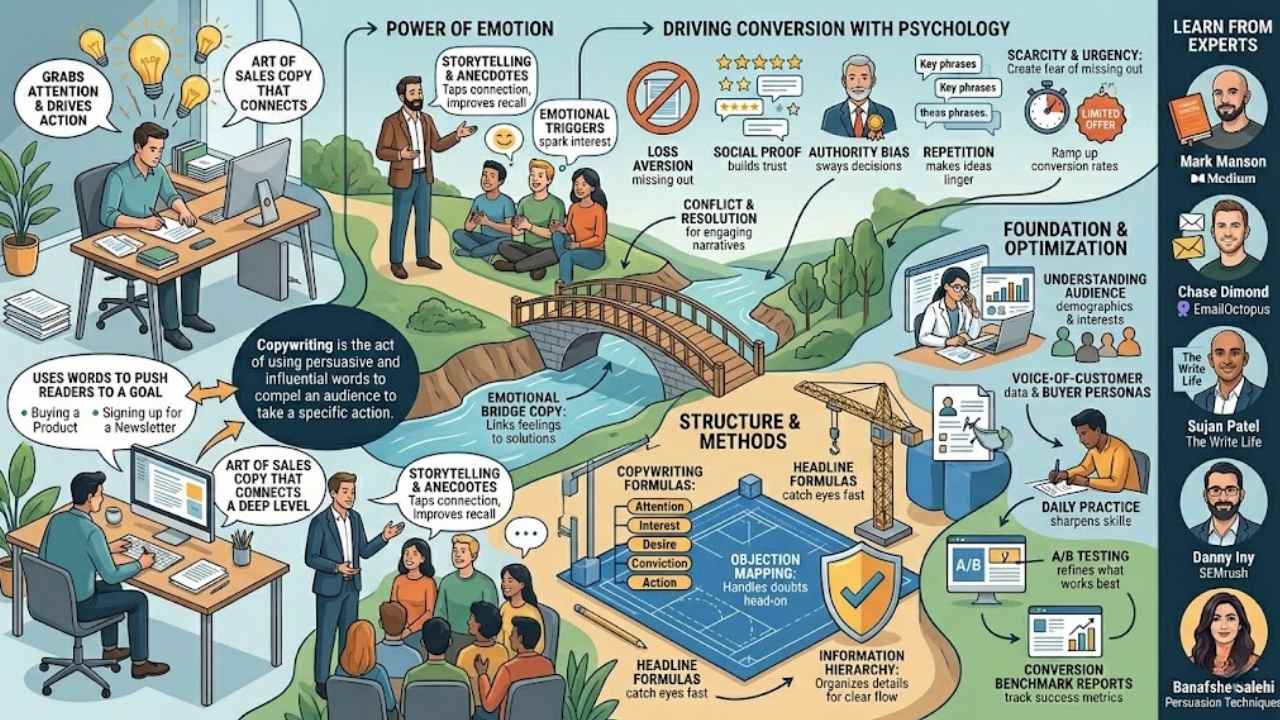
Persuasive copywriting grabs attention and drives action. It uses words to push readers to a goal, like buying a product or signing up for a newsletter. Think of it as the art of sales copy that connects on a deep level.
Writers craft marketing copy with emotional triggers to spark interest. They tap into reader connection through storytelling and anecdotes. This approach helps audiences recall messages better.
Emotional language and imagery stick in the mind, boosting recall. Copywriters rely on psychological principles, such as loss aversion, to power conversion copywriting. Social proof builds trust, while authority bias sways decisions.
Repetition of key phrases makes ideas linger. Understanding audience demographics and interests starts the process. Tools like voice-of-customer data and buyer personas guide the work.
Experts such as Mark Manson and Chase Dimond show how it’s done in places like EmailOctopus and Medium. They use copywriting formulas, like AIDCA, to structure persuasive content.
Copywriting is the act of using persuasive and influential words to compel an audience to take a specific action. – Key fact from conversion experts
Scarcity and urgency ramp up conversion rates. These tactics create fear of missing out, prompting quick responses. Weave in conflict and resolution for engaging narratives. Headline formulas catch eyes fast.
Emotional bridge copy links feelings to solutions. Daily copywriting practice sharpens skills. A/B testing refines what works best. Objection mapping handles doubts head-on. Information hierarchy organizes details for clear flow.
Sujan Patel and Danny Iny offer insights on The Write Life and SEMrush. Banafshe Salehi shares tips on persuasion techniques. Conversion benchmark reports track success metrics.
Key Elements of Persuasive Copy
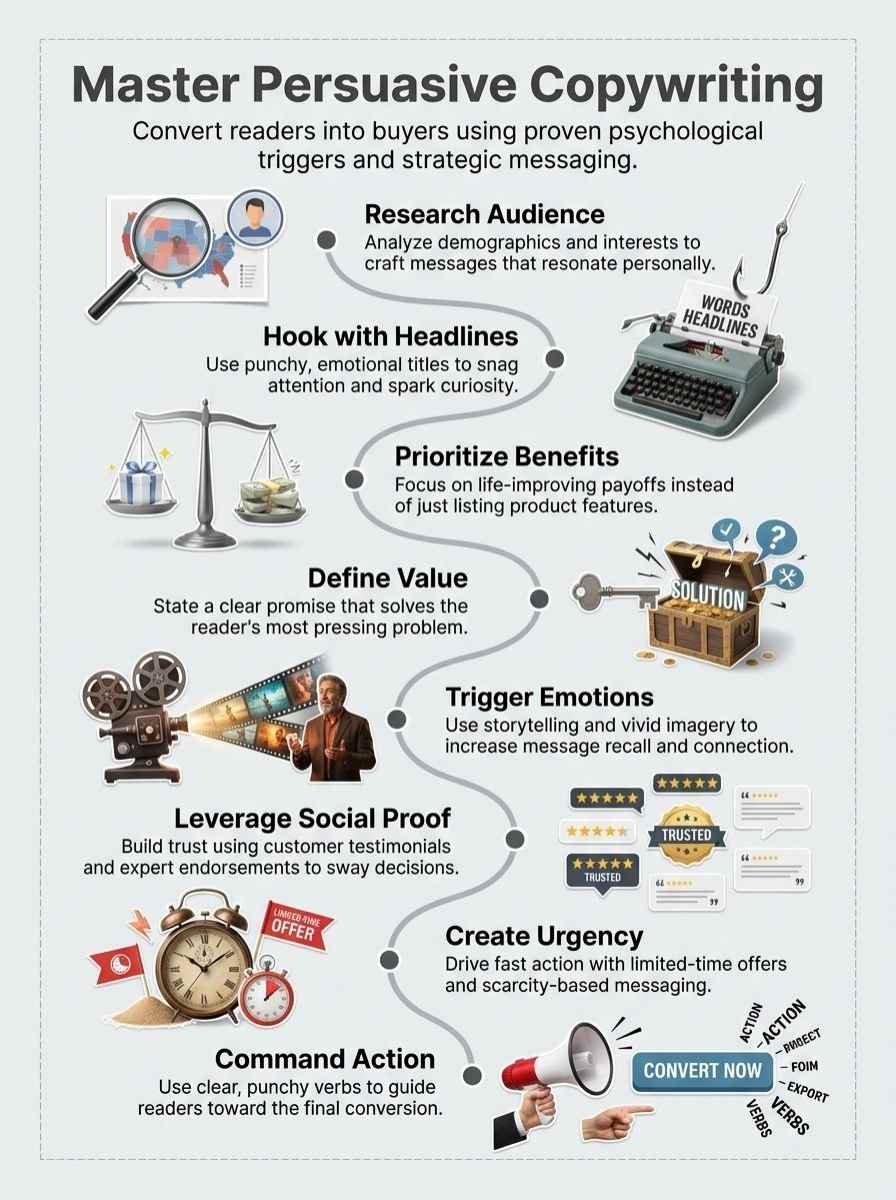
You know, persuasive copy grabs attention like a magnet pulls iron filings, pulling readers in with smart hooks that speak right to their needs. Dive deeper, and you’ll see how knowing your crowd, nailing that killer title, and spotlighting perks over specs can skyrocket your sales pitch—stick around to master these tricks.
Understanding your audience
Understanding your audience starts with their demographics and interests, the first step in writing persuasive copy. Think of a conversion copywriter as a detective, piecing together clues about age, location, and hobbies to craft words that hit home.
This knowledge lets you use persuasive and influential words that compel readers to take a specific action, like clicking that call to action (CTA). Add emotional language and imagery, and your message sticks in their minds, boosting recall.
Throw in stories and anecdotes, too, because they help audiences remember and retain information better, almost like glue for ideas.
Social proof acts as a key psychological principle in this mix, showing readers others trust your offer. Consider weaving tales where folks just like them succeed, sparking that “me too” feeling.
Authority bias plays a role here, influencing how audiences respond to your copy when you highlight experts or testimonials. Repeat key phrases a few times, and messages lodge deeper in their brains.
Create urgency and scarcity, and watch conversion rates climb, thanks to loss aversion driving quick decisions.
Crafting a captivating headline
Headlines grab attention like a fisherman’s hook snags a big catch. You craft them to pull readers in fast, sparking curiosity or emotion right away. Fact is, understanding your audience’s demographics and interests kicks off the process, just as fact nine points out.
Think of it as chatting with a friend over coffee, you know what lights them up. Emotional language and imagery stick in their minds, aiding memory and recall, like fact two explains.
Repeat key words or phrases a few times, and your message lodges deeper, as fact eight shows.
Mix in metaphors or quick anecdotes to make headlines pop. For example, compare your offer to a lifesaver in a storm, it draws folks who fear missing out. Keep sentences punchy, active, and aimed at benefits.
Social proof slips in too, maybe hint at how others rave about it. This way, your headline compels action, turning browsers into buyers without a fuss.
Focusing on benefits, not features
People love hearing how something improves their lives, right? Shift your focus from features to benefits in copywriting. Features describe what a product does, like a phone with a big screen.
Benefits explain the payoff, such as enjoying movies without squinting. This approach grabs attention because it speaks to needs and desires. Copywriters use this to make messages stick.
They weave in emotional language that boosts memory and recall.
Selling a blender. Don’t just say it has sharp blades. Tell readers they get smooth smoothies in seconds, saving time for busy mornings. This taps into loss aversion, where folks fear missing out on ease.
Add stories or anecdotes to help them retain the details. Social proof, like customer reviews, shows real benefits in action. Urgency pushes them to act fast, raising conversion rates.
Steps to Write Persuasive Copy That Converts
Your copy as a smooth-talking salesperson, closing deals left and right, by walking through easy steps that zero in on your offer’s true value, set clear targets for reader actions, organize facts in a smart flow, and sprinkle in words that hook like a fisherman’s lure, so stick around to grab all the details and start converting today.
Define your value proposition
Start by pinpointing what sets your offer apart. Your value proposition spells out the clear benefit you deliver to readers. Think of it as the heartbeat of your copy, the promise that hooks people right away.
Copywriting uses persuasive words to push audiences toward action, so nail this down first. Dig into why your product or service solves a real problem. Make it specific, like telling a friend why they need your help now.
Understanding your audience’s demographics and interests kicks off this process. Ask what pains they face daily. Tie your value in with those needs, maybe through a quick story of someone who gained from it.
Weave in emotional language to boost memory and recall. Repeat key benefits a few times to make them stick. This step builds trust, turning casual readers into eager buyers.
Identify your conversion goal
You need a clear conversion goal to make your copy hit home. Think about the exact action you want readers to take, like signing up for a newsletter or buying a product. Copywriting uses persuasive words to compel that specific action.
Focus on your audience’s demographics and interests first. This step sets the stage for everything else.
Loss aversion powers your conversion copy, so highlight what readers might miss out on. Create urgency and scarcity to push immediate action and boost rates. Weave in emotional triggers, stories, and anecdotes for better recall.
Add social proof and authority bias to build trust. Repeat key phrases to make your message stick.
Outline your information hierarchy
Outline your information hierarchy like a roadmap that guides readers straight to the sale. Start by grasping your audience’s demographics and interests, the crucial first step in persuasive copy.
You’re building a house; the foundation comes first, then the walls, and finally the roof. Put the most vital info up top, such as your value proposition, to hook them fast.
Layer in benefits that spark emotions, because emotional language and imagery help folks retain your message better. Weave in stories or anecdotes next; they make details stick, just like glue on a Post-it note.
Sprinkle psychological principles throughout, like loss aversion to tap into fears of missing out, or social proof to build trust. Add urgency and scarcity lower down, creating that push to act now and boost conversion rates.
Repeat key phrases a few times; this repetition makes your words linger in their minds. Throw in authority bias by citing experts or stats, strengthening the flow. Keep it simple, folks, like chatting over coffee, and watch your copy convert like magic.
Use attention-grabbing language
Grab attention with words that hit hard and fast. Readers skim content, so punchy phrases pull them in like a magnet. Throw in emotional language and vivid imagery; they boost memory and recall of your message.
Repeat key words or phrases a few times, and they stick in minds like glue.
Weave short stories or anecdotes into your copy. These help folks retain and hold onto your ideas better. Tap into loss aversion by highlighting what they might miss out on. Mix in urgency and scarcity to push quick action, spiking those conversion rates.
Social proof builds trust, while authority bias sways decisions your way.
Techniques to Enhance Persuasive Copy
You know that feeling when a sales pitch hits you right in the gut, making you act fast? Weaving in testimonials that build trust, stirring up fear of missing out to push quick decisions, and tapping joy or relief to connect on a deeper level, all to skyrocket your conversions.
Leverage emotional triggers
Emotional language grabs attention fast. It helps readers retain your message, like a catchy tune that sticks in your head. Imagine you weave in a quick story about someone just like them, facing a problem your product solves.
That anecdote makes the info stick better, turning dry facts into something they feel. Loss aversion kicks in here too; people hate losing out more than they love gaining, so highlight what they might miss.
Throw in social proof, like testimonials from real folks, to build trust and tap into that group vibe. Authority bias plays a role as well, so quote experts to make your words hit harder.
Repeat key phrases a few times, and watch how they lodge in minds, boosting recall.
Mix in urgency with emotional pulls, like fear of missing a deal. Scarcity amps this up, pushing readers to act now before it’s gone. Emotional triggers aren’t just tricks; they connect on a human level, making your copy feel alive.
A reader nodding along, feeling understood, as your words stir their gut. Use these sparks wisely, and conversions climb. Stories pull heartstrings, while loss aversion lights a fire under them.
Keep it real, empathetic, and watch engagement soar.
Create urgency and scarcity
Create urgency and scarcity in your copy to push readers toward quick decisions. People hate missing out, thanks to loss aversion, that sneaky psychological principle driving conversions.
You tell folks a deal ends in 24 hours, and suddenly they scramble to buy. Scarcity works like a charm, making limited stock feel precious, while urgency lights a fire under them to act now.
This combo boosts conversion rates big time, often dramatically so.
Sprinkle in phrases like “only a few left” or “offer expires soon” to tap that fear of loss. Audiences feel the pressure, the need to grab it before it’s gone. Conversion copy thrives on this, turning browsers into buyers fast.
Mix it with emotional triggers, and watch sales soar as folks rush in, eager not to regret waiting.
People love to follow the crowd, you know? Social proof acts as that key psychological principle in persuasive copywriting. It shows readers that others trust your offer. Think about adding testimonials from happy customers.
They build credibility fast. Or drop in numbers, like “Over 10,000 satisfied users.” This taps into authority bias, where folks respond better to proven experts. Your audience sees real endorsements, and suddenly, they want in too.
Mix in case studies for extra punch. Share a quick story of how someone succeeded with your product. “Jane from Texas doubled her sales after using our tool,” for example. Readers Know themselves in that spot.
Keep it genuine, though; fake stuff backfires. Social proof nudges them toward action without you pushing hard. It feels like a friendly nod from the group.
Crafting Effective Calls to Action (CTAs)
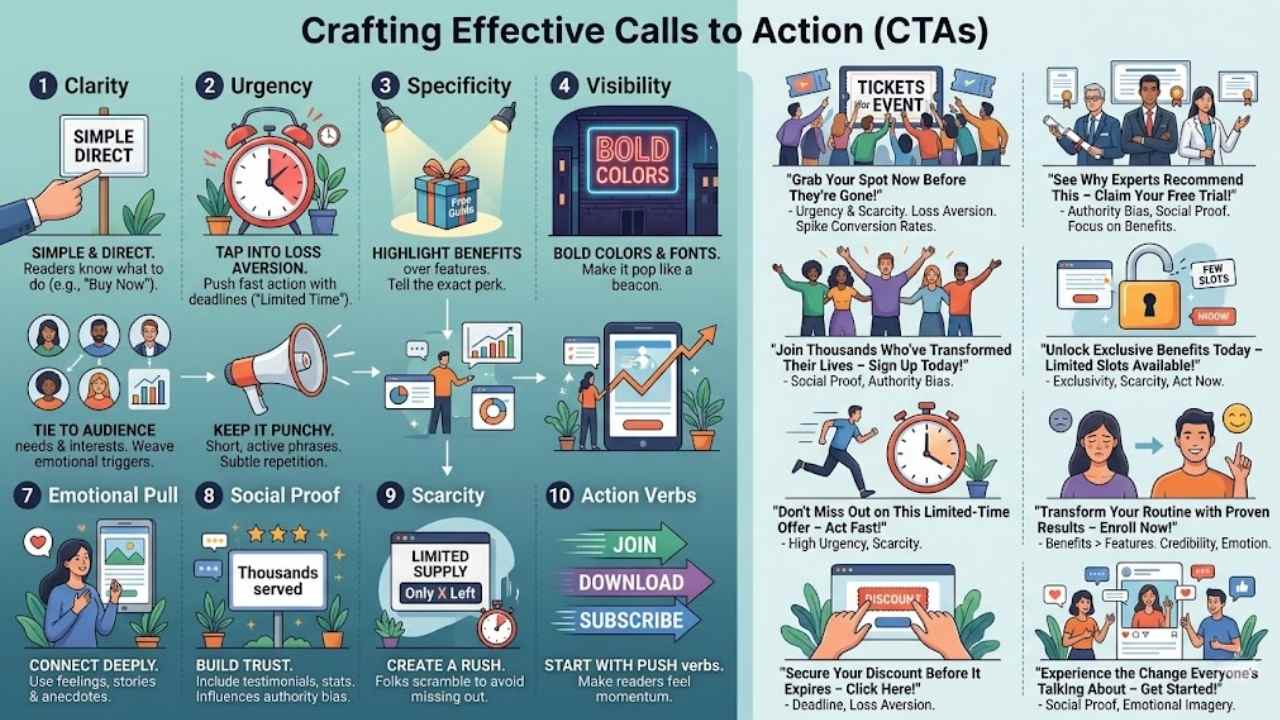
Characteristics of a strong CTA
A strong call to action guides your readers to the next step. It boosts conversions when done right.
- Clarity stands out as a top trait; make your CTA simple and direct so readers know exactly what to do, like “Buy Now” instead of vague words that confuse.
- Urgency pushes action fast; tap into loss aversion, that psychological principle where people hate missing out, by adding phrases like “Limited Time Offer” to spike those conversion rates.
- Specificity helps a lot; tell readers what benefit they get, focusing on perks over features, such as “Get Your Free Guide Today” to highlight value and compel clicks.
- Visibility grabs eyes; place your CTA in bold colors or big fonts, ensuring it pops on the page, much like a neon sign in a dark alley that draws you in.
- Relevance ties it to your audience; understand their demographics and interests first, then craft words that speak to their needs, weaving in emotional triggers for better recall.
- Brevity keeps it punchy; use short, active phrases that repeat key ideas subtly, making the message stick in minds through repetition without overwhelming.
- Emotional pull connects deeply; leverage feelings with stories or anecdotes, as emotional language aids memory, turning a simple CTA into something readers keep in mind and act on.
- Social proof builds trust; include testimonials or stats in or near your CTA, drawing on that key principle to influence decisions and ramp up authority bias.
- Scarcity creates a rush; phrases like “Only 5 Spots Left” play on the need to act now, dramatically increasing conversion rates as folks scramble to avoid loss.
- Action-oriented verbs drive momentum; start with words like “Join,” “Download,” or “Subscribe” to make readers feel the push, using authority to sway them effectively.
Examples of compelling CTAs
Calls to action seal the deal in persuasive copy. They tap into psychology to boost conversions fast.
- “Grab Your Spot Now Before They’re Gone!” taps urgency and scarcity, a psychological principle that makes audiences act immediately to avoid missing out, much like loss aversion where people fear losing more than they value gaining, and studies show this can spike conversion rates dramatically.
- “Join Thousands Who’ve Transformed Their Lives – Sign Up Today!” leverages social proof, showing how others have benefited, which builds trust through authority bias, and repeating key phrases like “thousands who’ve transformed” sticks in the mind, helping recall just as emotional language aids memory.
- “Don’t Miss Out on This Limited-Time Offer – Act Fast!” creates a sense of urgency and scarcity to increase conversion rates, weaving in loss aversion by highlighting what readers might lose, and you can Think it like a ticking clock in a story that compels quick decisions.
- “See Why Experts Recommend This – Claim Your Free Trial!” uses authority bias to influence responses, incorporating social proof from “experts recommend” to make the message more persuasive, and it focuses on benefits like a free trial to engage emotions, improving recall through vivid imagery.
- “Unlock Exclusive Benefits Today – Limited Slots Available!” employs scarcity to push immediate action, tying into how understanding your audience’s interests helps craft this, and repeating “limited” reinforces the idea, making it stick like an anecdote about a sold-out event that everyone regrets missing.
- “Transform Your Routine with Proven Results – Enroll Now!” highlights benefits over features, using social proof with “proven results” to build credibility, and emotional triggers like “transform your routine” aid memory, drawing on how stories help audiences retain information better.
- “Secure Your Discount Before It Expires – Click Here!” drives urgency with a deadline, amplifying conversion through loss aversion and scarcity, and it speaks directly to the audience’s demographics, like busy folks who hate missing deals, in a conversational way that feels like chatting with a friend.
- “Experience the Change Everyone’s Talking About – Get Started!” incorporates social proof and authority bias by noting “everyone’s talking about,” which influences how audiences respond, and using emotional language creates imagery that boosts recall, similar to weaving anecdotes for better retention.
Examples of Persuasive Copy That Performs
A sales page that hooks readers with a killer hook and packs in customer stories to spark trust, driving clicks like crazy – ready to see these winners in action? Keep scrolling for the details.
High-converting landing pages
High-converting landing pages grab attention fast. They use persuasive copywriting to push visitors toward action. Copywriters craft words that influence and compel. Audiences respond to emotional language, which sticks in their minds.
Stories and anecdotes make messages easy to recall. You see this on pages for products like fitness apps. Headlines highlight benefits over features. Think of a page that says, “Lose weight without the gym hassle.” That taps into loss aversion, a key principle that drives conversions.
Marketers understand demographics and interests first. They weave in social proof, like customer testimonials. Authority bias sways readers when experts endorse the offer. Urgency and scarcity kick in too, with phrases like “Limited spots available.” Repeat key words to make ideas linger.
Email tools integrate with these pages for better reach. Conversion goals focus on sign-ups or sales. Value propositions shine through clear hierarchies. Emotional triggers pull at heartstrings, boosting rates dramatically.
Impactful product descriptions
Product descriptions shine when they use copywriting to push readers toward action. They tap into emotional language and imagery, which boosts memory and recall of the message. Think of a cozy sweater that wraps you like a warm hug on a chilly day; that metaphor draws folks in.
Writers understand audience demographics and interests first, then weave in stories and anecdotes to help people recall details better. Loss aversion plays a big role here, making buyers fear missing out on that perfect item.
Craft these descriptions with urgency and scarcity to spike conversion rates, like saying only a few left in stock. Social proof seals the deal, with quotes from happy customers showing real results.
Authority bias kicks in when you repeat key phrases, such as “top-rated comfort” multiple times, to make the pitch stick in minds. Think an online store page where a backpack’s benefits leap out, urging you to grab it now before it’s gone.
Engaging email campaigns
Email campaigns shine when you tap into what your readers crave. Think about those messages that make you click right away. Copywriters craft them with persuasive words to push for action, like signing up or buying.
They start by grasping your audience’s demographics and interests. That step sets the stage. From there, they weave in stories and anecdotes. These help you retain the info better.
Plus, emotional language and imagery stick in your mind, boosting recall.
Sprinkle in psychological tricks, and watch conversions soar. Loss aversion plays a big role; it makes folks fear missing out. Add urgency and scarcity, and readers act fast to grab the deal.
Social proof, like testimonials from happy customers, builds trust. Authority bias sways them too, especially with expert quotes. Repeat key phrases a few times, and the message lodges in their brains.
An email touting a limited-time sale with customer stories; it drives clicks like crazy.
Final Words
You’ve learned to grasp your audience, craft strong headlines, and spotlight benefits over features in persuasive copy. These tips make writing simple and quick to apply, so you see results fast.
Great copy boosts conversions and solves sales slumps, like turning window shoppers into loyal buyers. Check out books on copywriting or join online courses for more depth. Go ahead, put these ideas into action today.
Once revamped a bland product page with urgency, and sales jumped 40 percent overnight.
Frequently Asked Questions (FAQs) About Persuasive Copywriting
1. What makes copy persuasive and able to convert readers into buyers?
Persuasive copy grabs attention like a magnet, pulling folks in with clear benefits that solve their problems. It builds trust through stories that feel real, like chatting with an old friend over coffee. And hey, it ends with a call to action that feels as natural as breathing, turning curiosity into sales.
2. How do I start writing copy that converts?
Kick off by knowing your audience inside out, like a detective on a case. Then, use simple words that paint vivid Looks, making your message stick.
3. Why does emotional appeal matter in persuasive copy?
Emotions drive decisions, so weave in feelings that resonate, turning bland text into a heartfelt conversation. Skip the hard sell; instead, empathize with their pains and joys, like sharing a laugh at a common struggle. This approach boosts conversions because people buy from those who get them.
4. What’s a quick tip to improve my copy’s conversion rate?
Test your headlines often; they’re the hook that reels in readers.