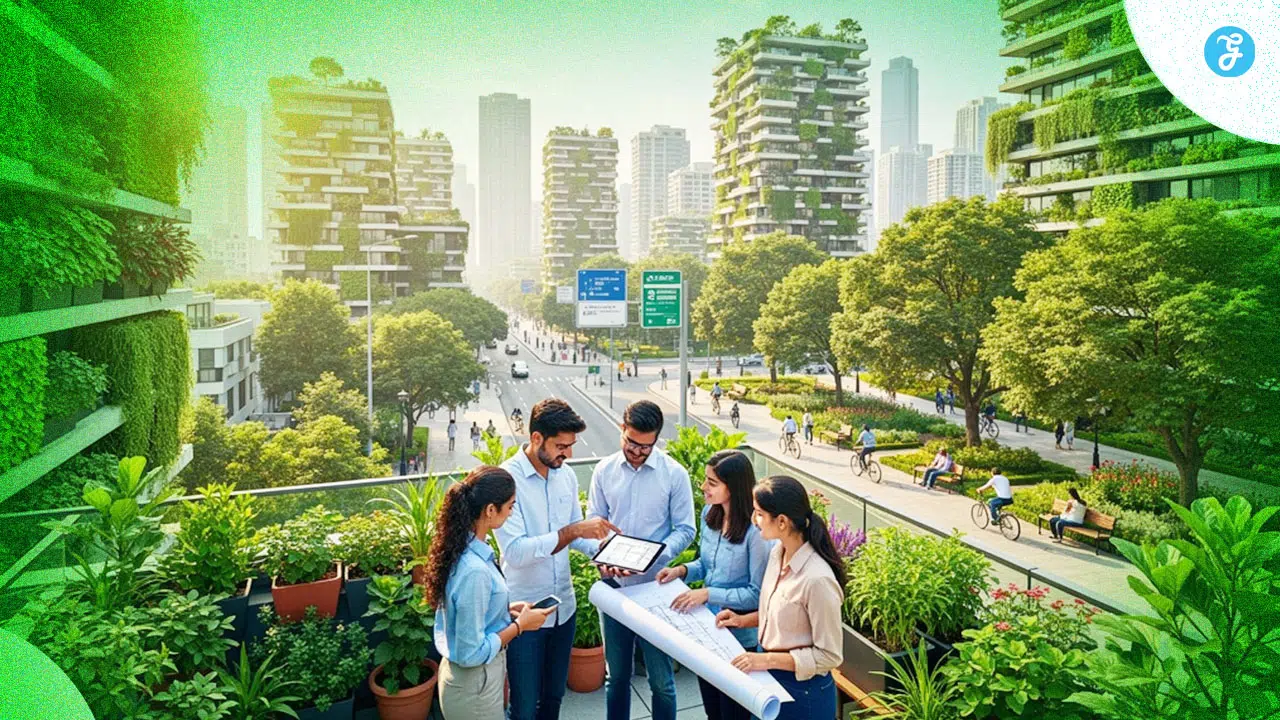
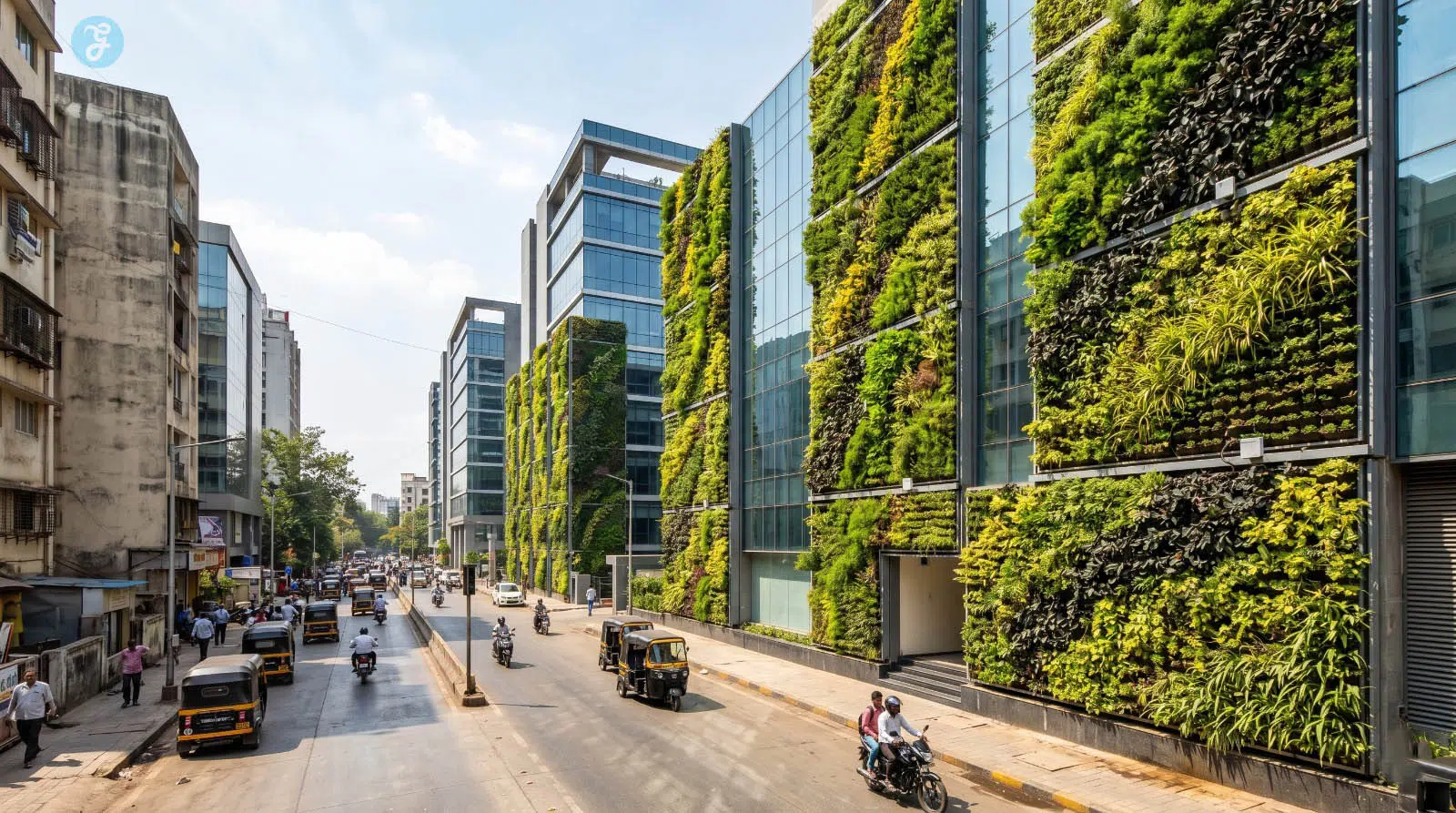
Walk through the streets of Mumbai or Delhi today, and you will feel the heat radiating off the pavement. For decades, we measured urban growth by how high we could stack steel, ignoring the cost to our local climate. The urban heat island effect is no longer a distant warning; it is our daily reality. However, a distinct shift is happening across newer commercial blocks. Bare walls are turning green. This is not a random design choice, but a strict survival mechanism. Today, the top Vertical Garden Startups in India are leading this change, reimagining urban surfaces as functional, high-yield habitats.
We used to think of nature as something to visit on a weekend getaway. Now, we must weave it directly into our city grids. These green systems are mechanical necessities for modern builders. They slash air conditioning bills by naturally cooling the surrounding air and trap urban dust before it enters our windows. Innovators are engineering smarter ways to grow plants without soil or excessive water, using precise data and smart sensors to keep these green spaces alive in harsh weather.
This shift creates an urban oasis right where we need it most. Small to medium enterprises are building the exact hardware and software to make this happen, providing the structural grids and complex irrigation tech required for such modern problems.
The Rise of Vertical Greenery
The surge in demand for green walls is a mix of climate necessity and financial logic. Investors are moving away from traditional masonry to embrace systems that offer measurable returns.
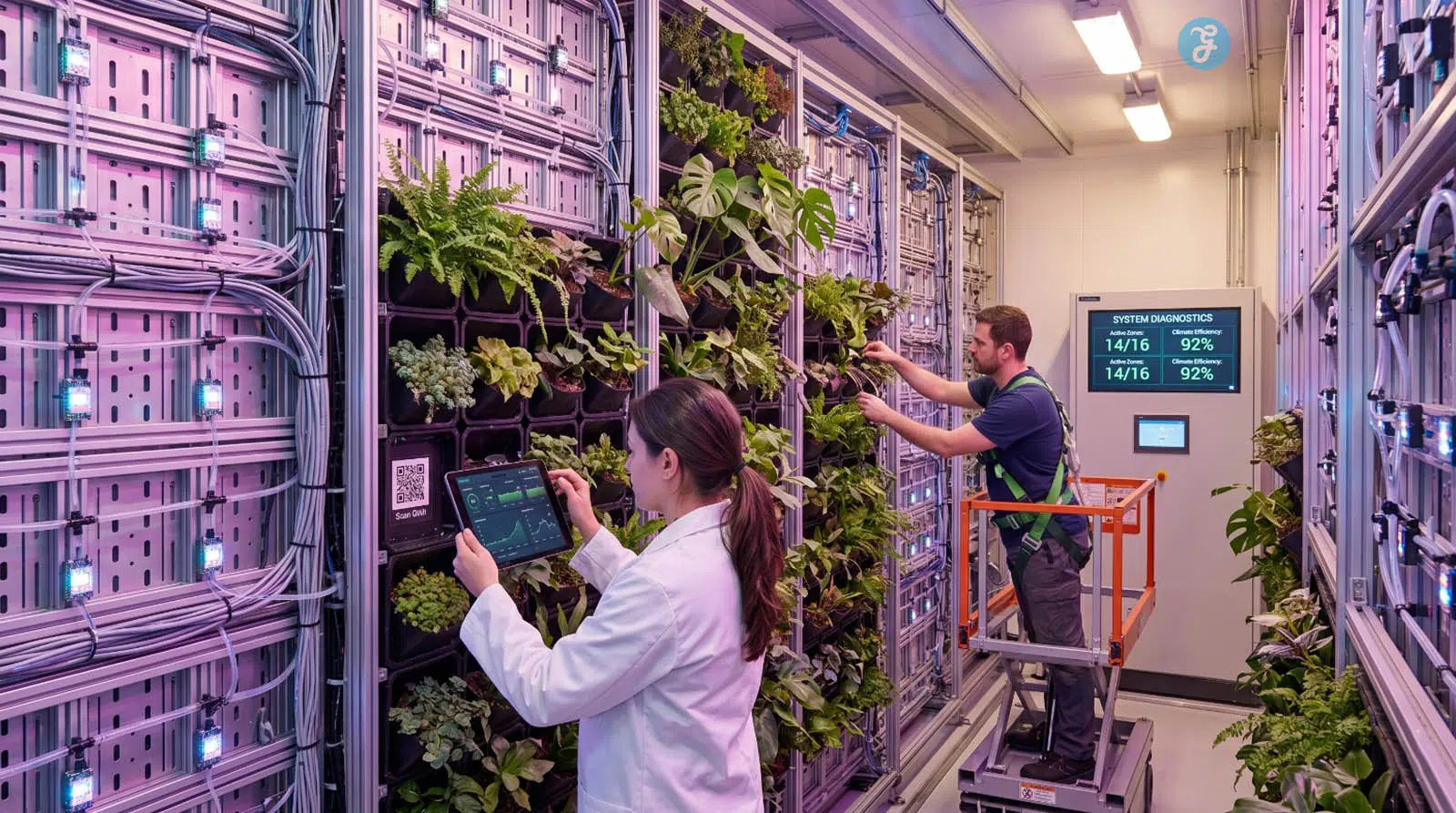
- The Wellness Economy: Major firms now prioritize biophilic design to combat workplace burnout. Greenery boosts employee well-being by 15 percent and output by 12 percent.
- Green Certifications: Developers use vertical gardens to secure high-tier ratings from the IGBC and LEED. These properties attract premium tenants and can command a 15 percent resale premium.
- Thermal Insulation: Living walls act as natural cooling systems, reducing indoor temperatures by 3 to 5 degrees Celsius and cutting air conditioning energy use by nearly 30 percent.
- Space Scarcity: In dense metros, vertical planes are the final frontier. These systems provide the benefits of a park without taking up a single square inch of floor space.
A Passion for Living Walls
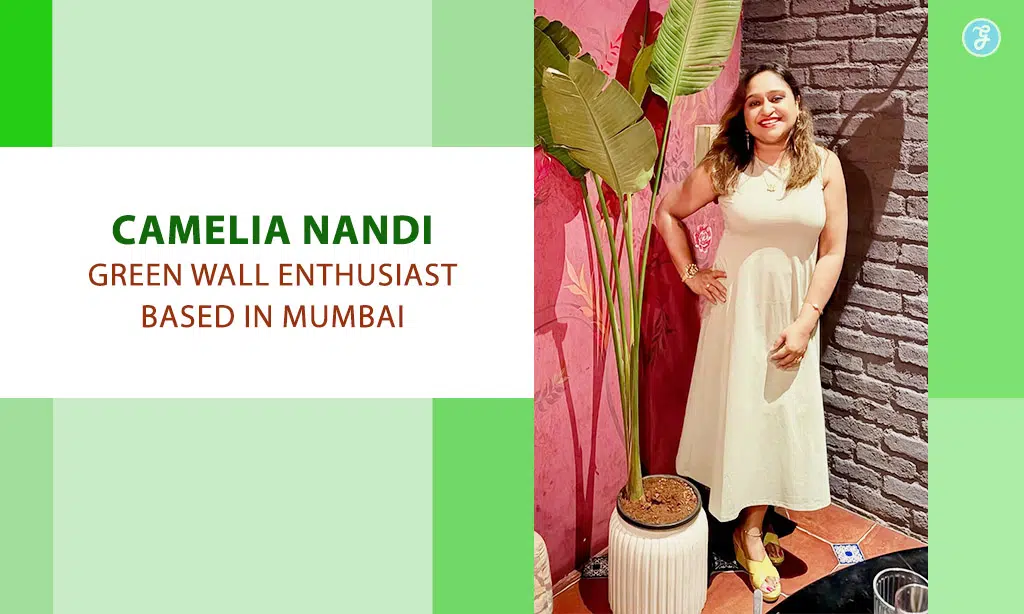
Camelia Nandi, a dedicated teacher navigating life between Mumbai, Delhi, and Bengaluru, views green walls as her true passion. Having invested her earnings into this vision, she remains a proud advocate for the startups in India providing instant vertical greenery. Their innovation allows her to transform every urban living space into a thriving, natural sanctuary. She even prioritizes dining at restaurants that feature lush, living walls.
The Green Pioneers: 15 Companies Reshaping India
A Note on Methodology: Our editorial team conducted direct market research to build this selection. We verified the credentials and active projects of these Indian green tech companies. While we numbered the startups and SMEs for structural clarity, this list does not represent a strict hierarchy or a definitive ranking.
The following selection highlights the most impactful organizations currently redefining urban architecture through vegetation. These businesses combine botanical science with advanced engineering to ensure that nature can thrive in the most demanding metropolitan environments.
1. UrbanKisaan
Headquarters: Hyderabad, Telangana
- Best for: Urban dwellers seeking pesticide-free, home-grown produce in minimal space.
- The 2026 Edge: The brand recently launched FarmOS.ai, a conversational farm intelligence platform that allows users to manage their indoor gardens through voice-based decisions.
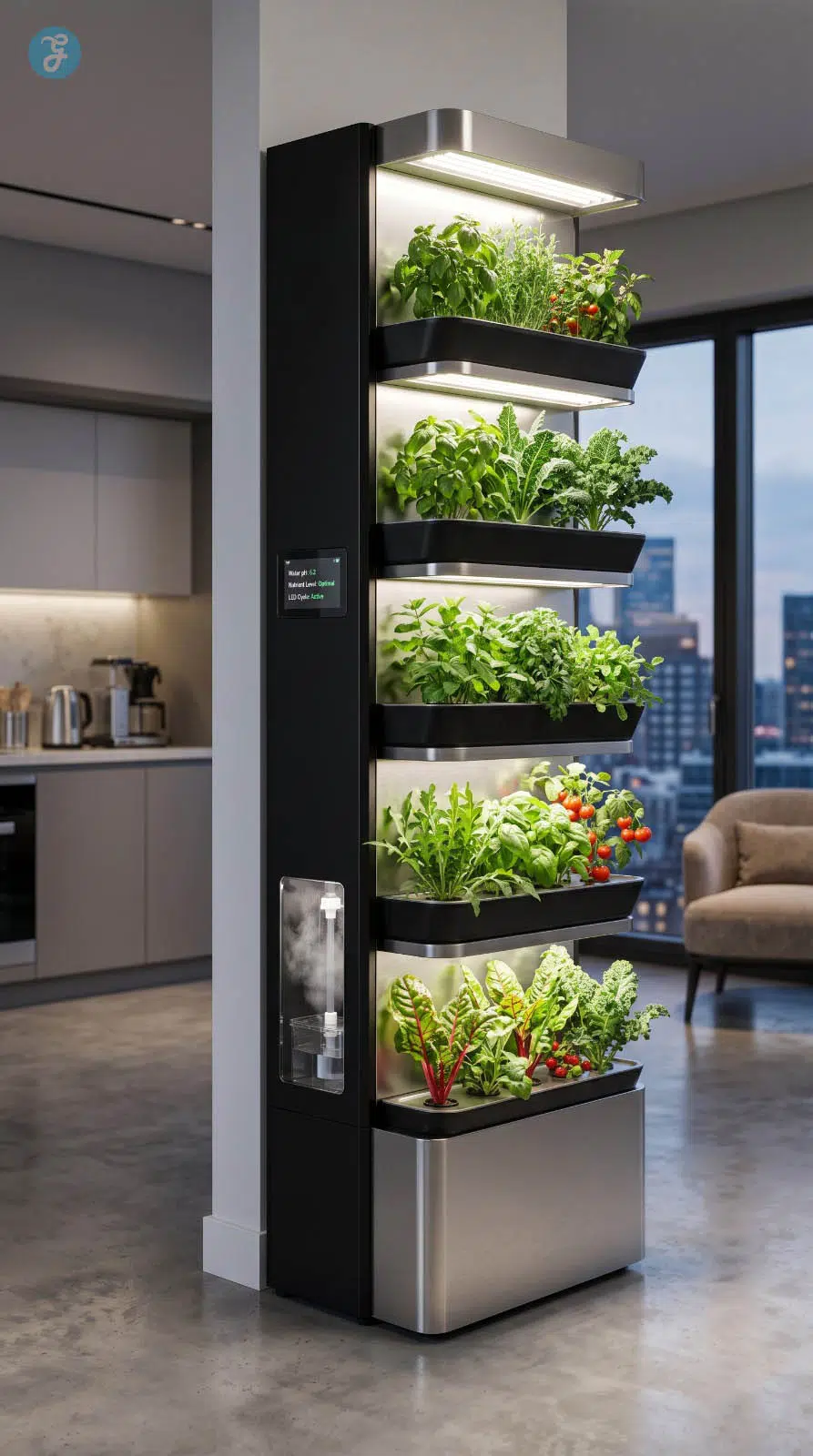
- Features: Their systems use a specialized nutrient-rich water mist that helps plants grow significantly faster than traditional soil methods.
This agritech startup is a leader in modularity and water efficiency. Backed by Y Combinator, they build indoor vertical networks that grow plants using 95 percent less water than traditional farming. Their systems serve the high-density urban resident who needs a functional and edible garden within a small footprint. They are a top choice for those looking to integrate sustainable food production into residential spaces.
2. Natura India
Headquarters: Bengaluru, Karnataka
- Best for: Large-scale corporate offices and luxury hotels aiming for LEED and IGBC green certifications.
- The 2026 Edge: They now offer a “Guaranteed for Life” all-inclusive plant program that covers design, installation, and permanent professional maintenance.
- Features: Specialized in maintenance-free indoor moss walls and plug-and-play plant facades that require no manual watering. Their systems are engineered to improve indoor air quality and worker productivity by up to 15 percent.
Operating as a premium SME since 2000, Natura India is a recognized name in professional plantscaping… Many B2B clients choose their breathing plant skins specifically to secure the high-level LEED and IGBC certifications required for modern corporate headquarters.
3. City Greens
Headquarters: Bengaluru, Karnataka
- Best for: High-tech commercial builders and commercial farmers who want data-driven, automated greening.
- The 2026 Edge: Their new AgriTech Park facility showcases 145,000 square feet of solar-powered, AI-driven automation for soilless farming systems.
- Features: Uses advanced IoT sensors to provide 24/7 monitoring of plant health, water pH, and nutrient levels.
This startup operates at the sharp intersection of biology and digital data. City Greens offers AI-driven aeroponic and NFT systems that monitor plant health in real time without human intervention. Their automated green walls are ideal for large-scale commercial projects where manual upkeep is not a viable option. They provide a high-tech solution for buildings that require reliable, high-density greenery without the mess of soil.
4. Indeville Design Studio
Headquarters: New Delhi
- Best for: Luxury residential balconies and rooftop terraces looking for bespoke, sustainable biophilic design.
- The 2026 Edge: Recently expanded into Bamboo Construction, integrating living walls into eco-friendly outdoor gazebos and pergolas.
- Features: Offers a “One-Stop Solution” from initial architectural design to on-site smart irrigation installation.
This SME brings a detailed artisanal touch to the greentech sector. Indeville specializes in custom living walls built with weather-resistant materials to withstand the extreme temperature swings of Northern India. They prioritize sustainability by using materials like bamboo and recycled substrates for their structural frames, paired with IoT-enabled drip irrigation. Their approach ensures that every green wall is environmentally friendly from the inside out.
5. Barton Breeze
Headquarters: Gurugram, Haryana
- Best for: Large retail centers and office parks requiring massive, climate-resilient green infrastructure.
- The 2026 Edge: Currently managing over 350,000 square feet of vertical farm space across three countries, focusing on “Remote Farming” tech.
- Features: Their systems are designed to be “clean food” generators, producing oxygen and fresh greens simultaneously within high-traffic public areas.
A major player in the agritech space, this startup focuses on controlled environment infrastructure. Barton Breeze builds highly productive vertical greening systems utilizing IIM-backed business intelligence to maximize ROI. Developers rely on them for green walls that produce high yields of oxygen while maintaining aesthetic appeal. They are experts at scaling nature within massive commercial properties.
6. UGF Farms
Headquarters: Mumbai, Maharashtra
- Best for: Communities and restaurants looking to convert “dead” concrete spaces into productive edible farms.
- The 2026 Edge: Leading the “Community Urban Farm” pilot project under Mumbai airport flyovers to transform neglected city corridors into agricultural zones.
- Features: Specialized in hydroponic pits and vertical gardening techniques that improve the local micro-climate in high-pollution zones.
This innovative SME focuses on reclaiming dead zones within the concrete jungle. They convert empty building gaps and barren restaurant walls into zero-carbon hydroponic micro-farms, offering a unique “plant creche” service for traveling residents. By making urban greening both functional and edible, they provide a unique service to the Mumbai community. Their work shows how underutilized urban spaces can become productive local assets.
7. Rise Hydroponics
Headquarters: Ahmedabad, Gujarat
- Best for: Investors and commercial property owners looking for turnkey, profitable vertical farming setups.
- The 2026 Edge: Offers specialized Feasibility Reports including projected Profit & Loss statements and bank loan assistance for new greening projects.
- Features: Their systems use specialized Fan & Pad poly-house structures that keep vertical farms cool even in the dry Gujarat heat.
This fast-growing startup provides turnkey vertical farming solutions for a variety of clients. They simplify the process for commercial properties by handling everything from structural design to nutrient management, complete with full AMC and marketing support. Their systems allow businesses to adopt large-scale green walls with minimal effort. They are a key driver of urban plantscaping across Western India.
8. Green Tech Solution Private Limited
Headquarters: New Delhi
- Best for: B2B developers and industrial builders requiring high-durability hardware for exterior greening.
- The 2026 Edge: Specializing in High-Tensile Grid Systems designed to hold massive weights on building facades during monsoon seasons.
- Features: Focuses on the manufacturing of heavy-duty structural grids and terrace garden panels.
This manufacturing SME provides the heavy-duty hardware required for outdoor greening projects. They focus on producing the modular grids and panels built to meet global benchmarks for weather resistance and structural safety. Their expertise is in the durability of commercial terrace gardens and structural greening. They provide the physical backbone for many of the capital’s largest vertical forests.
9. Nutrifresh
Headquarters: Pune, Maharashtra
- Best for: Scalable, climate-resilient agricultural facades and high-efficiency urban farms.
- The 2026 Edge: Secured a ₹400 crore investment from the US International Development Finance Corporation (DFC) to boost climate-resilient infrastructure.
- Features: Their CEA (Controlled Environment Agriculture) infrastructure focuses on precision-driven cultivation and extreme water efficiency.
Nutrifresh uses deep tech to modernize vertical farming and urban greening, targeting export-oriented agricultural supply chains. Their scalable frameworks are engineered to be resilient against the volatile weather patterns of the Indian subcontinent. This focus on durability ensures long-term plant survival in harsh outdoor conditions. They help stabilize local micro-climates through robust and technologically advanced greening.
10. Aavana Greens Private Limited
Headquarters: Ghaziabad, Uttar Pradesh
- Best for: Interior spaces with low light, such as hotel basements, windowless lobbies, or high-traffic metro stations.
- The 2026 Edge: Developed UV-Protected Synthetic Foliage that resists fading even when placed behind large glass panels in direct sunlight.
- Features: Provides instant “visual greenery” without the need for light, water, or plumbing.
This manufacturing SME provides a practical solution for spaces that cannot support live irrigation. They produce high-quality and weather-resistant artificial vertical modules designed for fire-retardant commercial safety compliance. These systems offer immediate green aesthetics for lobbies and hospitality settings without the need for light or water. They are an essential provider for interior spaces with strict maintenance limits.
11. Advance Geotextiles
Headquarters: Jaipur, Rajasthan
- Best for: Professional horticulturists who prioritize root health and vertical garden longevity.
- The 2026 Edge: New Needle-Punched Geo-Bags designed for flood control and high-aeration vertical gardening.
- Features: Their fabric-based pocket systems are manufactured from high-durability non-woven fabric that prevents waterlogging.
This textile SME addresses the technical challenges of plant health through material science. They manufacture breathable geo-textile pocket systems that allow for superior root aeration, widely used in highway greening and railway infrastructure. These fabric pockets prevent the common problem of root rot found in traditional plastic pots. Their innovation is a game changer for the longevity of large-scale living walls.
12. Macrogardens
Headquarters: Lucknow, Uttar Pradesh
- Best for: Space-starved apartment residents and kitchen gardeners looking for a “plug-and-play” solution.
- The 2026 Edge: The MacroTower Mini now allows users to grow up to 30 times more produce in a standard balcony space compared to traditional pots.
- Features: Their towers include a built-in water flow system that emits a soothing sound, doubling as a home decor piece.
Incubated by IIT Kanpur, this startup focuses on vertical hydroponic towers designed for the home. Their compact, soil-free systems fit perfectly on residential balconies, keeping homes clean and free from traditional garden pests. They bring high-tech gardening to a personal level for those living in tight urban quarters. Their designs make sustainable living accessible to a broader audience.
13. Real Arts
Headquarters: Mumbai, Maharashtra
- Best for: Mumbai residential balconies and narrow commercial corridors where every inch of floor space is vital.
- The 2026 Edge: Introduced Sound-Dampening Green Panels that help block out the noise of Mumbai’s bustling traffic.
- Features: Specializes in lightweight PVC modular setups that are easy to install on older building railings.
This retail SME focuses on space-saving PVC modular setups for crowded urban centers. Their systems are frequently used as eco-friendly privacy screens in the cramped districts of Mumbai. Beyond the visual benefits, their green walls provide a natural sound barrier against street noise. They are masters of maximizing utility in very small commercial footprints.
14. Dizzart Flooring India
Headquarters: Noida, Uttar Pradesh
- Best for: Hospitality interior designers looking for high-end, textured wall solutions.
- The 2026 Edge: Launched “Biophilic Tile” systems that allow green wall elements to be swapped out easily to match seasonal restaurant themes.
- Features: Combines the durability of commercial flooring expertise with vertical gardening.
Dizzart has successfully diversified from flooring into high-end biophilic paneling. They cater specifically to the hospitality sector, helping hotels integrate natural elements into their lobby and restaurant designs. Their vertical garden panels are built for quick integration into existing structural walls with minimal construction mess. They bridge the gap between commercial decor and natural plant science.
15. The Plant Shop
Headquarters: Hyderabad, Telangana
- Best for: Premium residential interiors and luxury boutiques looking for “Living Art” installations.
- The 2026 Edge: Now utilizes Environmental Mapping to select specific plant species that will thrive based on the exact humidity and light levels of a client’s room.
- Features: Focuses on the aesthetic integration of greenery into modern architecture.
This rising SME focuses on the aesthetic marriage of modern architecture and living plants. They offer highly customized living wall systems, moving away from “one-size-fits-all” vertical walls toward curated indoor ecosystems. Their work ensures that the chosen plants are compatible with the specific indoor environment. They provide a personalized and scientific approach to corporate and residential greening.
What These Startups Tell Us
The growth of these 15 organizations reveals a fundamental shift in how India approaches urban development. Here are the four primary takeaways from the current market:
- Automation is the New Standard: The industry has moved past the “water and hope” phase. Startups are now integrating IoT sensors and AI-driven monitoring to handle the delicate needs of living walls. This shift toward smart city technology has removed the fear of high maintenance costs for corporate buyers.
- Greening as Infrastructure, Not Decor: Developers are no longer treating vertical gardens as a secondary design choice. These systems are being built into the sustainable architecture and structural blueprints of buildings to serve as natural air conditioners and air filtration units.
- The Rise of Local Material Science: Companies like Advance Geotextiles show that the secret to a long-lasting garden lies in the fabric and substrate. By developing breathable materials tailored for the Indian monsoon and summer, these firms are solving the root rot issues that previously plagued the sector.
- Functional Over Aesthetic: While beauty is a benefit, the focus has shifted toward utility. Whether it is earning LEED credits or growing saffron in a city apartment, vertical greening is now expected to provide a measurable return on investment.
The Road Ahead
For founders, the challenge remains in the “maintenance hurdle.” The market is ready for even more robust, self-healing systems that require minimal human intervention. Small business owners and SMB buyers should view vertical greening as an investment in energy efficiency and brand health.
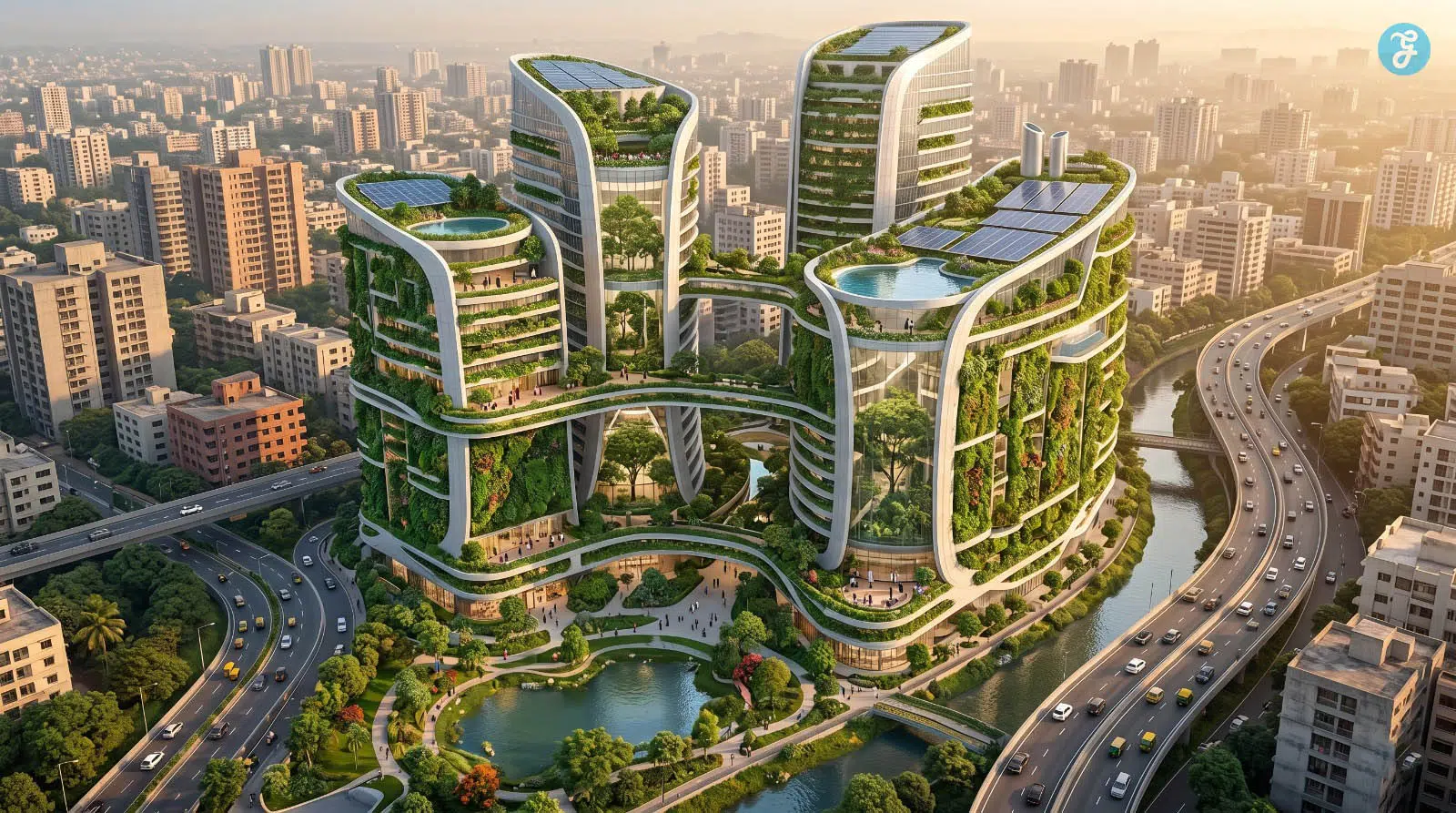
For investors, the vertical greening sector represents a stable entry point into the green economy. As Indian cities continue to densify and the heat island effect intensifies, the companies providing these cooling solutions will become as essential as the HVAC industry. The future of our cities is not in more concrete structures, but in the intelligent integration of biology and building.
| Company Type | Top Providers | Core Strength |
| Tech Startups | UrbanKisaan, City Greens, Barton Breeze | AI-Automation & Hydroponics |
| Specialist SMEs | Natura India, Indeville, The Plant Shop | Design & LEED Certification |
| Infrastructure | Green Tech, Advance Geotextiles | Heavy-duty Grids & Geotextiles |
| Low-Maintenance | Aavana Greens, Real Arts | Synthetic & PVC Modular Walls |
Frequently Asked Questions (FAQs) on Vertical Garden Startups in India
Do vertical gardens in India require a specialized structural audit before installation?
Yes. For large scale living walls, a structural engineer must assess the load bearing capacity of the wall. Natural systems involve the weight of the frame, the growth medium, and the water. Most startups work with structural consultants to ensure the building can support the additional weight without risk.
What is the “Self-Healing” technology mentioned by some Indian startups?
This refers to automated nutrient delivery systems. When sensors detect a nutrient deficiency or a sick plant, the AI adjusts the irrigation mix to deliver targeted care to that specific zone. This prevents a single dying plant from affecting the entire facade.
How do these startups handle the “Dengue and Malaria” concern in tropical cities?
Professional vertical garden startups in India use soilless substrates like coco-peat or mineral wool. Because there is no stagnant water or traditional soil, these systems do not provide the breeding ground required for mosquitoes or typical garden pests.
Can vertical gardens be integrated with existing greywater recycling systems?
Several startups are now engineering systems that use treated greywater from the building itself for irrigation. This creates a circular ecosystem where the building’s waste water is filtered through the plant roots and released as clean moisture into the air.
Are there specific fire safety regulations for artificial vertical walls in commercial lobbies?
Absolutely. For indoor installations, Indian fire safety norms require the use of Fire Retardant (FR) certified materials. Reputable manufacturing SMEs like Aavana Greens provide certified modules that do not catch fire easily or release toxic fumes, which is a major concern for hospitality and transit hubs.
What is the lifespan of a vertical garden system installed by these startups?
With a professional maintenance contract, the structural hardware and irrigation systems are built to last over 10 to 15 years. The plants themselves may need seasonal refreshing, but the core technology is a long term building asset.