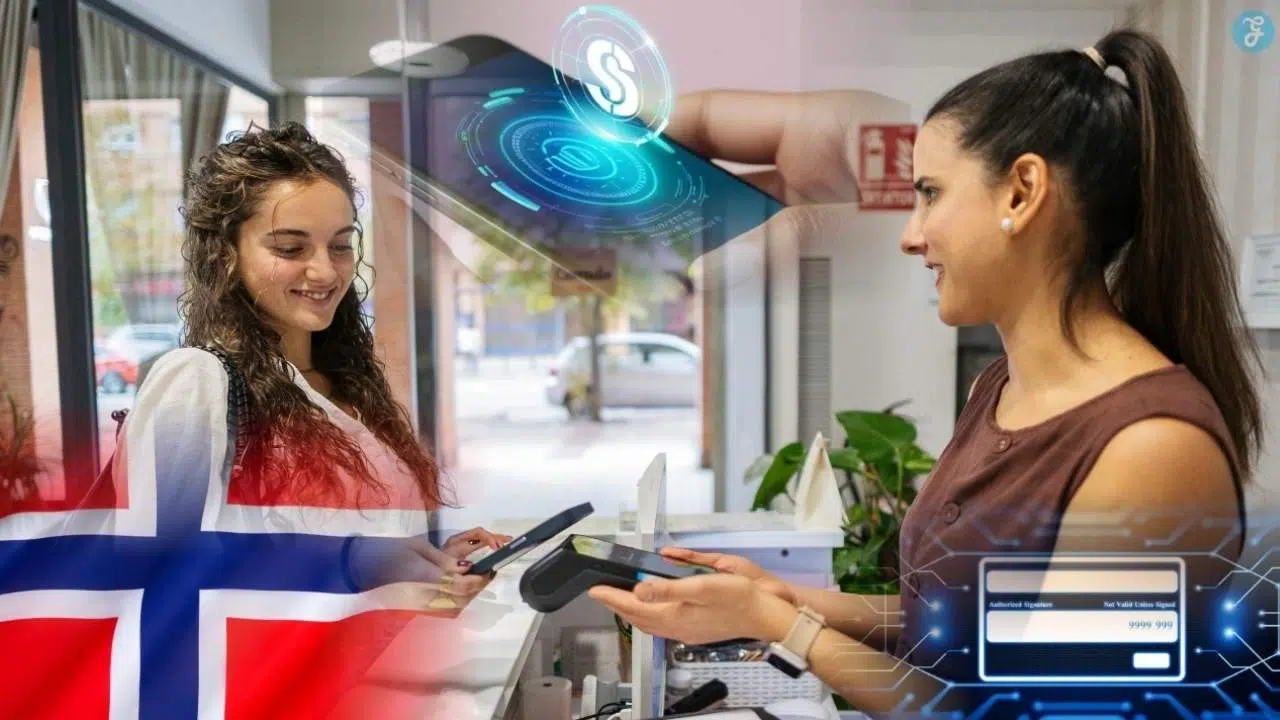
Try buying a cinnamon bun in Stockholm with a crisp banknote, and you will likely get a polite smile followed by a firm shake of the head. Physical money is practically a museum artifact in the Nordic region today. Signs declaring “no cash accepted” hang prominently in shop windows, and locals seamlessly split dinner bills, pay taxes, and even buy goods at weekend flea markets using just their smartphones. This massive shift did not happen by accident, nor did it happen overnight. Looking closely at Scandinavia cashless banking reveals a multi-decade effort involving banks, lawmakers, and ordinary citizens working in tandem.
It is a completely different way of handling money that leaves the rest of the world taking notes. While other nations debate the privacy concerns or logistical headaches of moving away from paper bills, the Nordic countries have already arrived at the destination. They built an ecosystem where the digital route is always the easiest, safest, and most logical path to take. To understand how they pulled this off, we have to look past just the technology and examine the cultural and economic pillars that made it possible.
Understanding how Sweden, Norway, and Denmark achieved this financial milestone requires looking at the foundation they built over the last twenty years. It involves a unique mix of cultural trust, aggressive corporate innovation, and government policy working together. You cannot simply force a population to drop physical cash if the digital alternatives are clunky, confusing, or unreliable. The Nordic countries made sure the digital option was superior in every conceivable way. Here is a deep dive into the 11 specific reasons why this region remains the undisputed global leader in digital payments.
1. Unmatched Internet and Smartphone Penetration
You simply cannot build a digital economy without incredibly solid plumbing. The Nordic countries boast some of the highest internet and smartphone usage rates on the planet, laying the vital groundwork for a mobile-first financial system. Norway, Sweden, and Denmark consistently report internet penetration rates well above 95 percent of their total populations. This isn’t just about having an internet connection at home; it is about having high-speed, reliable data wherever you go. Thanks to massive early investments in fiber-optic infrastructure and 4G/5G networks, even remote cabins in the Norwegian fjords or Swedish forests often have better cellular reception than major cities in other parts of the world.
This widespread connectivity was heavily supported by local telecommunications giants like Ericsson and Nokia, who historically drove early mobile network rollouts across the region. Because citizens have enjoyed fast, reliable, and relatively cheap mobile data for years, the barrier to using mobile wallets vanished entirely. When almost everyone has a high-speed connection in their pocket at all times, checking a bank balance or tapping a phone to pay for groceries feels as natural as checking the time. Digital literacy programs initiated by local governments also ensured that everyone from schoolchildren to seniors knew how to navigate smart devices safely.
| Country | Internet Penetration | Smartphone Adoption | Network Infrastructure |
| Norway | 99% | 96% | Extensive 5G and deep rural coverage |
| Sweden | 98% | 95% | Fiber-optic dominance and rapid 5G rollout |
| Denmark | 98% | 94% | Highly concentrated, ultra-fast urban data |
2. High Levels of Trust in Financial Institutions
One of the biggest, yet heavily overlooked, factors behind the cashless shift is the deep social trust found in these countries. People here generally trust their governments, legal systems, and banks to do the right thing and handle their data responsibly. In many other parts of the world, people hoard physical money under mattresses because they fear sudden bank collapses, hidden corporate fees, or extreme government surveillance. The Nordic social contract is entirely different. The financial system is widely viewed as transparent, fair, and working for the benefit of the public rather than just corporate shareholders.
Citizens feel totally confident that their hard-earned money is safe in a digital ledger and that their financial privacy will be respected by the institutions managing it. This massive amount of trust removes the psychological friction that slows down digital adoption elsewhere. Strong consumer protection laws also play a massive role here; if a citizen is the victim of digital fraud, the banks are generally quick to refund the money and handle the investigation without punishing the victim. When you know the system has your back, you are much more willing to leave physical cash behind.
| Trust Indicator | Nordic Reality | Global Comparison | Impact on Payments |
| Institutional Trust | Extremely high | Moderate to low | High willingness to digitize assets |
| Fraud Resolution | Fast, customer-first | Often slow and disputed | Consumers feel safe using apps |
| Data Privacy | Strictly regulated (GDPR) | Varies wildly | Comfort linking IDs to bank accounts |
3. Government and Regulatory Push for Digitalization
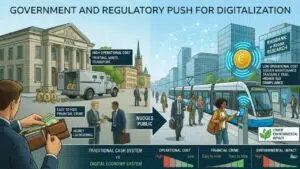
Lawmakers and central banks across Scandinavia have actively nudged the public away from physical bills for years. Printing paper money, minting coins, processing them, and driving them around in heavily armored trucks is incredibly expensive and environmentally taxing. By embracing digital systems, the state cuts massive operational and logistical costs. Furthermore, digital transactions leave a permanent, trackable paper trail. This makes tax evasion, money laundering, and black-market activities incredibly hard to pull off compared to cash-in-hand businesses. The government has a vested financial interest in knowing exactly where money is flowing to ensure taxes are collected efficiently.
While regulators have recently realized they need to protect the small minority of citizens who still rely on cash, their long-term policies have overwhelmingly favored the digital economy. Sweden’s central bank, the Riksbank, realized that private apps were taking over so quickly that the state was losing control over the concept of money. In response, they began heavily researching the e-krona, a central bank digital currency (CBDC). This state-backed digital money aims to keep public currency relevant in a society that no longer wants to carry leather wallets.
| Government Driver | Traditional Cash System | Digital Economy System | Regulatory Benefit |
| Operational Cost | High (printing, transport, storage) | Low (server maintenance) | Massive tax savings for the state |
| Financial Crime | Easy to hide (untraceable cash) | Hard to hide (digital footprint) | Higher tax compliance and less fraud |
| Environmental Impact | High (transport emissions) | Low (digital data transfer) | Aligns with Nordic green energy goals |
4. The Rise of National Mobile Payment Apps
If you want to point to a single, highly visible catalyst for the cashless society here, look directly at the local mobile payment apps. Sweden has Swish, Norway has Vipps, and Denmark relies on MobilePay. These tools were born because rival banks made an incredibly smart decision: they cooperated instead of fighting each other. Rather than launching a dozen separate, confusing platforms that would fragment the market, the major banks pooled their resources to build unified systems. These apps are now so deeply ingrained in daily life that their brand names are universally used as verbs in casual conversation.
Because the apps tie directly to users’ bank accounts and national identification numbers, there is no need to manually “load” a digital wallet or pay middleman fees. Paying a friend back for a movie ticket, donating to a charity, or buying vegetables from a farm stand takes about two seconds. You just type in a phone number or scan a QR code, authorize it with your face or fingerprint, and the money moves instantly. Recently, Vipps and MobilePay even merged into a single corporate entity, paving the way for seamless cross-border mobile payments throughout the Nordic region.
| Payment App | Home Country | How It Works | Current Status |
| Swish | Sweden | Connects phone number to bank account | Used by over 80% of Swedes |
| Vipps | Norway | Instant P2P and merchant payments | Dominates the Norwegian market |
| MobilePay | Denmark | QR code and phone number transfers | Recently merged operations with Vipps |
5. Robust Tech Infrastructure and E-ID Systems
A digital economy is only as safe and efficient as its identity verification process. The Nordic region solved this massive headache years ago by creating powerful electronic identification systems, most notably BankID in Sweden and Norway, and MitID in Denmark. Interestingly, these were developed jointly by the major banks rather than the government. BankID acts just like an official digital passport. Citizens use it for absolutely everything: logging into their bank accounts, signing apartment leases, filing their annual taxes, and securely checking their medical records online.
Because it gives everyone a highly secure and universal way to prove exactly who they are on the internet, the rollout of mobile payment apps was remarkably fast and secure. It completely eliminated the frustrating need to create new accounts and remember dozens of different passwords for every single service. By building a unified digital identity layer first, the banks ensured that when it was time to launch digital payments, the public was already verified, authenticated, and ready to transact safely with bank-grade encryption.
| E-ID System | Primary Region | Issuing Authority | Common Daily Uses |
| BankID | Sweden & Norway | Consortium of major banks | Banking, taxes, signing legal contracts |
| MitID | Denmark | Banks & public sector | Accessing healthcare portals, digital payments |
| Freja eID | Sweden (Alternative) | Private tech company | Age verification, secure logins |
6. Retailers Rejecting Cash Transactions
In many countries, it is strictly illegal for a store to refuse legal tender; if you have the cash, they have to take it. The rules in Scandinavia operate differently. Merchants in Sweden, for example, are legally allowed to reject cash as long as they clearly display a sign stating their policy at the entrance or checkout counter. As digital payments grew in popularity, shop owners quickly realized they could save a massive amount of time and money by ditching cash registers entirely. Managing physical money is a severe burden for small businesses.
Retailers stopped paying staff to stay late and count registers after closing. They eliminated the expensive insurance premiums required for keeping cash on site, and they no longer had to pay armored truck services to securely transport their daily earnings to the bank. Today, thousands of cafes, bars, and boutique shops across the region operate without a single coin on the premises. Even small-time vendors at weekend markets and traveling food trucks exclusively use portable card readers or display QR codes, making the physical cash transaction effectively obsolete in the retail sector.
| Retail Metric | Cash Handling | Cashless Operations | Impact on Business |
| Closing Time | 30-45 mins counting registers | 2 mins to run a digital batch report | Reduces labor costs and overtime |
| Security Costs | High insurance, vault requirements | Low insurance, zero physical theft risk | Boosts profit margins |
| Checkout Speed | Slow (counting change) | Fast (tap-and-go) | Shorter lines and happier customers |
7. Favorable Demographics and Tech-Savvy Populations
The Nordic region heavily benefits from highly educated populations that love getting their hands on new technology early. Digital literacy is a core part of the school curriculum from a young age, and there is a general cultural excitement for making systems more modern and efficient. What makes this area truly unique, however, is that the tech-savviness reaches far beyond the youth. While younger generations obviously prefer digital wallets, older demographics in Scandinavia have also adopted these tools at staggering rates, defying global trends.
The intuitive, simple design of local payment apps like Swish bridged the digital divide that usually leaves older citizens frustrated and left behind. Furthermore, local municipalities and community centers frequently host free workshops to help seniors set up their digital IDs and learn how to use banking apps safely. Because society shifted so decisively, older populations adapted out of necessity, realizing that the new digital tools were actually much easier to manage than walking to an ATM in the freezing winter.
| Demographic | Digital Adoption Rate | Primary Motivator | Usage Pattern |
| Gen Z & Millennials | Near 100% | Speed and absolute convenience | Rarely or never touch physical cash |
| Gen X | 95%+ | Efficiency and budgeting tools | Primary users of mobile bank apps |
| Seniors (65+) | 80%+ | Safety, necessity, and family help | High use of BankID and digital billing |
8. Security Concerns and the Cost of Handling Cash
Physical money is heavy, dirty, and incredibly risky to move around. In the early 2000s, Sweden experienced a massive wave of violent cash-in-transit robberies and spectacular bank heists. The most famous was the 2009 Västberga helicopter robbery, which stunned the nation. In response to the rising violence, the push toward a cashless society gained massive support from labor unions representing retail workers, bus drivers, and bank tellers. These unions aggressively demanded safer workplaces, arguing that removing cash was the only way to stop the armed robberies.
The results of systematically removing physical money have been nothing short of incredible. Bank robberies in Denmark and Sweden have essentially dropped to zero in recent years simply because local bank branches no longer hold any physical cash in their vaults. For businesses and workers, going cashless was just as much about saving lives and reducing workplace anxiety as it was about technological convenience. When there is no cash in the register, there is absolutely no reason for a criminal to hold up the store.
| Security Issue | Era of Heavy Cash Usage | Modern Cashless Era | Result for Workers |
| Bank Robberies | High risk, frequent incidents | Practically zero | Massive increase in workplace safety |
| Transit Heists | Organized crime targeting trucks | Truck routes mostly eliminated | Lower insurance and security costs |
| Retail Theft | Common register skimming/robbery | Digital fraud replaced physical theft | Shift from physical danger to IT security |
9. Seamless Integration of Public Transport and Services
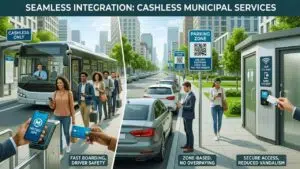
Public transit networks were among the very first institutions to completely ban cash, acting as a massive catalyst for public adoption. Years ago, city planners realized that letting passengers buy tickets with coins slowed down the boarding process for buses and made drivers prime targets for late-night muggings. By pulling cash out of the transit system entirely, they made the buses run faster and kept their employees safe. Today, you buy your transit ticket using a dedicated app or simply by tapping your contactless credit card directly on the turnstile reader.
This extended quickly to other municipal services. Parking meters that took coins have completely vanished from the streets, replaced by apps like EasyPark that charge your card for the exact minutes your car occupies the space. By forcing people to use digital methods for daily, unavoidable tasks like commuting and parking, the cities essentially ran a massive behavioral psychology experiment. They quickly conditioned everyone to leave their physical wallets at home, proving that digital payments worked flawlessly for everyday necessities.
| Public Service | Previous Cash Method | Current Digital Method | Primary Advantage |
| City Buses | Paying driver with coins | App tickets, tap-to-pay | Faster boarding, driver safety |
| Street Parking | Coin-operated meters | Zone-based mobile apps | Pay for exact time used, no overpaying |
| Public Restrooms | Inserting physical coins | Text message billing, card tap | Reduced vandalism of coin boxes |
10. The Shift Toward Open Banking and Fintech Innovation
Stockholm has quietly grown into one of the most powerful and prolific financial technology hubs on earth, often dubbed the “Silicon Valley of Europe.” The region created global heavyweights like Klarna, which completely revolutionized the buy-now-pay-later (BNPL) industry, and iZettle, which gave small merchants mobile card readers long before traditional banks woke up to the need. This thriving environment exists because of forward-thinking open banking rules and a highly supportive regulatory sandbox that allows startups to experiment.
Thanks to European open banking directives (like PSD2), startups can easily and securely plug into existing bank infrastructure to build fresh, consumer-friendly services. Because the population is so willing to try new digital financial tools, Scandinavia acts as the perfect testing ground for fintech companies. They build their products locally, test them on a highly tech-savvy population, and then scale them globally. This constant wave of innovation guarantees that shoppers and businesses in the region always have the fastest, most modern payment tools available.
| Fintech Pioneer | Origin Country | Core Innovation | Global Impact |
| Klarna | Sweden | Buy-Now-Pay-Later (BNPL) integration | Transformed global e-commerce checkout |
| iZettle | Sweden | Smartphone-based portable card readers | Empowered micro-merchants globally |
| Trustly | Sweden | Account-to-account (A2A) payments | Bypassed traditional credit card networks |
11. Cultural Mindset Geared Toward Convenience and Efficiency
At the end of the day, a deep cultural pragmatism drives this entire movement. Scandinavians highly value efficiency, simplicity, and clean design in everything they do—from their furniture to their finances. If a new system works better, faster, and more logically than the old way, people will jump on board without hesitation or nostalgia. Digging around in a pocket for loose change, waiting for a cashier to hand back coins, or physically walking to a bank branch is viewed as an absolute, unnecessary waste of precious time.
Unlike countries like Germany or the United States, where cash is often romantically tied to concepts of personal freedom and privacy, the Nordic mindset focuses on societal efficiency. The public fully embraced Scandinavia cashless banking not because an authoritarian government forced them to, but because tapping a screen simply makes a busy, modern life much easier to navigate. Frictionless experiences are highly prized, and physical cash simply has too much friction to survive in their modern society.
| Cultural Trait | Relationship to Cash | Relationship to Digital Tech | Societal Outcome |
| Pragmatism | Sees cash as heavy and slow | Sees apps as fast and logical | Rapid, complaint-free adoption |
| Minimalism | Dislikes carrying bulky wallets | Prefers everything on one device | Near total smartphone reliance |
| Time Valuation | Hates waiting in checkout lines | Loves instant, self-serve checkout | Highly efficient retail environment |
The Challenges of Moving Towards a Completely Cashless Society
Despite the overwhelming success of this model, the transition is not completely perfect. Pushing physical money out of society has created an entirely new set of modern vulnerabilities that governments are now scrambling to address. When an entire country relies on servers, fiber-optic cables, and data centers to buy daily groceries, a major internet outage or a coordinated cyberattack could theoretically freeze the entire economy in minutes. Governments and central banks are currently rushing to build offline backup systems to handle these exact nightmare scenarios.
Furthermore, completely ignoring cash creates genuine hurdles for specific groups of people. It limits the financial independence of those who struggle with technology or cannot access a standard bank account. While the convenience is unparalleled for the vast majority, ensuring that the system remains inclusive and resilient under pressure is the next great hurdle for Nordic policymakers.
| Challenge Area | Impact on Society | Severity | Proposed Solution |
| Cyber Threats | Hackers could halt retail transactions nationwide. | High | Developing offline-capable digital currencies. |
| Digital Exclusion | Elderly/disabled struggle with smart devices. | Medium | Retaining cash mandates for essential goods. |
| Tourist Friction | Visitors without apps face checkout hurdles. | Low | Wider acceptance of international tap-to-pay. |
For any nation trying to modernize its payment systems, the Nordic region offers the ultimate, battle-tested playbook. The biggest takeaway is that splitting the market into a dozen competing corporate apps ruins consumer adoption. The digital shift worked incredibly well here because rival banks swallowed their pride and teamed up to build single, universally accepted platforms. When everyone uses the exact same system, the network effect makes it unstoppable.
The second major lesson is that you absolutely need a secure digital ID system built first. Without a universally accepted, safe way to verify who is logging in, a cashless system will drown in fraud and consumer frustration. Finally, the transition must feel natural. You cannot just ban cash overnight. The shift happened organically because the tech companies built tools that were genuinely faster and safer than carrying bills.
| Key Lesson | Description | Implementation Strategy |
| Bank Cooperation | Banks must build unified platforms. | Regulators encourage joint ventures over silos. |
| Digital Identity | E-ID is mandatory for safe transactions. | Create bank-grade, universal digital passports. |
| Organic Adoption | Make digital simply better than cash. | Focus heavily on seamless User Experience (UX). |
Final Thoughts
The rapid evolution of Scandinavia cashless banking offers a clear, undeniable glimpse into the future of global money. By combining rock-solid internet infrastructure, deep societal trust, and incredibly smart corporate partnerships, Sweden, Norway, and Denmark have practically engineered physical cash out of existence. They proved that a whole society can function beautifully on digital ledgers and biometric approvals.
While they are now carefully navigating the modern headaches of cyber security resilience and digital inclusion for the elderly, their overwhelming success proves that a frictionless economy is entirely possible. The rest of the world is watching these Nordic nations closely, taking notes on their regulatory moves and technological infrastructure. Ultimately, it is only a matter of time before tapping a screen completely replaces the cash register on a global scale.
Understanding the day-to-day mechanics of a society completely without paper money often brings up some unique, highly specific questions. People who have never visited the region usually wonder how basic, street-level transactions work when coins are obsolete. Below are a few of the most uncommon but highly relevant questions regarding how daily life functions in these heavily digitized countries.
How do homeless people or street vendors make money?
It is a common misconception that street vendors and the unbanked completely suffer without cash. In Sweden, vendors selling the well-known street newspaper Situation Sthlm wear official badges printed with their own unique Swish QR codes. Passersby simply scan the code with their phones to pay the vendor directly. Many independent buskers, flea market sellers, and charity collectors also rely entirely on mobile payment QR codes printed on large cardboard signs.
What happens during a complete power grid failure?
This is currently a massive point of discussion for Nordic defense planners. The Swedish Civil Contingencies Agency actively advises all citizens to keep cash in small denominations at home in their emergency prep kits, just in case. Simultaneously, central banks and tech firms are trying to develop technical protocols that allow mobile phones to securely log offline transactions via Bluetooth or Near Field Communication (NFC) until the national network comes back online.
Can I just use Euros instead of local cash?
Sweden, Norway, and Denmark do not use the Euro as their primary national currency. While a few major tourist shops at the international airports or ferry terminals might accept physical Euros, trying to use foreign physical cash at a local bakery, transit station, or grocery store will absolutely not work. As a visitor, you will need to rely on an international debit or credit card for practically everything.
What is the e-krona project?
Because private retail banks control the mobile payment apps and the digital infrastructure, the Swedish central bank (Riksbank) grew concerned that the state was losing total control over the concept of public money. The e-krona is an ongoing, massive research project into a Central Bank Digital Currency (CBDC). It would essentially be digital cash guaranteed directly by the state government, giving citizens a risk-free alternative to relying entirely on private banking applications.