
What is a Multi-Language Website?
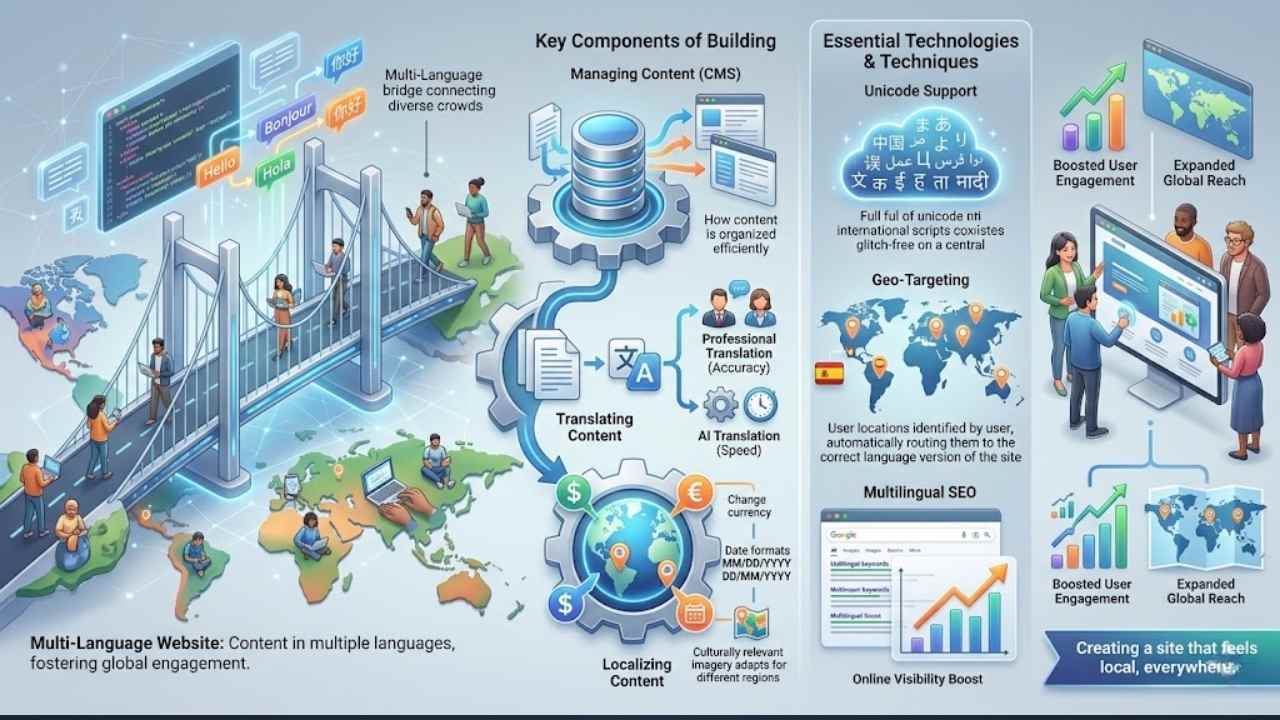
A multi-language website displays content in more than one language. It goes beyond simple translation. Builders manage, translate, and localize content for users worldwide. Think of it as a bridge connecting diverse crowds, like a global party where everyone chats in their own tongue.
You adapt designs for culture too, not just words. This keeps your brand strong and communication smooth. Sites like these aim for seamless access to multilingual information. They engage customers from different regions with ease.
Picture a bilingual website growing into a full multilingual hub, pulling in folks from new markets.
Building a multilingual website involves three key components: managing, translating, and localizing content effectively. – CSA Research
Designers use tools like content management systems (CMS) for dynamic content. Unicode helps handle various scripts without glitches. Professional translation services ensure accuracy, while AI translation speeds things up.
This setup boosts user engagement and online visibility. Geo-targeting directs visitors to the right language version. Search engine optimization (SEO) plays a big role here. Keyword research tailors terms for each locale.
All this creates a site that feels local, no matter where you log in from.
Why Build a Multi-Language Website?
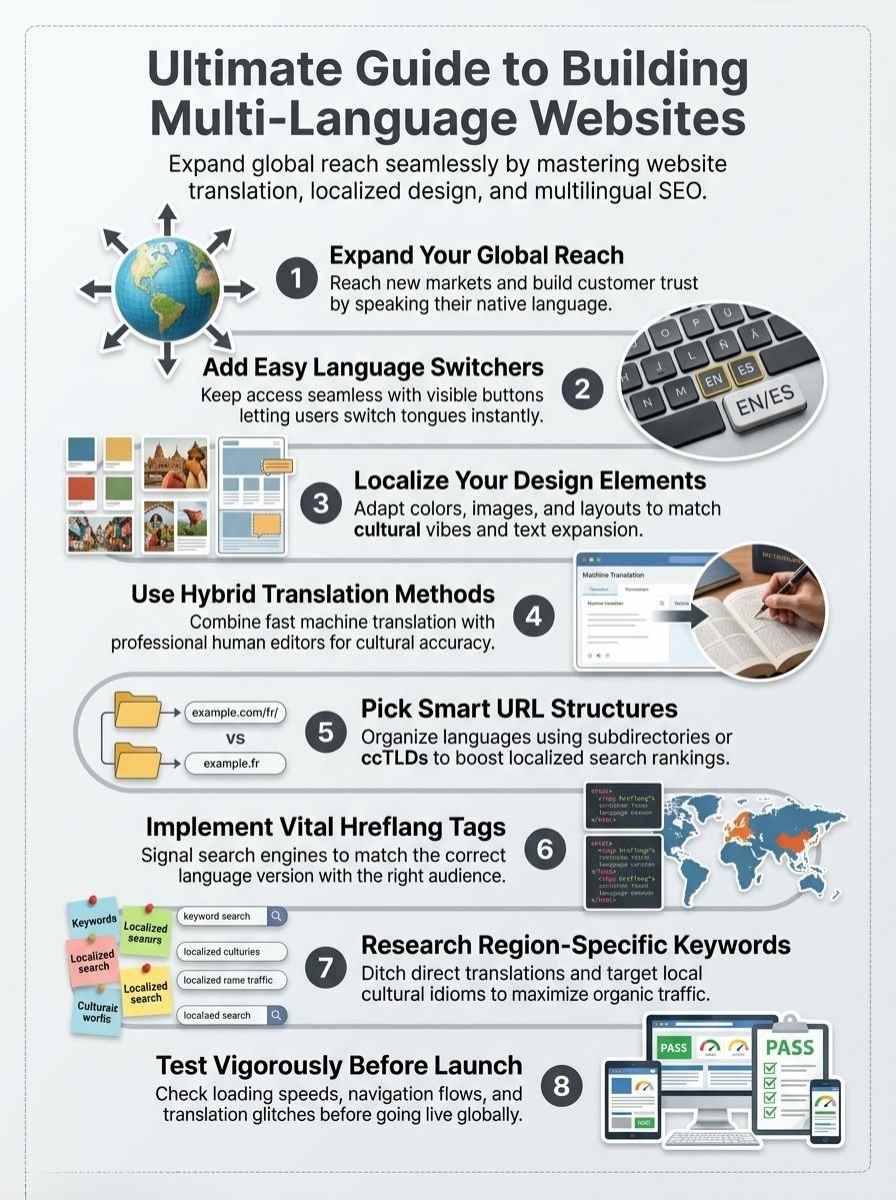
Imagine your site speaking directly to folks in Tokyo or Paris, pulling them in like a friendly chat over coffee, and suddenly your brand feels right at home everywhere. With smart moves in web design and SEO, you open doors to new crowds, spark real connections, and watch your traffic soar, all while dodging those awkward lost-in-translation moments.
Expanding global reach
You want to connect with folks around the world, right? A multi-language website opens doors to the global market, letting you chat with customers in their own tongues. Picture your brand as a friendly neighbor, not a distant stranger; that builds real bonds.
Companies like Google use multilingual websites to boost their reach, and you can too. This setup expands user demographics, pulling in diverse crowds from different regions. Think about it, your site becomes a bridge, crossing oceans without leaving home.
Smart planning makes all the difference here. You manage, translate, and localize content to fit local vibes, accounting for text expansion in various languages. Culture plays a big role too, beyond just words; it shapes how people see your message.
Tools like a content management system (CMS) help handle this, while SEO optimization drives traffic from everywhere. Firms such as Tomedes offer professional human translation, blending it with machine translation for speed.
In the end, this strategy amps up conversion optimization, turning visitors into loyal fans across borders.
Building trust and credibility
Envision a global customer scrolling your site, feeling right at home because you’ve customized it to their language and culture. You build trust by going beyond simple website translation, exploring content strategy that respects local nuances, like how text expands in different tongues.
This approach, part of multilingual website design, shows you care about their world, and also the sales. Consider it a warm handshake across borders; it fosters credibility when users see consistent, comparable versions across languages.
Tools like Semrush help here, boosting SEO while ensuring seamless access to info.
Customers trust brands that communicate clearly, maintaining a strong presence in their native tongue. You achieve this through careful project management, localizing elements with a translation management system for accuracy.
It’s no joke, handling culture in multilingual website development takes planning, but it pays off in loyalty. Envision dodging mishaps, like a joke that flops in translation; instead, you engage folks effectively, proving your site’s built for them.
Boosting SEO performance
Multi-language websites boost SEO by reaching more people across the globe. Search engines love content that speaks to users in their own tongue, so you rank higher in local searches.
Imagine your site popping up first for folks in France or Japan; that’s the magic here. Appsero and Lumin tools help with this, letting you manage CMS content smoothly. You handle keyword research for each language, and suddenly traffic spikes.
Information architecture plays a big role too, as you organize pages with clear wireframes.
Think about hreflang tags; they tell Google which version fits which audience, avoiding mix-ups. Webflow designer makes it easy to add these without headaches. They make design simple for multilingual setups.
Plus, localized link building draws in region-specific backlinks, pumping up your site’s authority. Appen can assist with translation data to fine-tune this. All this planning pays off, turning your site into a global powerhouse that search engines reward.
Key Features of a Multi-Language Website
Think your site as a friendly host at a global party, where a simple button lets visitors flip between tongues like English and Spanish, colors and images shift to match local vibes, and pages load fast enough to keep everyone dancing without a hitch—stick around to uncover how these tricks make your online spot a worldwide hit.
Language switcher functionality
Users love a smooth ride on websites, so imagine: a simple button or dropdown that lets them flip languages in a snap. Language switchers act as your site’s friendly doorkeeper, making sure folks from different spots grab content in their tongue without a hitch.
They boost search engine optimization by signaling to bots like Google that your pages suit various crowds. Think of it as a magic key, opening doors to global chats and keeping your brand’s vibe strong across borders.
Place that switcher up top, maybe in the header, for easy spotting. Tools like appsrow or medium plugins can help set it up fast, but always test for glitches. This setup ties into the big picture of managing, translating, and localizing content, as building a multilingual site demands initial planning to pick smart strategies.
Culture matters here too, beyond words, so adapt icons or flags to fit local tastes and avoid mix-ups. Keep versions comparable for consistency, and seamless access engages customers like a warm handshake.
Localized design elements
Localized design elements make your multi-language website feel like home to users from different cultures. Think about colors, for starters. Red means luck in China but danger in the West, so pick shades that match local vibes to build trust.
Images matter too; swap out a hamburger for a taco in Spanish versions to connect better. Layouts need tweaks because text expands in languages like German, which takes up more space than English.
We account for this in design to avoid messy pages.
Culture drives these choices beyond just words. You adapt icons and fonts to fit regional tastes, like using rounded shapes for a friendly feel in Japan. This boosts seo by keeping visitors engaged longer.
Seamless access to these customized bits helps your brand shine globally. Keep versions comparable across languages for consistency that users love.
Optimized loading speed
Fast sites win the race in today’s web world. Imagine you’re clicking on a multi-language page, and it drags like molasses in winter. Nobody sticks around for that. Optimized loading speed means your site zips along, no matter the language or region.
It ties right into search engine optimization, boosting your SEO rankings as Google favors quick pages. Think about text expansion too, some languages stretch words longer, so you account for that in design to avoid slowdowns.
We manage, translate, and localize content effectively, but speed is key to seamless access.
Keep things humming with smart tricks. Use content delivery networks to serve files from nearby servers, cutting wait times. Compress images and code, folks, it makes a huge difference.
Building a multilingual website takes time and cash, sure, but plan for speed from the start. This ensures easy access to info in all languages, building trust without the frustration of lag.
Culture plays in here as well, adapt designs so they load fast everywhere, maintaining that strong brand vibe.
Translation and Localization Strategies
Picture your website as a friendly tour guide, chatting with visitors in their own tongue, but getting it right takes smart choices. Pick human translators for spot-on cultural tweaks, try tools like DeepL for quick machine help, or blend them in mixed methods to cut costs while keeping quality high—stick around to learn how these paths can supercharge your global site.
Professional human translation
Professional translators bring real skill to your website’s words. They handle nuances that machines often miss, like idioms that don’t translate directly. Think of it as a chef seasoning a dish just right for different tastes.
Culture plays a big part here, not just the language swap. You account for text expansion too, since some languages stretch words longer than others. This keeps your design clean and functional across versions.
Hire pros for that human touch in managing, translating, and localizing content. It costs more and takes time, but the payoff shows in trust from global users. Plan carefully from the start, pick solid strategies, and watch your site’s SEO climb with accurate, region-specific keywords.
Imagine a French visitor feeling right at home; that’s the magic. Teams ensure comparability between language versions, maintaining your brand’s voice everywhere.
Machine translation and its limitations
Machine translation tools, like Google Translate or Microsoft Translator, offer a quick way to convert text from one language to another. They use algorithms to handle the job fast and cheap.
You pop in your content, and out comes a version in Spanish or French. Sounds like a dream for busy site builders, right? But hold on, these tools often miss the boat on nuances. Idioms get mangled, and cultural references flop.
Think of it as a robot trying to tell a joke; it might get the words right, but the punchline falls flat. This can hurt your site’s trust with global visitors, especially if errors slip through.
Limitations hit hard when you aim for top-notch search engine optimization across languages. Machine methods struggle with context, leading to awkward phrasing that expands text unevenly.
Note that some languages need more space? That messes up your design. Plus, they ignore cultural tweaks, which are key for real localization. Building a multilingual website demands more than speedy swaps; it calls for blending these tools with human oversight to manage content well.
Otherwise, you risk confusing users and weakening your brand’s voice in new markets.
Hybrid translation approaches
Hybrid translation mixes machine tools, like Google Translate, with human experts to handle your site’s content. You start with fast automated translations for bulk work, then pros refine them for accuracy and cultural fit.
This approach cuts costs and time, but plan it well since building a multilingual site demands careful management. Picture it as a tag-team effort: machines speed through the rough draft, humans polish the final touches to avoid awkward phrasing.
Culture plays a big role here, beyond just words, so account for text expansion in designs as languages vary in length. Select strategies up front, blending tools for managing, translating, and localizing effectively.
This boosts your seo by making content feel natural in each region, engaging global users without breaking the bank.
Structuring Your Multi-Language Website
Pick the right URL setup, like subfolders for easy management or top-level domains for strong local vibes, to keep visitors hooked. Imagine your site as a global airport, with clear signs guiding folks through menus that switch languages without a hitch, making everyone feel right at home.
Subdomains vs. subdirectories vs. ccTLDs
Let’s talk about picking the right URL setup for your multi-language site, since URL strategy ranks as one of the top 10 best practices for effective multilingual websites.
| Option | What It Means | Pros | Cons | When to Use It |
|---|---|---|---|---|
| Subdomains | You create separate sections like es.example.com for Spanish, fr.example.com for French. This splits languages into their own spaces under the main domain. | Search engines treat them as distinct sites, which boosts localized SEO. You gain flexibility in hosting and design tweaks for each language. Initial planning here helps select strategies that fit your global goals. | Costs more to set up and manage, especially with separate servers. Building a multilingual website takes time and money, so plan this out early. | Go for this if you target specific countries with unique content needs. Think of it like separate rooms in a house, each customized to guests from different places. |
| Subdirectories | You add folders like example.com/es/ for Spanish, example.com/fr/ for French. Everything stays under one main domain. | Easier to maintain since it’s all in one place. Shares the main site’s authority for better overall SEO. Selecting this strategy during initial planning keeps things simple and cuts costs. | Search engines might not separate languages as clearly, which could mix up rankings. Managing content across folders demands careful oversight to match cultures, not just words. | Use it for sites with shared branding across regions. Imagine it as drawers in one big cabinet, organized but connected. |
| ccTLDs | You buy country-specific domains like example.es for Spain, example.fr for France. Each acts as a standalone site. | Builds strong local trust and credibility. Perfect for targeting users in specific countries with fully localized experiences. This approach underscores the need for initial planning to pick strategies that align with regional cultures. | Expensive to buy and run multiple domains. SEO starts from scratch for each one, adding to the time-consuming nature of multilingual projects. | Choose this for businesses with deep roots in certain markets. It’s like owning separate houses in different neighborhoods, each customized to local tastes. |
Multilingual navigation keeps your site user-friendly across languages. It boosts engagement and helps with search engine optimization too.
- Place the language switcher in a spot that’s easy to find, like the top right corner, so users spot it right away and switch without hassle; this ties into making access to multilingual information seamless, which engages customers effectively and builds that strong brand presence you want.
- Use flags or text labels for languages, but lean toward text to avoid mix-ups, since some flags represent countries more than languages; think about culture here, as it’s key in design, not just translation, to show empathy for diverse users.
- Keep navigation menus consistent across versions, with the same structure and links, because comparability in different language setups maintains design consistency and avoids confusing folks who jump between them.
- Localize menu items fully, adapting phrases to fit cultural norms, like shortening or expanding text based on language length needs; this honors the fact that a successful site must localize to regions, making it feel right at home for everyone.
- Integrate hreflang tags in your navigation setup to guide search engines, which amps up your SEO performance by directing users to the correct language version without guesswork.
- Opt for clear URL strategies, such as subdirectories, since this ranks as a top practice for effective multilingual sites; it streamlines how users move around and find localized content fast.
- Test navigation speed on all devices, ensuring quick loads no matter the language, because optimized performance keeps visitors happy and sticking around longer.
- Update navigation elements regularly as content changes, to provide that seamless communication with customers; imagine a user in Japan clicking smoothly to info customized just for them, boosting trust big time.
Multilingual SEO Best Practices
Know your site as a world traveler, speaking fluent French in Paris and perfect Spanish in Madrid, all to charm local search engines. Dive right into using hreflang tags on your pages, pick keywords that fit each culture with tools like Ahrefs, and build links from regional sites to skyrocket your global rankings—ready to make your content a star abroad?
Hreflang tags act as signals for search engines, showing which language and region your web pages target. They help Google direct users to the right version of your site, like sending French speakers to the French page instead of the English one.
Imagine you’re running a global shop, and without these tags, folks in Spain might land on your German content by mistake, frustrating everyone. Search engine optimization relies on them to avoid duplicate content issues, boosting your visibility across borders.
Plus, they tie into best practices like URL strategy, one of the top 10 for effective multilingual sites, while ensuring comparability across different language versions for that consistent feel.
These tags support seamless access to multilingual information, key for engaging customers and building a strong brand presence. You implement them in your site’s HTML code, or through sitemaps if you prefer tools like XML formats.
Culture plays a big role here, more than straight translation, since tags help localize content for regions, accounting for things like text expansion in designs. Think of it as a bridge, connecting your careful planning, from managing and translating content to localizing it effectively, all while keeping the project on track despite its time-consuming nature.
They enhance seo performance by guiding keyword research in various languages, making your site more trustworthy globally.
Keyword research for different languages
Keyword research forms a vital part of multilingual SEO. It helps you connect with audiences in their native tongues, boosting your site’s search engine optimization efforts.
- Start with initial planning by selecting strategies that account for cultural nuances, because culture plays a critical role in multilingual websites, beyond just translating words. Think of it like customizing a suit; one size won’t fit all markets. For example, a phrase that sells in English might flop in Spanish if it ignores local idioms. This ties into the three key components of building such sites: manage content, translate it, and localize it to make everything feel native and engaging.
- Focus on localizing keywords for different regions, since a successful multilingual website needs easy access across languages and adapts to specific areas. Imagine searching for “soccer shoes” in the US versus “football boots” in the UK; those tweaks drive better SEO. Use tools like Google Keyword Planner to spot these variations, and aim for comparability across language versions to keep your brand presence strong and consistent.
- Conduct thorough research using tools such as Ahrefs or SEMrush to uncover search volumes and competition in each language. You know, it’s like mining for gold; some keywords shine bright in French but gather dust in German. Keep in mind the primary goal: seamless communication with customers, which demands keywords that resonate culturally and support strong brand ties.
- Incorporate URL strategies as a top best practice, weaving in localized keywords to enhance multilingual navigation and SEO performance. Say you’re targeting Japan; opt for terms like “kutsu” for shoes instead of direct translations. This approach aligns with making sites accessible and localized, while initial planning helps avoid costly pitfalls down the line.
- Blend in cultural considerations to refine your keyword lists, ensuring they reflect regional preferences and avoid translation blunders. For instance, a holiday term in one culture might offend in another, so test them out. This supports the essential best practice of comparability, keeping all versions consistent and true to your brand’s voice.
- Account for text expansion in keywords, as languages vary in length and can affect SEO layouts. Short English phrases often balloon in German, so choose flexible terms. Tools like Google Trends help here, revealing how expansions impact search engine optimization and user experience across borders.
- Plan for the expense and time of keyword research in multilingual projects, since these efforts demand careful management to yield results. It’s no quick fix, folks; budget wisely to localize effectively. This planning phase sets up seamless access to information, engaging customers in ways that build trust and boost your global reach.
- Prioritize accessibility in your keyword strategy, providing multilingual info without hurdles to draw in diverse crowds. Imagine a user in Brazil clicking away because keywords feel off; fix that with localized research. Such steps maintain the site’s goal of clear communication, all while upholding a solid brand presence through smart SEO tactics.
Localized link building strategies
Localized link building boosts your site’s visibility in different regions. You focus on earning backlinks from sources that match local cultures and languages, tying into strong SEO performance.
- Target local influencers and bloggers in each language market, because culture plays a key role in multilingual websites, not just translation. Reach out with personalized pitches that respect regional customs, like sharing a quick anecdote about how a French food blogger linked to a site’s localized recipe page, driving traffic. This approach builds trust and credibility, as access to multilingual information engages customers seamlessly.
- Submit your site to region-specific directories and forums, incorporating URL strategies as a top best practice for effective multilingual sites. For example, use subdirectories like /fr/ for French content to attract links from local business listings in Paris. Folks often overlook this, but it maintains comparability across language versions, keeping your brand presence strong.
- Create guest posts on local news sites or industry blogs, ensuring the content localizes effectively to different regions. Envision writing an article on eco-friendly tips for a Spanish audience, complete with idioms like “killing two birds with one stone” adapted to fit cultural vibes. This hybrid method, blending human insight with quick checks, supports SEO by earning high-quality links that communicate seamlessly with global customers.
- Partner with local businesses for co-marketing, planning these ties during the initial strategy phase of building your multilingual site. Say you team up with a German retailer for a joint webinar; they link back to your localized page, boosting rankings. Keep in mind this expensive project demands careful management, yet it expands reach when you localize links to cultural nuances.
- Run social media campaigns customized to each locale, using localized hashtags and engaging in community discussions. Consider a funny story where a UK brand’s tweet went viral after linking to their British English site, sparking shares. Such efforts monitor ongoing updates, aligning with the goal of seamless communication while optimizing for search engine performance in diverse markets.
Testing and Maintaining a Multi-Language Website
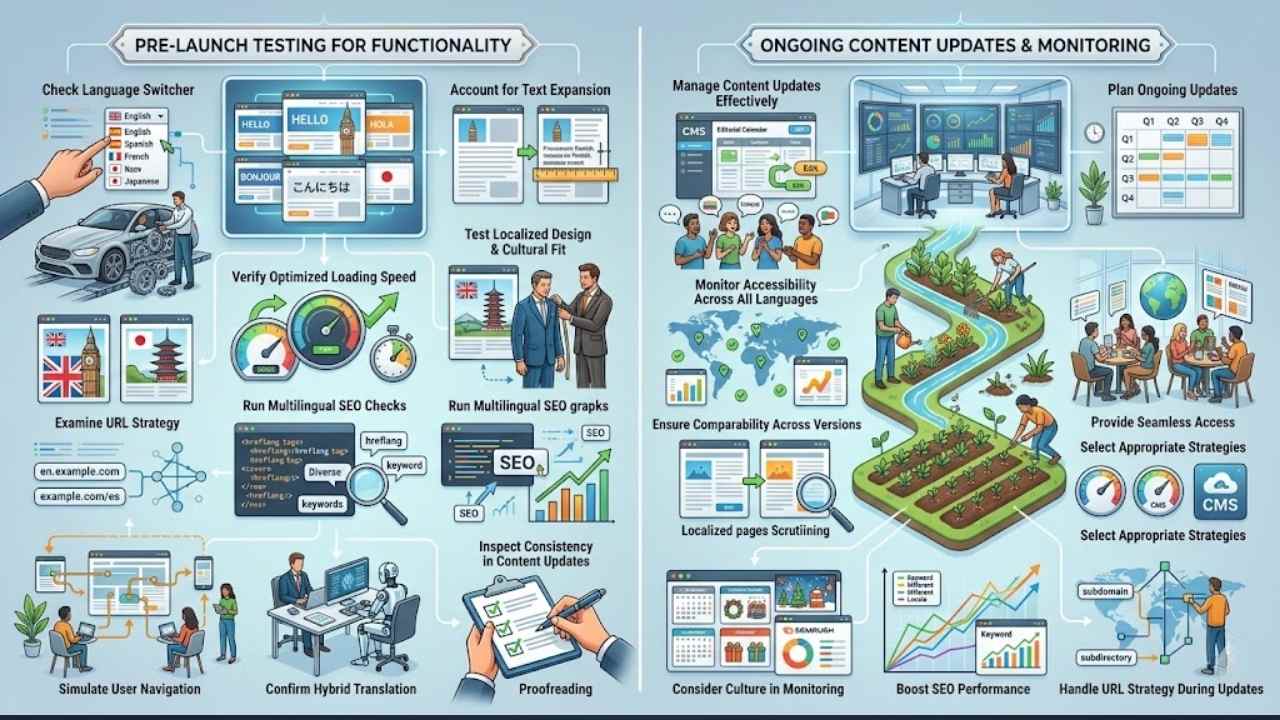
Test your site before launch with cross-browser checks and user trials to catch translation glitches, then monitor performance using tools like Google Analytics for quick fixes on content updates—curious about the details? Dive deeper into our guide.
Pre-launch testing for functionality
You put a lot of work into building a multi-language website. Pre-launch testing checks that everything runs smooth before you go live.
- Check language switcher functionality to make sure users flip between languages without a hitch, like testing a car’s gears before hitting the road, and account for text expansion in translations since different languages vary in length, which ties into effective managing, translating, and localizing content.
- Test localized design elements for cultural fit, because culture ranks as a critical consideration beyond just language translation, and you want to build trust and credibility by ensuring the site feels right in every region, much like customizing a suit to fit perfectly.
- Verify optimized loading speed across all versions, as a successful multilingual website must be easily accessible to all languages and localized to different regions, avoiding slowdowns that could frustrate global users chasing that seamless communication with customers.
- Examine URL strategy options like subdomains, subdirectories, or ccTLDs, since this stands as one of the top 10 best practices for creating effective multilingual websites, and you need to confirm they work without breaking search engine optimization efforts.
- Run checks on multilingual SEO best practices, including hreflang tags and keyword research for different languages, to boost SEO performance and ensure comparability across versions, keeping your brand presence strong no matter the tongue.
- Simulate user navigation to confirm best practices for multilingual paths, providing access to multilingual information seamlessly to engage customers effectively, and this expensive, time-consuming project demands careful management and planning from the start.
- Confirm hybrid translation approaches hold up, blending professional human translation with machine options despite their limitations, as building a multilingual website involves initial planning and selecting appropriate strategies before implementation, like mapping a trip to dodge detours.
- Inspect for consistency in content updates, ensuring ongoing monitoring post-launch, but focus here on pre-launch to catch issues early, aligning with the primary goal of establishing seamless communication while maintaining strong brand presence, you know, like proofreading a letter before sending it out.
Ongoing content updates and monitoring
Keeping your multi-language website fresh demands regular updates. You maintain its edge by monitoring performance, which boosts SEO and user trust.
- Manage content updates as part of the three key components in building a multilingual website, which include managing, translating, and localizing content effectively; this step keeps your site relevant, and it ties into the primary goal of establishing seamless communication with customers while maintaining strong brand presence, like chatting with a friend in their native tongue.
- Plan ongoing updates carefully because creating a multilingual site ranks as an expensive and time-consuming project that requires careful management and planning; think of it as tending a garden, where you weed out old info and plant new seeds to avoid wilting engagement.
- Monitor accessibility across all languages since a successful multilingual website must stay easily accessible to all languages and localized to different regions; for example, use tools like Google Analytics to track user behavior, ensuring no one feels left out in the conversation.
- Provide seamless access to multilingual information to engage customers effectively, much like offering a menu in every diner’s language at a global cafe; this practice supports SEO by keeping content current and comparable across versions.
- Ensure comparability across different language versions as an essential best practice for maintaining consistency in multilingual website design; you check this by reviewing pages side by side, spotting mismatches that could confuse visitors and hurt your brand’s vibe.
- Select appropriate strategies before implementation since building a multilingual website involves initial planning and selecting appropriate strategies before implementation; apply this to updates by scheduling them quarterly, using a content management system like WordPress to streamline the process and dodge costly slip-ups.
- Consider culture in your monitoring, not just language translation, because culture stands as a critical consideration when designing multilingual websites; for instance, track how localized elements perform in tools such as SEMrush, adjusting for holidays or customs that vary by region to keep things relatable and fun.
- Boost SEO performance through regular monitoring of keyword research for different languages; integrate this with updates by analyzing data from search engine optimization tools, ensuring your site climbs rankings like a climber scaling a peak with the right gear.
- Handle URL strategy during updates, as it counts among the top 10 best practices for creating effective multilingual websites; you review and adjust subdirectories or subdomains to maintain smooth navigation, preventing users from getting lost in a maze of links.
Final Thoughts
Frequently Asked Questions (FAQs) on Multilingual Website Development
1. Why should I build a multi-language website, you ask?
You’re reaching out to folks across the globe, like chatting with a neighbor over the fence but in their own tongue; it boosts your SEO, or search engine optimization, by drawing in more visitors who search in different languages. And hey, that means more eyes on your stuff, right?
2. How do I handle SEO for a multi-language site?
Start simple; use tools like hreflang tags to tell search engines which language version fits the user. This keeps things smooth, avoids mix-ups, and lifts your search engine optimization game without the headache.
3. What if my team isn’t fluent in all those languages?
Don’t sweat it; tools like translation plugins can jump in, making the job easier, and always double-check with native speakers to keep it real. Remember, good SEO, that’s search engine optimization, loves accurate content that feels like a friendly chat, not a robot’s ramble. It’s like baking a cake, you want the right ingredients for that perfect taste.
4. Can building a multi-language website hurt my SEO?
Not if you play it smart; duplicate content is the villain here, so make each version stand on its own with tailored keywords. That way, search engine optimization works in your favor, pulling in traffic like a magnet.