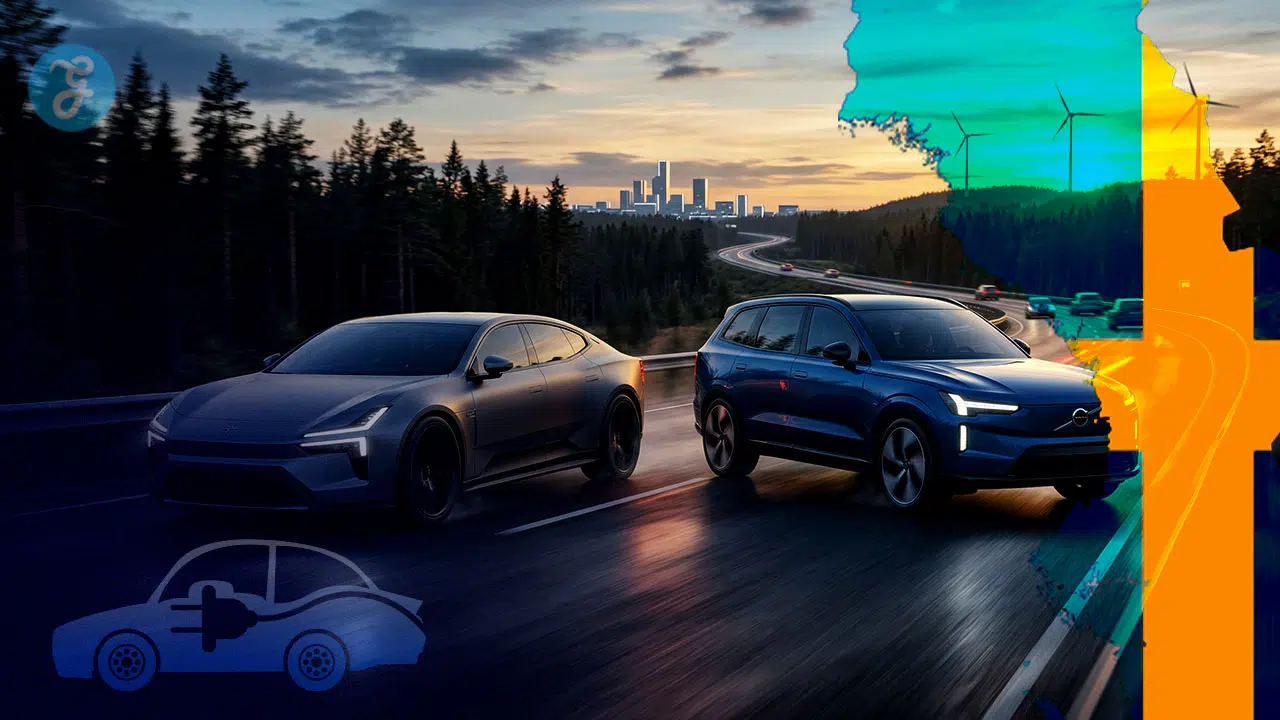
The automotive landscape in 2026 is defined by a fierce transition toward electrification, and Sweden’s premier brands are positioning themselves at the vanguard of this shift. Within this environment, Scandinavian manufacturers are navigating a delicate balance between high-performance innovation and pragmatic market adaptation. By leveraging their heritage of safety and minimalist design, these brands are carving out a distinct space in a market often dominated by larger global rivals.
How We Selected Our 7 Best Volvo and Polestar EV Competition Strategies
To identify the most effective tactics being used by these Scandinavian brands, we evaluated their performance across international markets during the first quarter of 2026. Our selection process focused on identifying moves that address the current “pump anxiety” of consumers while maintaining the long-term goal of total decarbonization.
The criteria below reflect the metrics used to determine which strategic pillars are most effectively driving the global expansion of these Swedish electric vehicles.
| Metric | Focus Area | Impact Level |
| Market Adaptability | Pivot from fixed deadlines to market-led growth | High |
| Technical Architecture | Adoption of 800V charging and core computing | Very High |
| Portfolio Diversity | Range of models from compact SUVs to GTs | Medium |
| Supply Chain Resilience | Diversification of manufacturing sites to avoid tariffs | Critical |
After establishing these benchmarks, we can now examine the specific ways these companies are outmaneuvering their competitors on the ground.
7 Proven Pillars of the Volvo and Polestar EV Strategy for Global Success
Developing a dominant presence in the electric sector requires a blend of high-end hardware and intelligent software management. These seven proven strategies demonstrate how Volvo and Polestar are utilizing their unique strengths to capture market share and redefine what a premium electric vehicle looks like in 2026.
Successful competition starts with the ability to pivot when global market conditions and infrastructure readiness fluctuate.
1. The Pivot to Market-Led Electrification
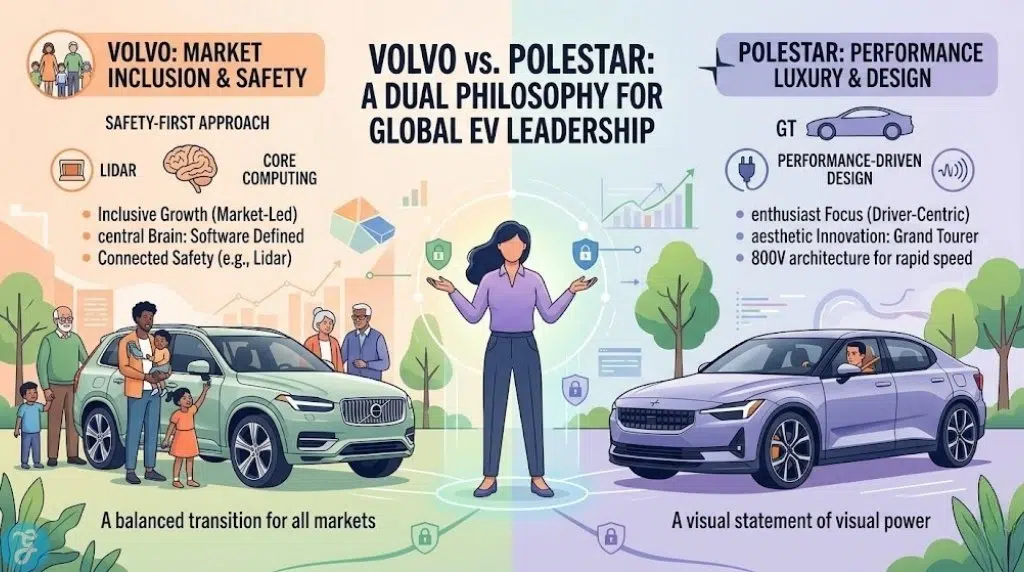
In early 2026, Volvo made the strategic decision to recalibrate its 2030 all-electric deadline in favor of a “market-led” approach. This allows the brand to continue offering high-efficiency hybrids in regions where charging infrastructure is still developing, ensuring they remain profitable while still moving toward their eventual goal of a fully electric future. It reflects the pragmatic economic reality of the 2026 automotive industry by meeting customers where they are currently.
Best for: Maintaining sales volume in diverse global markets with uneven infrastructure.
Why We Chose It:
-
It prevents the financial losses associated with forcing an EV-only lineup prematurely.
-
It allows for a gradual transition that builds consumer trust through hybrid options.
-
It ensures the brand remains viable in regions with slower charging network rollouts.
Things to consider: Some critics argue this may slow the pace of pure innovation compared to brands that are exclusively electric.
While Volvo focuses on a broad market transition, Polestar is doubling down on luxury performance and high-end design.
2. The Performance Luxury Offensive
Polestar has solidified its position as a performance-first brand with the successful global rollout of the Polestar 3, 4, and the new Polestar 5 grand tourer. By targeting the high-end enthusiast market, they are directly competing with established luxury brands, focusing on driving dynamics rather than just utility. The brand identity is now firmly rooted in a “driver-centric” experience that justifies its premium pricing.
Best for: High-income buyers seeking a performance-oriented electric experience.
Why We Chose It:
-
It creates a clear brand identity that is separate from traditional utility-focused images.
-
The Polestar 5 has set new standards for grand touring efficiency and power.
-
High-performance models typically offer better profit margins during economic shifts.
Things to consider: These models are priced significantly higher than average consumer electric vehicles on the market today.
The underlying strength of these vehicles increasingly depends on the digital architecture that manages every function from the cabin to the motors.
3. Software-Defined Vehicle Architecture
A key pillar of the current strategy is the move toward centralized core computing, most notably seen in the latest flagship SUV models. By utilizing high-capacity dual processing systems, these vehicles can handle over 500 trillion operations per second, allowing for real-time safety updates. This transition enables the seamless integration of advanced driver assistance features that improve over the life of the car.
Best for: Ensuring that the vehicle remains current through over-the-air updates for many years.
Why We Chose It:
-
Centralized computing reduces complex wiring and overall manufacturing costs.
-
It enables “connected safety” alerts that warn drivers of hazards on the road ahead.
-
It places the brands at the forefront of the AI-integrated automotive race.
Things to consider: Heavy reliance on software can lead to potential delays if the initial rollout is not perfectly managed.
To keep these high-performance computers and motors running, the brands are revolutionizing the speed at which the cars are fueled.
4. Adoption of 800-Volt Charging Infrastructure
The latest 2026 models have moved to an 800-volt electrical architecture, significantly reducing the “pump anxiety” that has plagued previous generations of electric cars. This technology allows drivers to add substantial range in just 10 minutes, making electric vehicles a viable option for long-distance travel across major highway networks. It represents a critical technological jump to keep up with the fastest-charging competitors globally.
Best for: Frequent travelers who require fast turnaround times during long-distance trips.
Why We Chose It:
-
It significantly improves the overall ownership experience and reduces queueing at stations.
-
Fast charging is the number one feature requested by premium buyers in 2026.
-
It makes electric vehicles a more practical primary car for a wider range of users.
Things to consider: The full benefit is only realized when using compatible high-speed charging stations which are still expanding.
While charging speed is vital for the owner, the way the car is manufactured is essential for long-term environmental goals.
5. Sustainable and Circular Manufacturing
Volvo and Polestar are using sustainability as a primary marketing and operational tool, focusing on low-carbon footprints for their most compact models. They have integrated recycled materials throughout their interiors and are moving toward using fossil-free steel in their construction to meet their climate-neutral targets. This approach appeals to a growing demographic of environmentally conscious consumers who demand transparency.
Best for: Environmentally conscious consumers who demand high transparency in the supply chain.
Why We Chose It:
-
It future-proofs the brands against tightening environmental regulations in global markets.
-
Using recycled materials can lower production costs as the recycling technology matures.
-
It creates a unique aesthetic that is modern, clean, and distinctively Scandinavian.
Things to consider: The total environmental benefit depends heavily on the lifecycle of the battery production process.
Managing these global sustainability goals requires a flexible approach to where these vehicles are actually produced for different markets.
6. Global Production Footprint Diversification
To navigate the complex international tariff environment of 2026, both brands have diversified their manufacturing bases across three continents. With production facilities now active in North America, Asia, and Europe, they can shift supply to avoid the heavy import duties that impact other brands. This diversification protects price stability and ensures availability for consumers in major western markets.
Best for: Protecting price stability and vehicle availability for consumers in tariff-sensitive regions.
Why We Chose It:
-
It mitigates the risks associated with geopolitical tensions and sudden trade shifts.
-
It allows for faster delivery times by producing vehicles closer to the end user.
-
It demonstrates a long-term commitment to local economies and regional labor markets.
Things to consider: Setting up new production lines in different continents is an extremely capital-intensive process.
Finally, the brands are ensuring that their vehicles are accessible through a rapidly growing network of physical touchpoints.
7. Aggressive Retail and Service Network Expansion
The strategy involves record-level expansion of retail points globally to ensure the brands are visible in emerging electric markets. By building “ultra-fast” charging corridors in key regions, they are ensuring that the infrastructure keeps pace with the number of vehicles on the road. This physical presence provides a high-end, low-pressure environment for new customers to experience the technology.
Best for: Consumers who still value a physical space to experience the vehicle before purchasing.
Why We Chose It:
-
It builds a strong brand presence in markets where they are looking to grow share.
-
Dedicated retail spaces provide a more personalized and modern shopping environment.
-
Integrated charging corridors directly address the infrastructure gap for new owners.
Things to consider: Rapid expansion of physical locations requires significant ongoing overhead and staff training.
An Overview Of the Volvo and Polestar EV Strategy
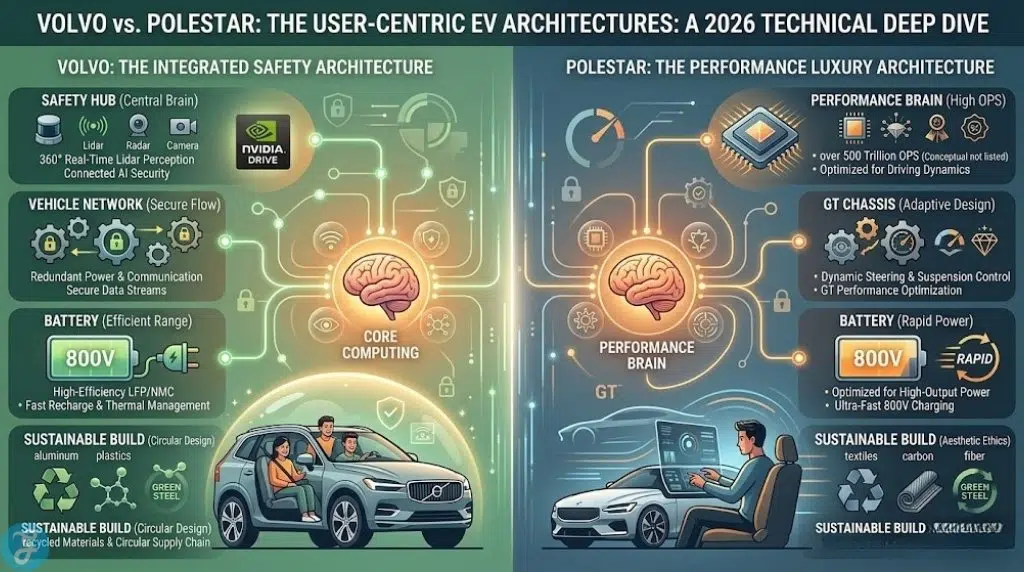
The Swedish approach to electrification is a blend of high-end performance and long-term industrial pragmatism. By analyzing how these two brands work in tandem, we can see a clear path for their continued growth in the global market.
The following information summarizes how each brand is positioned to tackle the specific challenges of the 2026 electric vehicle landscape.
Overview Comparison Table
The categories below summarize the different layers of the national strategy and their current status.
| Strategic Pillar | Volvo Focus | Polestar Focus |
| Core Philosophy | Safety and Market Inclusion | Design and Performance |
| Primary Model | EX90 (Family SUV) | Polestar 5 (Grand Tourer) |
| Tech Lead | Centralized Core Computing | 800V High-Performance Charging |
| Growth Strategy | Hybrid-Supported Transition | Rapid Retail and Brand Expansion |
Following this comparison, it is possible to identify which specific innovations are currently having the most significant impact on the market.
Our Top 3 Picks and Why?
While all seven strategies are important, these three represent the most significant reasons for the current success of the Swedish brands.
-
Market-Led Pivot: This ensures that the brands stay financially healthy during the current infrastructure gap.
-
800V Architecture: This technology removes the primary psychological barrier of slow charging for new owners.
-
Manufacturing Diversification: This is the only way for the brands to survive in the current tariff-heavy global environment.
To understand how to apply these insights to your own purchase decision, it is helpful to look at a structured selection framework.
How to Choose the Right Volvo and Polestar EV Strategy by Yourself?
Deciding which Scandinavian electric vehicle fits your needs requires an assessment of your daily driving habits and your long-term commitment to the brand. By following a structured decision framework, you can determine which model provides the most appropriate balance of performance and utility.
-
Analyze Your Charging Access: Determine if you have access to the high-speed 800V stations required for the fastest recharge times.
-
Identify Your Space Needs: Choose the larger SUV platforms for family utility or the grand tourers for a more personal experience.
-
Assess Your Tech Comfort: Decide if you prefer a safety-focused interface or a minimalist, performance-oriented operating system.
The choice often comes down to a balance between the need for family-sized utility and the desire for a performance-driven grand tourer.
| Choose Volvo if… | Choose Polestar if… |
| You need a seven-seat vehicle for family travel. | You prioritize acceleration and cornering dynamics. |
| Safety technology and Lidar are your top priorities. | You want a vehicle that makes a bold design statement. |
| You prefer a hybrid option while infrastructure grows. | You are ready for a purely electric, high-end brand. |
After determining which brand fits your profile, use the following points to finalize your decision.
The Final Checklist
-
[ ] Test drive the flagship SUV to feel the difference in the centralized steering and suspension.
-
[ ] Verify the location of the nearest 800V fast-charging station to your frequent routes.
-
[ ] Check for the latest 2026 local government incentives for high-performance electric cars.
-
[ ] Review the history of over-the-air updates to ensure consistent software support.
-
[ ] Confirm the production origin of the specific vehicle to understand any tariff-impacted pricing.
Forging the Future of Swedish Performance
The Swedish automotive sector has successfully navigated the turbulent market changes of the early 2020s to emerge as a dominant force in 2026. By choosing a path that respects both the environment and the practical needs of the consumer, these brands are proving that the transition to electric mobility does not have to be a compromise. As they continue to expand their global footprint and refine their 800-volt technology, Volvo and Polestar are set to remain the standard-bearers for Scandinavian design and engineering excellence for the next decade.
Frequently Asked Questions About the Volvo and Polestar EV Strategy
Several questions often arise regarding the specific technical and regional changes these brands have implemented this year.
Why did Volvo shift the 2030 all-electric target?
Answer: Volvo moved to a market-led strategy in 2026 to stay competitive in regions where charging infrastructure is still being built. This allows them to offer high-efficiency hybrids as a bridge for customers who aren’t ready for a full EV.
To further understand the specific models available, many consumers ask about the newest high-performance releases.
Is the Polestar 5 available for purchase in 2026?
Answer: Yes, the Polestar 5 grand tourer has officially arrived in showrooms and on the roads in 2026. It offers a high-performance alternative to luxury sedans with advanced 800V fast-charging capabilities as a standard feature.
Regarding safety technology, there is often curiosity about how these brands maintain their reputation while going electric.
Does Volvo still use Lidar in all its new EVs?
Answer: Lidar remains a standard feature on the flagship EX90 and is being integrated into other models throughout 2026. It is a core part of their centralized computing architecture and advanced safety systems.
Production location is another common topic given the current state of global trade and manufacturing.
Where are Polestar cars currently manufactured?
Answer: As of 2026, Polestar produces vehicles in multiple sites across North America and Asia to ensure they can serve different markets. This diversification helps the brand avoid heavy import tariffs in various regions.
Finally, owners frequently inquire about the compatibility of their vehicles with existing charging networks.
Can I charge a Volvo EX90 at a Tesla Supercharger?
Answer: Yes, in 2026, most Volvo and Polestar vehicles are fully compatible with NACS charging networks across North America. This provides owners with access to the most extensive fast-charging infrastructure currently available.