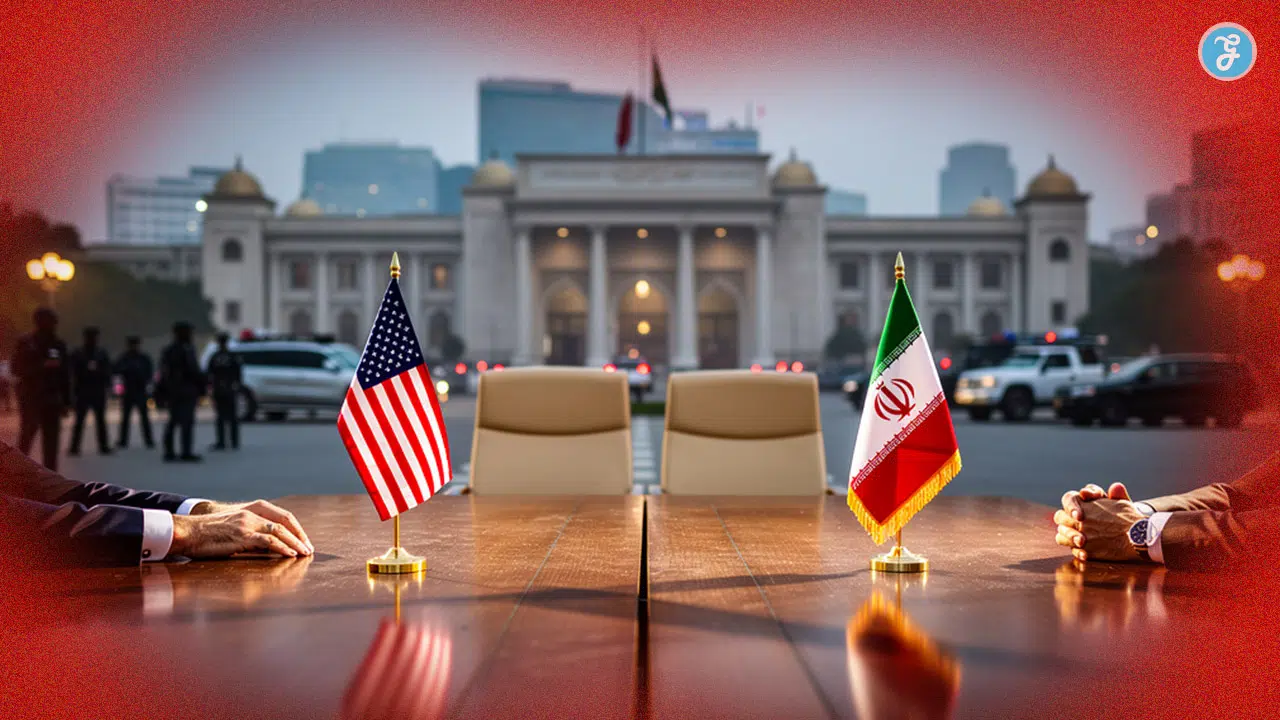
The air in Islamabad is thick with the scent of jasmine and jet fuel. It is a surreal setting for the most consequential diplomatic gamble of the decade. The US-Iran Ceasefire 2026 is no longer just a pause in aerial strikes. It is now a high-stakes auction for the future of global energy. With Vice President JD Vance descending on the capital to meet with Iranian leaders, this is not a sudden bloom of friendship. It is a cold calculation born of mutual exhaustion.
Both nations are currently staring into a fiscal and military abyss. Washington faces an electorate weary of overseas entanglement. Tehran faces an economy gasping for air. The April 2026 truce ended weeks of brutal kinetic exchanges that left infrastructure in ruins and oil prices at record highs.
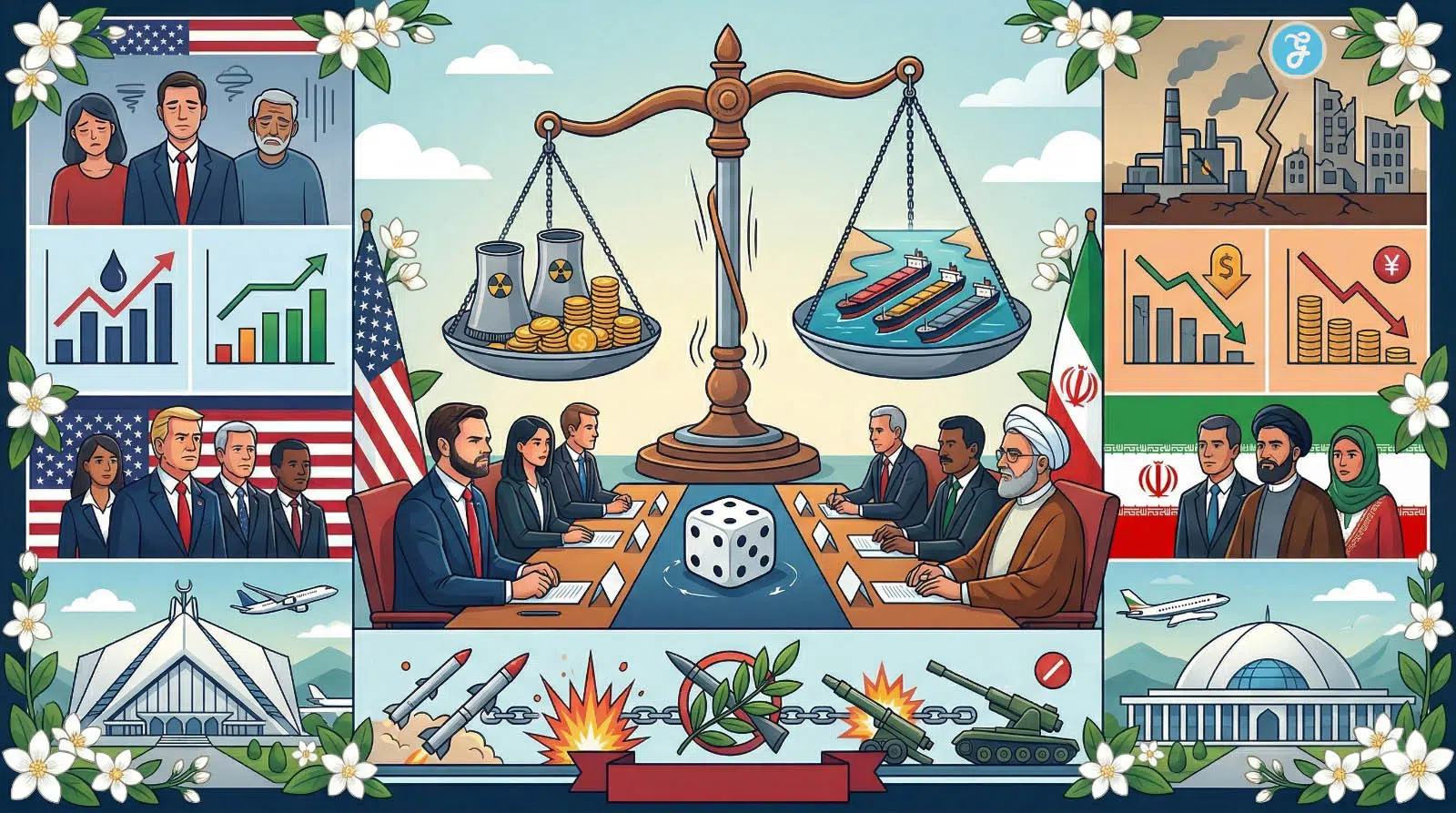
Now the focus shifts to the Islamabad Accord. The terms are simple but staggering. Iran must trade its nuclear dreams for a chance at economic survival. The US must weigh the risk of a nuclear-capable rival against the necessity of a stable Strait of Hormuz.
This summit represents a desperate management of scarcity. It is a pivot away from total war because neither side can afford the bill for victory. The world watches with a mix of hope and profound skepticism. If Vance and the Iranian delegation can bridge the gap, global markets might finally breathe. If they fail, the temporary silence of the guns will merely be the prologue to a much larger explosion. This is the world’s riskiest bet. It is also the only path left on the map.
The Strait of Shadows: Oil as a Weapon of Peace
The Islamabad Accord centers on a strip of water just 21 miles wide. The Strait of Hormuz is currently a graveyard for global commerce. Over 2,000 ships are stranded in the Persian Gulf. This is not just about metal and oil. It is about 20,000 seafarers caught in a limbo of sea mines and drone threats.
The Economic Stranglehold
For weeks, only five ships a day have moved through these waters. Before the strikes, that number was closer to 100. This is Iran’s primary leverage. Tehran calls it regulated passage. In plain English, they want to toll the world’s oil. The US demand is an immediate and total reopening. For the Iranian delegation, the Strait is their only life insurance policy. They know that once the tankers flow freely, the US pressure might return.
The Risk of a Half-Open Door
Negotiators are now haggling over technical limitations. This is a polite term for who keeps their finger on the trigger. Iran has a 10-point plan for sovereignty over the waterway.
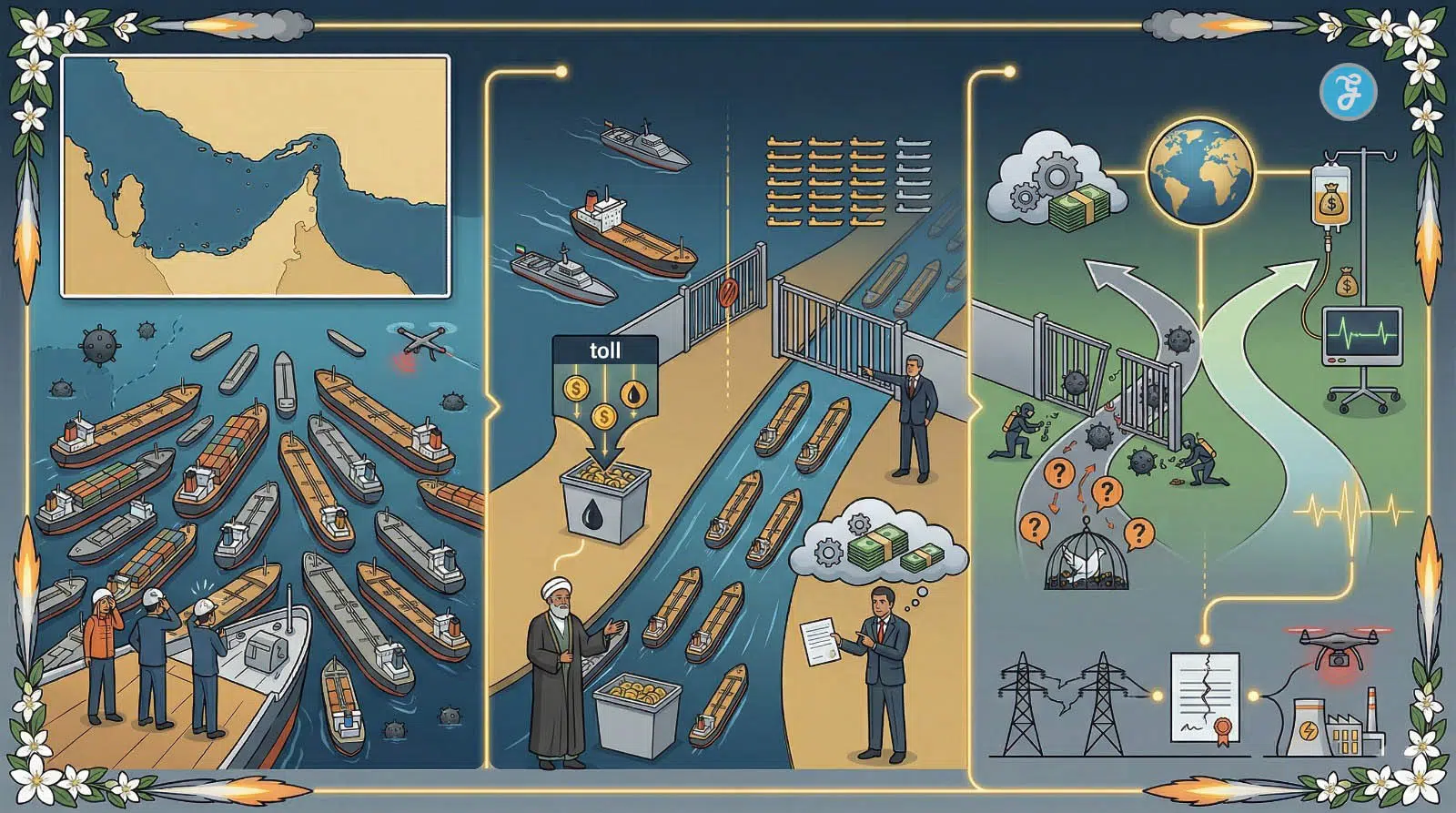
They want to inspect every hull. Washington wants a clear path for every flag. If this summit fails to clear the mines, the global economy remains on life support. The risk is a peace that looks like a blockade. No energy market can thrive on a promise that might break with the next drone launch.
US-Iran Ceasefire 2026: The Vance Khamenei Poker Game
The presence of JD Vance in Islamabad signals a sharp shift in American tactics. Historically one of the most vocal skeptics of foreign military intervention, Vance is the reluctant warrior of the inner circle. By sending him, the US is signaling that it prefers a deal over a continued conflict. This is not the slow diplomacy of the State Department. It is a transactional blitz. Vance is joined by figures like Jared Kushner and Steve Witkoff, and they are treating the Middle East like a distressed asset.
A Real Estate Approach to Geopolitics
This strategy is transactional and high-leverage. It moves away from decades of slow-moving treaties. The team in Islamabad views the map through the lens of a balance sheet. The US delegation wants a Phase 2 settlement within 45 days. This push is backed by a very specific threat. President Trump recently used social media to warn that the ‘Shootin Starts’ if terms are not met. There is no room for polite ambiguity here. The goal is a clear return on the diplomatic investment.
The Two Irans at the Table
On the other side of the velvet table sits a fractured Iranian leadership. Foreign Minister Abbas Araghchi is not just negotiating with JD Vance. He is fighting a desperate rear-guard action against his own hardliners. Reports from regional sources confirm that Araghchi spent hours in high-pressure sessions convincing the Islamic Revolutionary Guard Corps (IRGC) commanders to even permit this pause. There are effectively two Irans at the table. One side is the diplomats who are looking at a bankrupt treasury and seeking economic survival. The other side is a group of veteran generals who view any compromise as a betrayal of the revolution.
The War Within the War
This internal rift recently spilled into the open in a sharp confrontation. President Masoud Pezeshkian has gone so far as to accuse senior Guards commanders of unilateral actions that have nearly wrecked the ceasefire prospects. While Araghchi discusses maritime safety in Islamabad, IRGC Aerospace commanders like Majid Mousavi are publicly touting new missile systems and a new phase of the war. This creates a dangerous paradox for the Islamabad Accord. Success depends on whether the Iranian state can actually speak with one voice. If the diplomats sign a deal that the generals refuse to honor, the Islamabad summit will be remembered as a hollow exercise in performance art. Every handshake Vance makes is a gamble that the man across from him actually has the power to keep the peace.
The Lebanon Asterisk: The Peace That Isn’t
There is a ghost at the table in Islamabad. While negotiators talk in Pakistan, Beirut is still burning. Both US and Israeli officials have been blunt. The Lebanon campaign is not part of this truce. This is the most dangerous flaw in the peace process.
The Hidden Trap
Israel launched its largest strikes in Beirut just hours after the ceasefire was announced. The White House calls this a separate theater. They argue that the fight against Hezbollah is not the same as the war with Iran. This creates an unreasonable reality.
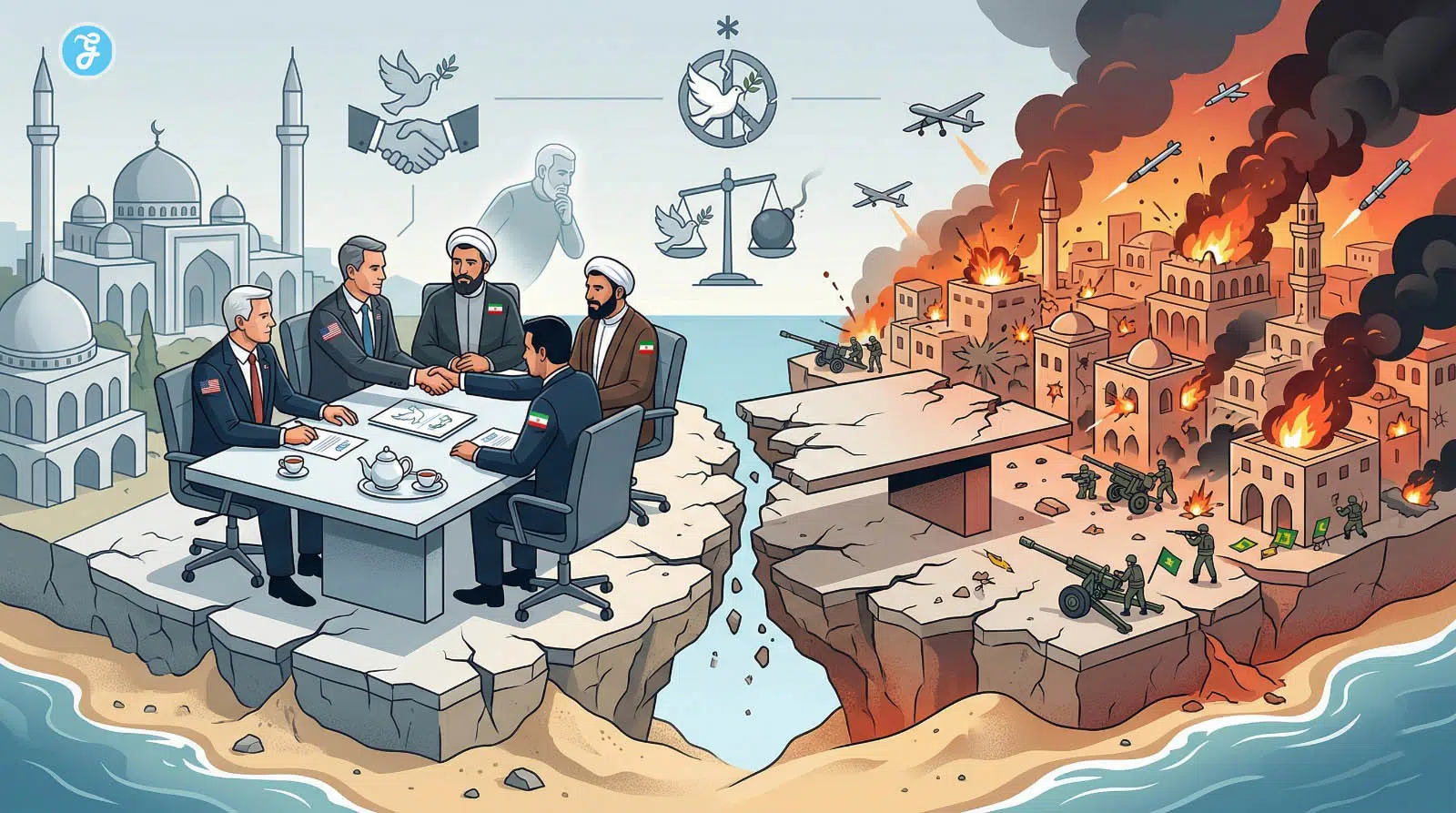
One part of the region is told to stop shooting while the other is hit with 100 strikes in ten minutes. It is a trap for the diplomats. Tehran views Hezbollah as its forward defense. Watching a proxy dismantled while sipping tea in Islamabad is a bitter pill for any Iranian general to swallow.
A Peace Built on Sand
Experts at Al Azhar University warn that these differences are structural. They argue that you cannot decouple these wars. If the Mediterranean is on fire, the Gulf will eventually feel the heat. The perspective here is simple. Any treaty signed in a Pakistani hotel is built on sand if Beirut remains a battlefield. You cannot have a ceasefire with the architect while the building is still being demolished. This is not a resolution. It is a tactical pause that ignores the actual geography of the conflict.
Sanctions Relief vs. Nuclear Silence: The Ultimate Gamble
The math of the Islamabad summit is brutal. Iran is out of cash and the American delegation knows it. This is a zero-sum negotiation where the prize is survival for one side and security for the other.
The Zero-Sum Choice
The demands on the table leave no room for gray areas. Tehran is asking for full war reparations and the immediate unfreezing of billions in global assets. They need this capital to rebuild a power grid and infrastructure shattered by recent weeks of conflict. In exchange, Washington is demanding zero enrichment. President Trump has been vocal about a plan to physically dig up and remove what he calls nuclear dust from Iranian soil. It is a total trade of sovereignty for solvency. Iran wants its money back, but the US wants the very foundation of Iran’s nuclear program gone forever.
Breaking the Historical Cycle
This is not a repeat of the 2015 JCPOA. That deal was about prevention and slow diplomacy. The 2026 summit is about salvage. The fundamental difference lies in the wreckage of 2025. During 12 days of joint US-Israel strikes last year, Iran’s most guarded facilities in Natanz and Fordo were decimated. The goalposts have shifted. In 2015, the world tried to keep a door closed. In 2026, the US is trying to clear the rubble and ensure nothing can be built on that site again. This is not a conversation between two peers. It is an ultimatum delivered to a nation that has seen exactly what the alternative looks like.
The Bitcoin Toll: A New Front in Economic Warfare
The crisis in the Strait of Hormuz is shifting from a military blockade to a digital extortion racket. Beyond the physical presence of sea mines, the Islamic Revolutionary Guard Corps (IRGC) is testing a radical economic theory. Reports suggest that Tehran is attempting to levy a toll of one dollar per barrel on all transiting oil. They are not asking for Dollars or Euros. They are demanding payment in Bitcoin.
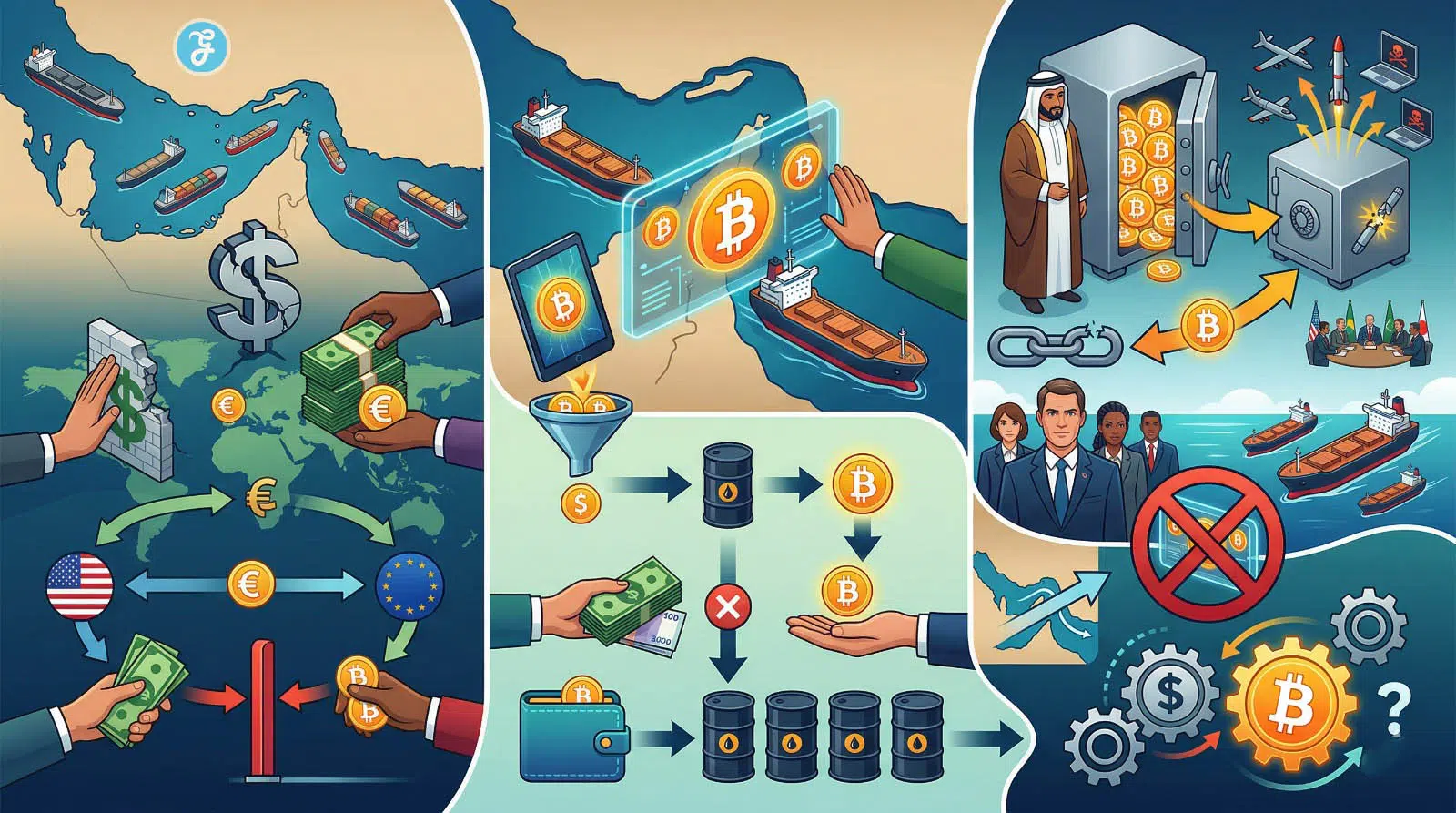
This move is designed to bypass the global petrodollar system. It is a direct challenge to the financial architecture that has governed the world for fifty years. If Iran succeeds, it creates a war chest that is immune to traditional US sanctions. The US delegation in Islamabad views this as a non-starter. For Washington, the freedom of navigation is an absolute right, not a subscription service. This digital blockade is forcing negotiators to discuss the very nature of global trade in the 21st century.
The Mosaic Trap: Who Really Controls the Trigger?
One of the greatest risks to the US-Iran Ceasefire 2026 is the decentralized nature of the Iranian military. The IRGC operates under what experts call a mosaic defense architecture. This means the 31 separate commands across Iran have significant autonomy. While Foreign Minister Abbas Araghchi talks peace in Islamabad, a local commander in a remote coastal province may still be operating under old orders.
This fragmentation is a double-edged sword. It makes the Iranian defense nearly impossible to decapitate with a single strike. However, it also means that Tehran cannot always guarantee that every unit will hold their fire. We saw this in the hours after the truce was signed. Low-level drone strikes continued against Gulf targets. The White House is left asking a difficult question. Is the Iranian leadership unable to control its forces, or are they simply playing a good-cop, bad-cop routine on the world stage? Any deal signed in Islamabad is only as strong as the weakest link in this mosaic.
Fast Facts on the Ground
Negotiators are not meeting in a vacuum. The situation in the Persian Gulf and Islamabad is moving in real time. Here is the data currently shaping the talks.
- The Two-Week Window: The current ceasefire is a temporary 14-day truce that began on April 8. It was brokered by Pakistan to prevent imminent strikes on Iranian civilian infrastructure.
- The Shipping Logjam: Despite the truce, the Strait of Hormuz remains restricted. Only two to three ships transited on April 8, compared to a peacetime average of 60 per day.
- The Human Cost: Approximately 20,000 seafarers are currently stranded on 2,000 vessels in the Persian Gulf. Many have been awaiting evacuation for over a month.
- The Islamabad Teams: Vice President JD Vance leads the US delegation alongside Jared Kushner and Steve Witkoff. They face an Iranian team led by Parliament Speaker Mohammad Baqer Qalibaf and Foreign Minister Abbas Araghchi.
- The Lebanon Gap: While Pakistan claims Lebanon is included in the truce, the US and Israel have denied this. Over 100 airstrikes hit Beirut within 10 minutes just hours after the Iran ceasefire was announced.
- Oil Market Reaction: Brent crude oil prices dropped below 100 dollars immediately following the truce announcement. However, rates remain volatile as the market waits for a permanent reopening of shipping lanes.
The Calculus of Survival
The Islamabad Summit is not a grand finale. It is a high-pressure diplomatic intermission. Both nations are using this time to catch their breath while the world watches with bated breath.
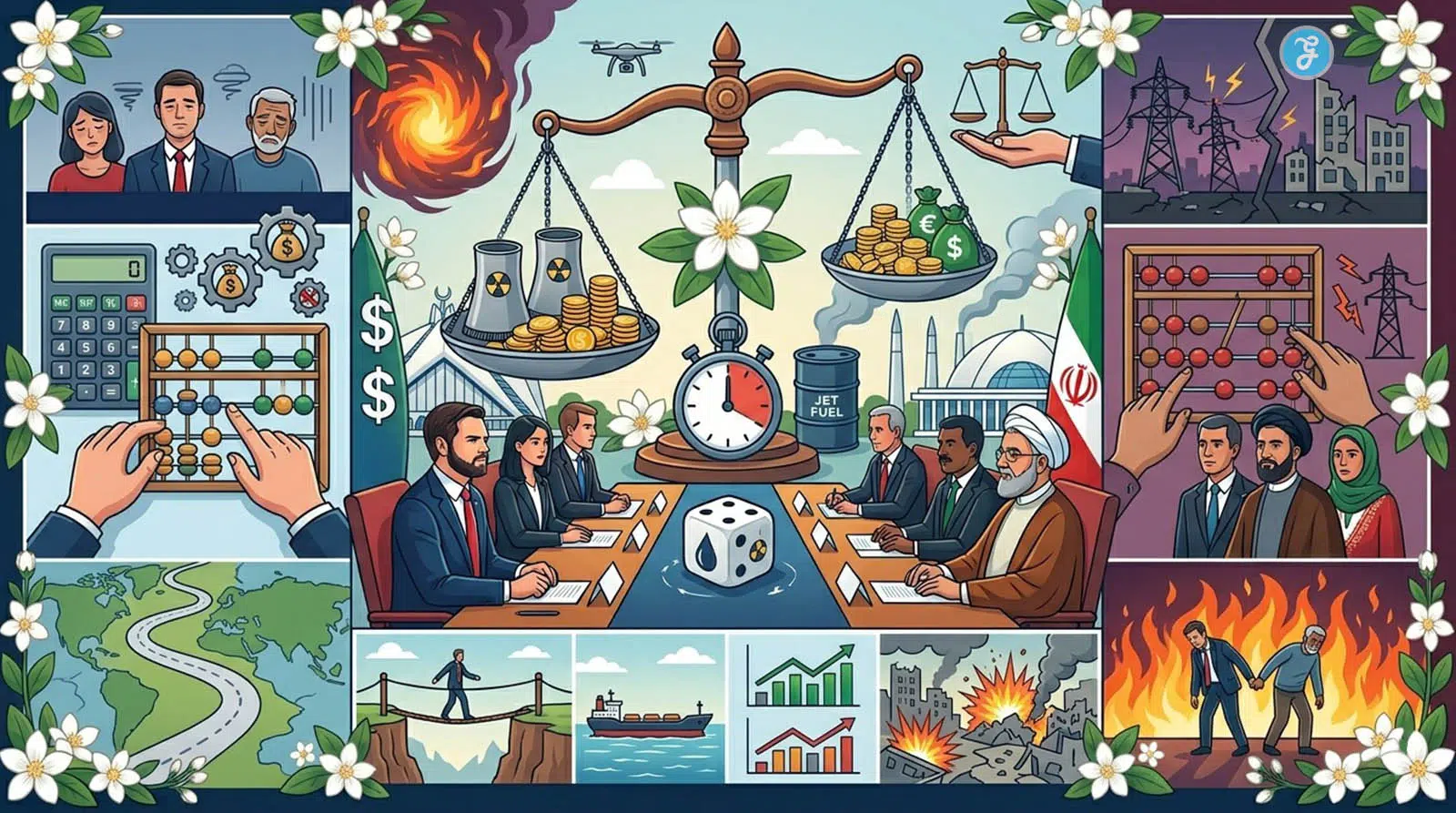
The US-Iran Ceasefire 2026 offers a momentary silence, but that silence is filled with the frantic clicking of calculators as both sides weigh the cost of the next move to avoid global economic collapse.
The Riskiest Bet
This summit is a gamble where the stakes are entire economies and millions of lives. History shows that temporary truces often serve as a prelude to even larger escalations. If the negotiators in Islamabad can find a middle ground, the global energy market might finally stabilize. If they fail, the pause will end with a countdown. It is a fragile moment where a single misstep or a rogue drone could restart the engine of war. For now, the smell of jasmine in the Pakistani capital prevails. But the jet fuel is never far away. Iran demands transit fees and the withdrawal of regional combat forces, while Washington insists on nuclear constraints and immediate reopening of the Strait of Hormuz to restore global oil flow.
The Only Path Left
The world is betting on this peace because the alternative, total regional collapse, is a price that neither Washington nor Tehran can afford to pay. The US electorate is tired of distant conflicts. The Iranian state is exhausted under a broken power grid and a shrinking economy. This is a peace born of necessity and paved with deep skepticism: a narrow path forward, but the only one left on the map. We are watching two exhausted rivals realize that while they cannot be friends, they can no longer afford the fire.
Disclaimer: Editorialge maintains a steadfast commitment to responsible reporting on the evolving conflicts in West Asia involving Israel, Iran, U.S., Gulf nations and non-state actors like Hezbollah, Hamas, Houthis, Islamic State, and others. In an environment where digital disinformation is widespread, we cannot independently verify every social media post or claim involving national and non-state actors. Our priority remains factual accuracy and the exercise of extreme caution when documenting all regional media.