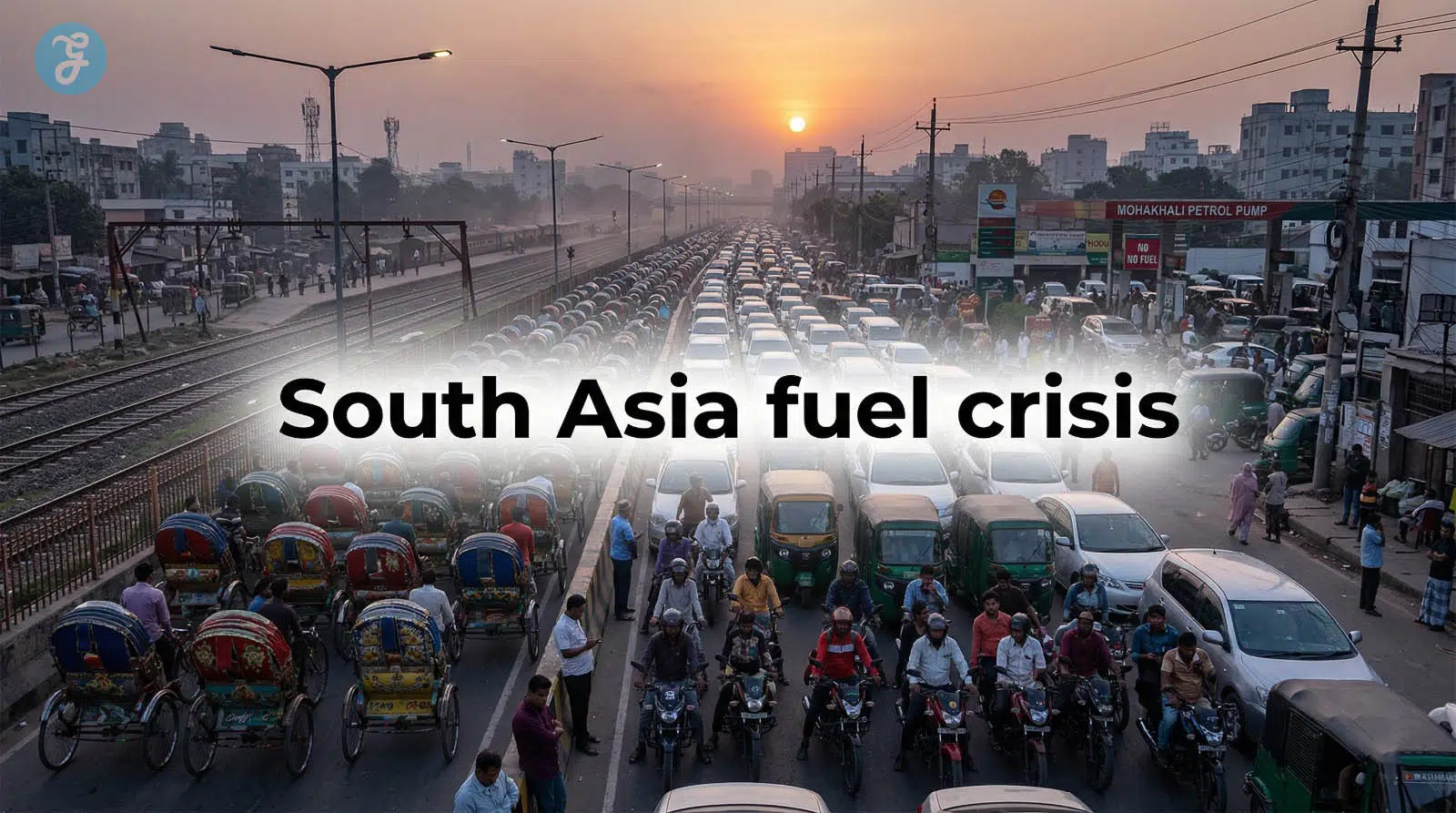
The sun has not yet touched the smoggy horizon of Dhaka. Already, the line at the Mohakhali petrol pump stretches past the railway tracks. Rickshaw pullers lean against their painted carriages. Commuters check their watches with practiced anxiety. In Karachi, the scene is a mirror image. This South Asia fuel crisis has forced motorcyclists to switch off their engines while they wait, conserving every possible drop of fuel. This is the new morning ritual for millions. It is a quiet, desperate vigil for a resource that has suddenly become a luxury.
For decades, the global energy market felt like a distant machine. Today, that machine has broken down in the Strait of Hormuz. As tensions around the chokepoint escalated earlier this month, pushing the narrow waterway toward a de facto closure, it did not just move stock tickers in New York. It stopped the pulse of South Asian cities. More than 20% of the world’s oil and a huge chunk of its liquefied natural gas pass through that chokepoint. Now, that flow is a trickle. Brent crude has soared past $106 a barrel, peaking as high as $120 in early March. In the streets of New Delhi and Colombo, the math is simple and brutal. Life has become too expensive to afford.
South Asia is uniquely vulnerable. India imports nearly 90% of its oil. Pakistan and Bangladesh are not far behind. When the Strait fell silent, the regional safety net vanished. This crisis differs from the 2022 shock. Back then, the world lacked crude oil. Now, the problem is getting refined fuel to the pumps. Diesel and jet fuel stocks are plummeting. The natural gas shortage is even more acute. Qatar has suspended many deliveries. For a region that banked its future on gas, the timing is catastrophic. Power plants are idling. Fertilizer factories are running at 70% capacity. The energy transition was supposed to be a bridge to the future. Instead, the bridge is on fire.
The Anatomy of a Chokepoint
South Asia sits at the mercy of a narrow stretch of water. The global energy market relies on a clockwork flow of tankers. When that flow stops, the regional economy stops with it. This is a vulnerability built over decades of import dependency. The current crisis has exposed how quickly these supply lines can snap.
The Numbers Behind the Crisis
The statistics are staggering. India imports between 85 and 90 percent of its crude oil. Pakistan relies on foreign tankers for roughly 85 percent of its supply. Bangladesh faces the steepest climb, importing a massive 95 percent of its petroleum needs. When the Strait of Hormuz went quiet, these nations lost their primary lifeline overnight.
Why This is Not 2022
Many compare this shock to the 2022 Ukraine crisis, but the mechanics are different. Back then, the world moved crude oil through new pipelines and diverted tankers. Today, the wall is at the refinery level.
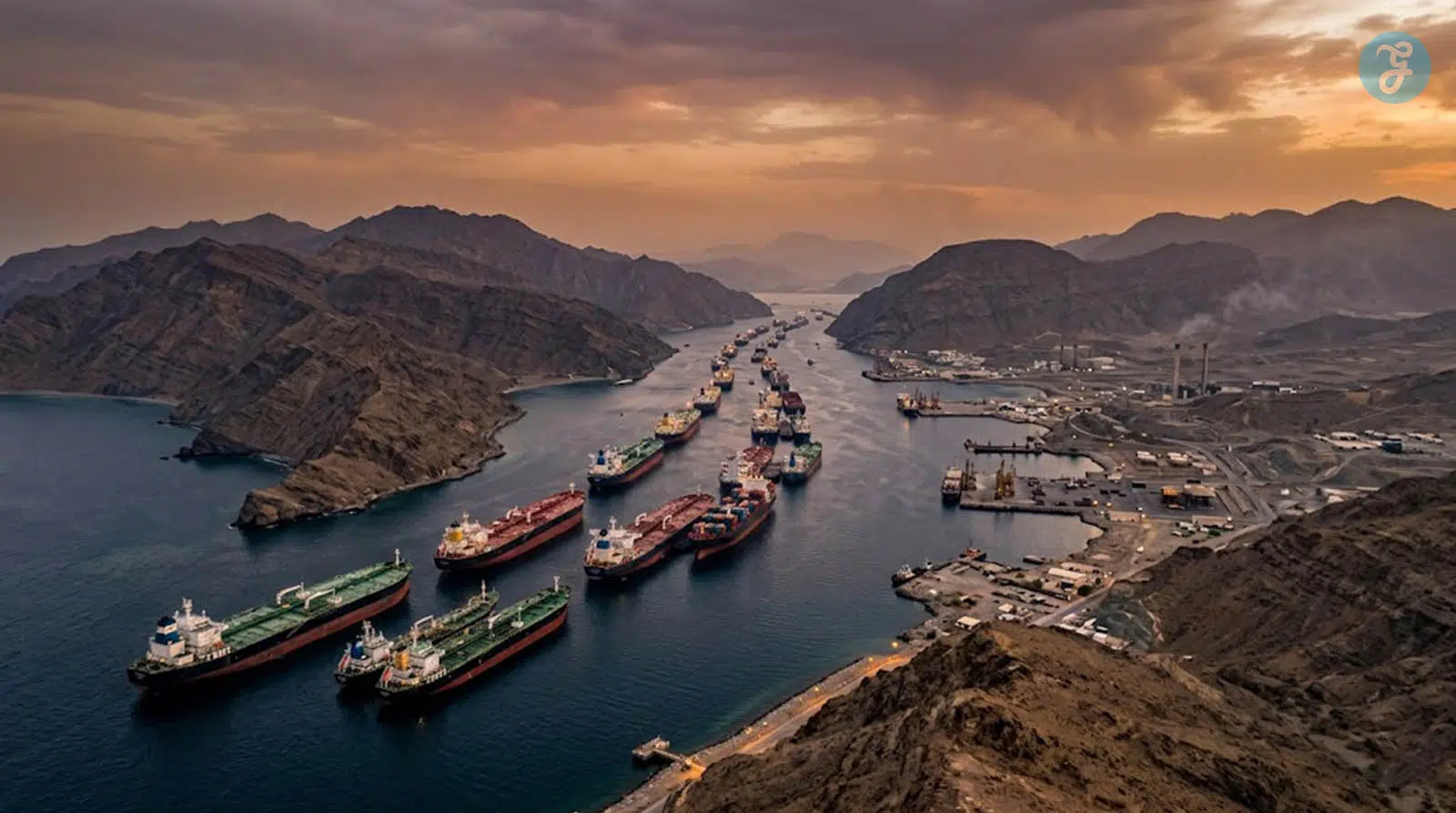
While crude oil has strategic buffers, refined products like diesel and jet fuel have no alternative routes that make economic sense. You cannot simply swap out a specialized diesel tanker for a raw crude carrier. The finished fuel that powers delivery trucks and passenger planes is trapped behind a geopolitical blockade.
The LNG Disaster at Ras Laffan
The collapse of the “clean energy” bridge adds a second layer of pain. South Asian governments spent billions transitioning power plants to Liquefied Natural Gas. That gamble broke when the strike hit Qatar’s Ras Laffan complex. As the heart of the global LNG supply chain, the damage there instantly choked deliveries to Asian ports. Factories cannot easily switch back to coal, and power grids are failing. The region staked its growth on one fragile supply line, and now the backup plan has literally burned down.
National Snapshots: A Region Under Pressure
The crisis is not a distant threat. It is a daily reality in the homes and markets across the continent. Each country faces its own unique trial by fire as this regional fuel crisis tightens its grip on the global economy.
India’s Balancing Act
New Delhi is navigating a complex energy and economic storm as West Asian supply lines falter. State-owned oil companies are currently absorbing heavy losses to prevent retail fuel spikes. However, fertilizer plants are operating at only 70 percent capacity, which directly threatens food security for upcoming harvests. In response, the government has launched the Bio-E3 policy to promote biomanufacturing and reduce fossil dependence. Prime Minister Narendra Modi has emphasized coordination with state leaders to curb hoarding and increase commercial LPG allocation. While reducing excise duties helps, the administration stresses that robust state-center coordination is the only way to safeguard citizens during these pressing challenges.
- Fiscal Shield: State-owned firms are absorbing massive losses to insulate consumers from global price volatility.
- Agricultural Risk: Reduced fertilizer production capacity directly endangers the national food security chain.
- Bio-E3 Policy: A strategic pivot toward biomanufacturing to create a self-reliant circular economy.
- Administrative Vigilance: High-level coordination to prevent black marketing and optimize LPG distribution.
Pakistan’s Austerity Measures
The situation in Pakistan has shifted to a wartime footing. To save energy, the government recently mandated a four-day work week for public offices. Some sectors have even seen 25 percent salary cuts to manage the fiscal strain. This is more than an economic adjustment. It is a severe test of the social contract. When energy rationing becomes the new normal, the divide between the elite and the working class grows. In cities like Lahore, the darkness of scheduled blackouts is a constant reminder of a system under siege.
- Operational Scaling: Implementation of a mandatory four-day work week for all public sector offices.
- Fiscal Compression: Drastic salary cuts across specific departments to manage dwindling reserves.
- Social Strain: Growing disparity between different economic classes during mandated energy rationing.
- Infrastructure Siege: Widespread and scheduled power outages impacting major industrial and residential hubs.
Bangladesh’s Educational Halt
In Dhaka, the cost of the crisis is measured in lost potential. The government has shut down public and private universities to conserve electricity. Even schools following foreign curricula have suspended classes. This is a symbolic blow to a nation that prides itself on upward mobility. Panic buying has taken hold in local markets. Families are stockpiling kerosene and candles. This rush for essentials has sent local inflation into a vertical climb. What began as an oil shortage is now a full-scale cost-of-living crisis.
- Educational Deficit: Indefinite closure of universities and private schools to lower the national power load.
- Market Panic: Widespread stockpiling of alternative fuel sources like kerosene and candles.
- Inflationary Spiral: Rapid price increases for basic essentials driven by supply chain disruptions.
- Socio-Economic Shift: The transition from a specific energy shortage to a general cost-of-living emergency.
Sri Lanka’s Fragility
Sri Lanka was just beginning to find its footing after years of economic turmoil. Now, an 8 percent fuel price hike has hit the island. The recovery is fragile and heavily dependent on neighbors. Lifeline shipments from India are the only thing keeping the lights on in Colombo. Without these bilateral energy transfers, the transportation sector would likely collapse. The island remains a vivid example of how quickly energy insecurity can undo years of hard-won progress.
- Price Shocks: A sudden 8 percent hike in retail fuel prices further straining a recovering economy.
- External Reliance: Critical dependence on Indian credit lines and shipments for basic electricity and transport.
- Recovery Threat: Energy instability actively reversing the modest gains made in post-crisis restructuring.
- Transport Gridlock: Heightened risk of a total collapse in the public and commercial transportation networks.
The Ripple Effect: Beyond the Gas Tank
The crisis does not stop at the gas station. It flows through every artery of the economy. When the price of diesel climbs, the cost of a bag of rice follows. In South Asia, trucks move almost everything. Higher fuel costs mean higher freight rates. This hits the dinner table instantly. Even a simple packet of noodles becomes more expensive. Most food packaging relies on petroleum-based plastics. Manufacturers now face a double hit from transport and raw materials. Families are forced to make hard choices between commuting to work or buying enough protein for the week.
Industrial Stagnation
The manufacturing heart of the region is beginning to seize up. In Bangladesh and Pakistan, the textile sector is the primary source of foreign currency. Now, these massive mills face rolling blackouts and gas rationing. Without steady power, they cannot meet global export deadlines.
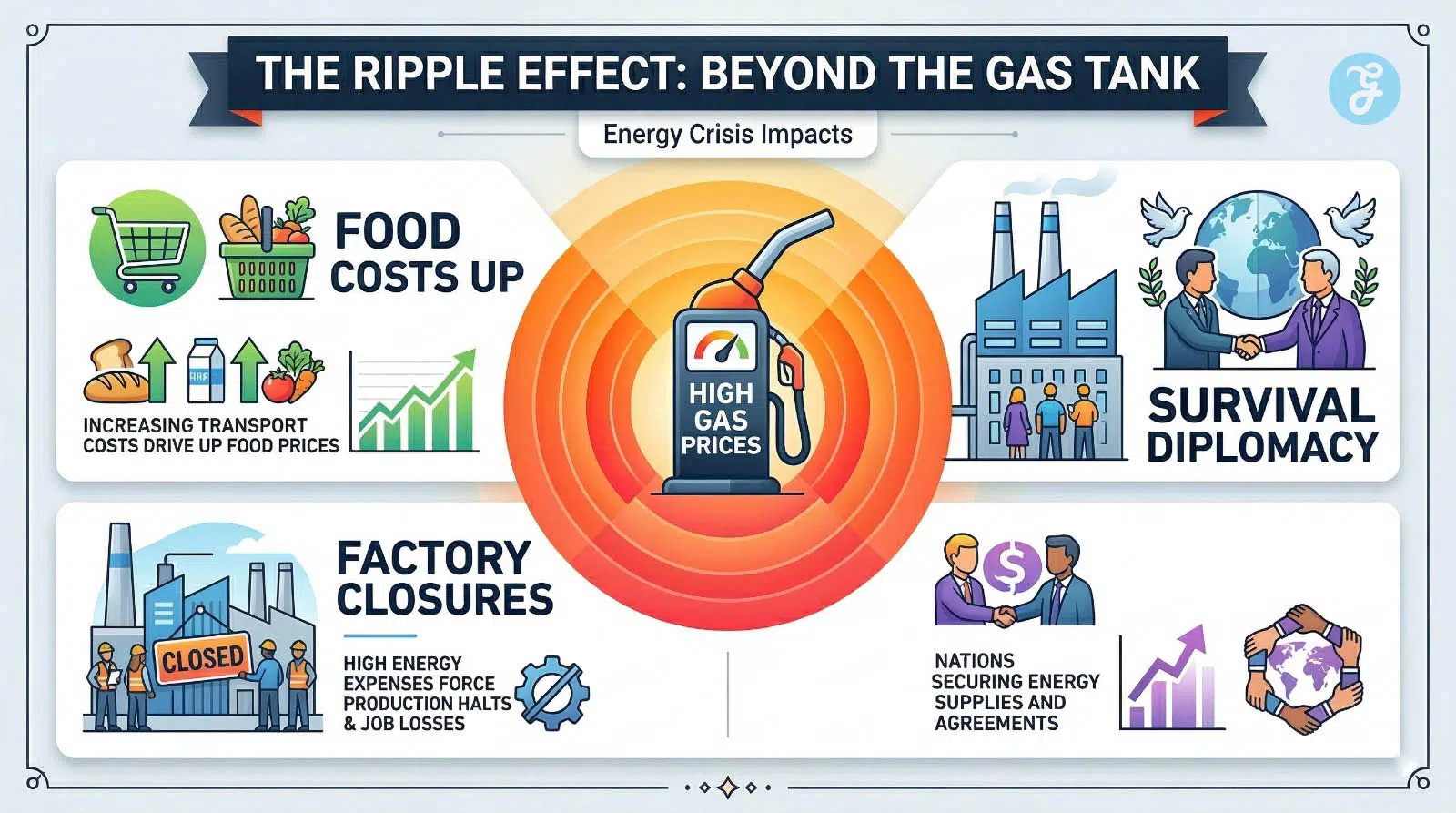
The ceramics industry is in a similar bind. Kilns require constant, high heat that only natural gas provides. When the gas stops, the production line dies. Reduced output is no longer just a boardroom concern. It is leading to widespread layoffs. For a worker in Faisalabad or Gazipur, energy insecurity means a lost paycheck.
Geopolitical Friction
Scarcity is a brutal teacher in diplomacy. The current energy void is forcing South Asian capitals to rethink their alliances. Relationships are being tested as nations compete for the few remaining spot market shipments of LNG. This pressure is driving a “look north” shift toward Russia. Both India and Pakistan are exploring long-term, discounted oil deals to keep their economies afloat. At the same time, some are looking west, trying to balance ties with Gulf nations while navigating the fallout from the Iran conflict. These are not just trade deals. They are survival tactics.
The ongoing South Asia fuel crisis is redrawing the map of influence in the region. Traditional partners are being weighed against the immediate need for heat and light. If regional cooperation does not improve, these diplomatic shifts could become permanent. The quest for energy is no longer just about economics. It is now the primary driver of national security policy.
The Failure of Policy and the Path Forward
Short-term fixes are like putting a bandage on a broken limb. Releasing emergency oil reserves provides a few days of relief at best. It does not fix the underlying dependency. For too long, South Asian leaders have reacted to crises rather than planning for them. This reactive cycle keeps the region tethered to volatile global markets. The South Asia fuel crisis has proven that true energy security requires a shift from survival mode to a long-term vision.
Regional Cooperation: The One South Asia Grid
The “One South Asia” energy grid is no longer a theoretical debate. It is a necessity. India and Sri Lanka are already building an undersea power link. This project serves as a perfect blueprint for the rest of the neighborhood. By connecting national grids, countries can share surpluses of hydro or solar power.
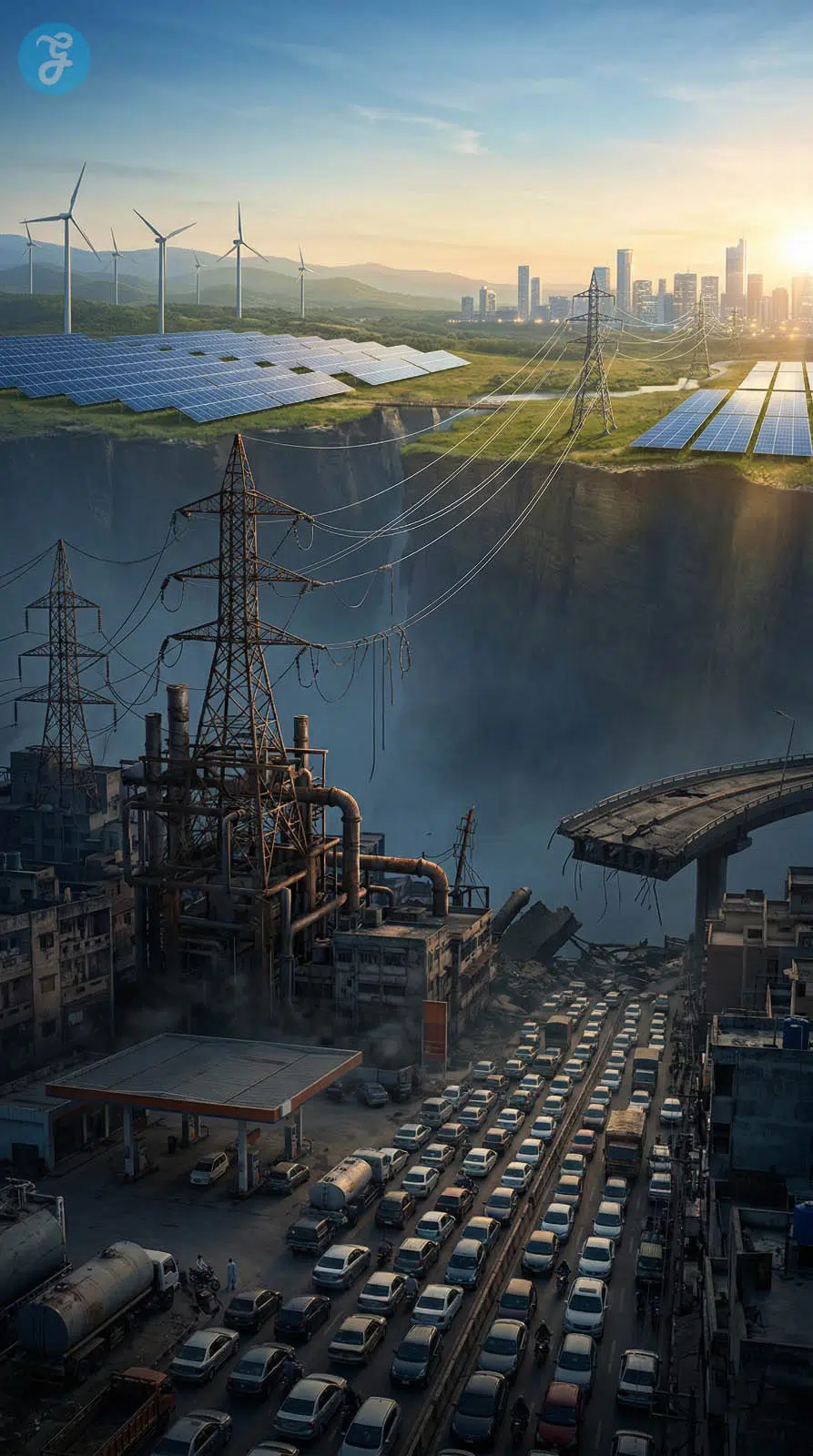
A unified grid would allow energy to flow from where it is produced to where it is needed most. Political friction has blocked this progress for decades. Now, the cost of that friction is visible at every dark storefront and idle factory.
The Renewable Mandate
Solar and wind power are often treated as environmental luxuries. In the current climate, they are tools for national sovereignty. Every kilowatt generated by a local solar farm is a kilowatt that does not have to pass through the Strait of Hormuz. Moving toward renewables is not just about meeting carbon targets. It is about cutting the cord of import dependency. Domestic energy production is the only way to insulate the economy from Middle Eastern conflicts. It turns natural resources into a shield against global price shocks.
Closing the Investment Gap
The biggest hurdle is the price tag. Transitioning to a green economy is expensive. Experts estimate that South Asia needs roughly $27 billion in annual investment to make this shift happen. This sounds like a massive sum, but the cost of inaction is higher. The region is already losing billions in lost industrial output and inflation. Financing this transition requires new partnerships with global lenders and private investors. If the money does not flow into renewables today, it will continue to leak out through high fuel bills tomorrow.
A Vision Beyond the Chasm: Preventing Regional Stagnation
For decades, South Asia has been a passenger on a global energy vessel it does not steer, building modern economies on the shifting sands of imported fuel. The darkness in Lahore and the silent campuses in Dhaka are not merely failures of trade; they are a collective awakening to the reality that true sovereignty cannot be bought on the spot market. Energy security is the bedrock of social stability. When a grid fails, trust in the government flickers and dies alongside the streetlights.
The current situation is a final warning. If regional leaders continue to prioritize old bilateral squabbles over shared survival, South Asia risks a decade of lost growth. Waiting for the Middle East to stabilize is a losing strategy. The shift toward self-reliance, requiring an estimated $27 billion annually, is not just a policy choice; it is a survival mandate.
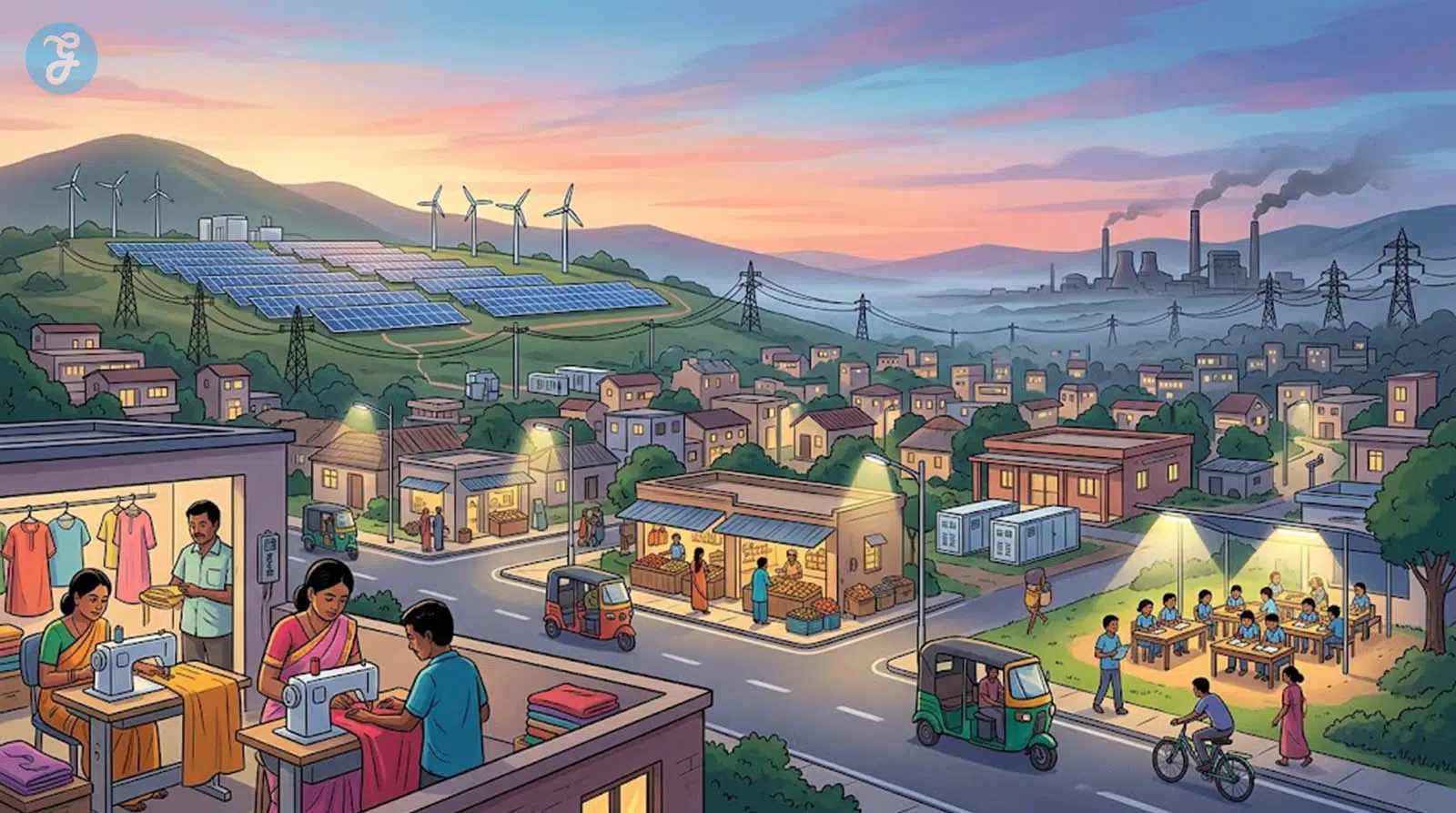
Coordination on regional pipelines, shared grids, and joint renewable projects must happen now so that a spike in Brent crude does not dictate whether a child misses school or a factory worker loses their job. When the lights eventually come back on, will we realize that the greatest threat to our sovereignty was not a closed strait, but our own refusal to plug into our neighbor’s grid?
As the sun fully rises over the Mohakhali pump in Dhaka, the tankers have finally arrived, and the long, stagnant queue begins to move. This slow crawl toward the nozzle must be more than temporary relief. It should symbolize a transition toward a resilient, self-sufficient South Asia. The region has the talent and the resources to power its own future. It only needs the collective will to turn the key.