March 25 is a date deeply etched into the fabric of global history, marked by groundbreaking astronomical discoveries, tragic industrial losses, and the births of icons who fundamentally reshaped our culture. From the tragic onset of the Bangladesh Liberation War to the birth of the undisputed “Queen of Soul,” Aretha Franklin, the events of this day span continents, centuries, and disciplines.
This comprehensive guide delves into the historical milestones, famous birthdays, notable deaths, and international observances that make March 25 a day worth remembering and studying.
Major Historical Events on March 25
History is shaped by pivotal moments, and March 25 has seen its fair share of royal coronations, geopolitical treaties, tragedies, and technological triumphs. Below is a quick glance at some of the most defining historical events that occurred on this day.
| Year | Event | Location / Significance |
| 1306 | Robert the Bruce crowned King of Scots | Scone, Scotland |
| 1655 | Christiaan Huygens discovers Titan | Saturn’s largest moon |
| 1807 | Slave Trade Act passed | British Empire |
| 1911 | Triangle Shirtwaist Factory fire | New York City, USA |
| 1948 | First successful tornado forecast | Oklahoma, USA |
| 1957 | Treaties of Rome signed | Europe (EEC formation) |
| 1965 | Selma to Montgomery march completed | Alabama, USA |
| 1971 | Operation Searchlight begins | East Pakistan (Bangladesh) |
| 1995 | WikiWikiWeb is launched | Portland, Oregon (The Internet) |
The table above highlights a fraction of the historical shifts that occurred on March 25. Let us dive deeper into the most impactful global events and unpack why they still matter today.
Operation Searchlight Initiates the Bangladesh Liberation War (1971)
In the 1970 general elections of Pakistan, the Awami League, led by Sheikh Mujibur Rahman, won a landslide victory, securing a clear majority to form the national government. However, the West Pakistani military junta, led by General Yahya Khan, and political leader Zulfikar Ali Bhutto refused to hand over power to a Bengali-led government.
Throughout March 1971, Sheikh Mujib called for a non-cooperation movement, effectively taking civilian control of East Pakistan. While Yahya Khan engaged in “peace talks” in Dhaka to stall for time, the Pakistani military was secretly flying in thousands of troops, weapons, and ammunition. On the evening of March 25, Yahya Khan secretly left Dhaka. His departure was the signal for the military to strike.
The Objectives of the Operation
The military high command, including General Tikka Khan (who earned the moniker “Butcher of Bengal”), designed Operation Searchlight to crush the Bengali nationalist movement overnight. The primary objectives were:
- Arrest Sheikh Mujibur Rahman and the Awami League leadership.
- Disarm Bengali personnel in the East Pakistan Rifles (EPR), the police, and the military.
- Crush student uprisings by targeting Dhaka University.
- Silence the Bengali intelligentsia and media.
- Target Hindu neighborhoods, as the junta falsely blamed the Hindu minority for inciting the Bengali Muslim population.
The Night of Terror: March 25, 1971
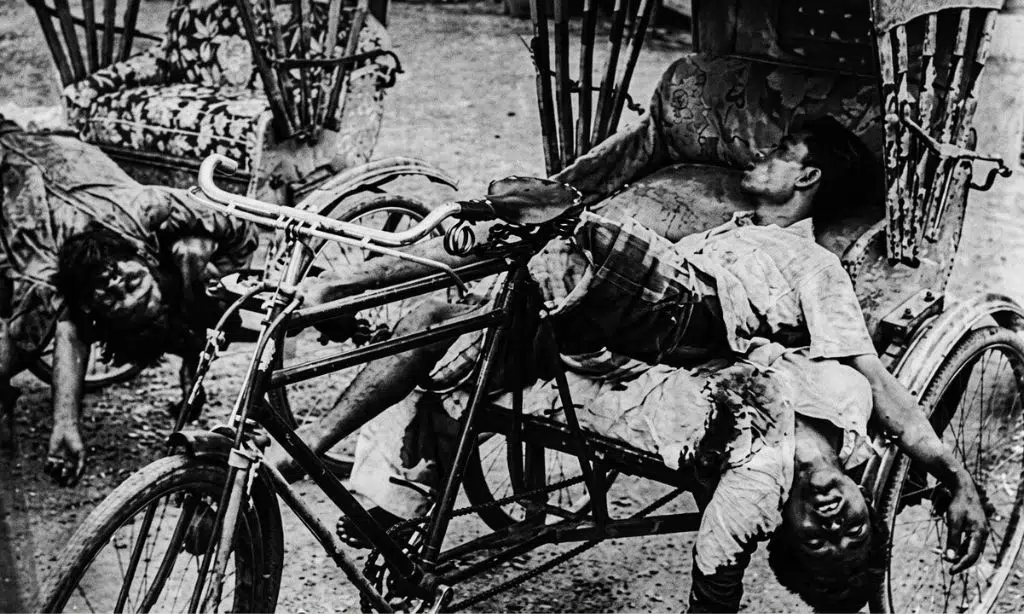
At around 11:30 PM, the Pakistani military rolled out of the Dhaka cantonment with tanks, armored vehicles, machine guns, and mortars. The city was plunged into darkness, and the massacre began simultaneously across several key locations.
1. The Attack on Rajarbagh Police Lines and Pilkhana
The Pakistani army first targeted the armed Bengali personnel to prevent a coordinated counter-attack. At the East Pakistan Rifles (EPR) headquarters in Pilkhana and the Rajarbagh Police Lines, Bengali forces were suddenly attacked.
- The First Resistance: The Bengali police officers at Rajarbagh were the first to put up armed resistance. Armed only with vintage .303 rifles, they fought valiantly against tanks and heavy artillery, sending out a wireless message across the country that the Pakistani army had attacked. They were eventually overpowered, and hundreds were slaughtered.
2. The Massacre at Dhaka University
Dhaka University was the intellectual and organizational heart of the Bengali nationalist movement. The army brought tanks onto the campus.
- They targeted Iqbal Hall (now Sergeant Zahurul Haq Hall) and Jagannath Hall (the dormitory for Hindu students).
- Students were dragged out of their rooms, lined up, and executed by firing squads. Rooms were set on fire, and those trying to escape were gunned down. Mass graves were hastily dug on the campus by bulldozers to bury the hundreds of dead students.
3. The Arrest of Sheikh Mujibur Rahman
In the early hours of March 26, commandos raided Sheikh Mujibur Rahman’s residence at Dhanmondi 32. Before he was arrested and flown to West Pakistan, he managed to send out a wireless message officially declaring the Independence of Bangladesh.
4. Civilian Massacres
The army indiscriminately fired upon civilian areas, slums, and the Hindu-majority areas of Old Dhaka (such as Shankhari Bazar). Slums were set ablaze, and fleeing civilians, including women and children, were shot dead in the streets.
The Martyrs of March 25
The exact number of people killed on the night of March 25 is difficult to verify, but estimates range from 7,000 to over 30,000 people in Dhaka alone within the first few days. The martyrs of that night included brave armed personnel, hundreds of students, thousands of civilians, and some of the brightest intellectual minds of the nation.
Notable Academic and Intellectual Martyrs of March 25:
The Pakistani army had a specific hit list of professors at Dhaka University to intellectually cripple the nation. The martyrs of that night included:
- Dr. Govinda Chandra Dev (G.C. Dev): A renowned professor of Philosophy. He was dragged from his university residence and shot dead along with his adopted daughter’s husband.
- Professor A.N.M. Muniruzzaman: The head of the Department of Statistics. He was killed in his apartment along with his son, brother, and nephew.
- Dr. Jyotirmoy Guhathakurta: A highly respected professor of English. He was dragged out of his flat, lined up in the dark, and shot in the neck and waist. He paralyzed and agonized for days before passing away on March 30.
- Dr. Fazlur Rahman: A professor of Soil Science, who was killed along with two of his relatives.
- Anudvaipayan Bhattacharya: A lecturer in Applied Physics, killed at Jagannath Hall.
The Student Martyrs:
Hundreds of unnamed students resting in their dormitories became martyrs that night. They were the vocal youth who had led the language movement and the 6-point demands. The fields of Jagannath Hall became a mass grave for these young martyrs.
The Armed Forces Martyrs:
The Bengali policemen at Rajarbagh and the EPR soldiers at Pilkhana who died fighting with light weapons against military tanks are remembered as the first armed martyrs of the Liberation War. Their spontaneous resistance bought crucial time for political leaders and civilians to flee Dhaka and organize the Mukti Bahini (Freedom Fighters).
The Initiation of the War
Operation Searchlight was intended to be a swift, decisive blow that would terrify the Bengalis into submission. It achieved the exact opposite.
The sheer brutality of the massacre erased any remaining hope for a united Pakistan. Sheikh Mujibur Rahman’s declaration of independence, broadcasted via clandestine radio, reached the masses. Surviving Bengali soldiers, police, students, and civilians fled to the countryside and across the border to India, where they regrouped, armed themselves, and formed the Mukti Bahini.
March 25 marked the point of no return. A 9-month-long bloody Liberation War ensued, resulting in the genocide of an estimated 3 million Bengalis and the rape of hundreds of thousands of women, before Bangladesh finally achieved victory and independence on December 16, 1971. Today, March 25 is observed in Bangladesh as Genocide Remembrance Day.
The Tragic Triangle Shirtwaist Factory Fire (1911)
In New York City, a horrific and fast-moving fire broke out in a garment factory, claiming the lives of 146 workers, the vast majority of whom were young immigrant women working for meager wages.
Best for: Highlighting the grim realities of early 20th-century industrial labor conditions and the necessity of state regulation.
Why We Chose It: This tragedy single-handedly galvanized the American labor movement, leading to immediate, sweeping workplace safety reforms that form the basis of modern labor laws.
Things to consider: Many victims were trapped or forced to jump from windows because management had locked the exit doors to prevent unauthorized breaks, serving as a grim reminder of unchecked industrial exploitation.
The Signing of the Treaties of Rome (1957)
European leaders gathered in Rome to sign the foundational documents that would eventually unite a historically divided continent through economic integration.
Best for: Tracing the economic and political origins of the modern-day European Union.
Why We Chose It: It established the European Economic Community (EEC), fostering unprecedented economic cooperation between France, West Germany, Italy, Belgium, the Netherlands, and Luxembourg.
Things to consider: This treaty paved the way for the Euro currency, the borderless Schengen Area, and decades of relative peace in a region that had been devastated by two World Wars.
The Discovery of Titan by Christiaan Huygens (1655)
Turning our eyes from Earth to the cosmos, brilliant Dutch mathematician and astronomer Christiaan Huygens made a monumental discovery using a telescope of his own design.
Best for: Astronomy enthusiasts looking to understand early milestones in planetary observation and space exploration.
Why We Chose It: Titan remains one of the most fascinating celestial bodies in our solar system, and its initial discovery rapidly expanded our understanding of Saturn’s complex neighborhood.
Things to consider: Today, we know Titan is the only moon in our solar system to have a dense atmosphere and liquid bodies on its surface, making it a prime target for modern astrobiology and NASA missions.
Completion of the Selma to Montgomery March (1965)
Led by Dr. Martin Luther King Jr., thousands of civil rights activists arrived at the Alabama state capitol after a grueling, dangerous 54-mile march for equality.
Best for: Examining key, hard-won victories in the American Civil Rights Movement.
Why We Chose It: The march was a direct catalyst for the Voting Rights Act of 1965, which aimed to permanently dismantle legal and physical barriers preventing African Americans from exercising their right to vote.
Things to consider: The peaceful marchers had previously faced extreme violence from state troopers on “Bloody Sunday,” which was televised nationally, amplifying global support and outrage for their cause.
Global Observances and Holidays on March 25
March 25 is not just a day of quiet historical reflection; it is also a day of active global observance. Various nations and international bodies designate this day to raise awareness, celebrate local culture, and solemnly honor victims of the past.
| Observance / Holiday | Region / Organization | Focus |
| Greek Independence Day | Greece | Commemorates the 1821 start of the War of Independence |
| Int’l Day of Remembrance of the Victims of Slavery | United Nations | Honors victims of the Transatlantic Slave Trade |
| Tolkien Reading Day | Global (Fandom) | Celebrates the literary works of J.R.R. Tolkien |
| Waffle Day | Sweden | Culinary celebration linked to the Feast of the Annunciation |
| Bengali Genocide Remembrance Day | Bangladesh | Honors the civilian victims of the 1971 Operation Searchlight |
These international days serve as vital cultural reminders of our shared global heritage. Let’s look closer at a few of these unique observances.
International Day of Remembrance of the Victims of Slavery
Established by the United Nations, this solemn international day ensures that the brutal horrors of the Transatlantic Slave Trade are never ignored or forgotten by modern society.
Best for: Educational initiatives focusing strictly on human rights, historical injustices, and global reconciliation.
Why We Chose It: It forces the global community to confront the agonizing legacy of racism and the centuries-long, systemic economic exploitation of millions of African people.
Things to consider: The observance does not just look backward; it actively promotes modern anti-racism campaigns and emphasizes the continuing, modern struggle against systemic inequality and human trafficking.
Greek Independence Day
On this day, Greece bursts into vibrant celebration, honoring the bravery of those who sparked the revolution against the occupying Ottoman Empire in 1821.
Best for: Cultural appreciation and understanding the ripple effects of European nationalist movements in the 19th century.
Why We Chose It: It is the most significant national holiday in Greece, marked by massive military parades, joyous school celebrations, and deep national pride across the Greek diaspora.
Things to consider: The date intentionally coincides with the Feast of the Annunciation in the Greek Orthodox Church, deeply intertwining the nation’s political identity with its longstanding religious traditions.
Tolkien Reading Day
A much lighter, yet globally popular observance, Tolkien Reading Day invites dedicated fans to dive back into the intricate fantasy realms created by author J.R.R. Tolkien.
Best for: Literature lovers, fantasy enthusiasts, and educators promoting the joy of reading.
Why We Chose It: It beautifully showcases how modern literature can create tight-knit global communities; the specific date was chosen by fans because it marks the fictional fall of Sauron in The Lord of the Rings.
Things to consider: It’s an excellent, accessible opportunity for parents and teachers to introduce younger generations to the foundational texts of modern high-fantasy literature.
Famous Birthdays on March 25
March 25 has been the entry point for some of the world’s most brilliant artistic minds, athletes, and social activists. The table below outlines a few of the iconic figures born on this day.
| Year | Name | Profession | Nationality |
| 1881 | Béla Bartók | Composer / Pianist | Hungarian |
| 1914 | Norman Borlaug | Agronomist / Nobel Laureate | American |
| 1934 | Gloria Steinem | Journalist / Feminist Activist | American |
| 1942 | Aretha Franklin | Singer / “Queen of Soul” | American |
| 1947 | Elton John | Singer-Songwriter / Pianist | English |
| 1965 | Sarah Jessica Parker | Actress / Producer | American |
| 1976 | Wladimir Klitschko | Heavyweight Boxer | Ukrainian |
| 1982 | Danica Patrick | Race Car Driver | American |
Let’s explore the rich lives and continuing legacies of some of the most influential individuals born on this date.
Aretha Franklin (1942)
Born in Memphis, Tennessee, and raised in Detroit, Aretha Franklin grew up singing gospel in her father’s church before transitioning to secular music, where she achieved unparalleled global superstardom.
Best for: Celebrating the undisputed “Queen of Soul” and her monumental contributions to both music and culture.
Why We Chose It: Franklin’s voice defined an entire generation, earning her 18 Grammy Awards and making her the very first woman inducted into the Rock and Roll Hall of Fame.
Things to consider: Beyond her musical genius, Franklin was a dedicated civil rights activist who frequently supported Dr. Martin Luther King Jr., famously offering to post bail for activists and performing at King’s memorial.
Sir Elton John (1947)
Reginald Kenneth Dwight, known globally as Elton John, was born in Pinner, Middlesex, and evolved into one of the best-selling, most flamboyant, and critically acclaimed music artists of all time.
Best for: Recognizing the lasting impact of a pop-rock pioneer and highly dedicated philanthropist.
Why We Chose It: With over 300 million records sold and timeless hits like “Your Song,” “Tiny Dancer,” and “Rocket Man,” his musical legacy and theatrical showmanship are largely unmatched.
Things to consider: His profound philanthropic work, particularly through the Elton John AIDS Foundation, has raised hundreds of millions of dollars for global HIV/AIDS research, prevention, and support.
Gloria Steinem (1934)
A trailblazing journalist and social political activist, Gloria Steinem became a nationally recognized leader and spokeswoman for second-wave feminism in the United States during the late 1960s and early 1970s.
Best for: Understanding the modern feminist movement and the ongoing fight for systemic gender equality.
Why We Chose It: Steinem co-founded Ms. magazine and the National Women’s Political Caucus, dedicating her life to advocating for women’s reproductive rights, workplace equality, and political representation worldwide.
Things to consider: Her famous undercover investigative journalism piece, “A Bunny’s Tale,” exposed the deeply exploitative and degrading working conditions at the Playboy Club, catapulting her into the national spotlight.
Norman Borlaug (1914)
Often respectfully referred to as the “father of the Green Revolution,” Norman Borlaug was a brilliant American agronomist who dedicated his scientific career to solving global hunger.
Best for: Learning about the intersection of agricultural science and humanitarianism that fundamentally altered human history.
Why We Chose It: His development of high-yielding, disease-resistant wheat varieties in the mid-20th century is credited with saving over a billion people worldwide from starvation, earning him the Nobel Peace Prize in 1970.
Things to consider: While his scientific methods dramatically increased global food production, they have also sparked ongoing, complex debates regarding the environmental impact of chemical fertilizers and intensive agricultural practices.
Notable Deaths on March 25
While we joyfully celebrate births, we must also honor the legacies of those who departed the world on March 25. The following table provides a brief overview of significant historical figures who passed away on this date.
| Year | Name | Profession/Legacy | Nationality |
| 1918 | Claude Debussy | Seminal Composer | French |
| 1931 | Ida B. Wells | Civil Rights Activist & Journalist | American |
| 1975 | King Faisal | King of Saudi Arabia | Saudi Arabian |
| 2006 | Buck Owens | Country Music Pioneer | American |
| 2021 | Beverly Cleary | Beloved Children’s Author | American |
| 2022 | Taylor Hawkins | Rock Drummer (Foo Fighters) | American |
The transition from a vibrant life to a historical legacy is profound. Here are the in-depth profiles of the notable figures we lost on this spring day.
Ida B. Wells (1931)
Ida B. Wells was a fearless American investigative journalist, educator, and an early, uncompromising leader in the civil rights movement.
Best for: Honoring the immense courage of early anti-lynching crusaders and pioneer investigative journalists who risked everything for the truth.
Why We Chose It: She risked her life to meticulously document and expose the horrors of lynching in the American South to a global audience, fighting systemic racism with undeniable, hard-hitting facts.
Things to consider: She was also a founding member of the National Association for the Advancement of Colored People (NAACP) and fiercely advocated for women’s suffrage, ensuring that the voices of Black women were not excluded from the voting rights movement.
Claude Debussy (1918)
Passing away during the heavy bombardment of Paris in World War I, Claude Debussy left behind a stunning musical legacy that fundamentally altered the trajectory of classical music.
Best for: Appreciating the stylistic transition from late-Romantic music to 20th-century modernism.
Why We Chose It: Debussy’s highly original system of harmony and musical structure, often associated with the Impressionist movement, broke centuries-old traditional rules and inspired countless composers who followed.
Things to consider: Masterpieces like Clair de lune and La Mer remain highly popular staples of the classical repertoire today, celebrated globally for their deeply evocative, dreamlike, and sensory qualities.
King Faisal of Saudi Arabia (1975)
King Faisal bin Abdulaziz Al Saud reigned over Saudi Arabia during a period of intense, rapid modernization and severe geopolitical turbulence in the Middle East.
Best for: Analyzing Middle Eastern geopolitics, economic shifts, and the tumultuous era of the 1973 oil crisis.
Why We Chose It: His sudden assassination by his own nephew sent immediate shockwaves through the global political landscape, given his highly central role in unifying the Arab world and controlling global oil markets.
Things to consider: He was a primary architect of the 1973 oil embargo against Western nations, an event that fundamentally shifted the economic and diplomatic relationship between the West and the Middle East forever.
Beverly Cleary (2021)
Living to the incredible age of 104, Beverly Cleary was one of America’s most successful and universally beloved children’s authors.
Best for: Celebrating the importance of accessible, relatable literature for early childhood development.
Why We Chose It: Through iconic, relatable characters like Ramona Quimby and Henry Huggins, Cleary captured the genuine, unvarnished emotions and everyday struggles of children, selling over 90 million books worldwide.
Things to consider: Prior to her career, children’s literature often featured highly idealized, aristocratic characters; Cleary revolutionized the genre by writing about ordinary, middle-class kids living on Klickitat Street.
Echoes of March 25 Through Time
The diverse events of March 25 vividly illustrate the profound complexity of the human experience. From the devastating, preventable loss of life in the Triangle Shirtwaist Factory and the brutal onset of the Bangladesh Liberation War, to the triumphant, hard-fought civil rights march in Selma and the joyous births of musical legends like Aretha Franklin and Elton John, this date serves as a perfect microcosm of global history.
These historical milestones, notable births, and solemn deaths continually remind us of our capacity for both profound destruction and incredible societal progress. Understanding what happened on this day provides us with the vital, grounding context needed to navigate the challenges and triumphs of our modern world today.