Rashida (name changed on request) stands by her window in Canary Wharf as the sun dips behind the Shard. Below her, London is a frantic hive of activity. For years, she was part of that frenzy. As a thirty-year-old Senior Analyst in the high-octane world of British finance, her life was a blur of spreadsheets and late-night pings. Then she discovered German Feierabend Culture. This historic daily ritual became her survival strategy in a city that never stops.
The Transition Ritual
At precisely 6:00 PM, Rashida performs what she calls her “cleansing.” It is a deliberate shift. She does not just shut her laptop. She wipes down her desk with a cloth scented with lemon and mint. This physical act signals to her brain that the professional day is dead. She then steps away from her workspace to change her clothes. Out goes the crisp corporate blazer. In comes a soft woollen jumper. This is her symbolic shedding of skin. She is no longer the analyst responsible for global market fluctuations. She is simply Rashida.
The Digital Sunset
The most radical part of her evening is the “charging box” in her hallway. It is a simple wooden chest. As she enters her living space, her phone goes inside. The lid stays shut.
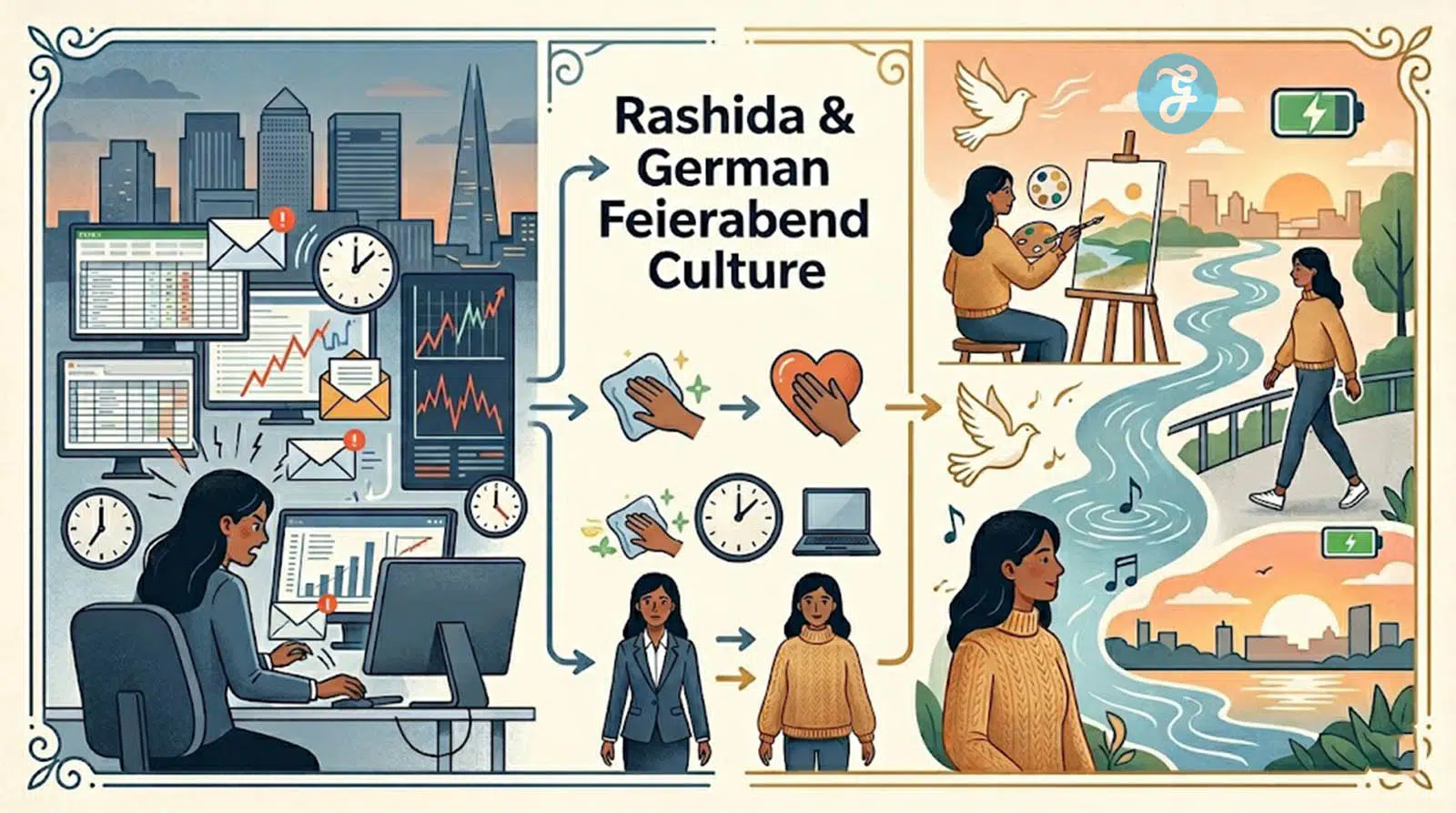
By embracing German Feierabend Culture, she has reclaimed her right to be unreachable. There is no Slack. There are no frantic emails about Tokyo opening prices. She has built a fortress around her peace. This boundary is not a sign of laziness. It is a mark of professional self-respect.
The Psychological Detachment
Her evenings are now sacred. Rashida avoids the trap of passive scrolling or “doomscrolling” which mimics the stress of work. Instead, she chooses active rest. Some nights involve her easel and oil paints. Other nights she takes a slow, rhythmic walk along the Thames path, embracing the Spaziergang ritual to clear her mind. She listens to the water rather than a podcast. This mental distance allows her to recover. For Rashida, the Feierabend is the bridge between the woman who solves crises and the woman who exists for herself. She returns to her desk the next morning sharper because she actually left it the night before.
German Feierabend Culture: The Ritual
German Feierabend Culture is the ironclad practice of ending the workday to initiate a “celebration evening.” It is a socio-cultural border. In Germany, this is not a suggestion but a collective social contract that dictates work and life are two separate nations. You do not bring the baggage of one into the territory of the other. It is the psychological act of switching off the professional mind to let the human spirit breathe. By prioritising the sanctity of the “eve” before the next day, it ensures that productivity is maintained through the preservation of the person rather than the extension of the hours. This boundary is backed by 2026 OECD data, which consistently shows that despite Germany having some of the lowest annual working hours globally, it remains a leader in hourly productivity.
The Historical and Etymological Roots
To understand why Germany remains a global productivity leader in 2026, one must look at the soil from which the Feierabend grew. This is not a corporate policy. It is an ancestral survival mechanism. While modern Londoners like Rashida use digital boxes to find peace, their predecessors used the very air around them to signal the end of the struggle.
The Echo of the Church Bells
In the 16th century, the workday was governed by the sun and the steeple. Church bells rang across the German countryside to signal the end of the agricultural day. This was the original “sonic boundary” for the peasantry.
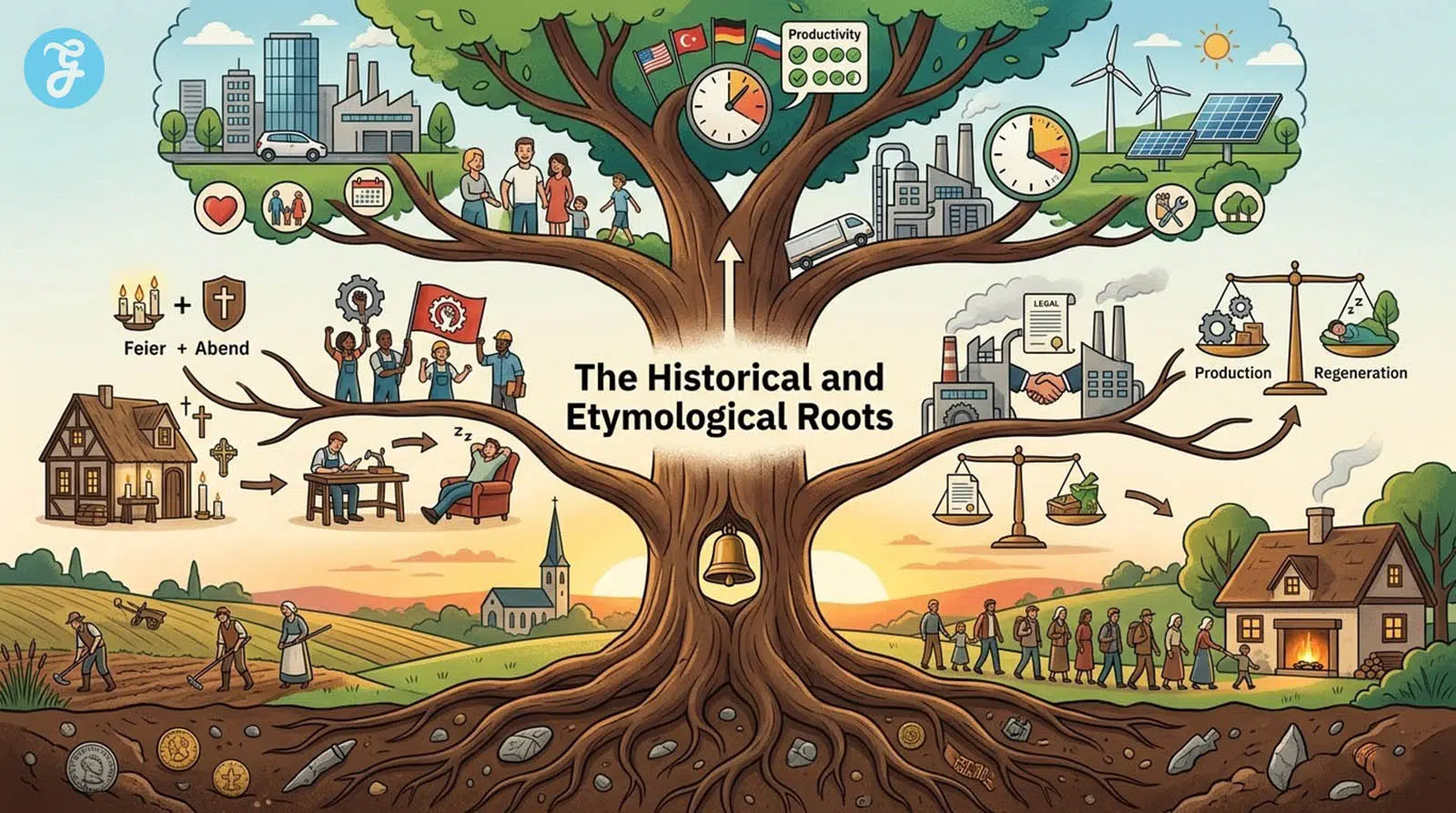
When the bells tolled, the tools were dropped. It was a moment of collective transition from the field to the hearth. These bells ensured that no farmer worked into the darkness.
From Sacred Eve to Secular Rest
The word itself is a compound of “Feier” meaning celebration and “Abend” meaning evening. Originally, it referred to the eve before a religious holiday or the Sabbath. It was a time of preparation for holiness. Over time, the religious weight lifted to reveal a secular necessity. The “celebration” became the simple act of being finished with one’s duties. By the 19th century, it was a common term for the period between the end of work and the beginning of sleep.
The Industrial Right to Regeneration
As Germany industrialised, the labour movement fought to codify this tradition into law. The 20th century saw the Feierabend shift from a custom into a formal right. Trade unions argued that “regeneration” was necessary for a healthy workforce. They viewed the evening not as a gap in production but as the foundation of it. This historical advocacy created the modern German legal framework that still protects worker “reachability” today. It transformed a bell’s toll into a robust social contract.
The Science of Disconnection
We can measure the benefits of this cultural boundary in a laboratory. It is not just a comforting philosophy. Verified workplace wellness data proves that mental distance changes our biology. Taking a firm break literally rewires your brain for better performance.
The Psychology of Recovery
The Journal of Occupational and Organizational Psychology published a major study in 2023. Researchers Maike Arnold and Sabine Sonnentag tracked daily recovery trajectories. They found that a hard stop creates high-quality recovery. This specific type of rest leads directly to increased wakefulness the next morning. It also fosters a deep sense of calmness before the workday even begins. You do not just feel rested. You become biologically prepared to focus.
The Detach to Thrive Principle
The Journal of Happiness Studies expanded on this concept in 2025. Their Detach to Thrive research examined various employee subgroups across different industries. The findings were completely universal. Psychological detachment from work is a primary driver of employee wellbeing. It does not matter if you are a finance director or a junior creative. You need absolute separation to function properly.
Managing The Cortisol Factor
Your body keeps a strict chemical score of your stress. Constant connectivity keeps stress hormones artificially elevated. A dedicated evening ritual actively lowers your cortisol levels. This drop in hormones prevents the chronic inflammation directly associated with Quiet Burnout. When you build a fortress around your evening, you calm your entire nervous system. You tell your body the daily threat is over so genuine healing can begin.
The 2026 Legal and Corporate Landscape
Culture needs a firm framework to survive the pressures of modern business. German lawmakers do not leave rest to chance or corporate generosity. They encode the right to disconnect directly into strict labour regulations. This legal backing turns a personal boundary into an unbreakable national standard.
German Employment Law and Reachability
The legal foundation of the German workplace is the Working Time Act. In 2026, the legislative focus has shifted entirely to protecting worker reachability. Lawmakers and powerful trade unions have tightened the rules around digital communication after hours. Managers face severe penalties for contacting employees during their designated rest periods. You cannot be disciplined for ignoring an evening email or a weekend text message. The law views this total unreachability as a fundamental health requirement rather than a lack of ambition.
The EU AI Act Protections
The workplace has changed rapidly with the rise of generative automation. While the EU AI Act entered into force in 2024, its most stringent high-risk workplace provisions reach full implementation in August 2026. These new transparency rules ensure that AI-driven productivity does not consume human rest.
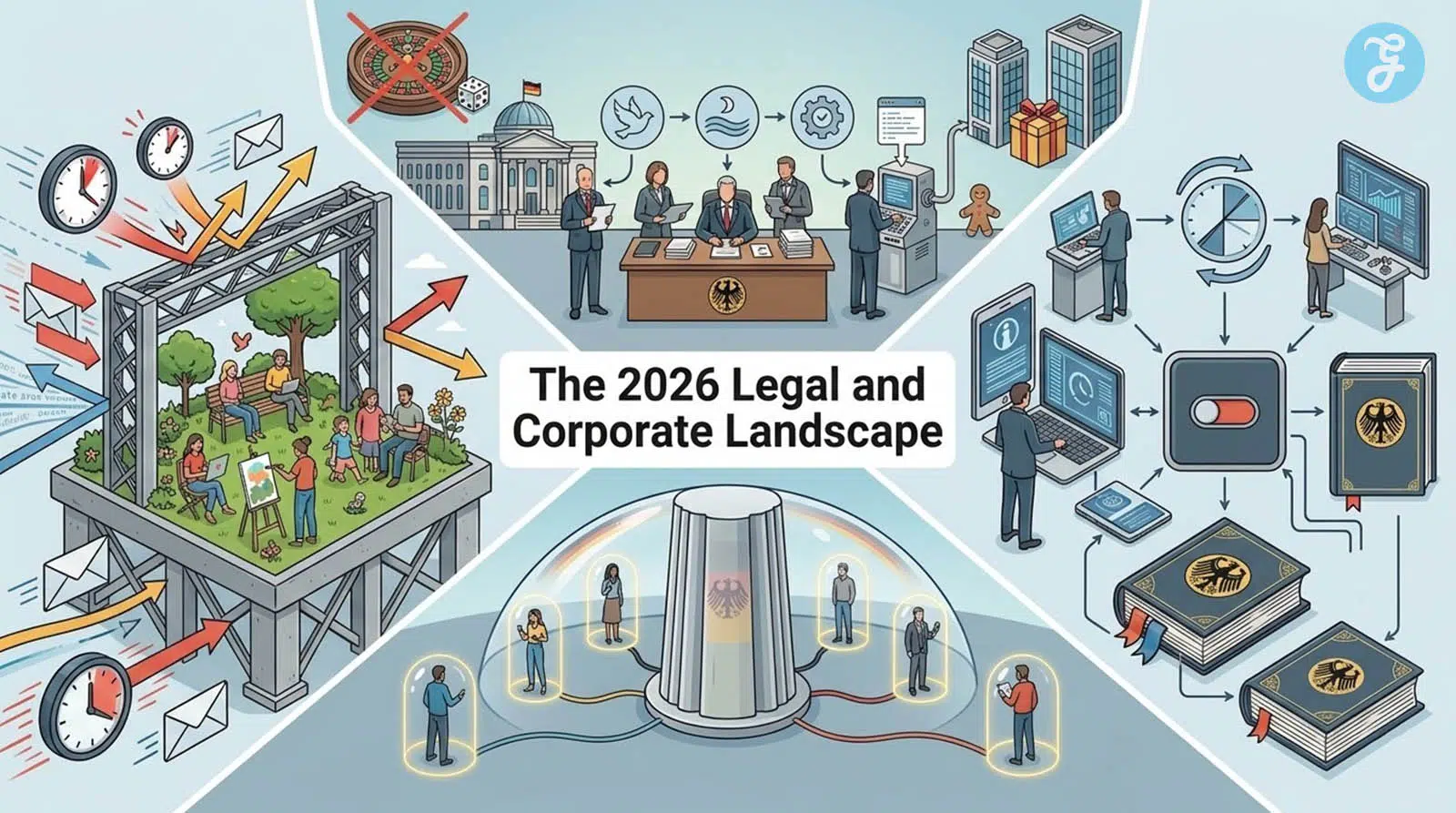
Companies must now prove that their algorithmic management systems do not pressure staff into working irregular or excessive schedules. The law effectively mandates that software must respect the human Feierabend by preventing automated “task creep” during protected hours.
Global Comparisons in Annual Hours
We can see the true impact of these laws by looking at verified OECD data. The average German employee logs exactly 1,341 working hours per year. We can contrast this sharply with the United Kingdom, where workers average roughly 1,530 hours. The gap widens further in the United States, where the average exceeds 1,800 hours. British and American corporate cultures often mistake long desk hours for high output. Germany proves this assumption wrong. It remains a dominant global economic power precisely because it mandates high-quality recovery over endless toil.
How to Build Your Own Feierabend Ritual
You do not need to move to Munich to reclaim your peace. Building a boundary is a skill that anyone can master with three deliberate steps. These habits transform the end of the day from a slow fade into a sharp, refreshing stop. You are training your brain to recognise that the professional mission is complete.
Step 1: The Closing Ceremony
Spend exactly five minutes at the end of your shift on a brain dump. Write a physical list of every outstanding task for the next morning. This simple act of “list making” clears your working memory. Research in cognitive psychology suggests that uncompleted tasks create intrusive thoughts. By externalising these burdens onto paper, you give your mind permission to let go. You are telling your subconscious that the information is safe. You no longer need to carry it through your evening.
Step 2: The Physical Shift
The most effective way to switch off is to move your body. If you work from home, try a “fake commute” by walking around the block. This movement creates a spatial buffer between your desk and your dinner table. Another powerful tool is changing your clothes immediately. Swapping a structured shirt for a soft cotton tee is a tactile signal to your nervous system. You are literally shedding the stress of the day. This physical transition is the most direct route to mental detachment.
Step 3: The Sensory Signal
Engage your senses to anchor your rest. Light a specific candle with a scent you never use during work hours. Alternatively, create a playlist of a specific genre that exists only for your personal time. These sensory cues act as a “do not disturb” sign for your brain. Over time, your mind will associate that specific smell or sound with safety and relaxation. This creates a psychological shortcut to a state of calm. You are no longer waiting for the stress to leave. You are actively inviting the peace to begin.
Rethinking Work and Rest
In my view, the growing global fascination with German Feierabend Culture in 2026 reflects a deeper need to disconnect from relentless productivity. What once passed as efficiency has quietly become a trap. We have reached a limit where constant connectivity no longer produces better results.

It only produces exhaustion. By embracing this ritual, we are not becoming less productive. We are reclaiming our humanity from systems that thrive on constant output.
The Foundation of a Meaningful Life
This cultural shift reminds us that rest is not a luxury. It is not something we earn after work like a hollow trophy. Instead, it is the very foundation of a balanced life. When we protect our evenings, we protect our ability to think clearly and live fully. We stop being mere resources in a corporate machine. We start being people again. The Feierabend is the ultimate act of defiance against a world that wants to monetise every second of our existence.
Why Feierabend is Most Important in Your Life
- Prevents Decision Fatigue: By ending the workday at a fixed time, you conserve the mental energy required for complex life choices and personal responsibilities.
- Restores Biological Rhythms: A strict boundary allows your nervous system to exit the “fight or flight” work mode, lowering heart rates and preparing the body for restorative sleep.
- Strengthens Social Identity: It ensures you remain an active participant in your community and family rather than an isolated extension of your professional role.
- Protects Cognitive Function: Regular mental detachment prevents the long-term cognitive decline associated with chronic workplace stress and digital exhaustion.
- Ensures Career Longevity: Treating rest as a non-negotiable requirement creates a sustainable pace that avoids the sudden, career-ending crash of total burnout.
Reclaiming Your Time
The power of German Feierabend Culture lies in its simplicity. It is far more than a specific time on a clock or a departure from an office building. This ritual is a mental state that you cultivate with intention. It is the recognition that your worth is not measured by your output alone.
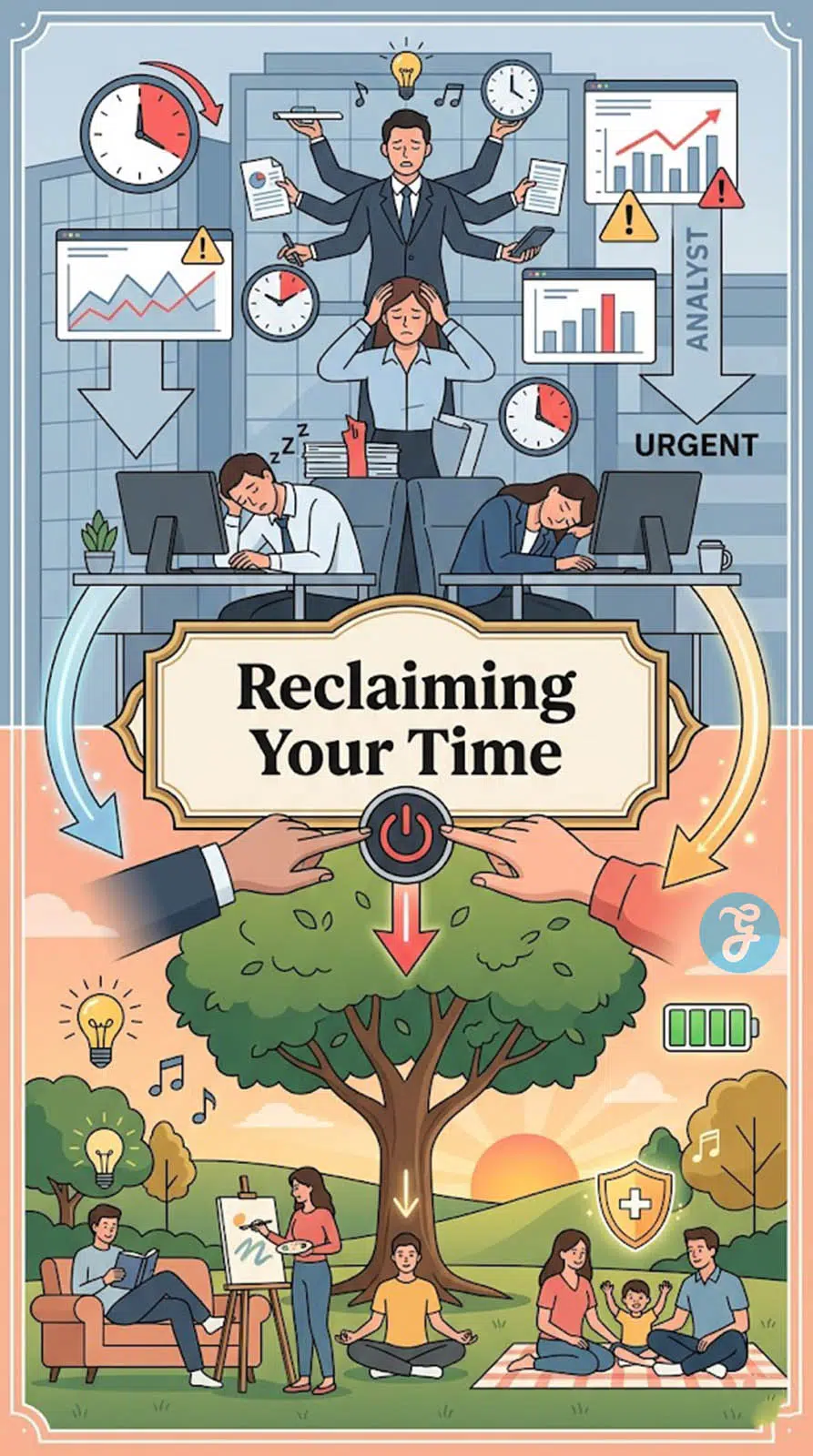
By building these boundaries, you ensure that you return to your tasks with a clear mind and a steady hand. You are not just ending a shift. You are beginning your life.
The Lasting Impact of Rest
True recovery requires a total shift in perspective. We must move away from the guilt that often follows a period of stillness. In Germany, the Feierabend is respected because it works. It creates a sustainable rhythm that prevents the slow erosion of our mental health. When you choose to switch off, you are making a long-term investment in your own brilliance. You are choosing to thrive rather than just survive.