Have you ever booked an amazing gig abroad, only to freeze when you realized you needed a work permit? You are definitely not alone. The visa process can feel like a massive hurdle for freelance artists and musicians. It often leaves creative professionals wondering if they even qualify for international work. I have found that understanding the specific visa options for freelance artists and musicians is the secret to a stress-free tour. Visas like the O-1B, P, and J-1 are specifically made to help you share your talents in the United States and beyond.
Knowing exactly which paperwork fits your career stage changes everything. I am going to walk you through the exact steps I use, and I think you will be surprised at how clear it can be. So grab a cup of coffee, and let’s go through it together.
Understanding Visa Options for Freelance Artists and Musicians
Freelance artists and musicians often need special work permits for international projects. The rules can feel like a maze, but knowing your choices opens new doors.
Importance of visas for creative professionals
Visas open doors for artists and musicians who want to work or share their talent abroad. Without proper visas, creative professionals risk losing jobs, facing heavy fines, or getting slapped with a multi-year ban from countries like the United States. Legal status means you can sign contracts and get paid securely.
Many top festivals and galleries require proof of work authorization before they let performers in. Work permits protect your rights while you show your art or play music at concerts. Having the right creative visa also allows people to plan tours safely and connect with global audiences.
A visa is a passport to opportunity for every artist traveling for their craft.
Artists often need these documents quickly because invitations come fast. Up-to-date paperwork prevents major travel headaches.
Challenges faced by freelance artists and musicians
Finding the right visa feels like hunting for a four-leaf clover. Many freelance artists and musicians struggle with long waits, high fees, and confusing immigration rules. Work permits get especially tricky for people who work on short projects in different countries.
A famous violinist might wow the crowd one week and face paperwork headaches the next. Without legal status or proper employment authorization, simple things like renting a studio space become very difficult.
Agencies often ask for proof of extraordinary ability or demand letters from past jobs. Some folks simply cannot provide these documents right away. Gigs vanish if your support personnel face issues at customs.
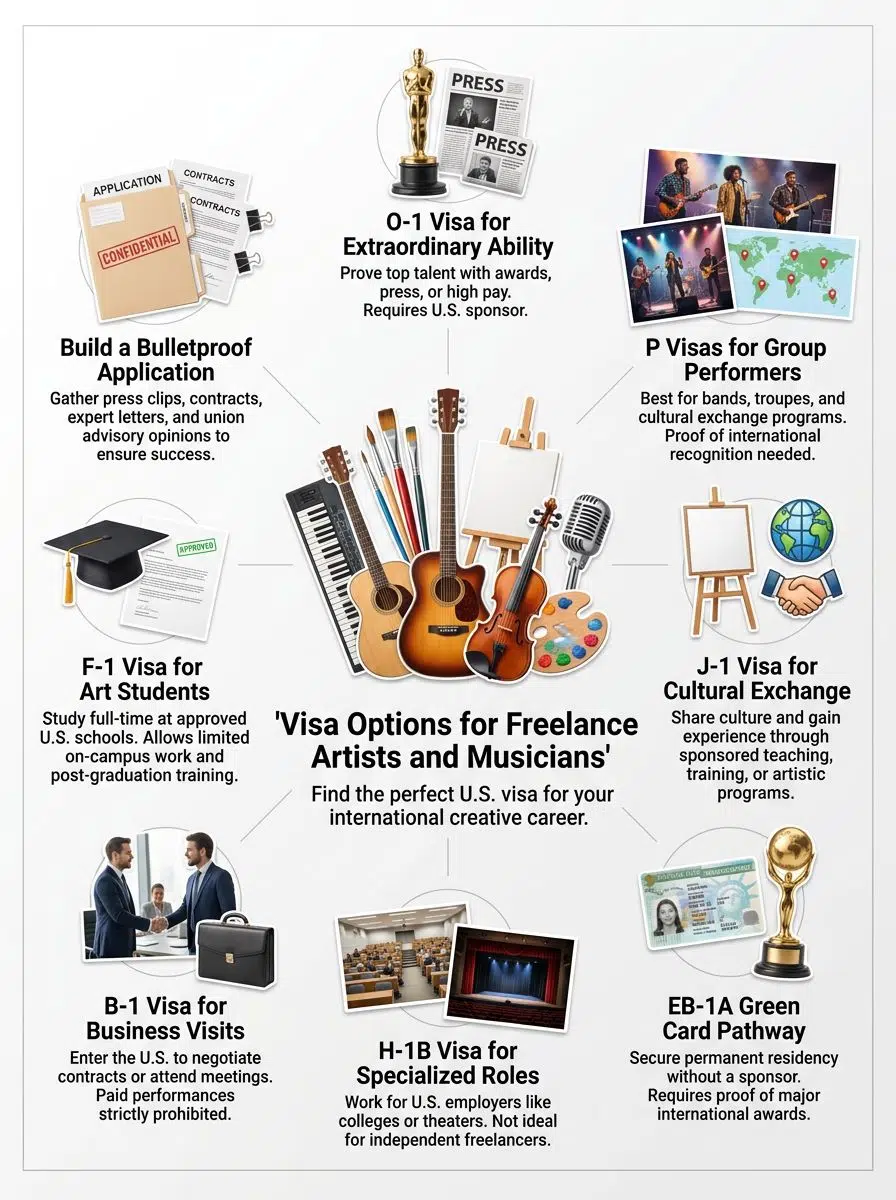
O-1 Visa: Extraordinary Ability in the Arts
The O-1B visa opens doors for artists and musicians who shine in their craft. Artists with big dreams find this path worth exploring because it highlights top talent. Recent 2025 data from Boundless Immigration shows the O-1 approval rate remains above 90%, making it a highly reliable option.
Eligibility criteria for O-1B visa
Getting an O-1B visa lets freelance artists and musicians work in the U.S. if they show extraordinary ability. You need a strong track record and proof of big artistic achievements.
- Show national or international recognition for your work.
- Provide evidence of leading roles for major productions or well-known organizations.
- Present press coverage or media stories highlighting your specific skills.
- Offer proof of major awards like a Grammy or Tony.
- Gather letters from industry experts who vouch for your high level of skill.
- Display a history of earning high pay in the arts and entertainment industry.
Each point above shows how creative professionals must present real proof of their careers.
The 3-of-6 criteria explained
Artists or musicians applying for the O-1B visa must meet at least 3 out of 6 specific criteria if they lack a massive award like a Grammy. These rules show the U.S. government that your work truly stands out.
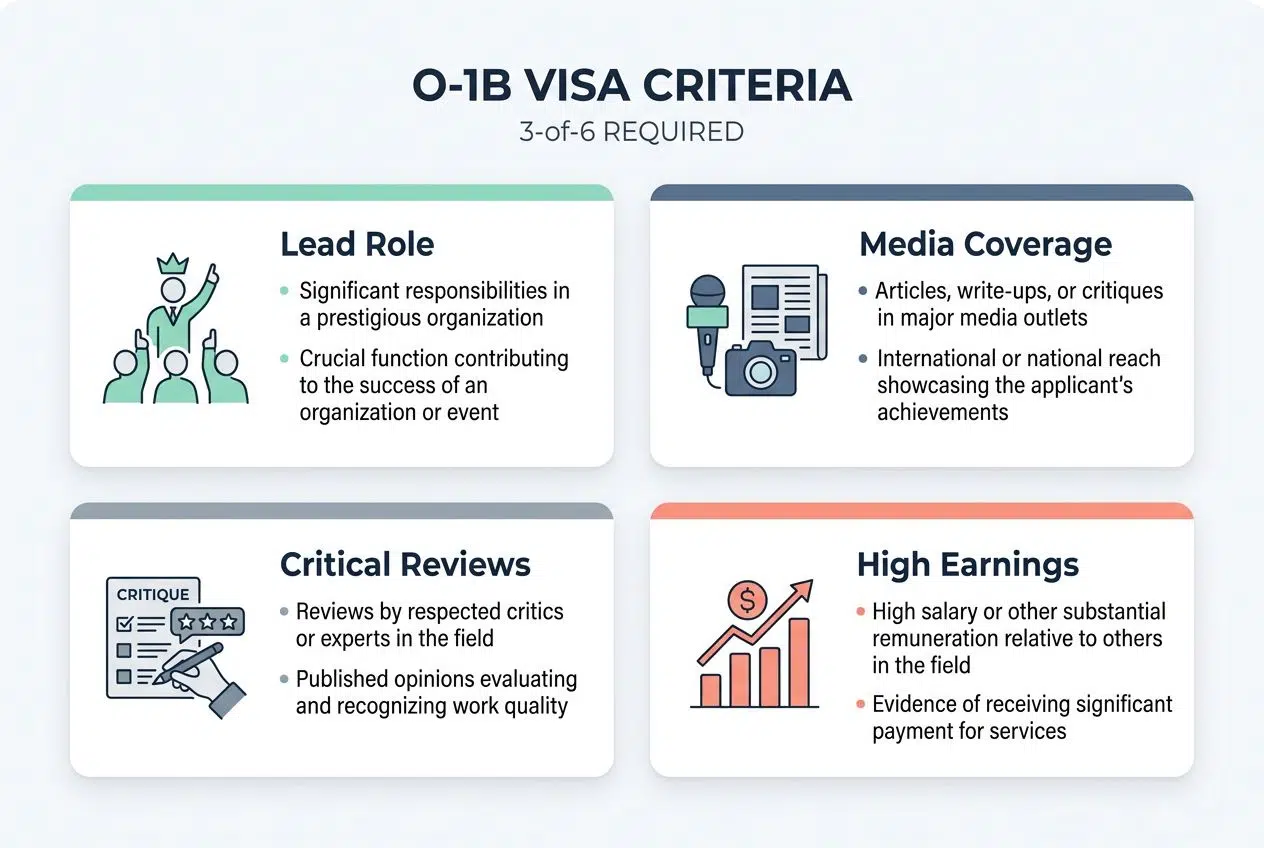
| Criterion | What It Means | Real-World Example |
|---|---|---|
| Lead Role | You are the star of a distinguished production. | Playing the main stage at a famous music festival. |
| Media Coverage | Major news outlets feature your achievements. | An interview about your art in Rolling Stone. |
| Critical Reviews | Experts publicly endorse your high-level work. | A glowing review from a respected theater critic. |
| High Earnings | You make more money than your average peers. | Contracts showing above-average gallery sales. |
Meeting at least three shows that you are someone whose art has made waves across borders.
Role of sponsorship for O-1 visa applicants
After checking the criteria, sponsorship is your next big step. O-1 visa applicants cannot file for themselves. A U.S.-based sponsor must file Form I-129 on your behalf.
Freelancers often use specialized agencies like Fractured Atlas to act as their petitioner. This is incredibly helpful if you plan gigs with several different clients. The government wants to see paperwork showing planned employment dates and specific performances.
Without a willing sponsor, even the most talented artists will not receive this permit. Securing this support takes networking savvy, but it unlocks your international career.
P Visas: Specifically for Performers
P visas can help performers spread their art across borders. This is true whether you are a one-person act or an entire band. With the right paperwork, artists can take center stage on foreign soil.
Overview of the P-1B visa for group performers
The P-1B visa works perfectly for groups of artists or musicians performing in the United States. This visa option requires a group of at least two people who have worked together for a minimum of one year. It covers musical bands, dance teams, and theater troupes seeking work authorization.
A U.S.-based sponsor must file a petition with proof of your group’s international recognition. You must also pay the standard Form I-129 filing fee, which is currently $1,055, or $530 for small employers. Support staff, like sound engineers, can apply under certain conditions.
P-2 visa for reciprocal exchange programs
P-2 visas open doors for artists who join a reciprocal exchange program. These programs let U.S. groups bring performers from other countries while sending their own members abroad. Both artists must work under formal agreements between organizations in each country.
Currently, the U.S. government recognizes five specific agreements. Some of the most popular exchange programs include:
- The American Federation of Musicians (AFM) for U.S. and Canadian musicians.
- The Actors’ Equity Association for U.S. and British actors.
- The International Council of Air Shows for specialty performers.
Artists on P-2 visas need to show that the exchange is real and fair for both sides.
P-3 visa for culturally unique performances
Artists and musicians can use the P-3 visa to perform or teach in programs that share culturally unique art forms. If your work features traditions like Irish step dancing or West African drumming, you may apply. You must show proof of your cultural background through press clippings or event flyers.
Solo performers and groups both qualify for this category. Crucially, your essential support personnel can apply for a P-3S visa to travel and work alongside you. This program aims to educate audiences while offering employment to international musicians.
J-1 Visa: Cultural Exchange Programs
The J-1 visa opens doors for artists to share their culture while gaining fresh experience. Read on to see if this path fits your creative journey.
Purpose and eligibility of the J-1 visa
This visa encourages cultural exchange by bringing artists and musicians to the United States. It helps creative professionals who want to teach or take part in official artistic residency programs. Musicians can join orchestras, and artists can hold gallery residencies.
To qualify, applicants must have a designated sponsor organization based in the United States. Major organizations like CIEE regularly sponsor J-1 Trainee and Specialist programs for international experts. This visa supports short-term stays that help share global talent with American audiences.
Categories relevant to artists and musicians
Artists and musicians have several J-1 visa categories made for creative exchange. Each type opens doors for different kinds of work and learning.
- Short-Term Scholar: Artists can visit for up to six months to collaborate on projects.
- Research Scholar: Musicians involved in academic research often use this category for visits up to five years.
- Professor and Teacher: Those teaching art or music at schools and universities use these types to share their culture.
- Specialist: Creative professionals like set designers enter through this option to demonstrate highly specialized skills.
- Student: Those studying the arts at a U.S. school use this to join workshops and classes.
- Intern: Recent art grads gain hands-on skills alongside American professionals.
Each group has its own rules about work authorization and time limits. Many applicants need proof of connections with a U.S. host.
EB-1A: Green Card for Extraordinary Ability
If you shine bright as an artist, the EB-1A green card could turn your passion into a permanent stay.
Benefits of EB-1A for freelance creatives
The EB-1A gives freelance artists and musicians a green card without needing an employer. You can work for different clients, book gigs, or accept projects entirely on your own schedule. No sponsor means you call the shots on your work and travel plans.
This visa offers permanent legal status in the U.S., allowing you to stay as long as you wish. You can also bring close family with you under this option. It grants far more freedom than temporary visas like the O-1.
Key requirements and application process
Artists aiming for a green card through extraordinary ability must meet very strict requirements. The process rewards strong achievements, but it is highly scrutinized. According to 2025 data from USCIS, the EB-1A approval rate hovered around 67%, making it one of the toughest categories to win.
- Show national or international awards in your field.
- Provide published articles and press about your major projects.
- Submit at least three strong pieces of proof backing your exceptional skill.
- Gather endorsement letters from highly recognized industry experts.
- File Form I-140 with U.S. Citizenship and Immigration Services to start.
- Organize your evidence clearly to avoid processing delays.
Freelancers may apply on their own behalf without a job offer. Legal guidance is highly recommended to prevent mistakes during this intense paperwork stage.
Other Visa Options for Artists and Musicians
Need more ways to work legally in the U.S.? Check out other visa options for artists and musicians to find a path that fits your dreams.
H-1B visa for specialized work
The H-1B visa lets creative professionals work in jobs that require a specialized bachelor’s degree. Musicians and artists may use this option if a music college or theater group hires them full-time. The employer must file paperwork showing there are no available U.S. workers for the job.
This pathway is extremely risky because it relies on an annual lottery system capped at 85,000 visas. Freelance artists face huge hurdles since they cannot self-sponsor an H-1B visa. Most short-term gigs do not qualify as steady employment under this rule.
B-1 visa for short-term business visits
Some freelance artists and musicians need only a short trip to the United States. The B-1 visa serves this purpose for business meetings, negotiating contracts, or scouting for gigs. You can visit galleries or talk with sponsors, but strict rules apply.
You cannot perform for paid gigs or sell art to the public on a B-1 visa or an ESTA waiver.
The only rare exception is performing at an official, unpaid showcase at festivals like SXSW. Even then, you must carry an official invitation letter to show customs agents. Always keep proof of your freelance status and show clear ties back home to smooth things out at the border.
F-1 visa for students in the arts
Artists and musicians can use the F-1 visa to study at approved schools in the United States. You must enroll full-time in a program for art, music, dance, or another creative field. Students can take private lessons and build skills in school workshops.
The biggest benefit comes after graduation. F-1 students can apply for Optional Practical Training (OPT), which grants up to 12 months of legal work experience in their specific art field. F-1 holders cannot freelance off-campus without permission, but OPT provides a great stepping stone to an O-1 visa.
How to Choose the Right Visa
Finding the best visa feels a bit like solving a puzzle, but every piece matters. Ask yourself what you want your journey to look like.
Assessing your career goals and projects
Think about the dreams you have for your work. Are you planning a one-time show, or will you need to travel often for music gigs? Some artists want to set up long-term careers in the United States, while others just need a quick visit.
Your future projects dictate your path. Large group tours call for P visas, but solo gallery shows steer you toward an O-1B visa. Artists focused on education prefer the F-1 visa, while those with major international acclaim seek the EB-1A green card.
Understanding timelines and costs
After mapping out your career goals, the clock and wallet start to matter. Visas take up a lot of time and money, so planning ahead is critical.
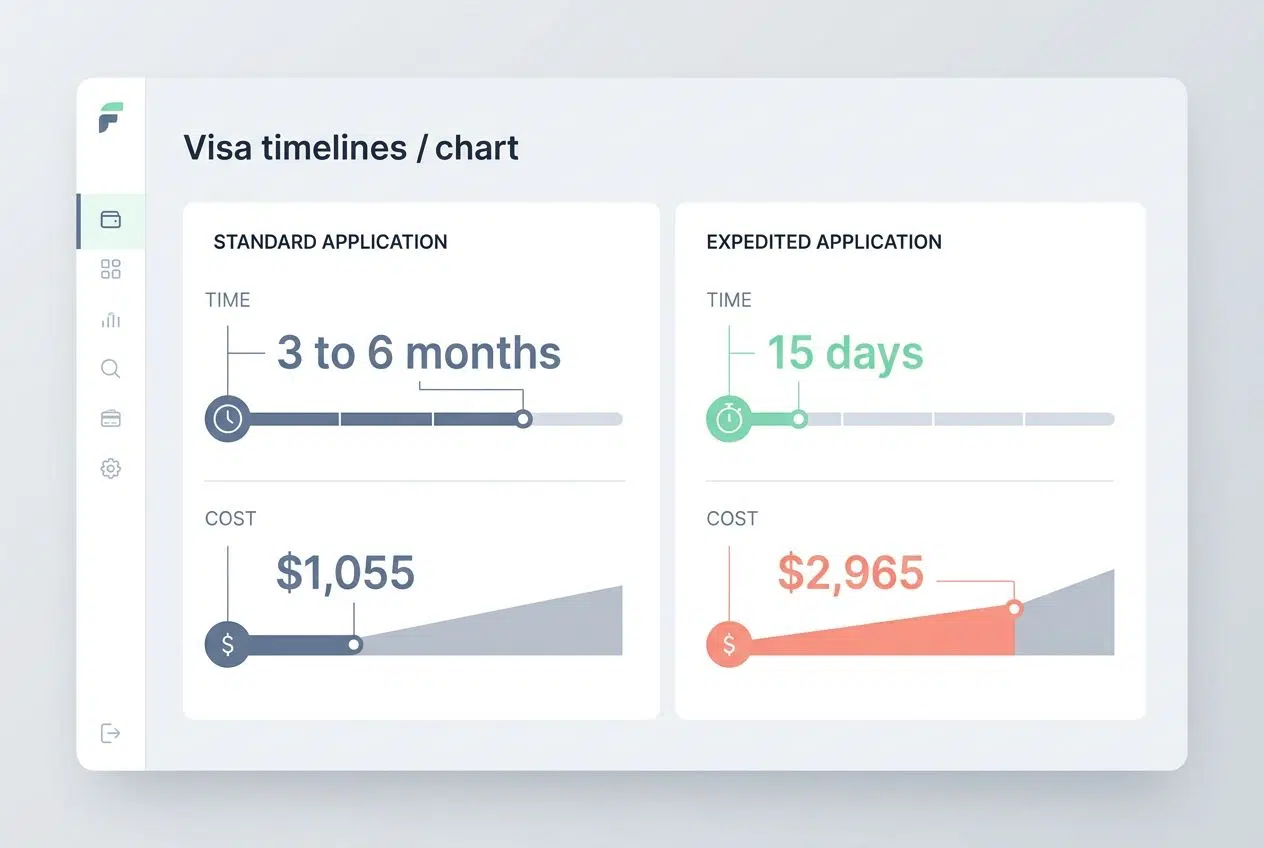
- Standard processing for an O-1 visa takes three to six months.
- Standard filing fees are $1,055 for most employers.
- Premium Processing guarantees a USCIS decision within 15 days.
- As of March 2026, the Premium Processing fee increased to $2,965.
Filing fees stack up fast with P visas, especially if you add support personnel. Always build an extra cushion into your budget so last-minute hiccups do not ruin your tour.
Consulting with an immigration attorney
Working with an immigration attorney clears up massive confusion about your specific options. These experts help you pick the right path and gather the exact proof USCIS wants to see. They know exactly how to document your extraordinary ability.
An attorney prevents common mistakes that trigger costly rejections or Requests for Evidence (RFEs). Legal fees for an O-1 visa generally range from $5,000 to $10,000, but the investment protects your entire career timeline. Some lawyers even connect you with sponsors who can back your application.
Tips for a Successful Visa Application
A strong application stands out clearly to immigration officers. Small details and well-organized paperwork make all the difference.
Gathering strong evidence of achievements
Start by highlighting your absolute best work. You must paint a picture of sustained success and high demand for your specific talents.
- List all awards, press mentions, and major media stories.
- Include proof of past performances at well-known venues or festivals.
- Gather letters of endorsement from respected leaders in your creative field.
- Show contracts for paid gigs and sales records for your art.
Collect photos and flyers as backup to visually prove your working history.
Importance of advisory opinions
Advisory opinions are professional stamps of approval from expert groups or unions in your industry. Most P visas and O-1B visa applications require this written support. They help immigration officers understand your true impact without getting lost in technical lingo.
For example, the Actors’ Equity Association provides these required letters for theater performers. Without an advisory opinion, even outstanding artists risk a fast denial. It is a mandatory step to prove that experts recognize your creative ability.
Preparing for interviews and documentation
Get all your papers ready well before your visa appointment at the embassy. Bring your passport, letters from clients, and duplicate copies of your Form I-129 approval notice. Keep digital and printed copies handy because documents sometimes go missing.
Practice simple answers for questions about your freelance work or creative projects. Officials like clear stories with facts, including names, dates, and how often you perform. Stay calm, answer honestly, and let your amazing portfolio do the heavy lifting.
Final Words
You now have a clear path through the many Visa Options for Freelance Artists and Musicians. Picking the right artist visa makes your international travel legal and completely stress-free. These options allow your creativity to shine across borders without red tape slowing you down.
Chase your big dreams with confidence! Every passport stamp is the next step in your journey from local talent to global star.