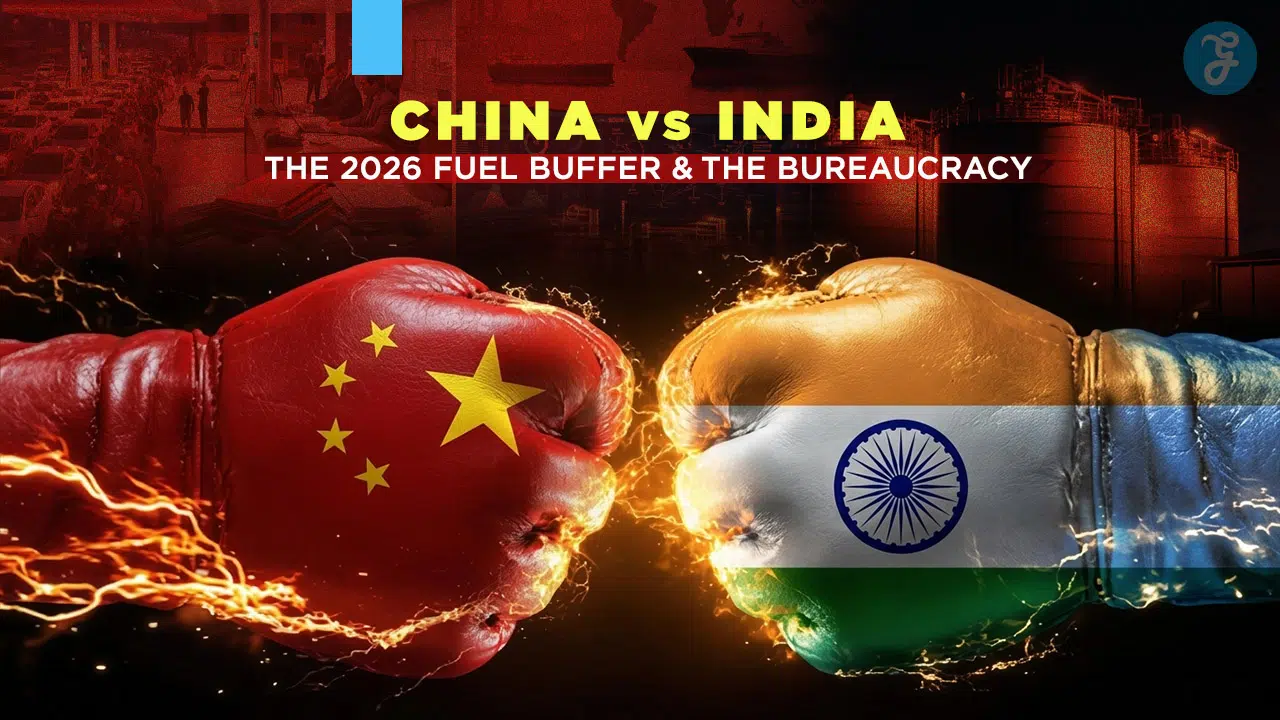
The common view of the 2026 fuel shock is that it is a simple story of global shortage. Markets tell us that supply lines are broken and prices must rise. But this narrative misses the real tectonic shift. The crisis is not about what is missing from the world’s pipes. It is about what was stored in the ground years ago. In Asia, 2026 fuel shock resilience is being defined by a brutal gap in physical preparation. One giant has a six-month shield. The other has a ten-day panic.
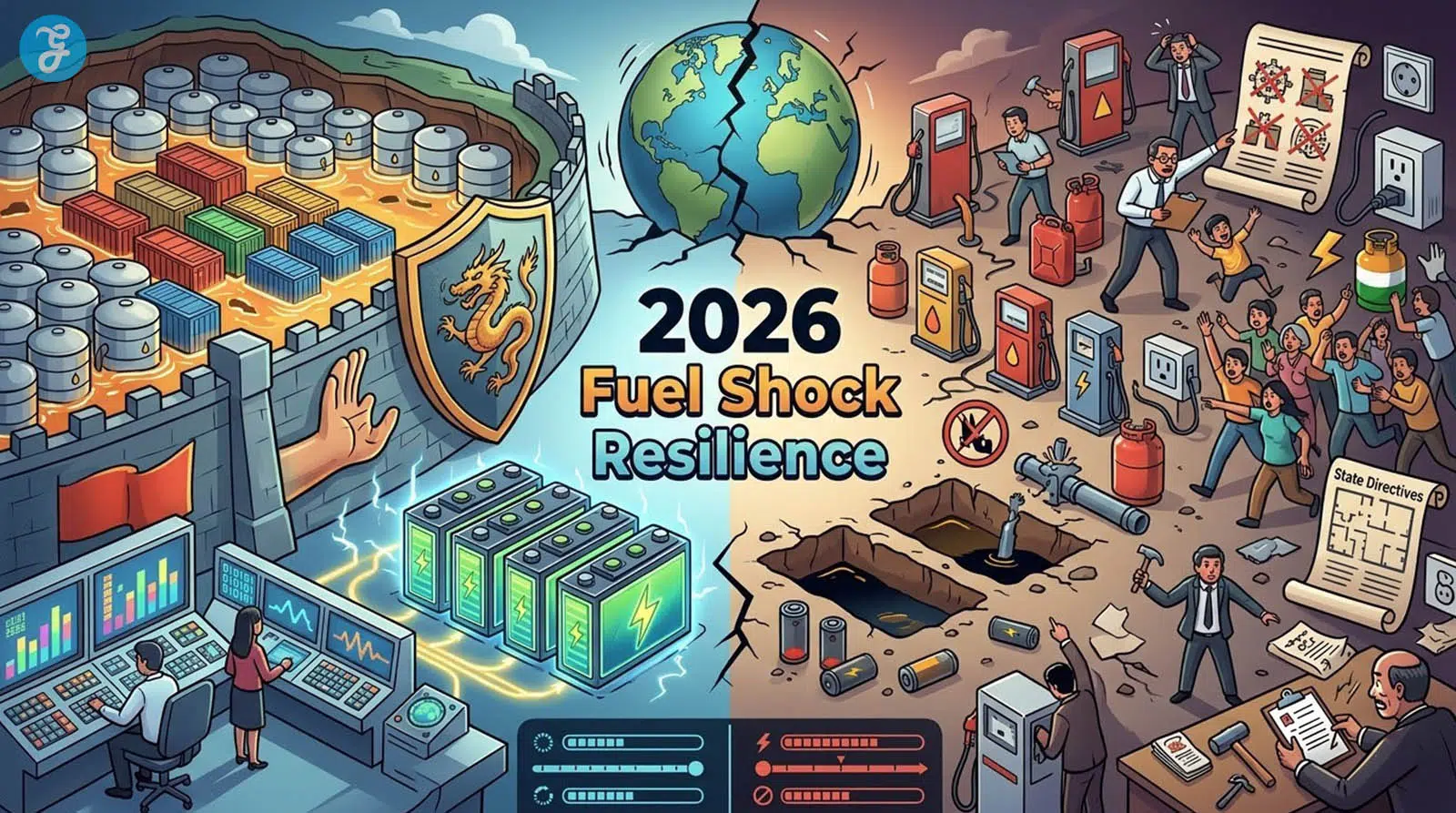
Beijing is currently winning the battle of the batteries and the barrels. While the world watches the Strait of Hormuz, China is drawing from a secret sea of oil. It built its strategic reserves in silence. India is now paying for that silence with noise. New Delhi is forced to use the blunt tools of the state to manage a domestic frenzy. This is not just an energy crisis. It is a trial of two different ways to run a nation under extreme pressure.
India: The High-Wire Act
India is a maritime prisoner. It imports nearly 90 per cent of its energy. If China is a fortress, India is a high-wire act. The math of Indian energy security is a precarious dance of just-in-time deliveries and half-filled tanks. When the 2026 fuel shock hit, the numbers became terrifying almost overnight. On paper, official reports often cite a 74-day buffer. Look closer, and the truth is far more brittle.
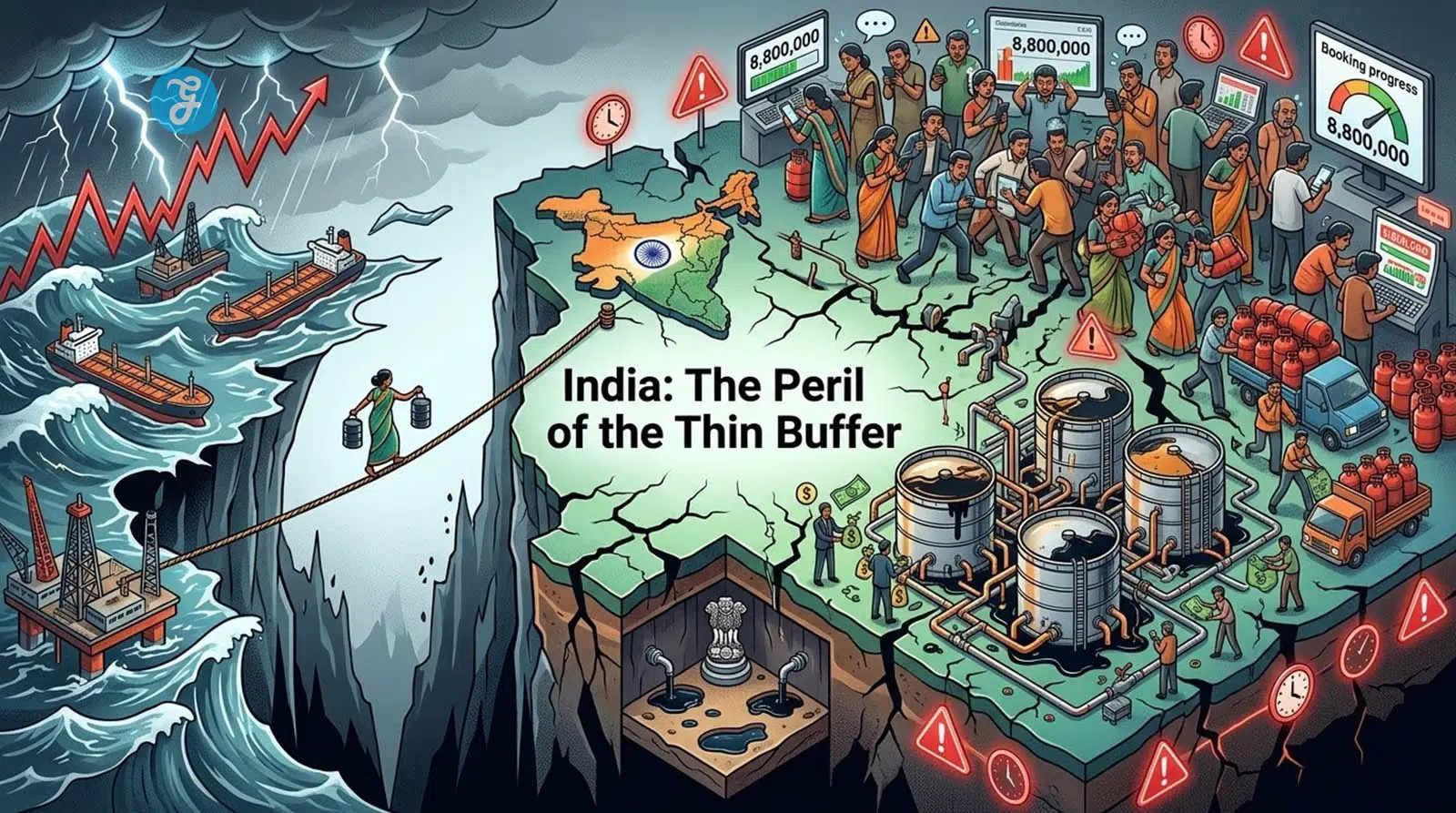 Strip away the corporate inventories and the oil already flowing through pipes, and you find a stark reality: India’s dedicated strategic caverns hold only 9.5 days of supply. The rest is commercial stock sitting in the tanks of refiners. It is oil that is already promised to the pumps. It belongs to the market, not the state.
This thin margin of safety creates a unique kind of national anxiety. In a country where the memory of the 1970s shortages still lingers, a supply dip is a trigger for survival instincts. When the public realised this in mid-March, the reaction was instant. On 13 March, LPG bookings spiked to nearly 9 million in 24 hours. This was not just a sudden demand for fuel; it was a collective mass pre-emptive strike by a population that fears waking up to cold stoves: a loud vote of no confidence in the national buffer.
The Bureaucracy of Scarcity
When the buffer is thin, the state must respond with the only thing it has left: its bureaucracy. The Natural Gas Supply Regulation Order of 2026 is the blunt, desperate instrument of this intervention. By invoking the Essential Commodities Act, New Delhi has effectively taken control of the national hearth to keep the kitchen fires burning. It prioritises the farmer and the cook over the manufacturer, mandating that agriculture and fertilisers receive protected status to ensure food security for 1.4 billion people ahead of industrial needs.
It is a noble choice for social stability, but it is a death knell for the petrochemical industry. Factories in Gujarat and Maharashtra are seeing their gas supplies cut by nearly 30 per cent. These are the same industries that are supposed to compete with China’s state-shielded giants. By saving the dinner plate, the bureaucracy is starving the industrial engine. It is a trade-off that highlights the lack of a physical cushion; policy is forced to do the work that should have been done by concrete and steel years ago.
The Temporary Relief Valve
Desperation has led to a reliance on external mercy. The recent 30-day waiver from the US for Russian oil imports is a perfect example. It is a relief valve that lets the pressure out, but it does not fix the leak. This waiver is a temporary fix that only serves to highlight the absence of a permanent Indian buffer. It keeps the lights on for another month while the nation waits for the next geopolitical miracle.
This reliance on diplomatic goodwill is the opposite of sovereignty. It means that Indian energy security is currently decided in Washington and Moscow rather than in New Delhi. The 2026 crisis has shown that a nation without a deep cellar is a nation that must always be asking for a favour. The high-wire act is exhausting. For the Indian consumer and the Indian industrialist, the lack of a real buffer means living in a state of permanent alert.
The Price of a Delayed Shield
The tragedy is that this vulnerability was predictable. Plans for the second phase of strategic reserves in Chandikhol and Padur have been stuck in the gears of land acquisition and environmental clearances for a decade. This is the bureaucracy that has failed the buffer. While China built, India debated. Now, as the 2026 fuel shock bites, the cost of that debate is being paid by every citizen at the pump and every worker on the factory floor. The high-wire act cannot last forever.
The Stage and the Vault
The 2026 fuel shock has created a diplomatic mask. While official speeches in New Delhi and Beijing preach regional cooperation, the reality is a cold calculation of survival hidden behind vault doors. Publicly, India appeals to the International Energy Agency for market stability, but internally, the state is in full damage control. Rather than projecting absolute power, New Delhi is forced into defensive manoeuvres, invoking the Essential Commodities Act and deploying naval escorts to protect merchant tankers, frantically prioritising the fragile civilian pumps and stoves over any illusion of strategic comfort.
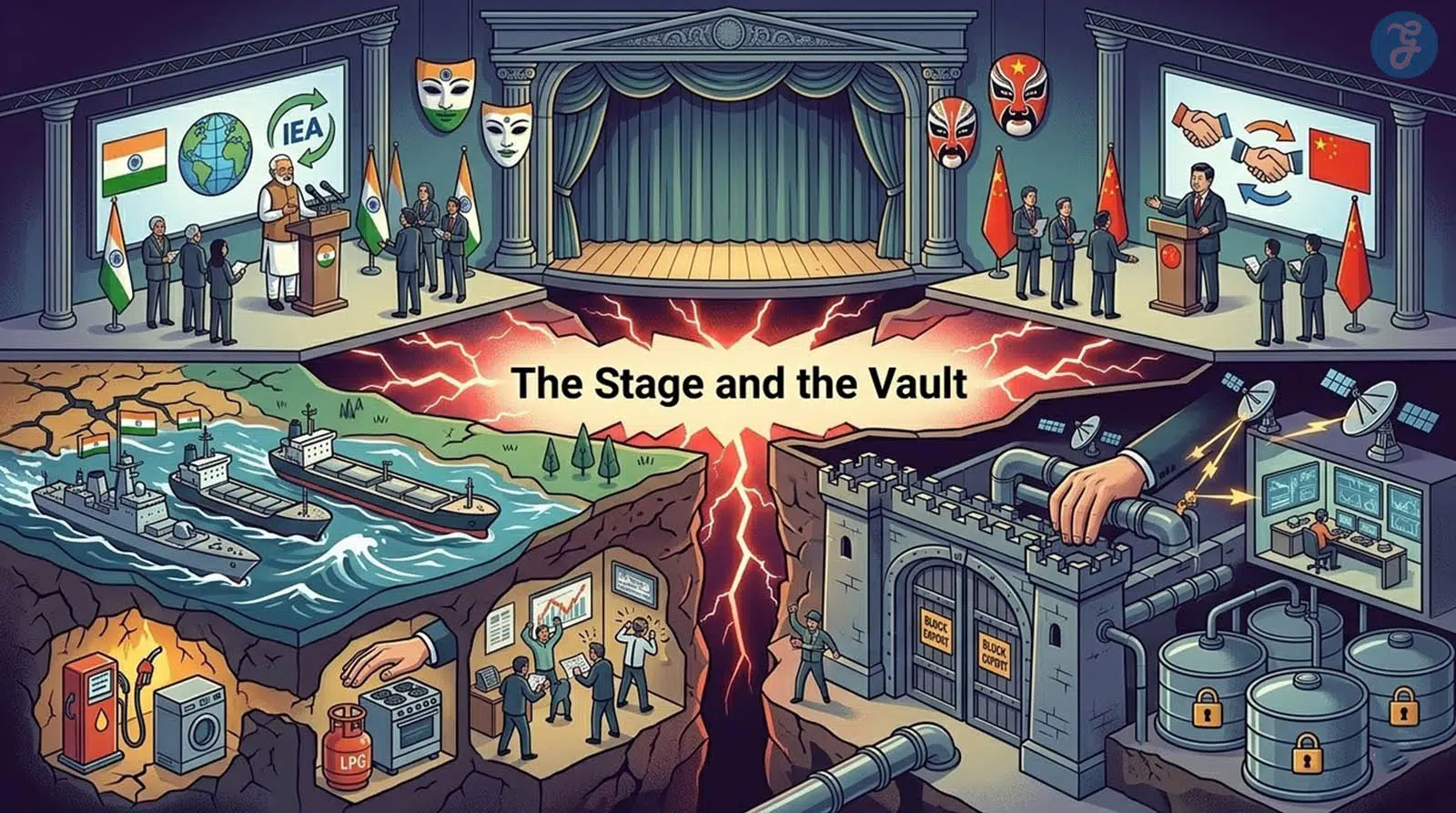 China plays its own ruthless game, projecting economic stability while pulling up the drawbridge. Beijing has enforced a severe, state-mandated blockade on refined product exports, immediately trapping vital gasoline and diesel behind its borders to insulate its domestic market from the global crisis. This underlying reality proves that resilience is not being built through diplomacy, but through aggressive self-preservation. The true power in this crisis lies in the growing gap between international rhetoric and the drastic actions taken to secure every last drop.
China: The Architecture of “Fortress Energy”
Beijing is not just playing the energy game. It has rewritten the rules. While other nations treat oil as a commodity to be bought and sold, China treats it as a structural foundation for survival. This is the core of the Strategic Petroleum Reserve (SPR) Gap 2026. The numbers are staggering. By the start of this year, China’s total reserves pushed past the 1.3 billion barrel mark. This is not a mere stockpile. It is a continental scale insurance policy.
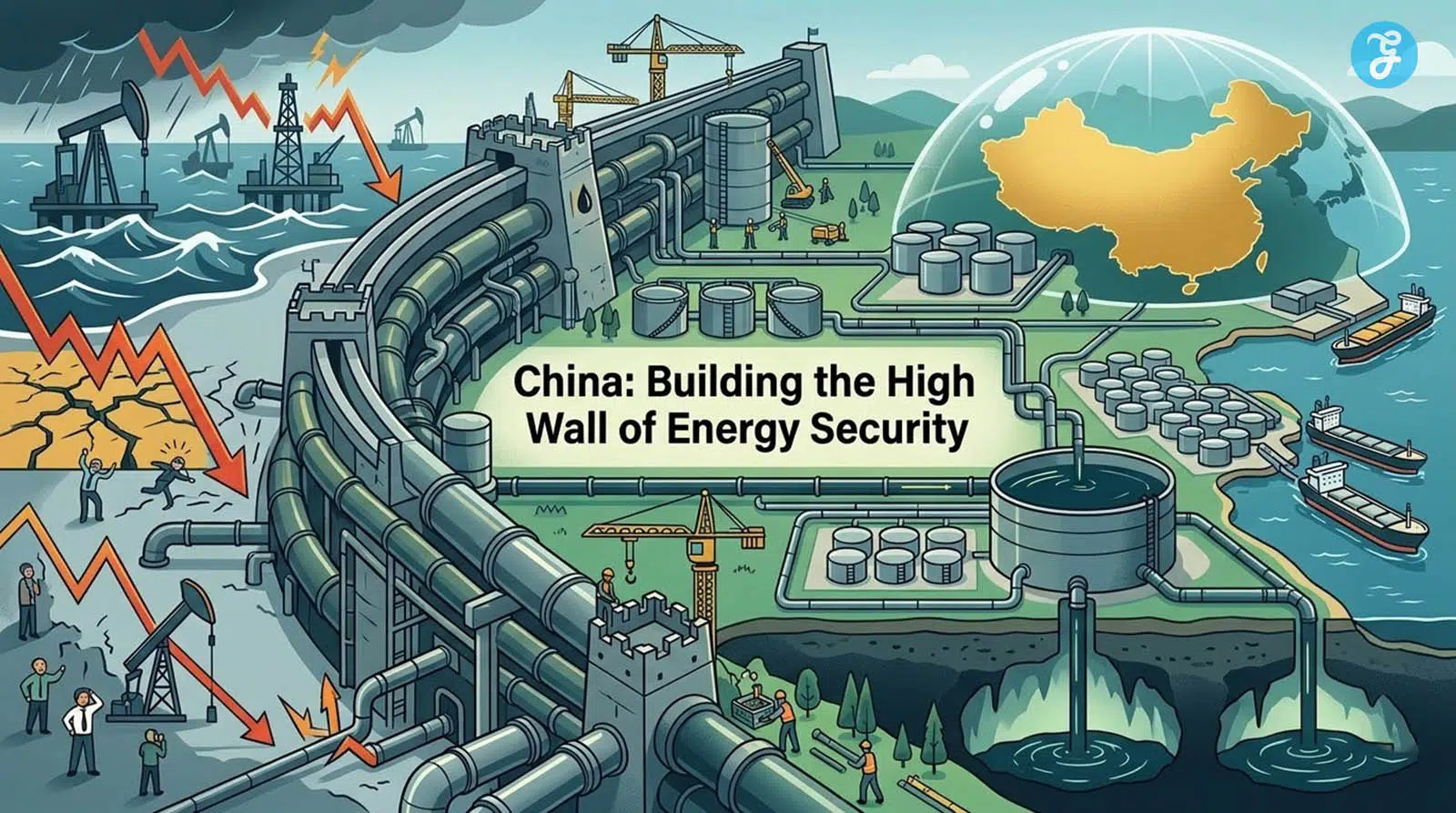 The expansion did not happen by chance. Between 2025 and 2026, China moved with a singular focus to fill every available cavern. It added massive new capacity in places like Zhoushan and Liaoning. These sites are the physical anchors of a nation that refuses to be held hostage by global price swings. When the shock hit in March, China did not panic. It simply stepped back from the open market’s price spikes, quietly maintained its secured pipeline flows, and started breathing from its own massive reserves.
The Law of the Tank
The real genius of the Chinese model is found in the Energy Law of January 2025. This legislation was a quiet revolution. It did something few democracies could ever achieve. It unified every drop of oil on Chinese soil under a single command. The law introduced a “Social Responsibility” mandate for the private sector. In simple terms, it turned every commercial tank into a national asset.
Before this law, private refiners could trade their stocks for profit. Now, they must hold a minimum level of supply for the state. Beijing has effectively decentralised its reserves. It no longer relies only on giant state facilities. It has countless smaller buffers spread across its industrial heartland. This integrated system allows the government to control the national pulse. If a specific province faces a shortage, the state can redirect private stocks with a single order.
The 6-Month Shield
This massive volume gives China a 6-month import cover. This is its greatest competitive advantage. In a market where a 1 per cent supply dip can send prices soaring, China can afford to wait. It can ignore the short term noise. While Indian industries face gas rationing, Chinese factories keep their assembly lines moving. They are shielded from the volatility that is currently crippling their rivals.
This shielding creates a massive price disparity. Chinese manufacturers are essentially paying a “pre shock” price for energy while the rest of the world pays the “crisis” price. This is how a buffer becomes a weapon. China can maintain its export volumes and keep its prices stable. It is stealing market share while everyone else is just trying to keep the lights on.
The Opportunist in the Market
The geopolitics of this buffer are cold and calculated. China has become an opportunist in a market of prey. Because it does not need to buy oil right now, it can wait for the desperate to sell. It can negotiate from a position of absolute strength. If a producer nation needs a quick exit for its cargo, Beijing is there with a low offer and a full tank.
This ability to “wait out” a conflict is a form of power that a navy cannot provide. It is the power of patience. China is not just surviving the 2026 fuel shock. It is using it to reshape the global hierarchy. It is proving that in a fractured world, the nation with the deepest cellar is the nation that leads. The Strategic Petroleum Reserve (SPR) Gap 2026 is not just a statistical difference. It is the distance between a leader and a follower.
The “Dhaba Economy” vs. The “Factory Floor”
The 2026 fuel shock is not just a ledger of imports and exports. It is a story told in the steam of a kitchen and the silence of a factory. In India, the energy crisis has a human face. It is the face of the migrant worker who relies on the roadside dhaba for a single affordable meal. When gas rationing hits, these small eateries are the first to break. In Kerala alone, 1,200 local restaurants have shuttered their doors in the last month. They simply cannot pass the cost of black market cylinders onto a customer base that lives on a knife edge.
For the 100 million internal migrants in India, this is a catastrophe of daily survival. These workers are the backbone of the construction and textile sectors. They do not have kitchens of their own. They eat where they work. When the dhaba closes, the nutritional security of an entire workforce is compromised. The state’s choice to prioritise household LPG over industrial gas was meant to prevent a middle class revolt. Instead, it has sparked a quiet crisis among the people who actually build the nation.
The Invisible Subsidy
While India scrambles to feed its workers, China is busy outrunning its rivals. This is where the “Buffer” becomes an existential threat to Indian industry. Because Beijing is sitting on 6 months of oil, it can freeze energy prices for its exporters. A factory in Guangdong is currently operating with an invisible subsidy. Its electricity and heat costs are stable because the state is drawing from its deep reserves.
This is not just a temporary advantage. It is a structural realignment of global trade. An Indian chemical plant in Dahej is seeing its overheads jump by 40 per cent due to gas shortages. At the same moment, its Chinese competitor is maintaining its 2025 pricing. In the high volume world of global exports, a 5 per cent price difference is enough to lose a contract. A 40 per cent difference is enough to lose a decade of market share.
The Permanent Shift
The danger for India is that these global supply chains are sticky. Once a European buyer shifts their order from a struggling Indian firm to a steady Chinese one, they rarely look back. They value reliability above all else. China is using its “Buffer” to prove that it is the only reliable partner in a fractured world. It is buying loyalty with the sheer volume of its stockpiles.
India’s “Bureaucracy” is trying to manage the pain, but it cannot invent energy that does not exist. The factory floor in India is being sacrificed to keep the social peace at home. It is a logical political move, but it is an economic tragedy. By the time the 2026 fuel shock recedes, the damage to India’s manufacturing ambitions may be permanent. The dhaba economy and the factory floor are two sides of the same coin. Both are currently being devalued by a crisis that India was not physically prepared to meet.
The Economic Undercurrent: The Profit of Pain
Follow the money and you find a strange set of beneficiaries. While the Indian deficit widens, specialised arbitrage firms in Dubai are thriving. These entities are moving Russian crude under the 30-day US waivers. Within India, the shift is creating a dual economy. Large fertiliser plants, protected by the Natural Gas Supply Regulation Order of 2026, are maintaining their margins through state subsidies. However, the small textile units are being bled dry. This is a massive wealth transfer from the industrial base to the state protected giants. In the long term, this crisis will lead to a more consolidated but less diverse Indian landscape.
Diplomacy in a Fractured Order
The global energy map has a new centre of gravity. In early 2026, the diplomatic irony is reaching a peak. India is now publicly hoping that China will release some of its massive reserves to cool global prices, a startling admission of a shift in power. For decades, the world looked to Washington or Riyadh to stabilise the markets. Today, New Delhi is essentially asking its greatest rival to act as the world’s central bank for oil.
Both giants are technically maritime prisoners. Over 80 per cent of the oil and gas destined for Asia must pass through the Strait of Hormuz, a narrow chokepoint that can be strangled by a single geopolitical misstep. But this is where the symmetry ends. China has spent 20 years building a backdoor that India simply does not have. Its overland pipelines from Russia and Central Asia act as a secondary circulatory system. When the sea lanes are threatened, Beijing can still draw breath. India, meanwhile, remains a captive of the waves. Every tanker delayed is a heartbeat skipped in Mumbai or Chennai.
The New Currency of Loyalty
Energy is the ultimate diplomatic currency. China’s ‘Energy Law of 2025’ turned every private oil tank into a national asset, allowing Beijing to play a long game. It can use its buffer as a carrot or a stick, offering energy security to smaller Asian neighbours currently drowning in high costs. A cut-price oil deal or a guaranteed gas shipment can win a decade of political alignment.
New Delhi is fighting a different battle. When a nation is rationing gas for its own citizens, it has very little left to offer its friends, creating a dangerous vacuum in regional leadership. While India is trapped in a cycle of reactive policy, with its storage plans in Padur stuck in red tape for years, China is using its buffer as a magnet for diplomatic influence. The 2026 fuel shock proves that you cannot build a shield while the arrows are already in the air.
The Great Pivot: Crisis as a Catalyst
The 2026 fuel shock has achieved what three decades of climate summits could not. It has broken the myth of fossil fuel reliability. For years, energy security was about securing the cheapest cargo or the safest sea lane. That era is over. In the harsh light of this crisis, energy security has become synonymous with renewable autonomy. The world is learning that a nation is only truly free when it does not need to ask a neighbour or a rival for permission to keep the lights on.
This is the year the global north and south stopped debating carbon targets and started fighting for survival. In India, the rationing of gas to the industrial heartlands has acted as a brutal accelerant. This is where the bureaucracy of 2026 might actually outpace the buffer of China. While Beijing can afford to lean on its billion barrel cushion, New Delhi has no such luxury. It is being forced to leapfrog into the future.
The Survivalist Leap
The Indian state is now using the same regulatory muscle it used for rationing to drive a green revolution. Solar power coupled with massive battery storage is no longer just a green goal. It is the only way to shield the factory floor from the next 11 March. We are seeing a desperate, high speed pivot to Green Hydrogen in sectors like steel and cement that were previously tethered to imported gas. The very “bureaucracy” that failed to build oil caverns is now clearing the path for solar parks with unprecedented speed. Desperation is a powerful motivator.
China is not standing still, but its massive reserves might ironically slow its transition. When you have a 6-month shield, the urgency to change the entire system is less acute. India’s lack of a safety net has made the status quo intolerable. The 2026 fuel shock resilience is not being built in the oil pits of Rajasthan. It is being forged in the silicon valleys of the south and the wind farms of the west.
The Tally
The ultimate winner of this crisis will not be the nation with the most oil today. It will be the nation that ensures it never needs a buffer again. History will look back at 2026 as the year the maritime prisoners of the Strait of Hormuz finally staged their breakout. China has the advantage of the present, but India is being forced to own the technology of the future.
The true test of 2026 fuel shock resilience is not how long you can hold your breath under water. It is how quickly you can learn to breathe on land. By the time the current volatility recedes, the energy map of Asia will be defined by those who used the shock to exit the old world entirely.
The New Asian Century
The resilience gap of 2026 is a mirror reflecting the new hierarchy of Asia. For decades, power was measured in GDP growth and military parades. Today, it is measured in the quiet confidence of a nation that can keep its lights on during a global storm. China has used its buffer to buy time and influence. India is using its bureaucracy to survive a trial by fire. This disparity is not just about oil. It is about the ability to protect the dignity of the citizen and the output of the factory. We are witnessing the birth of a more honest Asian century where true strength is found in the ground under your feet and the sun over your head.
Foresight Assessment
The unintended consequences of the 2026 fuel shock will likely trigger a Great Decoupling within Asia. By late 2027, expect to see the permanent migration of energy-intensive manufacturing from the Indian suburbs to the Chinese mainland. This shift will be driven by the sheer reliability of the buffer. However, this may be a Pyrrhic victory for Beijing. India’s forced, frantic leap into a sun-powered grid will likely create a first-mover advantage in the green hydrogen export market that no oil reserve can match.
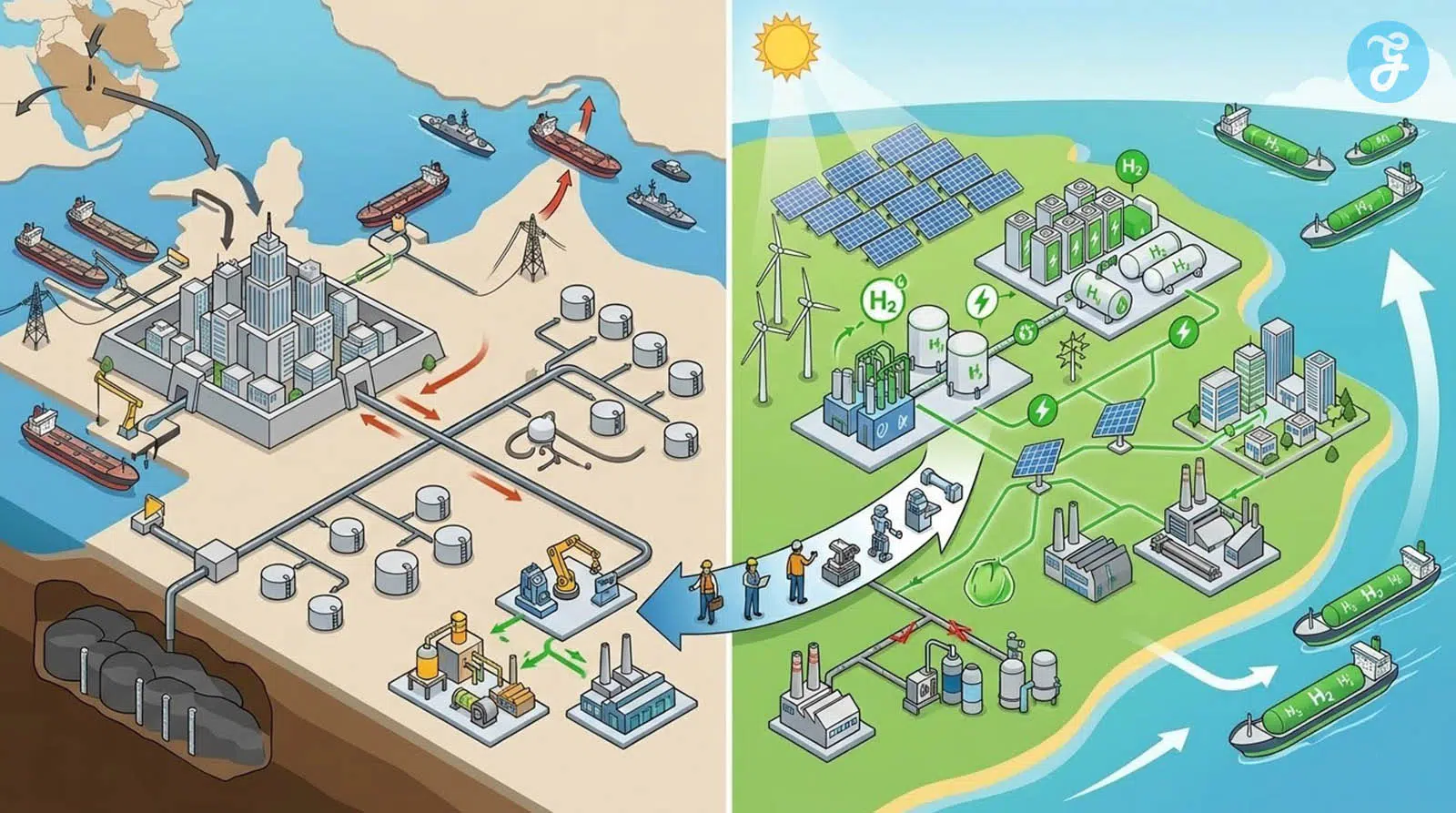
The immediate future suggests a world where the “haves” of fossil storage are eventually overtaken by the “doers” of renewable autonomy. In a world of shocks, a full tank is a temporary comfort. A sun-powered grid is a permanent victory. As the dust settles on this crisis, one question remains for the global order. If energy security can no longer be bought with money or protected by navies, is a nation’s true power defined by what it can store, or by what it can finally afford to outgrow?