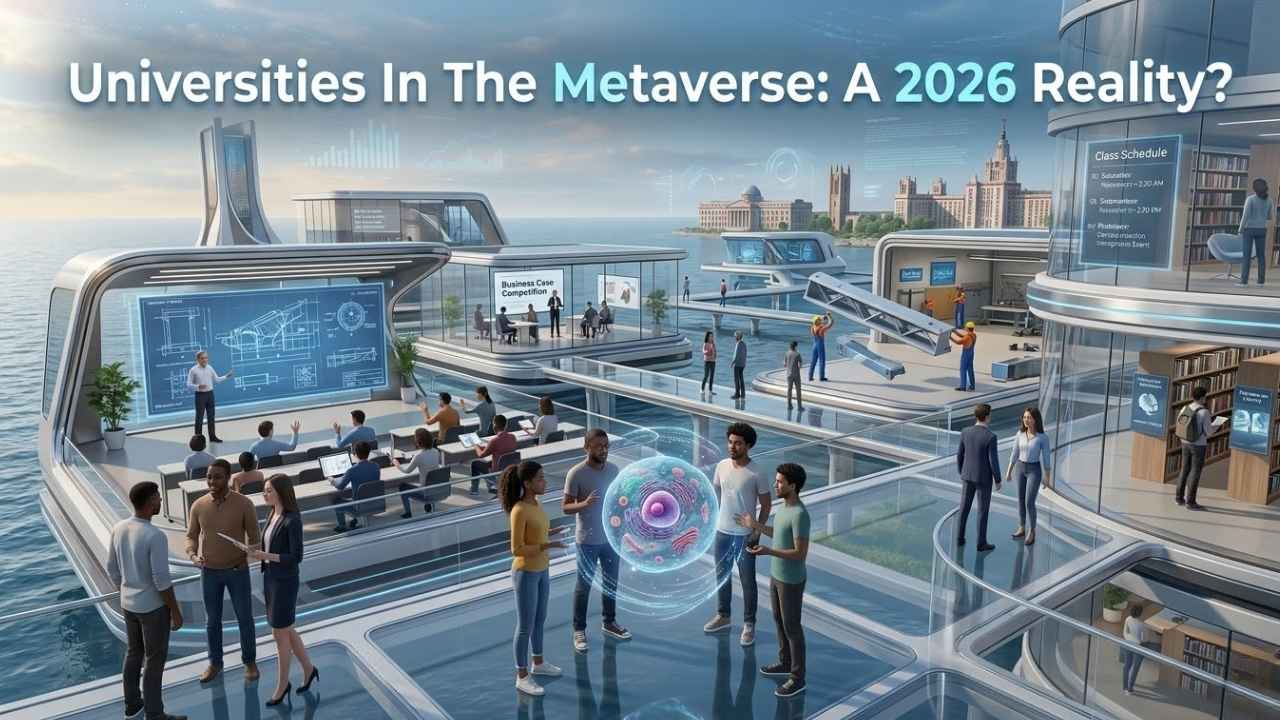
If you are tired of boring online classes, one big question is emerging: Universities in the Metaverse — a 2026 reality? Many students feel stuck staring at endless slides on regular video calls. A better and more engaging way to learn is something many are hoping for.
Some colleges are already building courses inside virtual spaces. Students can enter a digital campus, interact with classmates, and even run experiments from their living rooms.
Top universities are beginning to use Virtual Reality to make learning more interactive and immersive. New trends are shaping how students study and experience education today. The next class might take place in a completely new environment—one that exists entirely in the metaverse.
The Rise of the Metaverse in Education
Schools are now creating virtual spaces where students actually interact and learn together. Teachers can build exciting learning spaces that feel like science fiction.
In my ten years of testing educational technology, I have never seen a shift happen this fast.
Overview of Metaverse Technologies
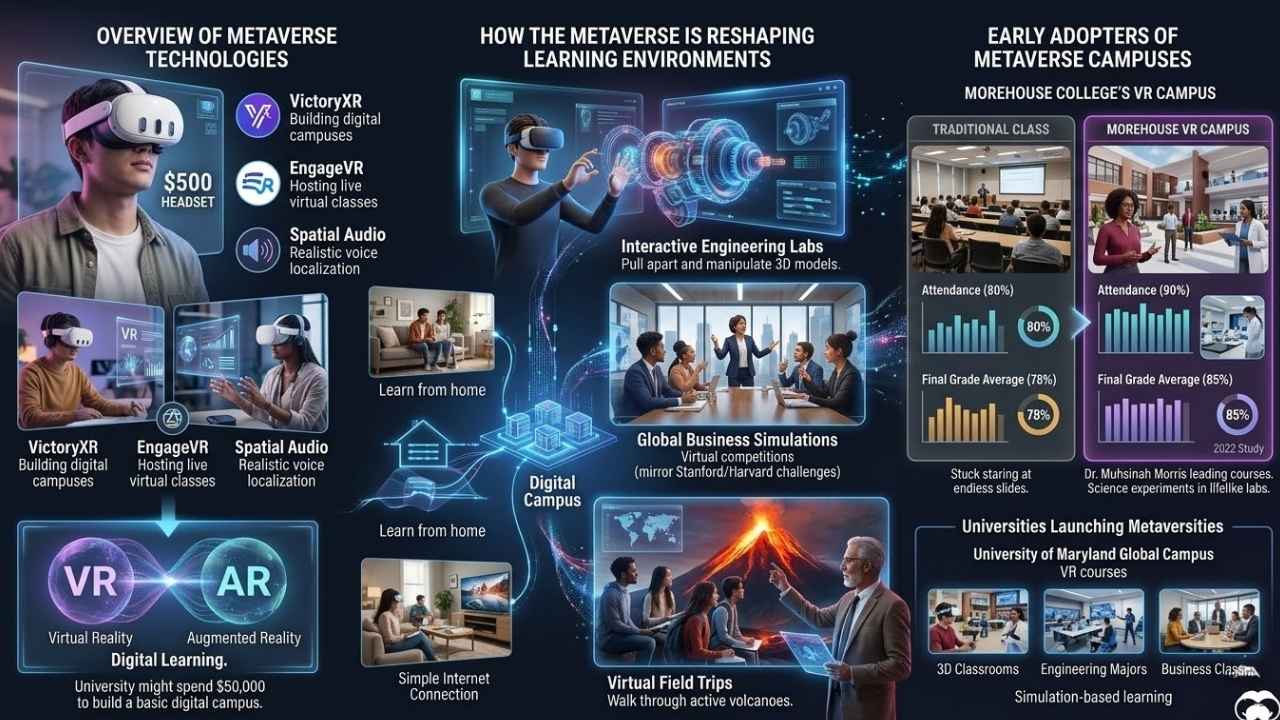
Virtual Reality and Augmented Reality are completely changing digital learning. A university might spend $50,000 to build a basic digital campus. Students wear headsets and step into a computer-generated environment that looks incredibly real.
Learning feels less like reading a textbook and more like playing an adventure game. Courses now take place fully inside these spaces for many higher education programs.
Here are the main tools powering this shift:
- Meta Quest 3: The standard $500 headset most students use for daily classes.
- VictoryXR: A major company building these virtual campuses for colleges.
- EngageVR: The popular software platform that hosts the live virtual classes.
- Spatial Audio: Technology that makes virtual voices sound like they are right next to you.
How the Metaverse is Reshaping Learning Environments
Engineering students now pull apart 3D models in digital labs. They can twist and turn each piece with a simple hand movement. Business majors step into virtual competitions that mirror real challenges at Stanford or Harvard.
Teachers walk students through active volcanoes without needing a plane ticket. Learning leaps off the pages of a textbook. The education feels hands-on because students are actually joining in.
Schools are investing heavily because the rewards are huge. Digital campuses bring people together from across the United States with just a simple internet connection. Educational institutions are racing to keep up. Simulation-based learning is quickly becoming part of higher education.
Early Adopters of Metaverse Campuses
Some colleges are already planting their flags in these digital landscapes. These early actions show us just how far immersive education can go.
Morehouse College’s VR Campus
Morehouse College took a massive leap into digital learning a few years ago. The college built an entire campus inside Virtual Reality.
Students attend classes as avatars and join clubs without leaving home.
Professors like Dr. Muhsinah Morris lead courses where science experiments happen in lifelike labs. The school spent a good amount of money for this setup. Engineering majors use the space for handling complex 3D models.
The results are amazing. A 2022 study on the Morehouse program showed massive improvements across the board.
| Metric | Traditional Class | VR Class |
|---|---|---|
| Student Attendance | 80% | 90% |
| Final Grade Average | 78% | 85% |
Students now drive discussions instead of just listening to lectures. This approach makes higher education much more accessible.
Universities Launching “Metaversities”
Colleges across the United States are setting up digital campuses called metaversities. The University of Maryland Global Campus joined this wave by offering VR courses at no extra cost to their standard tuition.
Students learn by moving through 3D classrooms instead of staring at flat screens. Faculty teach lessons giving students chances that regular online classes cannot match.
Engineering majors work with lifelike models in digital labs. Business classes hold simulated case competitions on these cyber campuses. The student becomes an active leader.
Key Features of Metaverse Universities
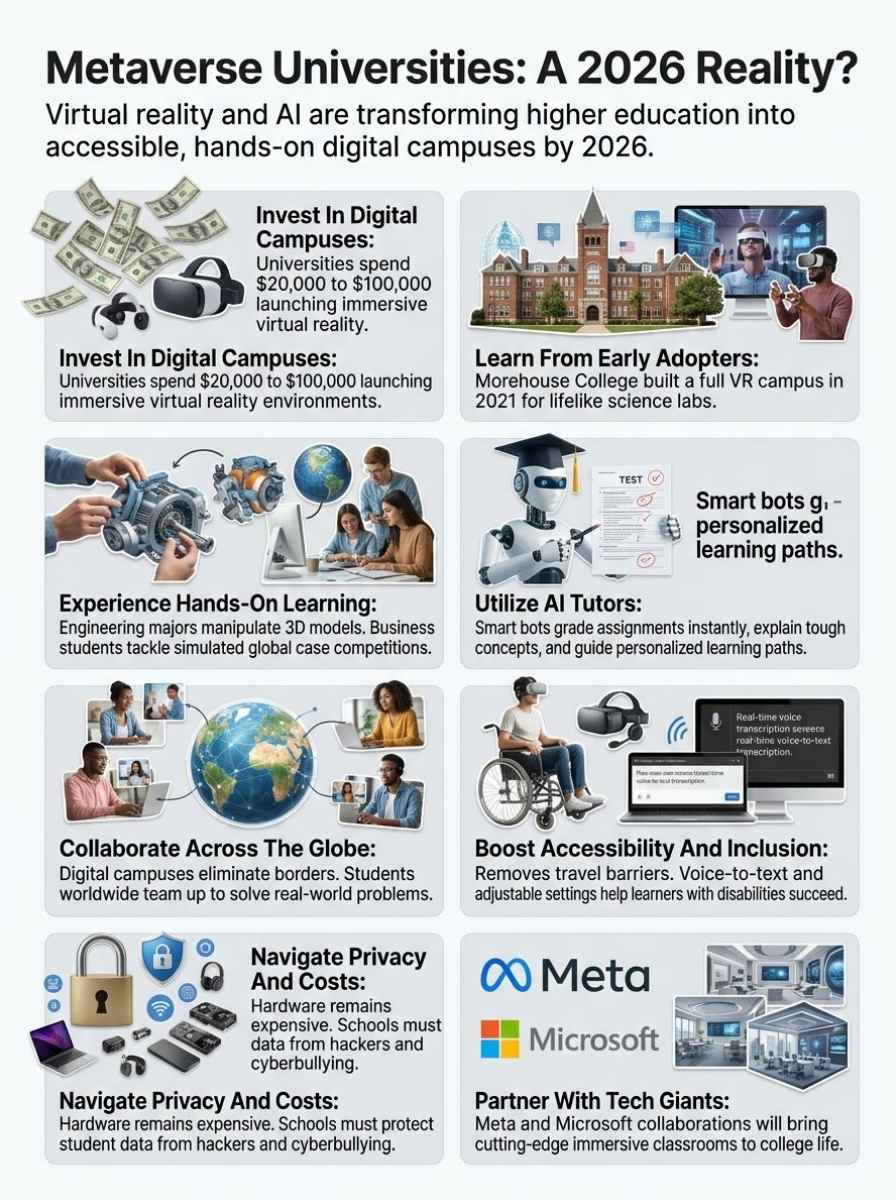
Step into a digital campus where class feels engaging and fun. Imagine grabbing your headset and feeling as if you just walked right through the school doors.
Immersive Virtual Classrooms
Virtual classrooms feel incredibly real. Students wear VR headsets and see their teacher and classmates all around them. Engineering students use 3D models to explore machines from every angle. Business students join simulated case competitions that mirror real challenges. Teachers use Augmented Reality tools to make lessons very lively.
“Students can stand in the middle of a molecule to understand its makeup, leaving 2D textbooks behind.” – Dr. Muhsinah Morris
The role of each student shifts dramatically. They lead experiments or guide group projects instead of just sitting quietly. Virtual learning offers exciting ways to teach tough subjects.
Virtual Campus Tours and Facilities
Students can slip on a headset and walk through dorms and libraries from their couch. These virtual campus tours are not just for show. They let students test equipment in science labs or join club meetings. Morehouse College rolled out its own VR campus to bring these experiences alive. Universities invest heavily to give affordable access to high-tech facilities.
You do not even need a headset to get started. Many platforms let you explore a digital twin campus using a standard web browser like Chrome or Safari. Engineering classes offer hands-on practice while business majors run through simulations.
AI-Powered Learning Tools
AI tools now grade assignments in seconds and suggest personalized learning paths. Teachers get help that saves hours each week. Learners enjoy feedback right after turning in their work.
A 2026 report from UPCEA predicts that AI will soon act as the core operating system for these schools. Bots can hold simple conversations to explain tough concepts.
Here are a few ways AI helps students right now:
- Grading complex assignments in seconds.
- Guiding business majors through difficult case studies.
- Answering late-night questions as a 24/7 virtual tutor.
- Tracking student progress to catch early signs of struggling.
Colleges use these tools for digital courses across the country. This innovation aims to boost student performance.
Benefits of Metaverse-Based Education
You can step into a digital campus from your living room and chat with classmates everywhere. Learning feels less like homework and more like a great adventure.
Enhanced Accessibility and Inclusivity
Students connect in digital classrooms using advanced tech tools. A student from a rural town can sit beside someone in a big city. Learning resources become much more affordable.
Universities remove the need for travel or expensive housing. Engineering students work with 3D models in virtual labs. Business students enter simulated case competitions easily.
All they need is an internet connection and basic VR gear. Classes are also easier to join for those with disabilities. On-screen captions and adjustable settings cater to individual needs. This shift lets more people lead their learning journey.
Interactive and Engaging Learning Experiences
Virtual Reality lets college classes break out of plain screens. Engineering students can twist 3D models in digital labs. Business learners join mock case competitions to feel like they are right in the action.
The technology turns each student into an active player. Courses taught fully online become lively and hands-on. A huge 2025 PwC study proved exactly how well this works for soft skills and professional training.
Here is what the study found about VR learners:
- They complete training 4 times faster than in regular classrooms.
- They are 275% more confident to apply what they learned.
- They are nearly 4 times more emotionally connected to the lesson content.
Teachers get new tools to spark curiosity. Lessons stick longer than they do with old lectures.
Global Collaboration Opportunities
A student in New York can team up with someone in Texas for a science project. Digital campuses remove borders entirely. Students from different states solve real problems together within the same interactive space.
Business students might join a global case competition running inside the virtual world. Engineering teams build 3D models side by side even if they live far apart.
Professors bring their classes into these shared environments. Universities make it easier for learners to interact during lectures. This teamwork trains future leaders to think beyond local limits.
Challenges in Implementing Metaverse Universities
Building these universities faces bumps like high costs and tech hiccups. Let’s look at what schools are doing about it.
High Initial Costs and Technical Barriers
Getting a digital campus off the ground costs around $50,000 for a few virtual buildings. That is just for the software and design. Some schools struggle because they lack fast computers or high-speed internet. Students often need expensive VR headsets to take part in immersive education. Not every household can afford these tools.
Here is a quick look at current hardware costs for students:
| Device | Average Cost | Best Use Case |
|---|---|---|
| Meta Quest 3 | $500 | Standard student access and daily classes |
| Apple Vision Pro | $3,500 | Advanced medical or high-end engineering labs |
| Basic Laptop | $400 | Browser-based virtual campus tours |
Even universities with tight budgets hesitate to invest until hardware costs drop further.
Privacy and Security Concerns
Student data in these spaces can be at risk. Virtual Reality tools collect personal details and voice recordings during online courses. US schools must ensure these platforms strictly follow FERPA privacy laws to protect this sensitive data.
Hackers might target these spaces to steal private files. Keeping this data safe becomes harder as more schools buy this technology. Universities must guard against fake profiles and cyberbullying.
AI tools that support mixed reality classes track student activities closely. Some fear misuse if not watched carefully. Every click could leave behind a digital footprint open to threats.
Adapting Curricula for Immersive Environments
Teachers now create lessons that use Virtual Reality. Physics learners walk through digital labs. Engineering majors build structures with their hands in a virtual world.
The metaverse lets business students join case competitions that feel like real boardrooms. No one sits at the back of the class anymore. Each participant interacts and learns by doing.
“We are building the School of the Future from my school in the past, allowing students to learn by doing.” – Steve Grubbs, VictoryXR CEO
Creating these 3D courses requires specialized software like Unity or Unreal Engine. This means professors need extra training to build their materials. Educational institutions look for new ways to blend traditional topics with this technology.
Universities In The Metaverse: A 2026 Reality?
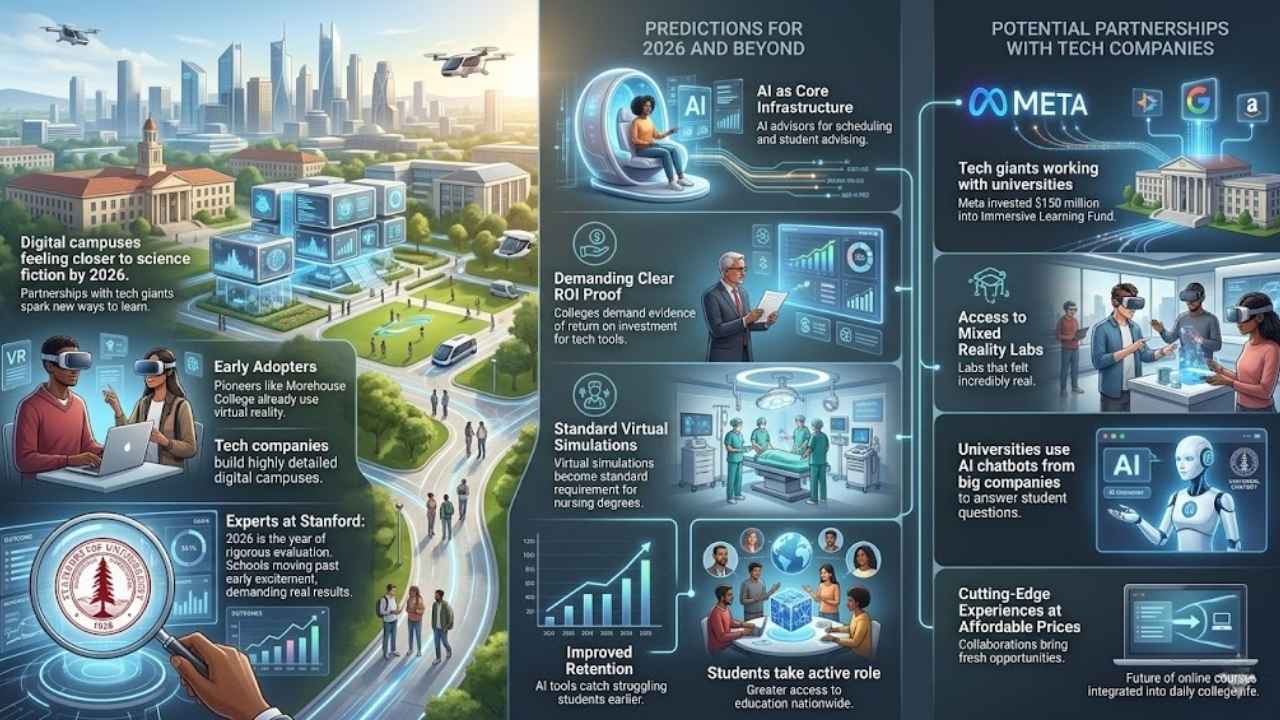
By 2026, digital campuses feel closer to science fiction than ever before. Partnerships with tech giants spark new ways to learn.
Predictions for 2026 and Beyond
Courses taught fully in the metaverse are popping up across higher education. Schools follow pioneers like Morehouse College that already use virtual reality.
Tech companies work with colleges to build highly detailed digital campuses. Experts at Stanford University predict that 2026 is the year of rigorous evaluation. Schools are moving past the early excitement and demanding real results.
Here are a few specific predictions for the near future:
- AI will act as the core infrastructure for student advising and scheduling.
- Colleges will demand clear proof of return on investment for new tech tools.
- Virtual simulations will become a standard requirement for nursing degrees.
- Retention rates will improve as AI tools catch struggling students earlier.
Students take an active role in their learning journeys. This shift brings better access to education around the country.
Potential Partnerships with Tech Companies
Tech giants began working with universities to build digital campuses a few years ago. Meta invested $150 million into an Immersive Learning Fund to help schools get started.
These partnerships gave students access to mixed reality labs that felt incredibly real. Collaborations with tech firms bring fresh opportunities every single month.
Universities use AI chatbots from big companies to answer student questions. Higher education gets access to cutting-edge experiences at affordable prices. Partnerships shape the future of online courses as they become part of daily college life.
Final Thoughts
Virtual universities are moving incredibly fast. They use new tech to create exciting ways for students to learn. Schools can easily set up digital campuses with interactive classes. These steps are not hard to try out. They cost less over time and help more people join in class discussions. Students from all over the country can finally connect in a meaningful way.
If you are still wondering about Universities In The Metaverse: A 2026 Reality?, the answer is a resounding yes. Many online resources share tips for a smooth start. The future is bright as digital campuses open new doors. Let your curiosity lead you forward into this exciting new way to learn.