Are you tired of reading gloomy news about vanishing rainforests? It feels like every update is just another loss for nature. But there is a bright spot on the horizon. Smart technology is completely changing the game. From high-flying satellites to nimble drones, these tools now watch over our wild places around the clock. Saving The Rainforests: Tech Solutions is more than just a catchy phrase.
It is a real movement happening right now.
The Importance of Saving Rainforests
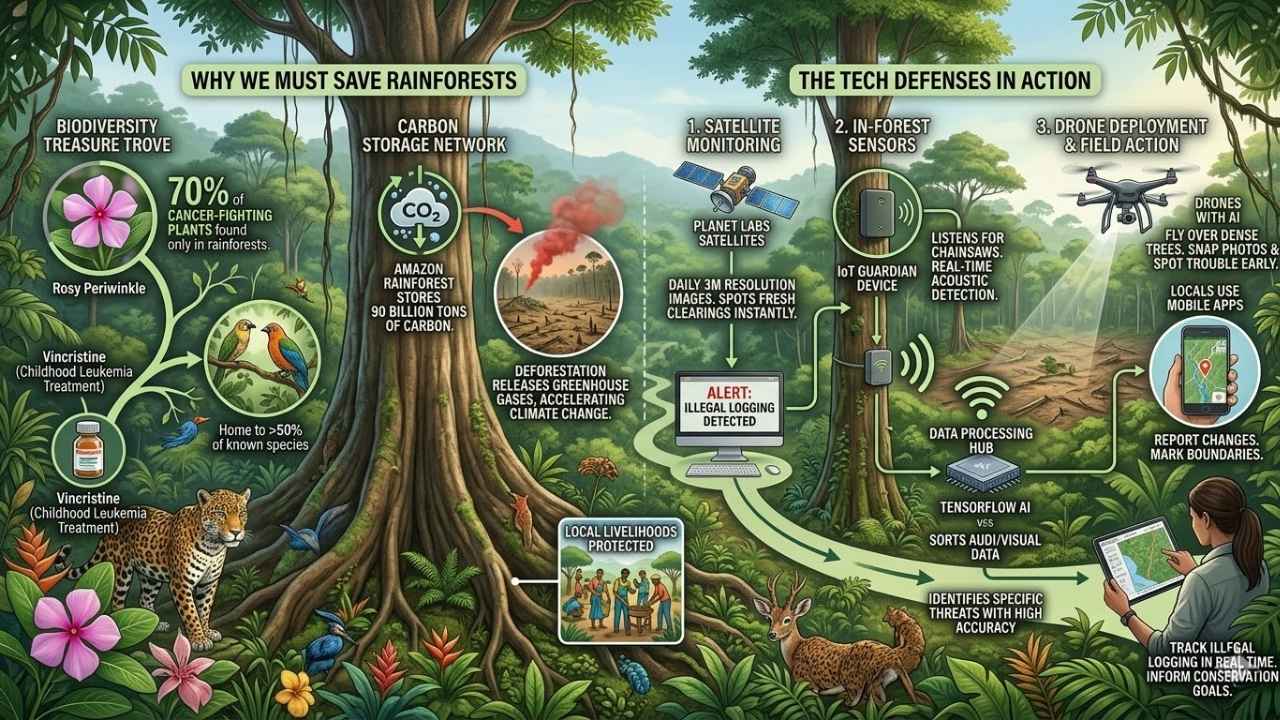
Rainforests hold an incredible treasure trove of life. They shelter more than half of the world’s plant and animal species, yet they cover less than 7% of Earth’s land surface. Losing these forests means losing rare birds, insects, and trees that hold immense medical value.
For example, the US National Cancer Institute notes that 70% of plants useful for cancer treatment are found exclusively in rainforests. The rosy periwinkle from Madagascar gave us Vincristine, a key medicine for childhood leukemia.
The Amazon alone stores over 90 billion tons of carbon. Cutting down these trees releases greenhouse gases rapidly, which speeds up global warming and climate change.
Tech innovation matters now more than ever for environmental protection. Groups like Rainforest Connection team up with Hitachi to build smart defenses. They use artificial intelligence, satellite images, drones, and acoustic sensors.
“Preserving the Amazon is not just a local issue; it is a global climate necessity. Every tree saved keeps vital carbon locked away safely.”
These tools track illegal logging and habitat loss in real time. Knowing the exact spots where key tree species stand helps answer big questions about conservation goals. This ecotechnology saves both wildlife and local livelihoods before it is too late to turn back the clock.
Role of Technology in Rainforest Conservation
Technology takes center stage in saving rainforests today. Drones fly over dense trees to snap photos and spot trouble early. Satellites from companies like the US-based Planet Labs scan whole continents from space.
They provide daily, high-resolution images to track deforestation as it happens. Artificial intelligence sorts through these images fast, finding patterns humans might easily miss. Groups bring these high-tech tools together to protect threatened areas across five continents.
Here is how different tools play a part in this mission:
- Planet Labs Satellites: Capture daily 3-meter resolution images of the entire Earth to spot fresh clearings instantly.
- IoT Guardian Devices: Listen for chainsaws deep in the woods, helping stop illegal logging before too many trees fall.
- TensorFlow AI: Sorts massive amounts of visual and audio data to identify specific threats with high accuracy.
Even smartphones are incredibly useful. Locals use specific mobile apps to report changes or mark boundaries of their land. Innovation keeps the fight moving faster than those who harm forests ever expected.
Real-Time Deforestation Monitoring
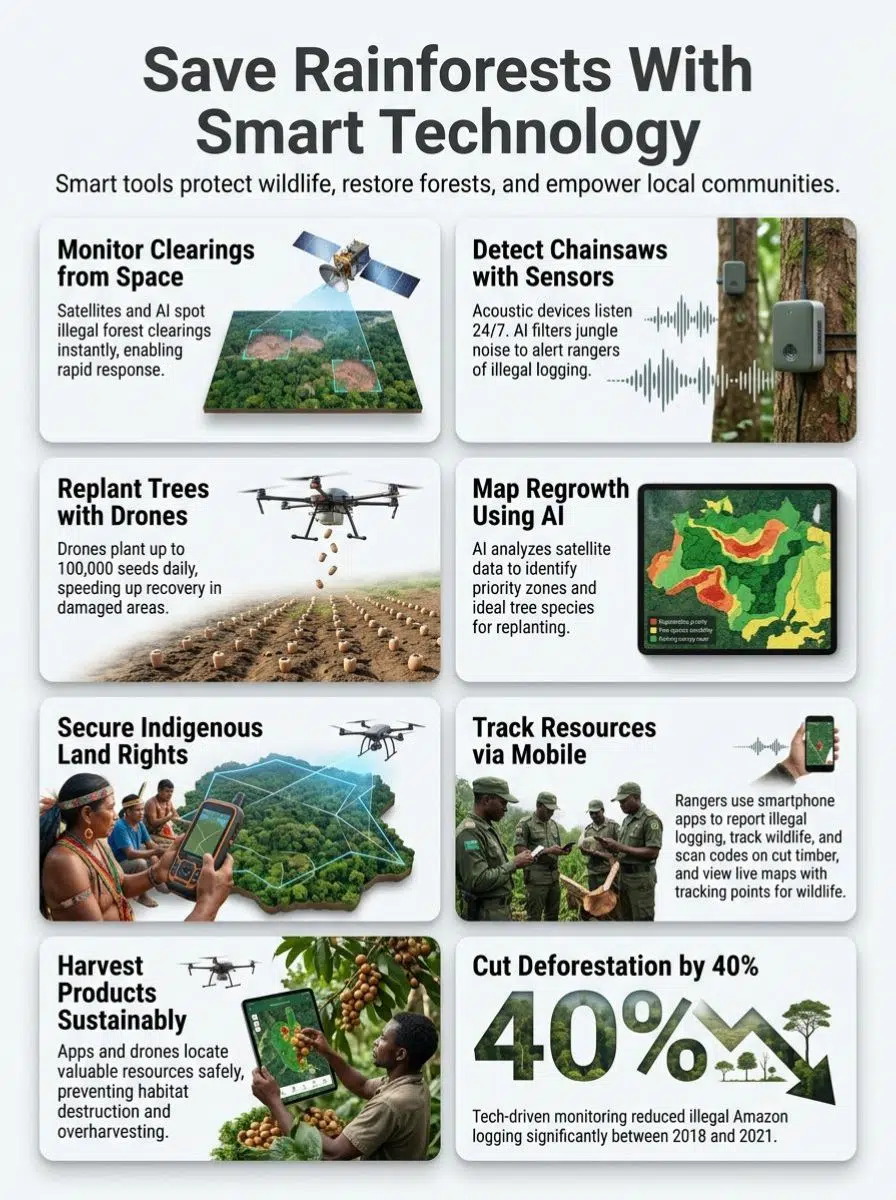
Today’s smart tools spot illegal tree cutting incredibly fast, so every moment counts. Let us look at how these wild forests get their superhero tech boost.
Satellite imaging and AI tools
Satellites soar high above rainforests, snapping thousands of pictures each day. These images help spot even the tiniest changes in forest cover. This makes it much easier to track sneaky deforestation.
Artificial intelligence steps in next to scan these photos. Tools like the Global Land Analysis and Discovery (GLAD) system update every eight days to flag fresh clearings. In 2025 alone, AI tools flagged several hotspots where illegal logging threatened key species.
Groups like Rainforest Connection and Hitachi team up to use this tech across five continents. By comparing old and new satellite pictures with smart computer eyes, scientists catch forest destruction quickly. They often spot it within hours instead of months.
| Monitoring Method | Average Response Time | Data Accuracy |
|---|---|---|
| Traditional Foot Patrols | Weeks to Months | Low (Limited area coverage) |
| Satellite and AI (GLAD) | 2 to 8 Days | High (Near-global coverage) |
Quick action can then protect more biodiversity and slow climate change before damage gets worse. This mix of satellites and AI gives conservation a fighting chance against threats that once went unnoticed.
Acoustic sensors to detect illegal logging
Acoustic sensors work like super ears in the rainforest. These tech tools listen for chainsaws and trucks, picking up signs of illegal logging even at night or during storms. Rainforest Connection places thousands of these sensors, called “Guardians,” in trees across the Amazon.
These Guardian devices are brilliant because they are built from upcycled US cell phones and solar panels. The sensors use real-time audio to alert rangers the moment suspicious sounds echo through the forest. They can hear a chainsaw from almost a mile away.
Artificial intelligence helps sort out normal jungle noises from true threats.
- Monkeys chattering? The AI labels it as safe.
- Rainfall and thunder? The AI filters it out completely.
- Chainsaw revving? The AI triggers an immediate danger alert for rangers.
With data flowing around the clock, teams move fast to stop deforestation before big damage happens. This kind of smart monitoring protects biodiversity by catching troublemakers red-handed.
High-Tech Restoration Solutions
Tech experts are bringing rainforests back to life in ways past generations only dreamed about. Stick around and see how these gadgets grow green magic.
Replanting degraded areas using drones
Drones now fly above damaged rainforests to bring new hope to battered lands. These gadgets are highly efficient seed spreaders. Startups like Dendra Systems use drone swarms to fire biodegradable seed pods directly into the ground at high speeds.
They can plant up to 100,000 seeds in a single day. This is roughly 120 times faster than people planting on foot. In places like the Amazon, drone teams use GPS and AI tools to pick ideal spots for tree planting.
“A single drone operator can restore acres of lost forest in hours, a task that used to take a human crew weeks to complete.”
By using drones for reforestation, technology speeds up recovery after illegal logging or wildfires. Drones reach steep slopes or flooded patches where humans struggle to walk safely. Their sensors gather data about soil moisture and sunlight too.
This careful planning makes each seed drop count even more. With shrinking forests across five continents, these flying helpers are completely changing conservation work.
Promoting forest regrowth with AI models
AI models now help forests bounce back faster and smarter than ever before. Scientists feed these artificial intelligence systems with data from satellites, drones, and ground sensors.
They pick up on where tree cover is thin or where illegal logging has left scars in the ecosystem. AI sorts this mountain of information at lightning speed. It maps the Normalized Difference Vegetation Index to measure exactly how healthy a plant canopy is.
This tech spots priority zones for reforestation right down to mapping which key species should grow there. Groups like Rainforest Connection team up with major tech names to create highly accurate predictions.
Here is what the AI looks for to ensure healthy regrowth:
- Soil moisture levels from recent rainfall data.
- Historical survival rates of specific native seeds.
- Available sunlight in damaged canopy gaps.
These high-tech tools make decisions much easier for field teams working hard to save critical areas. Smart technology means less wasted time and fewer missed chances for sustainability.
Supporting Indigenous Communities with Technology
Tech tools now help Indigenous groups map their lands and protect forests. This makes every single tree count as we explore how these digital partnerships spark real change.
GPS mapping for land rights
GPS mapping tools help Indigenous communities in the Amazon draw clear lines around their land. These digital maps show exactly where forests, rivers, and village borders sit. The US-based Cadasta Foundation provides digital mapping tools specifically for this purpose.
With these exact coordinates, groups can prove their land rights if outsiders try to take or destroy forest areas. In Brazil and Peru, handheld GPS units guide people as they walk natural borders and record data.
Drones make this job faster by snapping aerial photos of huge forest spaces. Digital records give strong proof for court cases or government meetings about rainforest protection.
A small group with a few phones now has power once held only by large companies or officials. This simple tech helps keep rainforests safe and lets communities guard the trees that store carbon.
Mobile apps for resource monitoring
Mobile apps put the power of conservation right into people’s hands. Forest rangers and indigenous groups use smartphones to track tree health, spot illegal logging fast, and log animal sightings.
The Forest Watcher app, created by the World Resources Institute, lets rangers download satellite alerts for offline use. This is crucial deep in the jungle where there is zero cell service. Through these digital tools, users record data on plants using simple touchscreens.
These apps offer several major benefits for daily patrols:
- Offline mapping: Navigate thick forests without needing a cell signal.
- Photo evidence: Snap geo-tagged pictures of illegal mining camps.
- Instant sync: Upload data to a central server as soon as a connection is available.
Someone mapping a stretch of woods can ping GPS data straight from their phone. Others then see exactly where endangered trees grow or where gold miners cut paths through old growth. These quick alerts help stop damage before it spreads too far.
Conservation Hubs as Innovation Centers
Conservation hubs work as creative centers, sparking fresh ideas and teaming up smart minds to shape bright green futures.
Living laboratories for research and solutions
Some rainforest centers act like open-air labs. Scientists and tech experts set up sensors, drones, and AI-powered cameras among the trees. The Barro Colorado Island lab, run by the US Smithsonian Tropical Research Institute, is a prime example.
These living laboratories give real-time data on animal movement, tree health, and subtle changes in air quality. Rainforest Connection works with Hitachi using IoT devices to detect chainsaw noises and send alerts in minutes.
Teams try new methods constantly to find solutions that stick. They test using drones for replanting lost acres of forest or mapping endangered tree species from above.
Young students also visit these sites to learn how conservation technology protects biodiversity. They see exactly how these tools keep ecosystems strong for future generations.
Collaborative efforts for education and innovation
Rainforest Connection and Hitachi teamed up to protect rainforests using advanced technology. They bring together scientists, local leaders, and students in conservation hubs. These places act like busy classrooms right in the forest.
Programs like National Geographic’s Explorer grants often fund local innovators at these hubs to build low-cost ecotechnology. People learn how satellite images help spot illegal logging. Tech experts teach how data from sensors can track changes and trigger alerts.
| Hub Activity | Primary Audience | Expected Outcome |
|---|---|---|
| Drone Flying Workshops | Local Youth | Skills for faster tree replanting |
| App Data Training | Forest Rangers | Better offline tracking of poachers |
| Smart Agriculture Labs | Community Farmers | Higher crop yields without clearing trees |
Each lesson sparks more ideas for saving wildlife habitats. This brings people one step closer to a future where forests thrive with help from innovation and teamwork.
Promoting Sustainable Forest Economies
Smart tools now help create jobs, boost local incomes, and keep rainforests healthy. See how technology shapes these green economies.
Research on forest-based products
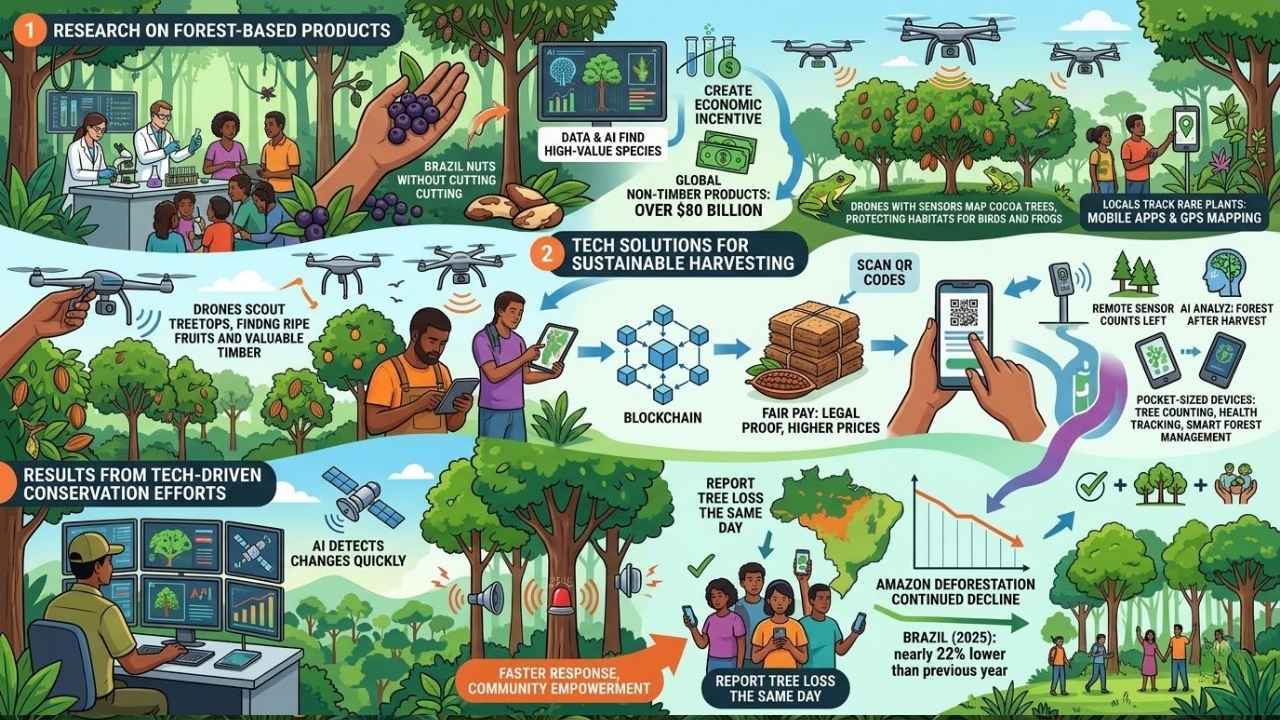
Scientists test new ways to use trees without cutting them down. Some teams have used data and AI tools to find which tree species bring the most value. A 2025 World Bank report highlights that non-timber forest products generate over $80 billion globally.
Acai berries and Brazil nuts, which are huge US imports, allow people to harvest products without harming the forest. In Brazil and Peru, local groups now track rare plants using mobile apps and GPS mapping.
“By valuing the fruits, nuts, and natural rubber a standing forest provides, we create a powerful economic incentive to leave the chainsaws at home.”
Researchers in places like the Amazon work with tech giants to study how drones can spot valuable forest goods from above. By 2024, projects were already showing how drones help map cocoa areas while protecting habitats for birds and frogs. These steps build more sustainable economies.
Tech solutions for sustainable harvesting
Drones scout the treetops, searching for ripe fruits and valuable timber. These flying helpers catch things people might completely miss from the ground. Mobile apps tell harvesters exactly where certain tree species grow best.
This saves time and keeps workers safe in tricky spots. Companies now use blockchain technology, similar to IBM’s Food Trust system, to trace the exact origin of sustainably harvested cocoa.
Here is how tracking tech improves sustainable harvests:
- Fair Pay: Scannable QR codes prove the harvest is legal, securing higher prices for farmers.
- Tree Counting: Remote sensors guard against overharvesting by counting trees left behind.
- Health Tracking: AI tracks which areas stay healthiest after harvests to balance protection with use.
Smart forest management now fits in your pocket. This turns each decision into a massive win for both families and forests alike.
Results from Tech-Driven Conservation Efforts
These new tools paint a clearer picture of what is actually working. You can see the progress and maybe feel inspired to learn more.
Tracking deforestation with advanced tools
Drones, satellite images, and smart sensors now watch the Amazon rainforest day and night. Artificial intelligence picks out changes in tree cover incredibly fast. Rainforest Connection uses new tech for fighting illegal logging across five continents.
Acoustic sensors pick up the sounds of chainsaws as soon as they start. This lets people act quickly before the damage is done. Data from all these tools gets sent straight to conservation workers’ phones or computers.
Areas monitored by these acoustic Guardians see a measurable, immediate drop in illegal logging activity. IoT devices track every single alert, while AI models sort through endless pictures from above.
Tech like this stops crime before it spreads too far into wild places. Forest guardians are more effective now because advanced monitoring means no inch of forest goes unwatched.
Published studies and measurable impacts
Research groups have tracked real impacts using satellite imaging, drones, and AI in rainforests. In the Amazon, new monitoring tools helped cut illegal deforestation significantly.
In 2025, Brazil’s National Institute for Space Research reported a continued decline in Amazon deforestation by nearly 22% compared to the previous year. This massive drop is heavily credited to satellite enforcement and AI monitoring.
The impacts of ecotechnology are clear:
- Faster Response: Acoustic sensors alert forest rangers right away to logging sounds.
- Community Empowerment: Mobile apps help local communities report tree loss the same day it happens.
- Targeted Restoration: Knowing the exact spot of key species boosts restoration success rates.
These success stories come from forests on five continents. They show the incredible reach of technology for ecosystem health and biodiversity protection.
Final Thoughts
Tech is now a highly effective ally in saving rainforests. From smart drones to apps helping local people protect their land, these tools make a huge difference. Tools like AI models and sensors work fast, making it easier than ever to track changes and act quickly.
These methods pack a serious punch against forest threats while keeping costs low. For more knowledge or ideas, groups like Rainforest Connection share excellent guides, studies, and updates online. Saving The Rainforests: Tech Solutions is an ongoing effort we can all support.
Every smart move adds up to a much brighter future.