

Have you ever felt stuck because you’re afraid of failing? Many people—especially entrepreneurs—experience this feeling. The fear of failure can keep even the best ideas from moving forward, making you question your abilities and hesitate to chase your goals. Learning about Overcoming Fear Of Failure is often the first step toward breaking that barrier.
Experts explain that this fear is completely normal. Your brain is simply trying to protect you from disappointment, criticism, or embarrassment. However, if you want to grow and succeed in business, Overcoming Fear Of Failure becomes an essential skill.
In this post, you’ll discover practical steps to build a stronger mindset, turn setbacks into valuable lessons, and develop the confidence to keep going when challenges appear.
Ready to see how real growth happens when you face your fears? Keep reading!
Understanding the Fear of Failure in Entrepreneurship
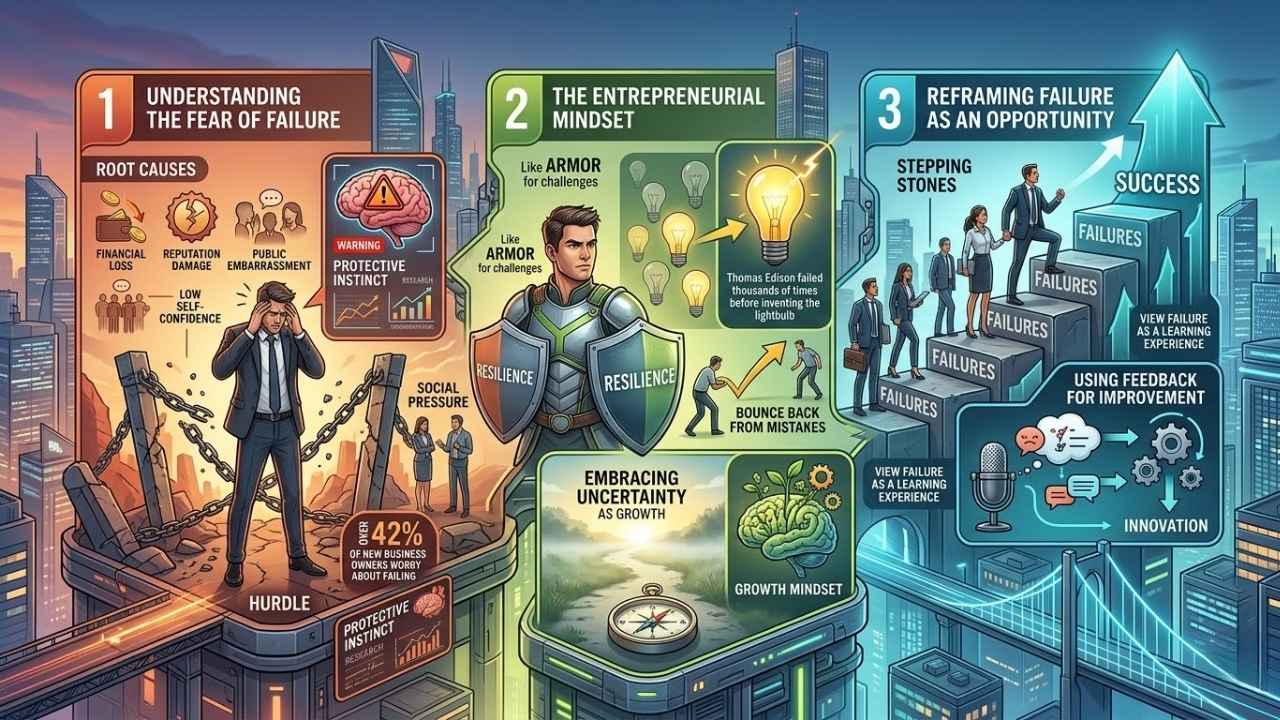
Fear of failure is a big hurdle for many entrepreneurs. It can hold them back from trying new ideas and taking risks.
Defining fear of failure in the business context
In business, the fear of failure pops up as a strong worry about making mistakes or losing money. Entrepreneurs may feel anxious about risking their savings, damaging their reputation, or letting down family and partners.
This kind of fear often stops people from taking bold actions or trying new ideas. It is a protective instinct that responds to risk and threats to well-being.
Most entrepreneurs do not want to fail because setbacks can have real costs—lost time, wasted resources, stress, and even public embarrassment. But the most successful ones see these bumps as steps in learning and growth.
They accept that failures are part of building resilience and finding innovation on the path to success.
Common root causes of fear
Fear often starts as a protective instinct. The brain reacts to the unknown and warns you of possible threats. Researchers say that most people do not want to fail because they see it as a danger to their well-being or image.
For many entrepreneurs, this fear grows stronger when there is money on the line, jobs at risk, or dreams at stake. Statistics from 2023 show almost 42% of new business owners worry about failing before launch day.
Low self-confidence adds fuel to anxiety about failure. Society can also set high bars for success; even kids learn early that mistakes are not welcome in school or sports. This thinking follows us into adulthood and shapes how we handle risks in business.
Social pressure builds up too—nobody likes public setbacks or feeling judged by friends and family if things go south. Each setback might feel personal, like proof you were never “good enough” for entrepreneurship in the first place, even though successful founders often treat every stumble as just another lesson on their path forward.
The Entrepreneurial Mindset
The entrepreneurial mindset is key for success. It thrives on resilience and adaptability, which help overcome challenges in business.
Importance of resilience in entrepreneurship
Resilience acts like armor for entrepreneurs. Every business owner faces setbacks and mistakes. Even Thomas Edison failed thousands of times before inventing the lightbulb. Successful entrepreneurs do not crumble after a mistake; instead, they treat each “failure” as a lesson and keep moving forward.
Accepting failure as part of learning builds confidence over time.
Statistics from studies show that most new businesses face some kind of failure early on, yet those who bounce back often see long-term success. Resilient people adapt quickly to change, support their teams during hard times, and grow stronger with each challenge faced.
It takes grit and courage to try again after things go wrong but sticking with it can spark creativity and lead to real innovation in entrepreneurship.
Embracing uncertainty as a pathway to growth
Uncertainty can be scary, but it often leads to growth. Entrepreneurs must accept that failure is part of their journey. Instead of seeing setbacks as losses, they should view them as lessons.
Each mistake offers insights for future success.
A growth mindset changes how we see challenges. It shifts our focus from fear to learning. Successful entrepreneurs know this well; they embrace risk and adapt quickly. They understand that every step into the unknown builds confidence and fosters innovation in their work life.
Reframing Failure as an Opportunity
Failure is not the end. It’s a chance to learn and grow. When you stumble, think of it as stepping stones to success. Each setback can give you valuable lessons that will help later on.
Use feedback wisely; it can be your guide for improvement!
Viewing failure as a learning experience
Seeing failure as a learning experience can change how entrepreneurs think. Failure is not a bad thing; it’s part of the journey. Successful entrepreneurs know that failing at something means they can learn and improve.
Instead of hiding from mistakes, they embrace them.
Fear of failure often stems from wanting to protect oneself from pain or embarrassment. This instinct is natural, but it should not hold you back. Use feedback to grow stronger and more skilled.
Each setback offers lessons that help in future success stories. Viewing these moments as steps on your path can build confidence and resilience over time.
Using feedback for improvement
Feedback is a powerful tool for growth. Successful entrepreneurs see failure as part of learning. They use feedback to improve their ideas and skills. Each mistake offers lessons that help them move forward.
Listening to others can boost self-awareness too. It shows where you need to change or grow. Embracing feedback makes it easier to adapt and innovate without fear of failure holding you back.
Every piece of advice helps build confidence for the next challenge ahead.
Strategies to Overcome Fear of Failure
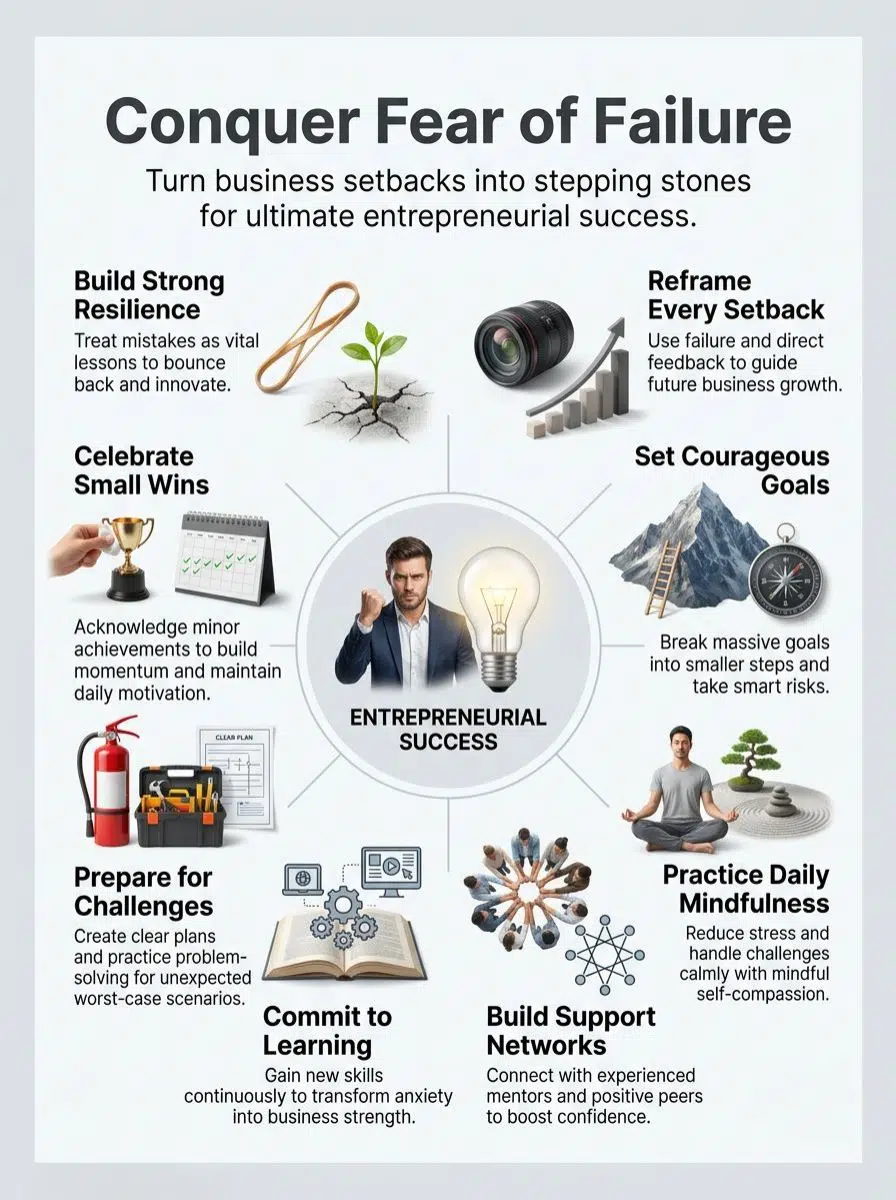
Fear of failure can be tough, but you can tackle it head-on. Setting brave goals helps you push past your limits and build confidence.
Courageous goal setting
Courageous goal setting is key for every entrepreneur. It helps turn dreams into reality.
- Set clear and specific goals. Vague goals lead to confusion. Aim for targets that are easy to understand and track.
- Break down larger goals. Big tasks can feel overwhelming. Slice them into smaller steps to make progress easier.
- Create a timeline for your goals. Deadlines keep you focused and motivated. Each step should have a date attached so you know when to check in on your progress.
- Be bold with risk-taking. Playing it safe often leads to missed chances for success. Take smart risks that can lead to growth and innovation.
- Write down your goals and share them with others. Writing makes them real, while sharing builds accountability; you’ll feel the push from others as they support your journey.
- Adjust goals as needed without fear of failure. Life is unpredictable, and changes might happen; don’t hesitate to tweak your plans if necessary.
- Celebrate achievements, big or small; each win counts toward building confidence, motivating you for the next challenge ahead.
- Learn from setbacks along the way; every misstep is a lesson that helps grow resilience and adapt future strategies.
- Use feedback as a guide; constructive criticism can sharpen focus; it’s about learning rather than feeling defeated by what didn’t work out.
- Embrace a growth mindset; see obstacles as stepping stones instead of roadblocks, keeping fear at bay while pushing forward with courage and determination.
Practicing mindfulness and self-compassion
Mindfulness and self-compassion help entrepreneurs face their fear of failure. These tools boost confidence and resilience.
- Mindfulness means being present in the moment. This can calm your mind when anxiety rises about failing in business.
- Practicing mindfulness reduces stress. It clears away distractions, letting you focus on what matters most, like your goals and plans.
- Self-compassion encourages kindness towards yourself. Treating yourself gently during tough times makes it easier to learn from mistakes instead of feeling defeated by them.
- A study shows that people who practice self-compassion have better emotional well-being. They handle setbacks more positively, which is key for entrepreneurs facing challenges.
- Engaging in daily mindfulness exercises can be simple and quick. Even five minutes of deep breathing each day can ground you and strengthen your mindset.
- Journaling about your feelings can also build self-awareness. Write down your worries, then reflect on how to turn those fears into learning experiences.
- Surrounding yourself with supportive people fosters a positive environment for growth. Good company boosts confidence and encourages risk-taking in business.
- Learning from past failures helps grow resilience, too. Seeing each setback as a stepping stone builds a stronger foundation for future success.
- Maintaining a growth mindset keeps you open to new ideas and innovations despite the fear of failure.
Cultivating these habits makes overcoming obstacles much easier for entrepreneurs managing their journeys through uncertainty and risk-taking.
Building a supportive network
Building a supportive network is key for entrepreneurs. A strong group can help you face your fears and grow.
- Surround yourself with positive people. Seek out others who encourage you and believe in your vision. They can lift you up when you feel low.
- Join networking groups or clubs. These groups can connect you with like-minded people. Sharing experiences helps ease the fear of failure.
- Find a mentor or coach. A mentor can offer guidance and advice based on their own experiences. Their support can boost your confidence.
- Share your goals with friends and family. Let them know what you’re trying to achieve. They can provide encouragement and hold you accountable.
- Attend workshops and seminars. These events are great for meeting new people and learning from experts in your field. Knowledge shared here builds resilience against failure.
- Use social media wisely to connect with other entrepreneurs, but keep it positive! Engage in communities that celebrate growth and innovation, not just success stories.
- Foster open communication within your network, share both successes and failures openly, this creates a safe space for growth where everyone learns together.
- Celebrate each other’s milestones, no matter how small, this recognition builds morale and strengthens bonds among peers.
- Offer help to others in your network too; supporting them will create lasting connections that benefit everyone involved.
- Stay adaptable as your network grows; be willing to change who you connect with as needed to keep evolving on your entrepreneurial journey.
Leveraging Education and Preparedness
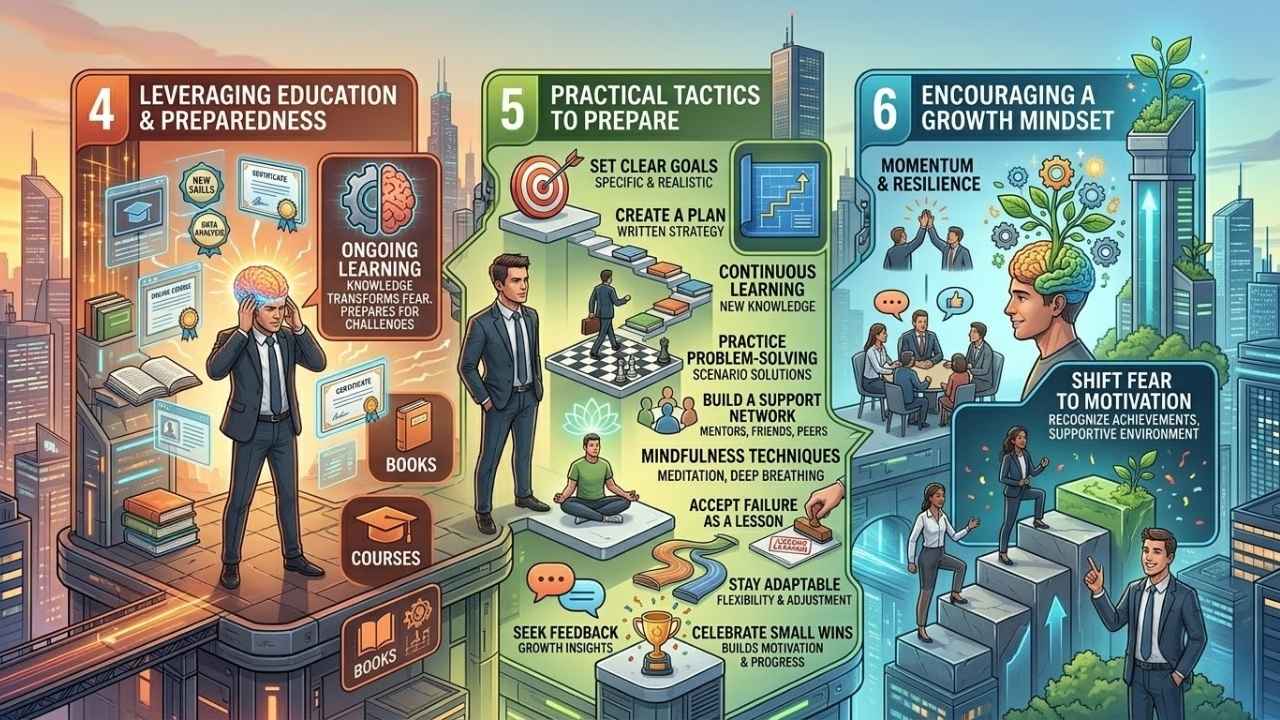
Keep learning to build your confidence. Each new skill makes challenges feel less scary. Try taking courses or reading books that relate to your goals. Being ready can help you face the bumps along the road with more ease.
Ongoing learning to boost confidence
Ongoing learning is key to building confidence. Entrepreneurs feel fear of failure, but this can change. Learning helps turn that fear into strength. It shows failure as a lesson, not an end.
Taking courses or attending workshops builds skills and knowledge. This prepares you for challenges ahead. The more you learn, the better equipped you become to handle setbacks. Regular learning also sparks innovation and creativity in your business journey.
Embracing a growth mindset can help give courage to take risks too!
Practical tactics to prepare for challenges
Challenges can come out of nowhere. It’s smart to be ready for them. Here are some actions you can take:
- Set clear goals. Think about what you want to achieve. Make sure your goals are specific and realistic.
- Create a plan. Write down steps to reach those goals. This will help guide you through challenges.
- Learn continuously. Seek new knowledge and skills that relate to your business. This boosts your confidence and makes you better prepared.
- Practice problem-solving. Picture different scenarios that could go wrong, and think of solutions for each one.
- Build a support network. Surround yourself with mentors, friends, or others who understand your journey in entrepreneurship.
- Use mindfulness techniques. Stay calm under pressure through meditation or deep breathing exercises.
- Accept failure as part of the process. Successful entrepreneurs see failure as a lesson, not an end point.
- Stay adaptable to change. Be ready to adjust plans if needed; flexibility is key in business.
- Seek feedback often. Ask others for their thoughts on your ideas, and use their insights to grow.
- Keep celebrating small wins along the way; this builds motivation and reminds you of your progress.
These tactics will prepare you better for any bumps along the road of entrepreneurship!
Encouraging a Growth-Oriented Mindset
Celebrating small wins can boost your spirit. Each victory, no matter how tiny, adds up and builds confidence.
Celebrating small victories
Small victories matter in entrepreneurship. They boost your confidence and keep you motivated. Each time you achieve a goal, no matter how little, take a moment to enjoy it. These wins remind you that progress is real.
Successful entrepreneurs see failure as part of their journey. They learn from mistakes but also celebrate steps forward.
Using positive reinforcement helps build resilience. Acknowledge small achievements like finishing a project or gaining a new client. Share these moments with your network for support and encouragement.
This builds camaraderie and positivity around risk-taking and growth. Celebrating each win, even if it’s minor, shapes a growth mindset in the face of challenges ahead.
Utilizing positive reinforcement
Positive reinforcement helps you build confidence. It boosts your courage to take risks. Celebrate small victories, like reaching a goal or overcoming a challenge. Acknowledge your efforts and progress along the way.
This shift in focus turns fear of failure into motivation for success.
Successful entrepreneurs see failure as part of the learning process. They learn from mistakes instead of hiding from them. Recognizing achievements gives you strength to face new challenges.
It creates a supportive environment where growth can thrive and innovation becomes possible. Embrace positive reinforcement, and watch your fear fade away.
Final Thoughts
Fear of failure is real. We discussed how it can hinder you in business. Reframing failure as a lesson makes it easier to cope. Practical tips like setting goals and practicing mindfulness are easy to use and very effective.
Consider how you can apply these ideas today. Failing isn’t the end; it’s a step toward success! Embrace your journey, learn from every bump in the road, and keep moving forward.