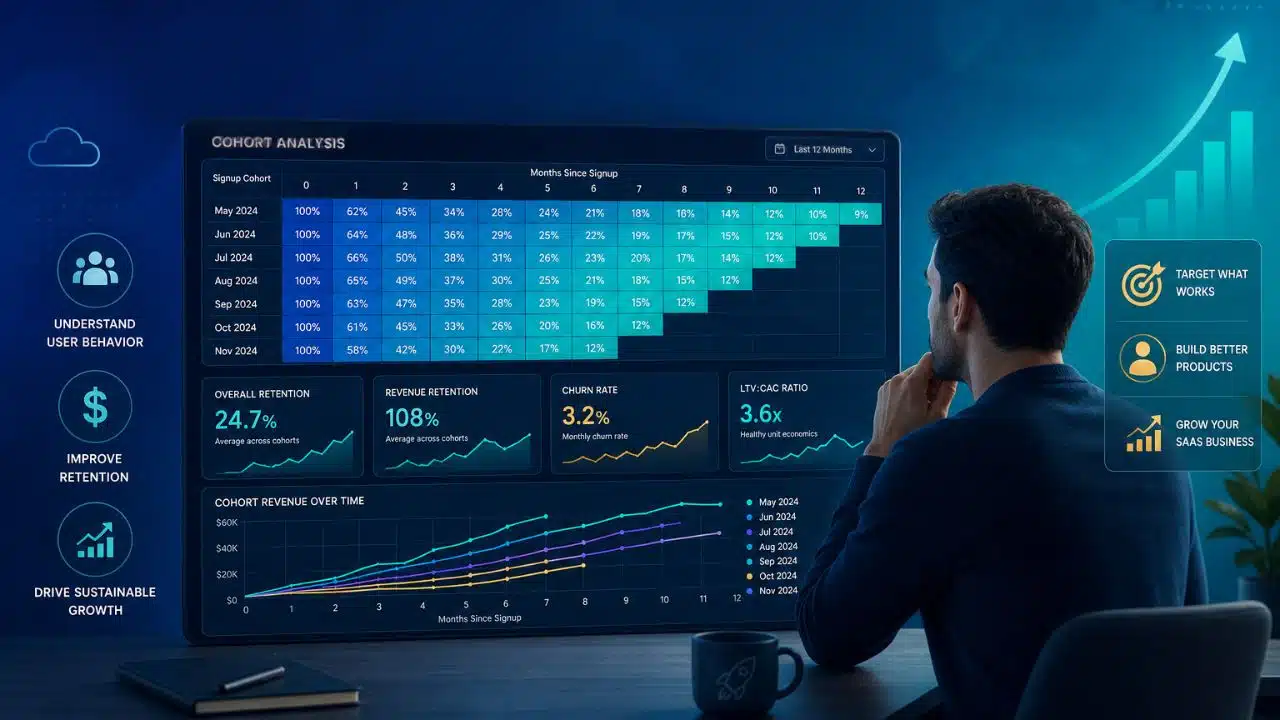
Your business is failing because you are obsessed with efficiency. You think you are practising Kaizen. You have the sticky notes. You have the charts. You have the belt-certified consultants prowling the corridors with stopwatches. Yet the spirit of your workforce is breaking. This is the efficiency trap. It is a cold, mechanical lie.
True Human-Centric Kaizen has nothing to do with shaving seconds off a task or squeezing more blood from the stone. It is a social contract. It is a radical, almost subversive act of dignity. If you aim for efficiency, you will get resentment. If you aim for respect, efficiency will arrive as an uninvited guest, ready to stay for good.
The Great Corporate Misunderstanding
Most leaders treat the Toyota Production System like a hardware store. They walk in and pick out the tools they like. They grab the “Just-in-Time” wrench and the “Standard Work” hammer. They ignore the foundation. That foundation is Human-Centric Kaizen.
In the original Japanese framework, “Respect for People” is not a soft HR suggestion. It is the engine. When you strip away the human element, you are left with “Fake Lean.” You are left with a system that views employees as biological robots. Robots do not innovate. Robots do not care about your quarterly targets. They simply wait for the clock to strike five.
The Wisdom of the Floor
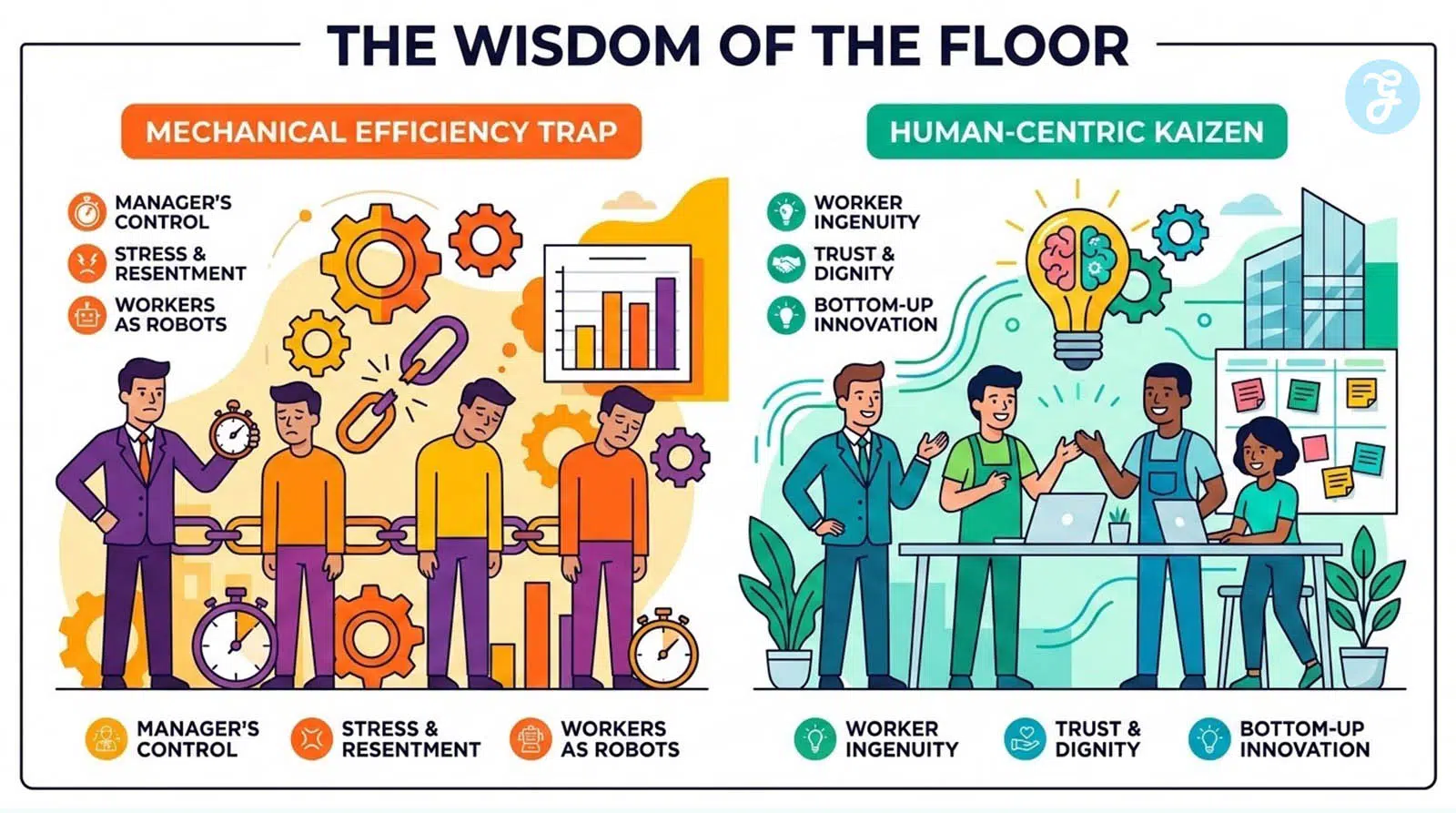
The ultimate disrespect in any office or factory is the assumption that the manager knows best. We hire people for their hands but forget they have heads.
Efficiency is a Symptom, Not a Goal
When a worker feels respected, they naturally want to fix the things that frustrate them. They want to remove the friction. They want to do a good job because their dignity is tied to the craft.
Efficiency hunters cut costs by chasing waste. Respect-driven leaders remove overburden and unlock improvement.
The data is clear. Plants that prioritise the psychological safety of their staff outperform those that focus on raw metrics. Why? Because you cannot mandate a good idea. You cannot force someone to be creative at gunpoint.
The Moral Mandate
We have turned a philosophy of human liberation into a spreadsheet exercise. We have traded the soul of the work for the speed of the work. It is time to go back to the Gemba, the actual place where the work happens.
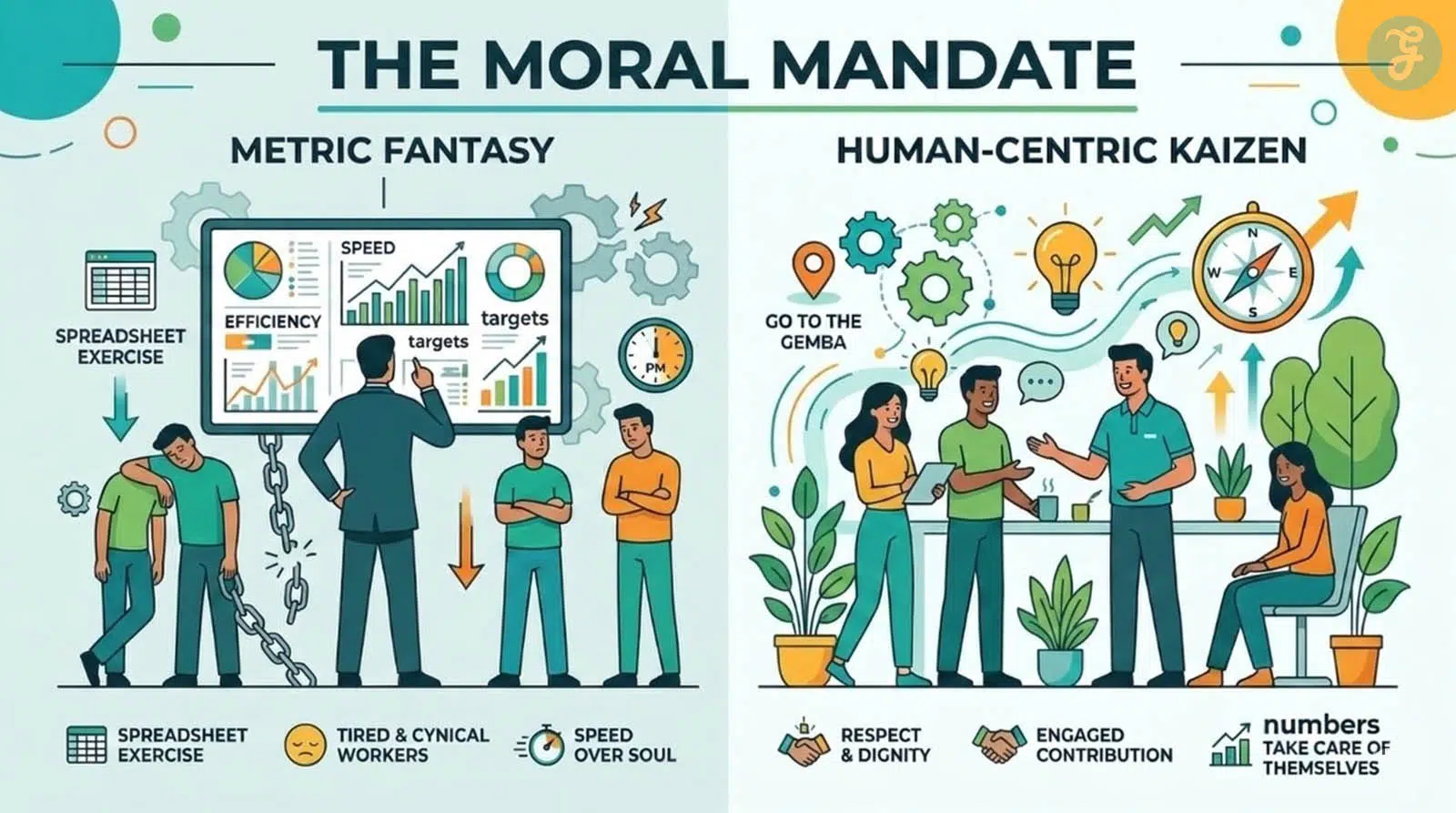 Stop looking at the data for a moment. Look at the people. If they are tired, if they are cynical, if they are just “putting in time,” your efficiency metrics are a fantasy. Human-Centric Kaizen is the belief that every human being has a contribution to make. It is the belief that no one should spend their life doing a job that is poorly designed or unnecessarily difficult. When we fix the work to respect the person, the numbers take care of themselves.
The Ghost of the Machine
We often speak about the “Toyota Way” as if it were a religious text written in stone. In reality, it was a response to a crisis of humanity. After the Second World War air raids, resources were scarce. But the most precious resource was the brainpower of the survivors.
The Toyota Way rests on two pillars: continuous improvement and respect for people. Most Western firms adopted the first and ignored the second.
To understand Human-Centric Kaizen, one must look at the linguistics of the founders. Taiichi Ohno focussed on removing obstacles that made work difficult, seeing workers not as costs but as sources of wisdom.
The Wisdom of the Gemba
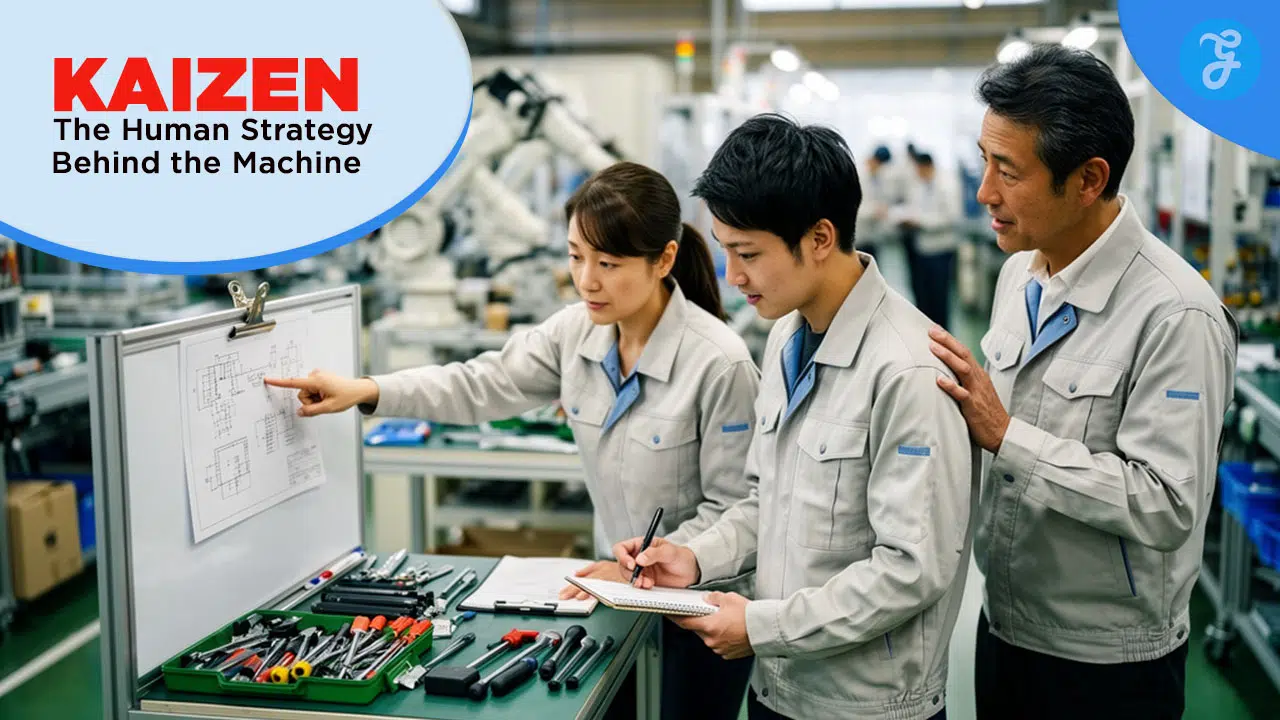
In the world of Human-Centric Kaizen, we talk about the Gemba. This is the “actual place” where the value is created. It is the hospital bedside. It is the coding desk. It is the welding station.
Traditional management hunts for “Muda” or waste but ignores the other two problems: Mura and Muri. Mura is unevenness. It is the stress of a chaotic schedule. Muri is overburden. It is the physical and mental exhaustion of being pushed beyond human limits.
If you focus only on waste, you are just a bean counter. If you focus on removing the burden from your staff, you are a leader. This is where the magic happens. When you make the work easier for the person, the work becomes faster for the company.
The Psychology of the Stop Button
Think about the mental state of a worker who sees a flaw. In a traditional firm, they might keep quiet. Why risk the trouble? Why slow down the numbers?
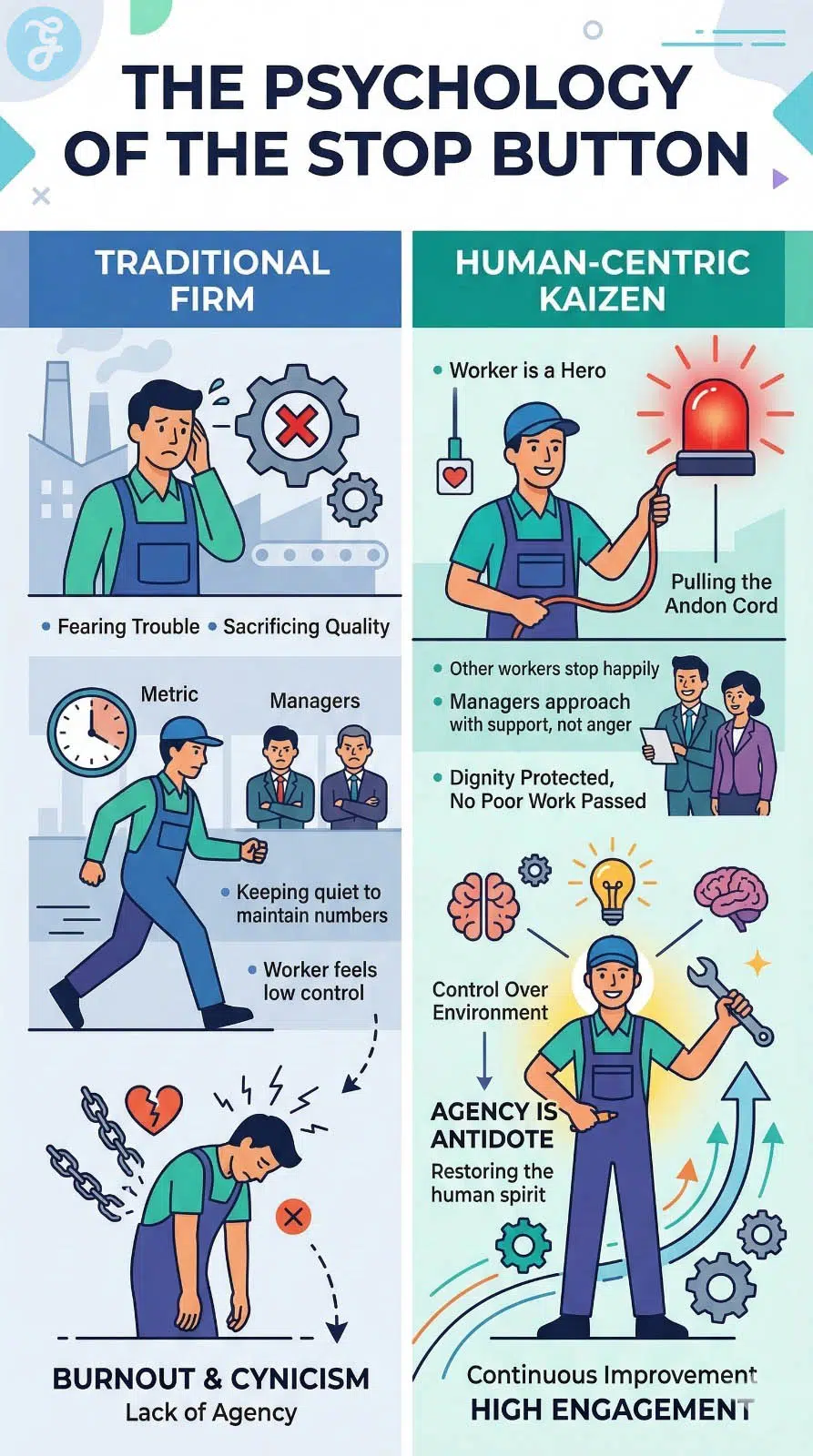 In a culture of Human-Centric Kaizen, that worker is a hero. The famous Andon cord is not there to catch defects. It is there to protect the dignity of the worker. It ensures no one has to pass on poor work. It ensures that the person on the line has total agency over their environment.
This agency is the antidote to burnout. Burnout is not just about working hard. It is about working hard on things you cannot control. By handing back control, you restore the human spirit.
The Expertise of the Front Line
Management is often a game of “tell.” Human-Centric Kaizen is a game of “ask.”
When you ask a worker how to fix a process, you are validating their existence. You are saying that their years of experience matter more than a consultant’s degree. This is not about being “nice” or “soft.” It is about being accurate.
The person doing the job every day knows where the friction is. They know which tool is blunt and which software is slow. By listening to them, you solve the problem at the root. You don’t just patch the symptom. You honour the expert. This is the essence of Human-Centric Kaizen: shifting from power over people to power with people.
The Resurrection of the Fremont Plant
The history of Human-Centric Kaizen is best told through the ruins of a California car factory. In the early 1980s, the General Motors plant in Fremont was a disaster. It was the worst factory in the United States.
The workers were angry. The management was hostile. Sabotage was common. Cars rolled off the line with half empty whiskey bottles in the doors. It was a war zone of mutual distrust. GM eventually shut it down because they believed the workforce was unmanageable.
Then came the NUMMI joint venture. Toyota moved in. They hired the exact same troublemakers that GM had fired.
The difference? Toyota sent these workers to Japan. They showed them the Andon cord. They showed them that their ideas mattered. They showed them Human-Centric Kaizen. In less than a year, that same workforce, in that same building, became the most productive plant in the country. The quality was as high as the Japanese plants. The hardware had not changed. The people had not changed. Only the level of respect had changed.
The Modern Cost of Invisible Disrespect
Today, we see the ghost of the old GM plant everywhere. We see it in hospitals where nurses are tracked by GPS. We see it in warehouses where workers are timed on their toilet breaks. This is the peak of the efficiency obsession. It is also a massive financial failure.
When you treat a person like a line item, they stop caring. They stop thinking. This leads to “Quiet Quitting” and high turnover. The cost of replacing a disengaged worker is far higher than any “lean” saving you made by cutting their break time. Disrespect is the most expensive “waste” in any business.
The ROI of the Soul
If you want to see a return on investment, invest in the soul of the work. A worker who feels respected will find ten ways to save time that a manager would never see. They will do it because they want the process to be better, not because they are afraid of a KPI.
Respect is the ultimate shortcut to excellence.
- The Old Way: Push people to work harder. Result: Burnout and errors.
- The Kaizen Way: Pull the obstacles out of their path. Result: Growth and loyalty.
We have to stop measuring “man-hours” and start measuring “meaning.” A person who finds meaning in their work is ten times more effective than a person who is just watching the clock.
A Call to the Gemba
Leadership is not about sitting in a glass office looking at a dashboard. It is about being on the floor. It is about asking the simplest, most respectful question in business: “What makes your job hard?”
The goal is not control, but removing obstacles. You are looking for Human-Centric Kaizen. The numbers will follow. They always do. But they are the score, not the game. The game is the dignity of the human being at work.
The Psychological Engine: Safety Over Speed
Kaizen is not a mechanical system but a psychological one. It requires a culture where the fear of making a mistake is replaced by the duty to fix it. Without this mental safety, the most advanced tools in the world are useless.
The Andon Cord Paradox
In a typical factory, the line must never stop. To the efficiency-obsessed manager, a halted line is a haemorrhage of cash. It is a failure. But in Human-Centric Kaizen, the ability to stop the line is the highest form of respect.
When you give a frontline worker the power to pull the Andon cord, you are handing them the keys to the kingdom. You are saying that their eyes and their integrity are more valuable than the next sixty seconds of production.
This is the paradox. By allowing the work to stop, you ensure it eventually moves faster and better. You move the responsibility of quality from a distant inspector to the person actually holding the tool. That trust transforms a “worker” into a “guardian.”
The Science of Safety
We cannot talk about improvement without talking about fear. Most corporate cultures are built on it. Fear of missing a target. Fear of looking stupid in a meeting. Fear of being the messenger who brings bad news.
Harvard professor Amy Edmondson’s research on psychological safety shows that fear is the ultimate form of waste. In her study of medical teams, she found that the highest-performing teams actually reported more errors than the low-performing ones. They weren’t making more mistakes. They were just safe enough to admit them.
Google’s “Project Aristotle” confirmed this. After studying hundreds of teams, they found that the secret to success wasn’t the IQ of the members. It was the belief that you could take a risk without being shamed. Without this safety, Human-Centric Kaizen is a ghost. People will hide defects to protect their jobs. They will “work around” a broken process instead of fixing it, because fixing it requires admitting that the current way is flawed.
The Security of Innovation
There is a dark side to efficiency that we rarely discuss in boardrooms. If an employee thinks that finding a “leaner” way to work will result in their colleague being laid off, they will stay silent. Self-preservation is a stronger instinct than process improvement.
True respect means providing job security. It means promising the staff that no one will lose their livelihood because they found a way to work smarter. When you remove the threat of the axe, you unlock the brain.
Innovation is a vulnerable act. It requires a person to say, “I think I can make this better.” To do that, they must feel that the company has their back. They must know that their value is not tied to a specific repetitive motion, but to their ability to think and solve problems. Respect is not a luxury. It is the only way to build a system that doesn’t break under the weight of its own silence.
The Reality of the Gemba
In the world of Human-Centric Kaizen, the truth is never found in a boardroom. It is found at the Gemba. Management often treats the Gemba as a remote colony to be governed by spreadsheets. They manage by proxy, staring at lagging indicators and colourful dashboards. This is the “Spreadsheet Manager.” They see numbers, not people. They see output, not the struggle required to produce it.
The Gemba Leader does the opposite. They go to the floor not to audit, but to serve. They understand that their job is to be a roadblock remover. When a leader stands at the Gemba, they are there to witness the “Muri” or overburden. They see the physical strain of a poorly designed reach or the mental exhaustion of a convoluted software interface.
The Power of Humble Inquiry
Respect for the Gemba is voiced through “Humble Inquiry.” This is the concept pioneered by Edgar Schein. It is the fine art of drawing someone out by asking questions to which you do not already know the answer.
Instead of saying, “You are moving too slowly,” the respectful leader asks, “What gets in your way?” This shift is profound. It moves the leader from a commander to a coach. It acknowledges that the worker is the person with the most valuable data. When you fix the overburden because a worker pointed it out, you aren’t just improving a process. You are performing a physical manifestation of respect.
The Cost of Disrespect: The Healthcare Failure
We see the wreckage of “Efficiency-First” thinking most clearly in modern healthcare. Many hospital systems adopted Lean Six Sigma to cut costs, focusing on bed turnover and patient throughput.
Nurses found themselves spending more time clicking boxes in a database than looking into the eyes of a patient. By ignoring the “Respect” pillar, these organisations triggered massive burnout.
When you prioritise the metric over the human, you don’t get efficiency. You get “moral injury.” You get a workforce that does the bare minimum to survive the shift. In healthcare, this lack of psychological safety leads directly to lower patient safety. If a nurse is too afraid or too tired to speak up about a medication error, the system has failed, regardless of what the spreadsheet says.
The ROI of Loyalty
Contrast this with Toyota’s history of crisis recovery. During the 2011 earthquake and tsunami in Japan, production was decimated. In a traditional firm, this would be a time for mass layoffs and “cost optimisation.”
Toyota didn’t do that. They kept their people. They leaned on the “loyalty of the front line.” Workers who had been treated with dignity for decades didn’t just show up; they innovated their way out of the crisis. They rebuilt supply chains and fixed factories with a speed that no “efficiency mandate” could ever produce. This is the direct return on investment for decades of respect. You cannot buy that kind of loyalty during a crisis. You have to earn it during the quiet years by proving, every single day, that the person matters more than the process.
Efficiency is the Shadow, Not the Light
We must perform a radical philosophical flip. Most modern boardrooms are obsessed with chasing the shadow. They see efficiency as the light, the thing they must pursue with all their corporate might. But they have it backwards. Efficiency is merely the shadow cast by a culture of respect.
When you chase the shadow, you lose the people. You create a sterile environment of compliance where workers do exactly what they are told and nothing more. You lose the “Chie,” the wisdom of the individual. You might shave a few pennies off a process in the short term, but you are bankrupting the long term soul of the firm.
When you chase respect, you empower people to solve their own problems. You give them the tools, the time, and the dignity to look at their own work and say, “This is broken; I can fix it.” In this environment, efficiency is not a goal. It is an inevitable, unstoppable byproduct. It is the gift that a respected workforce gives back to a company that values them.
We need a new way to measure the health of a Human-Centric Kaizen culture. We need a “Dignity Metric.” Stop looking at “Dollars Saved” as your primary KPI. Start looking at “Employee Suggestions Implemented.” If your people are suggesting ways to improve their own daily lives, it means they trust the system. It means they feel like owners, not assets. High participation is the only true proof of a high-respect culture.
Restoring the Soul of Kaizen
The era of the “Efficiency Consultant” is over. It is time for the era of the “Humble Leader.” I challenge every CEO to burn their efficiency manuals and step onto the Gemba. Spend a full week on the floor. Do not look at a single dashboard. Instead, ask every person you meet one simple question: “How can I make your work easier?”
By removing the obstacles, you are not just improving a flow. You are validating a human being.
Kaizen is the quiet, persistent practice of believing that every person has a contribution to make. It is the refusal to let a single spark of human creativity go to waste. That is not an industrial theory. It is a moral one. When we lead with respect, we don’t just build better companies. We build a better world for the people who make them run.