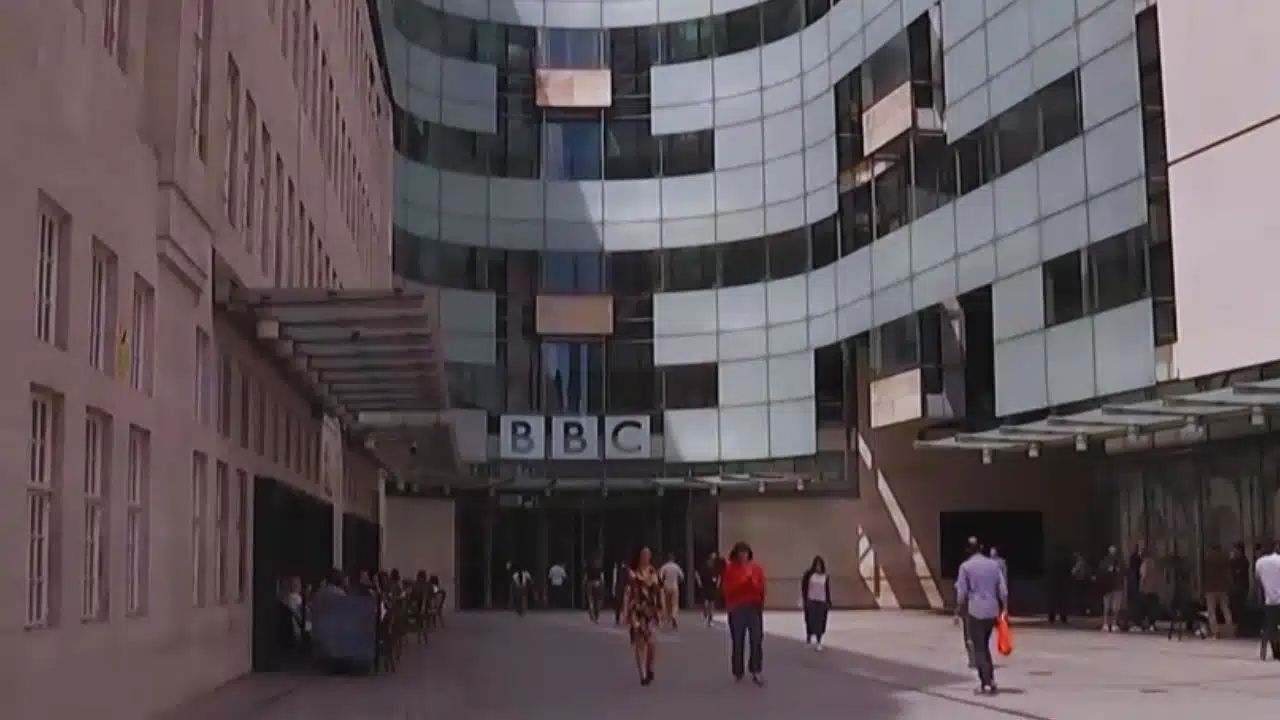
The BBC has issued a formal and unusually direct apology to former U.S. President Donald Trump after an editing mistake in a documentary misrepresented a portion of his January 6, 2021 speech. The error triggered a political storm, a major internal crisis for the British broadcaster, and intense scrutiny from both the public and government officials. Although the BBC admitted to the mistake and expressed regret to Trump and the White House, it strongly denied that its actions met the legal standard for defamation, setting the stage for a tense standoff between the former U.S. president and one of the world’s most influential media organizations.
The dispute centers on an October 2024 BBC documentary, “Trump: A Second Chance?”, which examined Trump’s political comeback efforts and the lasting impact of the January 6 Capitol riot. A key segment of the program used an edited version of Trump’s speech that appeared to combine separate lines spoken nearly an hour apart. This editing choice, now acknowledged as flawed, created a misleading impression about the tone and timing of Trump’s remarks—fueling allegations of bias, negligence, and political manipulation inside the broadcaster.
At a moment when media trust is already fragile in both the United Kingdom and the United States, the controversy quickly escalated into one of the BBC’s most damaging crises in years. It ultimately prompted the resignation of major leadership figures inside BBC News and ignited a wider public debate about editorial standards, accountability, and the responsibility of influential news organizations when handling politically sensitive material.
The BBC confirmed that its legal team formally replied to Trump’s lawyers after receiving a strongly worded letter on Sunday. Along with the legal response, BBC Chair Samir Shah personally wrote to the White House, expressing regret for the wrongly edited clip. According to the broadcaster, Shah’s letter made clear that the organization was “sorry for the edit of the president’s speech on 6 January 2021” and acknowledged that the presentation of that segment did not meet the BBC’s editorial standards.
The original documentary had shown Trump delivering a sequence of lines that made it appear as though he had encouraged supporters to “fight like hell” while immediately calling on them to walk down to the Capitol. In reality, Trump first told his supporters to go to the Capitol and “cheer on” lawmakers. The “fight like hell” remark came 54 minutes later in the speech, long after the initial call to march. The documentary’s edited version placed these statements back-to-back, creating a meaningfully different impression of Trump’s rhetoric on that day.
Trump’s legal team argued that this editing choice was not a minor mistake but a “serious and harmful distortion” that damaged the former president’s reputation globally. They demanded a full retraction, a corrected version of the film, a public apology, and $1 billion in compensation, claiming the error inflicted both “overwhelming financial and reputational harm.”
The BBC acknowledged that the editing constituted a lapse in judgment and said that it regretted the confusion it caused. However, it emphasized that regret does not equate to defamation. In its official statement, the broadcaster insisted: “While the BBC sincerely regrets the manner in which the video clip was edited, we strongly disagree there is a basis for a defamation claim.” The BBC also stated that it has no intention of rebroadcasting the documentary on any of its platforms.
Trump, in an appearance on Fox News, accused the BBC of “butchering” what he described as a “beautiful” and “calming” speech. He said the edits made it sound extreme and “radical,” adding that the broadcaster had engaged in what he called “a terrible misrepresentation.” Despite the strong rhetoric, Trump has a history of issuing legal threats without necessarily pursuing full lawsuits. Still, he has recently sued The New York Times and The Wall Street Journal, indicating a heightened willingness to confront media organizations he believes have treated him unfairly.
While Trump’s threat of a billion-dollar lawsuit captured headlines, the deeper shockwaves were felt inside the BBC itself. The editing error was first revealed through a leaked internal memo, which circulated widely and prompted fierce criticism from journalists, lawmakers, and the public. The memo reportedly acknowledged that the segment did not follow standard editorial practices, raising questions about how such a mistake passed through multiple review layers inside the BBC’s newsroom.
The scandal rapidly escalated into one of the most serious editorial crises the broadcaster has faced in years. Two top executives resigned as pressure mounted: the Director-General and the Head of BBC News. Their departures fueled the perception of an organization grappling with internal disorder and struggling to maintain public confidence.
Deborah Turness, the outgoing CEO of BBC News who stepped down on Sunday, released a message to staff in which she defended the integrity of the newsroom but acknowledged the severity of the situation. She stated that although genuine mistakes had been made, accusations claiming the BBC was “institutionally biased” were unfounded. Turness emphasized her deep respect for the organization and expressed concern that the ongoing uproar was inflicting real damage on an institution she considered vital to public life.
The broader controversy has sparked renewed debate about how journalists should handle politically charged content, especially during periods of intense global polarization. Critics argue that even unintentional errors can be weaponized by political figures to undermine trust in media institutions. Supporters of the BBC caution that while accountability is important, editorial mistakes should not be inflated into evidence of systemic bias without further proof.
For now, the BBC has not announced any additional steps beyond the apology, the resignations, and the decision to withhold the documentary from future broadcasts. Trump has not yet publicly responded to the apology, and his legal team has offered no further comment since confirming receipt of the BBC’s letter.
The situation remains fluid, and both sides appear to be weighing their next moves carefully. For the BBC, the priority is stabilizing public trust and restoring confidence in its editorial processes. For Trump, the controversy provides a new platform to challenge major media organizations while reinforcing his long-held claim that the mainstream press misrepresents him. The dispute highlights how a single editorial error—especially one involving a figure as polarizing as Trump—can ignite a high-stakes confrontation with global repercussions.