

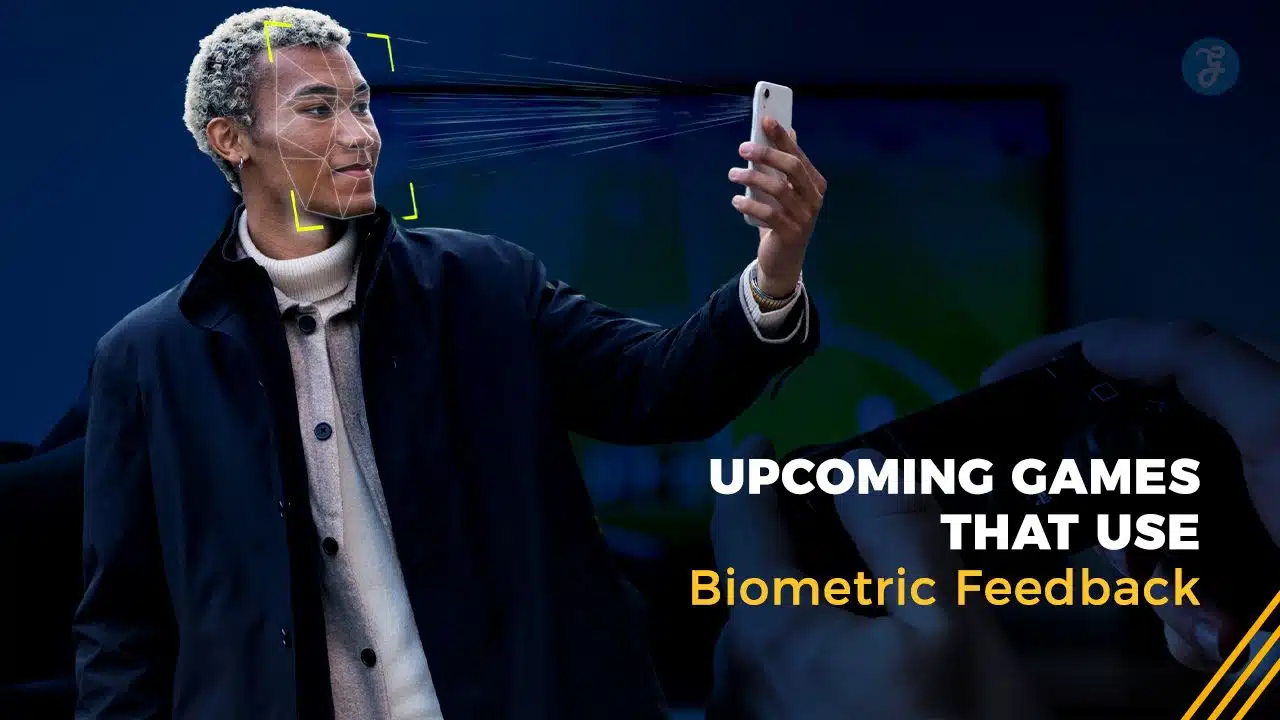
Do you feel video games do not react to your mood, and that they miss real-life cues? Many players want games that read heart rate, voice commands, and body signals, to make play more immersive and help with stress management.
Nevermind, a bio-feedback adventure horror, reads heart rate and raises difficulty as fear grows, it first showed at GDC 2015 after a Kickstarter. This post lists five upcoming games that use biometric technology and physiological data, and it will explain how voice recognition, speech recognition, machine learning algorithms, and proof of personhood can change non-player characters, support relaxation techniques, or boost fitness in virtual reality (vr) and augmented reality (ar).
We will note privacy concerns, and share practical tips from Erin Reynolds about stress management. Read on.
Key Takeaways
- Nevermind, revealed by Erin Reynolds at GDC 2015 after a Kickstarter, uses pulse and micro-expression sensors to raise difficulty as player fear rises.
- Sony trials pair heart sensors with consoles to adjust difficulty, but Graham McAllister warns heart rate alone does not map directly to emotion.
- Nintendo shelved the Vitality Sensor after Satoru Iwata cited reliability issues.
- Ghostwire: Tokyo and Keith Makse’s July 13, 2018 demos used pulse and skin sensors to tune scares while advocating anonymized physiological data.
- ChilloutVR reads heart rate and skin conductance, but AWS police ties and EUDI Wallet concerns heighten calls for consent, encryption, and K-ID age checks.
Nevermind: A Horror Game That Adapts to Your Fear Levels
Erin Reynolds revealed Nevermind at GDC 2015, after a successful Kickstarter campaign. The game uses a pulse sensor to read heart rate. It makes puzzles harder as your rate spikes.
You step into the role of an investigator, exploring repressed memories of PTSD patients. The visuals aim to unsettle, with screaming baby heads, and blood-filled milk cartons.
Succumbing to fear fills your screen with static, and foes grow more hostile. Developers began with heart rate, then added a micro-expression detector to catch stress and anxiety. Once running, the program reads physiological data and translates that information into new obstacles, like a rough natural language of fear; fans, recalling Satoru Iwata’s player-first ideas, used it for stress management.
Some demos pair Nevermind with virtual reality (vr) gear to push immersive gaming, showing what biometric technology can do in video games; the design also raises privacy concerns about biometric data and personal information.
Sony’s Biometric Gaming: Adjusting Difficulty Based on Heart Rate
Sony runs trials that read heart rate, then tweak difficulty in real time. A Sony console can pair with a wearable heart sensor, or link to a headset that reads pulse, to change enemy speed or puzzle timers.
Nintendo once planned the Vitality Sensor, but Nintendo president Satoru Iwata shelved it over reliability issues. Graham McAllister of Player Research warns that heart rate, while useful, does not map directly to emotion and needs other inputs, like surveys or behavioral patterns.
Journalist Erin Reynolds says tech limits no longer block wider biometric gaming, and the bigger gap sits in designer awareness and clear rules for use.
Companies collect physiological data, and that raises clear privacy concerns and hard questions about data security. Adaptive difficulty can nudge player behaviour, so teams must get consent and set limits on storage and sharing.
Player Research suggests pairing sensors with self-report tools and pattern analysis, to avoid mistaking a spike in pulse for fear. Biometric technology in immersive gaming and virtual reality (vr) can aid stress management, if developers encrypt raw readings and set strict access rules.
Privacy rules and tight encryption must guard raw heart readings, because leaks would expose sensitive physiological data. Designers who ignore these issues risk public backlash, and that could slow wider use of biometric tools in video games.
Ghostwire: Tokyo’s Integration of Biometric Stress Feedback
Ghostwire: Tokyo taps pulse sensors and skin sensors to track stress while you play. Tango Gameworks feeds that biometric technology into the video game, so music and enemy spawns match your stress.
Developers link those signals to virtual reality (vr) headsets and wearable sensors to boost immersive gaming, the tiny thump in your chest can change camera shake and monster timing.
Keith Makse, developer of Bring to Light at Canadian studio Red Meat Games, proved this on July 13, 2018, a Friday the 13th. His title lets players navigate a terrifying subway, solve puzzles with light, and avoid creatures, and he routed a player’s racing pulse into the audio to heighten scares and player-game connection.
Both Makse and erin reynolds push to anonymize physiological data, they flag privacy concerns and medical privacy as core issues. Stress management matters here, anonymized pulse feeds can help video games tune tension without exposing health records.
ChilloutVR: Enhancing Immersion with Biometric Data
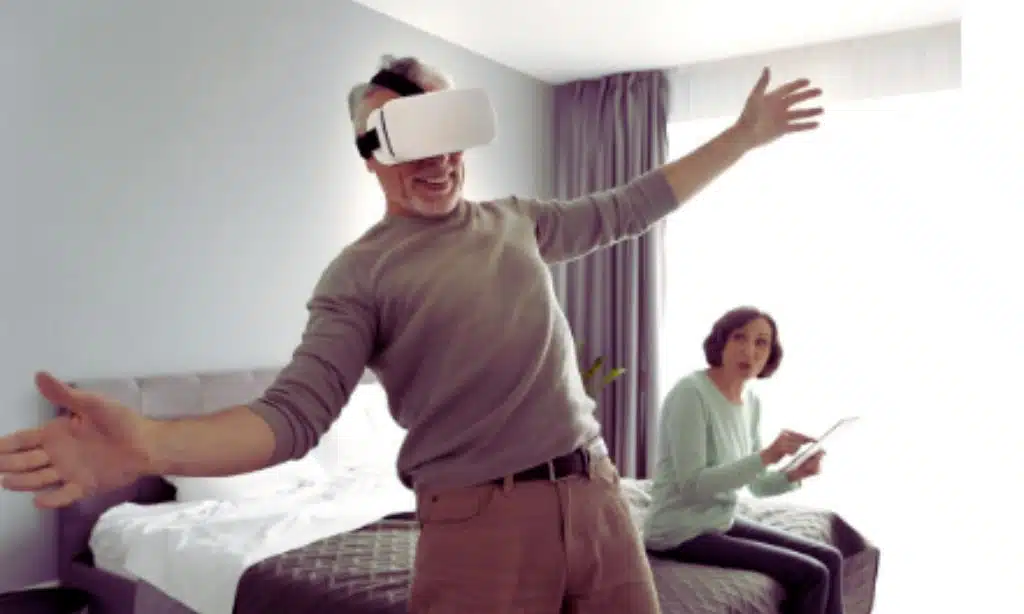
ChilloutVR mixes biometric data with virtual reality (VR) to boost immersive gaming. It reads heart rate and skin conductance, and it shifts audio, lighting, and interaction to match player state in video games.
Erin Reynolds plans to adapt Nevermind for VR, and she says the medium brings deeper immersion. Players see direct benefits for stress management while playing, like calmer spaces and guided breathing prompts.
Privacy concerns loom, since biometric technology now links to law enforcement, and Amazon Web Services took part in police surveillance experiments. ChilloutVR teams must build clear data rules, to keep trust, and protect users.
The European Digital Identity Wallet, the EUDI Wallet, could change how games verify users, though its business model still faces doubt. Designers must weigh immersion gains against those legal and ethical risks.
The Future of Fitness Gaming: Biometric Feedback in Active Games
Fitness games will read your body, then shift challenge in real time. Pulse sensors, brainwave bands, and wrist trackers send heart and stress signals to video games. Mindlight proves calm matters, kids must quiet down to move forward.
K-ID offers privacy-preserving age-assurance that adapts experiences by age, geography, permissions, consents, and laws. The World Economic Forum praised K-ID for making age checks affordable for small and medium studios, so they can meet global child safety laws without heavy engineering work.
Erin Reynolds highlights stress management as a clear win for immersive gaming that uses biometric technology.
Virtual reality (vr) fitness titles will tailor cardio zones and breathing prompts with live bio data. Xbox Gaming Safety Toolkit gives age-specific, culturally localized parental guidance, developed with educators and civil society in Australia, New Zealand, and Asia.
Parents can act as co-pilots in children’s online lives, the toolkit avoids moralizing or lecturing. Developers will pair biometric technology with those safety tools, to protect kids and keep workouts fun.
Immersive gaming can teach stress management, and it can turn tough sweat sessions into play. A clear policy, simple consent screens, and smart privacy filters must sit alongside the tech.
Takeaways
Biometric games will change how we play. Erin Reynolds and other makers test pulse sensors and depth cameras at events like GDC, after early success on Kickstarter. Players can find video games and virtual reality (vr) titles that use biometric technology to tune fear, and that can aid stress management.
That tech also raises hard questions about privacy and data security. Groups such as the World Economic Forum, the Xbox Gaming Safety Toolkit, and k-ID push for child safety, clear rules, and design-time protections.
Try a demo, laugh at your own jump, and keep asking smart questions.
FAQs on Upcoming Games That Use Biometric Feedback
1. What is biometric feedback in these upcoming games?
Biometric feedback reads your body signals, like pulse, breathing, and sweat level, and feeds that data into the game. The game then changes pace, tone, or challenge, to match how you feel.
2. How does virtual reality (vr) use biometric feedback?
In virtual reality (vr), sensors on the device pick up pulse, breathing, and movement. Games use that data to change the scene, the music, or the difficulty, so play feels personal and alive.
3. Can these games help with stress management?
Yes, some titles use your signals to guide calm breathing, slow scenes, and short tasks, all aimed at stress management. Players can learn to spot stress, and practice ways to lower it, while they play.
4. Who makes these games, and should I trust them?
Small studios, labs, and designers build many of these projects, and erin reynolds is one noted creator in the field. Teams often work with health experts, they test, and they tune the systems, to keep the feedback useful and safe.






















