
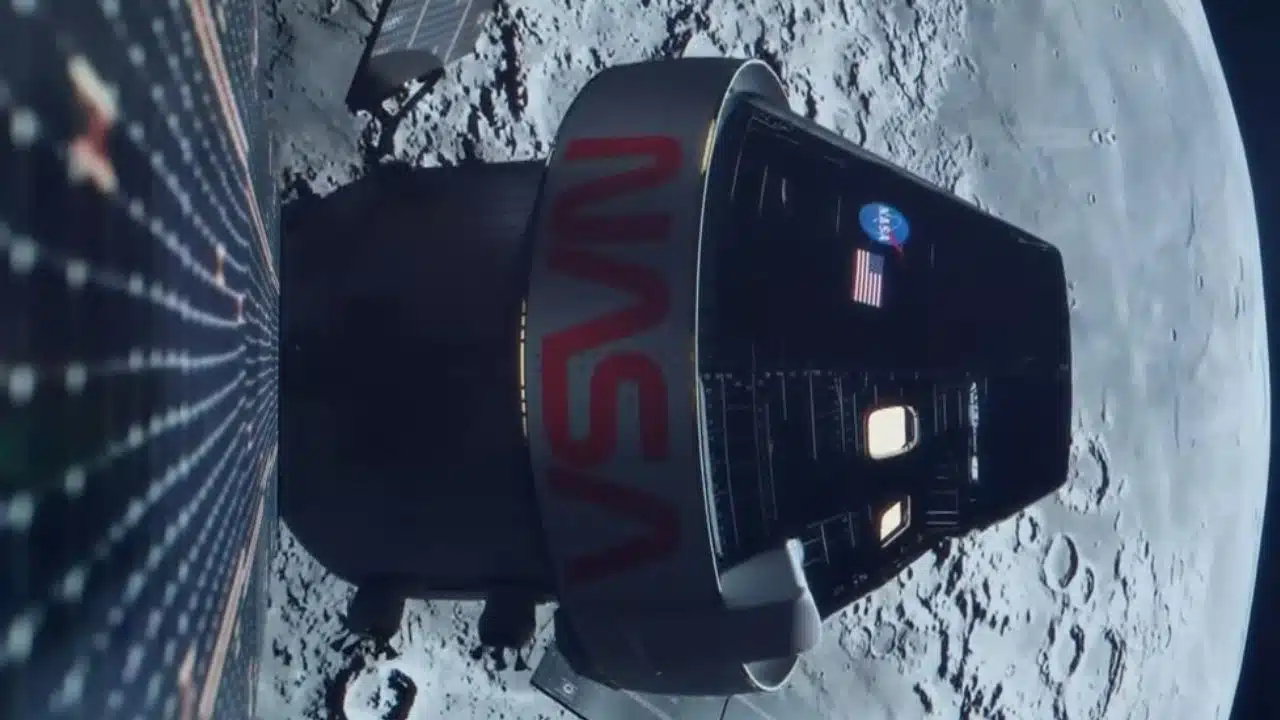
NASA is pressing ahead with one of the most ambitious undertakings in modern space exploration — the Artemis II mission, which aims to send humans around the Moon for the first time in more than half a century.
During a detailed briefing at the Johnson Space Center in Houston on September 23, 2025, officials confirmed that the mission is tracking toward a launch window that opens on February 5, 2026. If successful, Artemis II will mark the first time astronauts have traveled beyond low-Earth orbit since Apollo 17 in December 1972, a historic leap forward in America’s new lunar exploration program.
A New Era of Human Spaceflight Beyond Low-Earth Orbit
The Artemis program, named after the twin sister of Apollo in Greek mythology, represents NASA’s long-term plan to return humans to the Moon and eventually build a sustainable presence there. Artemis II is a 10-day crewed test flight, designed not to land but to perform a full lunar flyby.
The crew will include:
- Reid Wiseman – Mission Commander, U.S. astronaut and veteran of a long-duration ISS mission.
- Victor Glover – Pilot, U.S. Navy Captain and the first Black astronaut to serve as pilot on a lunar mission.
- Christina Koch – Mission Specialist, who holds the record for the longest continuous spaceflight by a woman (328 days).
- Jeremy Hansen – Canadian Space Agency astronaut, making him the first non-American to fly beyond low-Earth orbit.
Their journey will make them the first humans in over five decades to venture into deep space, opening the path for Artemis III, which will attempt to land astronauts on the Moon’s South Pole region, a location believed to hold water ice and critical resources.
Hardware Nearing Flight Readiness
The powerful Space Launch System (SLS) — the most capable rocket NASA has ever built — has already been fully stacked and declared flight-ready. Standing taller than the Statue of Liberty and producing 8.8 million pounds of thrust, the SLS will carry Orion and its crew into deep space.
Meanwhile, the Orion spacecraft, NASA’s state-of-the-art crew capsule, is undergoing its final checks. Orion has already proven itself on the Artemis I test mission in 2022, which flew uncrewed to the Moon and back. For Artemis II, the spacecraft has been integrated with its Launch Abort System (LAS), a 44-foot-tall safety tower designed to pull the crew capsule away from the rocket in case of emergency.
Later this year, Orion will be secured atop the SLS stack at Kennedy Space Center. In early 2026, the combined vehicle will roll out to Launch Complex 39B, where it will be connected to ground systems for final preparations.
The Wet Dress Rehearsal: A Critical Pre-Launch Test
Before liftoff, the Artemis II team will conduct a wet dress rehearsal (WDR). This involves loading the SLS with liquid hydrogen and liquid oxygen, fully simulating a countdown to just 29 seconds before ignition.
The WDR is crucial because it validates fueling systems, pressurization, countdown procedures, and ground-to-vehicle integration. Afterward, the rocket will be de-tanked, rechecked, and rolled back for launch.
Launch Windows and Flight Profile
Due to the geometry of Earth and Moon orbits, Artemis II’s launch windows are limited. Each month offers a 4–8 day opportunity to align the mission with the Moon’s trajectory. For February 2026, the first window opens on the 5th, with the launch expected in the evening local time.
Once launched, the timeline unfolds as follows:
- Liftoff & Ascent – The SLS lifts the Orion spacecraft into space.
- Earth Orbit Checkout – Orion separates from the upper stage after ~3 hours and orbits Earth for 24 hours. The crew will check life-support systems, thrusters, avionics, and communication equipment.
- Trans-Lunar Injection – If all systems perform as expected, Orion will fire its main engine to set course on a free-return trajectory, looping around the Moon and back.
- Lunar Flyby – Orion will pass the Moon at a distance of 5,000 to 9,000 miles beyond the lunar surface, giving astronauts a distant but spectacular view before gravity slings them back toward Earth.
- Reentry & Splashdown – After ~10 days, Orion will reenter Earth’s atmosphere at nearly 25,000 mph, testing its heat shield before parachuting into the Pacific Ocean.
The Heat Shield Challenge
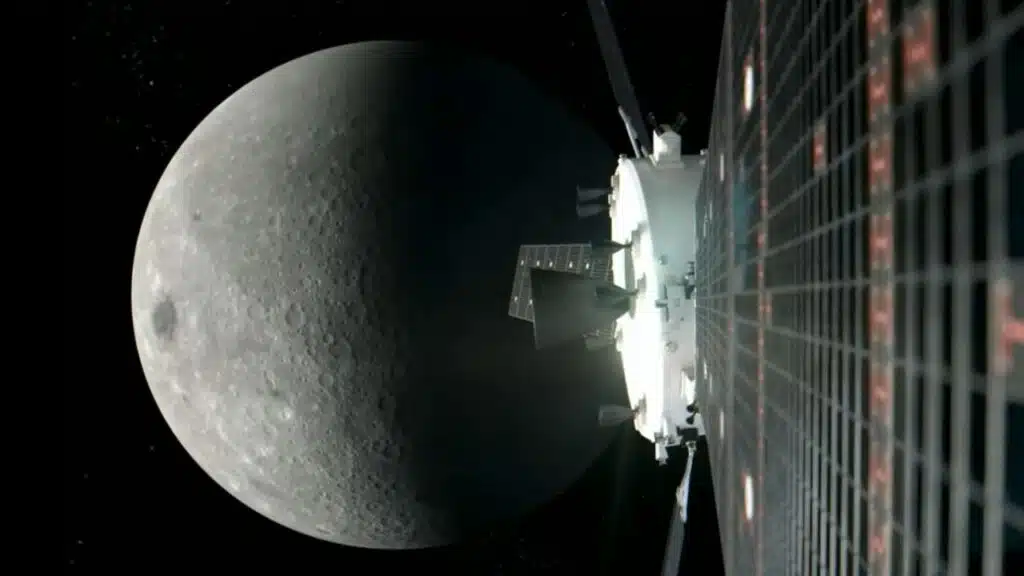
One of the most closely watched parts of Artemis II will be Orion’s reentry. While the Artemis I mission in 2022 proved Orion could survive the extreme heat of reentry — temperatures exceeding 5,000°F — engineers observed that unexpected chunks of the ablative heat shield broke off.
Investigations revealed that gases from the ablative material built up more quickly than anticipated. For Artemis II, NASA engineers adjusted Orion’s reentry path to reduce stress on the shield and ensure astronaut safety.
Rick Henfling, Artemis II entry flight director, emphasized that the fix is backed by two years of testing and analysis, adding that he has “the utmost confidence” in the engineering teams behind the redesign.
Research and Crew Tasks
During the flight, astronauts will not only be testing Orion’s systems but also contributing to NASA’s Human Research Program. Activities include:
- Collecting saliva and biological samples.
- Tracking sleep patterns and physical responses to deep-space travel.
- Monitoring how human bodies adapt outside of Earth’s protective magnetic field.
These data will help prepare for longer missions, including future crewed missions to Mars.
Strategic Importance and the “Second Space Race”
The Artemis program is more than science — it’s also geopolitics. NASA leaders acknowledged that the United States is in what many describe as a “second space race”, particularly with China, which also plans lunar missions in the late 2020s.
Lakiesha Hawkins, NASA’s acting deputy associate administrator, noted that the U.S. wants to ensure it returns astronauts to the Moon safely and before others establish dominance over strategic areas such as the lunar South Pole, where water ice deposits could support future bases and fuel production.
A Historic Spacecraft Name: “Integrity”
In September 2025, the Artemis II crew announced that they had named their spacecraft Integrity. The name reflects values of trust, humility, respect, and honesty — qualities they see as essential for a mission that symbolizes global cooperation and human ambition.
Looking Ahead: Artemis III and Beyond
Artemis II is a proving ground. If successful, it will set the stage for Artemis III, planned for no earlier than 2027, which aims to land astronauts near the Moon’s South Pole. That mission will rely on SpaceX’s Starship Human Landing System to ferry astronauts from lunar orbit to the surface.
Longer term, Artemis seeks to establish the Lunar Gateway (a small space station orbiting the Moon) and permanent surface habitats. These will act as stepping stones for future Mars missions in the 2030s.
NASA’s Artemis II is not just a spaceflight; it is a milestone that carries the weight of history, scientific discovery, and international competition. With safety as its foundation and innovation as its driving force, the mission will test spacecraft systems, human endurance, and the very limits of exploration.
If Artemis II launches in February 2026 as planned, it will reignite the dream of lunar exploration and inspire a new generation — just as Apollo did more than 50 years ago.
The Information is Collected from BBC and Arstechnica.