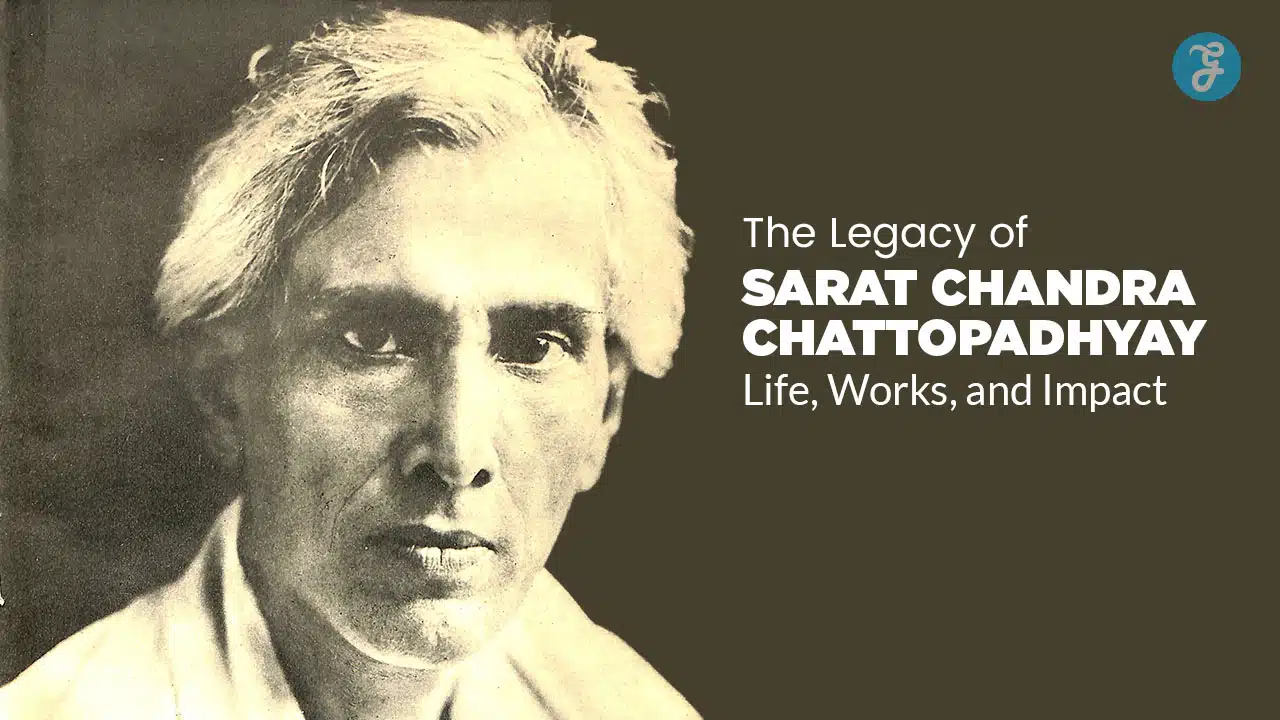
Many fans of classic tales feel out of place. They want stories that speak to modern life, yet they find old works in bengali literature distant. Readers often struggle to see why Sarat Chandra Chattopadhyay still matters today.
He wrote Devdas, Parineeta, and Pather Dabi. His books inspired over 40 film adaptations in Indian cinema. This post will trace his life from Pegu to the University of Calcutta, and show his push for women’s empowerment.
Ready to read more?
Key Takeaways
- He wrote Devdas in 1917, Parineeta in 1914, and Pather Dabi in 1926. These works led to over 40 film and stage shows.
- He began writing at 17 and worked in Burma from 1903. A 1908 plague killed his wife Shanti and infant son. He married Mokshada in 1910.
- He used social realism and early feminism in tales like “Narir Lekha” (1914) and “Sesh Prashna” (1931). He wrote about poor villagers and women’s rights.
- Bimal Roy adapted Devdas in 1955 and Sanjay Leela Bhansali in 2002 (Filmfare Best Film 2003). Pradeep Sarkar’s Parineeta (2005) won wide acclaim.
- He first appeared in English in 1922 when Oxford U. Press printed Srikanta part 1. Britannica ran his profile on July 23, 2025. Students at Calcutta and Dacca still study his novels.
Early Life and Personal Experiences
Sarat Chandra Chattopadhyay became the second child of Motilal Chattopadhyay and Bhubanmohini Devi. Childhood money troubles shaped his stories. His parents moved the family to Bhagalpur, Bihar.
He aced the entrance exam in 1894. Lack of funds kept him from Calcutta University. His early struggles spurred a deep love for bengali literature.
A job at Banaili Estate began in 1900. He moved to Burma in 1903. Service at Pegu and the Rangoon Public Works Accounts Office sharpened his view. A plague hit his household in 1908.
Shanti and their infant son died in that outbreak. Mokshada became his wife in 1910. She later took the name Hiranmoyee. These hardships fed his passion for bengali literature and shaped classics such as Pather Dabi.
Literary Journey
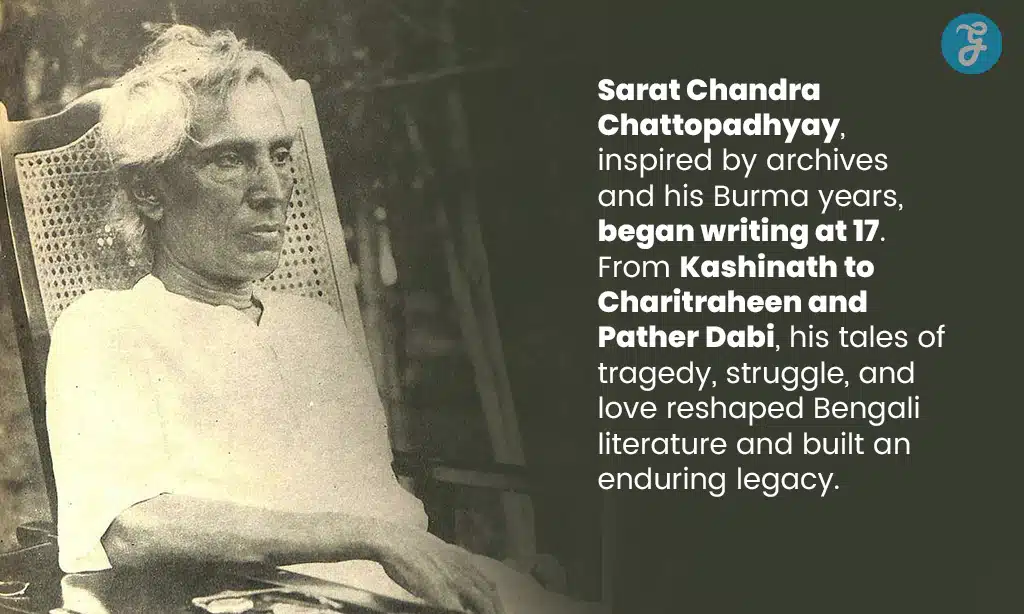
Chattopadhyay dug through University of Calcutta archives and Burma Public Works accounts to fuel his first stories.
His pen danced with heartache, framing the rise of romantic tragedy during the Bengali Renaissance, and it set the course for his enduring voice.
Early Literary Works
He began writing at 17, inspired by his father’s unfinished novel. His first tale, Kashinath, sprang from a school desk. He adopted the English pseudonym St. C. Lara. He entered Mandir in 1904 under his uncle’s name.
Judges awarded him the Kuntalin Puraskar. He tracked themes from Bankim Chandra Chattopadhyay. Readers saw Tagore’s touch in Charitraheen and Chandranath, both from 1916. These entries pushed bengali literature forward.
He slipped Bojha and Balyasmriti into print, without consent, long before he knew. He penned Ramer Sumati and the essay Narir Lekha for a Jamuna magazine. He sold Biraj Bou rights for just 200 rupees.
Actors staged it at Star Theatre in Calcutta in 1918. Famous editors cursed his missed deadlines. One, Nalinikanta Sarkar, even locked him in a room, till he wrote a manuscript. Grit like that foreshadowed Saratchandra Chattopadhyay’s large role in bengali literature.
Influence of Life in Burma
Sarat Chandra Chattopadhyay moved to Rangoon in 1903 to join the Burma Public Works Accounts Office. Office tasks kept him busy, but he spent lunch hours among local markets. He scribbled notes on vendors and river life.
Those pages became seeds for his bengali literature.
Return to Howrah came in 1916. He poured memories of Pegu and Rangoon into his pen. He showed hardship and displacement in Pather Dabi. His diverse characters gained depth from those days.
Critics still praise his bengali novelist insight today.
Notable Works of Sarat Chandra Chattopadhyay
He shaped modern Bengali fiction with social realism and early feminism. Cinema troupes revive his tales through fresh scripts and live theater performances.
Devdas
Devdas came out in 1917. Sarat Chandra Chattopadhyay wrote it as a tragic love narrative in Bengali literature. The story exposes rigid social norms and the sting of parting. Readers meet a broken heart, a loyal friend, and a dowry system that crushes hope.
This novel set a new bar for character arc and narrative technique.
Bimal Roy adapted it for Indian cinema in 1955. His cast included Dilip Kumar, Suchitra Sen, Vyjayanthimala. Film camera and microphone brought on-screen emotion to life. Sanjay Leela Bhansali staged a 2002 version.
The stars included Shah Rukh Khan, Aishwarya Rai Bachchan, Madhuri Dixit. That movie won the Filmfare Award for Best Film in 2003.
Parineeta
Sarat Chandra Chattopadhyay published Parineeta in 1914, adding a prized title to bengali literature. The novel shows two neighbors bound by friendship, an unspoken love that simmers beneath polite nods.
Class tensions and caste rules challenge their bond, yet women’s courage shines in each act. Readers watch the heroine break norms, her spirit as steady as the Ganges current. This work holds a mirror to early 20th century Bengal, in verse that feels alive.
Pradeep Sarkar adapted this bangla literature gem into a 2005 film that drew crowds. Vidya Balan lit up the screen, Saif Ali Khan gave a subtle performance, and Sanjay Dutt impressed with his depth.
Indian cinema embraced the tale, sparking new interest in sharat chandra chatterjee’s stories. Critics praised its blend of social issues and gentle romance, a recipe that still resonates.
Fans quote lines as if they are old friends, proof that Parineeta holds its charm.
Pather Dabi
Pather Dabi burst into Bengali literature in 1926. The Bengali novelist Sarat Chandra Chattopadhyay spun a tale of revolt, secret societies, and armed duty. Revolutionary themes run through each page.
The work mirrors anti colonial feeling in pre independence India. It claims a spot in classic Indian literature.
British censors ordered a ban on the text within weeks. Manuscripts circulated by printing presses hidden in Kolkata. Students at the University of Calcutta and University of Dacca shelved them under desks.
Theatre troupes and silent movie adaptations soon inspired Bengali film. Critics still debate its call to arms.
Impact on Indian Society and Literature
Pather Dabi sent waves through college halls and movie screens in India, pushing people to rethink class and women’s rights—read on.
Reflection of Social Issues in His Works
Sarat Chandra Chattopadhyay showed social conflicts and social injustices in his writing. This Bengali novelist shaped modern Bengali literature with plain, strong words. He wrote about poor villagers and low caste families stuck in rigid norms.
His 1926 novel Pather Dabi drew a ban for urging armed resistance. He also showed economic struggles from his own family’s poverty.
He explored the clash between tradition and modernity in Sesh Prashna, published in 1931. He asked tough questions about old beliefs and new freedom. His scenes often featured underprivileged women fighting for respect, a call for women’s empowerment.
He drew on his days at Burma Public Works Accounts Office for hard truths about economic divides.
Advocacy for Women’s Empowerment
The Bengali novelist Sarat Chandra Chattopadhyay published ‘Narir Lekha’ in Jamuna magazine in 1914. An essay gave voice to women’s struggles. Many of his female roles drew from his mother’s strong will.
Readers met Kamal, a free thinker, in ‘Sesh Prashna’ (1931). Parineeta (1914) met class barriers with grit. Page after page, his psychological insights shook Bengali literature.
Words served as tools, not swords. People in Calcutta and Dacca saw new heroines. Those bold leads sparked debates at the University of Calcutta and University of Dacca. A writer with a stint at the Burma Public Works Accounts Office stirred hearts.
Indian literature and Indian cinema still echo his call for equality.
Adaptations of His Works
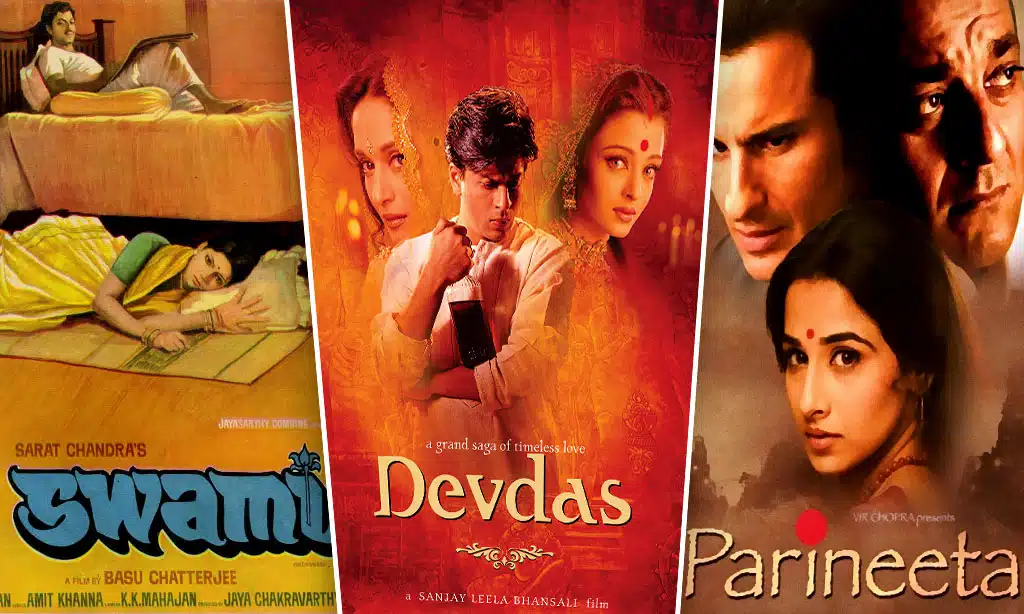
Indian cinema brought his books to life, from silent films with bold camera work to spirited TV plays shaped by crisp scriptwriting—read on for more.
Influence on Indian Cinema
A silent film called Andhare Alo hit screens in 1922. It marked the first silent movie adaptation of his work. Sarat Chandra Chattopadhyay’s tales have inspired over 40 films in Indian cinema.
These films draw on his bengali literature roots. Filmmakers tap his plots for screenplay and cinematography ideas. Recurring adaptations show his grasp of social drama still moves viewers.
Bimal Roy brought Devdas to life in 1955. Sanjay Leela Bhansali’s 2002 Devdas won the 2003 Filmfare Award for Best Film. Pradeep Sarkar adapted Parineeta into a 2005 hit. A team turned Nishkriti into Swami in 1977, then Apne Paraye in 1980.
Many directors cite his style in casting and frame choices.
Stage and Television Adaptations
Managers staged Biraj Bou at Star Theatre in Calcutta in 1918. Actors brought its tale to life. Fans cheered. Major theaters in West Bengal later hosted more plays, and moved his stories beyond print.
Translators shaped Pather Dabi for many tongues, so stage directors could expand reach.
TV crews filmed Sarat Chandra Chattopadhyay novels as serials. The episodes reached homes across India, and won new fans. Channels aired Devdas, Parineeta and Apne Paraye, and placed classic literature on screens.
Radio stations also played his dramas, which led listeners on audio journeys in bengali literature.
Legacy and Continued Influence
Sarat Chandra Chattopadhyay’s prose reaches readers in French, Italian, and more. Oxford University Press printed Srikanta part 1 in English in 1922. James Drummond Anderson helped bring his words to a global audience.
Students at the University of Calcutta and the University of Dacca include his titles in their lists. Academics in translation studies and literary theory debate his narrative style.
The Encyclopedia Britannica ran his profile on July 23, 2025. Print runs in India top tens of thousands. His novels, including Pather Dabi, remain top sellers among classic literature.
Writers name him as a founding voice in Bengali literature. They borrow his character‐driven methods, and they echo his themes in modern Indian literature. Feminist authors draw inspiration from his focus on women’s roles.
Directors such as Uttam Kumar and Soumitra Chatterjee star in adaptations of Devdas and Parineeta, Apne Paraye and silent movie adaptations. Fans visit the Burma Public Works Accounts Office in Bago to trace his steps.
They drop by Sarat Smriti Mandir in Batasari, West Bengal, India to pay respect. Readers still win the Jagattarini Gold Medal for essays on his impact.
Takeaways
His tales still spark laughter and tears. They speak of old Bengal roads, dusty homes, and brave hearts. His words walked from Howrah lanes to wide screens of Indian cinema. He shaped modern Bengali literature and helped women find their voice.
New readers still meet Devdas and Parineeta, feel joy and pain. His stories stand tall, long after he left us. Stories guide us today. They remind us that simple truth can change lives.
FAQs
1. Who was Sharat Chandra Chattopadhyay?
He was a bengali novelist from India. He won the jagattarini gold medal at Calcutta University. His stories gave new wings to bengali literature.
2. What are some of his classic works?
He wrote Pather Dabi. He gave us Kaanal Neer and Bhahmo Somaj. Apne Paraye also shines bright. These titles stand tall as classic literature in bengali literature.
3. How did he begin his writing career?
He studied law at Dacca University. He then worked as a clerk in the Burma Public Works Accounts Office. Those roles bent him toward writing.
4. How did his novels jump to Indian cinema?
Many silent movie adaptations picked his plots. Indian cinema turned Apne Paraye and Pather Dabi into films. His drama hit the big screen and found fresh fans, like bees to honey.
5. Why does Sarat Chandra Chatterjee’s legacy matter today?
His voice shaped indian literature. Classic literature fans still dive into his tales. Kolkata Airport even bears the name of Sarat Chandra Chatterjee. From Sarat Chandar to modern readers, his words still hit you in the heart. They echo debates that once drew the likes of Chittaranjan Das.