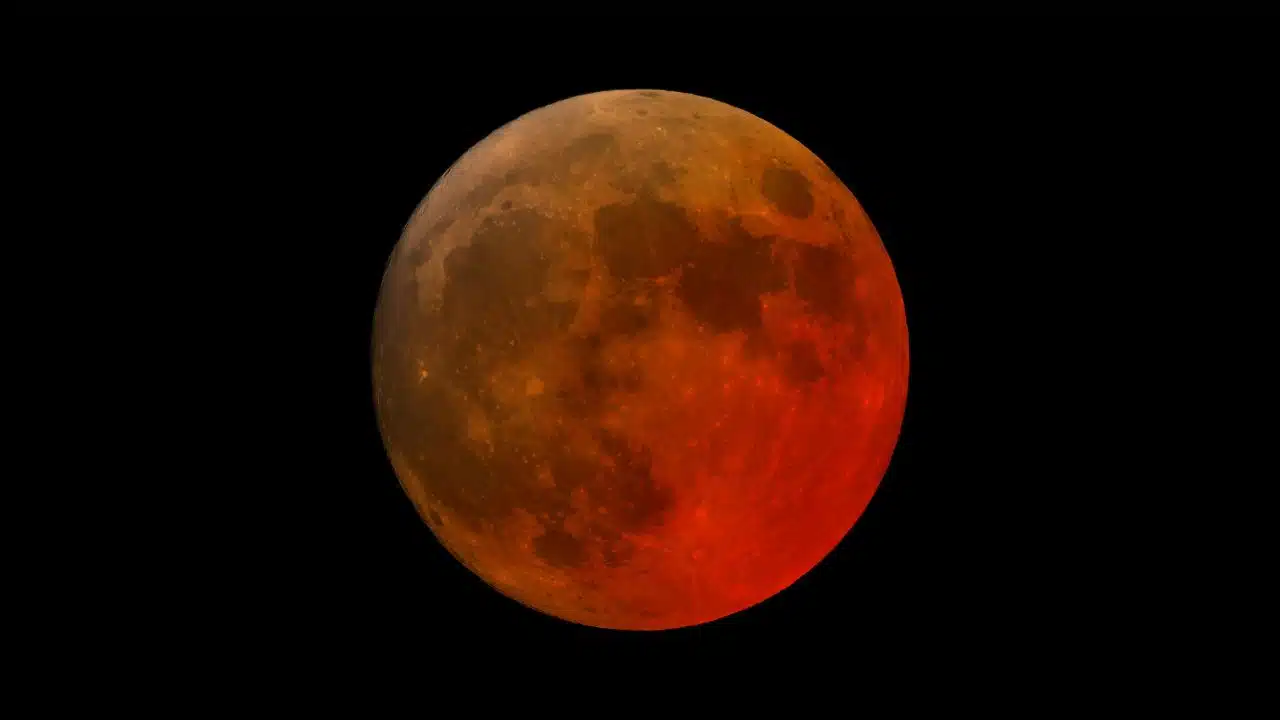
On Sunday night, September 7, 2025, millions of people across Asia, Africa, Australia, and parts of Europe will witness one of nature’s most captivating spectacles — a total lunar eclipse, popularly known as a “Blood Moon.” Unlike solar eclipses, which require special glasses and last only a few minutes, this event will stretch for several hours and can be enjoyed safely with the naked eye, making it one of the most accessible astronomical shows of the year.
This will be the last total lunar eclipse of 2025, closing the year’s eclipse calendar with a display that many astronomers are already calling one of the most remarkable of the decade because of its long totality and wide visibility.
Why the Moon Turns Blood Red
During a total lunar eclipse, the Earth moves directly between the Sun and the Moon, casting a shadow that engulfs the lunar surface. But instead of disappearing in darkness, the Moon takes on a haunting, coppery-red glow.
This phenomenon happens because Earth’s atmosphere bends and scatters sunlight. The shorter blue wavelengths are filtered out, while the longer red wavelengths travel through and reach the Moon, painting it in shades of crimson. This same effect is why sunrises and sunsets appear red.
Astronomers call this process Rayleigh scattering, and it’s the key reason why every Blood Moon is slightly different in tone — sometimes dark brick red, sometimes orange, or even with a brownish tint, depending on the amount of dust, pollution, or volcanic particles in Earth’s atmosphere at the time.
Where the Eclipse Will Be Visible
The September Blood Moon will be visible across large parts of the Eastern Hemisphere, offering millions of people an uninterrupted view of the full eclipse.
- Asia: Best viewing opportunities in India, China, Southeast Asia, and Central Asia. For many in these regions, the eclipse will happen late at night and extend into the early hours of September 8.
- Africa: Countries on the eastern side of the continent will witness the eclipse in its entirety, while western regions may only catch partial phases.
- Australia: Western and central Australia will have prime views, though in eastern cities like Sydney, the eclipse will already be underway by the time the Moon rises.
- Europe: Eastern and southern Europe will see much of the eclipse, but for places like the UK, France, and Spain, the Moon will rise already eclipsed, offering a shorter glimpse.
- The Americas: Unfortunately, most of North and South America will miss out entirely, as the event occurs during their daylight hours.
Exact Timing of the Eclipse (UTC)
According to NASA and astronomical observatories, here is the detailed timeline of the eclipse:
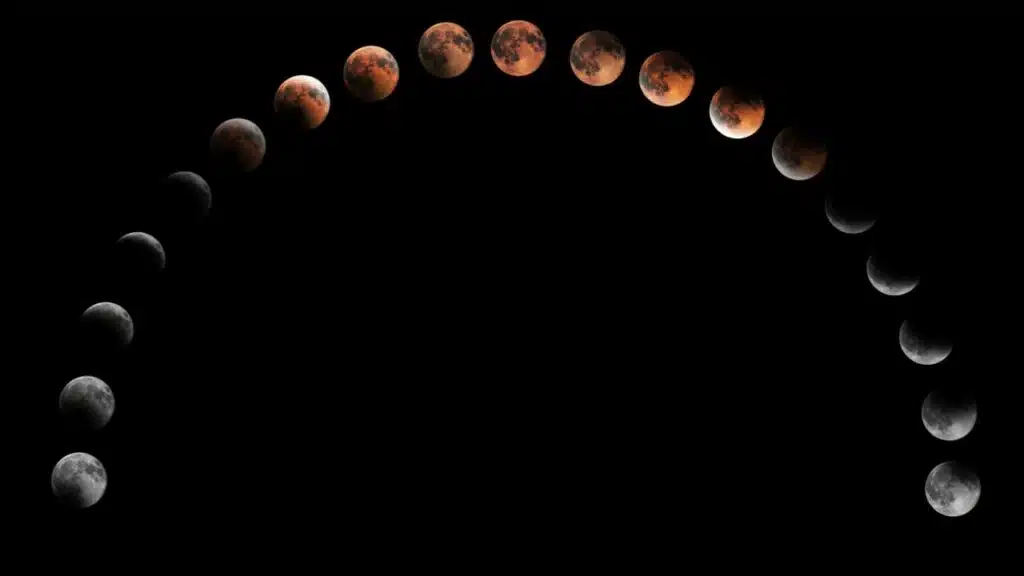
- Penumbral Eclipse Begins: 15:28 UTC — the Moon enters Earth’s outer shadow, though the dimming is subtle.
- Partial Eclipse Begins: 16:27 UTC — the Moon starts to move into Earth’s darker, central shadow (umbra), creating a visible dark bite on one edge.
- Total Eclipse Begins: 17:30 UTC — the entire Moon is in the umbra, glowing red.
- Greatest Eclipse: 18:11 UTC — the midpoint, when the Moon is at its deepest red and darkest.
- Total Eclipse Ends: 18:52 UTC — the Moon begins to emerge from the umbra.
- Partial Eclipse Ends: 19:56 UTC.
- Penumbral Eclipse Ends: 20:55 UTC — the event concludes.
That means the totality itself lasts about 82 minutes, one of the longest durations in recent years.
For local timings:
- India (IST): 11:00 PM – 12:22 AM (Sept 7–8)
- China (CST): 1:30 AM – 2:52 AM (Sept 8)
- UK (BST): Moon rises eclipsed around 7:30–7:52 PM
- Australia (AWST): 11:30 PM – 12:52 AM local time
Why This Eclipse Is Special
This isn’t just any lunar eclipse — it’s scientifically significant for several reasons:
- Long Duration: At over 82 minutes of totality, this eclipse ranks among the longest of the 21st century.
- Apogee Effect: The Moon will be near its apogee (the farthest point in its orbit around Earth), which means it moves more slowly across the sky, prolonging the eclipse.
- Global Reach: It is visible across densely populated regions like India, China, and Africa, allowing billions of people the chance to witness it.
- End of 2025 Cycle: It marks the final eclipse of the year and will be remembered as one of the highlights of the 2025 celestial calendar.
A Prelude to the “Big One” in 2026
Astrophysicists, including eclipse-chasers like Ryan Milligan of Queen’s University Belfast, describe this event as a curtain-raiser for an even rarer spectacle: the total solar eclipse of August 12, 2026.
That eclipse will be visible in parts of Spain, Iceland, and the Arctic, marking the first total solar eclipse over mainland Europe since 2006. It will attract astronomers, photographers, and tourists from around the globe, just as this Blood Moon is expected to.
How to Watch Safely and Effectively
One of the best things about lunar eclipses is that they are safe to watch with the naked eye — unlike solar eclipses, which can cause permanent eye damage without protection.
Tips for the best experience:
- Choose a dark, clear location away from city lights.
- Bring binoculars or a telescope for a closer look at the Moon’s red surface features.
- Use a camera with a tripod to capture the gradual change in color.
- Check local timings carefully so you don’t miss the brief window of totality.
Weather permitting, you don’t need any special equipment — just your eyes, patience, and a good view of the eastern horizon.
Looking Back and Looking Ahead
The last total lunar eclipse happened in March 2025, earlier this year. Before that, the most widely seen Blood Moons occurred in 2022 during a series of eclipses known as a tetrad.
Looking forward, after this September event, the next total lunar eclipse won’t arrive until March 2026, followed by another in August 2026. These events will continue to fuel public interest in astronomy, which has seen renewed enthusiasm thanks to global live streams, citizen science projects, and the rise of astrophotography.
The September 2025 Blood Moon is more than just an astronomical curiosity — it’s a reminder of how interconnected Earth and space are. As the Moon turns red high above, people across continents will share a collective moment of awe, separated by geography but united under the same sky.
For scientists, it’s an opportunity to study Earth’s atmosphere through the way it bends light. For the rest of us, it’s a chance to witness one of the most mystical and beautiful events in nature — a glowing red Moon that has inspired myths, stories, and wonder for millennia.
The Information is collected from CNN BBC.