

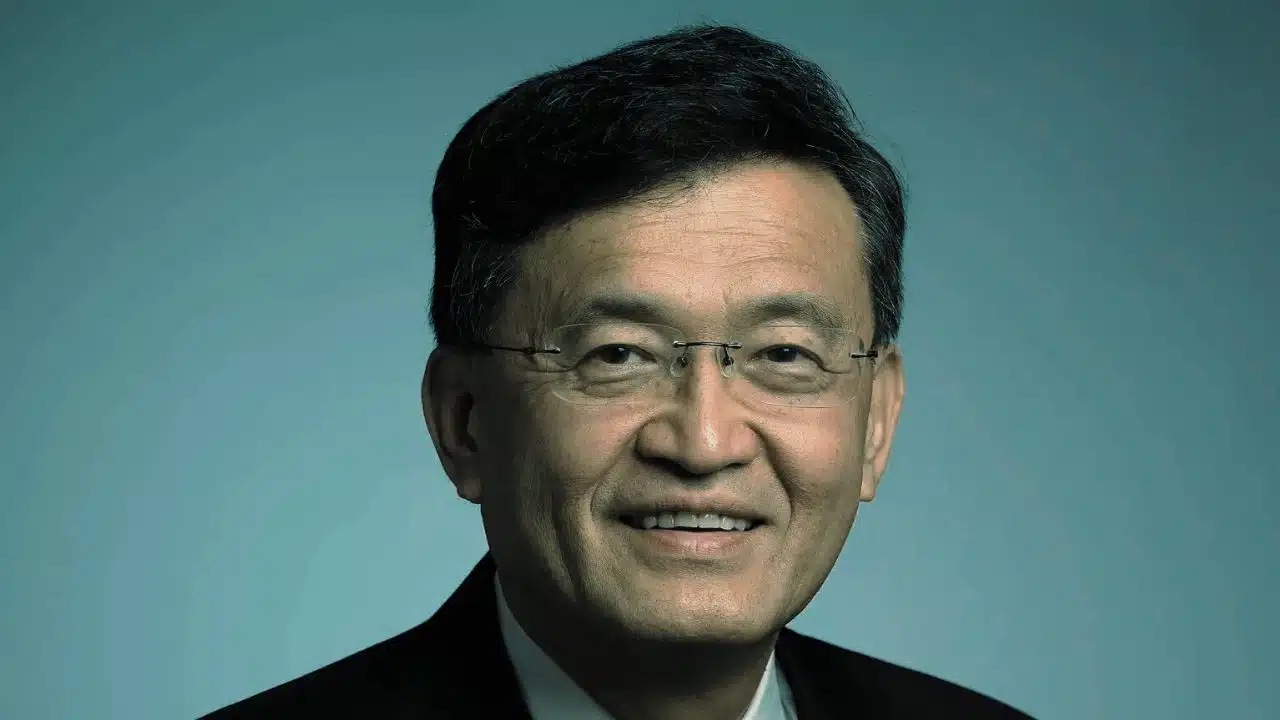
U.S. President Donald Trump has issued a direct public call for Intel’s Chief Executive Officer, Lip-Bu Tan, to resign immediately. The demand, made via his social media platform, alleged that Tan’s past and current investment links to Chinese companies pose a serious conflict of interest for the head of one of America’s largest semiconductor manufacturers. This move is highly unusual in U.S. politics, as it involves a president directly targeting the leadership of a private corporation.
The timing of Trump’s remarks coincides with heightened U.S.–China tensions over technology and national security. It also comes just days after he announced plans to impose significantly higher tariffs on imported semiconductors, a measure that would impact the entire industry.
Background on Lip-Bu Tan and Intel’s Current Challenges
Lip-Bu Tan, a naturalized U.S. citizen born in Malaysia and raised in Singapore, is a veteran of the semiconductor sector and a well-known venture capitalist. Before taking the helm at Intel in March 2025, Tan served for decades as the CEO of Cadence Design Systems and founded the venture firm Walden International, where he invested heavily in chip-related startups globally.
Tan was brought in to lead Intel during a period of declining market share against competitors like Taiwan Semiconductor Manufacturing Company (TSMC) and South Korea’s Samsung Electronics. Intel, once considered the uncontested leader of the U.S. chip industry, has in recent years struggled with production delays, manufacturing setbacks, and loss of technological leadership. The Biden administration and now Trump’s administration have both made domestic semiconductor manufacturing a strategic priority, injecting billions into the industry through subsidies under the CHIPS and Science Act.
The Allegations Driving Political Pressure
Concerns about Tan’s business ties to China have been building for months. According to a Reuters investigation earlier this year, Tan personally or through his investment funds has held stakes in hundreds of Chinese companies since 2012, including some reportedly connected to the Chinese military. Some of these investments continued into late 2024.
Republican Senator Tom Cotton amplified those concerns earlier this week in a letter to Intel’s board. Cotton pointed to Tan’s long leadership of Cadence Design Systems, which last month pleaded guilty to U.S. export control violations and agreed to pay $140 million in penalties. U.S. authorities said a Cadence subsidiary in China conducted repeated business with the National University of Defense Technology — an institution blacklisted for its ties to China’s military. While Tan was not personally charged in that case, Cotton argued that such associations raise questions about Intel’s ability to comply with U.S. security regulations, especially as it receives substantial government subsidies.
Intel’s Position and Corporate Response
Intel’s board and leadership have publicly rejected the notion that Tan’s background compromises national security. The company emphasized its commitment to advancing U.S. economic and defense priorities and reaffirmed plans to invest heavily in U.S.-based manufacturing facilities. Intel stated that these investments are consistent with the administration’s economic agenda, pointing to ongoing expansion projects in Arizona and Ohio, which are expected to create thousands of jobs.
Sources within the company noted that Tan’s recent strategy update included scaling back certain manufacturing investments to better align with market demand — a move interpreted by some industry analysts as a potential friction point with the White House. Intel has also undergone significant layoffs this year as part of cost-cutting measures to stabilize its balance sheet.
Market Reaction and Investor Concerns
Following Trump’s public comments, Intel’s share price fell over 3% by midday trading, reflecting market unease about both the political implications and the potential instability in the company’s leadership. Investors are concerned that such a high-profile clash with the president could jeopardize Intel’s access to federal subsidies and government contracts.
Market analysts warn that prolonged political pressure on Tan could disrupt Intel’s turnaround plans. Industry observers also point to Trump’s history of using public criticism to gain leverage in negotiations with major corporations, particularly when seeking greater U.S.-based investment.
The Larger Geopolitical Context
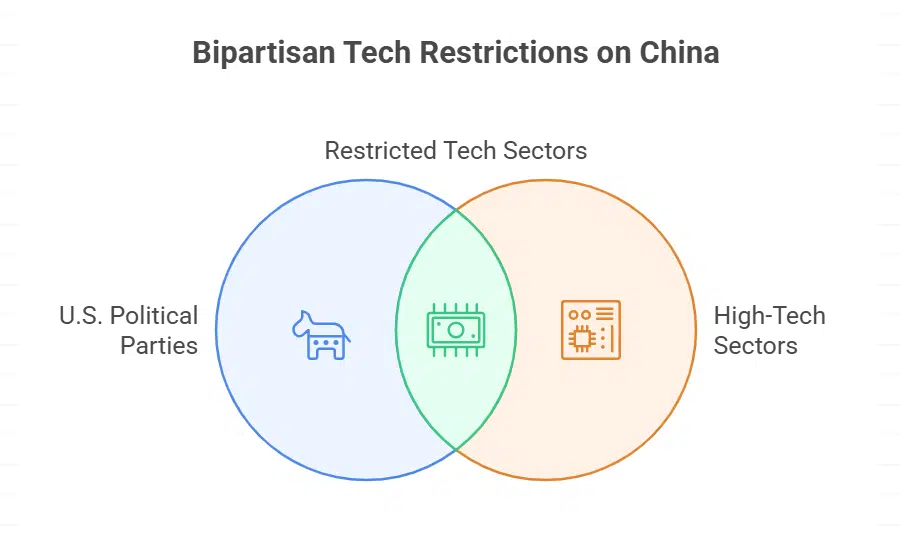
Trump’s attack on Tan is part of a broader bipartisan effort to restrict U.S. business ties with China in high-tech sectors, especially in areas involving artificial intelligence, quantum computing, and advanced semiconductors. Both Democrats and Republicans have expressed concerns about Chinese military access to U.S.-origin technology.
Since his first term, Trump has pushed for a separation of U.S. and Chinese tech supply chains, including blocking mergers and imposing export bans on companies linked to China’s defense sector. Under his current administration, the White House has expanded restrictions on outbound U.S. investments in Chinese tech companies, citing national security threats.
Potential Motives Behind the Confrontation
Industry experts, including Patrick Moorhead of Moor Insights & Strategy, have suggested that the dispute may also be linked to negotiations over Intel’s U.S. investment commitments. Reports indicate that the White House has favored partnerships between Intel and TSMC for advanced chip production — an arrangement that could have been a point of contention. Some analysts believe Trump is using the controversy over Tan’s China ties as additional leverage to push Intel toward decisions more aligned with the administration’s industrial policy.
Pressure from Other Political Figures
Trump’s position has been echoed by allies such as Republican Senator Bernie Moreno, who criticized Intel for delays in its U.S. chip manufacturing projects. These lawmakers argue that Intel must accelerate its domestic production plans to reduce reliance on foreign supply chains and strengthen U.S. national security.
Challenges for U.S. Semiconductor Ambitions
Intel is a central player in the U.S. plan to rebuild advanced semiconductor manufacturing capacity, which has eroded over decades as production shifted to Asia. The company has received billions in federal incentives but has faced setbacks in meeting construction timelines for new facilities. Disruption at the top leadership level could further delay these projects and undermine broader U.S. efforts to compete with China in critical technologies.
While Trump’s demand for Tan’s resignation is unprecedented in its directness, the outcome remains uncertain. Intel’s board has expressed confidence in Tan’s leadership, but ongoing political and public pressure could force a reassessment. For now, the clash underscores the increasing intersection of corporate governance, geopolitics, and U.S. industrial strategy — where leadership decisions at a single company can have global implications.





















