In a significant development that has sent shockwaves through the global gaming industry, a French court has handed down sentences to three former senior Ubisoft executives for engaging in serious misconduct, including sexual and psychological harassment in the workplace. The individuals involved—Serge Hascoët, Tommy François, and Guillaume Patrux—were each found guilty and sentenced with fines and suspended prison terms, marking a rare instance where criminal accountability followed high-level misconduct in the video game sector.
This ruling stems from an extensive investigation into Ubisoft’s toxic workplace culture that began in 2020, during a wave of allegations tied to the broader #MeToo movement in gaming. The judgment has not only brought long-awaited justice for victims but has also reignited calls for stronger industry regulations and better workplace protections across global tech companies.
Who Are the Convicted Executives?
Serge Hascoët – Former Chief Creative Officer
Once considered one of Ubisoft’s most powerful figures, Hascoët served as the company’s Chief Creative Officer and played a key role in shaping franchises like Assassin’s Creed and Far Cry. His influence over game development and internal policies made him nearly untouchable within the company. However, investigations revealed that his behavior often crossed professional boundaries and created a hostile environment for female colleagues.
The court found that Hascoët made highly inappropriate and degrading remarks to a female employee in a way that trivialized sexual harassment and objectified women in the workplace. Though the behavior may have been normalized internally for years, French prosecutors successfully argued that such comments contributed to an atmosphere of intimidation and psychological harm.
Tommy François – Former Vice President of Editorial
François was known for managing Ubisoft’s editorial team, which had a major influence on the direction of some of its biggest titles. His charges were among the most severe. In addition to sexual harassment, he was also convicted of attempted sexual assault, a serious offense under French law.
Court documents described an incident where François allegedly tried to forcefully kiss a female coworker at a corporate party while others physically restrained her. His conduct reportedly spanned several years, with multiple women alleging inappropriate touching, lewd comments, and unwanted advances. During the trial, it emerged that François tried to justify his behavior by claiming it reflected a broader company culture in which inappropriate behavior was pervasive and overlooked. The court, however, rejected this reasoning and emphasized personal responsibility.
Guillaume Patrux – Former Game Director
Patrux, a game director who worked on several Ubisoft projects, was found guilty of psychological harassment. Witnesses described an aggressive management style marked by intimidation and violent outbursts. He reportedly threw chairs and other office furniture during meetings, hurled objects at team members, and engaged in disturbing behavior such as defacing employee notebooks with hateful symbols, including swastikas.
Such conduct created a workplace environment filled with fear and anxiety. The psychological toll on employees was deemed significant enough to warrant legal intervention. Patrux’s sentencing underscores that abuse of authority, even in the absence of sexual misconduct, can result in criminal penalties under French labor law.
The Origins of the Investigation: Ubisoft’s Reckoning in 2020
The road to these convictions began in June 2020, when dozens of Ubisoft employees—both current and former—came forward with stories of workplace abuse. Using Twitter and other social media platforms, they described a long-standing culture of harassment, misogyny, and impunity at the French video game giant. Their testimonies detailed years of unchecked power held by executives who allegedly created and enabled a toxic working environment.
In response to the allegations, Ubisoft launched an internal investigation and commissioned a company-wide survey to assess the extent of the problem. The findings were staggering:
-
Out of approximately 14,000 employees, around 25% said they had personally experienced or witnessed workplace misconduct.
-
About 20% stated that they did not feel safe or respected at their job.
These internal numbers aligned with the accounts shared by employees online and in interviews with major publications such as Bloomberg, The Guardian, Le Monde, and Kotaku.
Company-Wide Fallout and Leadership Shake-Up
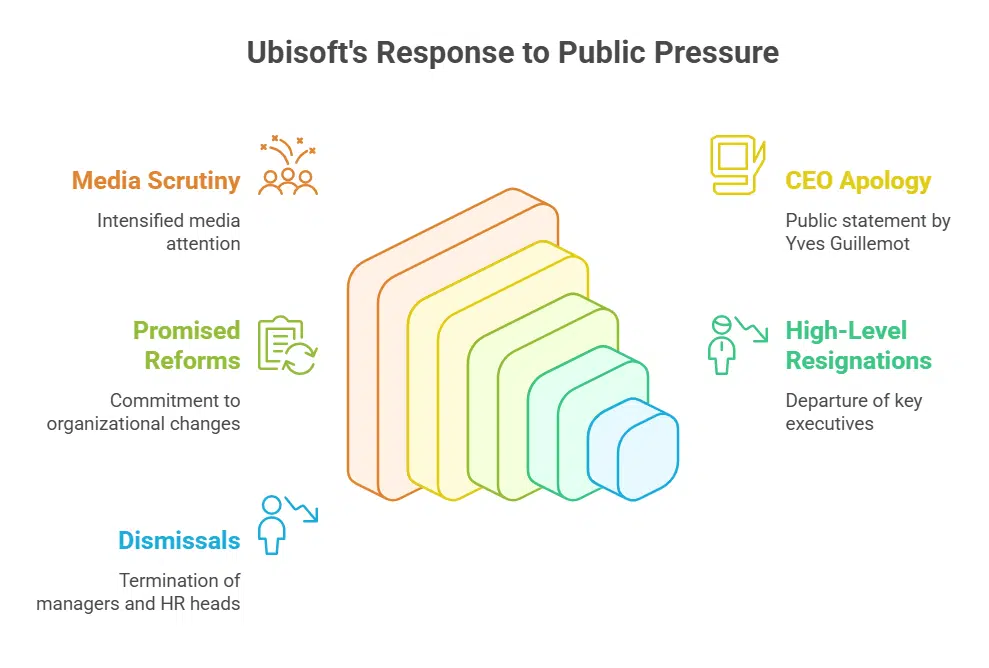
As public pressure mounted and media scrutiny intensified, Ubisoft was forced to act. The company’s CEO, Yves Guillemot, issued a public apology and promised sweeping reforms. Several high-level resignations and dismissals followed in quick succession.
-
Serge Hascoët resigned in July 2020, ending a decades-long career with the company.
-
Tommy François was terminated soon after.
-
Several other managers and HR heads also left or were reassigned.
Ubisoft said it would improve its HR practices, create anonymous reporting channels, and provide mandatory anti-harassment training for all employees. Despite these pledges, critics argued that the company’s response was largely reactive and insufficient. Investigative journalists later revealed that some accused managers had quietly been reassigned rather than removed, raising further concerns about Ubisoft’s commitment to cultural change.
The 2023 Arrests and Criminal Proceedings
While internal reforms were ongoing, legal consequences were still in motion. In 2023, following a criminal complaint filed by several former employees, French police arrested five former Ubisoft executives, including Hascoët and François. These arrests were part of a broader judicial investigation into workplace harassment and abuse of power.
The French legal system treated the allegations with the seriousness they warranted. After months of gathering testimony, reviewing company documents, and analyzing evidence, prosecutors formally charged the three executives. The trial drew significant public attention, particularly as it marked one of the few cases where top-level gaming executives faced legal repercussions for workplace misconduct.
Defense Arguments and Court’s Rejection
During the trial, the defense for François argued that the Ubisoft culture enabled and normalized behavior that would otherwise be deemed inappropriate. François claimed that the environment at Ubisoft was one where such actions were neither challenged nor viewed as problematic.
However, the court found that the executives could not use company culture as a shield for personal accountability. The ruling emphasized that individuals in leadership positions have a duty to uphold professional standards, regardless of the environment they operate in. The judge stated that ignoring or participating in misconduct—especially when in positions of power—amplifies the harm done to subordinates and the company at large.
What Happens Next for Ubisoft?
As of now, Ubisoft has not released a detailed comment on the court ruling. The company maintains that it has restructured many of its internal policies since 2020 and continues working on cultural transformation. CEO Yves Guillemot has reiterated the firm’s commitment to building a respectful and safe workplace.
Yet, skepticism remains. Some employees, speaking anonymously to media outlets like Axios and Kotaku, noted that the same management structures remain largely intact. Others pointed out that while public-facing changes have been made, deeper cultural reforms are still a work in progress.
A Turning Point for the Gaming Industry
The conviction of these three Ubisoft executives is being seen as a landmark case for accountability in the global gaming industry. While other companies, including Activision Blizzard and Riot Games, have also faced serious misconduct allegations, few have resulted in criminal trials and court sentences.
The outcome of the Ubisoft case could signal a shift in how the industry and legal systems handle internal workplace abuse. It highlights the importance of whistleblowers, employee advocacy, and independent investigations in driving change.
Victims’ rights groups and industry watchdogs hope that the ruling will empower more employees to report abuse and push companies to implement lasting reforms that go beyond surface-level changes.