

You might watch your water bill climb while you tug weeds. You feel stuck in a watering battle. Your lawn looks thirsty, and you worry about stormwater runoff. Native plants can cut watering by half, and they feed bees and birds.
This post shows ten sustainable landscaping ideas, like rain gardens, compost bins, and drip irrigation systems, plus solar-powered outdoor lighting. You can manage stormwater, save water, and boost curb appeal, all with low maintenance steps.
Read on.
Key Takeaways
- Plant native species. They cut watering by half, need no extra fertilizer or pesticides, and Pacific Outdoor Living reports a 200–400% ROI.
- Dig a rain garden. Make a 6 to 8-inch basin near your downspout, add 2 inches of sand, then mix one part compost with two parts topsoil. Plant drought-tolerant species and link a rain barrel for overflow.
- Use drip irrigation. Lay lines under mulch to feed roots, fit a pressure regulator, moisture sensor, and smart controller. You can save $1,200 to $6,000 per year on lawn care.
- Spread organic mulch around beds. It holds moisture, cuts weeds, and yields a 126% ROI. Plant oak or maple trees to lower AC use and boost home value by 7–19% ($1,000–$10,000).
- Install solar LED lights and vertical gardens. Solar lights add about $2,500 in home value with no wiring. Vertical gardens use drip water and recycled planters to grow herbs and veggies in small spaces.
Incorporate Native Plants for Water Efficiency

After exploring sustainable landscaping basics, let us add native species for better water use. Native plants boost water conservation and thrive without extra fertilization or pest control.
Pacific Outdoor Living notes a 200 percent to 400 percent return on investment for this approach. This method fits a sustainable living style and reduces your carbon footprint.
Local drought-tolerant varieties suit yard soil and cut irrigation system run time. Gardeners mulch around roots with wood chips or organic mulches to guard soil moisture. A precipitation gauge and moisture probe help track rainwater harvesting and groundwater recharge.
Raised garden beds filled with milkweed and ornamental grasses add curb appeal and habitat. These choices boost ecosystem health and lower water bills.
Create a Rain Garden to Manage Runoff
Next, we learn to tame stormwater with a rain garden. This feature slows runoff and boosts groundwater recharge.
- Carve a shallow basin 6 to 8 inches deep using a garden tool to catch stormwater runoff near downspouts.
- Treat the garden like a mini retention pond or bioswale, spread 2 inches of coarse sand at the base to speed water flow into soil and support groundwater recharge.
- Mix one part organic compost with two parts native topsoil to craft a fast-draining bed, boosting soil structure.
- Insert drought-tolerant plants like sedge grass, daylily, or ornamental grasses that thrive on stormwater, inviting pollinators.
- Border garden edges with permeable pavers or a strip of porous asphalt creating a safe overflow route for heavy storms.
- Link a rain barrel to your roof gutter to direct extra runoff into the garden during peak rains, cutting water waste.
Install Drip Irrigation Systems for Precision Watering
After you shape runoff with a rain garden, you can add a targeted drip network for roots. Drip lines cut waste and trim energy spent on watering.
- Select a drip irrigation network that hugs the soil surface and feeds roots under mulch to cut evaporation, boosting water conservation.
- Lay mainline tubing along grouping of drought-tolerant plants; the system can slash watering time and lower yearly lawn care costs of $1,200 to $6,000.
- Fit a pressure regulator at the hose bib to keep flow steady and protect fragile emitters, which extends tool life.
- Place a moisture sensor near a raised bed or tree root zone to trigger water only when soil moisture dips below a set point.
- Set a smart controller with timers and a rain sensor; this combo stops watering during rain and improves irrigation uniformity.
- Link the drip grid to a rain barrel system to reclaim runoff, aiding stormwater management and groundwater recharge.
- Test each emitter once a month to clear blockages, flush debris and keep water flowing evenly across all zones.
Use Mulching to Conserve Soil Moisture
Organic mulch holds moisture in soil, cuts evaporation, and suppresses weeds. A fresh layer yields a 126% return on investment, lowers water use, and boosts soil conservation. A wheelbarrow and garden fork help spread material around trees, shrubs, and garden beds, feeding microbes and enhancing soil health.
Covering raised garden beds with shredded leaves locks in hydration for veggies and ornamentals. Sustainable landscaping practices like this cut reliance on chemical fertilizers, conserve water, and curb environmental impact.
That detail paves the way for shade trees that reduce heat near outdoor living spaces and trim energy costs.
Plant Trees Strategically for Shade and Energy Savings
After mulching keeps soil moist, shift to shade trees to cut heat. A seasonal sun angle check, using a pocket solar pathfinder, helps pick the best spots.
Oak or maple trees block summer sun on west and south walls. Mature shade trees cut air conditioning costs, and they add privacy screens. Home value climbs 7 to 19 percent, adding $1,000 to $10,000 at resale.
You trim carbon footprint and boost curb appeal with energy-efficient landscaping.
Design a Composting Area for Organic Waste
Composting cuts waste. Soil conservation with composting improves soil health.
- Pick a level spot near your raised garden beds with good drainage.
- Place a composter built from recycled wood or sturdy plastic beside a water tap.
- Layer green peels, grass clippings, and brown leaves to balance carbon and nitrogen.
- Stir the pile weekly with a pitchfork to add oxygen and speed breakdown.
- Check the mix with a compost thermometer, keeping it near 120°F for active microbes.
- Spray water if the pile feels dry, aiming for damp, sponge-like moisture.
- Scoop mature compost after three to six months and apply it as organic fertilizer, cutting use of chemical fertilizers.
Add Permeable Pavers for Sustainable Walkways
Porous bricks make a yard soak up rain. They cut stormwater runoff and boost curb appeal.
- Lay porous bricks or slate slabs on a firm base of pea rock and coarse sand to build a sustainable landscaping path that drains water into the soil.
- Space flat stones with half inch gaps to form permeable paving that boosts groundwater recharge and limits pooling.
- Blend pea rock or crushed shell in the voids to trap rainwater and cut stormwater runoff across hardscapes.
- Surround the path with native drought-tolerant shrubs and ornamental grasses to channel water to roots and support pollination.
- Place a rain barrel near the end to collect overflow for drip irrigation and rainwater harvesting in dry months.
- Mix organic fertilizer under stones before laying to feed soil life and keep paths low maintenance landscaping.
Grow a Pollinator Garden to Support Biodiversity
Plant native coneflowers, milkweed, goldenrod, to lure bees, butterflies, hummingbirds. These drought-tolerant flowers fit low-maintenance landscaping, they save water. Mix in lavender and salvia for color, they attract pollinators year-round.
Set up a rain barrel for rainwater harvesting. The barrel holds 50 gallons per storm, it cools plants, cuts water bills.
Place raised garden beds close to a sunny wall. Add a water dish with stones, provide landing spots, keep water fresh. Nesting boxes, bee blocks, and bat houses offer safe nesting spots, boost wildlife habitat.
Use organic fertilizers, skip chemicals. Gardeners spot bees on petals by noon, hummingbirds sip from red blooms at dusk.
Install Solar-Powered Outdoor Lighting
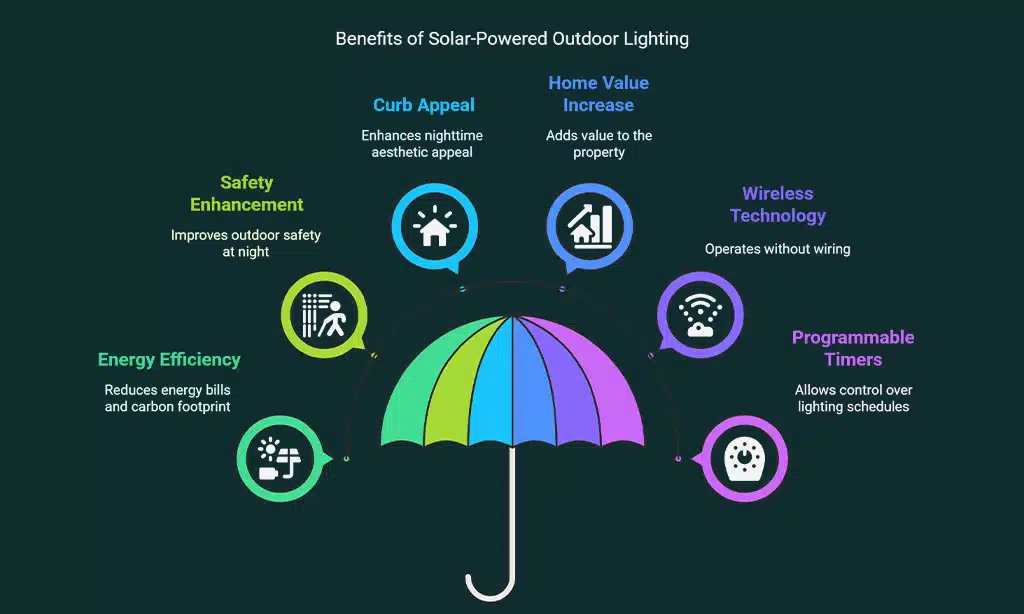
Solar modules soak up sun energy. They charge all day then light up at dusk. Outdoor lighting improves safety, while it boosts nighttime curb appeal. A full setup can add $2,500 to home value, with a 50% return.
Renewable energy like solar lighting cuts energy bills and shrinks your carbon footprint.
Homeowners install light-emitting diode lamps on posts or walls without any wiring. Solar cells link to a wireless sensor to switch lights on as the sky darkens. Programmable timers let you control run times for pathways, patios, or garden beds.
This energy-efficient outdoor lighting needs no power grid hookup.
Incorporate Vertical Gardens for Space Optimization
After installing energy-efficient lamps, shift to living walls that save planter space. Vertical gardens fit herbs, vegetables, and berries on fences and porch walls. They add curb appeal and boost property value with a living roof effect, fitting sustainable landscaping plans.
Mount modular pots or stepped plant racks against brick, wood, or trellis frames.
Use a drip irrigation controller to water each level precisely. Mix compost from your garden waste for organic fertilizer. Plant drought-tolerant sage, oregano, or cherry tomatoes in wall pots.
Pair them with raised beds below and a rain barrel to collect runoff.
Use Recycled Materials for Landscaping Features
Vertical gardens free up ground space, and they pair with recycled materials for edging or planters. Reclaimed wood lowers your carbon footprint and adds rustic charm. You can use recycled plastic planks for benches or raised garden beds.
This choice reduces waste and builds a sustainable ecosystem. Artificial turf pays back costs within seven years and lasts up to twenty-five years. It cuts irrigation needs and trims water bills.
Homeowners see cost-effective, eco-friendly upgrades that boost curb appeal.
Mix porous asphalt pathways with recycled brick for a low maintenance look. Rain barrel hides behind shrubs to collect organic waste and rainwater. Shovel and wheelbarrow move mulch to create moisture-retaining beds near shade trees.
Stormwater runoff drops into permeable pavers, and groundwater recharge rates climb. Solar powered LED fixtures light walkways and reduce electricity bills. Landscape crews need only a trowel and rake for upkeep.
Takeaways
Applying native plants cuts water waste. You can add an irrigation system for dry spots. A rain garden slows stormwater and feeds groundwater. Trees give shade and slash cooling bills.
Compost areas turn scraps into rich topsoil. Permeable walkways let rain seep down. Pollinator beds attract bees, birds, and butterflies. Solar lanterns light paths and save power.
Pick a few ideas. Watch your landscape bloom green.
FAQs on How to Enhance Property Sustainability
1. What are the perks of using native plants and drought-tolerant plants for water conservation and low-maintenance landscaping?
Native plants need less water, they suit your soil and climate. Drought-tolerant plants like ornamental grasses save water, cut chores, and keep your yard happy, like a friend who brings snacks.
2. Why choose a drip irrigation system to manage stormwater runoff?
A drip irrigation system drips water right where roots grow, it trims water waste, it tames stormwater runoff. You get lush beds, without a swamp.
3. How do rain gardens, rain barrels, and permeable paving help groundwater recharge?
Rain barrels catch roof runoff for your plants, rain gardens act like a sponge, and permeable paving lets water sink in. Together they slow stormwater, boost groundwater recharge, and aid the environment.
4. How can plant grouping with shade trees and grass boost curb appeal and wildlife habitat?
Group plants by height and color, add shade trees and grass, you get a layered look. Birds, bees, and butterflies move in, turning your yard into a hotspot for wildlife habitat and eye-catching curb appeal.
5. How do energy-efficient outdoor lighting and solar panels cut carbon footprint and brighten outdoor living spaces?
Use LED or solar light fixtures, they sip little power but beam bright paths. Solar panels on a shed or greenhouse power your lights, shrink your carbon footprint, and keep evenings cozy.
6. What are simple steps to grow food, enrich soil, and practice integrated pest management?
Build raised garden beds for a neat vegetable garden, plant cover crops to feed soil. Mix companion planting with organic fertilizers and integrated pest management, you’ll harvest fresh produce and build a thriving sustainable landscape.