Need privacy at home? Fast-growing trees can create natural screens quickly—some grow several feet per year! This guide explores ten fast-growing trees perfect as living fences around your yard—from dense evergreen giants like Leyland Cypress to colorful choices like Crepe Myrtle.
Find your ideal privacy solution here!
Leyland Cypress: A Quick-Growing Solution for Privacy
The Leyland Cypress is a top choice for natural privacy. This fast-growing tree can reach heights of 60 to 70 feet in just a few years. It thrives in full sun and well-drained soil, making it low maintenance for gardeners.
Its dense foliage creates an effective privacy screen, blocking unwanted views and noise.
Planting Leyland Cypresses with proper tree spacing ensures quick coverage. They adapt well to various climates and resist frost damage. For those seeking evergreen trees that grow rapidly, the Leyland Cypress offers both beauty and function without much effort.
Benefits of Green Giant Arborvitae for Natural Screening
Green Giant Arborvitae is a top choice for natural privacy screens. Its dense foliage grows quickly, reaching a mature height of 30-40 feet. These evergreen trees thrive in full sun and adapt well to various soil types, including moist soil.
They require minimal pruning and are low maintenance, making them ideal for busy homeowners.
This hardy tree forms a thick barrier, blocking noise and wind effectively. Its green giants grow up to 3 feet per year, creating a private space in no time. Arborvitae works well in both partial shade and sunny areas, offering flexibility in landscaping.
With proper tree spacing, it creates a seamless, natural privacy screen.
Rapid Growth Characteristics of Hybrid Poplar
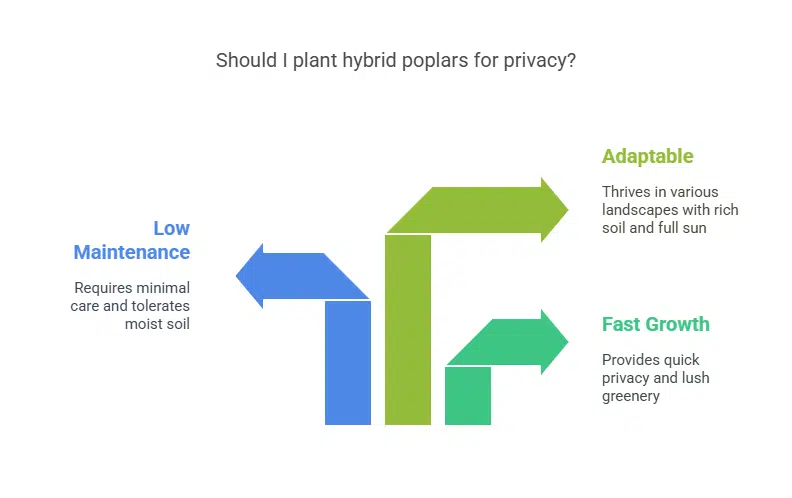
The hybrid poplar is a top pick for fast-growing trees that offer natural privacy. This deciduous tree can grow up to 8 feet per year, reaching a mature height of 40-50 feet in just a few years.
Its dense foliage creates an effective privacy screen, blocking unwanted views and noise. Hybrid poplars thrive in rich soil and full sun, making them adaptable to various landscapes.
They require low maintenance and can tolerate moist soil conditions. For optimal growth, proper tree spacing is essential. These trees are ideal for homeowners seeking quick results and a lush green barrier.
Bamboo: Fast and Effective Privacy Fencing
Bamboo is a top choice for creating natural privacy screens. It grows quickly, often reaching full height in just a few years. This makes it ideal for those needing fast results. Bamboo thrives in well-drained soil and can adapt to both full sun and partial shade.
Its dense foliage forms a thick barrier, blocking unwanted views effectively. Some varieties, like clumping bamboo, are low maintenance and won’t spread aggressively. For a tropical touch with practical benefits, bamboo offers both beauty and function as a privacy screen.
Italian Cypress for Elegant Privacy Borders
Italian Cypress trees add a touch of elegance to any landscape. These evergreen trees grow tall and narrow, making them perfect for privacy borders. They reach a mature height of up to 60 feet but stay just 3 to 6 feet wide, ideal for tight spaces.
These low-maintenance trees thrive in full sun and well-drained soil. Their dense foliage creates an excellent privacy screen year-round. Italian Cypress also resists pests and diseases, ensuring long-lasting beauty with minimal care.
Plant them close together for an effective natural barrier that’s both functional and stylish.
Advantages of Eastern Red Cedar in Privacy Landscaping
Eastern Red Cedar is a top choice for natural privacy. This evergreen tree grows quickly, reaching a mature height of 30 to 40 feet. Its dense foliage creates an effective privacy screen year-round.
The tree thrives in full sun and adapts well to various soil types, including moist soil.
Low maintenance makes Eastern Red Cedar ideal for busy homeowners. It resists pests and diseases, ensuring long-lasting beauty. Plant these trees with proper spacing to form a thick barrier.
Their rich green color adds visual appeal while providing seclusion—perfect for creating private outdoor spaces without the need for fences or walls.
Areca Palm: Tropical Privacy and Aesthetic Appeal
The Areca Palm offers a lush, tropical vibe while creating natural privacy. Its feathery fronds grow dense, blocking unwanted views. This palm thrives in partial shade and moist soil, making it adaptable to various landscapes.
Areca Palms add aesthetic appeal with their vibrant green foliage. They are low maintenance and grow quickly—perfect for privacy screens in warm climates. Plant them in well-drained soil to ensure healthy growth and long-lasting beauty.
Crepe Myrtle for Seasonal Privacy and Color
Crepe Myrtle offers a mix of beauty and function for your yard. Its dense foliage creates a natural privacy screen during the warmer months, blocking unwanted views. The tree thrives in full sun and adapts well to various soil types, including well-drained soil.
Known for its vibrant blooms in shades of pink, purple, red, and white, it adds seasonal color to your landscape.
This versatile tree is low maintenance once established. It grows quickly—reaching up to 25 feet or more at mature height—making it ideal for creating privacy borders.
Crepe Myrtle also provides shade with its broad canopy while keeping its ornamental charm year-round through exfoliating bark that adds texture even in winter. Whether you need a standalone focal point or a grouped hedge, this plant delivers both style and practicality.
Yellow Oleander: Quick Privacy with Ornamental Value
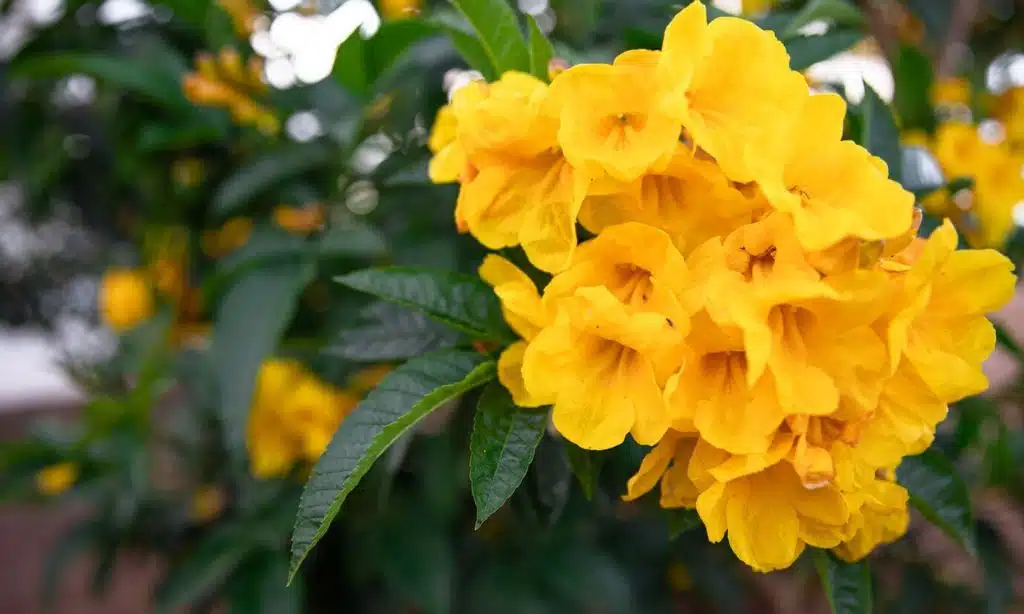
Yellow Oleander offers both privacy and beauty. This fast-growing tree thrives in full sun and well-drained soil, making it a low-maintenance choice for natural screening. Its dense foliage creates an effective privacy screen while adding ornamental value to your landscape.
The tree’s vibrant yellow flowers bloom throughout the year, enhancing its aesthetic appeal. Yellow Oleander reaches a mature height quickly, providing rapid coverage for your yard.
It’s perfect for those seeking quick privacy with a touch of tropical charm.
Royal Poinciana for Broad, Natural Canopies
The Royal Poinciana is a stunning tree known for its wide, natural canopies. It grows fast and offers excellent shade with its broad leaves. This tree thrives in full sun and well-drained soil, making it ideal for warm climates.
Its vibrant orange-red flowers add ornamental value during the blooming season.
With a mature height of 30 to 40 feet, the Royal Poinciana creates a striking privacy screen. Its dense foliage provides year-round coverage while enhancing your landscape’s beauty.
Low maintenance and drought-tolerant, it’s perfect for those seeking both elegance and function in their outdoor space.
Small Leaf Clusia for Dense, Evergreen Privacy
Small Leaf Clusia creates a thick, evergreen privacy screen. Its dense foliage grows fast and stays green all year. Plant it in full sun or partial shade for best results. This tree thrives in well-drained soil and needs little maintenance once established.
Its waxy leaves resist pests and harsh weather. Small Leaf Clusia works well as a natural fence or border. Space trees properly to ensure healthy growth and coverage. With its low upkeep needs, it’s perfect for busy homeowners looking for lasting privacy solutions.
Takeaways
Adding fast-growing trees to your yard is a smart way to create natural privacy. From the dense foliage of Leyland Cypress to the tropical charm of Areca Palm, these options suit various needs and styles.
With proper care—like well-drained soil and full sun—they’ll thrive quickly. Transform your space into a private, green haven with ease. Enjoy both beauty and seclusion in no time!
FAQs on Fast-Growing Trees That Will Give Your Home Natural Privacy
1. What are the best fast-growing trees for natural privacy?
Leyland cypress, green giant arborvitae, and hybrid poplar are excellent choices. These evergreen trees grow quickly and provide dense foliage for a privacy screen.
2. How much space do I need between privacy trees?
Tree spacing depends on the type of tree—usually 5 to 15 feet apart. For example, Leyland cypress needs about 10 feet, while Italian cypress can be planted closer together.
3. Can fast-growing trees thrive in partial shade?
Some can—like wax myrtle and Japanese pagoda tree—but most prefer full sun for optimal growth. Always check the specific needs of each tree before planting.
4. Which low-maintenance trees work well for a privacy screen?
Emerald green arborvitae and bald cypress are great options—they require minimal care once established and adapt well to various soil types, including moist or rich soil.
5. Do deciduous trees like tulip trees offer year-round privacy?
No, deciduous trees lose their leaves in winter—so they’re not ideal for year-round coverage evergreens like Leyland cypress or eastern red cedars are better suited for constant privacy screens with dense foliage throughout all seasons!