


If you’re planning to invest in property, it helps to speak the language of real estate. Understanding key terms gives you confidence when making decisions, negotiating deals, and managing your investments. Whether you’re a new investor or looking to sharpen your knowledge, knowing these basic real estate terms can save you from costly mistakes.
In this guide, we break down 12 essential real estate terms every investor should know. These are the terms professionals use every day, and they play a big role in real estate success. From cash flow to cap rate and 1031 exchange, we explain each term in simple language with real-world examples.
Let’s dive in.
Why Real Estate Terminology Matters for Investors
Investing in real estate isn’t just about buying and selling properties. It involves financial planning, risk analysis, tax strategies, and legal documentation. Real estate has its own set of vocabulary. If you don’t understand what a “cap rate” or “ARV” means, you might overlook important information or make poor investment choices.
Knowing these terms helps you:
- Analyze deals more accurately
- Communicate effectively with agents, lenders, and contractors
- Make smarter financial decisions
- Avoid legal or financial traps
Understanding real estate lingo gives you a strong foundation. It’s like learning the rules before playing the game.
1. Cash Flow
Cash flow is the money you earn from a property after deducting all operating expenses and mortgage payments.
Why It Matters: Positive cash flow means your property is making money. Negative cash flow means you are losing money monthly.
Example: If you earn $2,000 in rent and your expenses (mortgage, taxes, insurance, repairs) are $1,500, your cash flow is $500.
A strong cash flow ensures that your investment generates a steady income stream. It helps cover ongoing expenses, builds financial stability, and can fund future investments. Cash flow is often the key reason people invest in rental properties.
| Term | Definition | Importance |
| Cash Flow | Net income after expenses from rental income | Shows profitability of a property |
2. Cap Rate (Capitalization Rate)
Cap Rate = Net Operating Income (NOI) / Property Price. It helps evaluate how profitable a property is.
Why It Matters: It’s used to compare returns across different properties or markets.
Example: If a property earns $10,000 annually and costs $100,000, the cap rate is 10%.
Cap rate also helps identify underpriced or overpriced properties. A high cap rate might indicate a better return but could also reflect higher risk. Investors often compare cap rates within the same area to find the best opportunities.
| Term | Definition | Importance |
| Cap Rate | Percentage that shows potential return on property | Compares investment opportunities |
3. Equity
Equity is the difference between your property’s market value and the amount you owe on the mortgage.
Why It Matters: Equity builds over time as you pay down the mortgage or the property value rises.
Example: Property value: $300,000. Mortgage balance: $200,000. Equity = $100,000.
Equity gives you financial leverage. You can borrow against it for home improvements or new investments. It also contributes to your overall net worth and financial health.
| Term | Definition | Importance |
| Equity | Ownership value in a property | Increases net worth and borrowing power |
4. Appreciation
Appreciation is the increase in a property’s value over time.
Why It Matters: It affects resale value and long-term investment return.
Example: If you buy a home for $250,000 and it increases to $300,000 in 5 years, it appreciated by $50,000.
Appreciation can result from market growth, location improvements, or property upgrades. It boosts your return when you sell or refinance the property. Investors often seek areas with strong appreciation trends.
| Term | Definition | Importance |
| Appreciation | Rise in property value over time | Boosts resale value and equity |
5. ROI (Return on Investment)
Definition: ROI = (Net Profit / Total Investment) x 100. It measures the efficiency of an investment.
Why It Matters: A higher ROI means better returns on your money.
Example: You invest $50,000 and earn $5,000 profit annually. ROI = 10%.
ROI helps compare different investments and strategies. It shows how well your money is working for you. Both short-term flippers and long-term landlords rely on ROI to measure success.
| Term | Definition | Importance |
| ROI | Percentage of profit from investment | Measures profitability |
6. ARV (After Repair Value)
ARV is the estimated value of a property after renovations or improvements are made.
Why It Matters: Helps investors decide if a property flip is worth it.
Example: A house bought at $150,000 is estimated to be worth $200,000 after $25,000 in repairs. ARV = $200,000.
Knowing ARV helps you calculate potential profit before you start a renovation. It also helps in securing financing, as lenders often require ARV estimates. Overestimating ARV can lead to losses.
| Term | Definition | Importance |
| ARV | Value of property after renovations | Helps plan property flipping deals |
7. NOI (Net Operating Income)
NOI = Gross Income – Operating Expenses (excluding mortgage payments).
Why It Matters: Indicates how much income a property generates before loan costs.
Example: Gross rent: $24,000. Expenses: $4,000. NOI = $20,000.
NOI is essential when evaluating property performance. Lenders and appraisers use it to determine property value. A high NOI usually means a well-performing investment.
| Term | Definition | Importance |
| NOI | Income from property before debt payments | Used to evaluate investment potential |
8. Debt-to-Income Ratio (DTI)
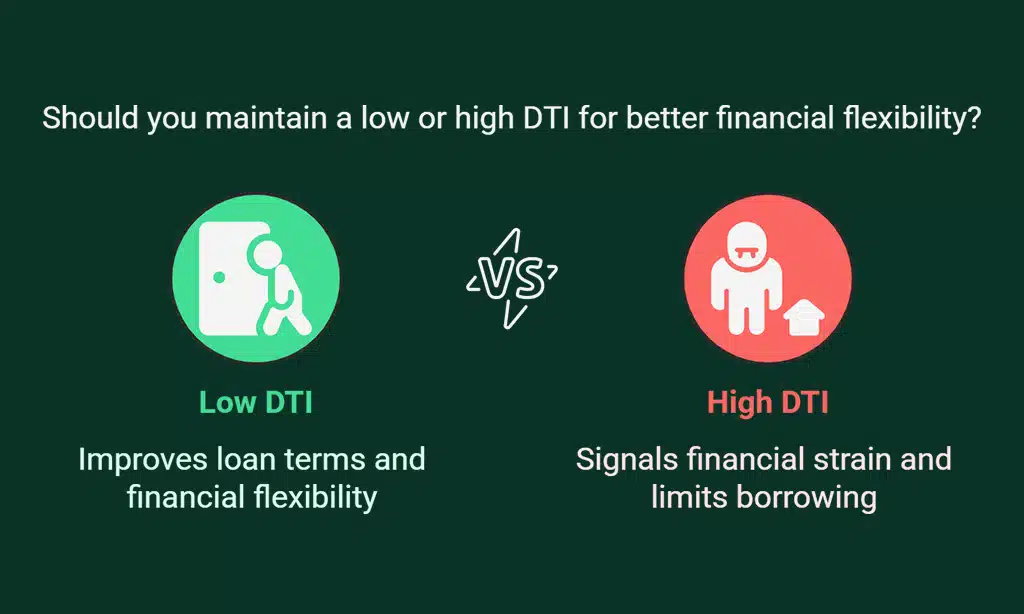
DTI = Total Monthly Debts / Gross Monthly Income. It shows how much of your income goes to debts.
Why It Matters: Lenders use it to evaluate your loan eligibility.
Example: Monthly income: $5,000. Debts: $2,000. DTI = 40%.
Lower DTI ratios improve your chances of getting favorable loan terms. A high DTI signals financial strain, which may limit your borrowing capacity. Investors should keep this ratio in check for better financial flexibility.
| Term | Definition | Importance |
| DTI | Ratio of debts to income | Impacts loan approvals and affordability |
9. Hard Money Loan
A short-term loan secured by real estate, typically used by house flippers.
Why It Matters: Easier to get than traditional loans, but interest rates are higher.
Example: A hard money lender gives $100,000 for 12 months at 12% interest.
These loans are based on asset value, not credit score. They are fast to process, making them ideal for competitive or distressed deals. However, investors should plan a quick exit strategy due to high costs.
| Term | Definition | Importance |
| Hard Money Loan | Short-term real estate loan with fast approval | Great for quick fix-and-flip deals |
10. Title Insurance
Insurance that protects you from property ownership disputes or claims.
Why It Matters: Protects against unknown liens, errors in records, or fraud.
Example: If someone else claims ownership after you buy, title insurance protects your interest.
Title insurance is a one-time cost that can save thousands. It provides peace of mind and legal protection. It’s often required by lenders to finalize mortgage deals.
| Term | Definition | Importance |
| Title Insurance | Insurance protecting property ownership rights | Prevents legal and financial risks |
11. Escrow
A neutral third party holds funds or documents during a real estate transaction.
Why It Matters: Ensures safety and fairness for both buyer and seller.
Example: During a home purchase, your deposit is held in escrow until closing.
Escrow protects all parties involved in a deal. It ensures that funds and property are exchanged only when all terms are met. It builds trust during the transaction.
| Term | Definition | Importance |
| Escrow | Neutral party handling money or paperwork safely | Ensures secure property transactions |
12. 1031 Exchange
Definition: A tax-deferred exchange of one investment property for another.
Why It Matters: Lets you defer capital gains tax when selling and reinvesting.
Example: You sell a rental home and buy another within the IRS deadline to avoid immediate tax.
This strategy helps investors grow portfolios without tax burdens. It’s a powerful tool for scaling investment real estate. However, strict rules apply, so professional advice is recommended.
| Term | Definition | Importance |
| 1031 Exchange | Swap of investment properties to defer taxes | Helps grow portfolio with tax advantages |
Bonus Terms to Know (At a Glance)
| Term | Definition | Importance |
| Zoning | Land-use regulations | Determines what you can build/use |
| MLS | Multiple Listing Service | Central database of properties |
| LTV | Loan-to-Value Ratio | Impacts loan approval and rates |
Quick Tips to Memorize Real Estate Terms Efficiently
- Flashcards – Create cards with term on one side, definition on the other
- Join Real Estate Forums – Learn through discussions with other investors
- Watch Videos – YouTube and online courses simplify complex concepts
- Read Books or Blogs – Follow real estate investment experts
Final Thoughts on Learning Real Estate Terms
Understanding real estate terms is not just for experts. Whether you’re just starting or already investing, these key concepts help you make better decisions, speak the language of professionals, and avoid costly mistakes.
Start by mastering the 12 key terms listed above. They form the foundation of real estate knowledge and will guide you as you explore more advanced topics.
Stay curious, keep learning, and don’t hesitate to ask questions. Every smart investor starts with the basics.





















